
Nobody Expects A Tiny Arizona Ranch To Let You Hand-Feed A Whole Flock Of Ostriches
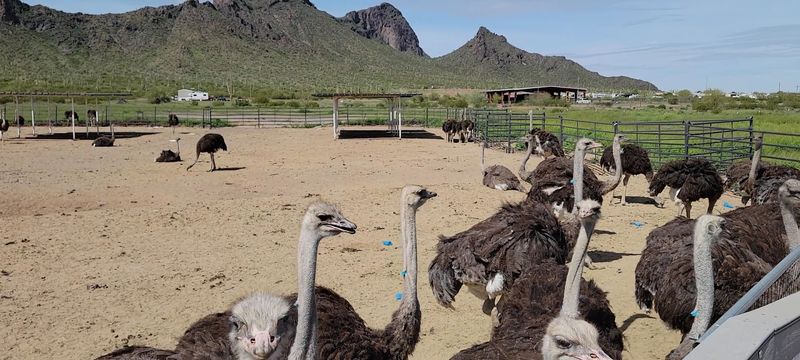
Ostriches do not nibble politely, and anyone holding a feed cup at one small family ranch in the Arizona desert learns that within about three seconds. From the highway it looks like just another roadside sign, yet it hides a hands-on menagerie of stingrays, lorikeets, goats and an entire flock of long-necked birds waiting for snacks.
Admission costs about the same as a fast-food lunch, and the feed is included. For families, road-trippers and curious locals, it may be the most fun you can have for $12 in the Sonoran Desert.
A Roadside Oddity Beneath Picacho Peak
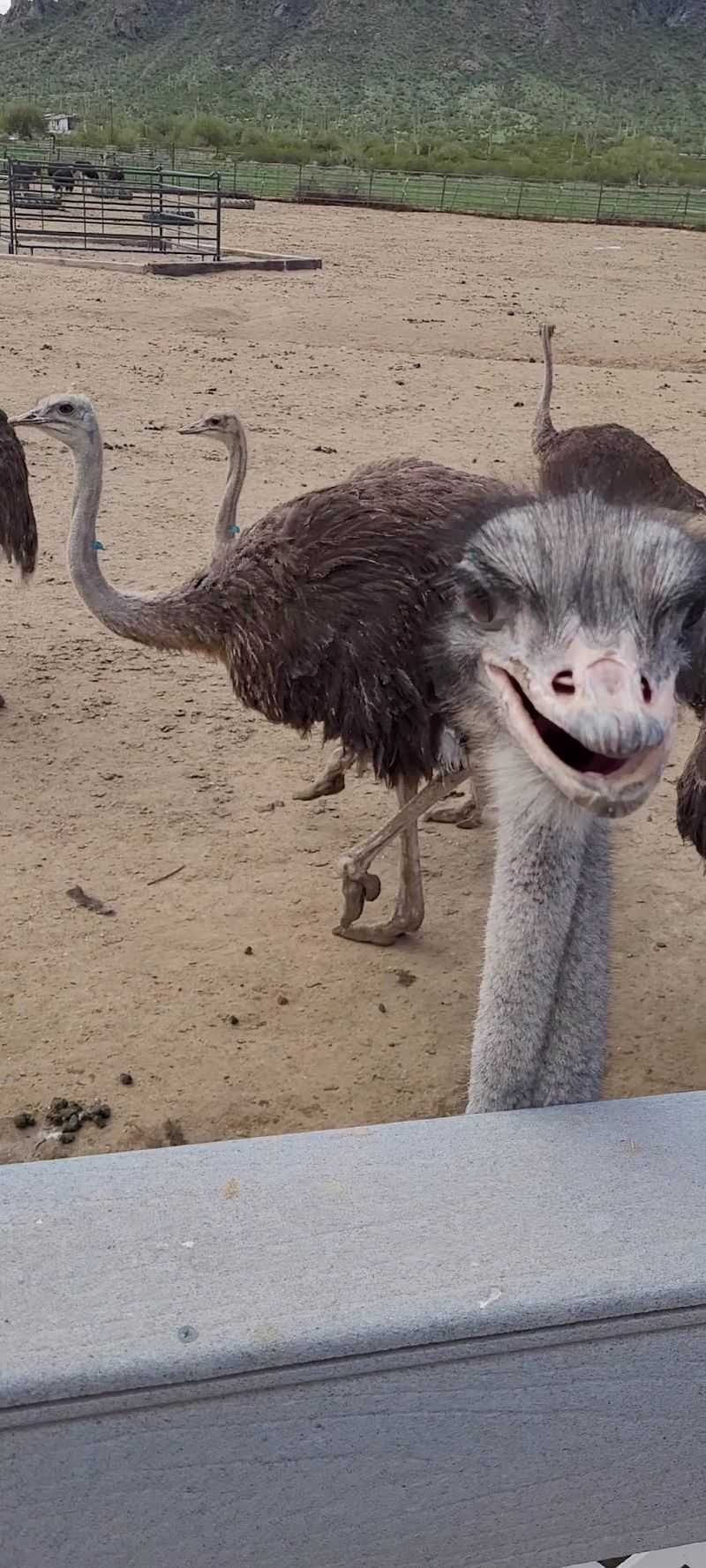
Drivers on Interstate 10 have been doing double takes at this spot for decades. Somewhere between Phoenix and Tucson, right around Exit 219, a ranch sign promises ostriches, and the promise turns out to be very real.
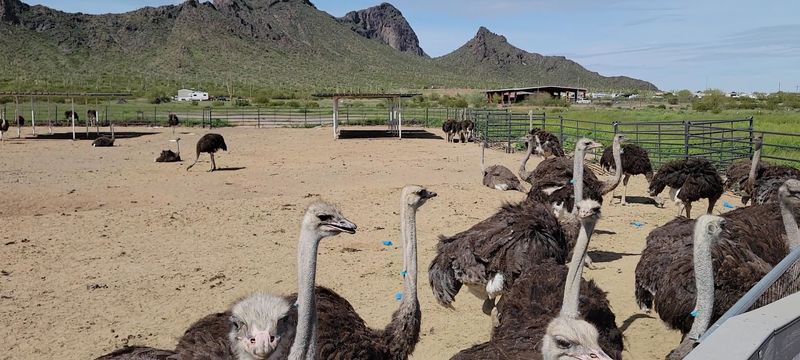
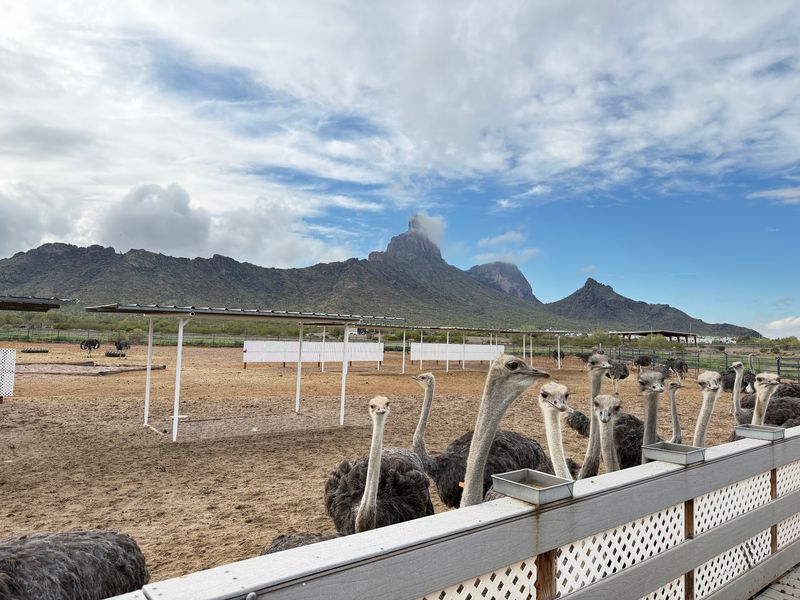
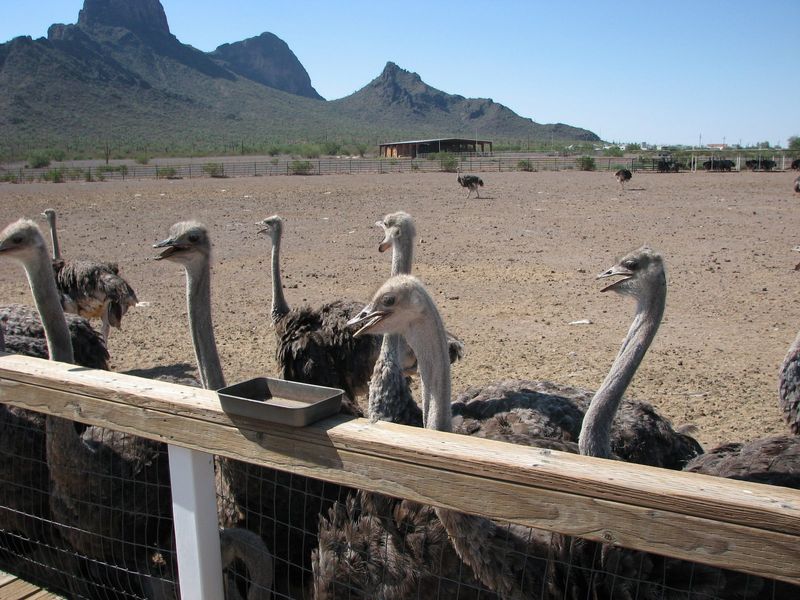
Rooster Cogburn Ostrich Ranch sits at 17599 E Peak Ln in Picacho, surrounded by open Sonoran Desert. The jagged silhouette of Picacho Peak rises right behind the property, so every photo of a feeding frenzy comes with a dramatic mountain backdrop at no extra charge.
Plenty of Arizonans admit they drove past for years before finally pulling off the highway.
At heart, it is a working ostrich ranch that also happens to welcome the public. Visitors wander through a loop of feeding stations, cup in hand, meeting birds, goats, donkeys, deer, rabbits, tortoises and even stingrays.
The mood is part petting zoo, part farm visit and part classic American roadside attraction.
What surprises most first-timers is how interactive the whole thing feels. Nobody stands behind a glass wall here.
Animals come trotting, waddling and flapping over the moment they spot a feed cup, and within minutes even the most skeptical grown-up tends to be grinning like a kid on a field trip.
Three Generations of Desert Ranchers
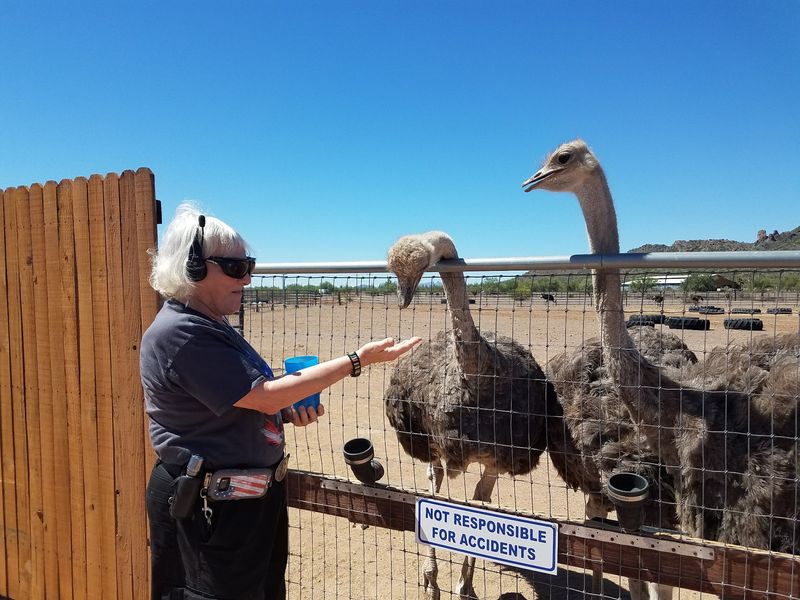
Family businesses rarely last three generations, and ones built around ostriches are rarer still. This ranch has been owned and run by the same family through all three, which gives the place a homegrown feel you notice right away.
The gates first opened to the public in 1999. Back then, the draw was simple: come feed the ostriches.
Over the years the family kept adding critters and experiences, slowly turning a single-attraction stop into a full loop of about fourteen feeding stations.
Longtime fans remember visiting in the early 2000s, and many of them still come back with their own children or grandchildren. Some travelers make it a ritual stop on every trip through southern Arizona, often on the way to or from the airport.
That kind of loyalty usually means a place has stayed true to what made it special.
The personal touch shows in the staff too. Employees are known for being friendly, patient and quick to help, whether that means explaining feeding rules to first-timers or checking on a guest who is struggling in the summer heat.
Visitors often say the crew makes the experience as much as the animals do.
Fun fact: the property still operates as a working ostrich ranch, not just a show.
The Main Event: A Flock of Hungry Ostriches
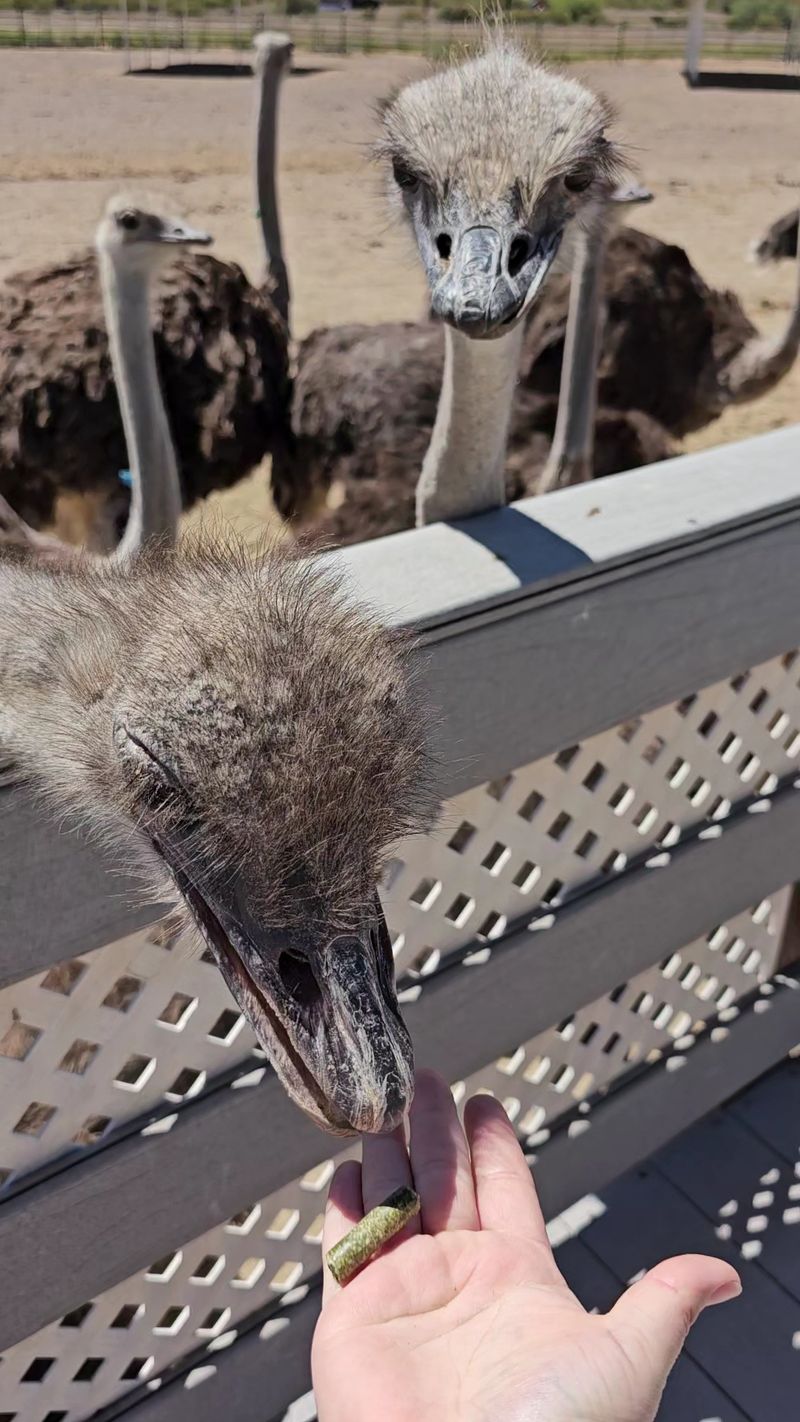
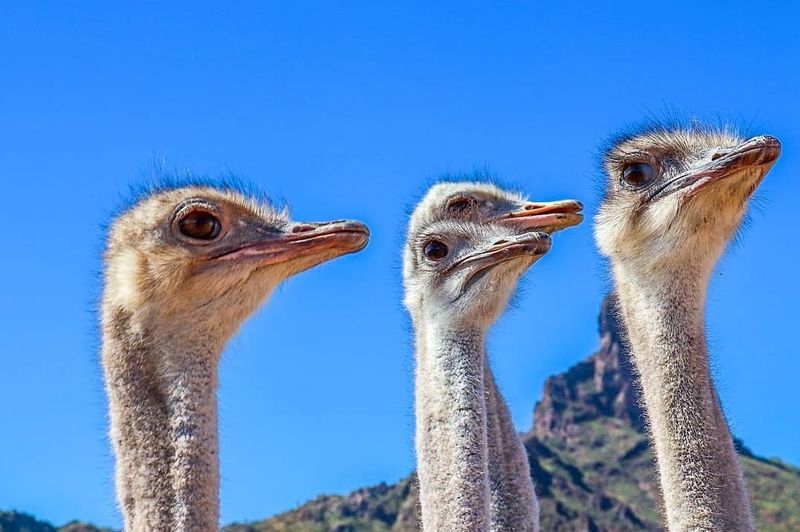
Long necks. Huge eyes.
Beaks that move faster than you expect. Hand-feeding a whole flock of ostriches is the headline act, and it lives up to the billing.
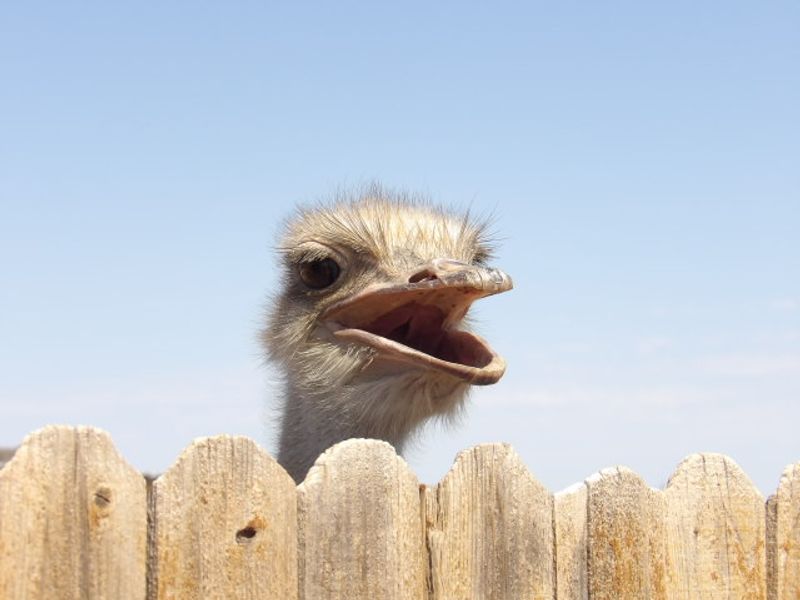
The birds are curious and enthusiastic eaters, to put it mildly. As soon as a visitor approaches the fence with a cup of feed, heads come swooping down from overhead, sometimes several at once.
The pecks are quick and surprisingly strong, which usually leads to a burst of laughter and at least one startled squeal.
Not everyone wants a beak aimed at their palm, and the ranch plans for that. Feed chutes let guests pour food down a pipe so the ostriches can eat without anyone putting their hands in range.
It is a clever way to let cautious kids and grown-ups join the fun at their own comfort level.
Standing eye to eye with these giant birds gives you a new respect for them. They are tall, a little goofy and completely focused on snacks.
Many visitors, especially the grown-ups, name this station their favorite of the day, even after learning these birds are not exactly cuddly.
Tip: hold your cup firmly. The flock has no manners about sharing.
Goats That Stick Their Necks Out
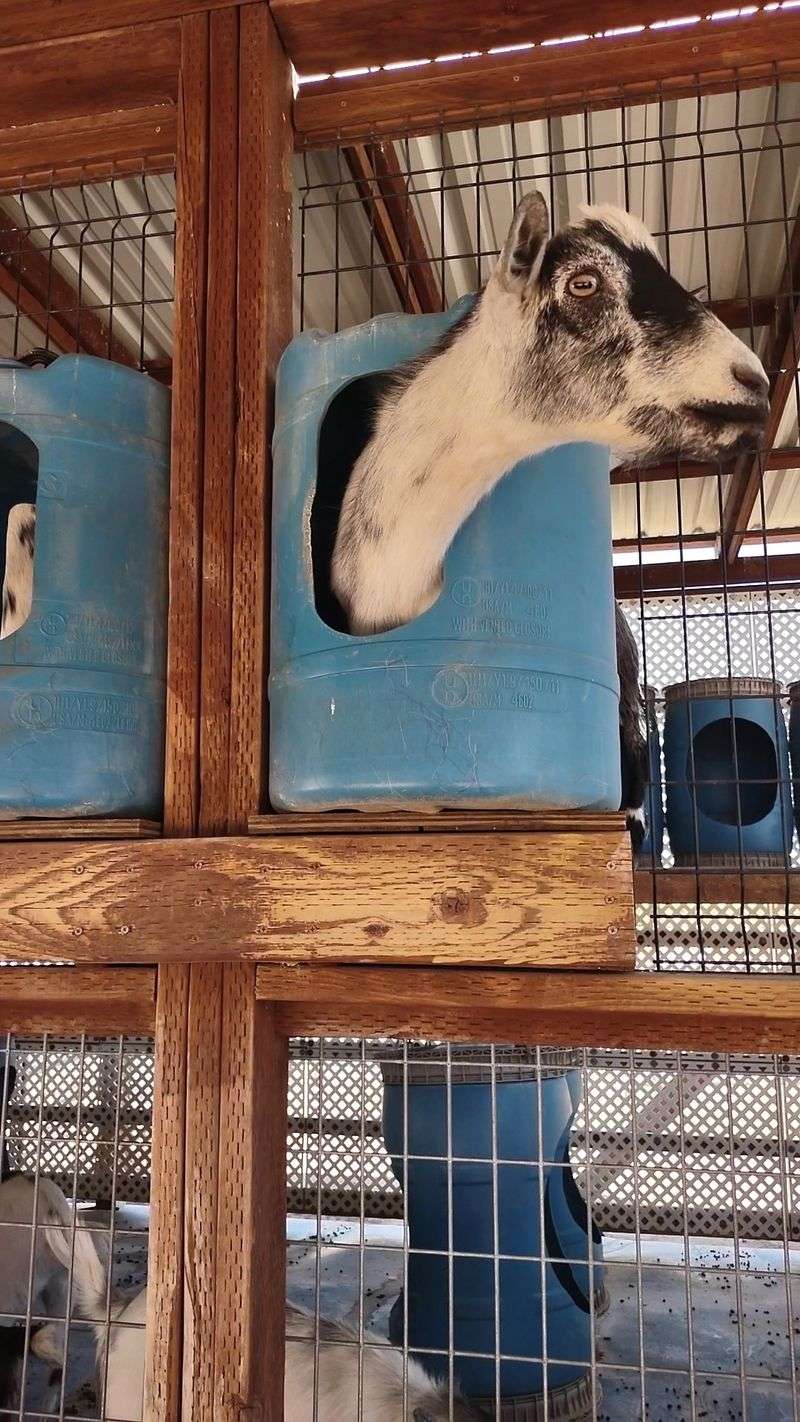
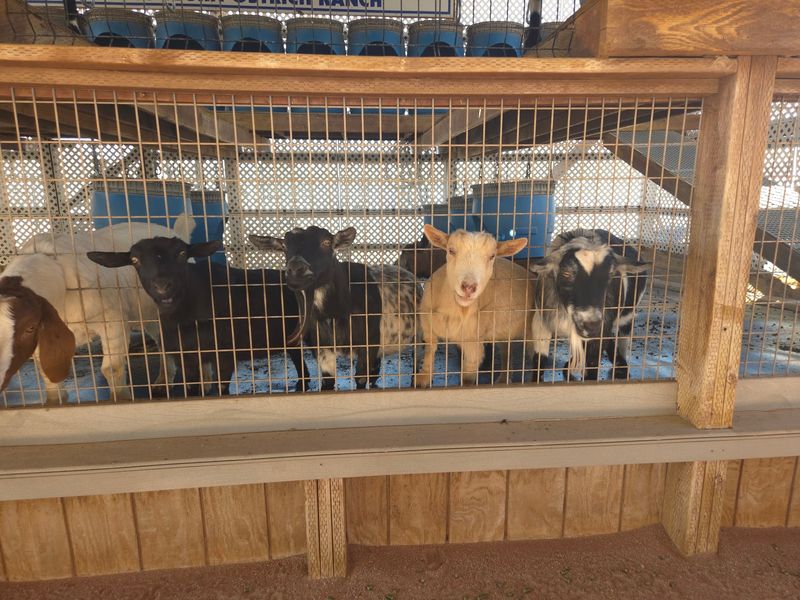
Every good ranch needs a gang, and here it is made up entirely of goats. Nicknamed the Hole in the Wall Gang, these characters poke their heads through openings in a barrier and wait, sometimes not very patiently, for someone to offer a snack.
The setup is pure comedy. Rows of furry faces peek out at once, ears flopping and mouths working, each goat acting like it has not eaten in weeks.
Kids tend to shriek with delight, and adults usually pull out their phones to record the scene.
The ranch keeps several kinds of goats, including Nigerian dwarf goats and Boer goats. The dwarf goats are small and spunky, while the Boer goats are larger and sturdier, so the petting and feeding feel a little different at each pen.
Some visitors name the goats as the best part of their whole trip.
A friendly reminder is worth sharing. Goats are eager eaters, and an excited one may give a small nip to a hand that lingers too long.
Following the posted feeding signs and keeping a close eye on young children makes the encounter smooth and fun for everybody.
Keep a spare handful of feed ready. The gang always wants seconds.
A 5,000-Square-Foot Burst of Tropical Color
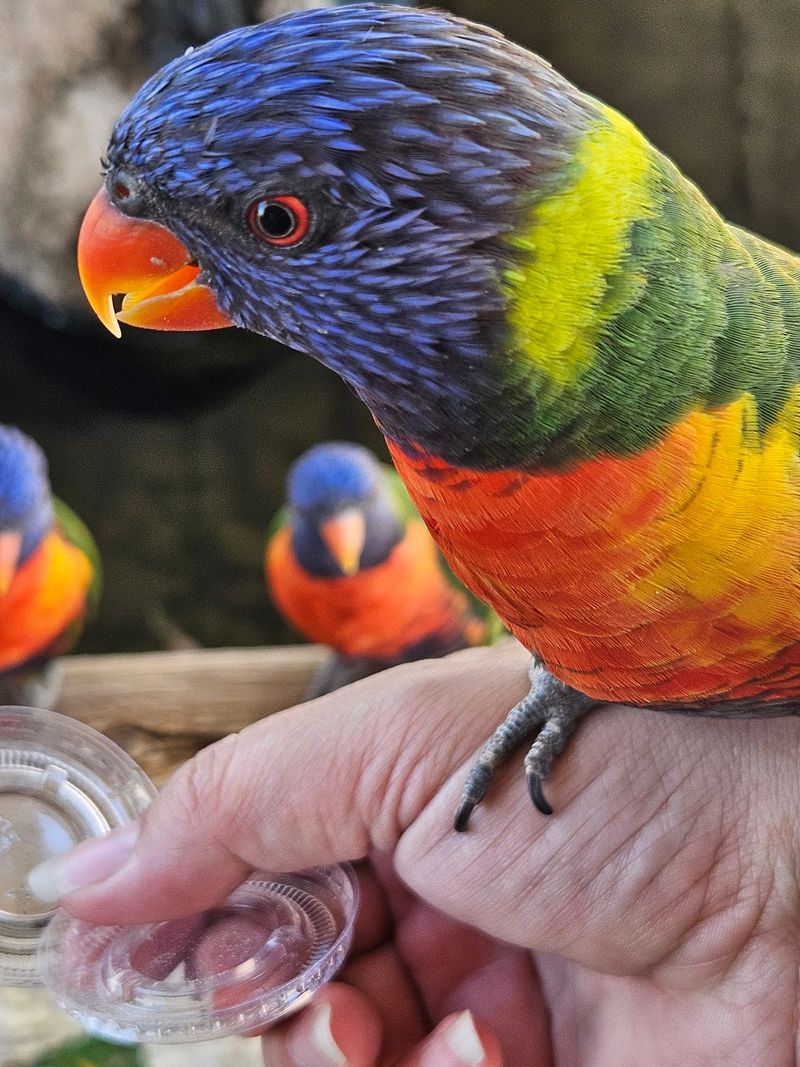
Few things feel less like the Sonoran Desert than a cloud of rainbow-colored birds landing on your shoulders. Inside the Rainbow Lorikeet Forest, that is exactly what happens.
The enclosure covers about 5,000 square feet and has a tropical feel, a sharp contrast to the cactus and creosote outside. Guests carry small cups of nectar, and the lorikeets zip down to drink from them.
Before long, birds may be perched on your hand, your arm or even the top of your head.
The colors are the real showstopper. Brilliant blues, greens, oranges and yellows flash past as the flock moves around the space, making it one of the most photographed corners of the ranch.
Teens and grandparents alike seem to fall under the spell.
Lorikeets are lively and a bit bossy, so expect some pinches from tiny beaks along with the cuddles. Staying calm and holding the cup steady usually keeps things pleasant.
Parakeets live at the ranch too, adding even more chirping and color to the bird experience.
Here is a helpful idea for families. Let each child hold their own nectar cup so everyone gets a turn with the birds.
The shared giggles when a lorikeet lands on someone’s hair are worth the price of admission.
Stingray Bay in the Middle of the Desert
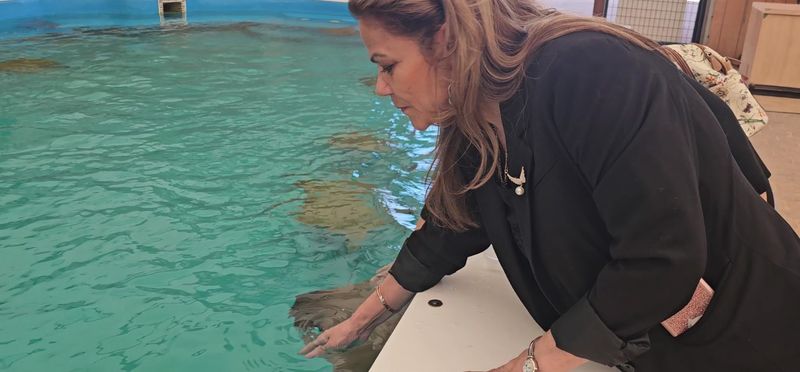
An ocean creature is the last thing anyone expects at an Arizona ostrich ranch. Yet here, in the middle of cactus country, sits Stingray Bay, a dedicated pool where guests can pet and feed stingrays.
The rays glide in slow circles and rise toward the surface when they sense food nearby. Visitors often describe their skin as incredibly smooth, a texture that surprises people who expect something rough or slimy.
Watching one swoop up to snatch a snack from your fingers is a thrill for all ages.
Stingray feeding is one of the most talked-about experiences at the ranch. Many families say it rivals the ostriches as the favorite activity.
It adds a completely unexpected twist to what already felt like a quirky day.
A quick note on cost: standard admission does not include stingray food. The $15 admission option adds it in, while the $12 ticket covers feed for most other animals.
For the small difference, most visitors find the upgrade well worth it.
Staff members stay close by at the pool, offering guidance on how to feed and touch the rays gently. Their calm instructions help nervous first-timers relax, so even hesitant kids usually end up reaching into the water with a smile.
Donkeys, Deer, Bunnies and Other Barnyard Friends
Don’t let the name fool you. The ostriches may get top billing, but the supporting cast is huge and full of personality.
Miniature Sicilian donkeys are crowd favorites, with fuzzy faces and expressions that sometimes look like they are laughing at a private joke. Fallow deer approach with gentle curiosity, while Peking ducks waddle around quacking for attention.
Chickens, sheep and giant tortoises round out the lineup, each with their own station and feeding instructions.
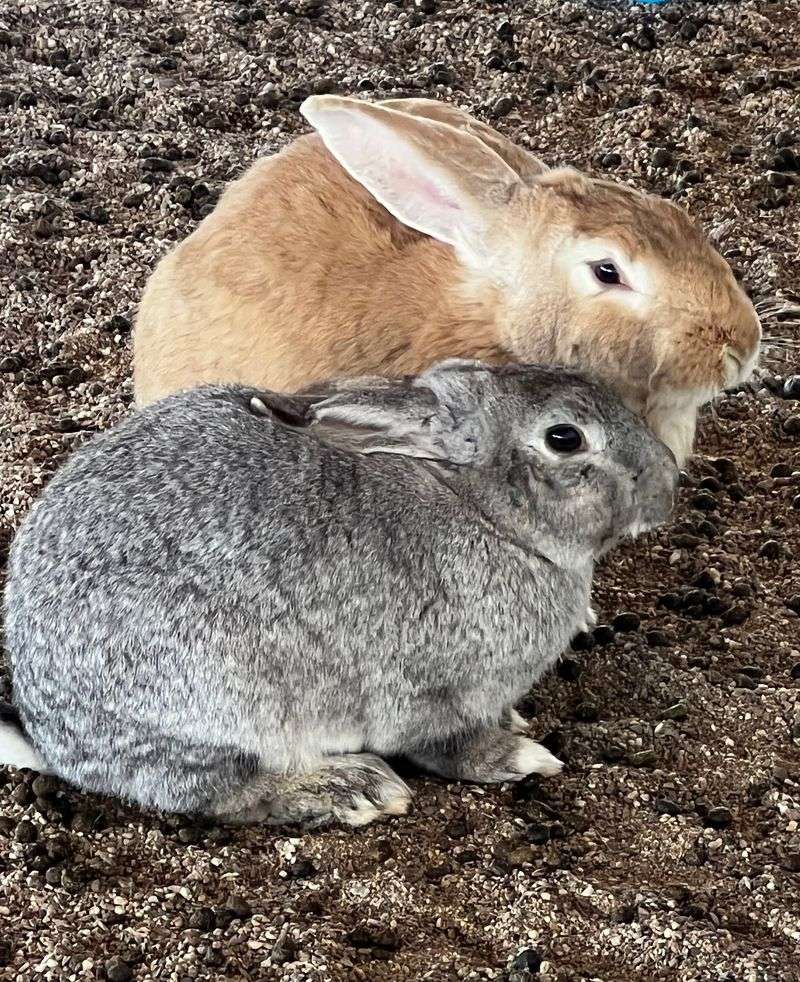
Then there is the sheltered bunny village, a shady spot where rabbits hop around and nibble offered pellets. Families with teens have named it a surprise highlight, proof that cute never goes out of style.
Come later in the day, though, and the bunnies may already be full and a bit sleepy.
The giant tortoises offer a slower pace, which can be a welcome break after the chaos of the ostrich and goat pens. Watching one of these ancient-looking reptiles lumber toward a snack is oddly relaxing.
Visitors regularly notice how many of each kind of animal live on the property. Instead of one lonely goat or a single donkey, you will find whole groups, which makes every stop feel lively.
Bring patience and plenty of feed, because nearly everyone wants a turn.
Monster Truck Tours and the Art of Ostrich Fishin’
Ranch tours usually mean a slow hayride. At this place, they mean climbing aboard a monster truck.
The Monster Truck Ranch Tour runs on most weekends and holidays and requires a separate ticket, priced from about $15 to $25 depending on age. Guides share stories about raising ostriches, the plants and wildlife of the Sonoran Desert, and the history of the ranch.
Drivers are known for being funny, engaging and packed with fun facts.
Along the route, the truck makes stops for some memorable moments. Riders may get to watch a border collie herd ducks and feed ostriches up close in areas regular visitors do not reach.
The real star, though, is an activity called Ostrich Fishin’.
Instead of a hook in a lake, guests cast a fishing-style line toward a crowd of eager birds, turning feeding time into a silly game. Kids often say it is the coolest thing they did all day, and plenty of parents agree.
Spots fill quickly. The tour runs only a few times each day, mostly in the morning, and seating is limited, so buying tickets online ahead of time is a smart move.
Morning rides also help you avoid the hottest part of the day.
Painted Eggs, Feather Dusters and Ostrich Burgers
Souvenir shopping gets delightfully weird here. The gift shop stocks painted ostrich eggs, real feathers, feather dusters, t-shirts and toys, plus something you will not find at most roadside stops: ostrich meat to take home.
Budget-minded families will appreciate the range. Plush animals sit on the pricier end, while little toys and candies keep things affordable for kids who want to pick out their own treasure.
Large families often find that letting each child choose a small goodie still feels reasonable.
Hungry visitors have another reason to plan ahead. A food truck serving ostrich burgers shows up on weekends and during the busiest season, which tends to peak around November.
Its schedule can shift, so calling ahead before a trip is the safest bet if a burger is on your wish list.
Those who have tried the ostrich burger describe it as a fun, one-of-a-kind taste of the ranch. Buying a pack of ostrich meat or an egg to take home lets the adventure continue in your own kitchen.
Picnickers are covered too. Tables around the grounds give families a place to rest, unpack snacks from home and refuel before heading back to the feeding stations for round two.
Clean Grounds, Clear Signs and Well-Cared-For Animals
Organization might not sound exciting, but it makes a big difference at a place with this many hungry mouths. The ranch is laid out in a smooth loop of about fourteen stations, and each one has clear signs showing what to feed and how to do it safely.
Visitors frequently praise the flow of the grounds. You simply move from one station to the next without backtracking or confusion.
Paths are stroller friendly, making it easier for parents with toddlers in tow.
Cleanliness earns plenty of compliments as well. Handwashing stations are scattered throughout the property, a thoughtful touch when your hands have been covered in goat slobber and bird nectar.
The restrooms are known for being clean and well kept.
Animal care is another point people notice. Guests describe the critters as healthy and well fed, with shady spots and fans set up to help them stay comfortable during hot weather.
Some enclosures use barriers that let people interact while protecting both visitors and animals.
That thoughtful design means you can relax and enjoy the moment. With no strict time limit on the feeding loop, families can linger at favorite stations and take as many photos as they like.
A Lighthearted Stop for Every Age
Hokey in the best possible way. That is how longtime fans often sum up the vibe, and it fits perfectly.
The atmosphere is relaxed, silly and warm. Nobody takes things too seriously, from the goats poking their heads through the wall to the ostriches bobbing for snacks.
It feels like an old-fashioned roadside attraction that has aged gracefully rather than a polished theme park.
Families with little ones are an obvious match, and toddlers as young as two seem to have a blast. Yet teens, parents and grandparents enjoy it just as much.
Groups spanning three generations often visit together, and everyone finds a favorite animal.
Road-trippers love it as a pit stop. Travelers heading between the Grand Canyon and Tucson, or on the way to Tombstone, often pull off for a couple of hours to stretch their legs.
Arizona locals looking for an easy, affordable day trip from Phoenix will find it fits the bill nicely.
Couples and solo visitors fit in too. Adults without kids regularly report enjoying every station, proving you do not need a child as an excuse to feed a donkey.
If you appreciate quirky, hands-on fun with a desert mountain view, this ranch will probably win you over.
Hours, Ticket Prices and Beating the Heat
Planning ahead pays off here, especially in summer. During warmer months, generally May through September, the ranch is typically open Friday through Monday from 8 a.m. to 2 p.m. and closed Tuesday through Thursday.
In the cooler season, October through April, hours and days often expand, sometimes to daily openings from 9 a.m. to 5 p.m. Admission sales usually stop about 30 minutes before closing, so checking the current schedule before you go is wise.
General admission for guests 6 and older is $12 and includes feed for most animals. The $15 option adds stingray food.
Children 5 and under get in free, with an optional $6 feed purchase, and extra feed cups have been available at around three for $5.
Most visitors spend about an hour and a half to two hours. Arriving close to closing time can feel rushed, so aim for earlier in the day.
Heat is the biggest factor. Shade is limited, so pack sunscreen, hats and plenty of water.
Water bottles, backpacks and snacks are allowed, and picnic tables offer a break. Getting there is easy: take Interstate 10 to Exit 219, between Phoenix and Tucson.
Worth the Exit Off Interstate 10
Plenty of attractions cost a fortune and still leave you shrugging. This little desert ranch goes the other direction, packing a surprising amount of joy into a modest ticket price.
For about the cost of a casual lunch, you get to hand-feed a flock of ostriches, get mobbed by rainbow lorikeets, touch a stingray, and meet goats, donkeys, deer and tortoises. Add a monster truck ride and an ostrich burger on the right weekend, and the day becomes a story your family will retell for years.
It is not fancy, and it does not try to be. Expect dust, sunshine and a few enthusiastic pecks along the way.
What you get in return is genuine, hands-on fun backed by a friendly family operation that has been welcoming guests since 1999.
Plan your visit for a cool morning, bring water and sunscreen, and give yourself enough time to enjoy every station. Grab a painted ostrich egg or feather duster on the way out as a quirky reminder.
Arizona has no shortage of grand scenery, but it also rewards anyone willing to pull off the highway for something unexpected. Beneath Picacho Peak, a hungry flock is waiting for its next snack, and you might just be the one holding the cup.