
North America’s Tallest Dunes Rise From An Unexpected Corner Of Southern Colorado
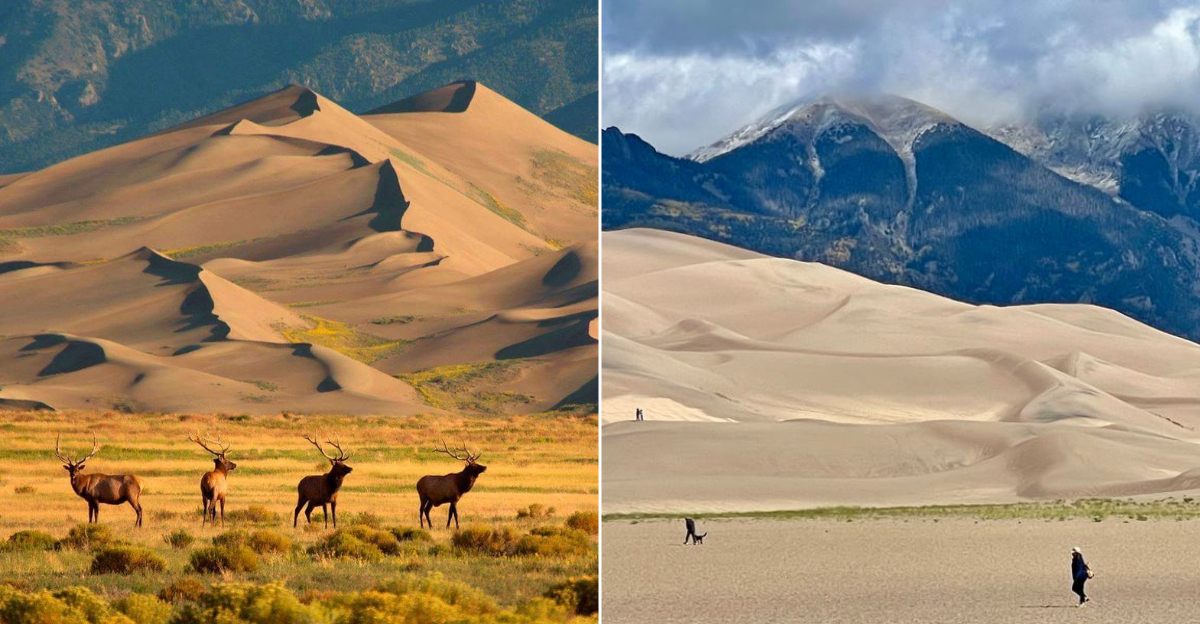
Some landscapes impress you slowly. This one rearranges your sense of scale before you even leave the car.
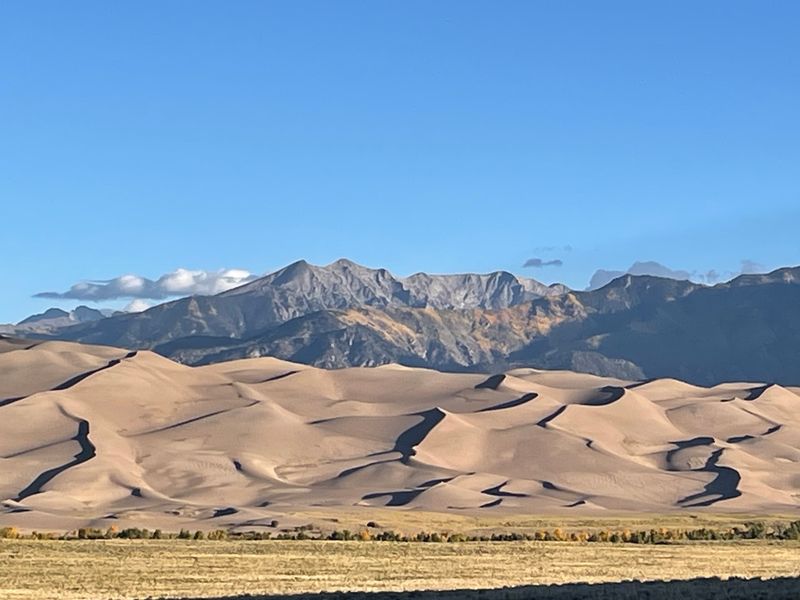
Across a broad valley in southern Colorado, enormous dunes rise against sharp mountain peaks, creating a scene that looks almost too mismatched to be real. Sand, alpine forests, seasonal water, dark skies, and open grasslands all share the same horizon, which is exactly why the place sticks with you.
You can climb until every step feels personal, race down on a sandboard, splash through a creek when conditions cooperate, or simply stand there wondering how all of it ended up together. That contrast feels especially wild even by Colorado standards.
The best part is that the day can be as easy or ambitious as you want. Come for one huge view, stay for the geology, the stars, and the strange satisfaction of finding sand in your shoes hours later back at home.
A Sand Sea Below The Sangre De Cristo Mountains
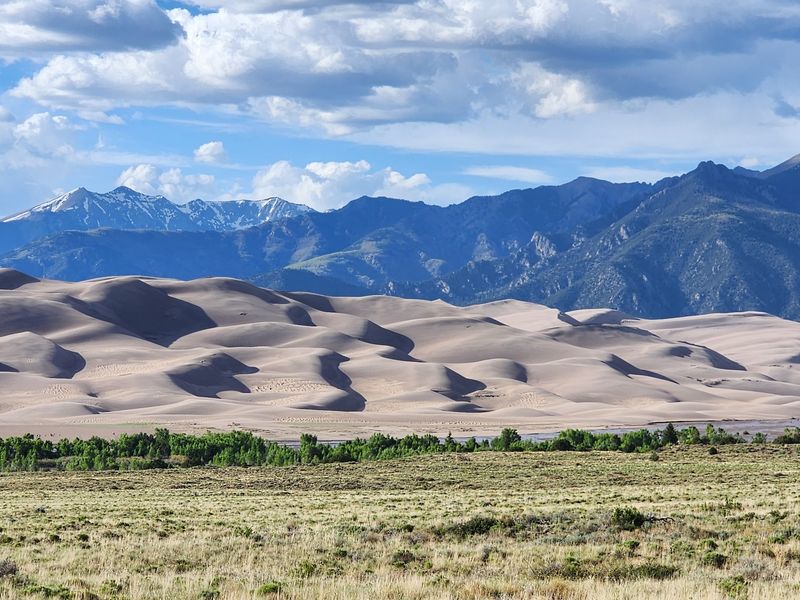
The first surprise is not just that the dunes are tall. It is where they are.
Great Sand Dunes National Park & Preserve sits in the San Luis Valley of southern Colorado, at 11999 State Highway 150, Mosca, CO 81146, where a broad valley floor meets the steep Sangre de Cristo Mountains.
That pairing gives the park its odd, wonderful tension. Sand usually makes people think of coastlines or deserts stretching flat to the horizon.
Here, the main dunefield rises beside alpine country, wetlands, grasslands, and forests, which feels like nature sorted the filing cabinet in a hurry.
The National Park Service protects both the national park and the preserve, covering a large landscape of dunes, mountains, and connected ecosystems. The main dunefield itself covers about 30 square miles, enough sand to make casual shoe choices suddenly feel like a strategic decision.
For visitors, the appeal is immediate and easy to understand. Great Sand Dunes National Park & Preserve does not require a long explanation before it becomes interesting.
You look at the dunes, look at the mountains, and the day has a plot.
Star Dune Gives The Park Its Tallest Claim
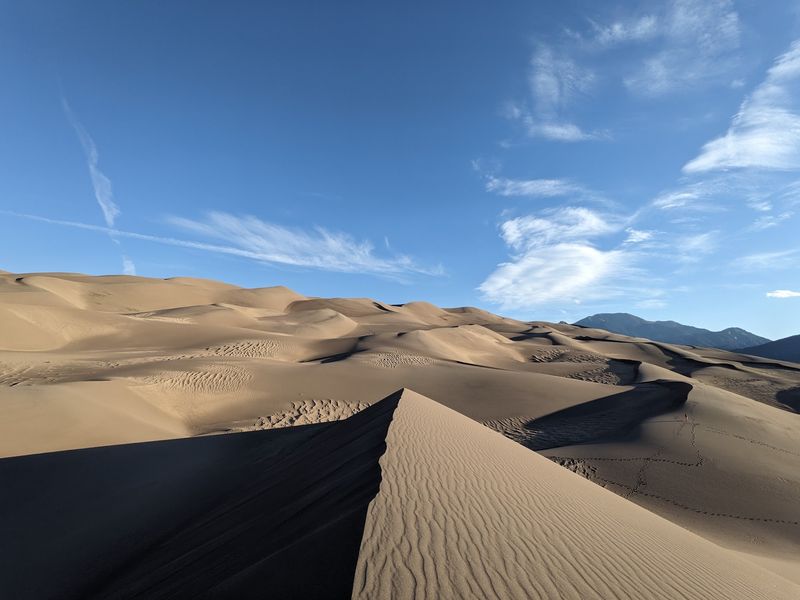
Star Dune is the headline grabber, and for once the headline does not need much polishing. Measured from base to crest, it rises about 750 feet, making it the tallest dune in North America according to the National Park Service.
That number sounds tidy on a screen. On sand, it becomes a different conversation.
Climbing a dune is not like walking up a firm trail, because each step may politely give back some of the progress you just made. Sand has a quiet talent for negotiation.
Great Sand Dunes National Park & Preserve also includes High Dune on First Ridge, a commonly visited high point that gives many people a strong view without requiring them to reach Star Dune. The park does not mark one fixed trail across the sand, so routes can vary depending on energy, time, and common sense.
Practical planning matters here. Bring water, sun protection, and footwear that can handle heat and sand.
Summer sand surface temperatures can become extremely hot, so early or cooler parts of the day are often more sensible for longer dune walks.
Wind And Water Built The Giant Piles
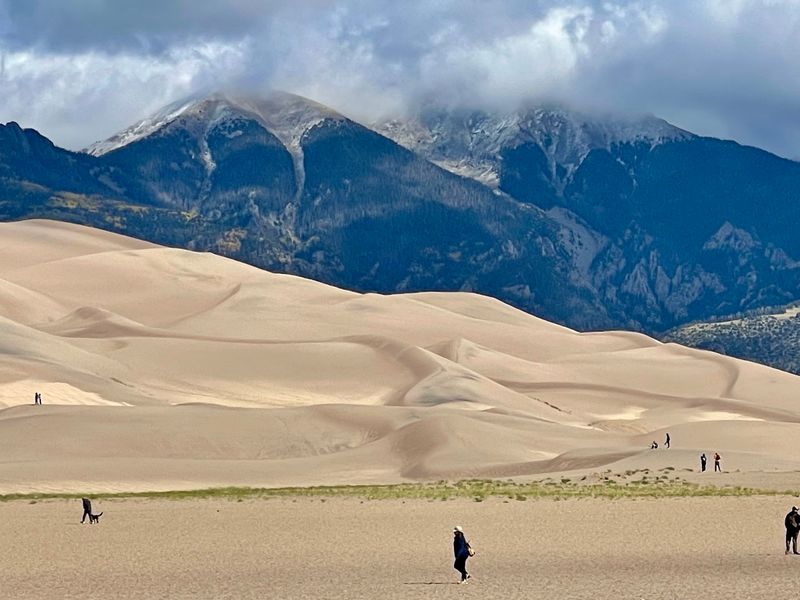
Those huge dunes are not random heaps, even if they look like a giant hourglass had a rough afternoon. Their formation depends on wind, water, sand supply, and the shape of the surrounding mountains.
Great Sand Dunes National Park & Preserve is a working geology lesson, only with better scenery than most classroom posters.
Sand grains have been carried from surrounding mountain and valley sources, then pushed by prevailing winds toward the Sangre de Cristo Mountains. When stronger storm winds blow back from the mountains, they help pile the sand higher.
Creeks also play a role by carrying sand around the system and returning it to the valley floor.
This cycle helps explain why the dunes remain active rather than frozen in place. They shift, build, slump, and change over time, though not in a way that visitors need to treat like a moving sidewalk.
Understanding that process makes the view more interesting. The dunes are not only large; they are evidence of forces still at work in southern Colorado.
The park lets travelers see geology doing its slow job in public.
Medano Creek Turns Sand Into A Seasonal Playground
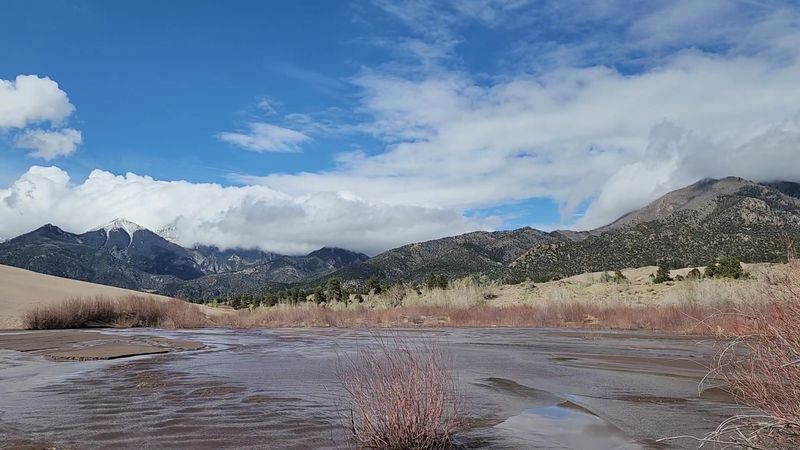
Medano Creek is one of the park’s best curveballs. At the base of a huge dunefield, shallow water can spread across the sand in spring and early summer, depending on snowmelt and seasonal conditions.
It is not a guaranteed feature every month, which is part of its personality.
When flowing, the creek creates a rare scene: children splashing, adults reconsidering their footwear, and dunes rising just beyond the water. The National Park Service notes that Medano Creek typically reaches peak flow in late spring or early summer, then often declines as the season dries out.
Great Sand Dunes National Park & Preserve is especially manageable when visitors plan around that seasonal rhythm. Families may find the creek area easier for short play than a long climb into deeper sand.
Couples and solo travelers can use it as a gentle starting point before deciding how ambitious the day should become.
A small planning cue helps: check current creek conditions before building the whole outing around water. Nobody wants to promise a splash day and arrive to find a sandy reminder that nature does not read your calendar invite.
Sandboarding Adds A Little Controlled Nonsense
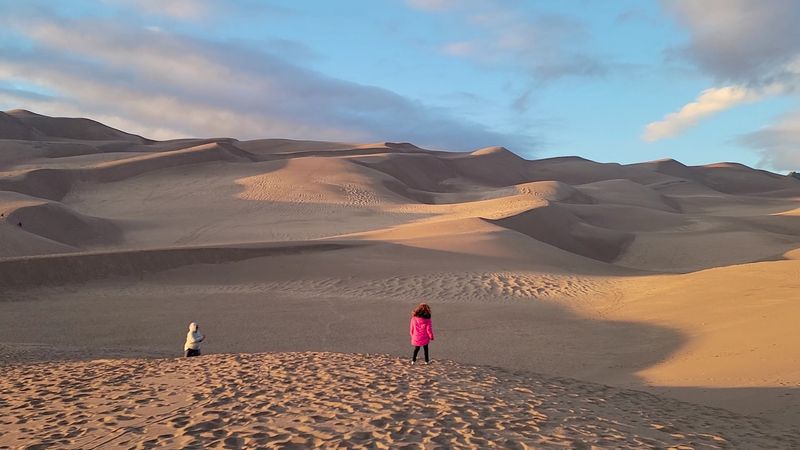
Sandboarding and sand sledding give the park a playful streak. Great Sand Dunes National Park & Preserve allows these activities on the dunes, but there is one practical catch: the park does not rent boards or sleds inside the visitor center.
Rentals are available from businesses outside the park, so planning ahead keeps the fun from becoming a parking lot discussion.
Special sand boards and sand sleds work better than snow gear because they are made for sliding on dry sand. Wax is usually part of the process, which sounds fussy until gravity refuses to cooperate.
Then wax seems less like a detail and more like diplomacy.
The activity suits visitors who want more than a scenic look but do not want a technical outdoor sport. Climbing up still takes effort, and sliding down still calls for judgment.
Start on smaller slopes, watch your speed, and avoid areas where other people are walking below.
For families with older children, couples who enjoy mild absurdity, and road trippers carrying spare socks, sand sledding can become the story everyone retells later, usually while finding sand in impossible places.
The Visitor Center Gives The Sand Some Context
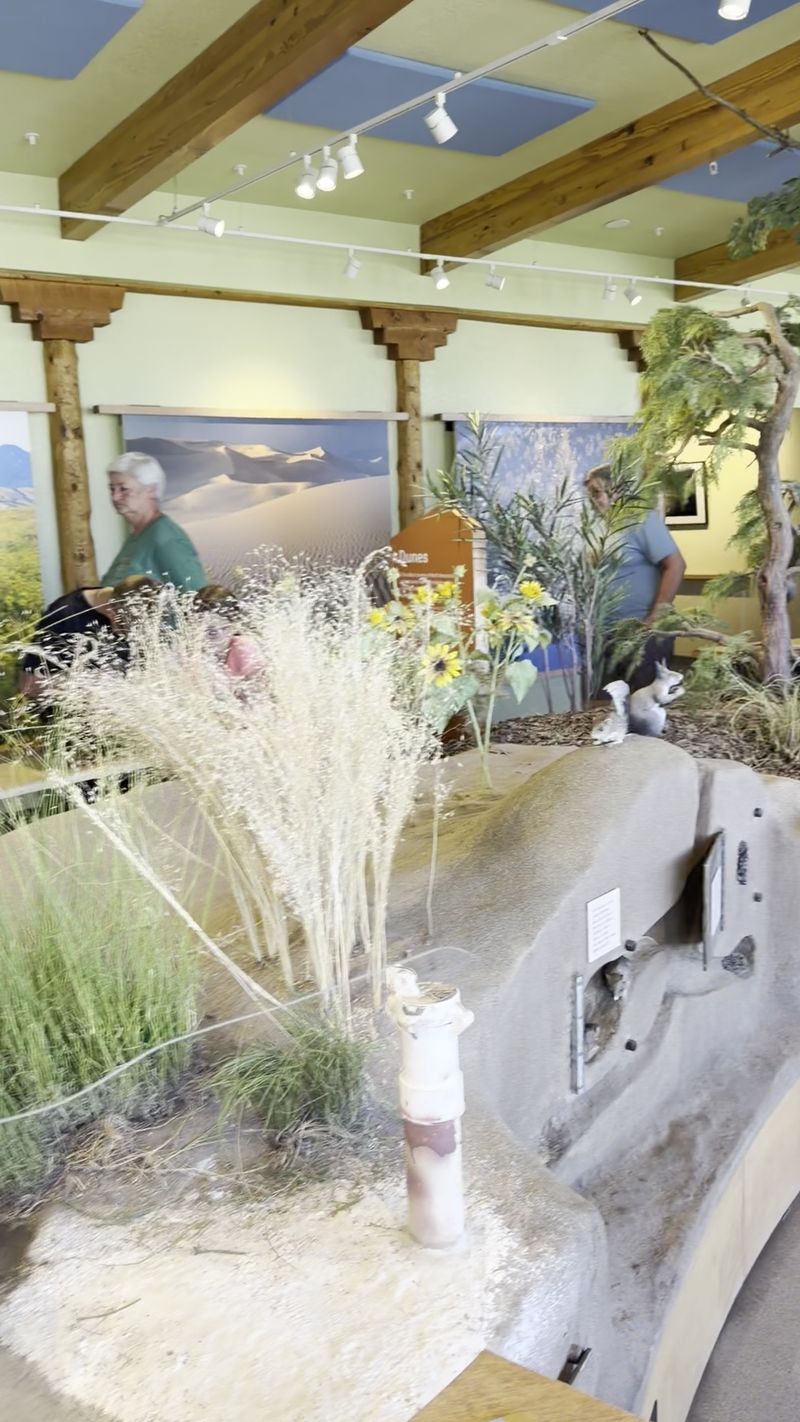
The visitor center is the sensible first stop, especially for anyone who prefers not to interpret an entire landscape by squinting at it from the parking area. At Great Sand Dunes National Park & Preserve, exhibits explain dune formation, park habitats, weather concerns, and current conditions in plain terms.
That context helps because the park contains more than the famous sand. The broader landscape includes grasslands, wetlands, forests, alpine areas, and the preserve in the mountains above the dunes.
Without a little orientation, it is easy to treat the place as one enormous sandbox and miss the larger system around it.
Rangers and posted information can also help visitors make better choices about heat, wind, creek flow, and trail options. Conditions matter here.
Sand can become hot, storms can change plans, and walking farther into the dunefield takes more energy than the distance may suggest.
For weekend planners, the visitor center adds decision relief. Stop in, get the day’s facts, then choose a realistic outing.
That might mean a short dune walk, a creek visit when water is present, or a longer hike for people who packed more than optimism.
The Park Is Open All Day And All Night
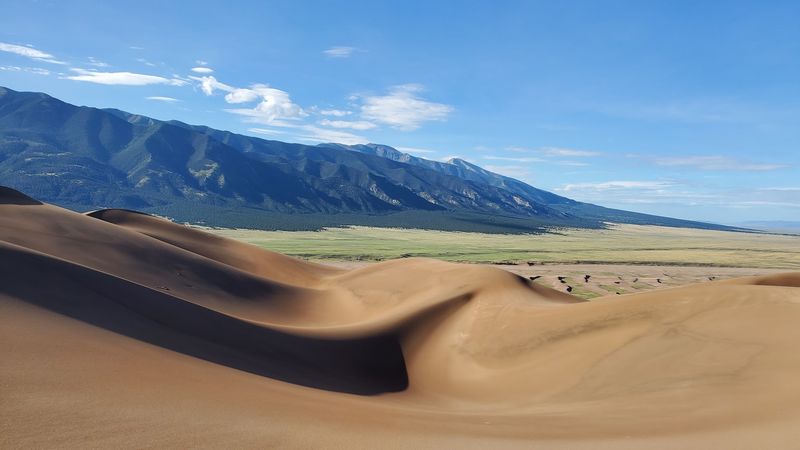
Great Sand Dunes National Park & Preserve is generally open 24 hours a day, year round, which gives travelers unusual flexibility. Not every facility operates at every hour, of course.
Nature may keep a broad schedule, but visitor centers still have doors, staff, and clocks.
The round the clock access matters because the dunes behave differently depending on time of day and season. In warm months, early morning or evening can be more comfortable for walking on sand.
During colder seasons, conditions may be quieter and more demanding, so current park alerts and weather forecasts deserve attention.
The park is also certified as an International Dark Sky Park, a designation that recognizes the quality of its night sky and efforts to reduce light pollution. For travelers used to city glow, the idea that darkness itself can be a feature may feel almost old fashioned.
Night visits require basic care: bring lights with settings that protect night vision, know where you are going, and do not underestimate temperature changes. A simple Saturday detour can stretch into evening here, but it should still be planned like an outdoor visit, not a casual stroll through a mall.
Trails Reach Beyond The Main Dunefield
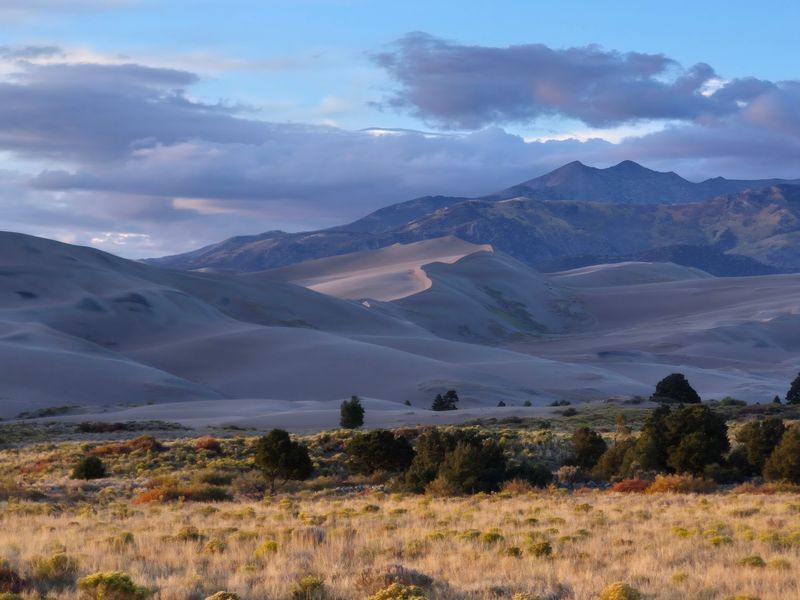
The dunes get the fame, but the park and preserve include more routes than a first glance suggests. Great Sand Dunes National Park & Preserve offers access to dune walking, front country trails, backcountry routes, and mountain environments within the larger protected area.
Some visitors stay close to the main dunefield, where there are no maintained trails across the sand and people choose their own path. Others look toward designated trails in surrounding habitats, where the footing and scenery change.
The preserve protects higher country in the Sangre de Cristo Mountains, adding a completely different scale to the same public land unit.
That variety helps different travelers shape the day. A solo visitor may appreciate the freedom of a self guided dune wander.
A family may choose a shorter outing near the base. More experienced hikers can research longer routes before arriving, then match ambition to weather, daylight, and fitness.
Maps matter. Sand ridges can make distances deceptive, and mountain routes require normal backcountry judgment.
The useful thing is choice. You can treat the park as a short stop with a big view, or as a deeper outdoor plan that asks for preparation and better snacks.
Camping Keeps The Landscape Close
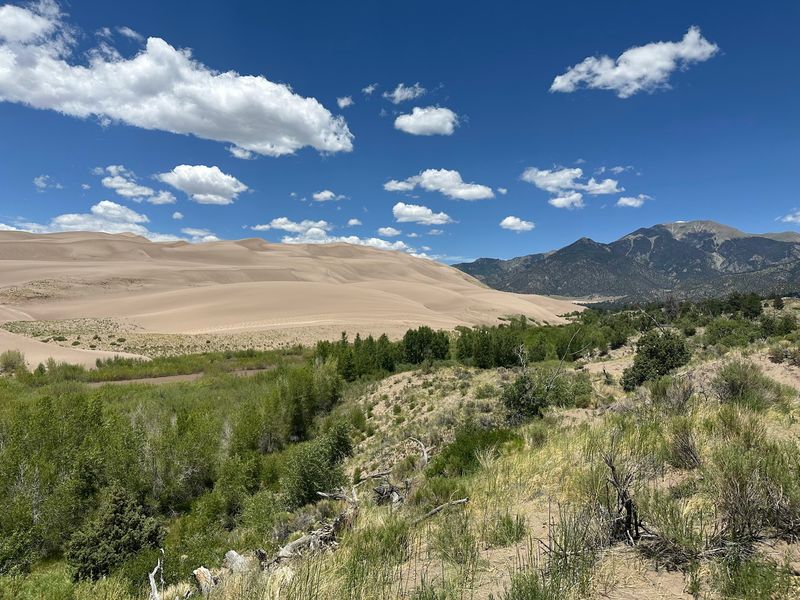
For travelers who want more than a quick look, camping can keep the dunes in the day’s orbit without turning the visit into a race. The park’s Piñon Flats Campground operates seasonally and is located within the national park, with reservations handled through the federal recreation system.
Camping changes the rhythm. Instead of driving in, taking photos, and leaving with sandy floor mats, visitors can plan morning and evening time around the dunes, when temperatures and light may be more forgiving.
That does not mean effortless. It still means packing water, layers, food, and a realistic sense of outdoor comfort.
Great Sand Dunes National Park & Preserve also has backcountry options, including permits for certain overnight areas. Those plans require more research because conditions, access, and rules matter.
The park is not a place to improvise overnight logistics from the front seat while someone else looks for a signal.
For couples, families, and weekend travelers, front country camping can make the visit feel less rushed. It also gives the landscape time to register.
The dunes are dramatic at first glance, but staying nearby lets the setting become more than a single view.
Wildlife And Habitats Share The Same Address
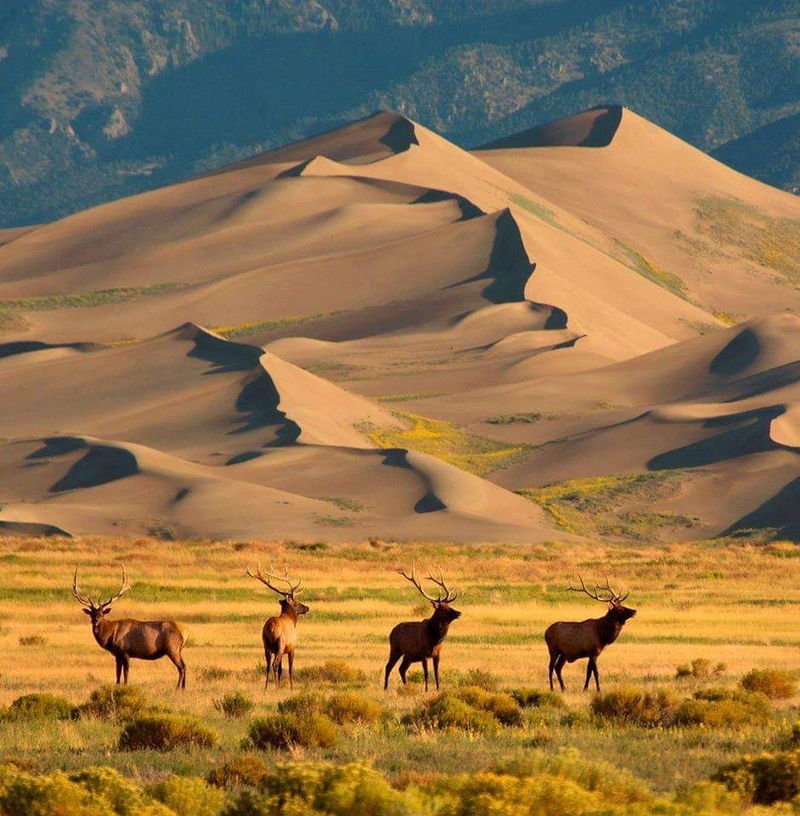
A park famous for sand might seem simple, but Great Sand Dunes National Park & Preserve is more like a layered map. The protected area includes dunes, grasslands, shrublands, wetlands, montane forests, alpine tundra, and lakes in higher terrain.
That range is not decorative background; it is central to why the place was expanded from a national monument into a national park and preserve.
Different habitats support different plants and animals, and the National Park Service manages the area as a connected natural system. Visitors may arrive for the dunes, but the surrounding wetlands and mountain environments help explain how the sand can exist where it does.
Water is not the opposite of the dunes here. It is part of the story.
Respecting that variety keeps a visit simple and responsible. Stay on designated routes where they exist, follow pet rules, pack out trash, and avoid treating fragile areas as empty space.
The sand may look tough, but nearby plants and wet places can be sensitive.
This is where the park rewards curious adults as much as energetic children. The main view is obvious.
The ecological puzzle behind it gives the outing a second layer.
Mosca Makes The Map Feel Honest
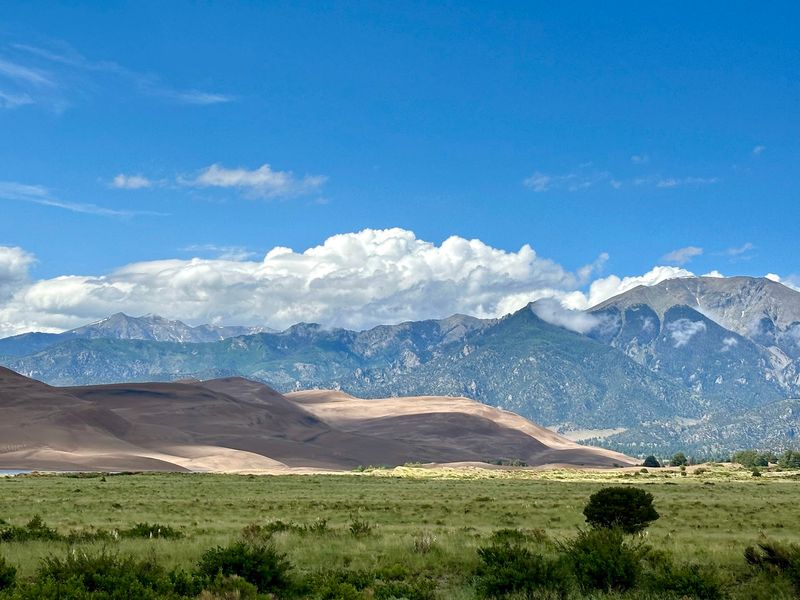
Mosca is the mailing address, and that detail helps set expectations. Great Sand Dunes National Park & Preserve is not folded into a dense resort strip or a downtown entertainment district.
The approach through the San Luis Valley is part of the orientation, with open country, long views, and mountains giving the trip a sense of scale.
The complete destination address, 11999 State Highway 150, Mosca, CO 81146, is worth saving before you go, since rural travel works better when navigation is settled early. Cell service can vary in remote areas, and nobody improves a vacation by arguing with a spinning map icon.
Road trippers should think practically: fuel up when it makes sense, bring water and snacks, and check current park alerts before committing to the day. The park is accessible by vehicle, but services in the wider area are more limited than in larger Colorado travel hubs.
That relative simplicity is part of the appeal. A visit here feels focused because the main event is the landscape, not a long list of side errands.
The plan can be as clean as this: arrive, orient yourself, choose a dune or creek outing, and leave room for the sky to do some work.
The Memory Is Bigger Than The Sand
The lasting value of Great Sand Dunes National Park & Preserve is not only that it holds a record. Yes, North America’s tallest dunes rise here, and that fact is useful for trivia, travel planning, and mildly impressing a car full of people who thought they were just going to see sand.
What stays with many visitors is the combination: a huge dunefield pressed against mountains, seasonal creek water at the base, dark skies overhead, and enough room to choose between a short look and a serious outing. Colorado has many famous landscapes, but this one rearranges expectations quickly.
The park works for different kinds of travelers because it gives clear choices. Families can keep the day modest.
Couples can linger over the view. Solo visitors can wander with a map and a plan.
Weekend travelers can build a focused trip without pretending they are leading an expedition.
Good preparation makes the visit better, not more complicated. Check conditions, bring water, respect heat and wind, and give the sand more credit than it appears to need.
Great Sand Dunes National Park & Preserve is strange, direct, and oddly practical. Tell your friend to pack shoes that forgive bad decisions.