
11 North Carolina Foods Only Locals Truly Appreciate
The flavors of North Carolina extend well past its famous barbecue pits. Across the state, humble ingredients are transformed into dishes that speak of heritage and place.
Coastal towns preserve traditions tied to the sea, while mountain communities pass down recipes as rich as the landscapes they come from.
Taken together, these culinary gems reveal the depth and diversity of a food culture that’s as authentic as it is enduring.
1. Lexington-Style Barbecue
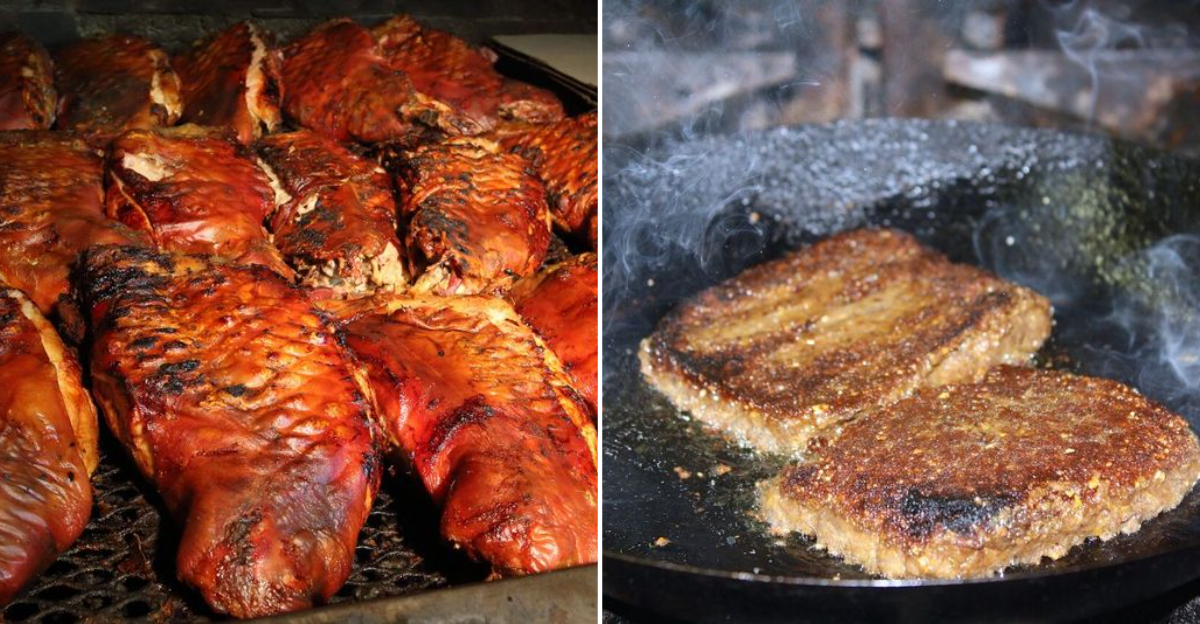
The Piedmont region proudly serves pork shoulders (not whole hog) smoked over hardwood coals until meltingly tender. What sets it apart is the signature reddish-brown dip, a sauce mixing vinegar with a touch of ketchup.
Served chopped or sliced with distinctive red slaw on the side, this style has sparked friendly rivalries with eastern NC for decades. True devotees call it simply ‘barbecue’ with no qualifiers needed.
2. Red Slaw
Forget everything you know about coleslaw. This Piedmont creation swaps mayonnaise for ketchup and vinegar, transforming humble cabbage into a zingy, crimson side dish.
Finely chopped cabbage gets tossed with the same vinegar-ketchup mixture used in Lexington barbecue. The tangy result cuts through fatty pork perfectly, creating a harmony that’s greater than the sum of its parts.
You’ll find it alongside barbecue trays and hot dogs throughout the Piedmont region.
3. Livermush
A breakfast revelation that divides first-timers into lovers or haters. This western NC specialty combines pork liver, head meat, and cornmeal into a sliceable loaf that’s fried until crispy on the outside.
Growing up near Shelby, we had livermush at least twice weekly. My dad would slice it thin, fry it crisp, and serve it on white bread with a smear of mustard and slice of tomato.
The savory, mineral flavor carries notes of sage and black pepper.
4. Chicken and Pastry
Not to be confused with chicken and dumplings, this eastern NC comfort food features flat, sliced dough strips simmered in rich chicken broth until tender. The pastry absorbs the savory liquid, creating something between a soup and stew.
Church suppers across the Coastal Plain wouldn’t be complete without massive pots of this simple dish. The beauty lies in its humble ingredients – just chicken, flour, broth, salt and pepper.
I watched my grandmother roll out pastry dough paper-thin before cutting it into rectangles that transformed the broth.
5. Surry County Sonker
This hyper-local dessert from the foothills remains unknown to most North Carolinians outside Surry County.
Part cobbler, part deep-dish pie, sonker typically features seasonal fruits like blackberries or sweet potatoes in a sweet, soupy base.
What makes sonker unique is its loose, rustic construction and the addition of “dip” – a sweet, milky sauce poured over the top while still hot. The dessert’s odd name supposedly comes from a Scottish word for “straw seat.”
Local families guard recipes passed through generations.
6. Calabash-Style Seafood
The tiny fishing village of Calabash birthed a seafood style now famous throughout the Carolinas. Fresh-caught shrimp, flounder, and oysters get a light dusting of seasoned cornmeal and flour before quick-frying to golden perfection.
What makes it special is what it’s not – no heavy batter to mask the delicate seafood flavor. The coating barely whispers around each morsel, letting the ocean-fresh taste shine through.
Served with coleslaw and hushpuppies, this coastal treasure draws visitors from hundreds of miles away.
7. Shrimp Burger
Crystal Coast locals know that beach days require this humble masterpiece: a soft bun piled high with small fried shrimp, tangy tartar sauce, and coleslaw. Unlike fancy restaurant fare, this sandwich celebrates simplicity.
I spent childhood summers waiting in line at El’s Drive-In, sand still clinging to my feet. The anticipation made that first bite – crispy shrimp against soft bread – even more magical.
While visitors chase trendy seafood towers, locals know this unassuming sandwich captures the essence of coastal Carolina.
8. Carolina-Style Hot Dogs and Burgers
Ask for a hot dog “all the way” in North Carolina and you’ll receive a specific quartet of toppings: meaty chili (no beans), creamy coleslaw, diced onions, and yellow mustard. This signature combination creates a perfect storm of flavors and textures.
The tradition crosses county lines and unites the state in delicious harmony. From gas station grills to historic drive-ins, this topping style appears on both dogs and burgers.
The messy, napkin-requiring creation delivers savory, tangy, crunchy, and sweet notes in each magnificent bite.
9. Bright Leaf Red Hot Dogs
The shocking crimson color startles visitors, but eastern North Carolinians know summer isn’t complete without these distinctive franks. Carolina Packers has produced these beef-and-pork dogs in Smithfield since 1941, creating a regional icon.
The vivid red casing snaps satisfyingly with each bite, revealing a uniquely spiced interior. Baseball games, cookouts, and roadside stands across eastern counties serve them “all the way” with chili, slaw, onions, and mustard.
Some newcomers question the color, but locals know: it’s not a proper NC cookout without these red beauties.
10. Moravian Baked Goods
Winston-Salem’s Moravian settlers brought baking traditions that remain beloved centuries later. Their legendary sugar cake features a yeasted potato dough with deep dimples filled with melted butter and brown sugar – simple yet transcendent.
Even more iconic are paper-thin spice cookies, rolled so impossibly thin you can read a newspaper through them. Ginger, clove, and molasses create the distinctive flavor that’s strongest during holiday seasons.
Old Salem’s historic Winkler Bakery still produces these treats using methods dating to the 1800s, drawing visitors year-round.
11. Muscadine Grape Hull Pie
North Carolina’s state fruit transforms into an aromatic pie that captures late summer’s essence. Unlike conventional grape pies, this version specifically uses the thick, flavorful skins (hulls) of native muscadines and scuppernongs.
The process requires patience – separating pulp from hulls, cooking each separately, then recombining with sugar into a jammy filling. The result delivers complex floral notes impossible to achieve with ordinary grapes.
Family reunions and church homecomings throughout eastern counties showcase this dessert when the vines hang heavy with bronze and purple fruit.