
8 North Carolina Islands Locals Say Have Changed Too Much Over The Years
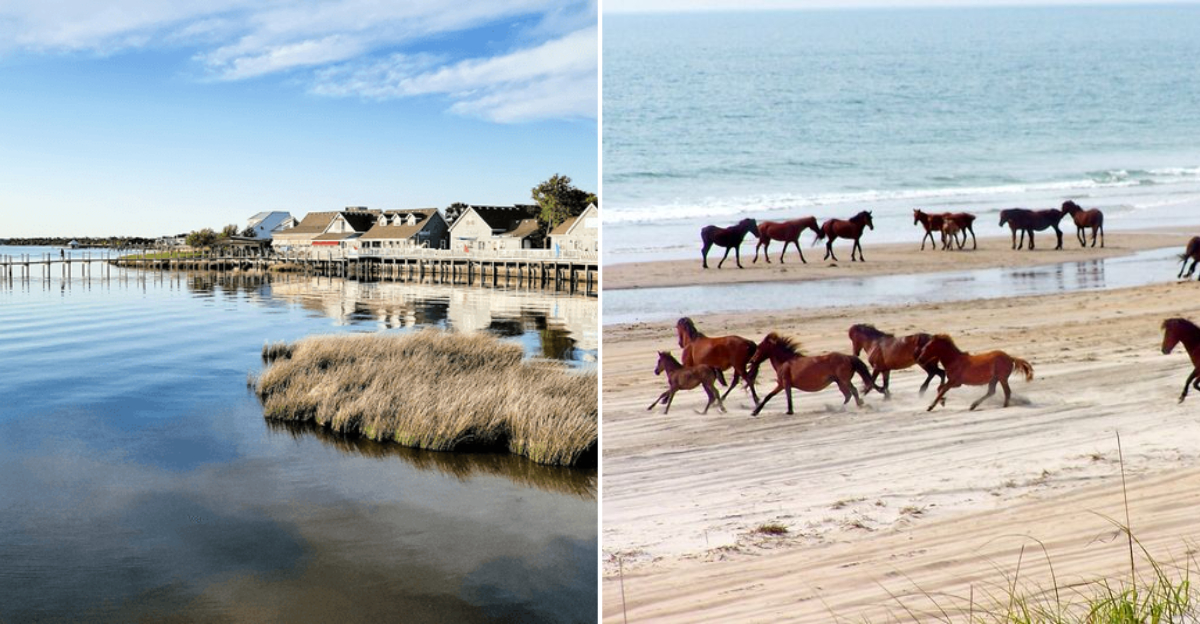
North Carolina’s barrier islands have always danced with the ocean, but the past few decades have brought changes that go far beyond natural shifts.
Locals who grew up on these sandy strips talk about a different time – slower ferries, fewer high-rises, and roads that sometimes just disappeared under storm surge.
Today, new bridges shorten commutes, beach nourishment projects reshape shorelines, and vacation crowds arrive year-round.
The islands are still beautiful, but many old-timers say the quiet, wild character they once knew has faded into something busier and more managed.
1. Ocracoke Island (Hyde County)
Ferries and storms define life here, and even the ferry scene has shifted: the seasonal Ocracoke Express passenger ferry just wrapped its 7th season in 2025, a symbol of rising visitation to a still-remote village.
Meanwhile, overwash at the island’s north end keeps threatening NC 12 access, with new preservation studies underway.
Locals remember when tourist traffic was a trickle, not a summer flood. The village charm remains, but the rhythm has quickened.
More visitors mean more shops, more rentals, and less of the unhurried pace that once made Ocracoke feel like a secret hideaway only islanders truly understood.
2. Hatteras Island (Dare County)
Erosion and surf have redrawn this long, skinny island; entire houses in Rodanthe have collapsed in recent years, and NC 12 now leaps the worst hotspots on the 2.4-mile Rodanthe Jug Handle Bridge, opened in 2022.
The fixes make travel safer, but old-timers miss the simpler, sand-road feel.
Watching homes tumble into the Atlantic is heartbreaking for families who spent summers in those cottages.
The new bridge bypasses trouble zones but also bypasses the gritty authenticity of driving right along the surf line.
Progress has a price, and here it’s measured in lost dunes and vanished driveways.
3. Corolla & Carova (Currituck Banks)
There was no paved road to Corolla until 1984; once NC 12 extended north, development boomed, and the once-sleepy village became a prime vacation corridor.
Today, the off-road beaches still hold the Corolla wild horses, but the area around the paved terminus is a far busier scene than decades ago.
Before asphalt arrived, reaching Corolla meant four-wheel drive and a sense of adventure. Now mega-mansions line the highway, and summer traffic crawls past souvenir shops.
The horses still roam Carova’s sand tracks, offering a glimpse of the untamed Banks that used to stretch for miles.
4. Duck (Northern Outer Banks)
Incorporated in 2002, Duck leaned into walkable, upscale village life: a nearly mile-long soundside boardwalk opened in 2012, and beach-nourishment campaigns in 2017 and 2023 rebuilt oceanfront width.
It’s still lovely, just less of the windswept, unbuilt strand locals remember.
The boardwalk draws evening strollers and paddleboarders, turning what was once an empty marsh edge into a social hub. Beach pumping keeps sand under rental cottages, but it also erases the natural ebb and flow.
Duck traded its raw, quiet character for polished charm, and the trade-off shows in every carefully placed dune fence.
5. Nags Head (Bodie Island)
One of the earliest resort towns on the Banks keeps renewing to hold the line – major projects after 2011 and 2019, and the town is already planning another as early as 2026.
The dunes, motels, and piers remain, but the engineered shoreline marks a clear before-and-after.
Vintage postcards show a narrower, wilder beach where storms regularly reshaped the sand. Now, pumps and pipelines deliver millions of cubic yards to protect beachfront property.
The classic pier silhouettes still define the skyline, yet the shore beneath them is increasingly artificial. Locals debate whether saving structures is worth losing the island’s natural rhythm.
6. Wrightsville Beach (New Hanover County)
Renourishment is practically a rhythm here: crews finished the latest project in March 2024, continuing a cycle that’s been repeating since the 1960s, using sand from Masonboro Inlet.
The water’s still clear and the surf’s still lively, but the once-quiet beach town now hums year-round.
Decades ago, winter meant empty blocks and shuttered shops. Today, restaurants stay open, condos fill with remote workers, and parking is a puzzle every weekend.
The sand looks pristine after each pump cycle, but the constant engineering feels like putting makeup on a face that used to glow naturally.
7. Topsail Island (Pender/Onslow Counties)
Change is easy to see the moment you arrive: the beloved Surf City swing bridge gave way to a 65-foot high-rise bridge in 2018, easing traffic and accelerating growth in the island’s three towns. It’s quicker to reach the sand now, and busier once you get there.
The old swing bridge used to open for boats, halting cars and creating a pause that felt like part of the island experience. The new span whisks everyone across in seconds, and that speed has invited more development.
Neighborhoods have filled in, rental inventory has doubled, and the laid-back vibe is harder to find.
8. Emerald Isle (Bogue Banks, Carteret County)
What was once a sleepy strand now has a long multi-use path, steady neighborhood build-out, and regular inlet dredging and renourishment – most recently targeted for early 2024.
It’s still family-friendly and relaxed, just more polished and planned than the cottage rows of old.
The bike path connects beach access points and has become a favorite for morning joggers and sunset cruisers. But paving paths and pumping sand also means managing nature rather than adapting to it.
The island’s growth feels orderly and safe, yet some longtime visitors miss the ramshackle charm of gravel lanes and weathered cottages.