
15 North Carolina Scenic Spots That Feel Like They Belong In A Movie
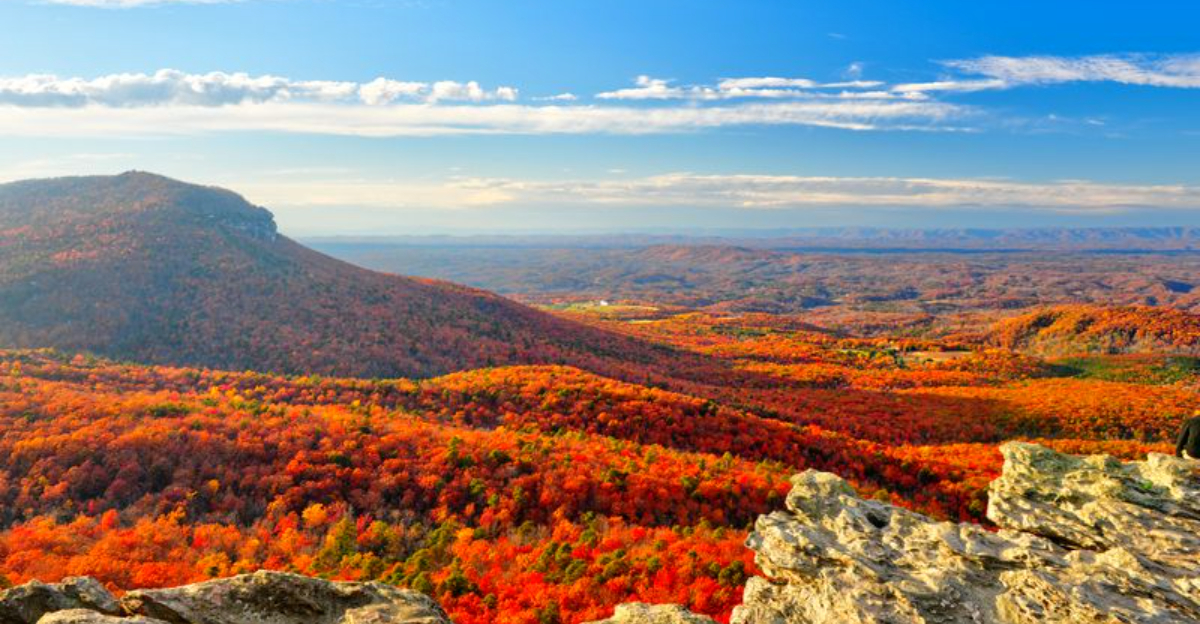
North Carolina has a habit of making you feel like you’ve stepped straight into a film – sometimes an indie drama, sometimes an epic adventure, and sometimes a dreamy, slow-motion montage you wish you could bottle.
One minute you’re winding through fog-softened mountain passes, the next you’re staring up at a lighthouse that looks like it’s guarding a secret.
Waterfalls roar like sound effects added in post-production, dunes glow under alien-planet sunsets, and ridgelines fade into more shades of blue than a camera could ever fully catch.
Drive long enough in this state, and you start to notice a pattern: around every bend, there’s another place that feels too dramatic, too moody, too perfect to just be… real life.
These are the spots where you stop the car without planning to, where you lose track of time, where even the quiet moments feel choreographed.
If you’ve ever wondered what it’s like to walk through your own movie scene, North Carolina is ready to roll the opening credits.
1. Craggy Gardens – Blue Ridge Parkway
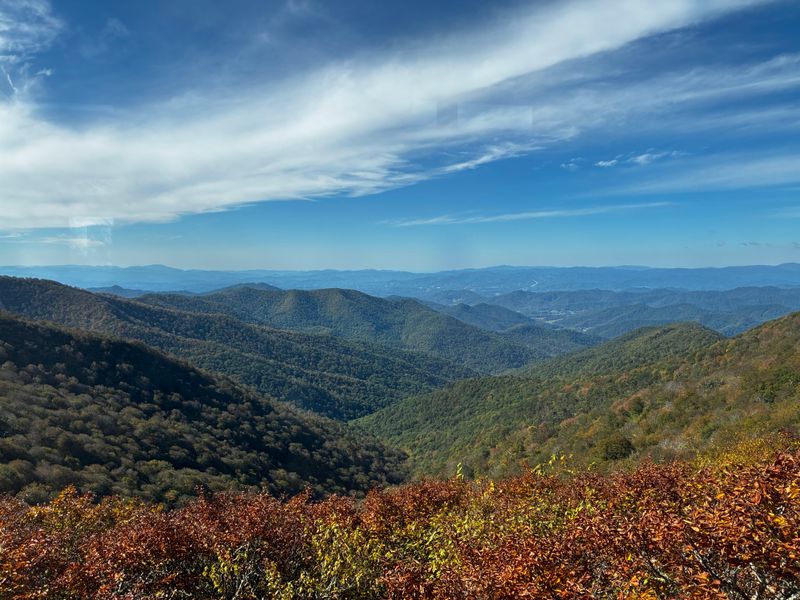
High above Asheville, Craggy Gardens feels like a mountaintop from a fantasy film – twisted trees, frequent fog, and an ocean of ridgelines fading into blue.
In June, the rhododendron explode in pink and purple, and the rocky summit trails give you 360-degree views that look painted on the sky.
On clear evenings, you can stand on the ridge and watch the last light pour into the valleys, headlights threading along the Parkway far below.
It’s the kind of place where you half expect a dragon or a wandering knight to step out of the mist.
2. Black Balsam Knob – Pisgah National Forest
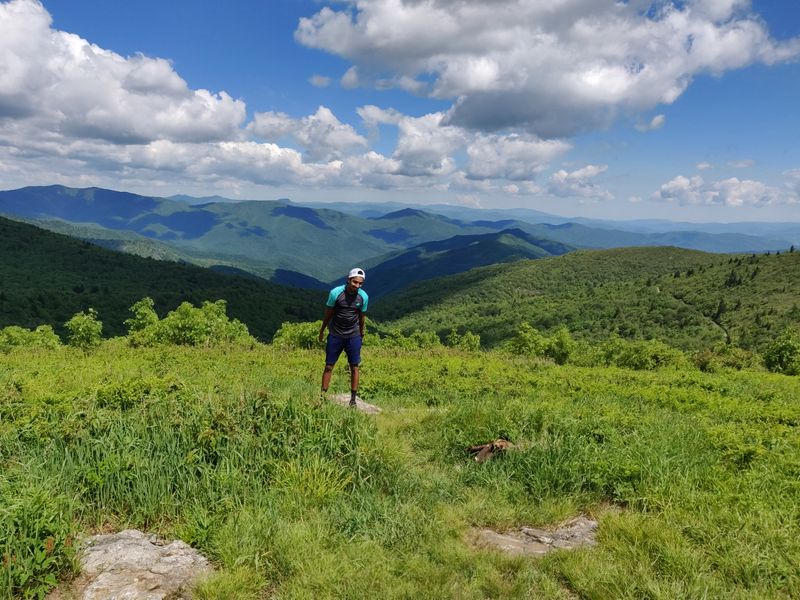
Black Balsam Knob is one of those peaks that makes you feel like you’ve climbed straight onto the roof of the Blue Ridge.
The Art Loeb Trail carries you through dark spruce forest and suddenly spits you out into open, grassy balds with 360-degree views in every direction.
In summer, wildflowers dot the hillsides; in fall, layers of fiery ridges roll away under a cold, glassy sky.
On a breezy evening, with the light dropping and the wind tugging at your jacket, it feels like a closing shot in an epic adventure.
3. Max Patch – Appalachian Trail Bald
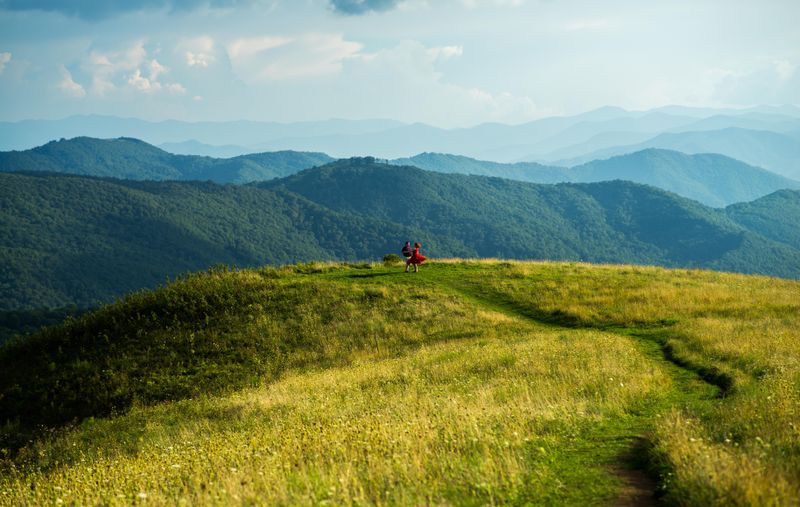
Max Patch is pure cinematic drama: a rounded grassy summit with mountains spilling away on all sides, the Appalachian Trail cutting right across the top.
It’s an easy walk from the parking area, but the payoff is a horizon that seems to go on forever.
Because it was loved a little too hard, the Forest Service has restored the area and now keeps it day-use only – no camping, no fires, and the bald closes one hour after sundown.
That means you get quieter, cleaner views: couples wrapped in blankets, hikers sharing thermoses, and a sky that looks like it was painted just for you.
4. Kuwohi (Clingmans Dome) – Great Smoky Mountains
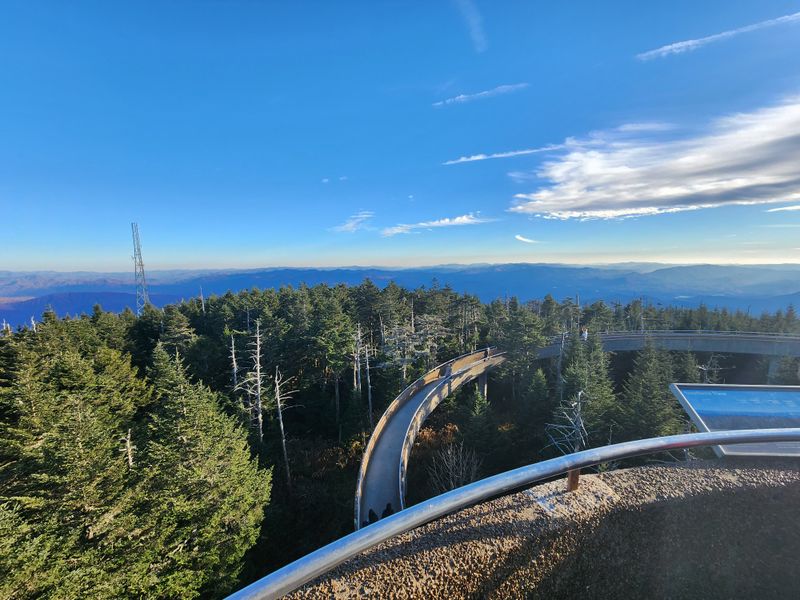
At 6,643 feet, Kuwohi – formerly known as Clingmans Dome – is the highest peak in the Smokies, and it absolutely looks the part.
From the parking area on the North Carolina side, a short but steep paved path leads to a futuristic concrete observation tower that soars above the spruce-fir canopy.
On clear days, you can see ridges stacking into the distance like blue paper cutouts, and the Appalachian Trail crosses right below the tower.
In fog and wind, the scene flips: the tower disappears into clouds, the forest goes quiet, and it feels like a moody art-house movie set in the clouds.
5. Linville Gorge & Linville Falls
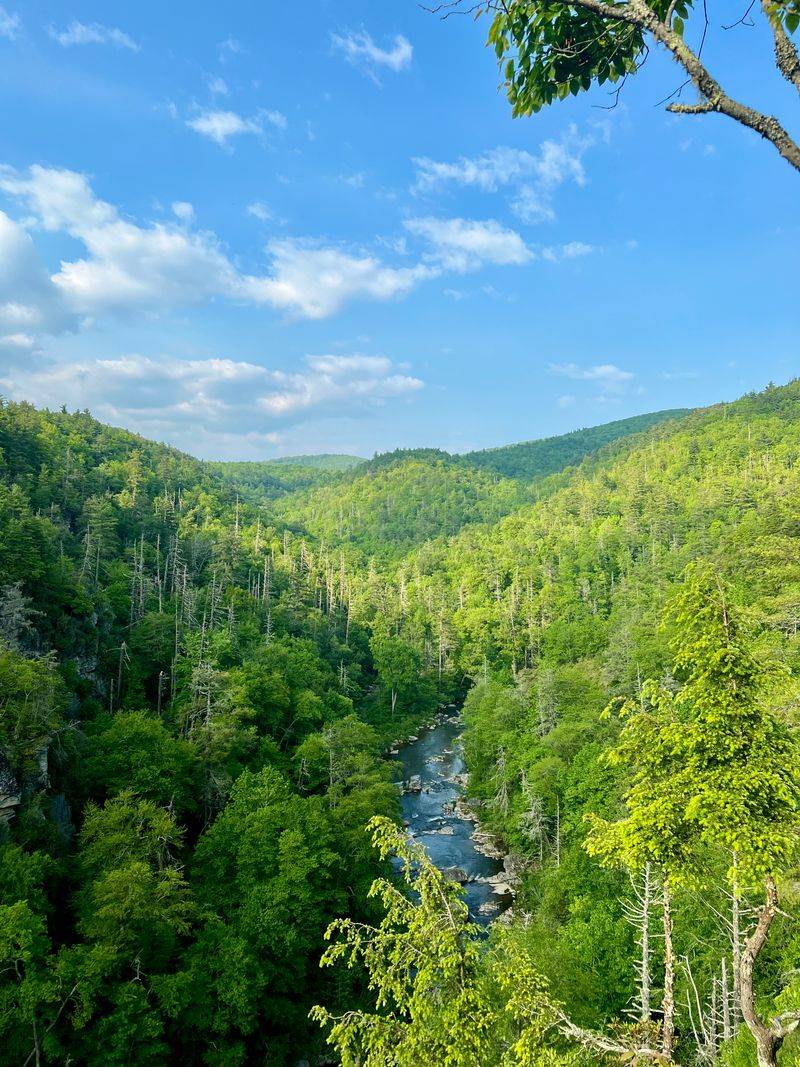
Linville Gorge is often called the Grand Canyon of the East, and when you reach the overlooks, the name makes sense: sheer, forested walls dropping 1,400 feet to the river, cliffs and ridges twisting away into wilderness.
At its head, Linville Falls thunders through a rocky cleft, with several short trails leading to different viewpoints along the Blue Ridge Parkway.
Stand at an overlook in late afternoon, when the gorge is half in shadow and half in gold, and you feel like the camera is slowly pulling back, the soundtrack swelling.
This is the part of the movie where the characters realize just how small they really are.
6. Grandfather Mountain & the Mile High Swinging Bridge
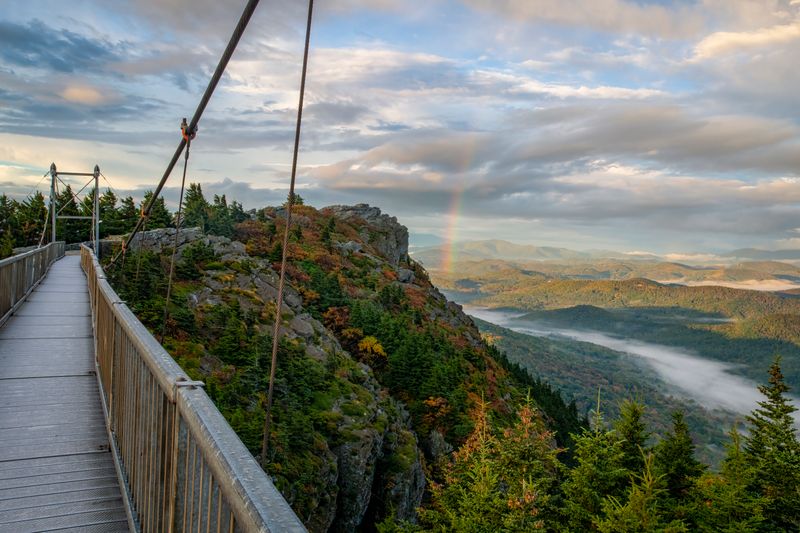
Grandfather Mountain looks dramatic from a distance, all jagged rock and steep slopes, but it’s the Mile High Swinging Bridge that turns it into a true movie location.
The suspension footbridge stretches 228 feet between rocky peaks, nearly a mile above sea level, giving you wild, open views in every direction.
On windy days, your jacket snaps like a flag and the bridge hums softly underfoot as clouds scrape past the cliffs.
Between the wildlife habitats, the museum, and those cinematic overlooks, it’s easy to imagine a sweeping drone shot of you walking across the bridge with the world dropping away below.
7. Looking Glass Falls – Pisgah National Forest
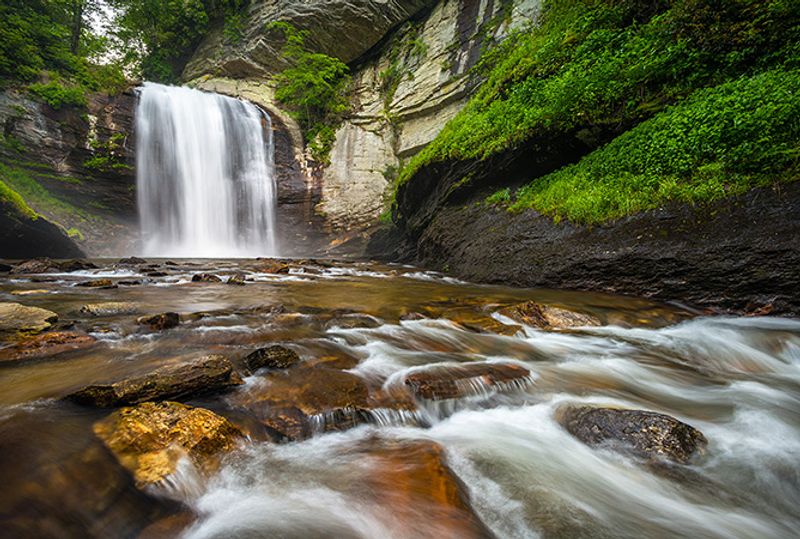
Looking Glass Falls is that classic waterfall you’ve seen on postcards: a 60-foot sheet of water plunging into a rocky pool, framed by mossy rock and dense forest.
It’s just off U.S. 276 near Brevard, with a roadside overlook and a short stairway down to the base, which is why it’s one of the most popular, most photographed falls in the state.
Mist hangs in the air, and in summer, families creep to the edge of the pool while photographers line up on the rocks.
In autumn, when the trees flare red and gold around the falls, it looks exactly like a slow-motion montage from a big-budget nature documentary.
8. Upper Whitewater Falls – Jackson County
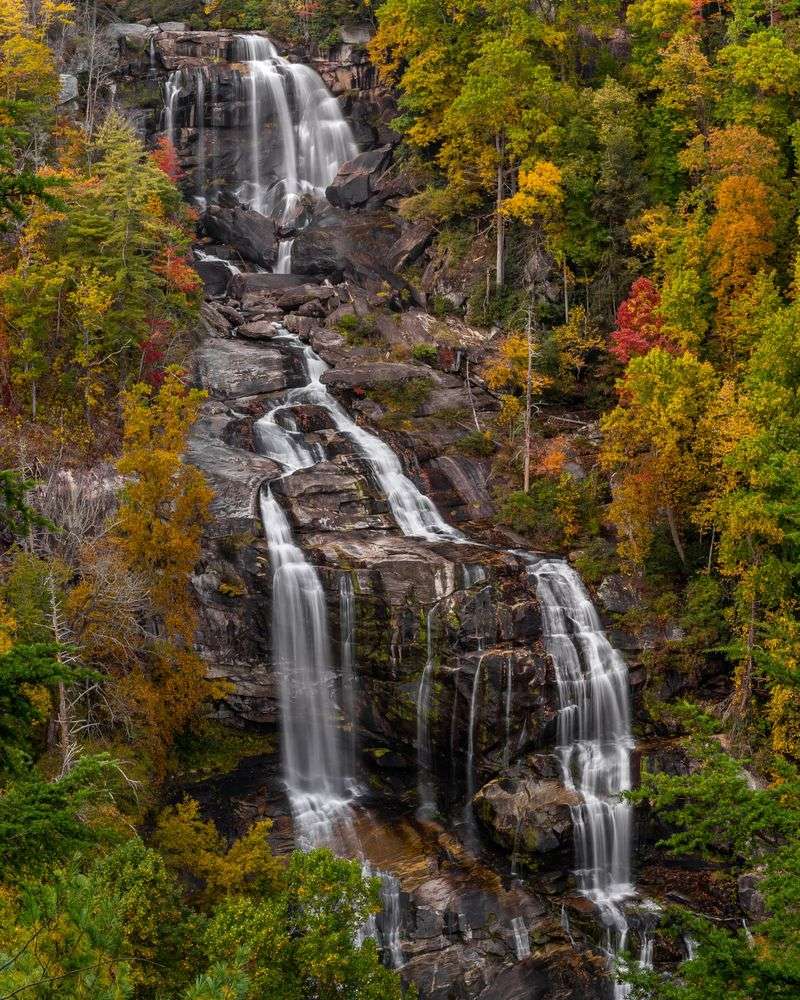
Deep in the far western corner of the state, Upper Whitewater Falls feels like a grand, secret set piece.
The U.S. Forest Service lists it as a 411-foot drop, the highest waterfall east of the Rockies, and it certainly looks the part from the viewing platforms above the gorge.
The staircases and walkways lead you through a fragrant forest to viewpoints where the falls step down in white tiers, swallowed by green.
On a rainy day, clouds snag on the ridges, and the whole scene turns dark and dramatic – like a plot twist is about to unfold right beneath the spray.
9. Chimney Rock & Hickory Nut Gorge
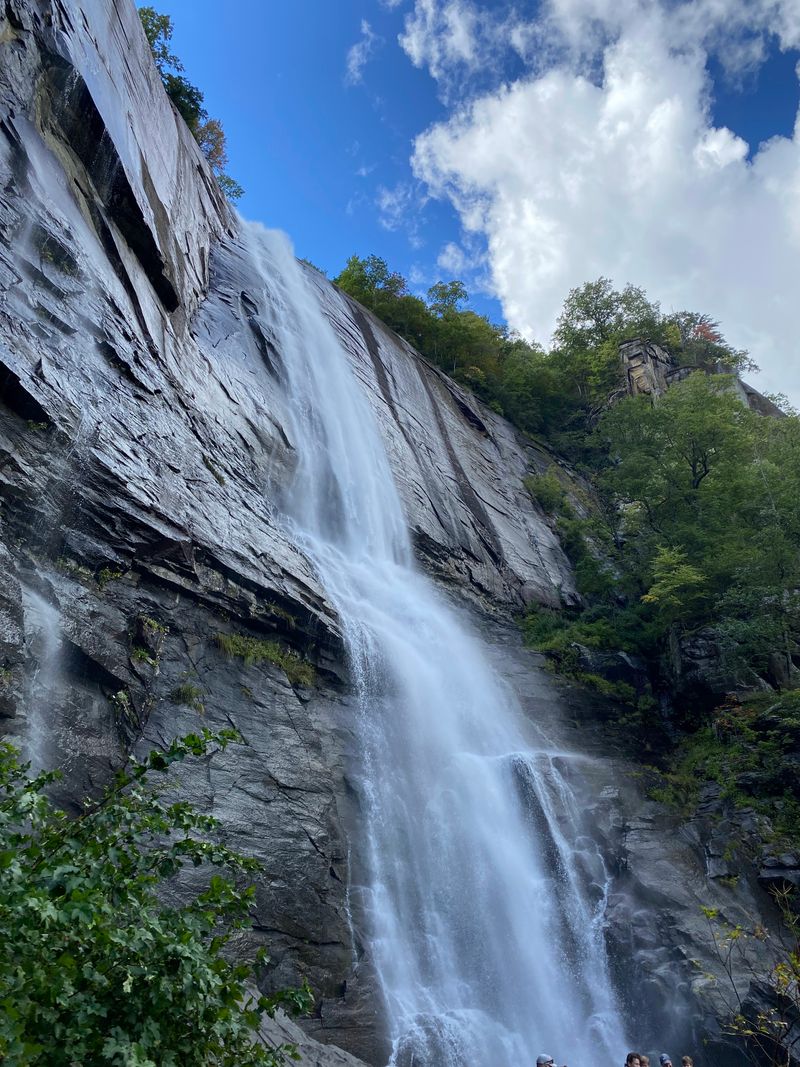
Chimney Rock State Park feels like somewhere a director would send the hero for a big turning-point scene.
A 315-foot freestanding rock spire rises above the deep cut of Hickory Nut Gorge and looks down on blue-green Lake Lure, with stairways and an elevator giving visitors access to the crown.
From the top, hawks drift over the valley and the lake glints like a movie prop far below.
Narrow gorge trails, waterfalls, and rock walls all around make it easy to picture period dramas, adventure films, or old-school Westerns playing out on these cliffs.
10. Biltmore Estate – Asheville
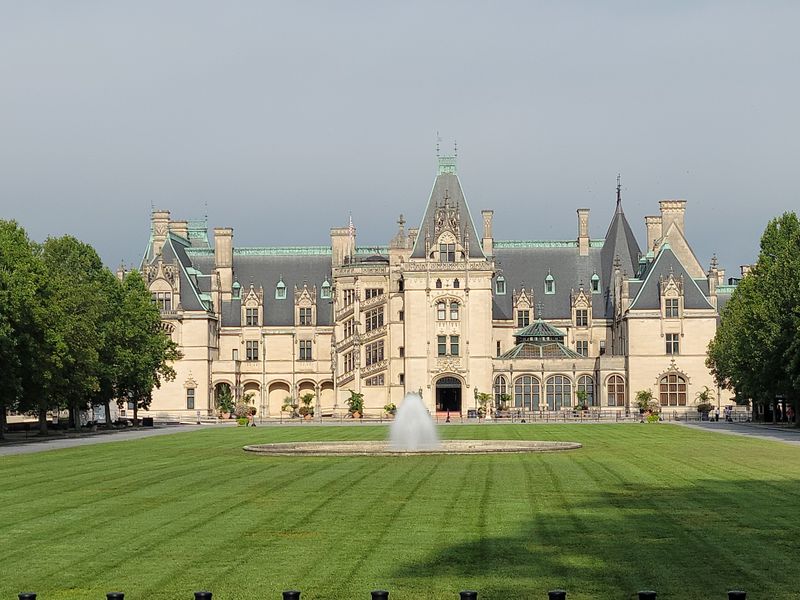
If you need a ready-made Gilded Age film set, Biltmore is it. America’s largest private home – 250 rooms wrapped in ornate stonework – sits on an 8,000-acre estate of gardens, forests, and rolling fields along the French Broad River.
Frederick Law Olmsted’s gardens unfold like a series of scenes: formal Italian terraces, a glass-roofed Conservatory bursting with tropical plants, and quiet paths that slip into the woods.
Around the holidays, the house glows with thousands of lights and towering Christmas trees, turning the whole place into a period-drama Christmas special.
11. Hanging Rock State Park – Stokes County
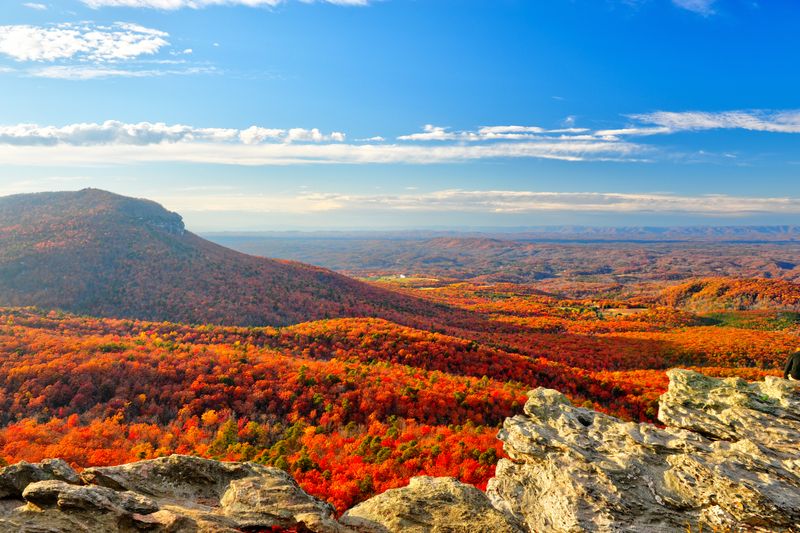
Just north of the Piedmont cities, Hanging Rock rises abruptly from the rolling countryside like a natural fortress.
Trails weave through hardwood forest to high rock ledges, waterfalls, and even a small cave, with more than 20 miles of paths threading the park.
At the namesake Hanging Rock overlook, the cliff juts into open space and the view stretches for miles – hazy farmland, blue ridges, and a big, cinematic sky.
On a fall afternoon, with leaves tumbling off the trees and the light going coppery, it feels like a coming-of-age movie where someone is about to make a life-changing decision.
12. Jockey’s Ridge State Park – Nags Head
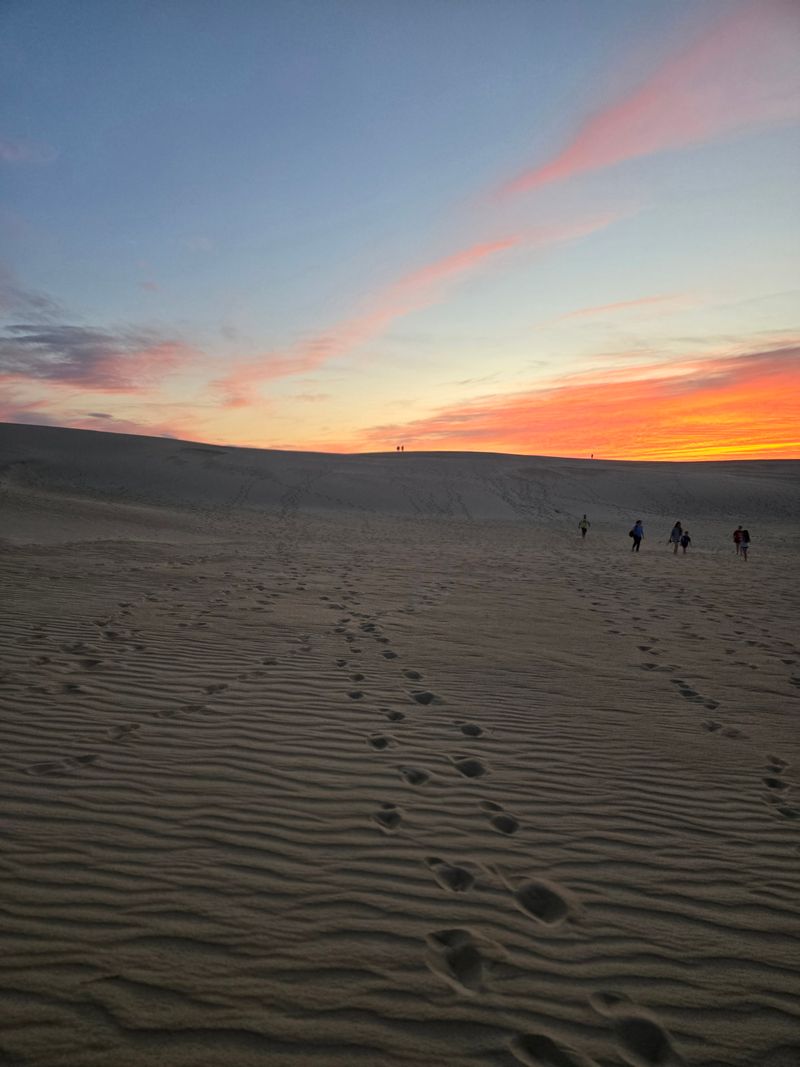
Jockey’s Ridge looks less like North Carolina and more like a desert planet from a sci-fi film.
These are the tallest active sand dunes in the eastern United States, a shifting medano rising above the Outer Banks, known for sunsets and kite-filled skies.
Walk up in late afternoon and you’ll find kids rolling down the slopes, hang gliders catching the coastal wind, and the Roanoke Sound glowing to the west.
When the sun drops and the sand cools under your feet, the dunes turn purple and gold, and the whole ridge feels like a wide-angle establishing shot.
13. Cape Hatteras Lighthouse & National Seashore
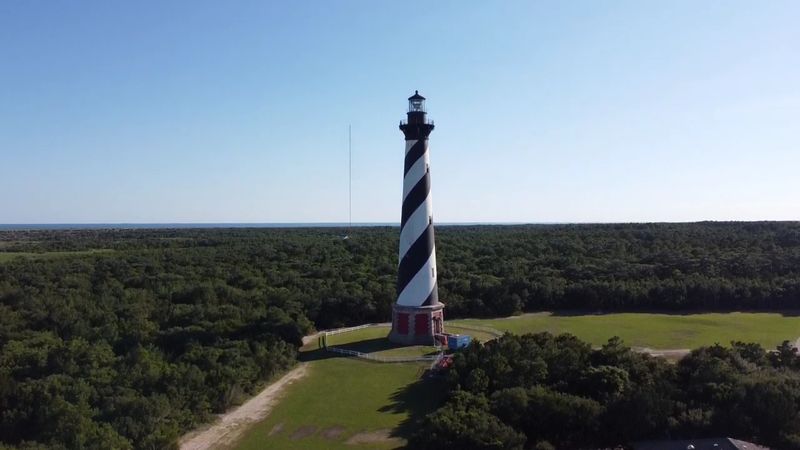
Cape Hatteras is all big elements – tower, ocean, sky.
The spiral-striped lighthouse is the tallest in the United States, rising more than 200 feet above the sand, guarding a notoriously dangerous stretch of coast.
The tower is currently closed to climbing during ongoing restoration, but the surrounding grounds, beaches, and museum remain open.
Walk the beach nearby and you’ll see waves chewing at the shore, shorebirds skittering at the foam line, and the lighthouse looming through fog and sea spray.
It feels like the setting for a storm-tossed drama – ships in danger offshore, lights cutting through rain, and a keeper watching from the lantern room.
14. Cape Lookout National Seashore & Shackleford Banks
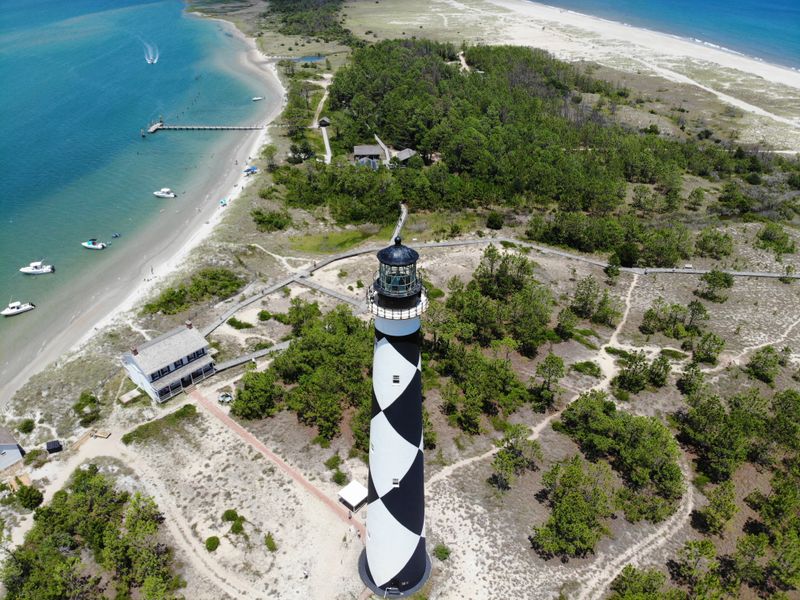
Cape Lookout is what you picture when you imagine an untouched barrier island: wide empty beaches, shallow turquoise water, and a black-and-white diamond-patterned lighthouse watching over it all.
The 163-foot tower stands on South Core Banks, flashing every 15 seconds, while ferries carry visitors out from the mainland to roam the sand.
Just across the channel, Shackleford Banks is home to more than 100 wild horses that roam the dunes and beachgrass, descendants of shipwrecked Spanish mustangs.
When you step off the boat and see a small band of horses cresting a dune with the lighthouse in the background, it feels less like real life and more like a perfectly framed shot from a coastal epic.
15. Bald Head Island & Old Baldy Lighthouse
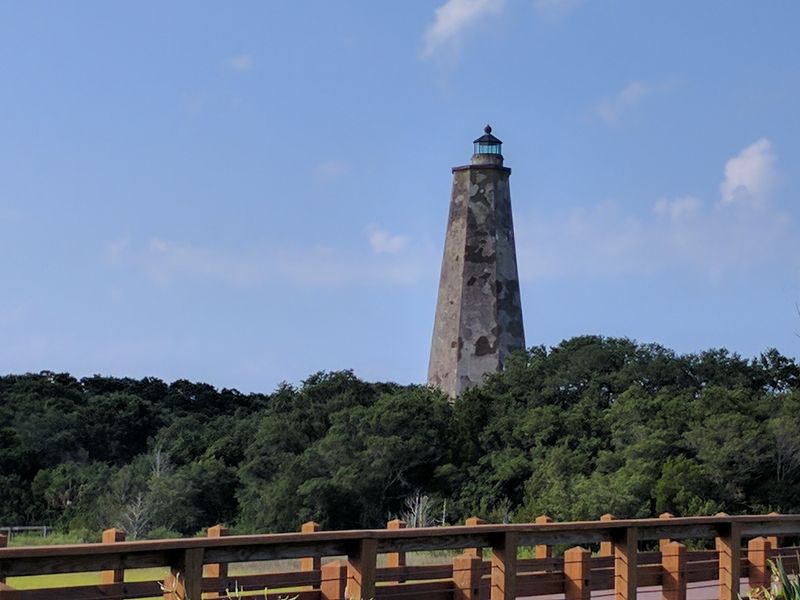
Bald Head Island is a quiet, car-free world where streets are lined with live oaks and golf carts hum softly toward the beach.
Rising over it all is Old Baldy, North Carolina’s oldest standing lighthouse, a mottled octagonal tower built in 1817 that you can still climb via 108 narrow steps.
From the top, the Cape Fear River, salt marshes, and Atlantic shoreline spread out like a watercolor painting.
Down below, boardwalks lead through maritime forest and out to long arcs of sand where sunsets stretch on and on – perfect for the closing scene of a seaside love story.