
North Carolina’s Pulled Pork Capital Isn’t Where You Think It Is
When the conversation turns to North Carolina barbecue, most people immediately crown Lexington as the pulled pork capital, celebrated far and wide for its smoky, tangy style.
But after years spent traveling the backroads of the Tar Heel State, from the Blue Ridge Mountains to the sandy coast, I’ve uncovered a far richer story.
The true heart of pulled pork isn’t confined to one town—it’s scattered across communities where history, technique, and deep-rooted pride shape every plate. What I discovered challenges conventional wisdom: North Carolina’s barbecue identity is more diverse and complex than outsiders realize, with rival traditions keeping the fire alive.
The Eastern-Western Divide Changes Everything
Y’all, the battle lines of Carolina barbecue run deeper than college basketball rivalries! Growing up near Raleigh, I witnessed firsthand how this pork-loving state maintains two completely different barbecue traditions.
Eastern-style embraces the whole hog, chopped fine with that vinegar-pepper kick that’ll clear your sinuses. Meanwhile, western Lexington-style focuses on shoulders with a sweeter tomato-vinegar sauce. This fundamental split creates confusion about where the true pulled pork capital sits.
Most folks automatically think “east means pulled, west means chopped,” but that oversimplification misses the nuanced reality of how these meats are actually prepared across the state.
Lexington’s Fame Comes From Shoulders, Not Whole Hog
Bless their hearts, Lexington barbecue folks make incredible pork – but they’re famous for shoulder meat, not the whole-hog pulled pork that defines the original Carolina tradition! Their annual Barbecue Festival draws 100,000+ visitors, cementing their reputation.
I remember my first visit to a Lexington smoke joint, expecting pulled pork but receiving beautifully chopped shoulder instead. The distinction matters because true pulled pork traditionally comes from whole hogs where different muscle groups create that perfect texture mix.
Lexington’s tomato-tinged dip creates a different flavor profile altogether from what pulled pork purists consider authentic.
Small Eastern Towns Guard The Real Tradition
Hidden down country roads where GPS signals fade, tiny Eastern NC towns quietly maintain the purest pulled pork traditions without fanfare. My uncle took me to Ayden when I was just twelve, and the Skylight Inn’s whole-hog barbecue changed my understanding of what pulled pork could be.
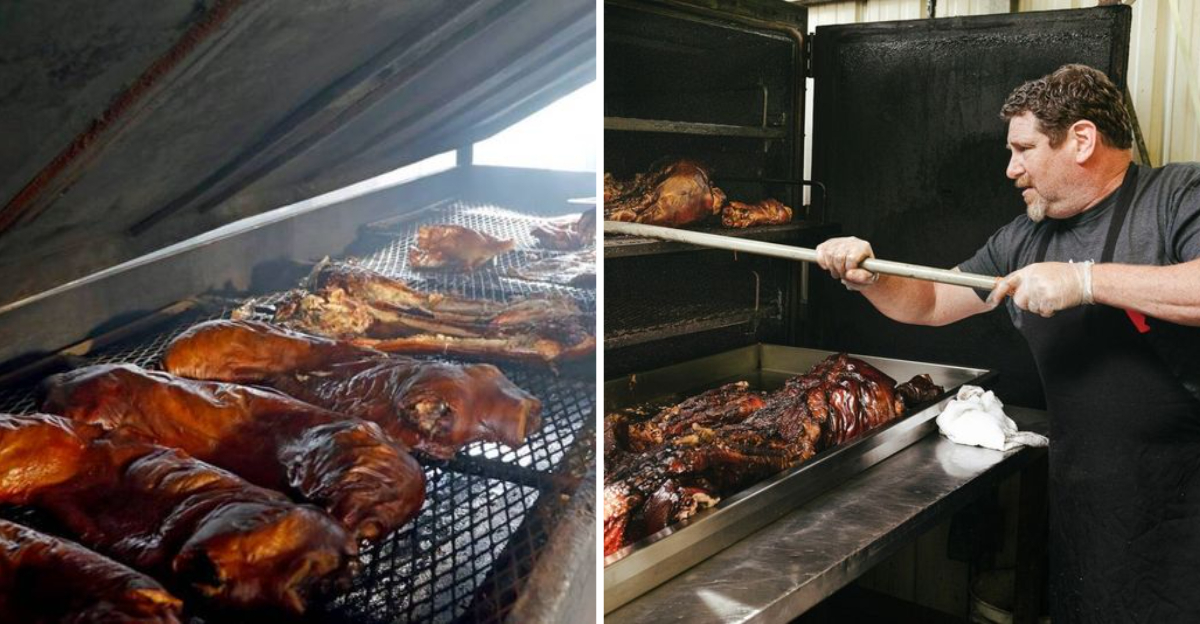
These small-town pitmasters still cook entire pigs over wood for 12+ hours, then hand-pull that succulent meat while incorporating everything from tender ham to crispy skin. The simplicity is the magic – just meat, vinegar, pepper, and generations of expertise.
No festivals or tourism campaigns needed; their reputation spreads through satisfied bellies.
Population Centers Shifted The Narrative
Money talks, honey! When I investigated why Lexington gets all the barbecue glory, I discovered how population shifts and tourism dollars rewrote the pulled pork story.
As North Carolina’s economic center moved westward toward Charlotte and the Research Triangle, the Lexington style gained prominence simply through proximity to more people and media outlets. Meanwhile, eastern counties where whole-hog pulled pork originated remained rural and less visited.
The marketing machine behind Lexington’s barbecue festival created a powerhouse brand that overshadowed eastern traditions. Fascinating how geography and economics, not just taste, determined which style became synonymous with North Carolina barbecue!
The Secret Capital Is Actually Many Places
Shocker: North Carolina’s true pulled pork capital isn’t a single town but a constellation of smoke-infused spots stretching across the coastal plain! Last summer’s barbecue road trip taught me this delicious truth.
From Wilber’s in Goldsboro to B’s in Greenville and Skylight Inn in Ayden, these scattered temples of whole-hog tradition collectively form the real capital. Each place maintains slightly different techniques – some chop coarser, others finer; some add more pepper flakes, others less.
What unites them? Unwavering dedication to wood-cooked whole hogs and vinegar sauce that hasn’t changed in centuries. The capital exists wherever these traditions remain intact!
Modern Pulled Pork Isn’t Always Traditional
Hold onto your hushpuppies! What passes for “pulled pork” in restaurants today often bears little resemblance to North Carolina’s heritage methods. My chef friend nearly fainted when I showed him a restaurant menu advertising “authentic pulled pork” made in an electric smoker.
Traditionally, pulled pork meant whole hog meat hand-pulled into irregular strands with bits of bark (the flavorful crust) mixed in. Today’s version often comes from shoulder-only cuts cooked in modern smokers or even – gasp! – slow cookers.
This evolution creates confusion about what constitutes authentic pulled pork and where its true capital should be located.
The Future Capital May Surprise Everyone
Plot twist! While we’re all arguing about east versus west, a new generation of pitmasters is redefining North Carolina’s pulled pork landscape. I chatted with twenty-something pit master Sam Jones who’s blending traditions in unexpected ways.
Cities like Raleigh, Durham, and Charlotte now host innovative barbecue joints where young chefs honor old techniques while introducing new flavors. They’re pulling whole hogs but experimenting with wood types, heritage pig breeds, and locally-sourced ingredients.
Tomorrow’s pulled pork capital might be an urban center where tradition meets innovation – respecting eastern whole-hog methods while embracing western hospitality and accessibility. The barbecue story continues to evolve!