
11 Ohio Cave And Gorge Adventures That Bring The Much-Needed Chill To Hot July Days
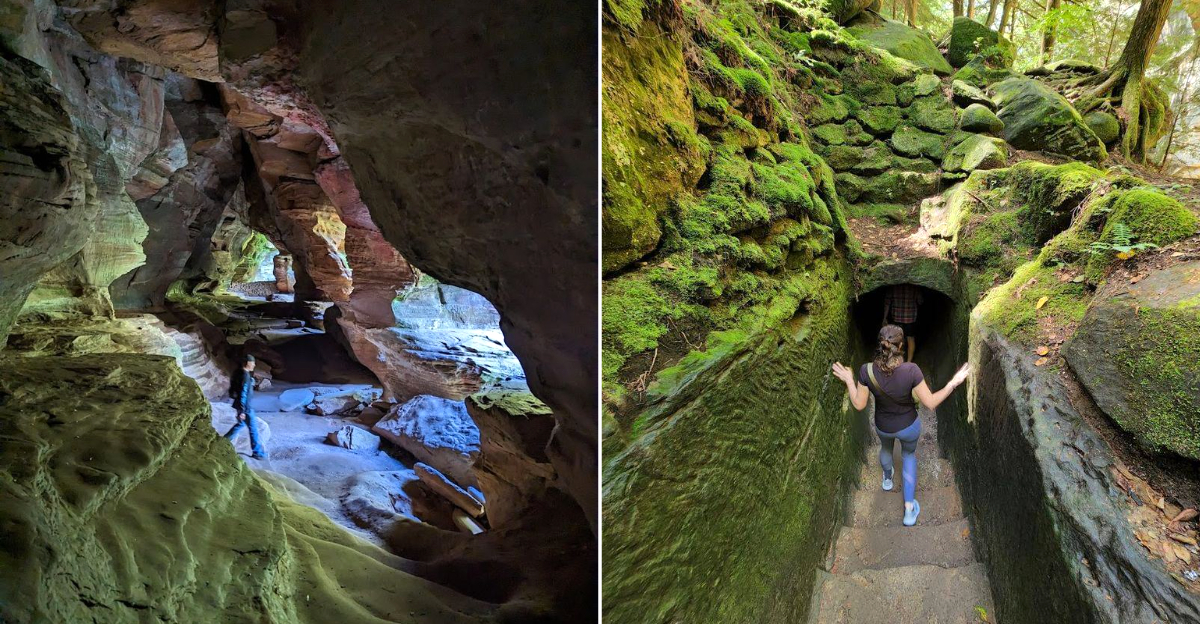
July in Ohio can get so sticky that even your shadow starts looking for air-conditioning.
That is when caves and gorges suddenly become the heroes of the summer road trip. You duck below ground, step into a shaded ravine, or follow a rocky trail where the air feels cooler before you even check the forecast.
Is it dramatic to plan a whole day around not melting? Maybe.
Is it also completely reasonable? Absolutely.
These 11 Ohio cave and gorge adventures bring the kind of natural chill that makes a hot July day feel a lot more manageable, and a lot more fun.
1. Ohio Caverns, West Liberty
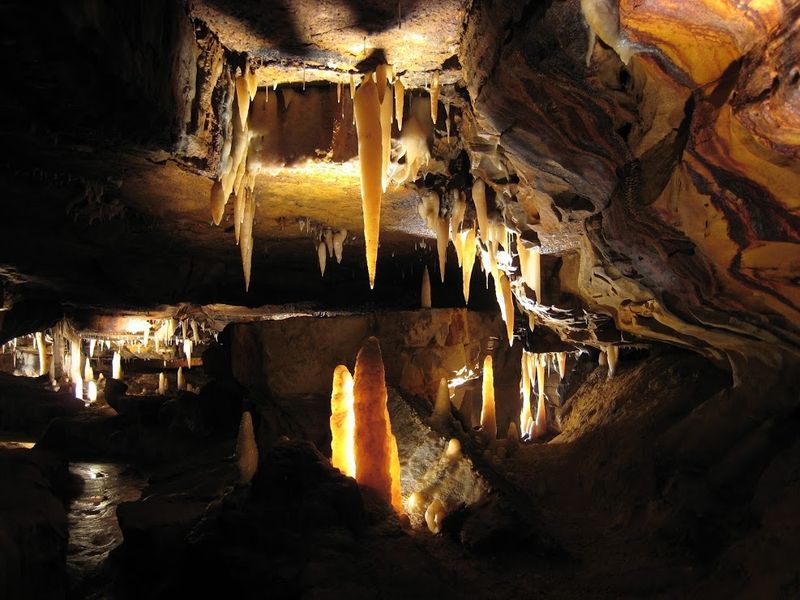
Hidden beneath the rolling farmland of West Liberty, Ohio Caverns holds the title of Ohio’s largest natural cave system, and it absolutely earns the bragging rights.
The cave sits at 2210 East State Route 245 and maintains a steady 54 degrees Fahrenheit year-round, making it one of the most refreshing escapes you can find on a blazing July afternoon.
What sets this cavern apart is its jaw-dropping collection of colorful crystal formations, including the Crystal King, the largest stalactite in Ohio.
You can choose from two guided tour options in the summer season: the Natural Wonder Tour through sections discovered after 1925, or the Historic Tour through sections explored from 1897 to 1925.
Both tours take about 50 minutes and are well-lit and paved, so you do not need any special gear or caving experience to enjoy them.
Kids tend to go wide-eyed at the Crystal King, a massive stalactite that has been growing for thousands of years.
Plan at least two hours here, because the gift shop and grounds are worth a slow stroll before you head back into the summer heat.
2. Seneca Caverns, Bellevue
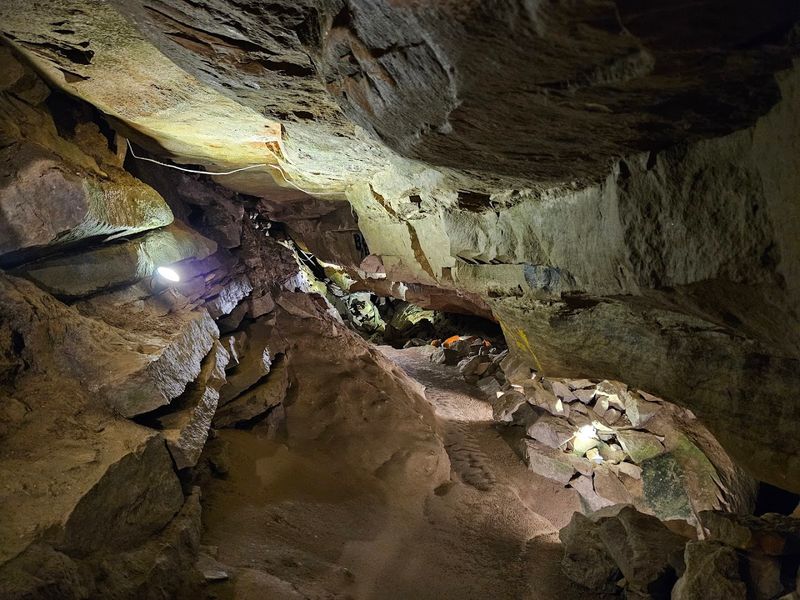
Seneca Caverns in Bellevue, Ohio, is the kind of place that makes you feel like you have stumbled onto a movie set, except everything around you is completely real and millions of years old.
Located at 15248 East Township Road 178, this cavern reaches a lowest public tour level 110 feet below the surface, where visitors can see the flowing underground stream called Ole Mist’ry River.
The cave formed not from water dissolving limestone from above, but from a massive earth crack, which makes it geologically unusual and endlessly fascinating.
Temperatures inside hover around 54 degrees, so that light jacket you packed will feel like the best decision you ever made.
Guided tours run regularly throughout the day and take about one hour, with the depth of the route depending on seasonal water levels.
The staff here are genuinely enthusiastic about the geology and history of the site, which adds a lot to the experience.
Come early on weekends, because summer crowds can build up quickly and tour spots fill fast.
3. Olentangy Caverns, Delaware
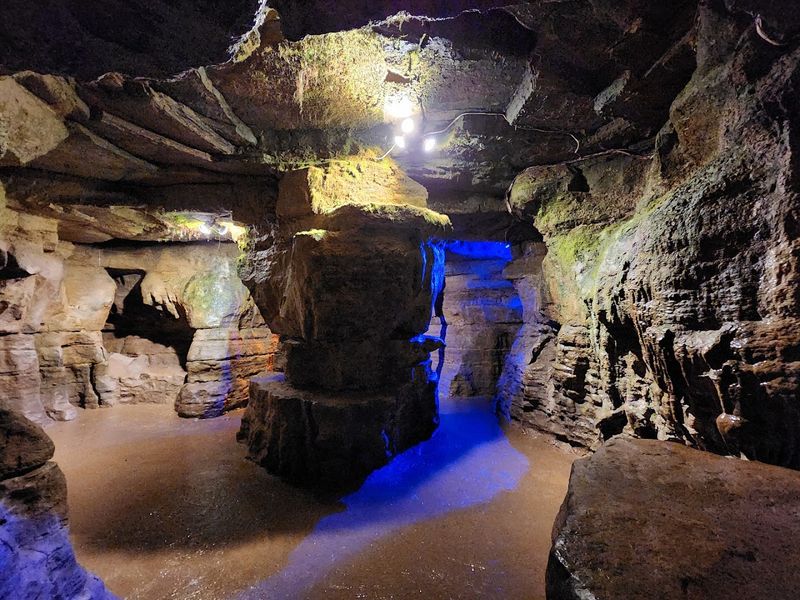
Just a short drive north of Columbus, Olentangy Caverns at 1779 Home Road in Delaware, Ohio, has been welcoming curious visitors since it opened for public tours in 1935, after the caverns were purchased and excavated by two local families.
The local origin story still goes back to 1821, when J. M.
Adams, a member of a westbound wagon train, entered the cave after one of his oxen fell into the entrance.
Inside, you will find a series of connected rooms and passages with educational audio stations and signs explaining the area’s geology, local history, and Native American lore.
The temperature underground stays cool enough to feel refreshing when you step in from a 90-degree July afternoon.
Tours are self-guided and usually take about 20 to 30 minutes, with no specific entry time required as long as you arrive at least 45 minutes before closing.
Beyond the cave itself, the property includes a gem mining sluice, a petting zoo, mini golf, a treasure hunt maze, a walking trail, a playground, and a rock and gem shop, making it an easy full-day outing for families.
The grounds are shaded and pleasant, so arriving early gives you plenty of time to explore everything before the afternoon crowds arrive.
4. Perry’s Cave Family Fun Center, Put-in-Bay
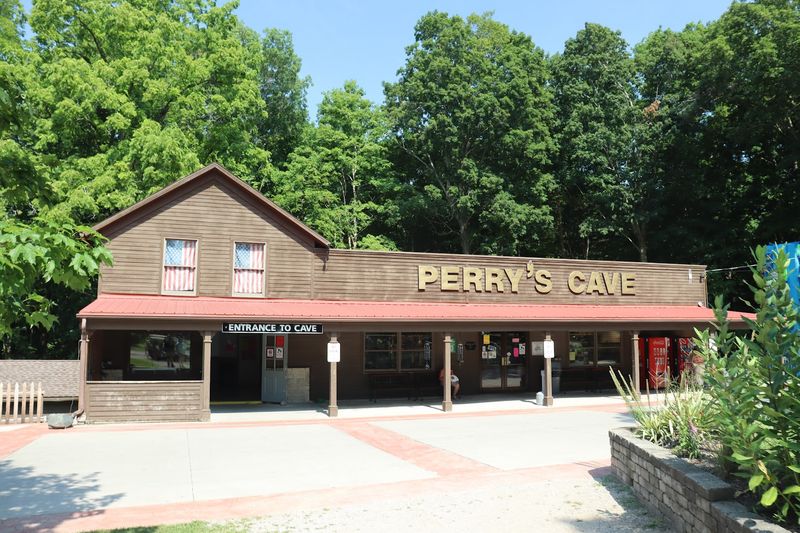
Sitting beneath South Bass Island in Lake Erie, Perry’s Cave at 979 Catawba Avenue in Put-in-Bay, Ohio, adds a nautical twist to the usual cave adventure.
The cave was reportedly discovered by Commodore Oliver Hazard Perry in 1813, and historical accounts say he used the cave’s fresh water during the Battle of Lake Erie.
That underground lake is still there today, and watching the water shimmer under the cave lights is genuinely mesmerizing.
At 50 degrees Fahrenheit, the cave is one of the chillier spots on this list, so a light layer is strongly recommended before you head down the stairs.
The surrounding Family Fun Center property includes mini golf, gemstone mining, a butterfly house, and a climbing wall, which means you could easily spend an entire day here without running out of things to do.
Getting to Put-in-Bay requires a ferry ride from Port Clinton or Catawba Island, which is a fun adventure all on its own.
Book your ferry tickets in advance during July, as summer weekends on the island get very busy.
5. Old Man’s Cave, Logan
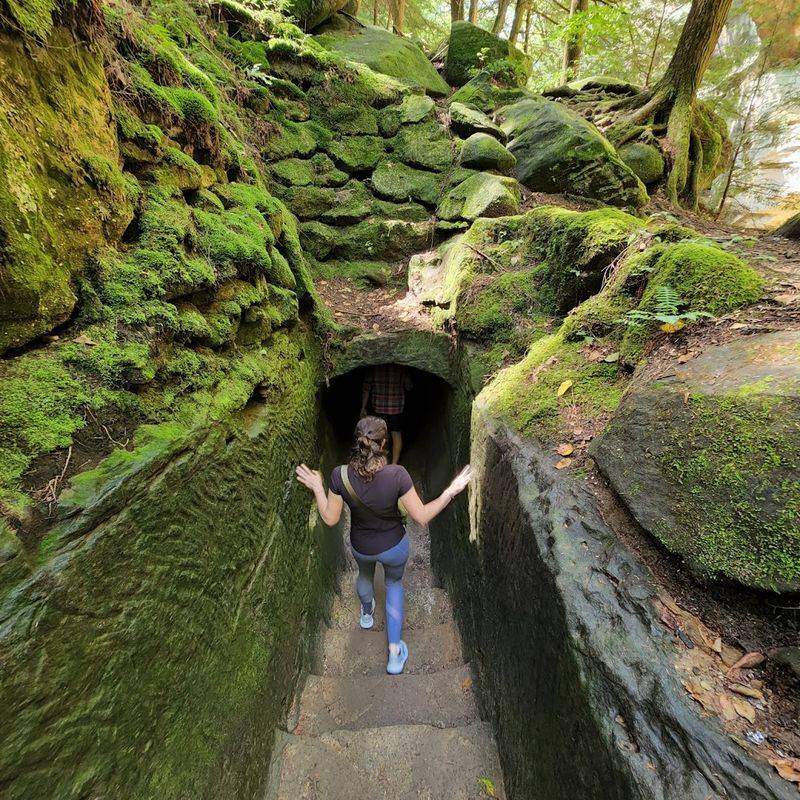
Few places in Ohio deliver a more dramatic first impression than Old Man’s Cave, and the name alone should tell you this is not your average afternoon hike.
Located at 19852 State Route 664 South in Logan, Ohio, this Hocking Hills landmark features a massive recess cave carved into Black Hand sandstone, with a waterfall tumbling into a cool, shaded gorge below.
The cave gets its name from a hermit named Richard Rowe who reportedly lived inside it during the early 1800s, which adds a wonderfully eccentric layer to the whole experience.
The main trail is about 2.5 miles round trip and winds past the upper falls, the cave itself, the lower falls, and a series of beautiful hemlock-shaded passages.
Even on the hottest July days, the gorge stays noticeably cooler than the surrounding landscape, thanks to the shaded cliffs and flowing water.
Parking fills up fast on summer weekends, so arriving before 9 a.m. is the smartest strategy.
The visitor center near the trailhead has restrooms, trail maps, and rangers who can answer questions about the area.
6. Ash Cave, South Bloomingville
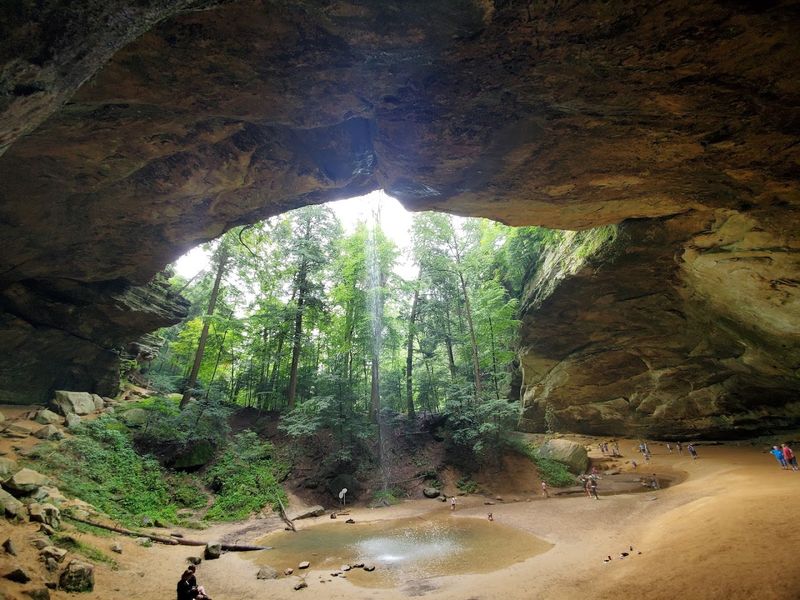
The sheer scale of Ash Cave stops most visitors cold the moment they round the final bend in the trail, and that reaction is completely earned.
Situated at 27291 OH-56 in South Bloomingville, Ohio, Ash Cave is the largest recess cave in the state, stretching roughly 700 feet wide and 100 feet deep under a sandstone overhang that soars nearly 90 feet above the cave floor.
A seasonal waterfall drops from the rim into a shallow pool at the center, and the surrounding rock walls are draped in moss and ferns that thrive in the constant shade and moisture.
The trail from the parking area to the cave is only about a quarter mile long and is mostly flat, making it one of the most accessible natural wonders in Ohio.
The cave floor stays noticeably cool and damp even in the peak of summer, and the natural amphitheater effect of the overhang creates a hushed, almost cathedral-like atmosphere.
Early morning visits in July reward you with mist rising from the waterfall pool and softer light filtering through the tree canopy above.
A longer loop trail connects Ash Cave to Cedar Falls for those who want more mileage.
7. Rock House, Laurelville
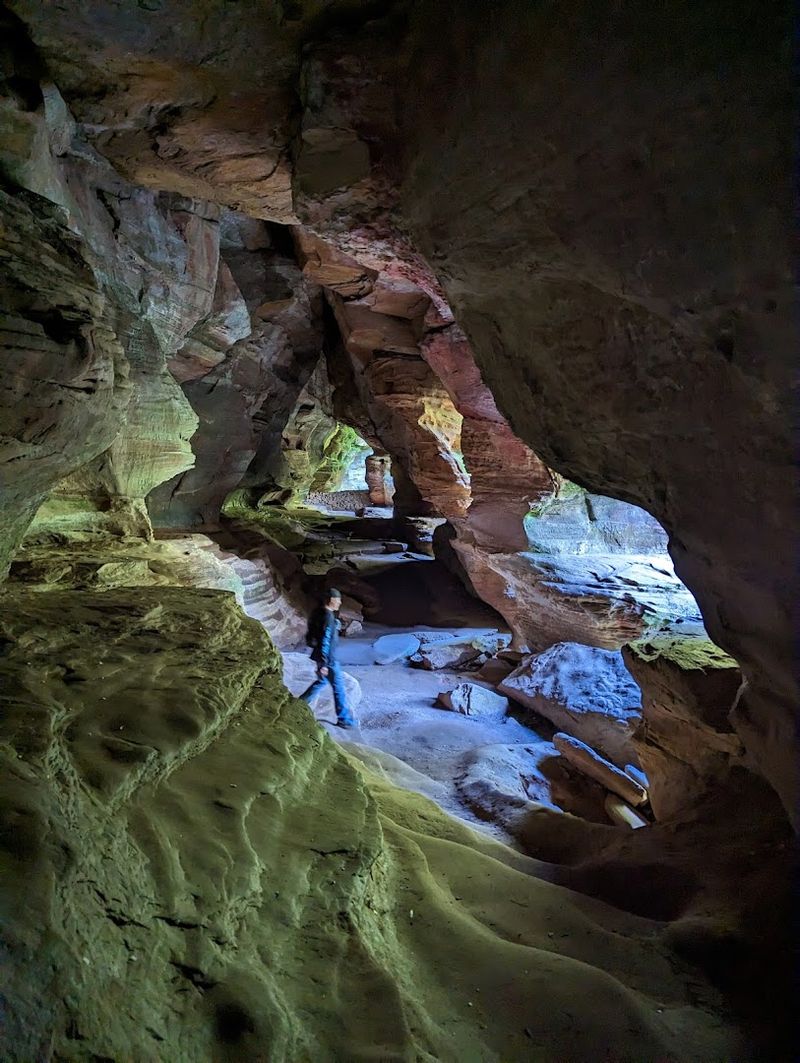
Rock House earns its reputation as the most unusual cave in Hocking Hills simply because it looks less like a cave and more like a fortress carved directly into a cliff face.
Found at 16350 OH-374 in Laurelville, Ohio, this is the only true cave in the Hocking Hills region, meaning it has an actual ceiling, floor, and walls fully enclosed on all sides, unlike the open recess caves at Ash Cave or Old Man’s Cave.
The cave runs about 200 feet long and features seven arched window openings that frame views of the surrounding forested gorge like natural picture frames.
Inside, the temperature drops noticeably compared to the trail outside, and the smooth sandstone walls have a cool, almost damp feel that makes the relief from July heat immediate.
The trail to reach Rock House is about 0.6 miles and involves some steep sections with stone steps, so comfortable shoes with grip are a good idea.
Evidence of past human use, including carved initials and ledge markings, gives the cave an added layer of historical intrigue.
Crowds here tend to be smaller than at Old Man’s Cave, which makes for a more peaceful experience.
8. Conkles Hollow State Nature Preserve, Rockbridge
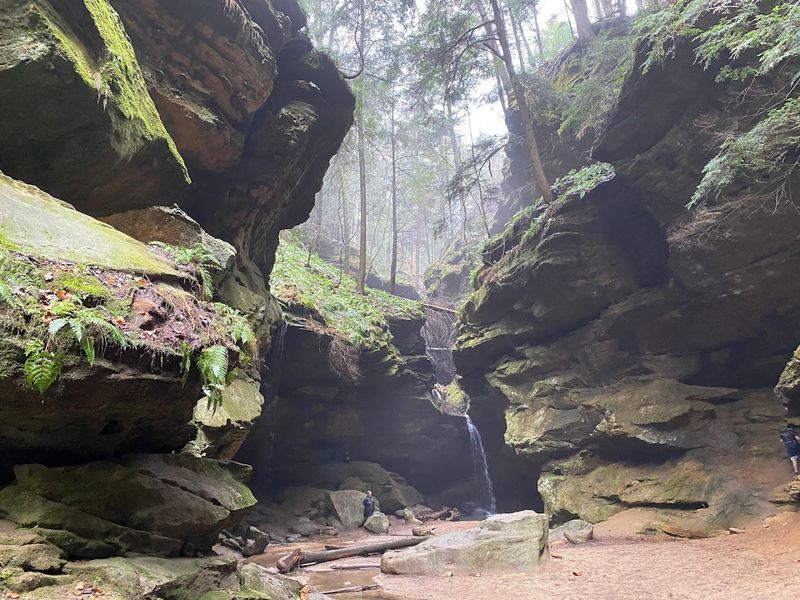
Conkles Hollow packs some of the most dramatic cliff scenery in Ohio into a relatively short hike, and the payoff starts almost immediately after you leave the parking area.
Located at 24858 Big Pine Road in Rockbridge, Ohio, this state nature preserve features a narrow gorge trail that winds between sandstone walls rising up to 200 feet on either side, draped in mosses, ferns, and hanging gardens of wildflowers.
The gorge floor stays shaded and cool throughout the day, with the high walls blocking direct sunlight for most of the morning and afternoon hours.
A second trail climbs to the rim of the gorge and offers sweeping views across the Hocking Hills landscape, though it involves some moderately strenuous climbing on uneven terrain.
Because this is a state nature preserve rather than a state park, the rules are stricter: no pets, no picnicking, and staying on the trail is firmly enforced.
The preserve is quieter than nearby Old Man’s Cave, attracting visitors who prefer a more contemplative outdoor experience.
Spring-fed seeps drip down the cliff walls even in dry July weather, keeping the gorge air noticeably humid and refreshing.
9. Cantwell Cliffs, Rockbridge
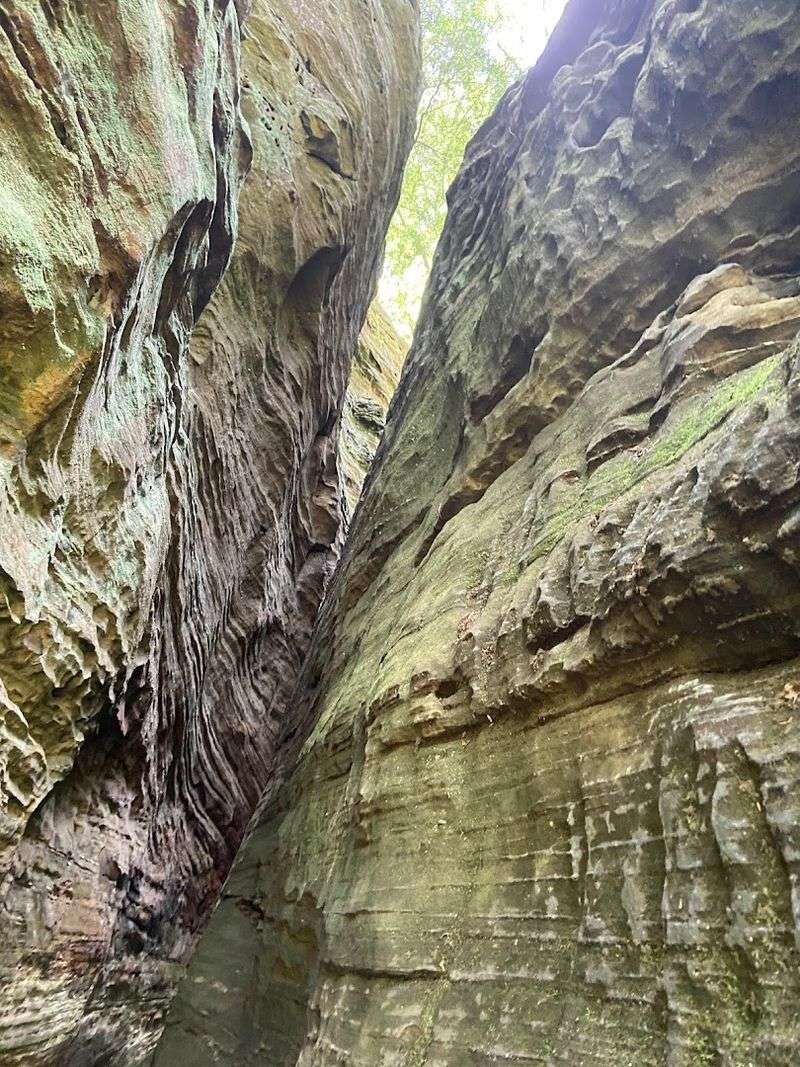
Cantwell Cliffs is the Hocking Hills destination that rewards hikers who are willing to go a little farther off the beaten path, and the experience feels genuinely different from the more famous spots nearby.
Sitting at 13640 OH-374 in Rockbridge, Ohio, this area features a dramatic loop trail of about 2.6 miles that passes through narrow sandstone passages, along cliff-top ledges, and down into a cool, shaded gorge carved by centuries of water erosion.
One section of the trail squeezes through a passage so narrow that hikers with wider backpacks may need to turn sideways, which is equal parts thrilling and amusing.
The gorge sections stay remarkably cool in July, with the tall cliff walls creating natural shade that cuts the ambient temperature by several degrees compared to the open forest above.
Because Cantwell Cliffs is one of the lesser-visited spots in the Hocking Hills system, parking is rarely a problem even on summer weekends.
The trail has some steep and rocky sections, making trekking poles a smart addition to your pack.
Birdwatching here is excellent, with pileated woodpeckers and wood thrushes frequently heard echoing through the gorge.
10. Clifton Gorge State Nature Preserve, Yellow Springs
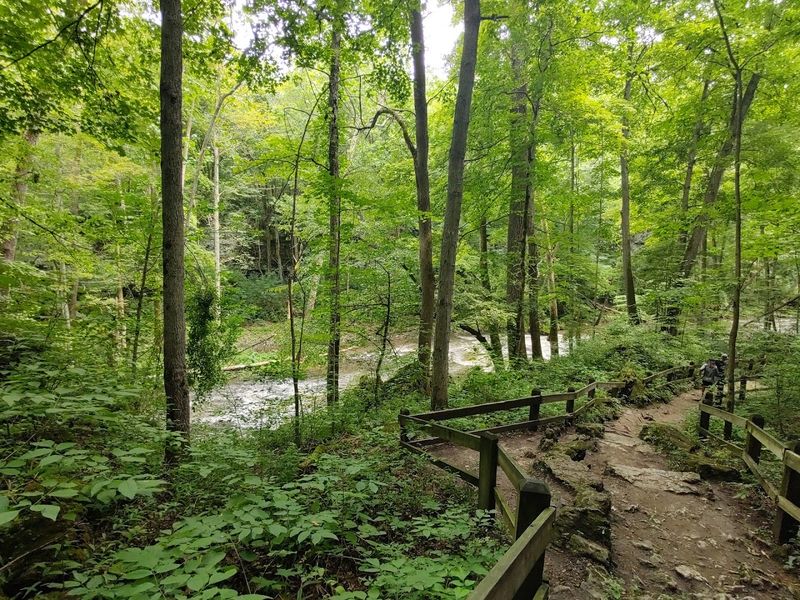
Clifton Gorge is one of those places that looks too dramatic to be real, with the Little Miami River churning through a narrow limestone gorge that was carved during the last ice age.
Located at 2331 State Route 343 in Yellow Springs, Ohio, this state nature preserve features a trail system that hugs the gorge rim and drops down to river level in several spots, giving you multiple perspectives on the rushing water below.
The gorge walls rise up to 100 feet in some sections, and the combination of cold river water and deep shade keeps the air along the trail noticeably cooler than the surrounding countryside.
Clifton Gorge is also a botanical hotspot, home to several plant species that are rare in Ohio and that thrive in the cool, moist microclimate created by the gorge itself.
The preserve connects to John Bryan State Park next door, which adds miles of additional trails if you want a longer outing.
Swimming in the gorge is not permitted, but the views of the rapids from the trail are spectacular enough to satisfy even the most adventurous visitors.
Yellow Springs is a charming town worth exploring before or after your hike.
11. Gorge Metro Park, Cuyahoga Falls
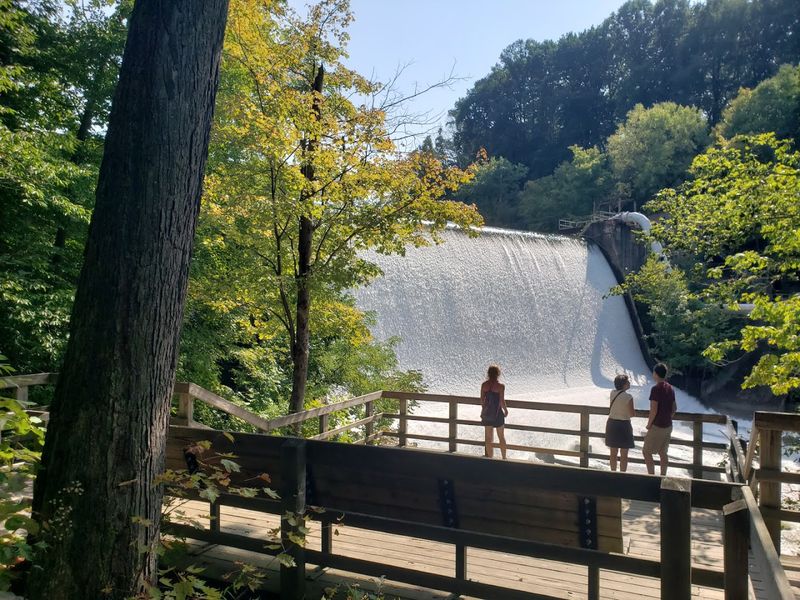
Up in the northern part of Ohio, Gorge Metro Park in Cuyahoga Falls delivers a surprisingly wild gorge setting just minutes from Akron, but current access requires a little homework.
The park entrance sits at 1160 Front Street in Cuyahoga Falls, Ohio, and several areas of Gorge Metro Park are affected by ongoing work tied to the Gorge Dam removal project.
Summit Metro Parks currently lists closures that include Glens Trail, the lower portion of Gorge Trail to the observation deck, and the Highbridge Trail lot, with those areas expected to remain closed for several years.
When open sections are available, the park showcases the Cuyahoga River gorge, dramatic rock layers, shaded forest, and views tied to one of Northeast Ohio’s most recognizable river landscapes.
Because conditions and trail access can change during construction, check Summit Metro Parks alerts before driving over, especially if you are planning around a specific trail or overlook.
Wildlife sightings around the broader river corridor are still possible, with birds often seen near the water and wooded edges.
Parking and trail options may be limited during the project, so this is no longer the simple show-up-and-roam stop the original entry described.