
12 Ohio Churches With Architecture That Feels Straight Out Of Europe (Oh So Beautiful And Sacred)
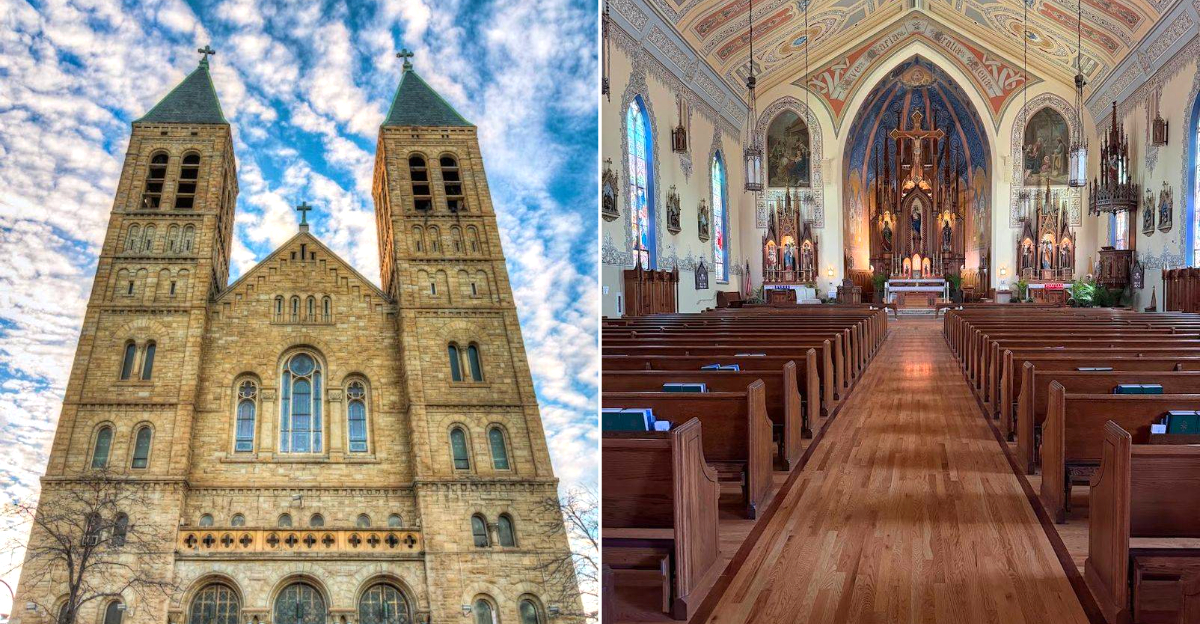
Some Ohio churches make you stop talking the second you walk in.
Not because they are loud or flashy. Quite the opposite.
It is the stonework, the stained glass, the painted ceilings, and that quiet feeling that somebody cared deeply about every inch of the place.
I love buildings like that.
They remind you how much history can fit inside one room, especially when immigrant communities built them with faith, patience, and serious craftsmanship.
These twelve Ohio churches feel less like quick stops and more like small architectural surprises, the kind that make the Midwest look a little more European than expected.
1. Cathedral Basilica of St. Peter in Chains, Cincinnati
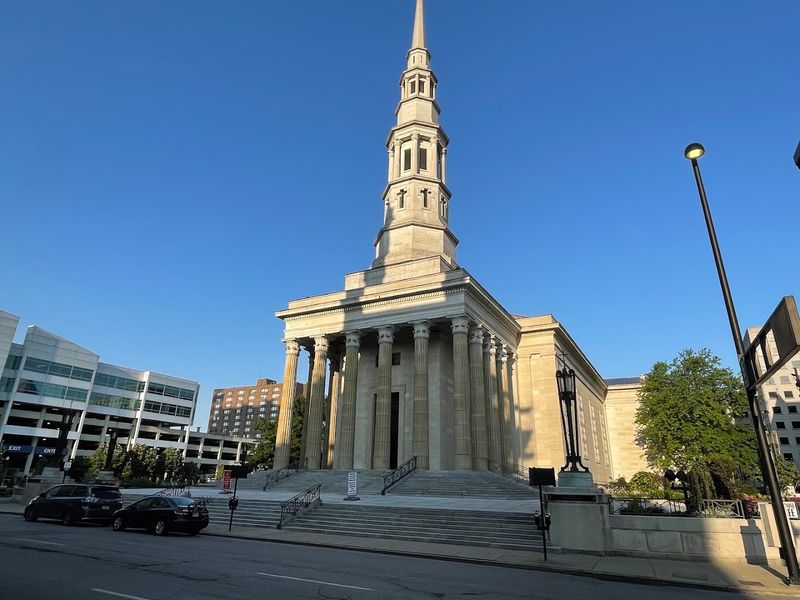
Few buildings in Cincinnati command attention quite like the Cathedral Basilica of St. Peter in Chains, sitting proudly at 325 West 8th Street.
Completed in 1845, this stunning structure is one of the finest examples of Greek Revival architecture in the entire United States.
Its gleaming white exterior is anchored by a row of massive Corinthian columns that look like they were lifted straight from ancient Athens.
Step inside and the experience shifts entirely. The interior was dramatically restored and expanded in the 1950s under the direction of Edward Schulte, who introduced rich marble, mosaics, gilded details, and artistic influences drawn from several historic traditions.
A monumental mosaic depicting three scriptural events from the life of St. Peter dominates the interior, while Greek, Eastern Christian, Art Deco, and early Roman basilica influences give the space its distinctive character.
Designated a minor basilica by Pope Francis in 2020, this church carries a title that reflects its historical, artistic, and spiritual significance.
Visitors are welcome to explore the interior during open hours, and the building is just a short walk from Cincinnati’s downtown core, making it an easy and rewarding stop on any city visit.
2. Holy Cross-Immaculata Parish, Cincinnati
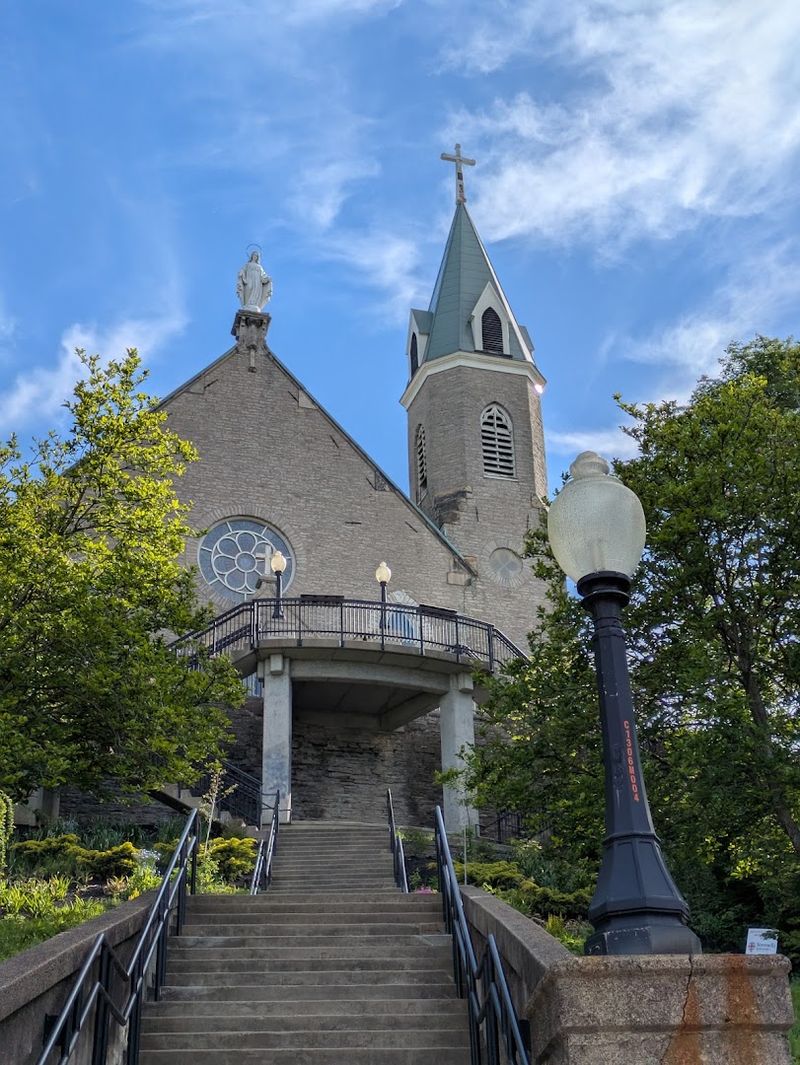
Perched dramatically on the hillside of Mount Adams in Cincinnati, Holy Cross-Immaculata Parish at 30 Guido Street is the kind of church that earns its reputation with every stone step you climb to reach it.
The tradition of praying while climbing the long stairway on Good Friday has drawn faithful visitors for well over a century, making this one of the most spiritually significant spots in Ohio.
Built in 1859, with its first Mass celebrated the following year, the historic brick church has watched over Cincinnati from its hilltop setting for generations.
The location gives the building an almost theatrical presence against the Cincinnati skyline, especially when viewed from across the Ohio River.
Inside, the church is rich with historic devotional paintings, carved details, a restored rose window, and stained glass that bathes the interior in warm, colored light throughout the day.
The church itself is maintained as a shrine to the Blessed Mother, adding to the contemplative atmosphere and making this more than just a sightseeing stop.
If you visit on a clear day, the view from the church grounds stretching over the city and river is something you will genuinely want to photograph and remember.
3. St. Mary Catholic Church, Dayton
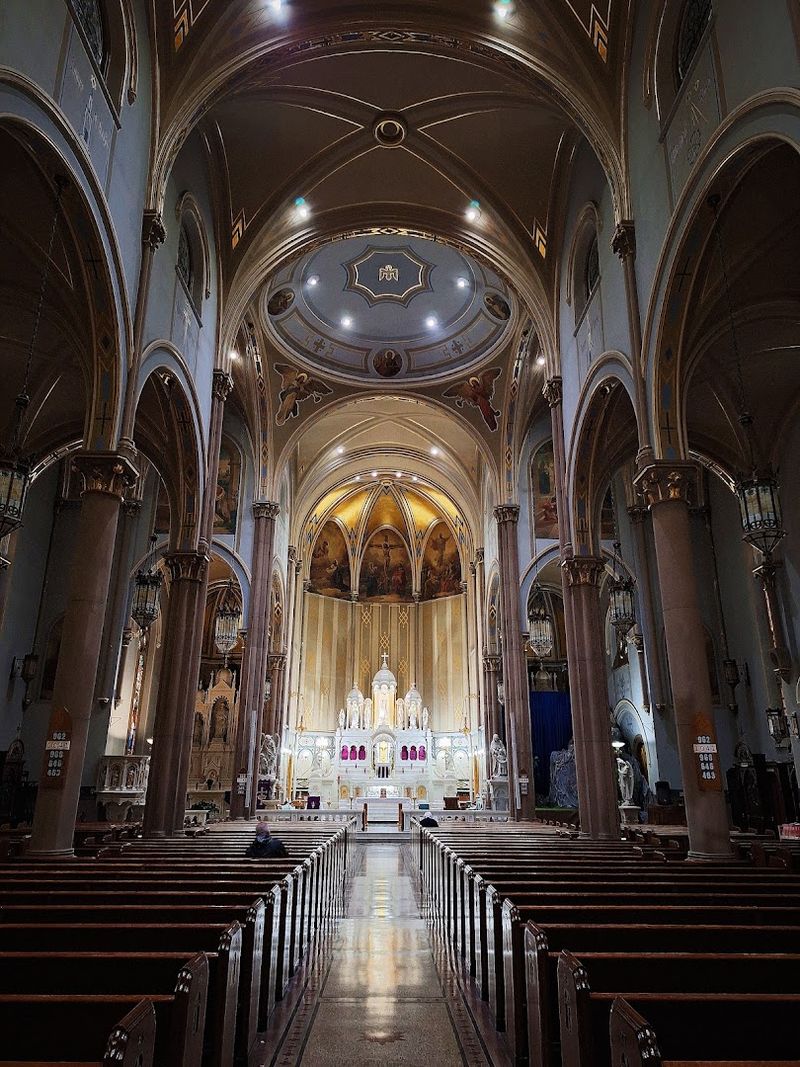
Romanesque architecture can make everything feel more epic, and St. Mary Catholic Church at 310 Allen Street in Dayton delivers that feeling in full.
Founded in 1859 to serve Dayton’s growing German immigrant community, this parish has more than a century of layered history built into its walls.
The present church, completed in 1906, features rounded arches, substantial masonry, and the strong, balanced forms that define the Romanesque style, giving it a silhouette that could easily be mistaken for something found in Germany.
Inside, the stained glass windows are genuinely extraordinary. Rich blues, deep reds, and golden yellows pour through the glass and paint shifting patterns across the pews and floors throughout the day.
The church has been lovingly maintained and restored over the decades, and that care shows in every polished surface and carefully preserved detail.
St. Mary’s sits in a historic neighborhood that rewards a slow walk, with several other notable buildings nearby worth exploring.
The parish remains active and welcoming, and visitors who arrive during open hours are often struck by how peaceful and grand the space feels even on an ordinary afternoon.
4. St. Bernard Catholic Church, Akron
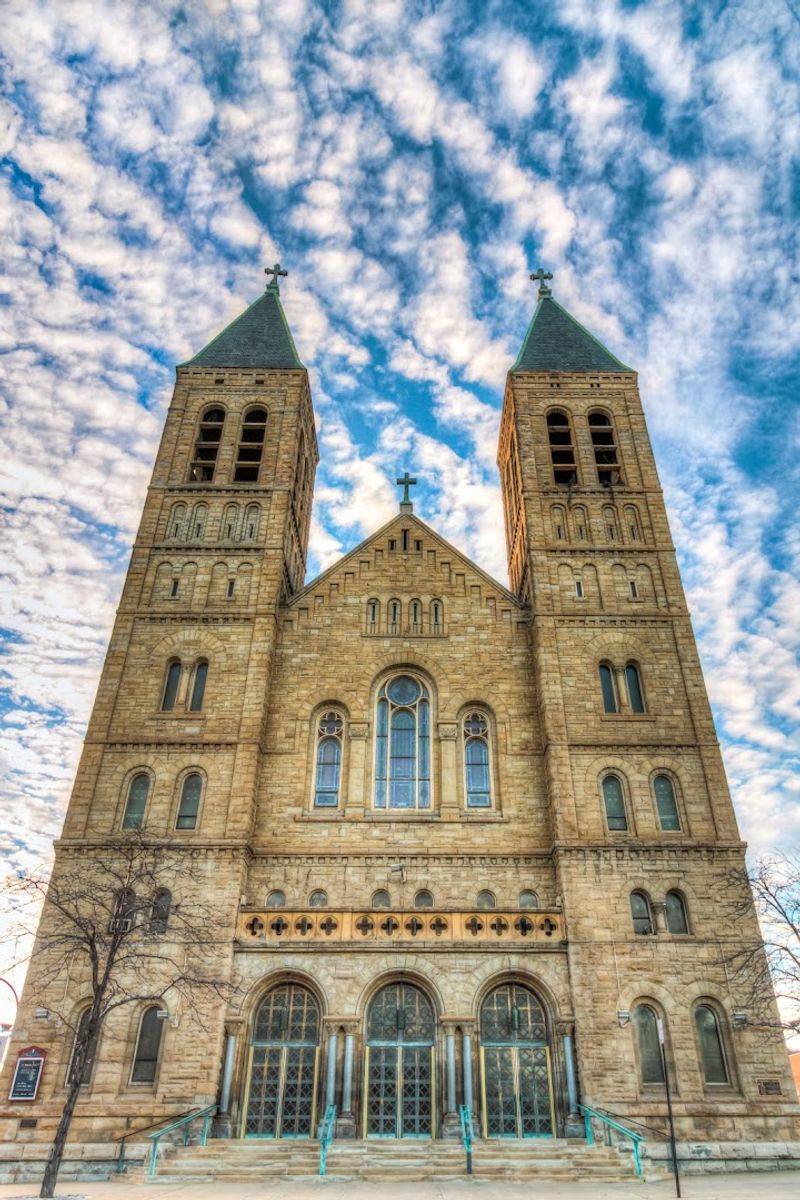
Tucked into the University area of Akron at 44 University Avenue, St. Bernard Catholic Church carries a quiet but undeniable grandeur that surprises first-time visitors.
The church was established in the mid-1800s to serve the city’s expanding Catholic population, and the building that stands today reflects generations of devoted craftsmanship and community pride.
Its stone exterior is anchored by a commanding tower that rises above the surrounding neighborhood, giving it a presence you can spot from several blocks away.
The architectural style draws heavily from European Romanesque traditions, with rounded arches, thick walls, and a solidity that feels designed to last for centuries, because it was.
Inside, the church opens into a beautifully proportioned nave with warm lighting, carved wooden details, and stained glass windows that bring color and life to even the quietest weekday afternoon.
St. Bernard’s has served the Akron community through enormous changes in the city’s history, and that continuity gives it a depth that newer buildings simply cannot replicate.
Visitors who appreciate old-world craftsmanship and the quiet power of a well-preserved historic church will find St. Bernard’s genuinely rewarding to explore.
5. St. Mary Catholic Church, Columbus
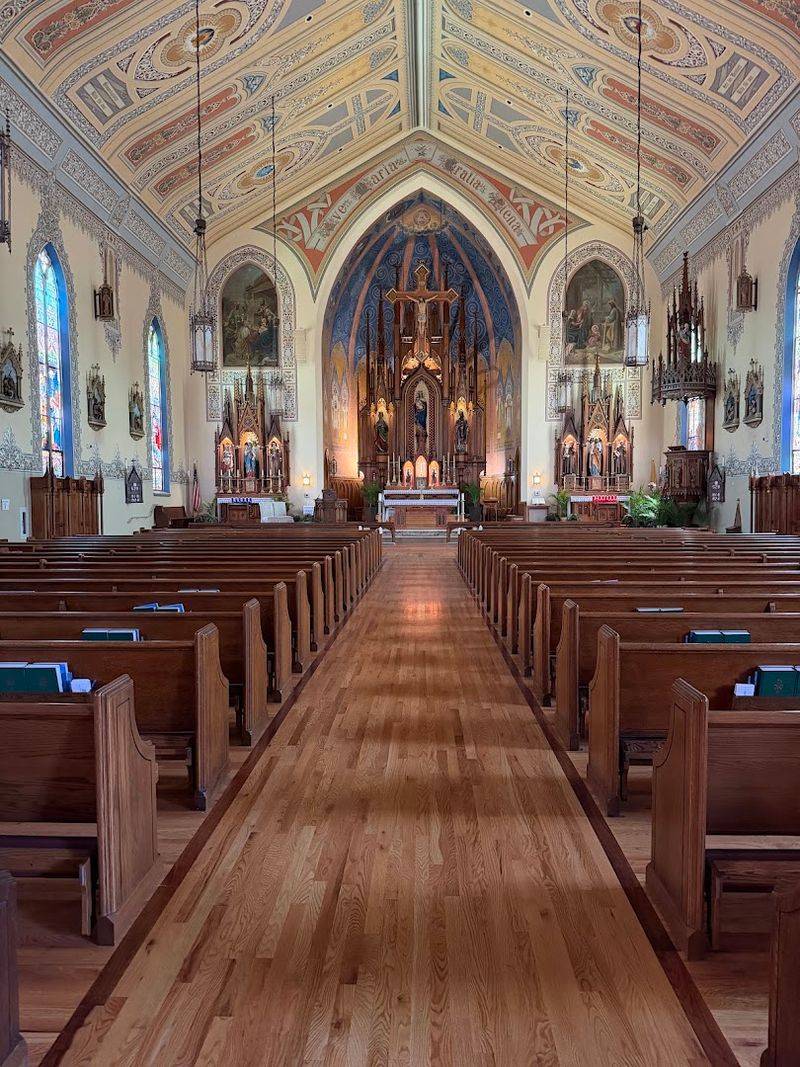
South Columbus has its own architectural treasure at 684 South Third Street, where St. Mary Catholic Church stands as one of the oldest and most visually striking parishes in the city.
Founded in 1868 to serve Columbus’s German Catholic community, the church reflects the deep pride those immigrants took in building a spiritual home worthy of the faith they carried across an ocean.
The brick exterior features arched windows, decorative stonework, and a tower that gives the building a distinctly European character, particularly reminiscent of the Rhine Valley churches that inspired its design.
Inside, the painted ceiling is the showstopper. Detailed figurative scenes and ornamental borders cover the vault above the nave, creating an experience that genuinely rivals much larger and more famous churches.
The warm interior lighting enhances every painted surface and carved detail, making the space feel intimate despite its impressive scale.
St. Mary’s sits in the historic German Village neighborhood, one of the most beautifully preserved 19th-century neighborhoods in the United States, which means a visit here pairs naturally with a walk through the surrounding streets.
6. St. Joseph Cathedral, Columbus
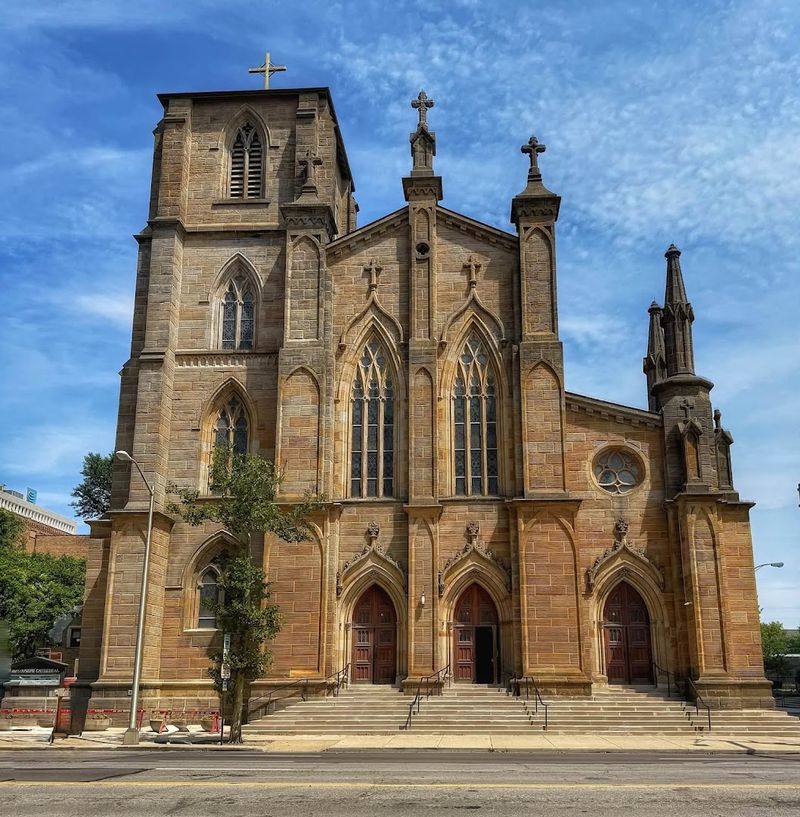
Right on East Broad Street at number 212, St. Joseph Cathedral is one of the most recognizable landmarks on Columbus’s architectural skyline.
First used for Mass in 1872 and consecrated in 1878, this Gothic cathedral began with plans prepared by architect Michael Harding, while Robert T. Brookes later continued the project as construction progressed.
The stone exterior features pointed arches and strong Gothic detailing. The original plans called for two monumental towers, but the main tower was never completed beyond the height seen today.
Inside, the cathedral opens into a soaring nave with groined arches, clustered Gothic columns, and rows of stained glass windows that transform sunlight into something almost supernatural.
The cathedral serves as the mother church of the Diocese of Columbus, and it hosts major liturgical events that draw visitors and worshippers from across the region.
Restoration work completed over several generations has preserved the building while respecting its historic design and religious purpose.
Arriving on a sunny morning, when colored light moves across the interior, is an experience that genuinely stops people in their tracks.
7. Basilica of St. Mary of the Assumption, Marietta
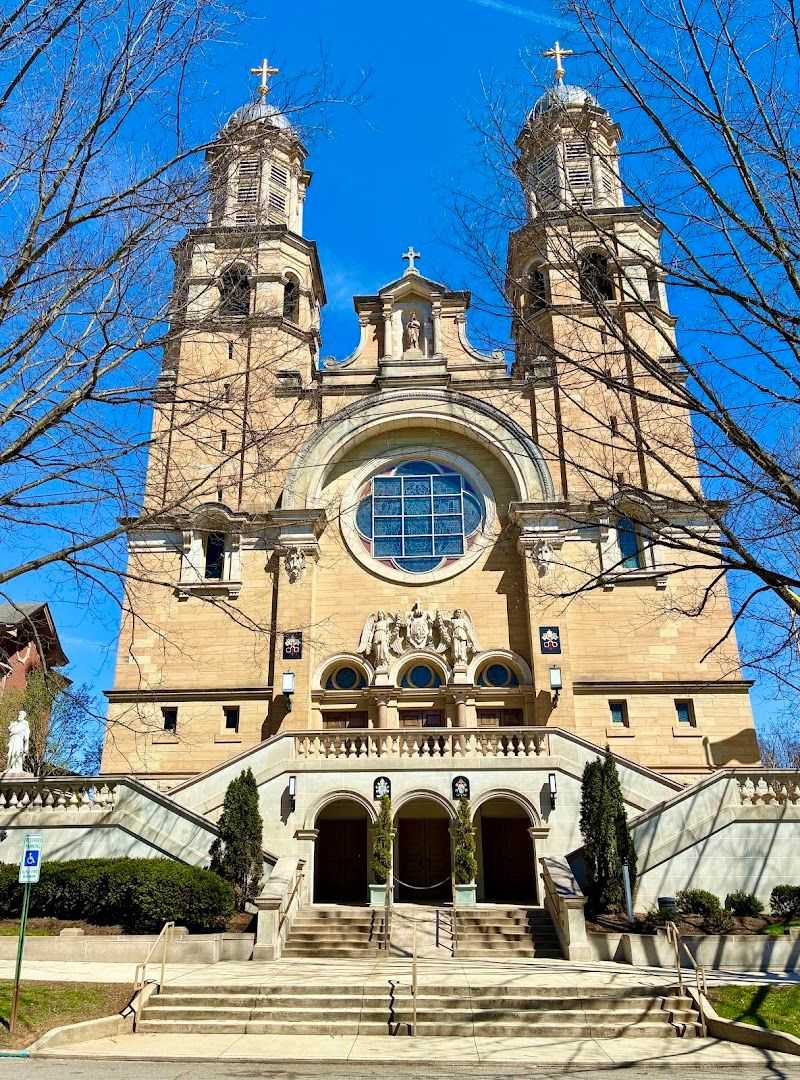
Marietta is already known as one of Ohio’s most historically rich cities, and at 506 Fourth Street, the Basilica of St. Mary of the Assumption adds another remarkable layer to that story.
Approved as a minor basilica by Pope Francis in 2013, this church carries an honor that reflects its historical importance, artistic beauty, and special relationship with the Holy See.
The stone exterior was designed in a Spanish Renaissance style blending Romanesque and Baroque influences, with towers, arched openings, and a dome that give the structure a profile recognizable from several blocks away.
Step through the entrance and the interior reveals itself gradually. The nave is proportioned beautifully, with massive columns leading the eye toward an altar that is richly decorated and clearly the work of skilled artisans.
Stained glass windows line the walls on both sides, and their colors shift with the movement of the sun throughout the day, keeping the interior feeling alive and ever-changing.
The basilica is an active parish, so visiting during quieter hours allows for a more contemplative experience.
Marietta itself is worth the drive, and this basilica is absolutely one of the architectural highlights of the visit.
8. Basilica and National Shrine of Our Lady of Consolation, Carey
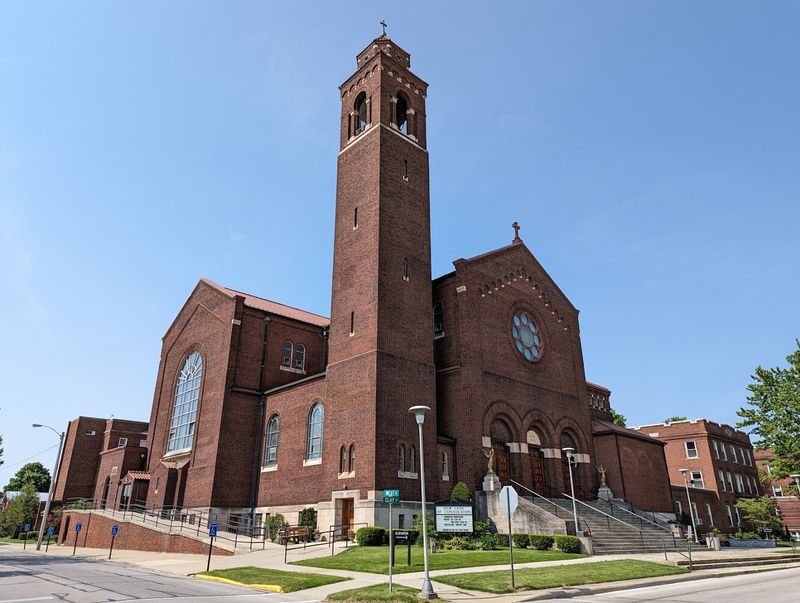
The small town of Carey, Ohio, is home to one of the most significant pilgrimage destinations in the country, and the Basilica and National Shrine of Our Lady of Consolation at 315 Clay Street is the reason people travel from across the United States to get there.
The shrine’s origins trace back to a replica of a famous statue from Luxembourg, brought to Carey in the 19th century, and the devotion that grew around it eventually led to the construction of this extraordinary church.
The basilica’s red-brick Romanesque exterior features one prominent bell tower, ornate brickwork, a large rose window, and round-arched entrances that give the building a distinctly European character.
Inside, the shrine is layered with votive offerings, religious artwork, and decorative elements accumulated over more than a century of pilgrimage activity, creating a visual richness that is unlike almost anything else in Ohio.
The painted surfaces, marble altars, and side chapels each tell a different chapter of the shrine’s long story.
Pilgrims and curious visitors alike are welcomed throughout the year, and the annual August pilgrimage draws thousands of people to this otherwise quiet small town.
9. Our Lady, Queen of the Most Holy Rosary Cathedral, Toledo
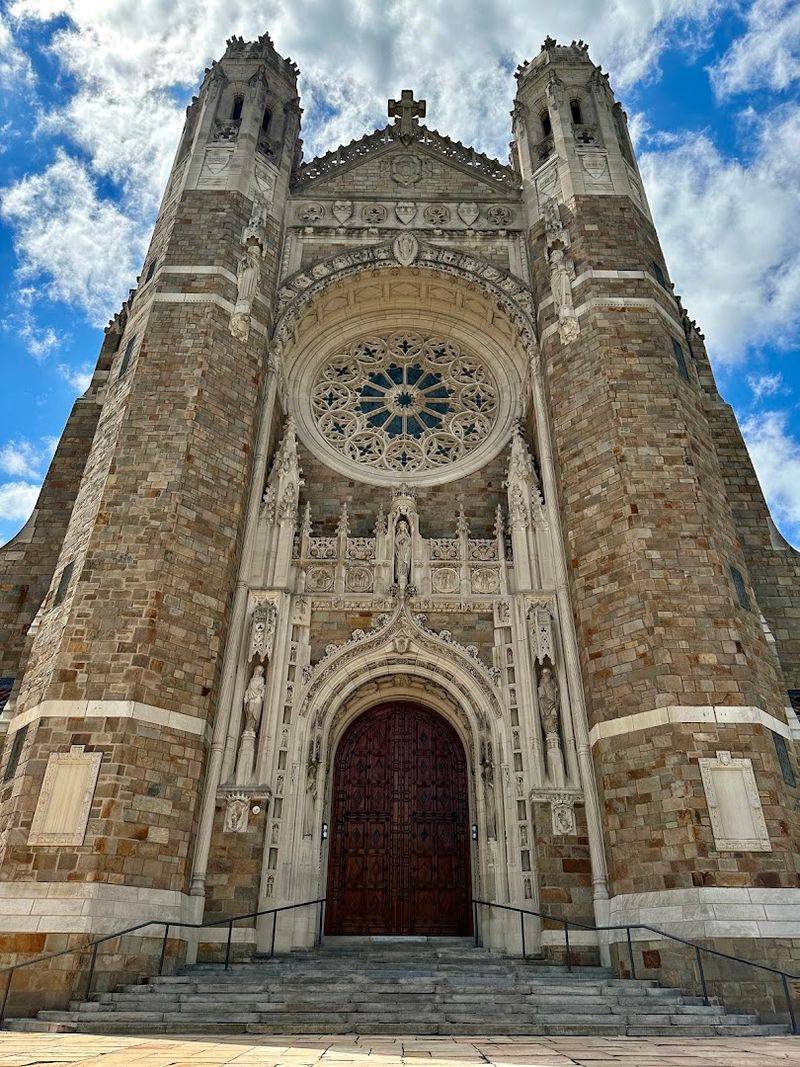
Toledo’s Collingwood Boulevard is home to one of the most visually distinctive cathedrals in the Midwest, and Our Lady, Queen of the Most Holy Rosary Cathedral at 2535 Collingwood Boulevard is a building that genuinely earns the word extraordinary.
Designed in a Spanish Plateresque style, the cathedral is an architectural outlier in Ohio, featuring granite and limestone construction, elaborate carved ornamentation, arched entrances, and decorative details inspired by Spanish architecture.
Plans were developed in 1922, the cornerstone was laid in 1926, the first public service was held inside in 1931, and the cathedral was formally dedicated in 1940. A large tower appeared in the original plans but was never constructed.
The interior is equally impressive, with a richly decorated nave, elaborate altars, murals, stained glass, and a collection of religious artwork that rewards far more than one quick look.
The cathedral serves as the mother church of the Diocese of Toledo, giving it a central role in the region’s Catholic life that adds to its historical weight.
Visiting the cathedral on a bright day, when the carved stone exterior stands sharply against a blue sky, produces the kind of photograph that makes friends ask where in Spain you traveled.
10. St. Mary’s Catholic Church, Sandusky
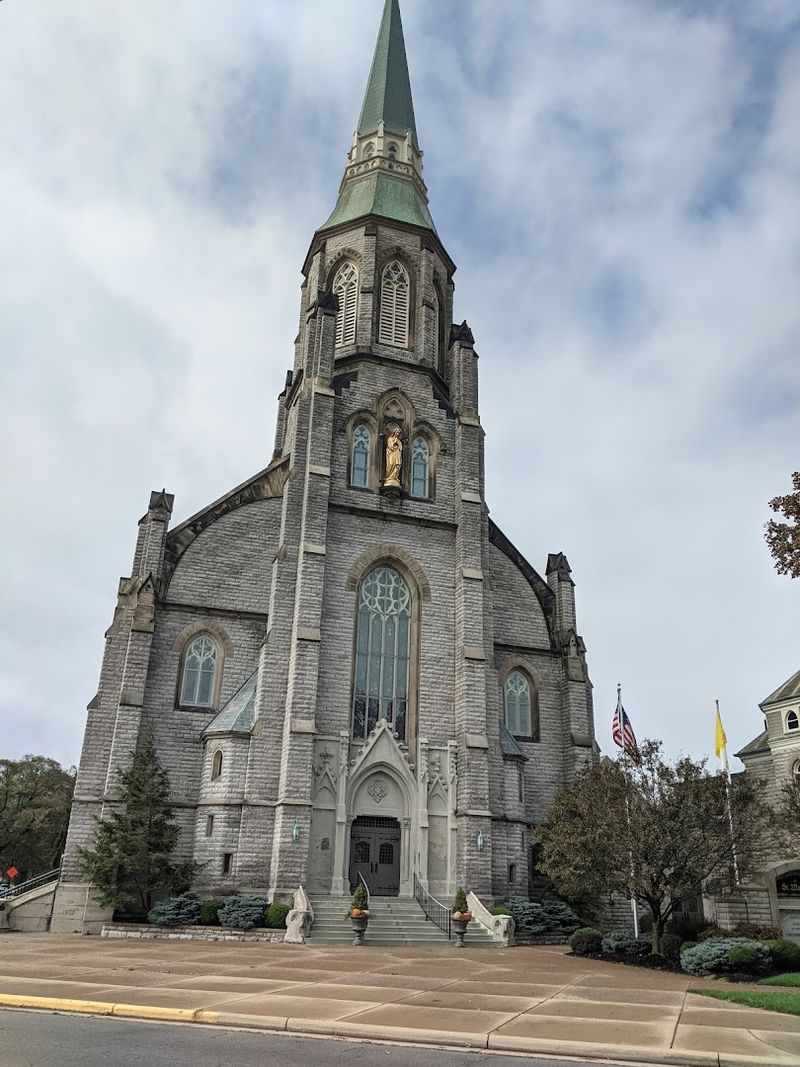
Sandusky is best known for roller coasters, but at 429 Central Avenue, St. Mary’s Catholic Church offers a completely different kind of awe-inspiring experience, one measured in generations rather than seconds.
Founded by German immigrants in 1855, the parish grew steadily alongside Sandusky’s development as a Lake Erie port city, and the current church reflects that era’s ambition and craftsmanship.
Construction of the present building began in 1873 under architect Franz Georg Himpler, and the church was dedicated seven years later. Its tall tower, arched windows, brickwork, and stone details speak clearly to the European church traditions the congregation brought to its new home.
Inside, the church rewards careful attention. The stained glass windows are particularly notable, with deep, saturated colors and detailed figurative scenes that have been maintained with evident care over the decades.
The woodwork throughout the interior is equally impressive, with carved pews and an altar that anchor the space with a sense of permanence and devotion.
St. Mary’s sits in a historic part of Sandusky that rewards a walking exploration before or after your visit to the church.
This is a place that reminds you that great architecture exists far beyond the obvious big-city destinations.
11. Shrine Church of St. Stanislaus, Cleveland
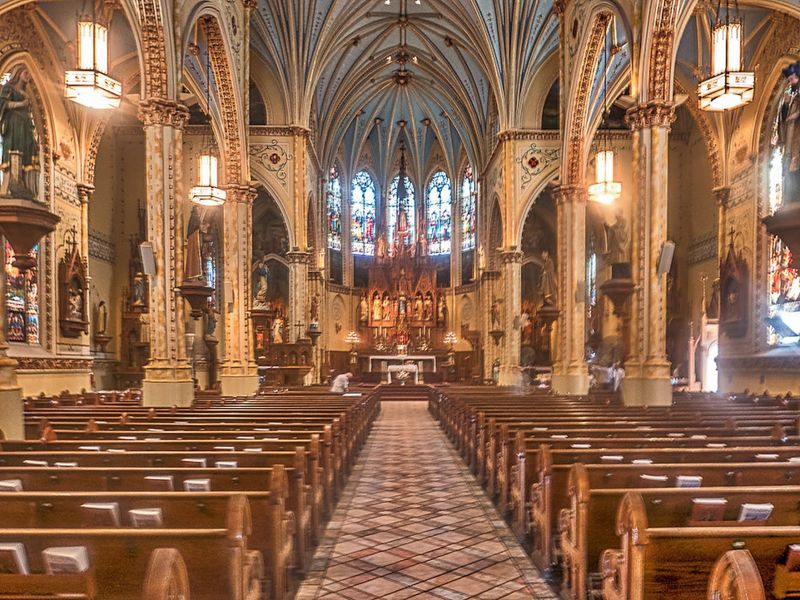
At 3649 East 65th Street in Cleveland’s historic Slavic Village neighborhood, the Shrine Church of St. Stanislaus is a testament to what a community can build when it is determined to honor both its faith and its heritage.
Established in 1873 to serve Cleveland’s growing Polish immigrant population, the parish eventually constructed a church of such ambition and beauty that it became a landmark not just for the neighborhood but for the entire city.
The exterior is a striking example of late-19th-century Gothic church architecture, with brick detailing, pointed openings, and twin towers. The original tall spires were lost during a 1909 tornado and were rebuilt at a lower height.
Inside, the church is a celebration of color, craft, and devotion. Painted murals cover the ceiling and upper walls, depicting biblical scenes with a vibrancy and skill that genuinely rivals European ecclesiastical art.
The gilded altars, carved woodwork, stained glass, and ornate side chapels add layer upon layer of visual richness to the experience.
St. Stanislaus was formally designated the Shrine Church of St. Stanislaus in 2004, reflecting its enduring significance to Cleveland’s Polish Catholic community.
A visit here feels like stepping into a different century, and that is entirely the point.
12. Cathedral of St. John the Evangelist, Cleveland
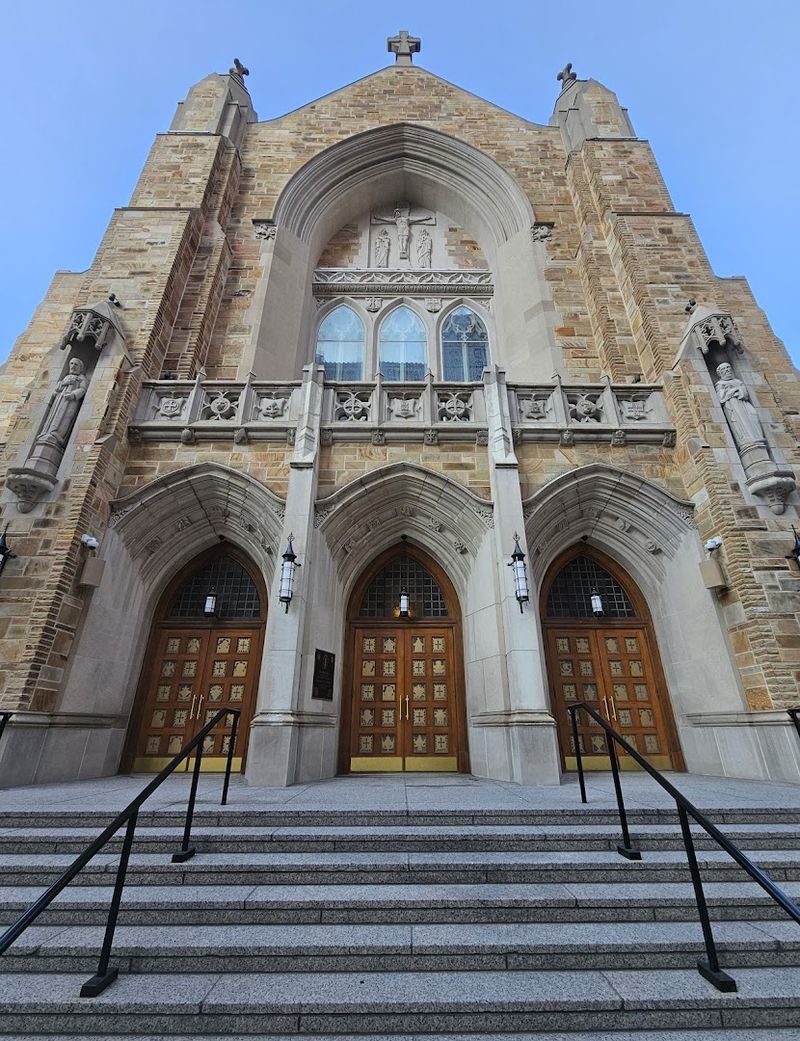
Cleveland’s Superior Avenue is home to one of the most architecturally significant Catholic churches in the entire state, and the Cathedral of St. John the Evangelist at 1007 Superior Avenue East has been anchoring that stretch of the city since the 19th century.
The current Gothic Revival structure, completed in 1852 and expanded significantly in subsequent decades, presents a commanding stone facade with a tall tower, pointed arches, and a scale that reflects the cathedral’s role as the mother church of the Diocese of Cleveland.
Every detail of the exterior communicates permanence and intention, from the carved stone entrance portal to the tracery in the upper windows that filters light in beautifully geometric patterns.
Inside, the cathedral opens into a nave of impressive height and length, with ribbed vaulting overhead and stained glass windows lining both sides of the space in a procession of color and narrative imagery.
The altar and sanctuary have been refined and restored over many decades, with each generation adding to the cathedral’s layered visual story.
The cathedral sits in the heart of Cleveland near several other cultural landmarks, making it a natural centerpiece for any architectural tour of the city.
Few buildings in Ohio carry this much history and beauty in a single address.