
7 Ohio Creeks And Creekside Spots Where You Can Hunt For Ancient Fossils
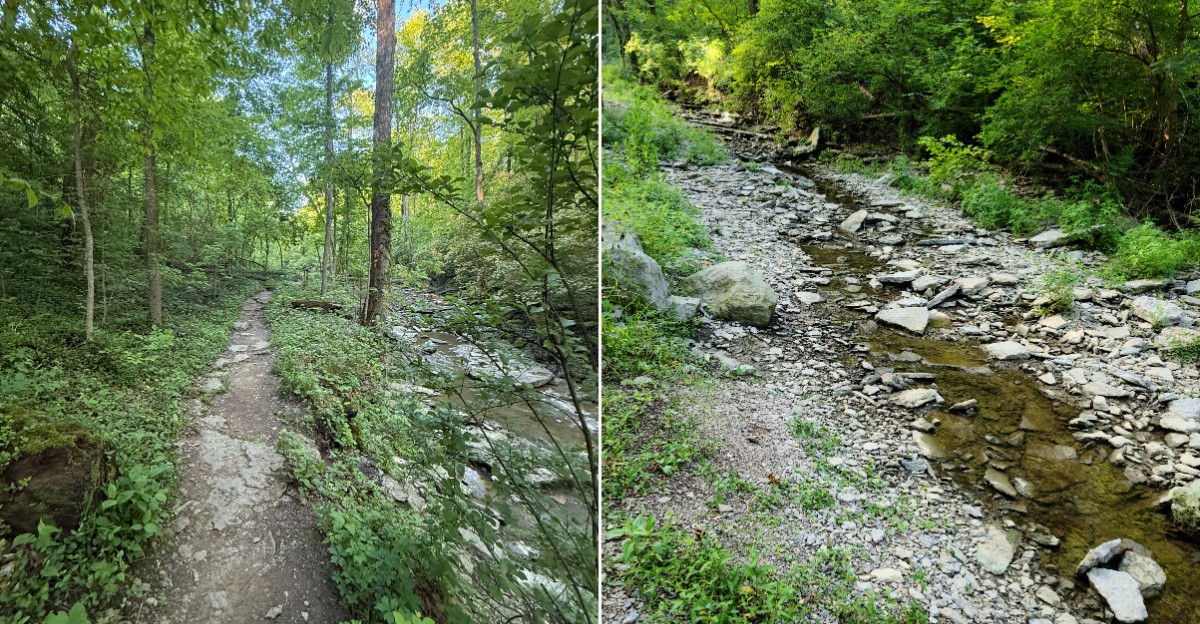
Ever picked up a rock and wondered what might be hiding inside it? In parts of Ohio, that ordinary-looking stone could contain a fossil that’s roughly 450 million years old.
I have to admit, finding traces of ancient sea creatures in a shallow creek sounds like a pretty interesting way to spend an afternoon. And the best part is that you don’t need to be a geology expert to appreciate what you’re looking at.
Southwestern Ohio is especially fascinating because much of the region was once covered by a shallow sea. Today, its exposed rocks and creek beds offer opportunities to discover evidence of that distant past.
Of course, there’s a difference between spotting a fossil and being allowed to take it home. Collection rules vary by location, so checking the regulations before your visit is always a smart move.
These seven Ohio creekside spots offer plenty of reasons to start looking a little closer at the ground beneath your feet.
One even requires a free collecting permit, and who knows what ancient surprise might be waiting for you among the rocks?
Caesar Creek Emergency Spillway, Waynesville
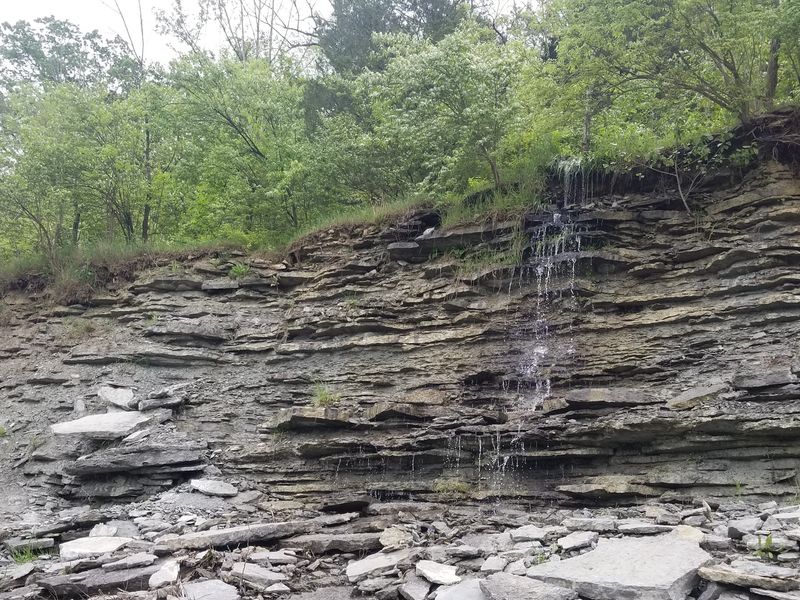
Picture a giant stone floor packed with sea creatures older than the dinosaurs.
That is exactly what waits at the Caesar Creek Emergency Spillway on Lincoln Road in Waynesville, Ohio, in the United States.
Builders cut through layers of rock when they made this spillway for Caesar Creek Lake. The result is a huge, open field of ancient seafloor that anyone can explore.
Here, the fossils are about 450 million years old. You will spot brachiopods, which look like tiny clam shells.
Bryozoans show up as lacy, twig-like shapes, and crinoid pieces look like little round beads.
Lucky hunters sometimes find trilobites. These bug-like sea animals are the rock stars of the spillway, so keep your eyes peeled for a curved, segmented shape.
Before you start, stop by the Caesar Creek Lake Visitor Center at 4020 N. Clarksville Road in Waynesville.
You need a free permit to collect here. The staff can also answer questions and show you what common fossils look like.
The rules are simple. Only palm-sized specimens may go home with you, and tools are not allowed.
That means no hammers, chisels, or shovels, so your hands do all the work.
Stay on the spillway floor and avoid climbing the rock walls or debris beneath them. The walls are unstable, and fossil collecting is permitted only within the designated emergency spillway area.
I suggest coming in the morning on a dry day. The rock surface has very little shade, and it gets hot in summer.
Bring water, a hat, and sunscreen, because the sun bounces right off the pale stone.
Sturdy shoes matter too. The ground is uneven, and loose rocks can roll under your feet.
A small zip bag or egg carton works great for keeping finds separate. Some families make a game out of who can find the most different types.
Plan for at least two hours here. Time has a funny way of slipping away when the whole ground is a treasure map, and you may leave with sore knees and a very happy grin.
Four Mile Creek At Hueston Woods State Park, College Corner
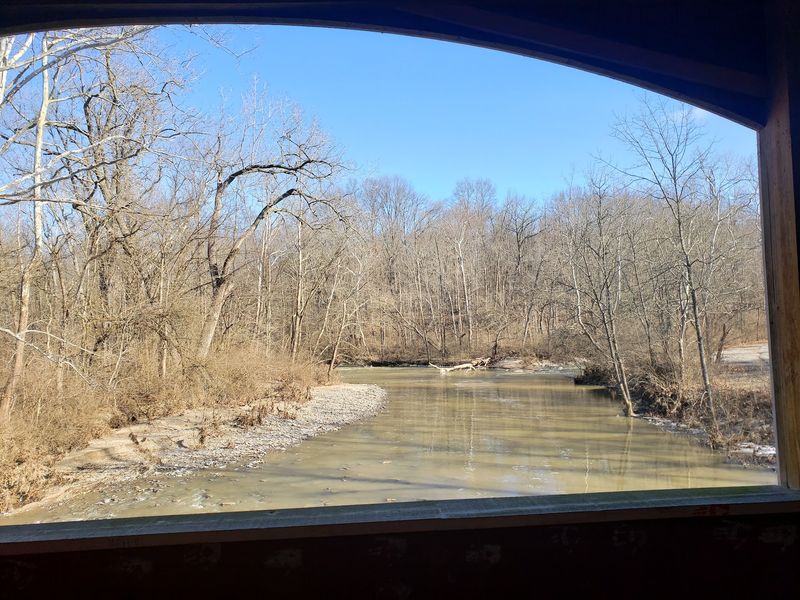
Splashing through a shallow creek is fun on its own. Finding a fossil shell under your sneakers makes it even better.
Hueston Woods State Park sits at 6301 Park Office Road in College Corner, Ohio, in the United States, close to the college town of Oxford. The park is known for limestone and shale that peek out along its creeks.
Four Mile Creek is one of the best places to see it.
The Four Mile Creek Picnic Area makes an easy home base. You can spread out a lunch, then wander down to the water and start searching.
The nearby covered bridge area is another popular spot, and it adds a lovely old-time feel to your trip.
So what can you find? Ancient shells, corals, and crinoid fragments are all common here.
Many rocks look plain at first, but tilt them toward the sunlight and little patterns pop out.
Collecting is allowed in the park’s creeks. Still, the park advises visitors to talk with a naturalist about current rules and the best locations.
I always check first, since guidelines can change, and the naturalists often share great tips.
Late summer and early fall are my favorite times to visit. Water levels tend to drop, which uncovers more creek bed.
After a big rain, though, the water can get fast and muddy, so wait a day or two.
Water shoes are a smart choice. The flat rocks can be slippery with algae, and nobody wants a surprise creek bath.
The park offers more than fossils. There is a big lake, hiking trails, and plenty of room for a full family day.
Bring a towel, a snack, and a curious mind. Four Mile Creek proves that history does not always live in a museum, sometimes it just sits quietly in the water waiting for you.
Amberley Creek At French Park, Cincinnati
Cincinnati has a secret, and it lives in the creek beds. The city sits on some of the richest fossil rock in the country.
French Park, at 3012 Section Road in Cincinnati, Ohio, in the United States, is a great place to see that for yourself.
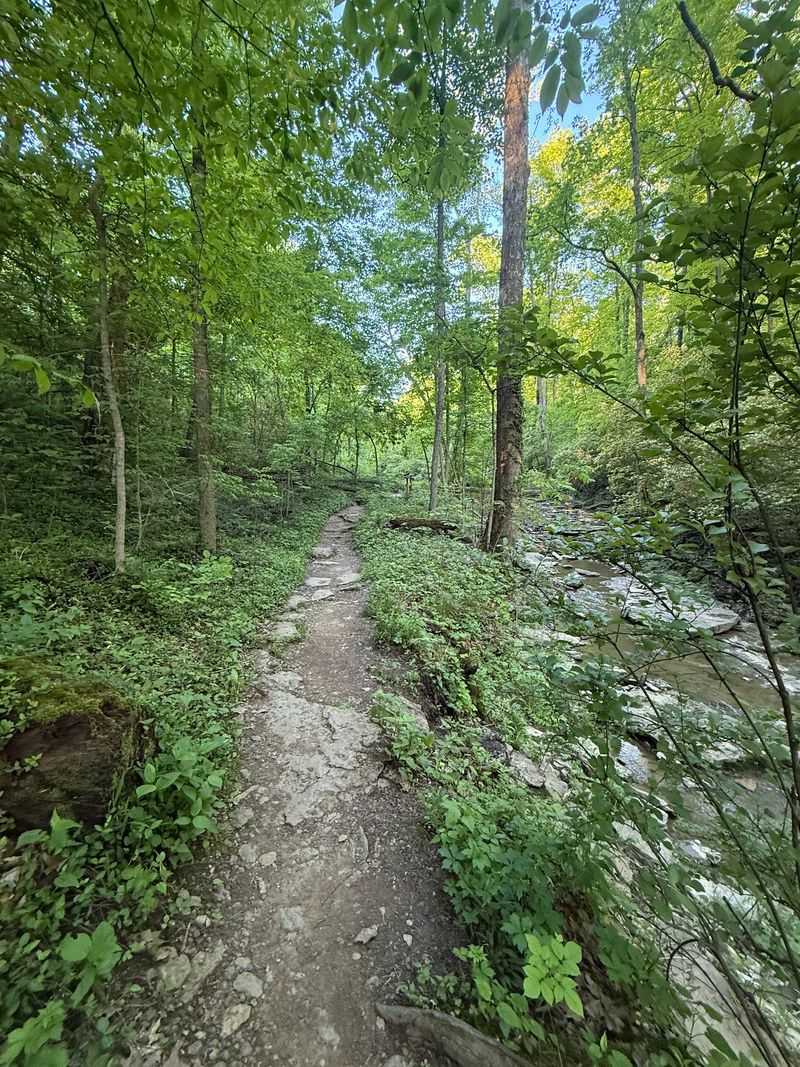
Amberley Creek winds through this wooded park, past forested hillsides and scenic hiking trails. Cincinnati Parks lists the creek as one of the region’s top fossil hunting spots.
I love how peaceful it feels here. The trees block much of the city noise, and the gentle sound of water makes rock hunting feel almost relaxing.
The creek rocks hold ancient marine remains from a time when this land was underwater. Look for ridged shells, branching corals, and round crinoid pieces.
Some stones are so full of fossils that they look like a crowded beach frozen in time.
Cincinnati Parks allows limited, responsible collecting in its fossil creek areas. That means taking only small pieces and leaving large rocks right where they are.
Those big rocks give homes to crayfish, insects, and other stream critters.
A good habit is to put back any rock you flip over. It keeps the creek healthy and gives the next hunter a fair shot too.
Spring and fall are lovely seasons for a visit. The leaves look amazing, and the air stays cool enough for long walks on the trails.
Pack a small magnifying glass if you have one. Tiny details on bryozoans and shell ridges look extra cool up close, and kids get a kick out of playing scientist.
After hunting, take time to stroll the trails and enjoy the woods. French Park is a reminder that a city adventure can feel wild, and the best souvenir might fit right in your pocket.
Lick Run Creek At California Woods, Cincinnati
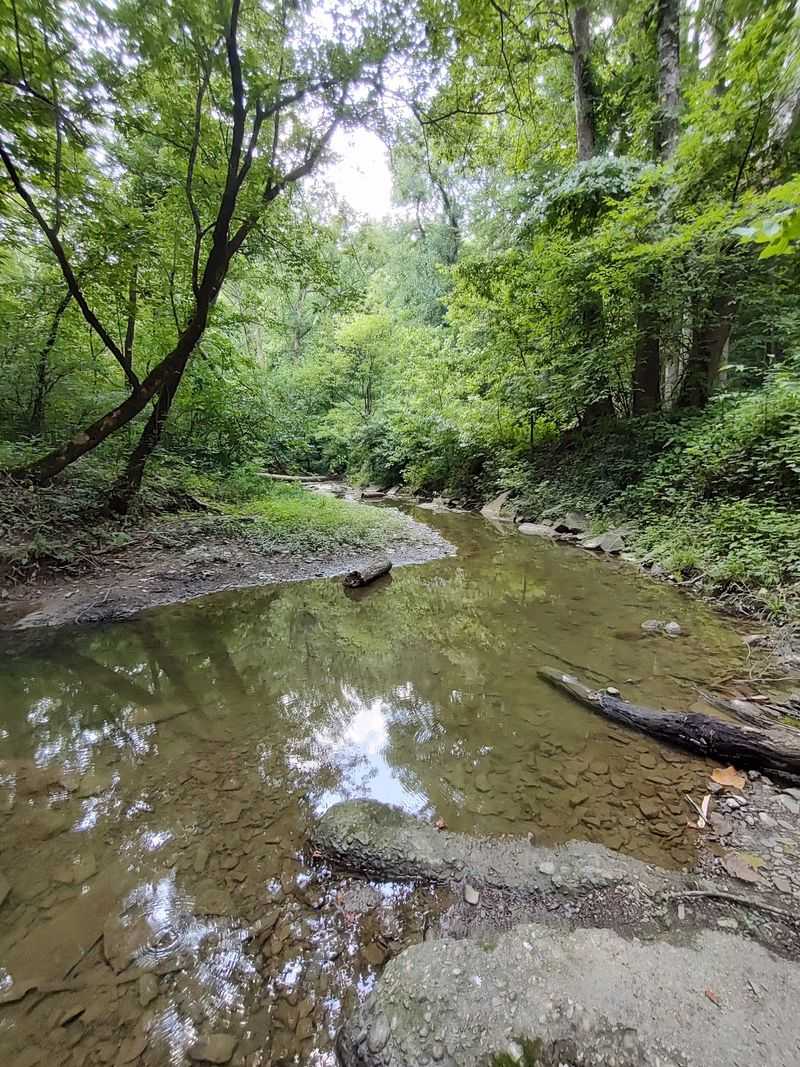
Yes, you can visit California without leaving the Midwest. You just have to head to Cincinnati’s California neighborhood.
California Woods Nature Preserve sits at 5400 Kellogg Avenue in Cincinnati, Ohio, in the United States. This 151-acre preserve features a pretty creek called Lick Run that flows through mature woodland.
Tall trees and quiet trails make it feel miles away from busy streets.
Along Lick Run Creek, layers of rock are exposed in the banks and bed. These rocks date to the Ordovician Period, a time when simple sea life filled warm waters.
Shell fossils, coral bits, and crinoid stems are all fair game for curious eyes.
California Woods appears on the official Cincinnati Parks fossil hunting list. That makes it a legit spot, not a sneaky guess.
Collect responsibly, stay in permitted areas, and only take small finds.
One rule surprises some visitors. Dogs are not allowed in the preserve, so leave your furry hiking buddy at home for this trip.
The quiet here is part of the charm. I like to sit on a flat rock, sort through a handful of pebbles, and listen to birds overhead.
It turns fossil hunting into a calm little break from screens and schedules.
For the best results, visit a few days after rain. Moving water can wash fresh rocks into view, but give the creek time to settle so it is safe and clear.
Wear shoes you do not mind getting wet. A small backpack with water and a snack keeps everyone happy on the trail.
Leave plenty of time for exploring the woods too. California Woods is the kind of place where you come for the fossils, then stay because the creek simply refuses to let you go home early.
The Creek At Stanbery Park, Cincinnati
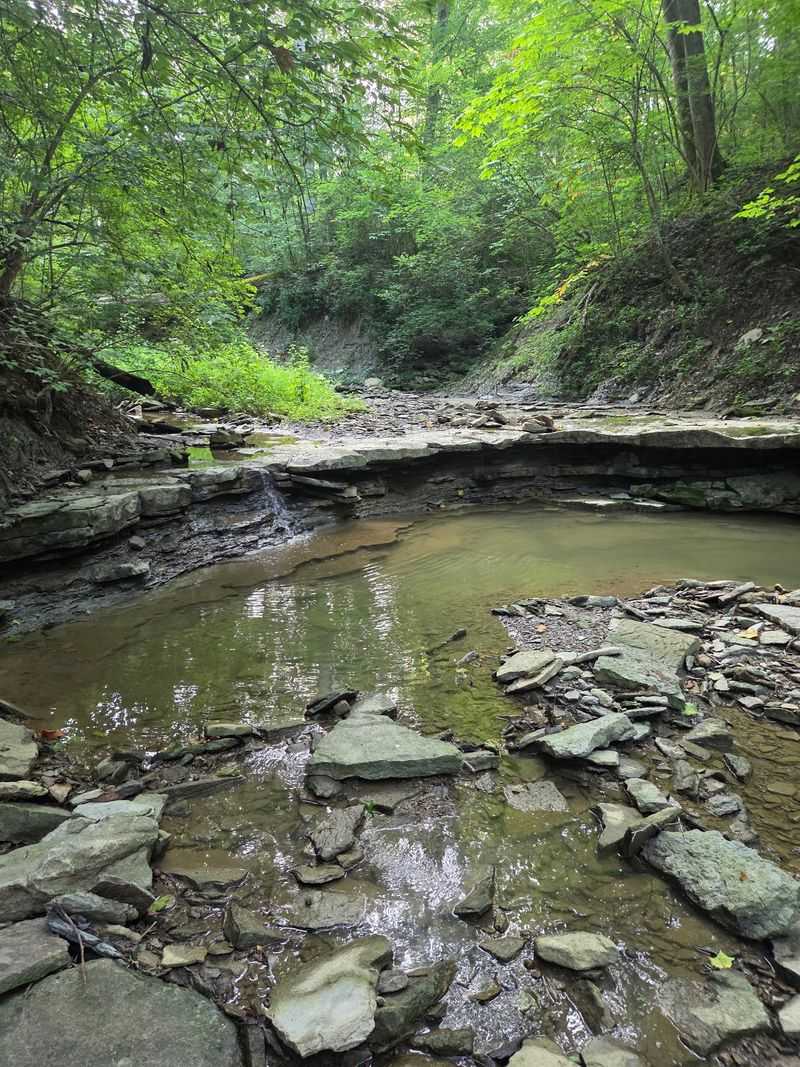
Some fossil spots make you hunt hard. Stanbery Park practically hands you a wall of history.
Tucked into the Mount Washington neighborhood, this 130-acre park sits at 2221 Oxford Avenue in Cincinnati, Ohio, in the United States. A wooded creek runs through it, surrounded by shale formations.
The star attraction is an exposed shale wall that Cincinnati Parks highlights as an excellent source of Ordovician fossils.
Shale is a soft, layered rock that breaks into thin, flat pieces. As it wears away over time, fossils slowly drop out and land near the creek.
That means sharp eyes can often find goodies just lying at the base of the wall.
Look closely and you may spot small shells, branching bryozoans, and tiny crinoid discs. I once found a brachiopod so neat it looked freshly stamped.
Limited creek collecting is permitted under Cincinnati Parks guidance. Pick up loose pieces instead of digging into the wall.
Keeping the shale wall intact means future visitors get to enjoy it too.
Here is a practical tip I learned the messy way. The hiking trails around the creek can turn muddy after rainfall, so wear boots with good grip.
An old towel in the car is a lifesaver. So is a plastic bag for muddy shoes on the ride home.
Stanbery Park is a nice choice for families with younger kids. The walk is short, and the fossil-rich area keeps short attention spans busy and excited.
Bring a small notebook if you want an extra challenge. Sketching your finds and labeling them later turns a simple outing into a fun science project.
When you finish, take a slow loop on the trails. Stanbery Park might be small on the map, but it packs a shale-sized punch of discovery.
The Creek At Caldwell Nature Preserve, Cincinnati
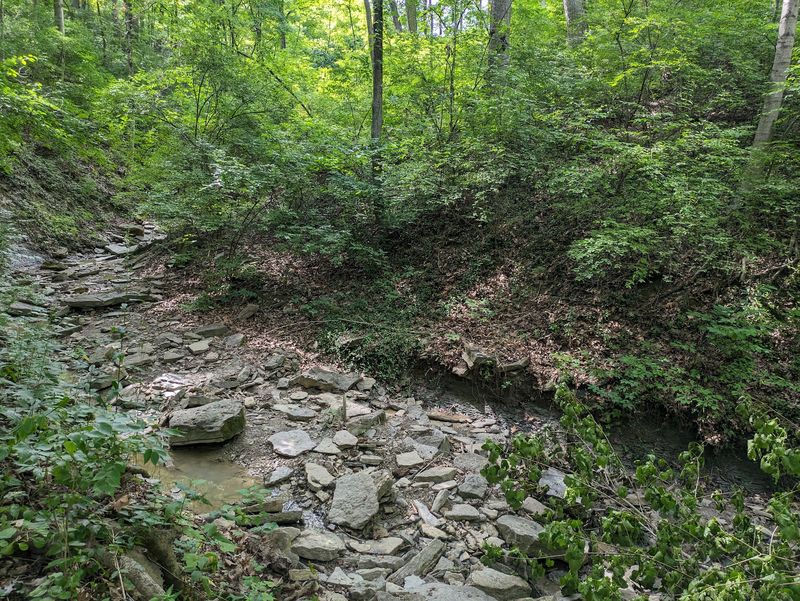
Good things come to those who hike downhill. At Caldwell Nature Preserve, the reward at the bottom is a creek full of fossils.
The preserve sits at 430 W. North Bend Road in Cincinnati, Ohio, in the United States.
It offers about 3.5 miles of trails winding through thick woods. Several routes head down toward a creek valley, where the real treasure hunt begins.
Cincinnati Parks names Caldwell as one of its recommended fossil hunting destinations. The creek bed rocks hold ancient marine fossils from the old sea that once covered the area.
Common finds include shells, coral pieces, and crinoid stems.
The hike itself is part of the fun. You pass tall trees, spot wildflowers in spring, and hear woodpeckers tapping away.
By the time you reach the creek, you feel like a real explorer.
Responsible collecting is allowed under Cincinnati Parks guidance. Keep your finds small, leave big rocks alone, and try not to disturb the stream.
Timing matters here. The preserve is generally open from dawn to dusk, so plan your visit during daylight hours.
The nature center only opens for scheduled programs, so check ahead if you hope to go inside.
Those programs can be worth it. Guided walks and nature activities sometimes help visitors learn more about the local land and its history.
Remember that what goes down must come back up. Save some energy for the climb out of the valley, and bring plenty of water.
A light backpack works better than a heavy bag. You will want your hands free for balance and rock flipping.
Fall is a beautiful season to visit, with colorful leaves lining the trails. Caldwell turns a fossil trip into a full woodland adventure, and your legs will remember it as fondly as your pockets do.
The Creek At McFarlan Woods, Mt. Airy Forest, Cincinnati
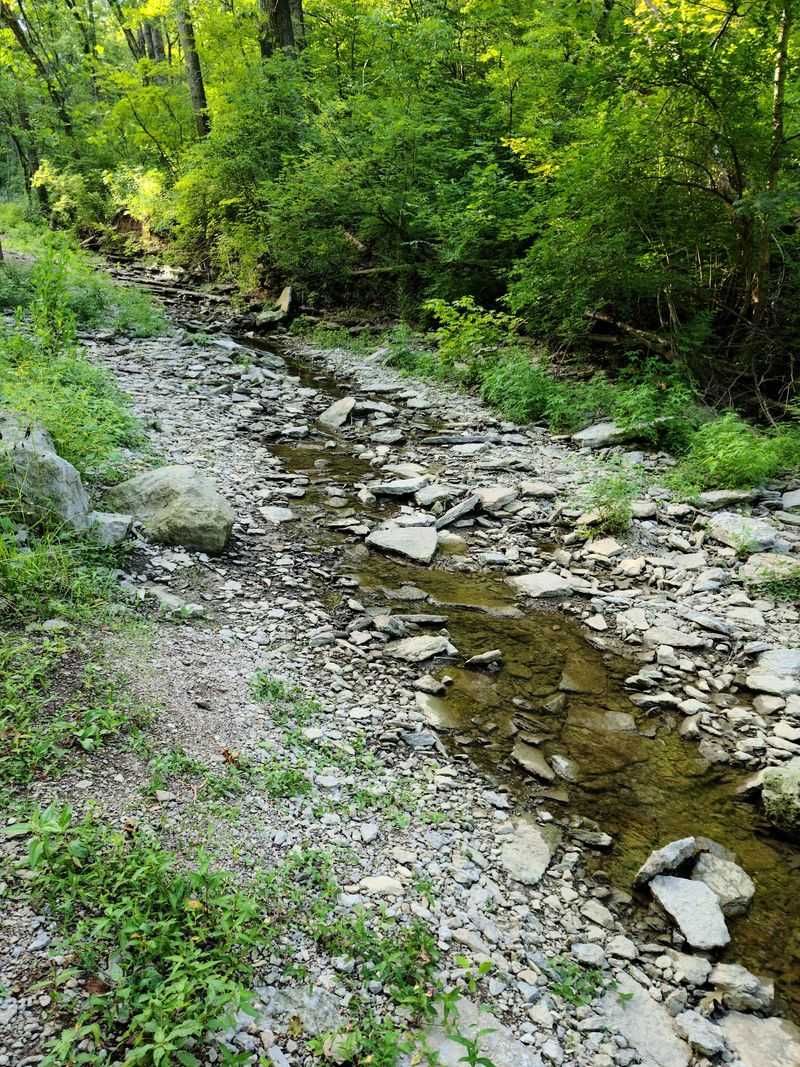
Crowds are rare at this one. That makes McFarlan Woods a dream for hunters who like peace and quiet.
McFarlan Woods is a calmer section of Mount Airy Forest, one of the largest city parks in the area. You can find it near 3690 McFarlan Ridge Road in Cincinnati, Ohio, in the United States.
Wooded trails and creekside views make it feel like a hidden corner of the forest.
Cincinnati Parks includes McFarlan Woods among its five recommended fossil hunting areas. That puts it in good company with the other city spots on this list.
The creek rocks hold ancient marine fossils just waiting for a careful look.
Since fewer people visit, you might have the creek mostly to yourself. I enjoy the slow pace here, where every rock gets a proper inspection.
Limited collecting is permitted under Cincinnati Parks guidance. As always, take only small pieces and leave the creek looking the way you found it.
Planning ahead is a must for this spot. Some woodland paths can be overgrown or hard to follow, so check the park’s trail map before you head out.
A downloaded map on your phone helps when signal gets spotty.
Long pants are a good idea too. They protect your legs from scratchy plants and keep ticks from hitching a ride.
Go with a buddy whenever you can. It is safer, and it is more fun to have someone to show your best finds to.
Early mornings feel especially magical here. Soft light filters through the trees, and the creek sparkles as you search.
McFarlan Woods wraps up this list on a quiet note. After a day of exploring, you may find that the forest’s silence is almost as rare as the fossils themselves.