
12 Ohio Dishes That Totally Made Sense In The ’80s
Remember when dinner came with big hair and bigger portions? The 1980s in Ohio wasn’t just about shopping malls and mixtapes – it was about distinctive regional foods that defined our gatherings.
These Ohio specialties flourished during the Reagan era, when casseroles ruled supreme and nobody counted calories.
Let’s revisit these Buckeye State classics that made perfect sense when neon was cool and leftovers always went home in margarine tubs.
1. Cincinnati Chili: Not Tex-Mex, But Something Better
Locals never called it ‘spaghetti with meat sauce’ – this was something uniquely Cincinnati. The secret blend of spices, such as cinnamon and allspice (with cocoa used in some recipes), topped spaghetti in ‘ways’ (2-way, 3-way, 4-way, 5-way) depending on your toppings.
Skyline and Gold Star restaurants expanded across Ohio in the ’80s, with Gold Star opening in some malls while Skyline focused on freestanding locations, making this once-ethnic specialty mainstream. Teenagers worked summer jobs serving mountains of finely shredded cheddar atop steaming plates.
My cousin from California visited in 1985 and thought we were crazy. By day three, he was ordering 4-ways like a native Cincinnatian.
2. Buckeyes: The Candy No Football Saturday Could Live Without
Peanut butter fudge balls dipped partially in chocolate to resemble the state tree’s nut became Ohio’s unofficial sweet. Every mother and grandmother had her own recipe, varying only slightly in the ratio of powdered sugar to peanut butter.
Buckeyes appeared at every bake sale, holiday gathering, and OSU football party. The no-bake simplicity made them perfect for 1980s busy moms juggling work and family obligations.
The trick was achieving the perfect peanut butter consistency – firm enough to hold shape but creamy enough to melt in your mouth.
3. Shredded Chicken Sandwiches: Concession Stand Royalty
Friday night football games in small-town Ohio meant one thing at the concession stand – shredded chicken sandwiches. Slow-cooked chicken mixed with crushed crackers and cream-of-something soup created a comfort food masterpiece.
Every mom had her secret ingredient – some added a splash of milk, others swore by crushed potato chips on top. The beauty was in its simplicity and ability to feed the whole team on a budget.
Back in ’83, my mom made these for my birthday party, and three kids asked for the recipe. Not for their moms – they wanted to make them themselves.
4. Johnny Marzetti: The Casserole That Fed Generations
Named after the brother-in-law of Teresa Marzetti (who owned a Columbus restaurant), this beefy pasta casserole was the ultimate 1980s potluck staple. Ground beef, tomato sauce, elbow macaroni, and cheese baked together in perfect harmony.
School cafeterias served it weekly, and moms made double batches – one for dinner, one for the freezer. The dish embodied 1980s practicality – affordable ingredients that stretched to feed many hungry mouths.
Variations abounded, with some families adding mushrooms, green peppers, or olives to customize their Marzetti magic.
5. Sauerkraut Balls: The Appetizer That Surprised Everyone
Akron’s gift to party platters everywhere – these deep-fried spheres packed tangy sauerkraut and ham into bite-sized flavor bombs. Cocktail parties weren’t complete without a platter of these northeastern Ohio specialties.
Legend has it they were created to use up leftover sauerkraut and pork from Akron’s German restaurants. By the 1980s, they’d become mandatory at holidays and gatherings across the state.
I remember my grandmother standing at the stove in her polyester pantsuit, frying batch after batch for New Year’s Eve 1987. The house smelled amazing.
6. Barberton Fried Chicken: The Serbian Secret Ohio Kept
While the Colonel was going national, Ohioans knew the real fried chicken came from Barberton. This Serbian-style chicken, served with spicy rice (actually a tomato-pepper sauce) and vinegar slaw, drew Sunday drivers from miles around.
Establishments like Belgrade Gardens and White House Chicken served their crispy, lard-fried chicken on paper-lined metal trays. No fancy presentation needed – the flavor spoke for itself.
The chicken stayed impossibly juicy inside while maintaining a shatteringly crisp exterior. No herbs or spices in the coating – just salt, pepper, and perfect technique.
7. Polish Boy: Cleveland’s Sandwich Masterpiece
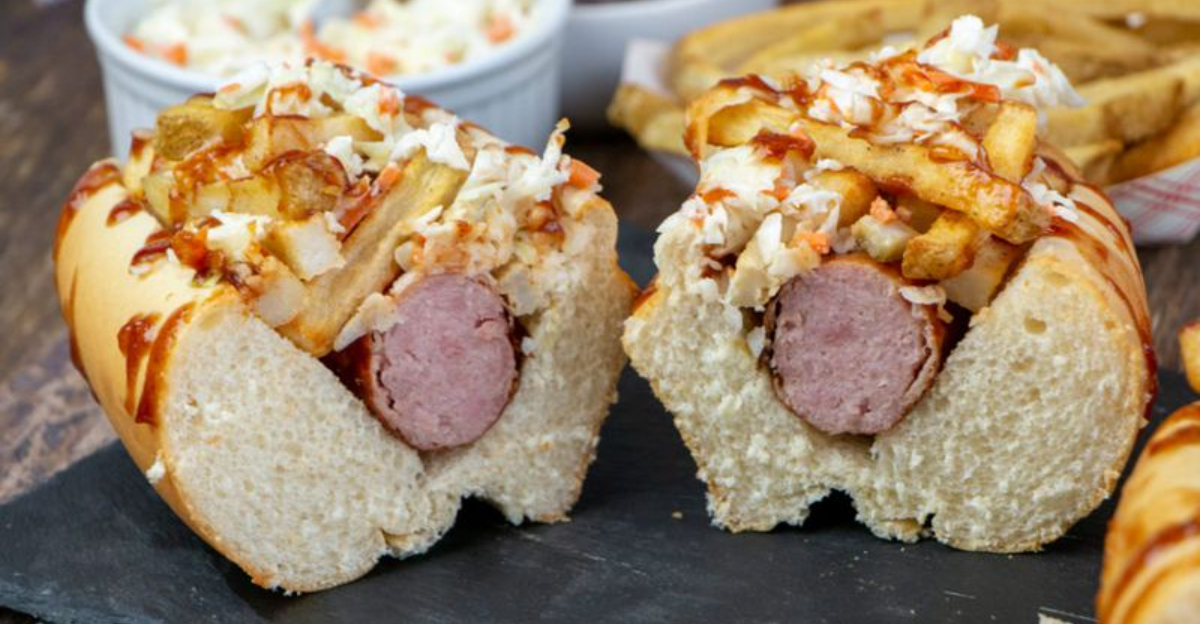
Cleveland’s contribution to sandwich architecture combined kielbasa, French fries, coleslaw, and barbecue sauce in a magnificent tower of flavor. This working-class hero required multiple napkins and a fearless appetite.
Popular at places like Seti’s Polish Boys and Hot Sauce Williams, this sandwich embodied 1980s excess – why choose between sausage and sides when you could pile everything together? The contrast of hot kielbasa with cool slaw created magic in every messy bite.
After Browns games, fans would line up in the cold for this perfect post-football feast, steam rising from the sandwiches in the winter air.
8. City Chicken: The Depression-Era Dish That Survived
Despite containing zero chicken, this Great Depression innovation remained beloved throughout 1980s Ohio. Cubes of pork and veal skewered on wooden sticks, breaded, and baked to resemble chicken drumsticks were weekend dinner staples.
Grandmothers in Cleveland and Youngstown kept the tradition alive, serving city chicken alongside mashed potatoes and green beans. The dish reflected Ohio’s practical nature – making something special from affordable ingredients.
My aunt served these at every family gathering with her special gravy recipe. She’d never share the secret ingredient, though we all suspected it was simply cream of mushroom soup.
9. Church Basement Pierogi: Faith, Fellowship, and Dumplings
Friday afternoons in Cleveland meant lines forming outside church basements where babushka-wearing women sold handmade pierogi by the dozen. These potato-cheese dumplings fried in butter with onions were worth the wait.
Parishes like St. Vladimir Ukrainian Orthodox and St. Josaphat Ukrainian Catholic became known for their pierogi quality. During the 1980s, these sales became major community events and fundraisers.
The production was impressive – assembly lines of women rolling dough, filling, pinching, and boiling. Each parish guarded their recipes like state secrets, with subtle differences in dough thickness and filling mixtures.
10. Goetta Breakfasts: Cincinnati’s Morning Meat Marvel
While scrapple claimed Pennsylvania and livermush belonged to the Carolinas, Cincinnati had goetta – a German-American breakfast meat that combined pork, beef, and steel-cut oats sliced and fried until crispy.
Glier’s became the dominant brand, but many Cincinnati families still made their own from recipes passed through generations. The contrasting textures – crispy exterior giving way to a soft, grain-studded interior – made it breakfast perfection.
In the 1980s, diners across Cincinnati’s west side served goetta as naturally as bacon or sausage. The dish was so regionally specific that travelers often brought frozen packages home like souvenirs.
11. Lake Erie Perch Sandwiches: Friday’s Freshwater Feast
Long before farm-to-table became trendy, Ohioans enjoyed lake-to-plate dining with fresh Lake Erie perch sandwiches. These light, flaky fillets were lightly breaded, fried golden, and served on soft buns with tartar sauce.
Lakefront restaurants from Toledo to Conneaut served these simple sandwiches with coleslaw and fries. The 1980s saw perch prices still affordable enough for regular family meals, before quotas and ecological changes affected the market.
Summer evenings meant driving to places like Brennan’s Fish House or Jolly Roger, where picnic tables overlooked the lake that provided dinner. The fish was so fresh it barely needed seasoning.
12. Tony Packo’s Hungarian Hot Dogs: The M*A*S*H Connection
Toledo’s most famous food became a national phenomenon thanks to Toledo native Jamie Farr mentioning it repeatedly on M*A*S*H. These weren’t ordinary hot dogs but Hungarian sausages topped with the restaurant’s famous spicy sauce and chopped onions.
The tradition of celebrity-signed hot dog buns began in the 1970s but exploded in the 1980s. Glass cases displayed hundreds of buns autographed by presidents, movie stars, and musicians who visited the East Side institution.
The restaurant’s pickles and peppers became so popular that they started selling them in jars at grocery stores. Tony Packo’s represented how a local favorite could leverage pop culture into lasting fame.