
15 Ohio Foods People Either Love Or Avoid
Ohio’s food scene is as diverse as its landscape, from the shores of Lake Erie to the rolling hills of Appalachia.
As a lifelong Buckeye State resident, I’ve witnessed firsthand how certain local dishes spark passionate debates at dinner tables across the state.
Some foods have become iconic symbols of Ohio’s culinary identity, while others remain divisive delicacies that separate the true locals from the uninitiated visitors.
1. Buckeyes
Nothing says ‘Ohio’ quite like biting into a homemade buckeye. I remember my grandmother making these peanut butter balls dipped in chocolate (leaving that distinctive ‘eye’ on top) every Christmas. The resemblance to the nuts from our state tree is uncanny, though thankfully our confections won’t poison you like the real thing!
The perfect buckeye requires balance – creamy peanut butter filling that’s not too sweet, with a thin chocolate shell that snaps just right. Store-bought versions never quite capture the magic of homemade ones, where family recipes are guarded secrets passed through generations.
Some folks find them cloyingly sweet, but most Ohioans will defend these treats as superior to any fancy chocolate truffle. During OSU football season, buckeyes become more than candy – they’re edible team spirit that disappear from party platters faster than you can say ‘O-H-I-O.’
2. Ohio-Style Pizza
Square-cut into tiny pieces that would make a New Yorker scoff, Ohio-style pizza is a curious phenomenon I’ve defended at many out-of-state gatherings. The thin, crispy crust serves as a sturdy platform for mountains of cheese and toppings that extend right to the edge – no wasted real estate here!
Donatos in Columbus pioneered this style, but regional chains like Marion’s in Dayton and LaRosa’s in Cincinnati each have their devoted followings. The ‘party cut’ or ‘tavern cut’ into small squares rather than triangular slices baffles outsiders but makes perfect sense to us – more pieces means more sharing (or more for yourself, I won’t judge).
The sweet tomato sauce might be the most divisive element. Half my family thinks it’s blasphemous while the other half considers it the hallmark of proper Ohio pizza. Whatever your stance, this style has fueled countless high school hangouts and office parties across the Buckeye State.
3. Pierogies
My Polish grandmother would spend hours in her Cleveland kitchen crafting these little pockets of heaven. Pierogies arrived with Eastern European immigrants who settled in northern Ohio, particularly Cleveland, where they’ve become a beloved staple rather than just an ethnic specialty.
These dumplings stuffed with potato, cheese, sauerkraut, or other fillings are typically boiled then pan-fried with butter and onions until golden. The contrast between the tender dough and crispy edges is what dreams are made of. Nothing beats watching them being made at church festivals, where babushka-wearing women pinch the edges with lightning speed.
While some find them too starchy or plain, pierogi lovers know the simple combination of dough, potato, and butter creates comfort food perfection. At Progressive Field, Cleveland Guardians fans even cheer for racing pierogi mascots between innings – that’s how deeply these dumplings have integrated into Ohio culture!
4. Cleveland-Style Polish Boys
The first time I ordered a Polish Boy from a food truck outside the Rock & Roll Hall of Fame, I wondered how I’d possibly eat this magnificent mess without wearing half of it. This Cleveland street food masterpiece starts with a kielbasa sausage stuffed into a bun, then gets absolutely smothered with French fries, coleslaw, and barbecue sauce.
Every bite delivers an explosion of flavors and textures – smoky sausage, tangy slaw, crispy fries, and sweet-spicy sauce. It’s the ultimate handheld meal that requires multiple napkins and zero concern for dignity. Some purists insist on hot sauce instead of BBQ, sparking heated debates at local stands like Seti’s and Banter.
Out-of-towners often mistake it for a chili dog variant, but Clevelanders know better. This working-class creation reflects the city’s Eastern European heritage and soul food influences. Not everyone appreciates this glorious caloric catastrophe, but those who do consider it Cleveland’s tastiest contribution to American cuisine.
5. Goetta
Growing up in Cincinnati, I thought everyone ate this strange meat-and-grain mixture for breakfast until I moved away and got blank stares when mentioning it. Goetta (pronounced ‘get-uh’) is essentially German peasant food – a mixture of ground pork, beef, steel-cut oats, and spices formed into slices and fried until crispy.
The texture is what divides people: crispy exterior giving way to a soft, grainy interior that’s simultaneously meaty and cereal-like. Cincinnati’s German immigrants created it as a way to stretch meat supplies, and it’s remained primarily in the city’s orbit despite attempts to introduce it elsewhere.
Glier’s produces the most famous commercial version, but small butcher shops often make their own. Goettafest in Newport, Kentucky celebrates this regional oddity with creative preparations from goetta pizza to goetta egg rolls. You’re either repulsed by its unusual texture or addicted to its savory, crispy goodness – there’s rarely an in-between reaction.
6. Corned Beef Sandwiches
My first visit to Slyman’s in Cleveland was a revelation – I’d never seen sandwiches piled so impossibly high with meat! Cleveland’s corned beef sandwiches are legendary, especially in the city’s historic Jewish delis and Irish pubs where they’ve been perfected over generations.
The ideal version features warm, thin-sliced corned beef stacked several inches high on rye bread with a smear of spicy brown mustard. Nothing else is needed, though some spots offer Swiss cheese or sauerkraut additions. The meat should be tender enough to bite through without pulling the entire sandwich apart – a true test of proper preparation.
While some find the portion sizes excessive or the salt content overwhelming, devotees consider these sandwiches a religious experience. During St. Patrick’s Day, lines stretch around blocks as Clevelanders patiently wait for their annual fix. These sandwiches reflect the city’s strong Eastern European and Irish influences – cultural heritage between two slices of bread.
7. Cincinnati Chili
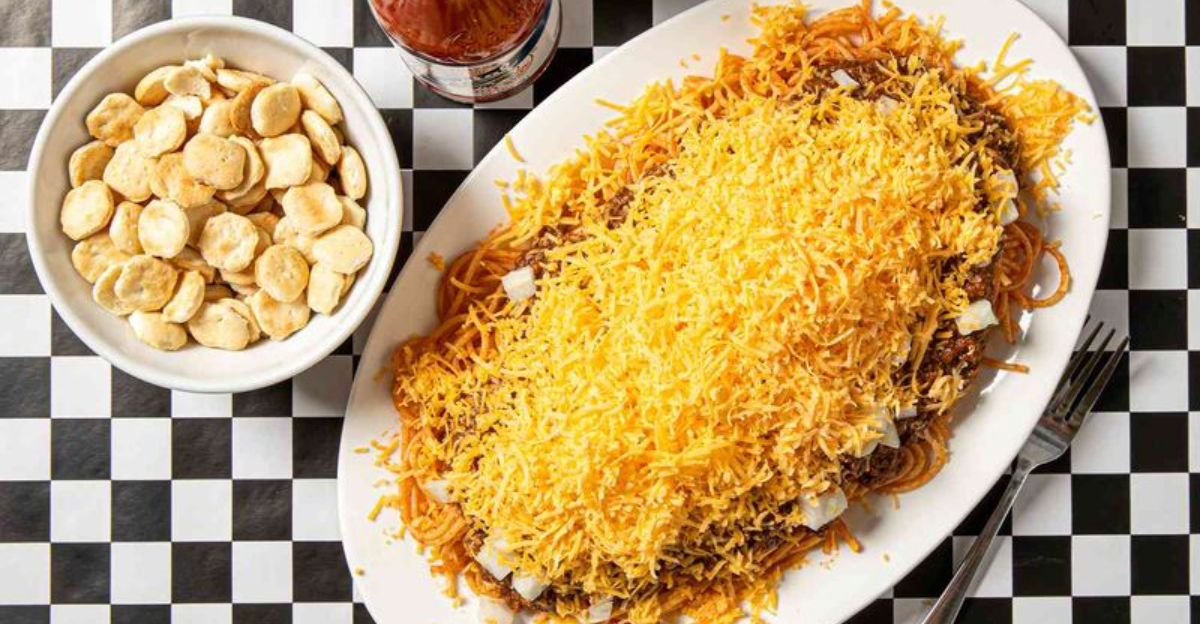
The first time I tried Cincinnati chili, I thought someone had made a terrible mistake. This Mediterranean-spiced meat sauce served over spaghetti bears little resemblance to Texas-style chili. Flavored with cinnamon, chocolate, and allspice, it’s typically ordered by ‘ways’ – from two-way (just spaghetti and chili) all the way to five-way (adding beans, onions, and mounds of shredded cheddar).
Skyline and Gold Star are the heavyweight champions in the Cincinnati chili arena, inspiring fierce loyalty among fans. Outsiders often dismiss it as ‘sweet meat sauce,’ while locals defend it with religious fervor.
Born from Greek immigrants in the 1920s, this odd regional specialty has become Cincinnati’s culinary calling card. One bite and you’ll either become a lifelong convert or swear off it forever – there’s rarely middle ground with this polarizing Ohio classic.
8. Montgomery Inn Ribs
The aroma of Montgomery Inn ribs instantly transports me back to family celebrations in Cincinnati. These luscious baby back ribs, slathered in the Inn’s famous tangy-sweet tomato-based sauce, have been serving as the backdrop for special occasions since 1951 when the original ‘Ribs King’ Ted Gregory opened his doors.
Unlike traditional smokehouse ribs, these are boiled then baked, resulting in fall-off-the-bone meat that purist barbecue aficionados sometimes criticize as ‘too tender.’ The signature sauce – now sold in supermarkets across the Midwest – strikes a perfect balance between tomato tanginess and molasses sweetness without the heavy smokiness of Southern barbecue sauces.
Presidents and celebrities have made pilgrimages to the restaurant’s riverfront location. While BBQ traditionalists might scoff at the preparation method, countless Ohioans consider these ribs the gold standard. They’re not trying to be authentic Memphis or Texas barbecue – they’re proudly their own Ohio institution.
9. Dayton-Style Chili
Everyone knows about Cincinnati chili, but I’ve started friendly arguments by suggesting that Dayton-style chili deserves equal recognition. While its Cincinnati cousin gets served over spaghetti, Dayton’s version typically comes in a bowl or atop a hot dog, with a texture more akin to traditional chili but still featuring those distinctive warm spices.
Skyline has locations in Dayton, but local institutions like Slyder’s and Gem City Chili serve up the authentic Dayton style. The chili has a darker color, thicker consistency, and often a spicier kick than its Cincinnati relative. You’ll find it topped with oyster crackers, onions, and that same neon-orange shredded cheddar.
Some Daytonians claim their version is the original that Cincinnati merely adapted and commercialized. This friendly rivalry continues to this day, with residents of each city defending their local interpretation. What both styles share is their ability to disgust first-time tasters who eventually become converts after a few more attempts.
10. Lake Erie Perch
Nothing tastes more like summer in northern Ohio than a platter of freshly caught Lake Erie yellow perch. I remember my grandfather returning from fishing trips with coolers full of these delicate fish that would become the centerpiece of family fish fries. These small, mild fillets develop a golden, crispy coating when properly fried, with flesh that flakes apart with just a fork touch.
Traditional preparation is simple – lightly breaded and flash-fried, served with lemon wedges and tartar sauce. Restaurants along the lake shore compete for the title of best perch sandwich, typically served on a soft bun with lettuce and tomato.
Some visitors expect more exotic seafood options, but locals know these humble freshwater fish outshine fancier fare. Environmental concerns have affected perch populations over the years, making these once-abundant fish more precious. When Lake Erie freezes, the winter perch shortage becomes a genuine hardship for devoted fans who count the days until fishing season returns.
11. Red Velvet Cake
My aunt’s red velvet cake recipe card is stained with decades of crimson batter splatters – evidence of how central this dessert is to Ohio family gatherings. While not exclusively an Ohio creation, red velvet cake has deep roots in Midwestern baking traditions, especially in our state where church potlucks and family reunions wouldn’t be complete without at least one version appearing on the dessert table.
The classic Ohio preparation features a subtle chocolate flavor with that distinctive red hue, topped with traditional cream cheese frosting rather than the heritage boiled milk frosting. The contrast between the moist, vibrant cake and the tangy white frosting makes for an irresistible combination.
Some food snobs dismiss it as merely chocolate cake with food coloring, missing the nuanced flavor profile that makes it unique. Regional variations exist even within Ohio – Cincinnati bakers often add more cocoa, while northern Ohio versions tend to be sweeter. Whatever the variation, this cake continues to represent celebration in households across the state.
12. Polish Sausage
The snap of biting into a perfectly grilled Polish sausage takes me back to summer festivals in Cleveland’s Slavic Village. Ohio’s rich Eastern European heritage, particularly in the northern parts of the state, has made kielbasa and other Polish sausages staples at family dinners, not just ethnic specialties.
The best versions come from small family butcher shops that have been making them the same way for generations. Slightly garlicky, smoky, and seasoned with marjoram and other spices, these sausages develop a crisp exterior when grilled while maintaining a juicy interior. They’re traditionally served with sauerkraut, pierogi, or simply on a bun with mustard.
While some find the garlic intensity off-putting, others can’t imagine holiday meals without these savory links. Cleveland’s West Side Market vendors still make them using old-country recipes, with lines forming early on Saturday mornings. These sausages represent Ohio’s industrial immigrant history – hearty, unpretentious food that sustained factory workers and continues to comfort their descendants.
13. Ohio Maple Syrup
My first maple sugaring season in northeastern Ohio changed my perception of syrup forever. Standing in the snow watching steam rise from the sugar shack, I realized the amber liquid drizzled over pancakes represents countless hours of work and generations of expertise. Ohio ranks among the top maple syrup producers nationally, with the northeastern counties producing the lion’s share.
Unlike the mass-produced syrups lining supermarket shelves, authentic Ohio maple syrup offers complex flavor notes that change based on when in the season it was produced. Early season syrup tends to be lighter with delicate flavor, while late-season batches develop a robust, almost caramel-like intensity.
Some find pure maple syrup too expensive or intensely flavored compared to the corn syrup varieties they grew up with. True enthusiasts, however, consider anything else sacrilege. The syrup-making tradition connects modern Ohioans to both indigenous practices and early settler heritage, making each bottle a sweet preservation of our state’s agricultural history.
14. Sweet Corn Pudding
Thanksgiving at my grandmother’s farm in central Ohio always featured her legendary sweet corn pudding – a dish that sparked more family debates than politics! This creamy, custardy side dish showcases Ohio’s agricultural bounty, particularly our famous sweet corn that reaches peak perfection in late summer.
The basic recipe combines fresh or frozen corn kernels with eggs, milk, sugar, and butter to create something that straddles the line between vegetable side dish and dessert. Some versions lean savory with the addition of cheese or herbs, while others embrace the sweetness with extra sugar or even a caramelized top like crème brûlée.
Corn pudding divides Ohioans into firm camps – those who consider it essential comfort food and those who find the texture disconcerting. Rural families tend to embrace it more than urban dwellers, reflecting its farmhouse origins. Whether you call it corn pudding, corn casserole, or corn soufflé, this humble dish remains a staple on holiday tables across the state’s agricultural heartland.
15. Apple Butter
The rich aroma of apple butter simmering in copper kettles at fall festivals represents pure Ohio autumn to me. This concentrated apple spread – essentially applesauce cooked down until it becomes dark, thick, and intensely flavored – has deep roots in our state’s Appalachian and Amish communities, where preservation techniques turned fall harvests into year-round staples.
Traditional preparation involves slow-cooking for hours with cinnamon, cloves, and sometimes nutmeg until the natural sugars caramelize, creating that distinctive deep brown color. The best versions maintain a perfect balance between sweetness and apple tartness, with spices that complement rather than overwhelm the fruit.
Some find it too intense compared to regular applesauce, while others become lifelong devotees after one taste on warm bread. Annual apple butter festivals in communities like Roscoe Village and Burton draw thousands who watch the stirring process using long-handled paddles in giant copper kettles – a tradition passed down through generations of Ohio families.