
Ohio Has A Covered Bridge That Feels Like A Postcard From Another Century
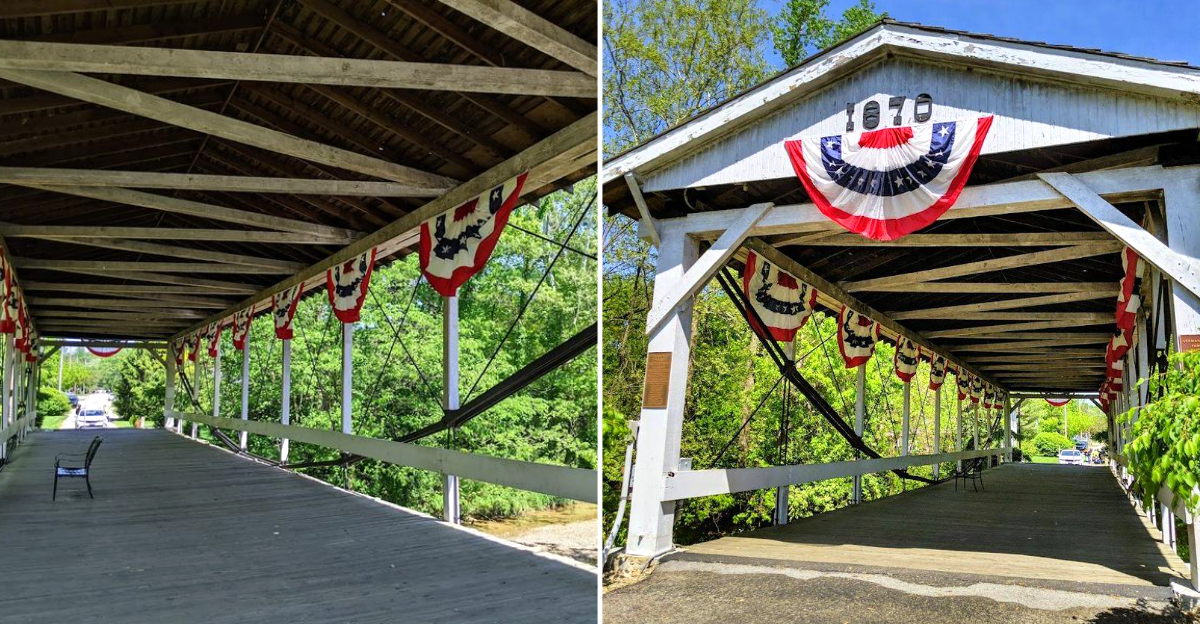
Some Ohio landmarks do not need flashing signs or grand entrances to make you stop and stare. This covered bridge sits quietly in a small town, looking like it wandered out of an old postcard and decided to stay put.
The first surprise is how peaceful it feels. The second is how rare it is.
This is not a decorative replica or a roadside photo prop, but a real historic bridge with more than 150 years behind it and a design you will not find just anywhere.
Between the wooden planks, the quiet creek, and the old-fashioned charm, the whole scene feels like a tiny time slip in the best possible way. It is the kind of Ohio stop that makes a simple detour feel oddly memorable.
A Bridge Unlike Any Other in the World
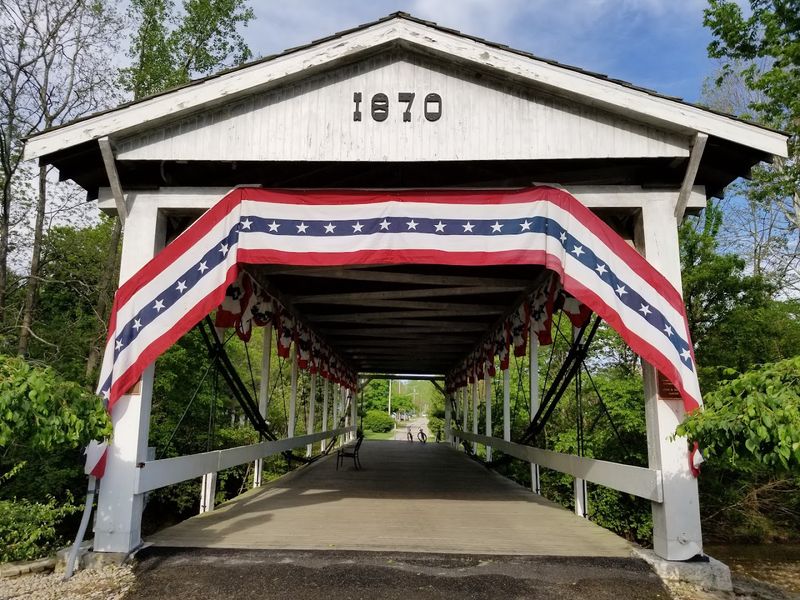
Built in 1870, the Germantown Covered Bridge holds a title that most historic structures can only dream about: it is reputed to be the only covered bridge of its kind remaining in the world.
That is not just marketing language. It is part of the bridge’s documented historical reputation, and historians and bridge enthusiasts have paid close attention to its unusual engineering for decades.
The bridge spans Little Twin Creek and rests on cut stone abutments that have helped anchor its story for well over a century. What makes the design so visually striking is the inverted bowstring truss system, which gives it a look completely unlike the traditional covered bridges most people picture.
The crisscrossed steel tie rods and wooden compression members create geometric patterns that catch your eye from every angle. You can view much of the truss from outside because the bridge has no full side cladding.
The full location is E Center St, Germantown, OH 45327. The bridge was listed on the National Register of Historic Places in 1971, though later damage and reconstruction changed that status, and current restoration work is intended to help restore its historic eligibility.
The Story Behind the Move and the Restoration
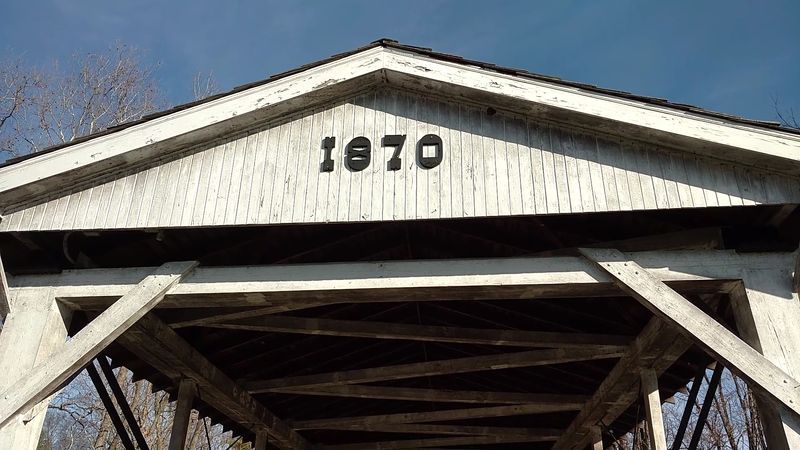
History rarely travels in a straight line, and this bridge is proof of that. Originally constructed in 1870, it was relocated from its first crossing to its current position in 1911, a remarkable feat of preservation for that era.
Then, decades later in 1963, the structure went through a careful restoration after it had become unsafe for traffic.
The story did not end there. In 1981, the bridge collapsed after being struck by a vehicle, and the community worked to salvage pieces and bring the structure back.
By 1982, it had been restored again and later continued as a pedestrian-only landmark.
That combination of original construction, relocation, restoration, collapse, and rebuilding gives the bridge several distinct chapters, each one worth thinking about as you look at the wooden planks and unusual truss work.
The community of Germantown has clearly taken pride in preserving this structure. During my visit, I noticed how well-maintained the surrounding area looked, and I later read that locals have long treated the bridge as a symbol of the town.
A structure this old surviving this well is not an accident. It is the result of generations of people deciding it was worth protecting, and that community commitment comes through the moment you arrive.
What the Bowstring Design Actually Looks Like Up Close
Most covered bridges look like a wooden tunnel with a roof. This one looks like an engineer had a very creative day and decided the rules were optional.
The bowstring arch curves upward along the outside of the bridge frame, which is the inverted part that surprises visitors who approach expecting something more traditional.
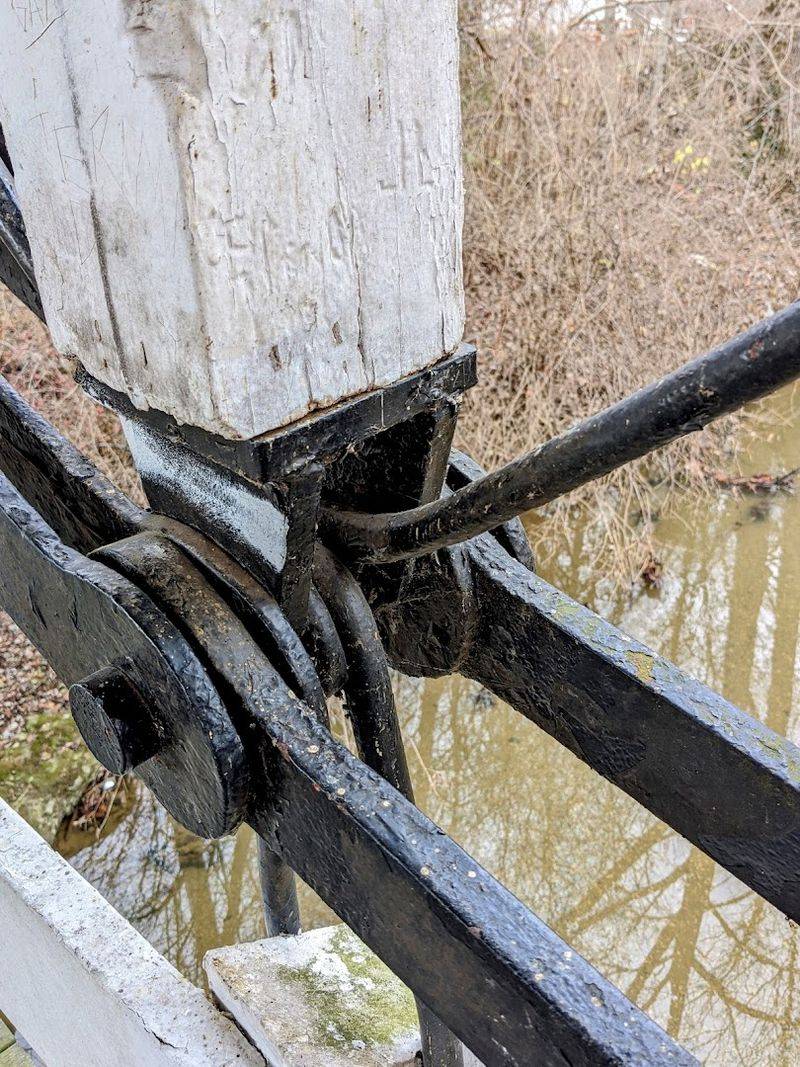
Those dark metal bars visible from the side are the structural supports forming the arch, and they are what give the bridge its one-of-a-kind silhouette.
From a distance, the shape reads almost like a long wooden boat turned upside down, with ribs of steel holding everything together. Up close, the geometry becomes even more interesting.
The crossing steel rods form diamond and triangle patterns that honestly look more like modern art than 19th-century infrastructure.
I spent a good twenty minutes just circling the bridge and looking at it from different angles, which is something I have never done at any other covered bridge.
Photography enthusiasts will find endless compositions here, whether shooting the full span from the creek bank or focusing tightly on the mechanical details of the truss work itself.
Little Twin Creek and the Scenery Around the Bridge
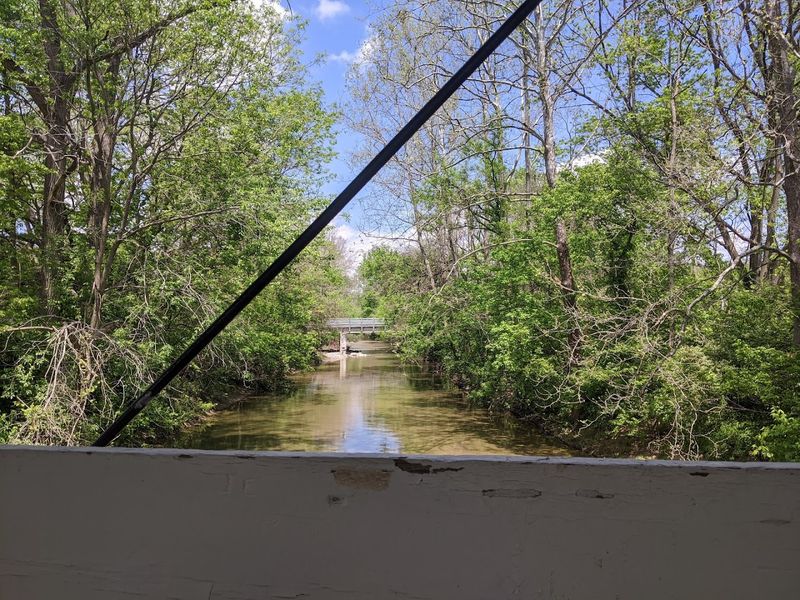
The creek running beneath the bridge is called Little Twin Creek, and it adds exactly the kind of gentle, scenic backdrop that makes the whole scene feel like something out of a painting.
The water moves quietly under the wooden span, and depending on the season, the surrounding trees frame the bridge in ways that shift from lush green in summer to golden and amber in autumn.
When I visited, there were songbirds moving through the branches along the creek bank, which added a layer of calm that no travel brochure could adequately prepare you for.
The combination of running water, bird calls, and creaking old wood underfoot created an atmosphere that felt genuinely removed from the pace of everyday life.
The view from the sides of the bridge, looking down at the creek and out toward the surrounding neighborhood, is worth pausing for. Bring your camera, or at minimum, take a moment to just stand still and absorb it.
The bridge is closed to vehicle traffic, which means the only sounds you hear are natural ones, and that quiet makes the scenery feel even more vivid and present.
Getting There Without Getting Lost
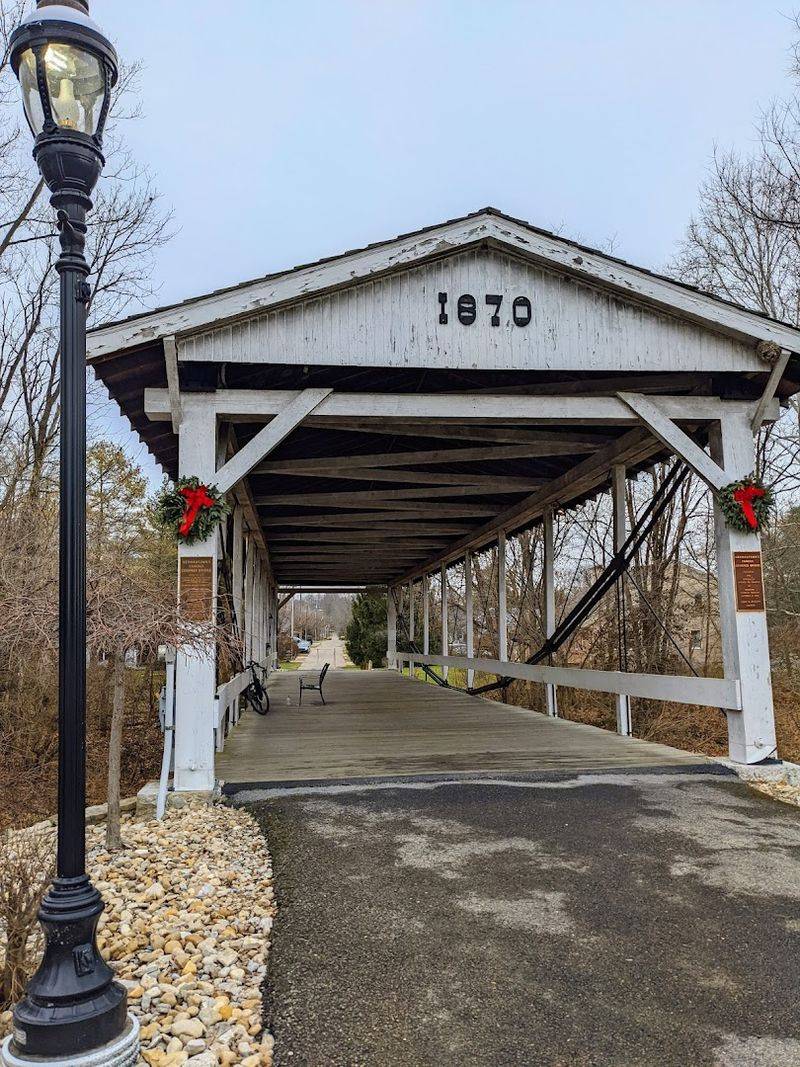
Navigating to this bridge requires a small heads-up that will save you some frustration. Google Maps can make the approach feel a little less obvious than expected, especially because the bridge sits in a residential setting rather than a large tourist complex.
The better approach is to come from the west side, off Water Street, which sits closer to the downtown area of Germantown. That route brings you near the limited parking area where you can stop comfortably, step out, and take in the bridge without crowding anyone’s driveway.
The road stops at the bridge from both directions, so do not expect to pass through. Plan it as a deliberate stop rather than a drive-through experience, which, honestly, is exactly what a place this special deserves.
Parking is limited but usually manageable for a few cars at a time. The bridge sits in a residential setting, so being a considerate visitor matters here more than at a larger tourist attraction.
Because the bridge is undergoing renovation in 2026 and is expected to be closed through summer and fall, checking current access before visiting is essential.
The Atmosphere Inside the Bridge
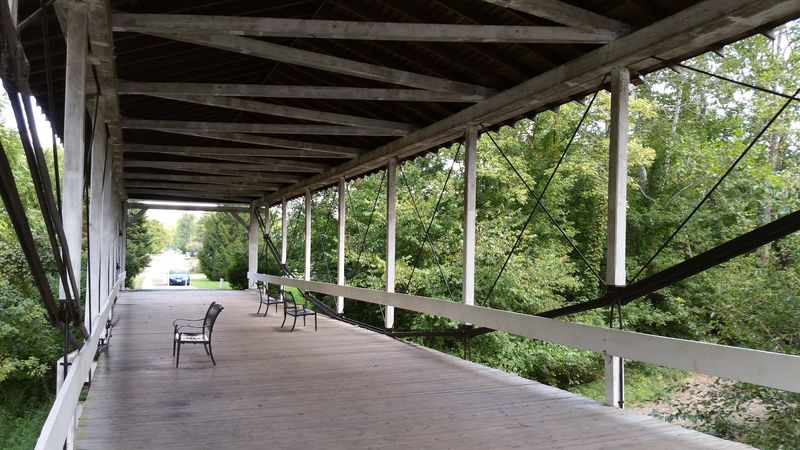
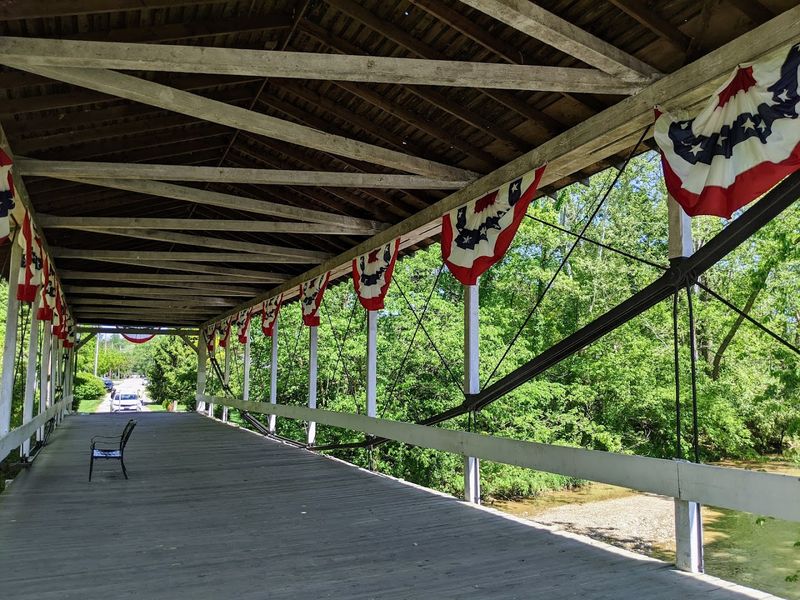
When the bridge is accessible, crossing it on foot is a short walk, but it is the kind of short walk you want to take slowly. The wooden planks underfoot have that satisfying solidity of old timber, and the sound of your footsteps can echo slightly in the covered space above.
There are benches inside the bridge where visitors have been able to sit and look out through the open sides toward the creek and the trees. That detail alone sets this place apart from most roadside historic stops, where you glance and move on.
Here, the invitation to sit and stay a while feels genuinely welcoming.
The light inside shifts depending on the time of day and the season. On a bright afternoon, sunlight filters through the gaps in the wooden structure and creates patterns on the floor that change as clouds pass overhead.
The absence of vehicle traffic gives the interior a peaceful, unhurried feeling when the bridge is open to pedestrians. Families, photographers, and solo visitors all seem to slow down once they step inside, as if the bridge itself asks something of you.
That something, I think, is simply attention, and it rewards you generously for giving it.
Why Photographers Love This Spot
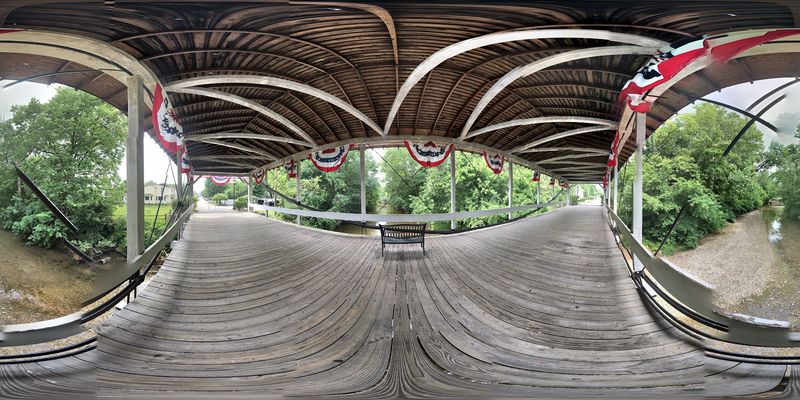
Few historic landmarks in Ohio offer this many distinct photographic compositions in such a compact space. The bridge works as a subject from nearly every angle, which is rare and makes it especially appealing for anyone who enjoys photography as a hobby or a serious pursuit.
From the creek bank below, you get the full span reflected in the water with the stone abutments anchoring each end. From the road approaching the west side, the covered entrance frames the view of the creek and trees beyond in a way that feels naturally composed.
Shooting from inside the bridge looking outward gives you a natural frame created by the wooden structure, with the creek and surrounding greenery visible through the opening. That shot practically arranges itself.
The geometric patterns of the bowstring truss and the crisscrossed steel rods reward close-up and abstract photography as well. There is texture, symmetry, and history in every plank and bolt.
Winter visits, especially after a snowfall, reportedly transform the bridge into something that looks almost impossibly picturesque. The combination of white snow, dark wooden beams, and the bare winter trees along the creek bank creates a scene that photographs beautifully in almost any lighting condition.
The Historical Markers and What They Tell You
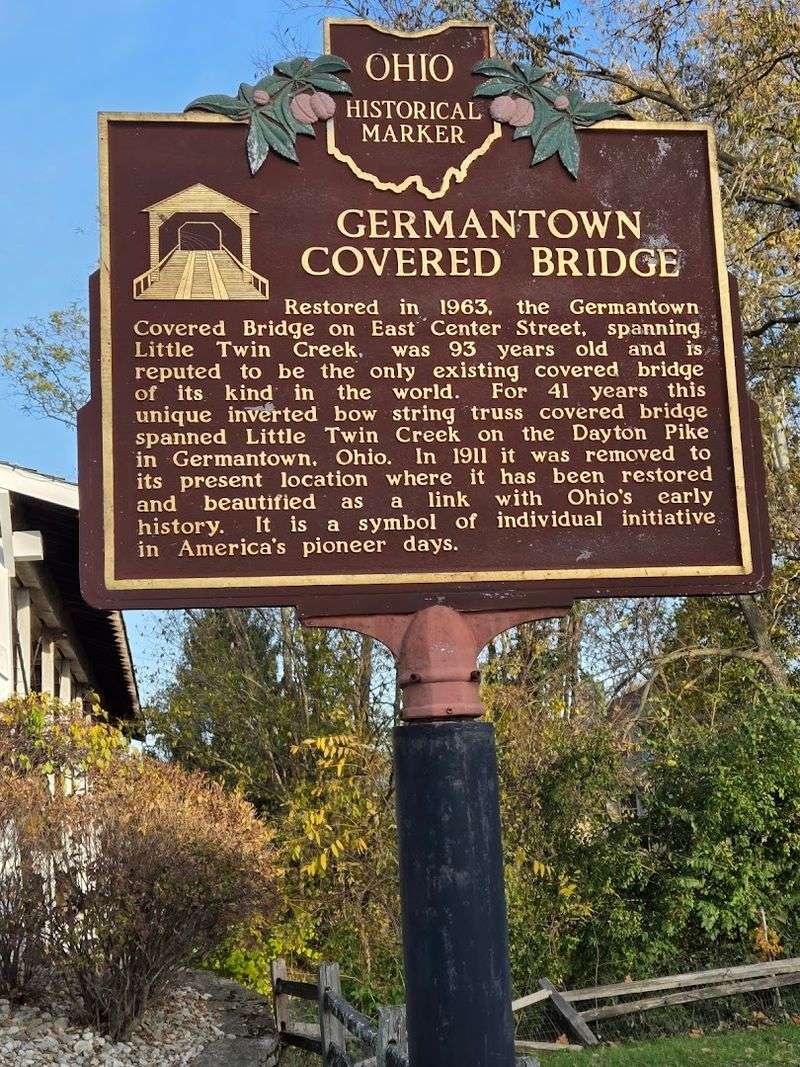
Right alongside the bridge, there are historical markers that fill in the story of the structure in a way that makes the visit feel educational without feeling like a school assignment.
The markers cover the construction date, the relocation, the restoration, and the engineering significance of the bowstring truss design.
Reading them before you walk around the bridge changes how you experience the structure, because suddenly those metal arches and steel rods mean something specific rather than just looking interesting.
Most people I watched during my visit stopped to read every word on those markers, which is not something you see at every roadside landmark. The information presented is genuinely engaging and written in a way that respects the reader’s curiosity.
The bridge was once listed on the National Register of Historic Places, and newer preservation work is aimed at restoring its eligibility after later damage and reconstruction changed that status. That context adds weight to the experience.
You are not just looking at an old bridge.
You are standing next to something that has been formally documented, locally treasured, and carefully protected because of its unusual design and community meaning.
Why This Stop Is Worth the Drive
Free to visit when accessible and genuinely unlike almost anything else you will find on a road trip through Ohio, this bridge earns its reputation as a rewarding detour without any effort at all.
There are no tickets to buy, no lines to wait in, and no crowds that make you feel rushed. The experience is entirely yours to shape when access is open, whether that means a five-minute stop for a few photos or a longer visit where you take in the details slowly.
Visitors who have made the drive from thirty minutes or more away consistently say it was worth it, and I agree completely. The combination of architectural rarity, natural beauty, and community care creates something that feels genuinely special rather than merely historic.
The surrounding town of Germantown adds a pleasant small-town backdrop if you want to extend the outing. The bridge sits in a neighborhood that feels lived-in and cared for, which gives the whole visit a warmth that larger tourist attractions rarely manage.
Because 2026 renovation work is expected to affect access through summer and fall, this is the kind of stop you should check on before you go.
Once the work is complete, the bridge on E Center St in Germantown, Ohio should remain exactly the kind of place that makes a simple detour feel surprisingly memorable.