
Ohio Is Home To The Longest Covered Bridge In The United States (Yes, You Heard That Right)
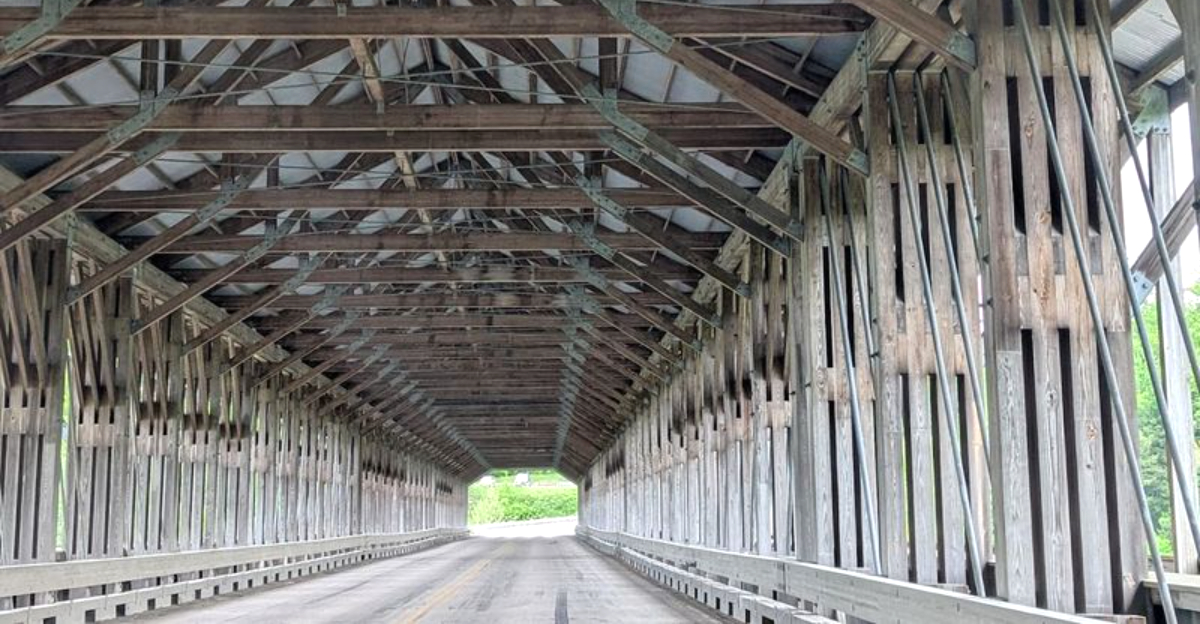
Ohio loves a good hidden flex, and this one comes with wooden walls and serious bragging rights. Out in the rolling countryside of Ashtabula County, this bridge stretches so far that the far end looks like it is flirting with the horizon.
I learned about it the same way I learn about most great Ohio surprises: by accidentally stumbling into it on a road trip and instantly wondering why nobody told me sooner. One minute I was just following directions, and the next I was staring down a covered bridge that feels more like a wooden tunnel built for dramatic entrances.
This stop delivers more than a quick photo, thanks to the river views, the quiet paths nearby, and the satisfying feeling of standing in front of a record-holder that actually looks like it earned the title. Give it a little time on your itinerary, because it is the kind of place that turns a simple drive into a story.
A Record-Breaking Structure That Earns Its Title
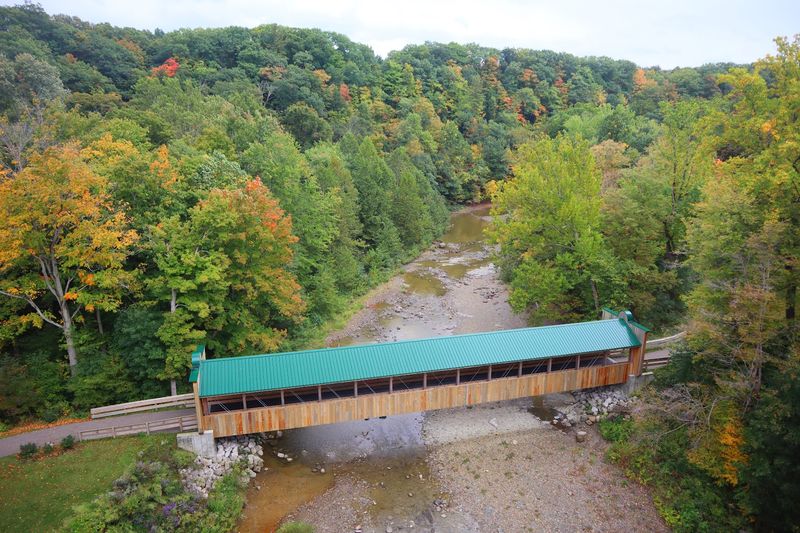
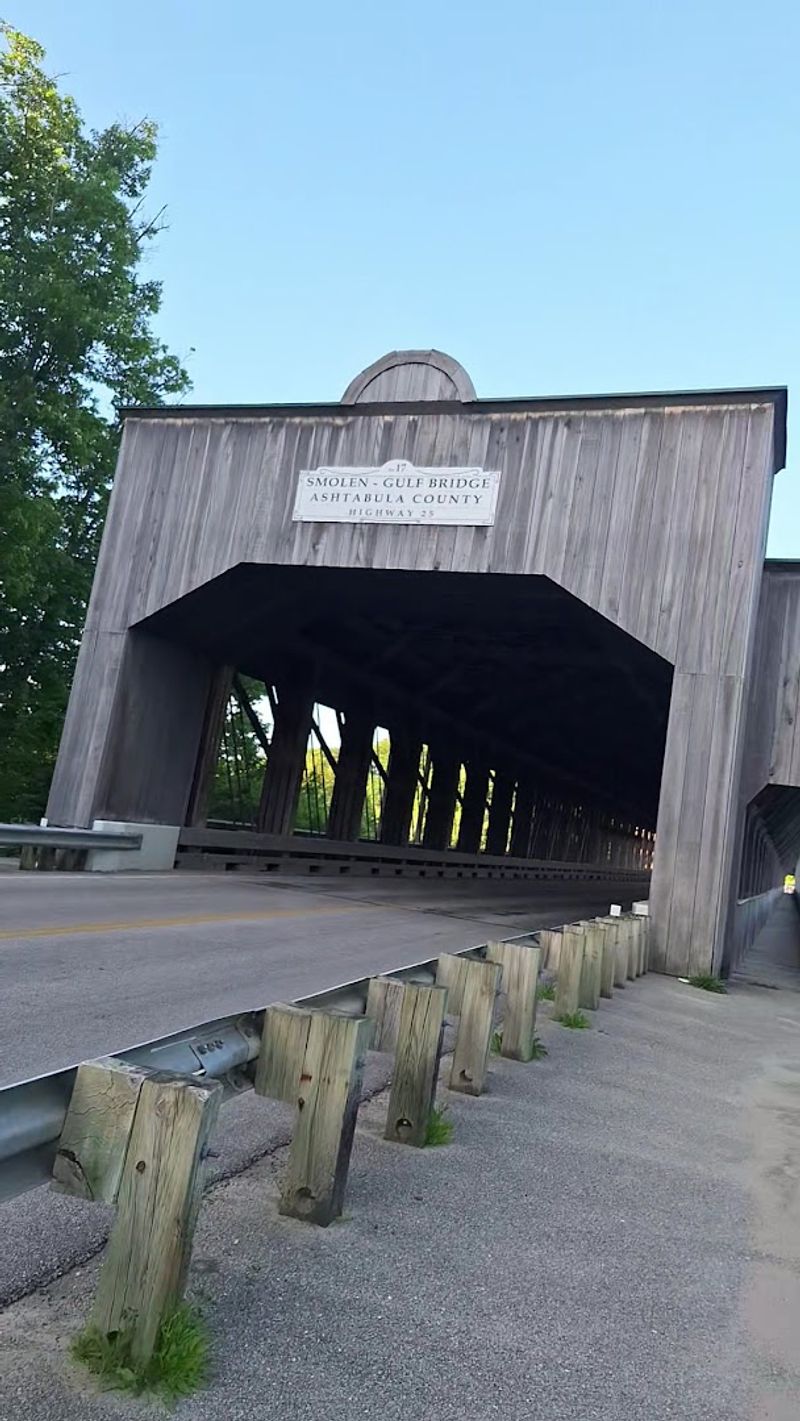
Not every record-holder looks the part, but this one absolutely does. This bridge in Ashtabula County, Ohio, stretches an extraordinary 613 feet across the Ashtabula River, making it the longest covered bridge in the United States.
That is not a rounding-up kind of stat. Standing at one end and looking through to the other side, you genuinely feel the scale of it.
The tunnel of wooden beams overhead seems to go on forever, and the light at the far end looks almost cinematic.
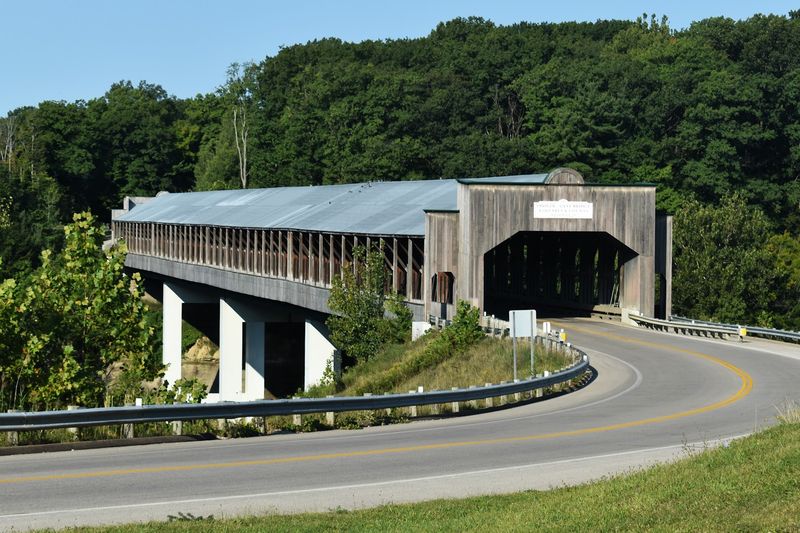
Built in 2008 and designed by engineer John Smolen, the bridge was constructed to honor the covered bridge heritage of Ashtabula County while also serving as a fully functional road bridge. It carries real traffic daily, which makes its covered design even more remarkable.
The bridge we are talking about is the Smolen-Gulf Covered Bridge, and you can find it at 4878 Plymouth Ridge Rd, Ashtabula, OH 44004. The surrounding area is clean, well-maintained, and easy to access, making it a rewarding stop whether you are a first-time visitor or a returning fan of covered bridges.
The History Behind the Wood and the Name
Ashtabula County has long had a deep connection to covered bridges, and that tradition did not just happen by accident. The county once had dozens of historic covered bridges dotting its landscape, and preserving that identity became a point of local pride over the decades.
John Smolen, the county engineer behind this bridge, spent much of his career championing the construction and restoration of covered bridges throughout the region. The Smolen-Gulf bridge was named partly in his honor, a fitting tribute to someone who gave so much to keep this architectural tradition alive.
The Gulf portion of the name refers to the Gulf Road area and the dramatic ravine the bridge spans. That ravine drops sharply below the roadway, giving the structure both its engineering challenge and its visual drama.
Understanding that history adds a whole new layer to the experience of crossing it. You are not just driving over a wooden bridge.
You are passing through a deliberate act of cultural preservation, built with craftsmanship and community pride baked right into every beam.
What It Actually Feels Like to Walk Across
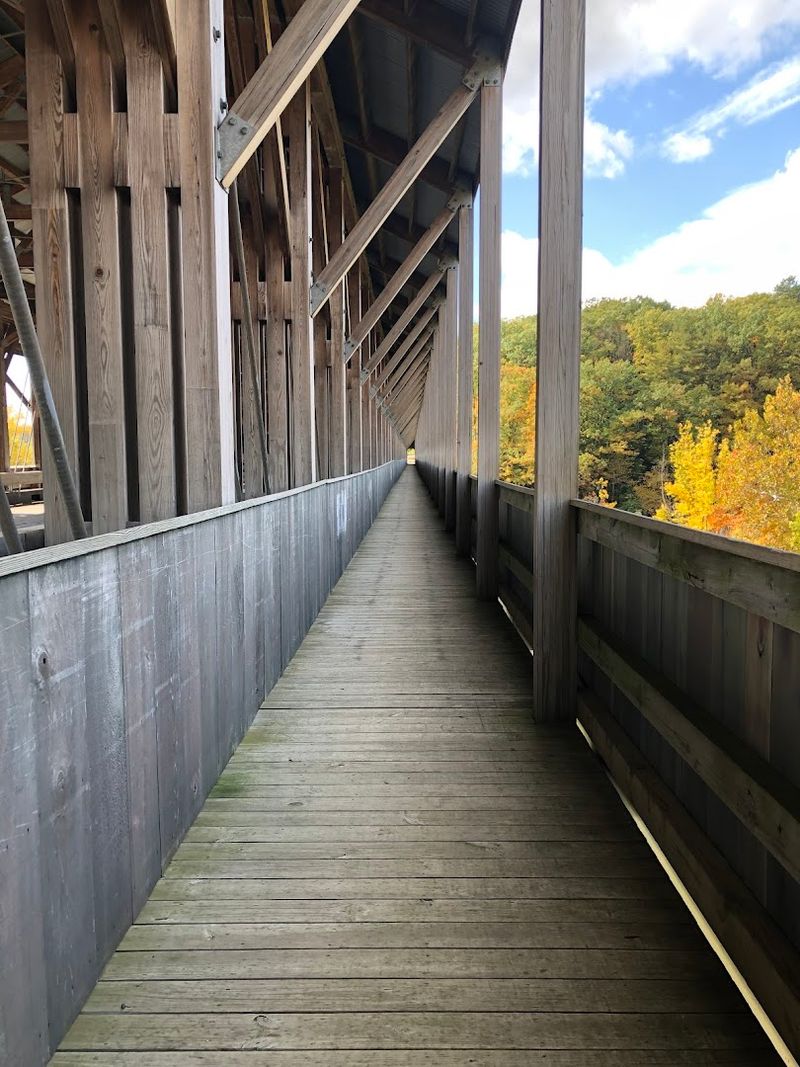
Crossing this bridge on foot is a completely different experience from driving through it, and I would strongly recommend doing both if you get the chance. The bridge has dedicated walkways on both sides, so pedestrians are safely separated from vehicle traffic throughout the crossing.
From inside the bridge, the wooden walls frame long rectangular views of the river valley below. The sound changes as you walk further in, with road noise fading and a quieter, more enclosed atmosphere taking over.
It has a surprisingly peaceful quality for a structure that carries active traffic.
The wooden planks underfoot have a satisfying solidity to them, and the overhead beams create a rhythm as you move through the space. Every few steps, a new angle of light filters in through the side openings.
By the time you reach the other side, there is a genuine sense of having experienced something out of the ordinary. It is the kind of walk that slows you down in the best possible way, making you notice details you would have missed at driving speed.
The Bonus Bridge You Almost Miss
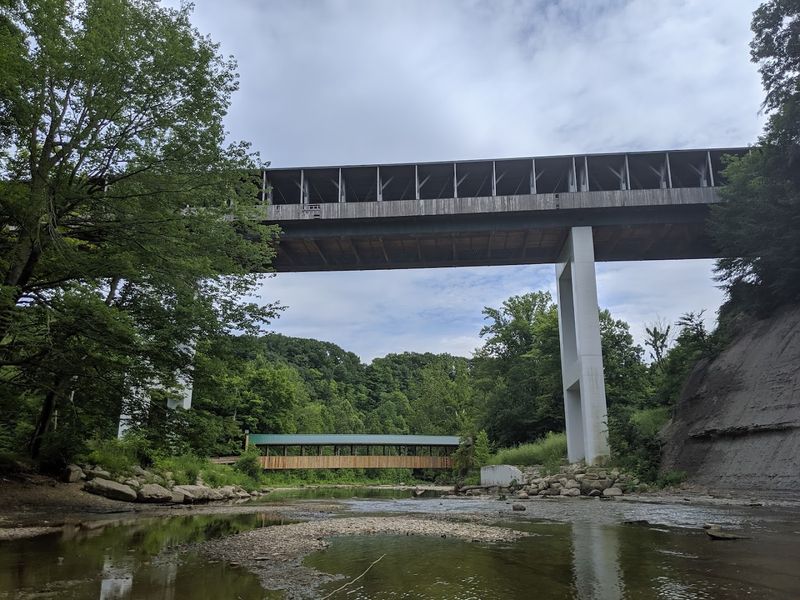
Here is a detail that genuinely surprised me: there is a second covered bridge right below the main one, and most visitors almost walk right past it without realizing it is there. A short trail from the lower parking area leads down to this smaller structure that is reserved for pedestrians only.
No cars cross this lower bridge, which gives it a completely different atmosphere. It sits close to the water, and the river below is shallow enough in many spots to wade through on a warm day.
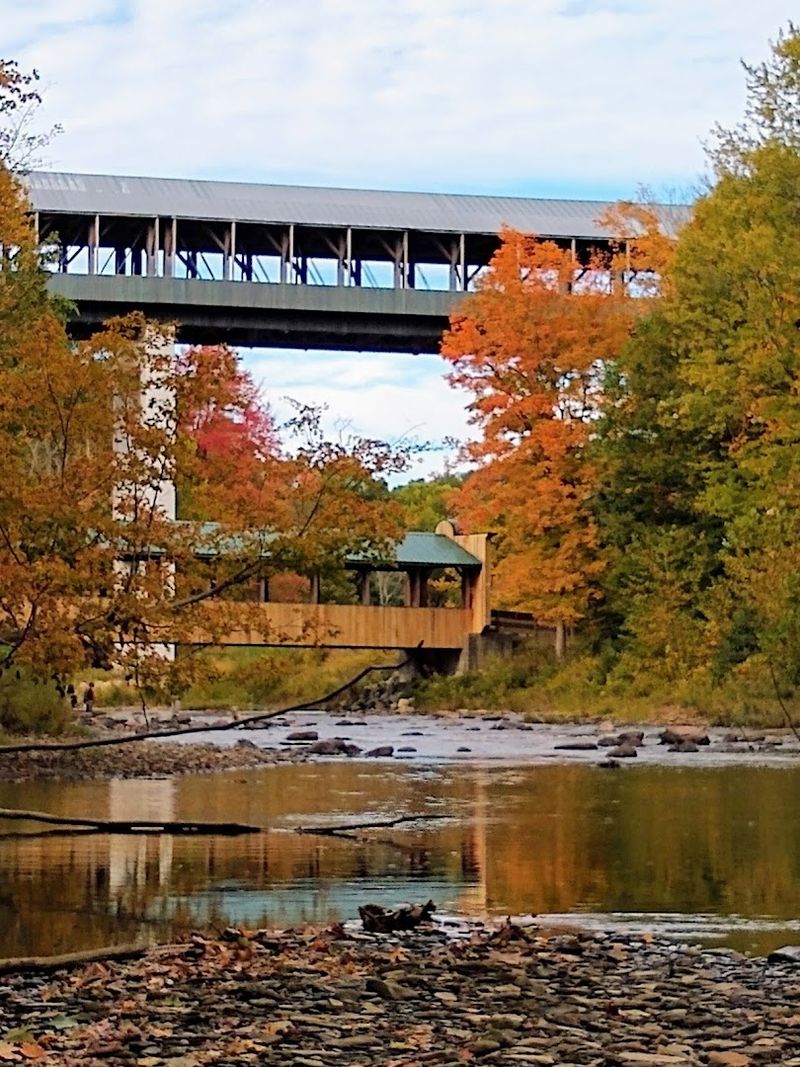
The contrast between the two bridges, one massive and modern, the other intimate and set right along the river, makes the whole area feel like a mini covered bridge museum. Families with kids especially seem to love this lower section.
There is space to explore, water to splash in, and great angles for photos that frame both bridges together in a single shot. The area around the lower bridge is kept clean and well maintained, which makes wandering around it genuinely pleasant rather than just a quick glance before heading back to the car.
Fall Foliage and the Best Time to Visit
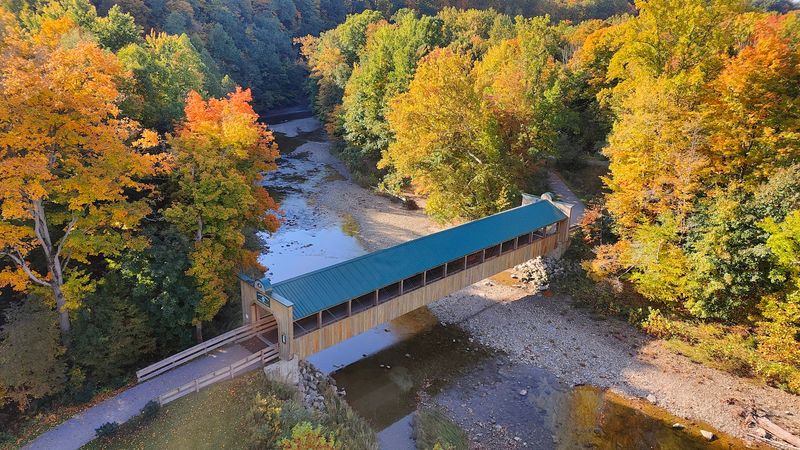
Autumn turns this already beautiful spot into something that looks almost too good to be real. The hillsides surrounding the bridge light up in shades of red, orange, and gold, and the river below mirrors all of it in a way that makes even a casual smartphone photo look stunning.
Late October is the sweet spot for fall color in this part of Ohio, and the scenic overlook near the bridge gives you a front-row seat to the whole display. Visitors who stop during this time consistently describe it as one of the most visually striking natural scenes they have encountered in the state.
That said, summer has its own appeal. The trails stay accessible, the creek is inviting, and the crowds are manageable enough that you can still find a quiet moment on the walkway.
Winter visits are possible since the bridge is open 24 hours every day of the year, but heavy snowfall can limit sightlines from the roadside parking area. Spring brings fresh greenery and flowing water, making it another underrated time to make the trip.
Trails, Nature, and Things to Do Around the Bridge
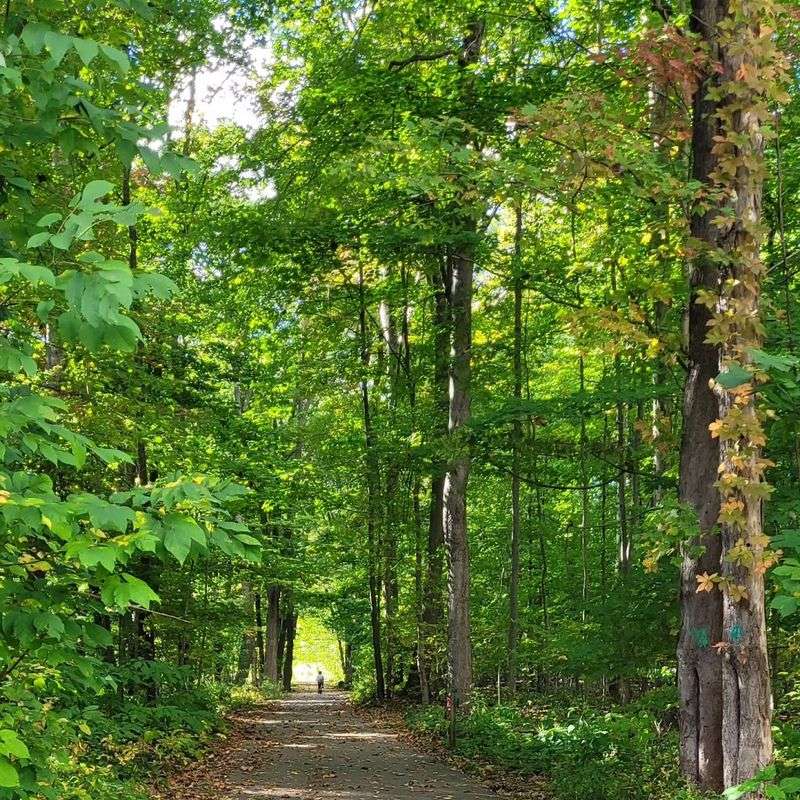
The bridge itself is the main draw, but the surrounding area gives you plenty of reasons to linger longer than a quick stop. Short hiking trails connect the upper viewing area to the lower parking lot and the pedestrian bridge, making the whole visit feel like a proper outdoor outing rather than just a drive-by photo moment.
The river that runs beneath the bridge is a highlight in its own right. In warmer months, the water is shallow and clear enough to walk through, and some visitors have reportedly found interesting rocks carved by nature along the riverbed over the years.
Night visits have their own quiet appeal. The area sits far enough from city lights that the sky after dark is genuinely impressive, and the bridge takes on a completely different character without daylight flooding through its openings.
Whether you bring a picnic, a camera, or just a pair of comfortable shoes, the setting rewards a slow, unhurried approach. There is a picnic area nearby, making it easy to turn the visit into a full afternoon rather than a quick ten-minute stop.
Ashtabula County and Its Covered Bridge Legacy
Ashtabula County is not just home to one remarkable covered bridge. The region has around 18 covered bridges scattered across its landscape, making it one of the most concentrated collections of covered bridges anywhere in the country.
I stumbled across a small informational pavilion near the Smolen-Gulf parking area that maps out all of them, and it immediately turned a single stop into a full-day itinerary in my head.
Each bridge has its own story, its own setting, and its own character, which makes a county-wide covered bridge tour genuinely compelling rather than repetitive.
The county has embraced this identity enthusiastically, maintaining the bridges, signposting the routes, and keeping the surrounding areas accessible and clean. It is the kind of regional pride that shows up in practical ways rather than just on a tourism brochure.
Ohio as a whole has a lot of natural and historical destinations worth exploring, but Ashtabula County offers something unusually specific and memorable. A covered bridge road trip through this corner of the state is the kind of low-key adventure that people talk about for years afterward.
Practical Tips Before You Make the Trip
A few practical things worth knowing before you head out will make the visit noticeably smoother. The bridge is free to cross and free to park near, which is a refreshing change from destinations that charge for every small experience.
There are two parking areas: one at the upper level near the bridge approach, and one below near the pedestrian bridge and river trail.
The upper parking area fills up faster and offers the clearest views of the main bridge from the roadside. The lower lot is quieter and gives you better access to the trail and the smaller bridge below.
Wear shoes you do not mind getting a little dusty or damp if you plan to explore the riverbank. The terrain is manageable but not paved, so sandals are less than ideal for the trail sections.
The bridge sits at 4878 Plymouth Ridge Rd, Ashtabula, OH 44004, and GPS navigation gets you there without any trouble. The site is open around the clock every day of the week, so timing your visit around weather and personal preference is entirely up to you.