
13 Ohio Small-Town Squares Where Brick Streets And Local Shops Set The Weekend Mood
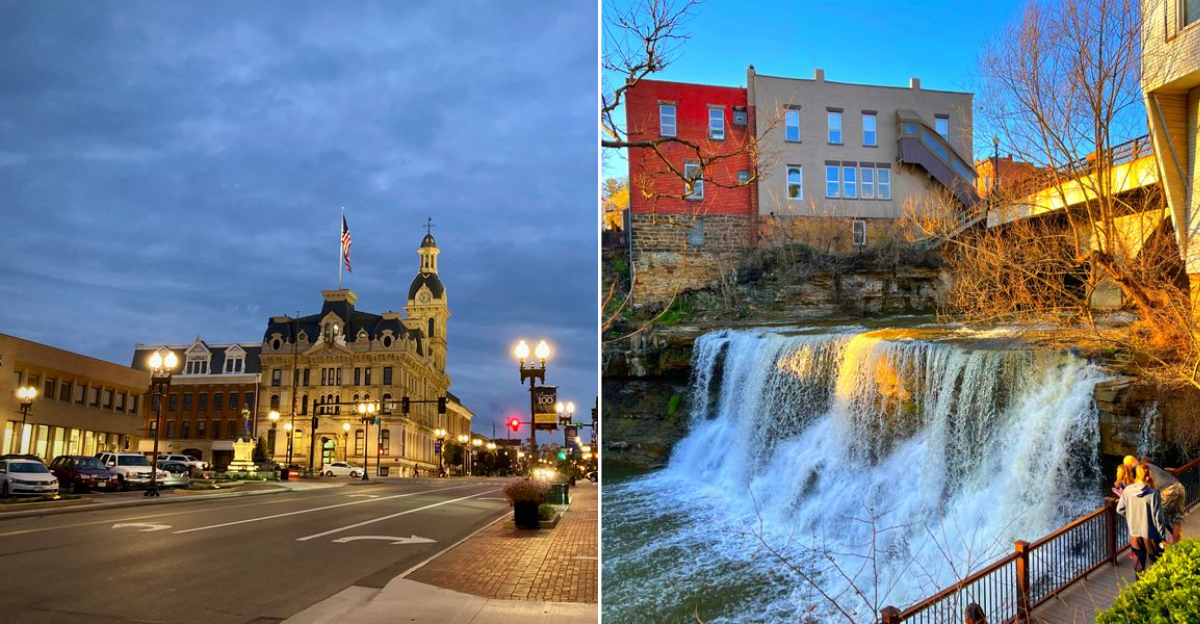
Ohio’s small-town squares have a way of slowing you down without asking permission. You turn off a state route expecting a quick loop, and suddenly there is brick underfoot, a courthouse clock keeping honest time, and the low hum of conversation drifting out of cafés that have been opening their doors the same way for decades.
These squares were built to be used, not rushed through, and on weekends they still earn that purpose, filling with farmers unloading crates, retirees trading news, and families stretching a simple errand into a morning ritual.
I have learned that the best approach is to park once, walk without a plan, and let small details guide you, a carved stone date above a doorway, a bench worn smooth, the smell of bread telling you which corner matters today.
You will find bakeries that sell out because they refuse to overproduce, lunch counters that know exactly how long to let a soup simmer, and shops where the owner looks up and actually sees you.
This list is not about checking off sights but about inhabiting a rhythm, where a square becomes a meeting point between history and habit.
Come curious, walk slowly, and expect the day to end with crumbs in your pocket and a reason to come back.
1. Medina Public Square, Medina
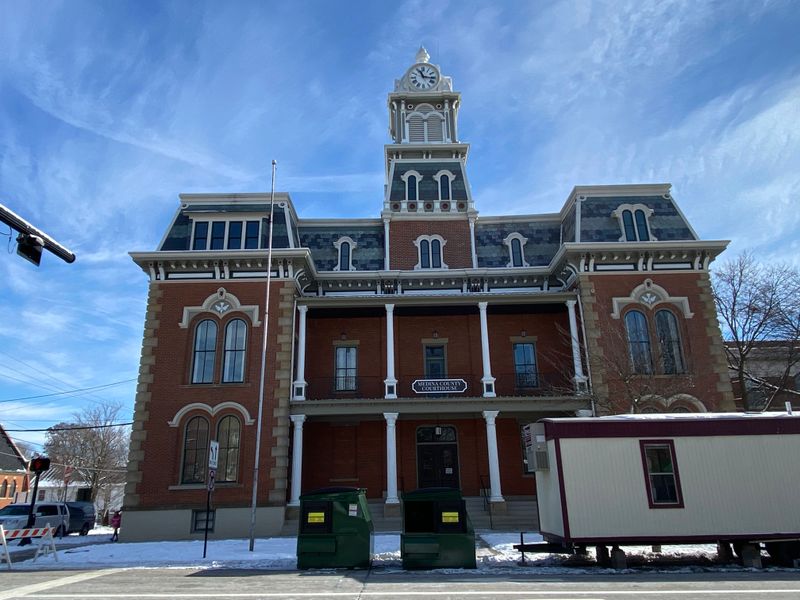
Warm red brick wraps the square in Medina, framing Victorian storefronts and drawing your attention naturally toward the courthouse that has been keeping patient watch here since the 1870s.
The space feels deliberately unhurried, with fountains murmuring under shade trees while crosswalks encourage lingering between antique shops, toy stores, and bakeries that seem to sell out precisely because nobody rushes them.
At the center of it all, Medina Public Square operates as a true community anchor rather than a backdrop, absorbing the foot traffic of weekends without losing its composure.
Local preservation is visible in careful details like restored cornices and transom windows that reward slow looking rather than quick photos.
Seasonal rhythms matter here, especially on Saturdays when the farmers market draws musicians, early risers, and regulars who know exactly which stall to visit first.
Parking works best along nearby side streets, which also lets you enter the square gradually instead of all at once.
As evening settles in and storefront lights warm the brick, it becomes surprisingly easy to realize you have been circling the square longer than planned without any reason to stop.
2. Triangle Park & Falls, Chagrin Falls
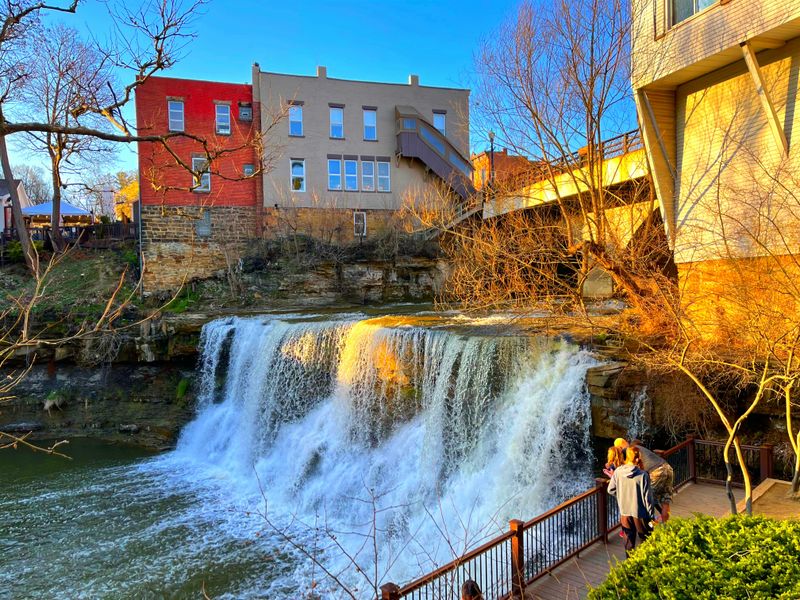
The steady rush of the waterfall in Chagrin Falls overwhelms casual conversation in a way that feels refreshing rather than disruptive, turning Triangle Park into a place where listening becomes part of the visit.
Mist drifts across the wooden steps near the falls, softening the edges of the scene as people pass by with popcorn, ice cream, or coffee held carefully in both hands.
Although the park itself is small, it draws energy from its surroundings, with shops, railings, and footbridges all oriented toward the sound and motion of the water.
Chagrin Falls grew around milling power, and that industrial history remains visible beneath the overlook without needing explanation.
Benches fill quickly on weekends, especially when the weather cooperates and the light catches the spray just right.
Street parking nearby rewards early arrivals, but walking a block or two adds perspective on how tightly the town wraps around the falls.
Standing near the rail for a few minutes often stretches into much longer, as the water quietly resets your sense of time.
3. Granville Village Green, Granville
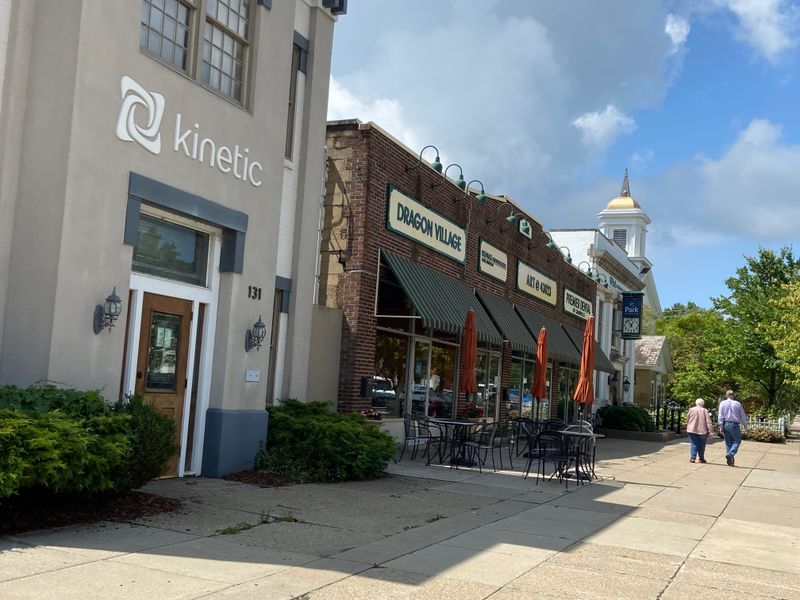
Morning in Granville begins gently, with church bells, runners circling the green, and white clapboard buildings standing in precise contrast to the deep green lawn at the center of town.
The square reads like a New England postcard translated into Ohio, orderly without feeling stiff, and formal without pushing people away.
Denison University’s presence lends a studious calm to the atmosphere, yet families spread blankets and settle in with the ease of a place that expects them.
Dating back to early nineteenth-century town planning, the village green reflects careful proportions that still hold up under modern use.
Preservation shows itself in brick walkways, modest signage, and seasonal flags that add color without clutter.
Parking along Broadway turns over frequently, making short stays easy and long ones tempting.
Whether you stop for a bookshop visit, a coffee, or nothing in particular, the green has a way of encouraging one more loop before you leave.
4. Worthington Village Green, Worthington
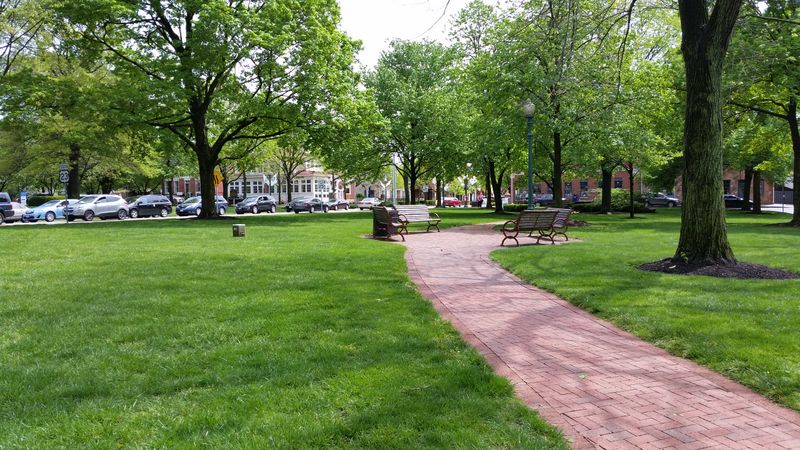
At first glance the Worthington Village Green feels almost reserved, but once the weekend farmers market sets up and High Street fills with produce crates, fiddle tunes, and the soft clink of coffee cups, the square reveals itself as a quietly social place that prefers participation over performance.
Brick crosswalks stitch together the four quadrants of the green, guiding foot traffic past lamppost banners and low storefronts where dogs wait patiently beside water bowls and neighbors greet one another by habit rather than coincidence.
Founded in 1803 by settlers from Connecticut, the layout remains remarkably intact, giving the square a sense of continuity that is felt rather than announced.
Greek Revival buildings and early commercial blocks line the perimeter with a steady rhythm that makes walking feel natural and unforced.
Community ceremonies, markets, and small concerts still gather beneath mature trees, reinforcing the green’s role as a civic living room.
Parking near the library garage removes most logistical stress and allows you to approach the square on foot, which suits its scale better than driving through.
Arriving early in the morning carries a special reward, when breakfast vendors sell out quickly and the square feels briefly like it belongs only to those who showed up on time.
5. Chardon Courthouse Square, Chardon
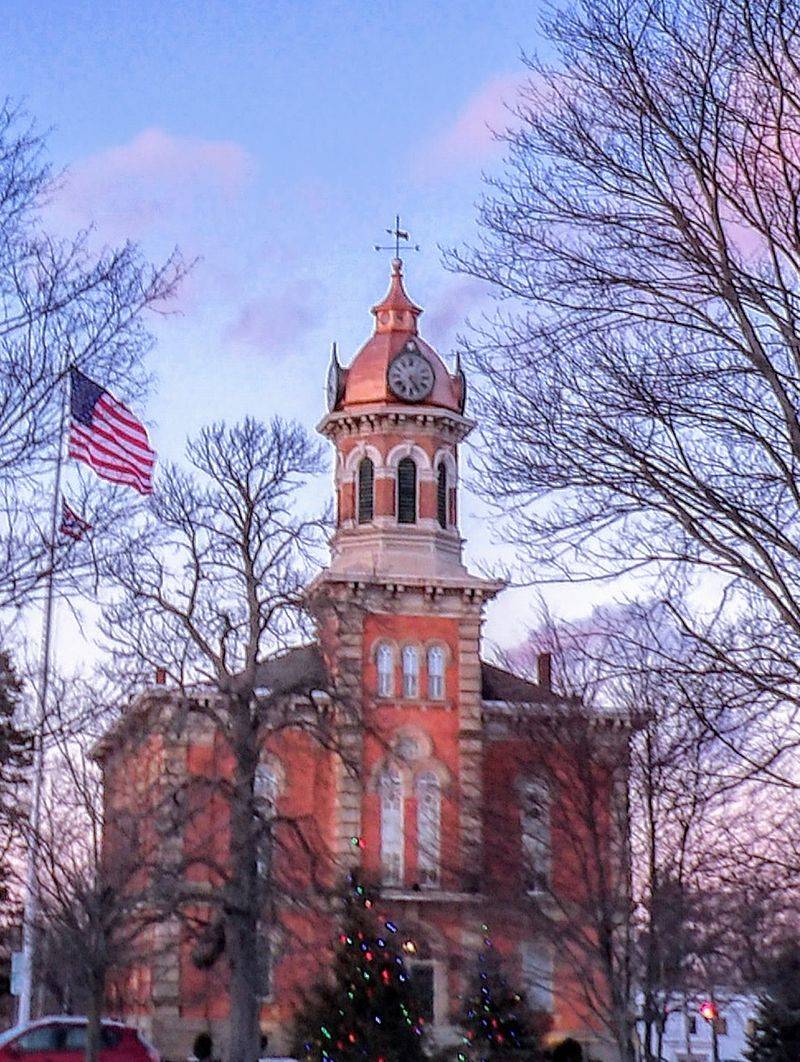
There is a snow-globe quality to Chardon that appears even outside winter, helped along by Lake Erie air, a handsome white courthouse, and a square that sits slightly elevated as if to better observe the town around it.
Brick storefronts ring the courthouse with diners and shops that seem built for lingering, where bottomless coffee cups and bakery scents drift easily into the street.
The courthouse clock provides a reassuring sense of order, chiming reliably while flags snap softly in the wind.
Chardon’s deep connection to maple production shows up not only in festivals but in subtle references throughout the square, from signage to seasonal treats.
Preservation here is practical and disciplined, keeping façades clean and signage restrained so the architecture can speak for itself.
Winter visits demand patience with parking, but sidewalks are cleared quickly, maintaining the square’s walkable feel.
A visit during the Maple Festival reveals the square at full capacity, busy yet balanced, and unusually good at handling a crowd without losing its calm.
6. Hudson Village Greens, Hudson
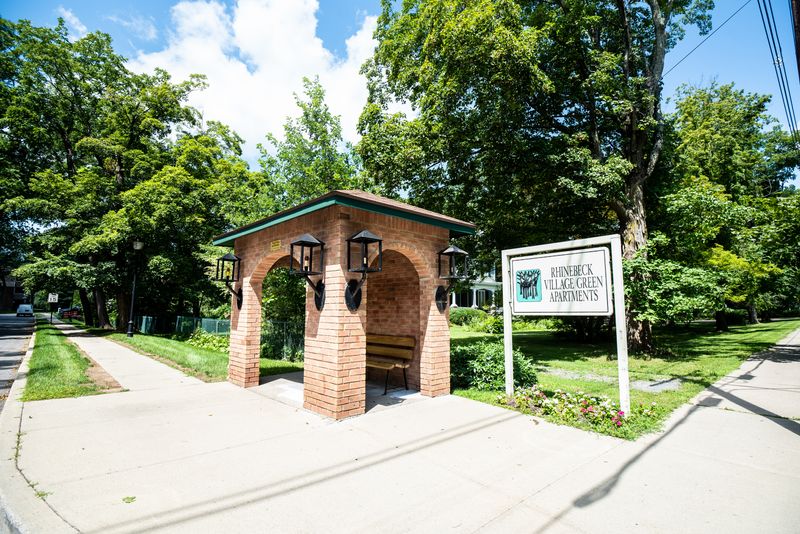
Hudson’s downtown is organized around a long, ribbon-like green that stretches rather than concentrates activity, inviting visitors to walk its full length instead of stopping at a single focal point.
Federal-style homes, church spires, and carefully maintained sidewalks frame the space, creating a composed atmosphere that feels intentional without being precious.
Pastry shops, cafés, and boutiques open directly onto the green, encouraging slow movement and repeated crossings rather than straight lines.
Founded by David Hudson, the town’s Western Reserve roots remain clearly legible in its architecture and street plan.
Concerts, art fairs, and small gatherings take advantage of the extended green, spreading out rather than clustering tightly.
Street parking near First and Main works well for longer visits, especially if you plan to explore end to end.
Late afternoon is particularly rewarding, when shadows lengthen across the lawn and the square shifts naturally from daytime errands to evening ease.
7. Troy Public Square, Troy
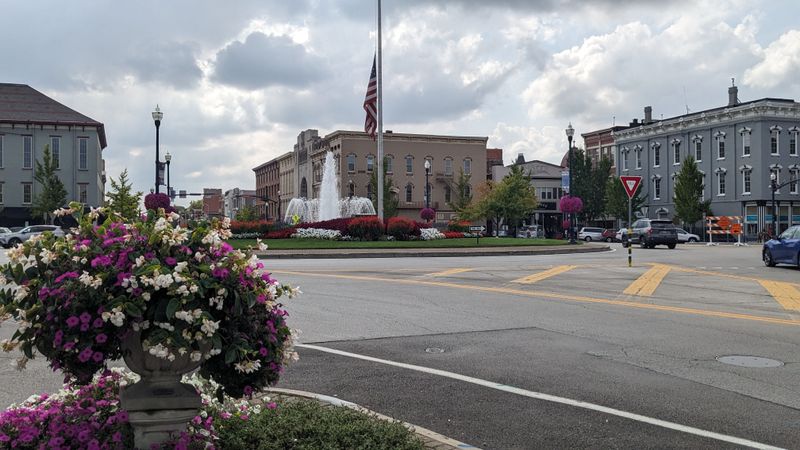
The roundabout at Troy Public Square turns gently around the Miami County Courthouse, creating a sense of motion that never quite becomes hurried, even as cars, bikes, and pedestrians all pass through together.
Murals, fountains, and storefront windows add color and texture, softening the formality of the courthouse dome that rises above it all.
Patio conversations spill outward on weekends, mixing with the sound of water and the quiet click of bike kickstands hitting pavement.
The square reflects late nineteenth-century civic ambition, restored with attention to stonework, proportions, and details that reward close inspection.
Festivals radiate outward from this center, giving the space a flexible identity that adapts easily to different moods and seasons.
Parking a block away avoids unnecessary circling and encourages entering the square on foot.
In strawberry season, the smell alone can reroute your plans, making it nearly impossible to pass through without stopping.
8. Wooster Public Square, Wooster
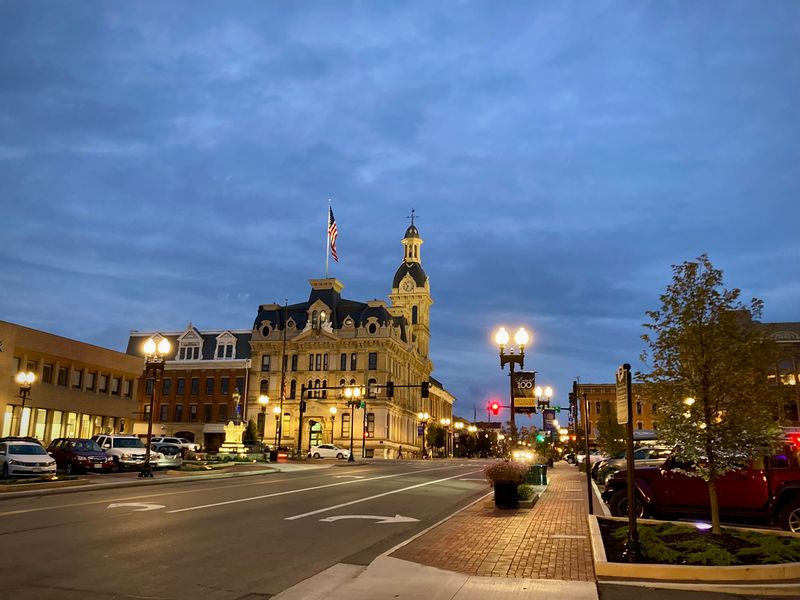
Wooster’s square carries a comfortable hum that reflects its role as a meeting point between agricultural life and college-town energy, with tractors occasionally sharing streets with students and shoppers.
Bakeries, bookstores, and a sturdy historic hotel cluster around the square, creating a sense of density without crowding.
Morning steam fogs windows while conversations overlap at a relaxed pace that feels practiced rather than accidental.
After historic fires reshaped the town, layers of rebuilding left behind a varied brick tapestry that gives the square visual depth.
Preservation efforts have emphasized details like arched windows, painted signs, and public art woven subtly between planters.
Metered parking along nearby streets turns over regularly, keeping access manageable even on busy days.
A bench near the courthouse clock offers an ideal place to pause and watch the square operate exactly as intended.
9. Mount Vernon Public Square, Mount Vernon
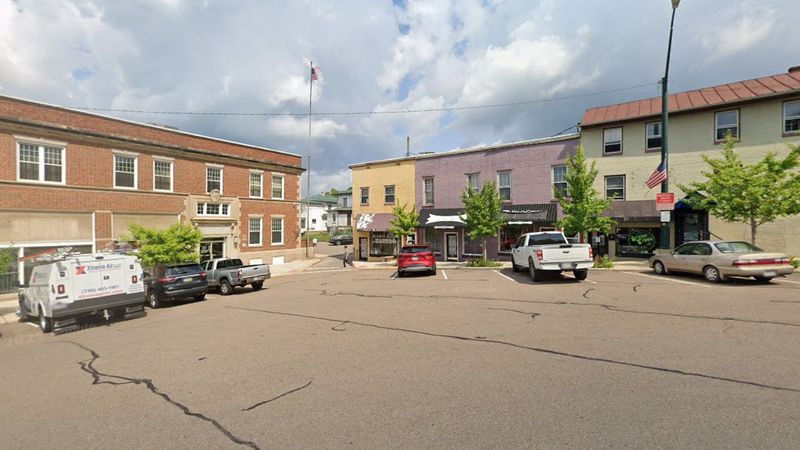
Four broad streets converge toward Mount Vernon’s central square, where traffic circles gently and the Woodward Opera House anchors the scene with polished confidence.
Murals peek from side alleys, cafés contribute steady background chatter, and the sidewalks feel intentionally generous, encouraging looping walks instead of direct routes.
Investment in restoration is visible throughout the square, from storefronts to performance venues, giving the area a sense of momentum without disruption.
Historic travel routes intersect here, and markers help contextualize the layout without overwhelming the experience.
Evening events often spill across crosswalks in a way that feels orderly rather than chaotic.
Parking near the river trail creates a gradual approach that enhances the first view of the square.
Comfortable shoes are essential, because curiosity here has a habit of extending walks beyond expectation.
10. Uptown Parks At Main And High, Oxford
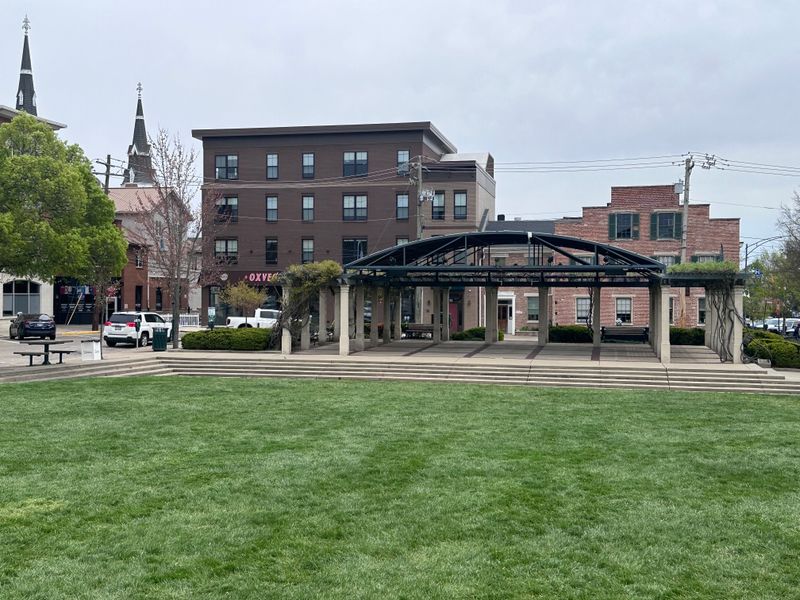
Oxford’s twin uptown parks function like a shared front porch, where student musicians, visiting families, and longtime residents overlap naturally.
Wide brick sidewalks absorb foot traffic easily, accommodating clusters of conversation without friction.
The visual connection to Miami University’s red brick campus reinforces the sense that town and gown share the same rhythm here.
Seasonal programming keeps the parks lively, from markets to concerts, without overwhelming their modest scale.
Historic façades remain readable behind updated signage, preserving continuity while allowing change.
Weekend parking can be competitive, but side streets and garages ease the process with a short walk.
As evening arrives and string lights flicker on, the parks shift from daytime bustle to an easy, social calm.
11. Tappan Square, Oberlin
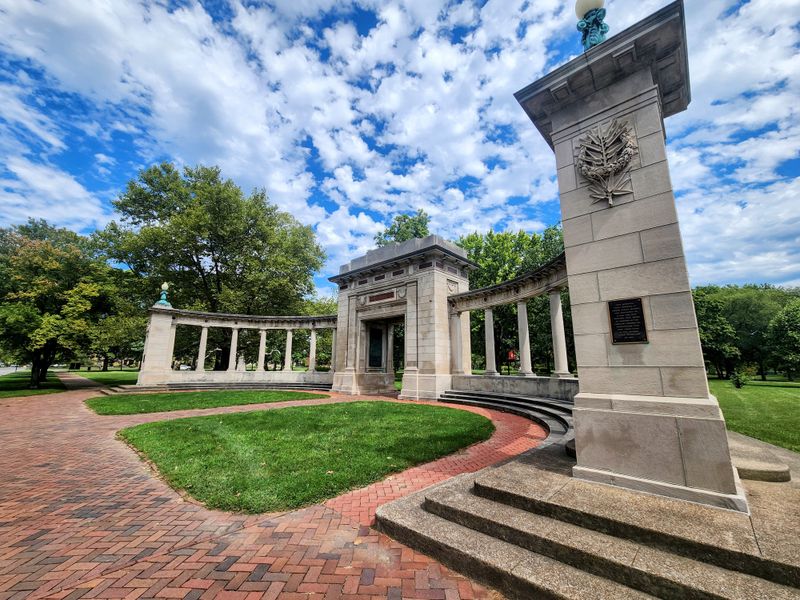
Tappan Square feels open and slightly untamed compared to more manicured greens, with towering oaks and broad lawns that invite lingering rather than directing movement.
Churches and academic buildings frame the space without enclosing it, leaving sightlines long and flexible.
Musicians rehearse under the bandstand while bicycles rest casually nearby, reinforcing the square’s everyday usability.
Rooted in abolitionist history and civic openness, the square has always functioned as a commons rather than a showpiece.
Memorials and plaques provide context quietly, encouraging reflection without interrupting flow.
Walking the perimeter first reveals shifting perspectives that reward patience.
Parking on the south side simplifies access and sets up a natural diagonal crossing through the lawn.
12. Gazebo Park By The Golden Lamb, Lebanon
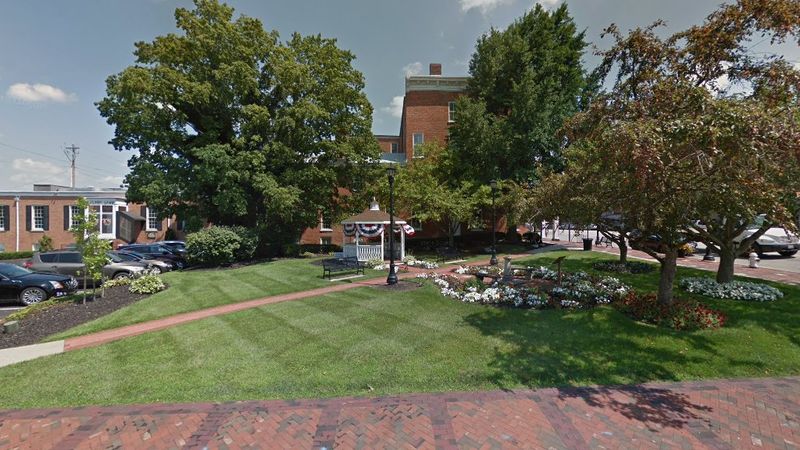
Footsteps echo on brick as Gazebo Park opens onto the Golden Lamb, Ohio’s oldest continuously operating hotel, where history feels present without being staged.
The park’s white gazebo anchors the square visually, while nearby antique shops add texture through creaking floors and curated displays.
Lebanon embraces its stagecoach-era past openly, with preservation efforts keeping porches deep and trim details sharp.
Seasonal festivals bring music, quilts, and conversation into the park, layering activity without overcrowding.
Street parking is generally straightforward, though weekends near Broadway fill quickly.
Circling behind the hotel reveals additional markers that enrich the visit.
A late lunch followed by a slow loop under evening lights often feels like the correct order of events.
13. Monument Square District, Urbana
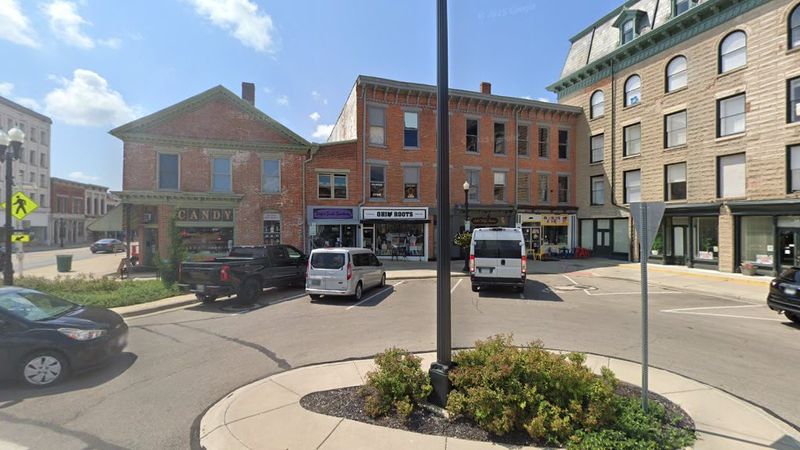
Traffic flows around Urbana’s central monument with practiced courtesy, revealing views of late nineteenth-century storefronts painted in confident, restrained colors.
Motorcycles idle patiently, bakery doors open and close rhythmically, and the square feels actively used rather than preserved behind glass.
The monument anchors county history while allowing the surrounding district to remain functional and flexible.
Brickwork, murals, and plaques supply context without visual noise, maintaining clarity.
Parking along Scioto Street provides easy access and a short, satisfying approach.
A clockwise loop captures the best sightlines, especially as sunlight hits upper cornices.
Stopping for pie before moving on often turns out to be the most sensible decision of the visit.