
Ohio’s Creepiest Abandoned Spots Are Not For The Easily Spooked
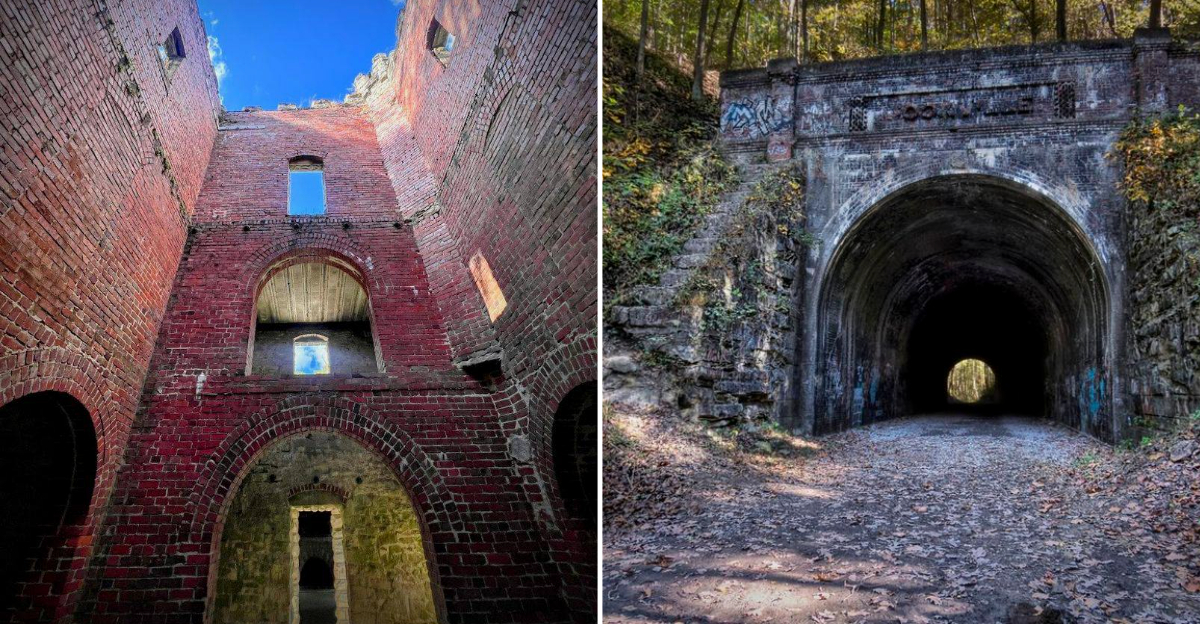
Ohio has a talent for keeping its strangest stories just out of plain sight, behind weathered brick, rusted gates, quiet tunnels, and trails that seem to get moodier with every step.
This is Ohio after closing time, and it gets wonderfully weird. Across the state, abandoned landmarks and forgotten corners still carry echoes of what they used to be, which is exactly what makes them so fascinating to explore from a safe and respectful distance.
History lovers, curious road-trippers, and anyone who enjoys a good goosebump moment will find plenty to talk about here.
This list of 9 eerie Ohio spots brings together old tunnels, crumbling attractions, historic buildings, and shadowy places that make a simple road trip feel like a scene with dramatic background music.
1. Chippewa Lake Park, Chippewa Lake, OH
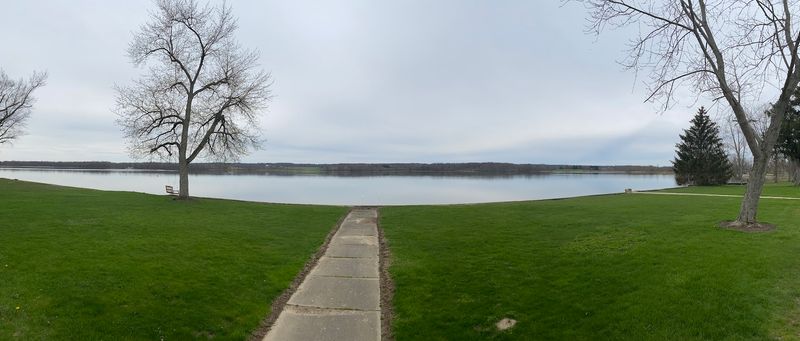
Picture a former amusement park slowly turning into a public historic park, and you are already halfway to understanding what makes Chippewa Lake Park so fascinating.
Located near the new Chippewa Lake Park Tumble Bug Trailhead at 5796 Longacre Lane in Chippewa Lake, Ohio, this was once a beloved amusement park that opened all the way back in 1878.
At its peak, the park drew thousands of visitors every summer, filling the air with laughter, music, and the clatter of carnival rides.
It closed permanently in 1978, and for decades, nature reclaimed much of the property while memories of the old rides became part of local legend.
The site is now being transformed by the Medina County Park District, with the first phase of public access scheduled to open on May 15, 2026.
That first phase includes the Tumble Bug Trailhead, parking, restrooms, a picnic shelter, and a half-mile accessible gravel loop trail.
What makes Chippewa Lake Park so compelling is how much history still surrounds the land, even as the site begins its new life as a public park.
Artifacts and stories from the old amusement park are being preserved through local history efforts, giving visitors a way to connect with what once stood there.
Access before the official opening remains restricted, so always check Medina County Park District updates before attempting to visit.
Once public access begins, the overgrown history and careful redevelopment should make this one of Ohio’s most unusual park stops.
2. Moonville Tunnel, McArthur, OH
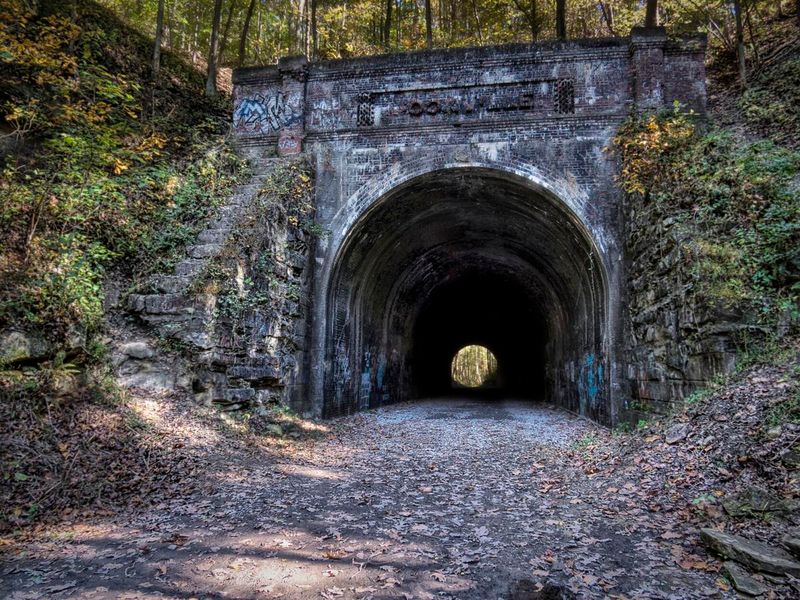
Carved into the hills of Vinton County near McArthur, Ohio, this old railroad tunnel has earned a reputation that stretches far beyond its modest size.
Moonville Tunnel sits along the Moonville Rail Trail and was once part of the Marietta and Cincinnati Railroad line, which stopped operating long ago.
The ghost town of Moonville itself has almost completely vanished into the forest, leaving the tunnel as the last real reminder that people actually lived here.
Local legends say the tunnel is haunted by the presence of a railroad worker connected to the old tracks many years ago.
Visitors often talk about flickering lights and unexplained sounds echoing through the stone passage, especially when the woods are quiet.
The tunnel is about 250 feet long, and walking through it feels like stepping into a completely different world.
Graffiti covers much of the interior walls, giving it an even more unsettling, layered atmosphere.
The surrounding forest adds to the mood, with tall trees blocking out sunlight and creating a heavy, watchful silence.
Getting there requires a short hike along a wooded trail, so wear sturdy shoes and bring a flashlight.
Spring and fall are the best seasons to visit, when the foliage frames the tunnel entrance beautifully and the temperature stays comfortable for exploring.
The Moonville Rail Trail and tunnel area are open during posted public access hours, so check current rules before planning a late visit.
3. Squire’s Castle, Willoughby Hills, OH
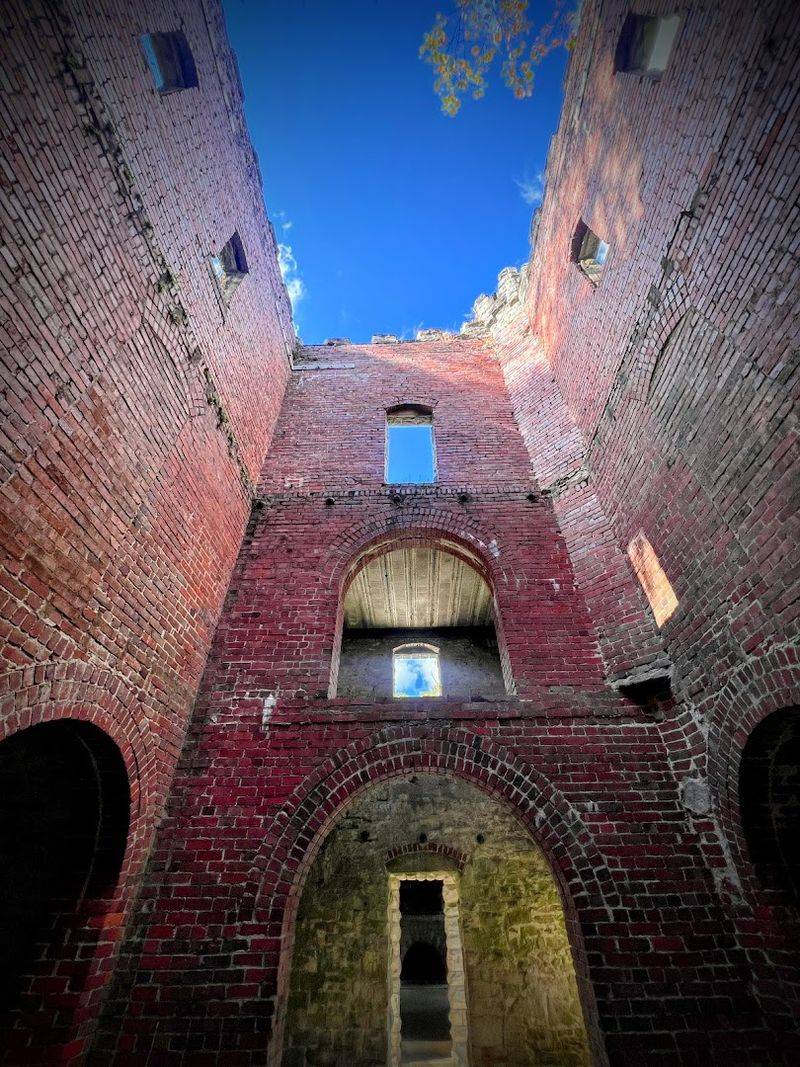
Tucked inside the North Chagrin Reservation near Willoughby Hills, Ohio, this roofless stone structure looks like it was plucked straight out of a European fairy tale and dropped into the woods.
Squire’s Castle, located at 2844 River Road, was originally built in the late 1800s as a gatekeeper’s residence for a much larger estate that industrialist Feargus Squire planned but never actually completed.
The grand mansion he envisioned was never built, leaving this smaller stone building standing alone in the forest as a permanent monument to unfulfilled ambition.
Today, the castle is a popular destination within the Cleveland Metroparks system, and it is free to visit year-round.
The stone walls remain impressively intact, and visitors can walk through the open rooms and peer out through the tall, glassless windows.
A local legend claims that Squire’s wife developed a deep fear of the isolated woods and that her spirit still wanders the building at night, carrying a red lantern.
Whether you believe in ghosts or not, the atmosphere inside the castle walls is genuinely atmospheric and a little unsettling after sundown.
Fall is especially popular for visiting, when the surrounding forest turns vivid shades of orange and red and frames the grey stone dramatically.
Bring a camera, because every angle of this place photographs beautifully and eerily at the same time.
4. Ohio State Reformatory, Mansfield, OH
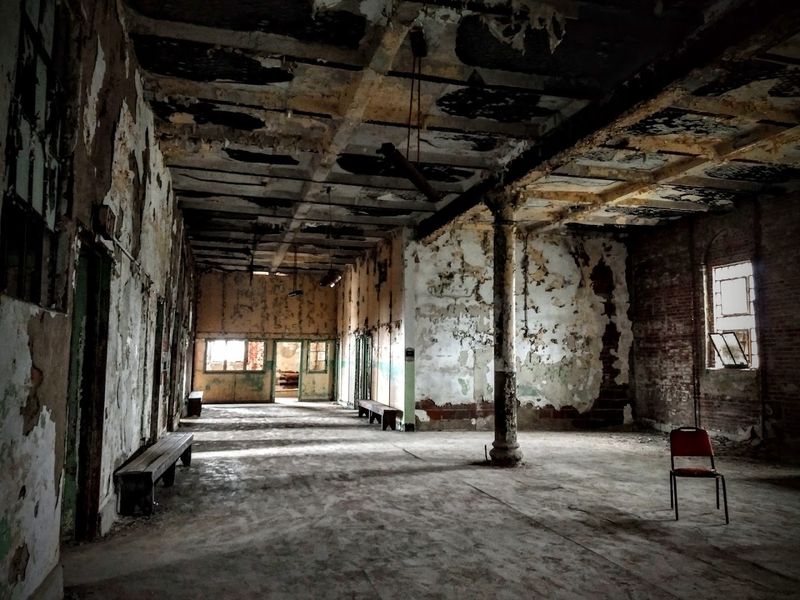
Few buildings in the entire country carry as much weight, history, and raw atmosphere as this towering Gothic structure in Mansfield, Ohio.
The Ohio State Reformatory, located at 100 Reformatory Road, opened in 1896 and operated as a prison for nearly a century before closing its doors in 1990.
The building’s architecture is genuinely jaw-dropping, with soaring stone towers, ornate brickwork, and a six-story cellblock that is reportedly the largest freestanding steel cellblock in the world.
Most people will recognize the exterior instantly, since the reformatory served as the filming location for the 1994 movie “The Shawshank Redemption.”
Today, the Mansfield Reformatory Preservation Society offers regular tours, including special ghost tours that run throughout the year and are wildly popular during the Halloween season.
The building’s interior is a maze of crumbling plaster, rusted iron, and peeling paint that creates an atmosphere unlike anything else in Ohio.
Paranormal investigators have visited the reformatory many times, and the building has appeared on numerous television shows dedicated to ghost hunting.
Cold spots, unexplained sounds, and shadowy figures are among the most commonly reported experiences from visitors.
Even if you are completely skeptical about the supernatural, the sheer scale and deteriorating grandeur of the place is enough to leave a lasting impression.
Plan at least two hours for your visit, and book tours in advance during fall weekends.
5. Fairfield County Infirmary, Lancaster, OH
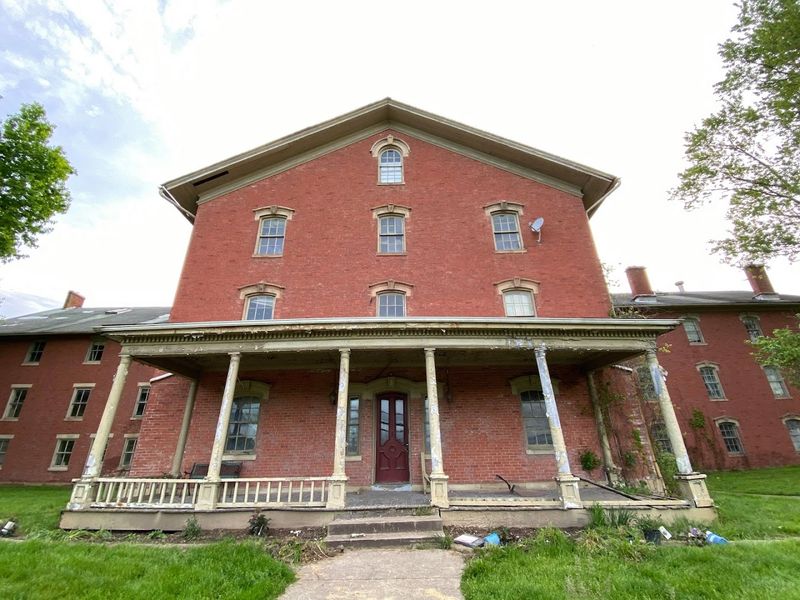
Not every creepy historic building announces itself with dramatic towers or famous movie appearances, and the Fairfield County Infirmary in Lancaster, Ohio, is proof of that.
Located at 1587 Granville Pike, this former poorhouse and county care facility operated for well over a century, serving some of the most vulnerable members of the local community.
Buildings like this one were once common across the United States, providing shelter and basic care for those who had nowhere else to turn.
Over time, the facility fell out of its original use, and its heavy institutional character helped turn it into one of Fairfield County’s most talked-about spooky historic sites.
Today, the property is not simply a roadside ruin, since visitors can book day tours, public hunts, photography sessions, and self-guided tours through the site.
What makes this location particularly unsettling is the combination of institutional architecture and the knowledge of the difficult lives once lived within these walls.
The property sits on a fairly open piece of land, which means the buildings are visible from the road, giving passing drivers an unexpected and sobering glimpse of forgotten Ohio history.
Photographers and paranormal enthusiasts have documented the interior in striking detail over the years, capturing the slow but relentless work of time.
Always book through the proper channels and respect any posted signage and property boundaries if you visit the area.
The site serves as a powerful reminder of how quickly places tied to human hardship can slip into obscurity.
6. Licking County Historic Jail, Newark, OH
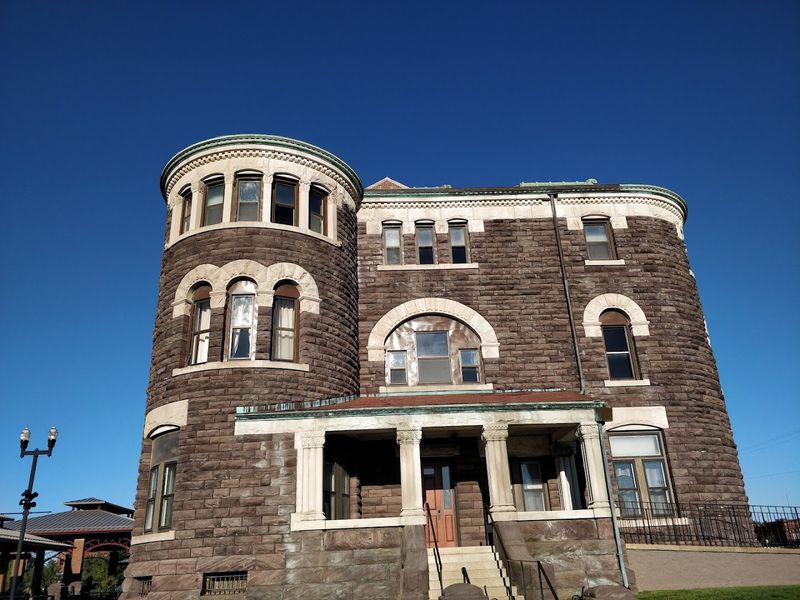
Right in the heart of Newark, Ohio, at 46 South 3rd Street, sits one of the most imposing and historically rich structures in the region.
The Licking County Historic Jail is a hulking stone building that first opened in November 1889, and its thick walls and small barred windows give it an unmistakably severe presence.
The building served as an active jail for nearly a century, and the stories collected within those walls range from the mundane to the genuinely chilling.
After finally closing as a working facility, the jail sat largely unused and became a subject of fascination for history enthusiasts and paranormal investigators alike.
The building’s construction is remarkable, featuring brownstone, Romanesque details, and ironwork that speaks to the craftsmanship of a much earlier era.
Inside, the original cell blocks remain largely intact, giving visitors a visceral and uncomfortable sense of what confinement in the late 19th century actually felt like.
Ghost tours have been organized at the site, and participants frequently report hearing unexplained sounds in the cellblock area.
The building is a recognized historic landmark, and preservation efforts have kept much of its original character intact.
If you are planning a visit, check with the site or local tourism organizations for scheduled tours or open house events, as access is not always available to the general public.
It is the kind of place that stays with you long after you have left the building.
7. Historic Prospect Place Estate, Trinway, OH
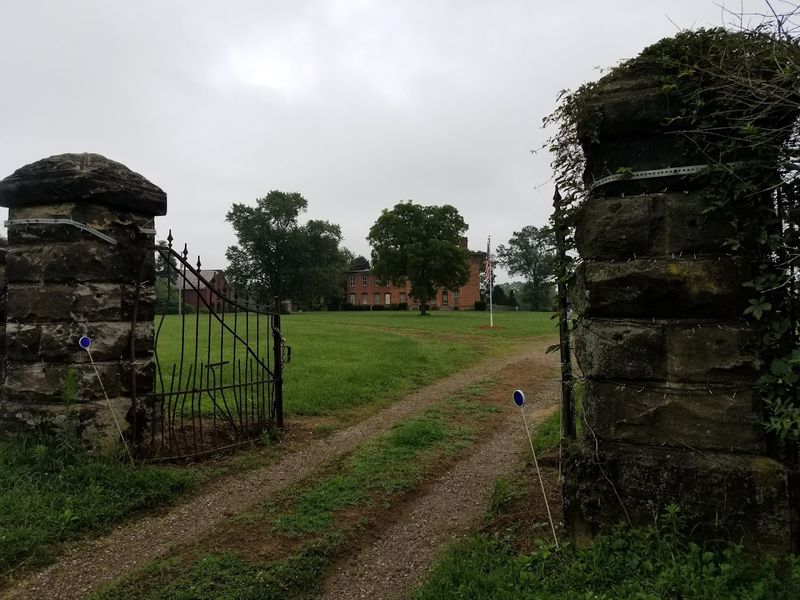
Standing in tiny Trinway, Ohio, this grand Greek Revival mansion commands attention in a way that feels almost defiant given how quiet and rural its surroundings are.
Historic Prospect Place Estate, located at 12150 Main Street, was built in the 1850s by George Willison Adams, a prosperous businessman and abolitionist whose history is closely tied to the Underground Railroad.
That history alone makes the estate significant, but it is the combination of grandeur, age, and partial restoration that gives the place its unmistakable atmosphere.
The mansion is enormous, featuring multiple stories, sweeping staircases, and rooms that once hosted the kind of social gatherings that small-town Ohio rarely sees today.
After years of neglect, the building fell into serious disrepair, and the all-volunteer G.W. Adams Educational Center, Inc. now owns and operates the site while working to preserve it.
The estate is open for tours, and special ghost tours and paranormal events have helped draw visitors from across the state.
The building has also been investigated by paranormal research teams, and reports of unexplained activity inside the mansion are plentiful.
The Underground Railroad history adds a deeply human and emotional layer to the experience that elevates the visit beyond simple ghost-hunting.
Tour availability can vary, so checking the official schedule before visiting is strongly recommended.
Few places in Ohio blend legitimate historical significance with genuine eeriness as effectively as this one does.
8. Great Stone Viaduct, Bellaire, OH
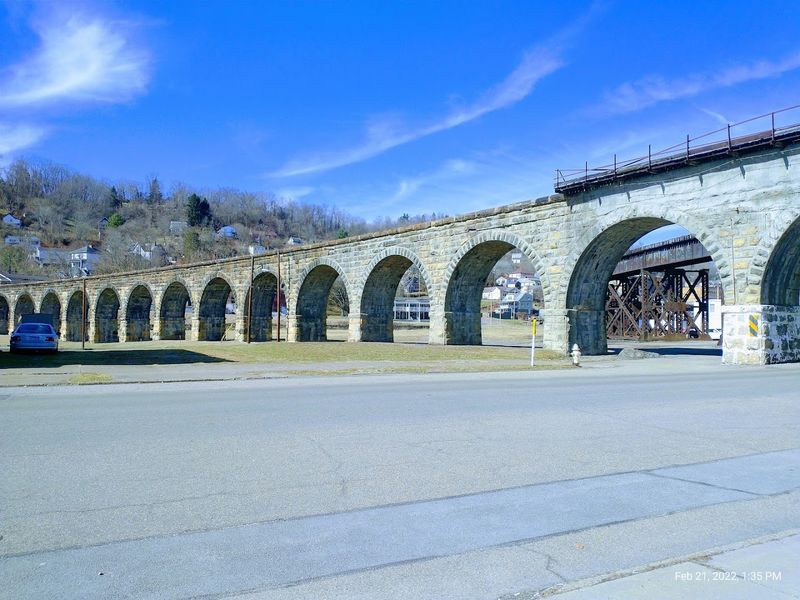
Bellaire, Ohio, might not be the first place that comes to mind when you think of dramatic industrial ruins, but this town along the Ohio River is hiding something genuinely spectacular.
The Great Stone Viaduct, located near 31st Street in Bellaire, is a massive stone railroad structure that was completed in 1871 as part of the rail connection between Ohio and West Virginia.
The structure was built from sandstone, and its towering arches stretch across the landscape with a presence that feels almost ancient despite its 19th-century origins.
In 1996, CSX abandoned a 20-arch portion of the viaduct while retaining other sections, and that preserved portion has since become a public walking trail, overlook, and plaza.
Today, the open section gives visitors a rare chance to walk beside one of Ohio’s most impressive pieces of railroad infrastructure.
The scale of the viaduct is what truly sets it apart from other historic structures in Ohio, since standing near those arches makes you feel genuinely small.
The surrounding area has a quiet, forgotten quality that adds to the overall atmosphere of the site.
Local history enthusiasts have worked to document and preserve the viaduct’s story, and it is recognized as a significant piece of regional industrial heritage.
Visiting during late spring or early fall gives you the best combination of manageable vegetation and atmospheric lighting for photography.
9. Lockington Locks, Lockington, OH
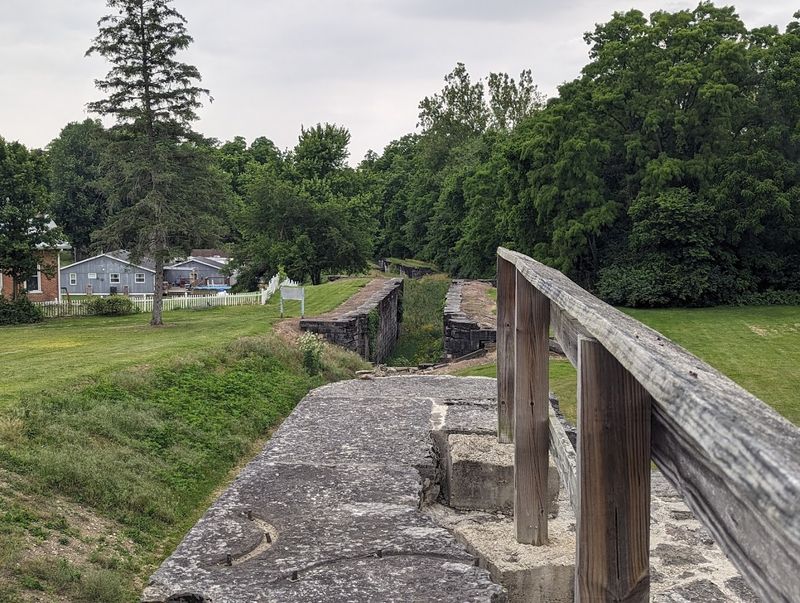
There is something quietly haunting about a place that was once the beating heart of an entire transportation network and now sits in near-total silence.
The Lockington Locks, found along the Museum Trail and Cross Trail in Lockington, Ohio, are the preserved remains of a series of canal locks that once helped boats navigate the Miami and Erie Canal system in the 1800s.
The canal era was a transformative period in Ohio’s history, connecting communities, driving commerce, and shaping the landscape in ways that are still visible today.
At Lockington, five of the original locks remain remarkably intact, making this one of the best-preserved examples of Ohio canal infrastructure anywhere in the state.
The stone walls of the locks are thick and precise, and walking alongside them gives you a real sense of the engineering ambition that went into building the canal system.
The surrounding area is quiet and heavily wooded, which creates a meditative and slightly otherworldly atmosphere, especially on overcast days when the light is flat and grey.
The site is managed as a historical preserve, and interpretive signage along the trail explains how the locks functioned and what daily life looked like for the people who worked them.
It is the kind of place that rewards slow, thoughtful exploration rather than a rushed visit.
Bring comfortable walking shoes and allow at least an hour to fully appreciate the trail and the remarkable stonework that has survived for nearly two centuries.