
10 Oklahoma Ghost Towns Where Time Stands Still And Beauty Lingers
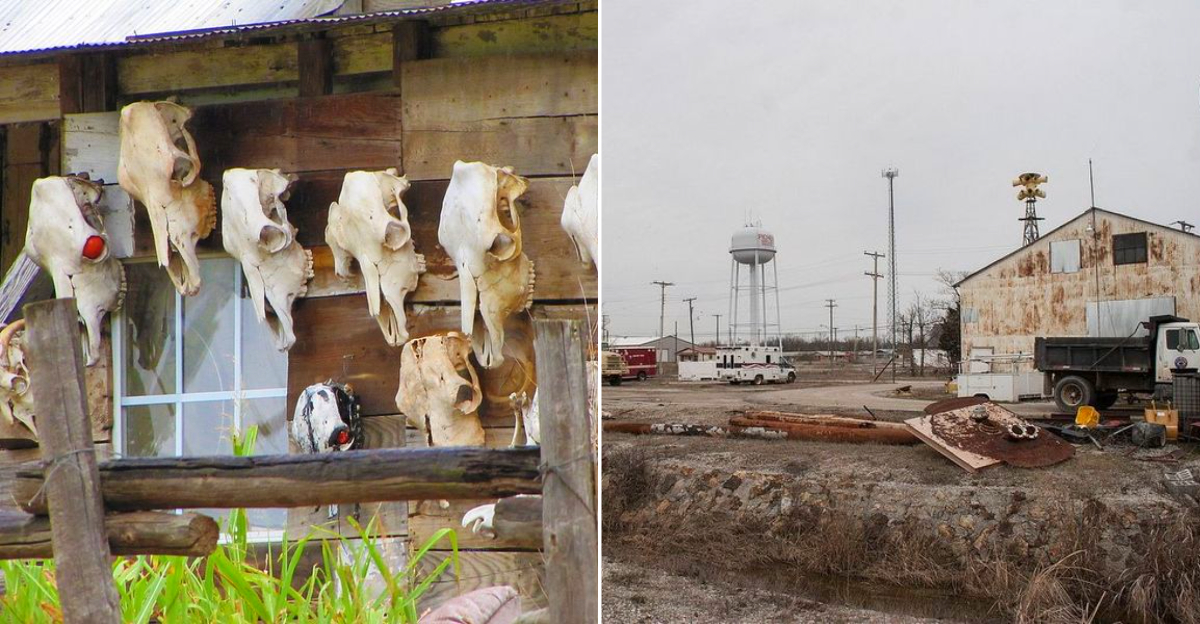
Driving through Oklahoma, you sometimes stumble into towns that feel caught between memory and silence. The prairie wind moves through broken windows, carrying the scent of dust and wildflowers, while old storefronts lean into one another as if holding on.
Rusted tracks stretch away from depots, schoolhouses sit empty, and sidewalks crack under the weight of years. Standing in these places, you sense the lives once lived here: the noise of markets, the sound of trains, the quiet afterward.
I’ve gathered ten ghost towns where history hasn’t vanished but lingers in the air, giving each stop its own strange beauty. Exploring them feels less like touring ruins and more like walking through stories that never completely ended.
Picher
The first thing that strikes you are the pale mountains of mine tailings, towering against the horizon like ghostly dunes. They shimmer oddly in the sun, unnatural yet mesmerizing, and frame a town that once bustled with miners and families.
Silence now rules the streets. Picher thrived on lead and zinc, but contamination and collapsing ground forced people out. The government closed the town in 2009, leaving behind a surreal wasteland of industry undone.
I wandered here once, and the contrast between human ambition and nature’s quiet revenge left me awestruck.
Douthat
You’ll find Douthat hiding under weeds and brush, its few remnants scattered close to Picher. The vibe is hushed, with rusted posts poking through fields and outlines of old roads barely visible. Standing there feels like holding a secret.
It began as Century, a small mining camp, but renamed Douthat when the post office opened in 1917. The railway ran here too, before the mines closed and families left.
Visitors today should expect little infrastructure, so bring water and good shoes. The reward is the eerie calm of solitude.
Texola
The mural still reads “There is No Place Like Texola,” cracked paint clinging to a wall beside the old Route 66 stretch. Crows perch on telephone wires, and the prairie wind whistles through empty windows. It feels like a pause between two worlds.
Texola once thrived as a highway town, full of cafés, gas stations, and passing travelers. When I-40 bypassed it, the people and businesses drained away.
I loved walking here, because even in decay, Texola carries the spirit of the road, wandering, restless, waiting for company.
Ingalls
Gunfire once rattled through this quiet patch of Payne County, when lawmen clashed with the Doolin-Dalton gang in 1893. Now, what’s left are low stone walls, wooden markers, and the sound of prairie grass swaying. The air carries a hush that feels heavier than silence.
Ingalls was once a busy frontier settlement, with saloons and boarding houses ringing its central square. After the shootout, decline came swiftly.
If you visit, bring curiosity: the site has a few interpretive signs that make history easier to picture.
Avery
Avery looks like open land now, but its roots go back to 1902 when the post office opened under its new name, honoring railway worker Avery Turner. For decades, trains gave this community life, bringing goods and families into the heart of Lincoln County.
The post office shut down in 1957, and Avery slipped away. Without the rails, the town had little reason to exist.
Stopping here, I felt a tug of melancholy, a sense that entire lives once spun around tracks now gone.
Bridgeport
Gravel crunches underfoot as you step through the old grid of Bridgeport. The buildings are skeletal, facades giving way to grass and quiet. It feels abandoned yet oddly dignified, like a stage set holding its breath.
Founded in 1893, it thrived only briefly. When growth shifted elsewhere, Bridgeport emptied out within a couple of decades. Today, only scraps remain.
I liked it more than I expected. Its ruins feel approachable, almost gentle, a ghost town that invites you to linger without fear.
Meridian
Early morning mist curls over the empty roads of Meridian, and the silence feels almost theatrical. A few structures lean against time, porches sagging, windows hollowed. The sense of abandonment wraps the place like a coat.
The town once served Logan County with stores, schools, and a post office. Over time, farming families moved away, and commerce drained elsewhere. Only fragments remain today.
Visitors should plan lightly: there’s little to “do” but stand still and feel how the quiet reshapes perception.
Doaksville
Doaksville was once the largest town in Indian Territory, bustling with shops, a school, and even a Choctaw-language newspaper. Its story began in the 1820s, expanding rapidly by mid-century.
When the railroad bypassed it in the 1870s and nearby Fort Towson closed, decline set in quickly. Now the site is maintained as an archaeological landmark.
If you come, bring water and patience. The ruins and interpretive signs deserve slow exploration, rewarding you with a vivid picture of a town that mattered deeply.
Boggy Depot
The park around Boggy Depot hums with cicadas, their chorus echoing across the creek where stagecoaches once stopped. Tall oaks shade the remaining stone foundations, and the cemetery still carries the names of early settlers.
Founded in 1837, it grew as a trading hub and became a Butterfield Overland Mail stop. When the railroad chose another route, the town declined.
I sat here on a summer afternoon, listening to leaves rustle overhead, and felt the strange blend of history and calm that lingers in ghost towns.
Fort Washita
Stone ruins peek from the prairie grass, their edges softened by years of weather. Walking here, you hear the crunch of gravel underfoot and the wind threading through hollow windows. The fort’s outline still feels commanding, even though the soldiers are long gone.
Built in 1842 to protect the Choctaw and Chickasaw Nations, Fort Washita later saw use in the Civil War before slipping into ruin. Today it’s preserved as a historic site open to visitors.
I stood on the parade ground and imagined the sound of boots striking in unison. The echo felt real enough to give me chills.