
13 Old-School Bakeries In Baltimore That Defined Neighborhoods
Every neighborhood in Baltimore seems to have its own beating heart, and more often than not, it’s found glowing warmly from the window of a local bakery.
These cherished institutions are more than simple stops for bread, pastries, or cakes—they’re gathering places where generations have come to mark life’s sweetest milestones. Birthdays, weddings, and Sunday dinners all carry the unmistakable touch of a neighborhood baker’s craft.
From crusty Italian loaves pulled fresh from the oven to the iconic cookies and desserts that helped put Baltimore on the culinary map, these 13 old-school bakeries have become woven into the city’s identity.
1. Otterbein Bakery: Fort McHenry’s Cookie Connection
Thin, crispy, and utterly irresistible – that’s the Otterbein experience in a nutshell. Since 1881, this family-owned treasure has been crafting cookies that disappear from the cookie jar faster than you can say “pass the milk.”
What started as a small operation near Fort McHenry blossomed into a Baltimore institution, with their signature sugar cookies becoming holiday traditions for countless families. The recipes haven’t changed in generations.
Walking into their shop feels like stepping back in time, with the sweet aroma of butter and vanilla wrapping around you like a warm hug from grandma. Their ginger and chocolate chip varieties have their own devoted followings.
2. Schmidt Baking Company: The Blue Ribbon Standard
The blue ribbon logo of Schmidt’s has been a kitchen staple for Baltimoreans since 1886. My grandmother would send me to the store just for their soft potato bread, claiming nothing else would do for her famous egg salad sandwiches.
From humble beginnings on Harford Road, Schmidt’s grew into a regional powerhouse while maintaining that hometown touch. Their bread trucks became a familiar sight rumbling through neighborhoods, delivering freshness door-to-door.
The heavenly scent of baking bread once wafted through East Baltimore, a daily reminder of the company’s presence. Though production has modernized, their commitment to quality remains unchanged – still using the recipes that made them a household name.
3. H & S Bakery: Fells Point’s Flour Power
Morning strolls through Fells Point once meant being enveloped by the mouthwatering aroma of fresh bread from H & S Bakery. Founded by Harry Tsakalos and Steve Paterakis in 1943, this immigrant success story started with a small family operation and grew into Baltimore’s bread empire.
Their Italian bread became the foundation of countless neighborhood sandwiches, while their rolls were non-negotiable necessities for proper crab feasts. The distinctive yellow delivery trucks became symbols of quality throughout the city.
Local restaurants proudly advertised that they served H & S bread, knowing customers recognized the difference. The bakery’s deep roots in the Harbor East and Fells Point areas helped shape those neighborhoods’ development and character over decades.
4. DeBaufre Bakeries: Berger Cookie Birthplace
Mention Berger cookies to any Baltimore native and watch their eyes light up with childlike delight. These thick, cakey cookies slathered with a generous layer of fudgy chocolate frosting aren’t just treats – they’re edible Baltimore history.
German immigrant Henry Berger created these delectable morsels in 1835, but it was the DeBaufre family who preserved and popularized the recipe when they took over in the mid-1900s. I still remember my first Berger cookie experience at age seven, wondering how something so simple could taste so extraordinary.
Found in grocery stores throughout Maryland, these humble cookies have achieved cult status nationwide. Their distinctive pink boxes have become sought-after souvenirs for visitors wanting a taste of authentic Baltimore.
5. Old Town Bakery: High Street’s Hidden Gem
Tucked away on North High Street, Old Town Bakery quietly served generations of East Baltimore families without fanfare or flash. The worn wooden floors creaked with history as customers lined up for their daily bread, a ritual repeated for nearly a century.
Jewish immigrant families who settled in the area particularly cherished Old Town’s rye bread and challah. The bakery’s resilience through changing neighborhood demographics spoke to the universal language of good food.
Saturday mornings meant special treats – hand-rolled bagels and flaky pastries that disappeared by noon. Though the original bakery eventually closed its doors, the memories of their perfectly crusty bread live on in neighborhood lore, a testament to how food becomes intertwined with our sense of home and belonging.
6. Rabai’s Bakery: Northeast Baltimore’s Breakfast Club
The moment you stepped through Rabai’s door, you became family. This Northeast Baltimore institution served more than pastries – it dished out daily doses of neighborhood news and warm conversation along with their legendary donuts and coffee cakes.
Founded by the Rabai family after World War II, the bakery’s peach cake became the unofficial taste of Baltimore summers. Customers would place orders weeks in advance to secure these seasonal treasures, with their perfectly caramelized fruit nestled atop sweet dough.
The bakery’s cramped quarters never deterred the Saturday morning crowds who squeezed in for fresh-from-the-oven treats. Children pressed noses against the glass cases while parents caught up with neighbors, creating a weekly ritual that shaped the rhythm of the community for decades.
7. Woodlea Bakery: Belair Road’s Birthday Cake Headquarters
“We’re getting the cake from Woodlea” became the ultimate confirmation that a celebration mattered in Northeast Baltimore. Since 1943, this family-owned treasure has transformed ordinary birthdays into memorable events with their spectacular decorated cakes and pastries.
The Hergenroeder family’s commitment to quality made Woodlea a destination bakery, drawing customers from across the city. Their strawberry shortcake in summer months created lines that stretched down Belair Road, a sweet testament to their reputation.
Beyond cakes, their peach dumplings and marshmallow donuts achieved legendary status among locals. Woodlea wasn’t just where you got dessert – it was where generations marked milestones, from first birthdays to wedding receptions, weaving the bakery into the fabric of family histories throughout Baltimore.
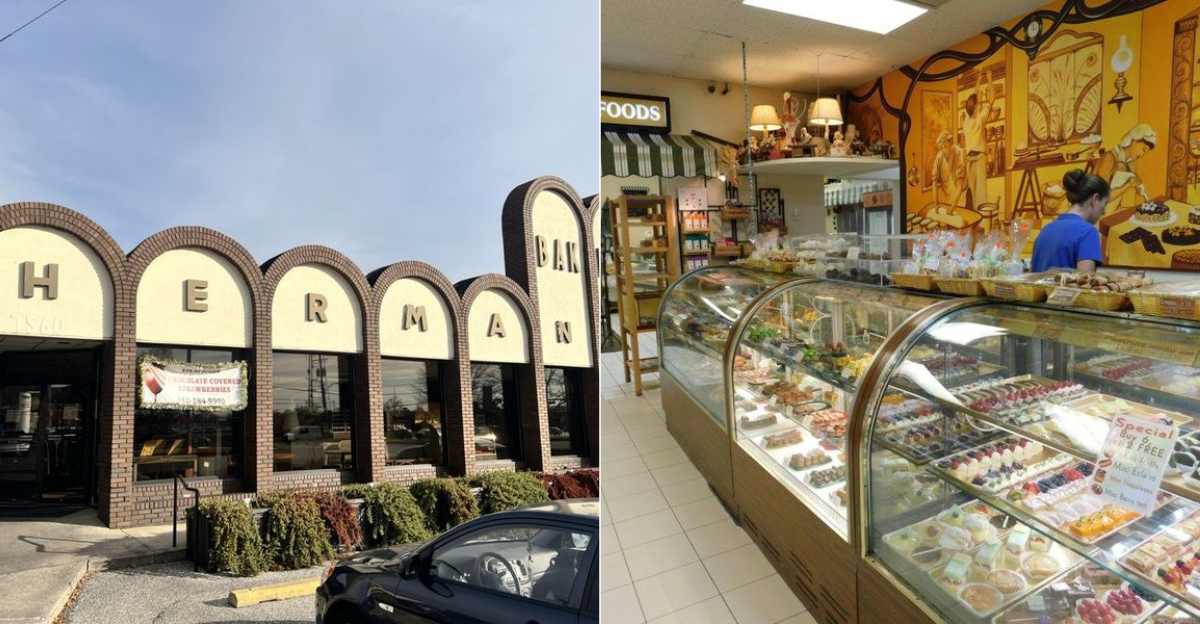
8. Herman’s Bakery: Dundalk’s Donut Dynasty
Ask any Dundalk native about Herman’s, and they’ll likely share stories of Saturday mornings waiting in line for still-warm donuts that defined weekend traditions. Founded in 1923 by German immigrants, this family bakery perfected the art of simple pleasures done extraordinarily well.
Their sticky buns achieved near-mythical status – gooey, buttery spirals of cinnamon-laced dough that compelled otherwise reasonable adults to set alarm clocks for ungodly weekend hours. The bakery’s longevity through Dundalk’s industrial boom and subsequent changes testified to their integral role in the community.
Fourth-generation customers still order the same treats their great-grandparents enjoyed, proving some flavors transcend time. Herman’s weathered changing food trends by never changing what worked, becoming not just a bakery but a living museum of neighborhood history.
9. Ward Baking Company: Midtown-Edmondson’s Bread Behemoth
The massive Ward Baking Company complex once dominated the Midtown-Edmondson skyline, a cathedral to commercial baking that employed hundreds of neighborhood residents. The sweet scent of baking bread permeated blocks in every direction, becoming part of the area’s sensory landscape.
At its peak in the mid-20th century, Ward’s delivery trucks fanned out across Baltimore each morning, supplying everything from corner stores to fine restaurants. The iconic yellow building with its distinctive smokestack served as a neighborhood landmark and economic anchor.
Though production eventually ceased, the impressive Art Deco building still stands as a testament to Baltimore’s industrial past. Former employees speak of the camaraderie that developed on the production lines, where neighborhood friendships were forged alongside the daily bread that fed the city.
10. Motzi Bread: Bolton Hill’s Artisanal Revival
Flour-dusted hands and ancient techniques are bringing old-world bread back to Baltimore at Motzi. While newer than other entries on this list, Motzi has rapidly established itself as a neighborhood cornerstone by embracing traditional methods that connect to Baltimore’s rich baking history.
Owners Russell and Maya use locally-sourced grains and natural fermentation, creating breads with depth and character that mass production can’t match. Their subscription model has created a modern version of the neighborhood bakery experience, where customers develop personal relationships with the people making their daily bread.
The small storefront on North Avenue has become a gathering place where the community connects over the simple pleasure of truly excellent bread. Their commitment to accessibility ensures their artisanal creations aren’t limited to the privileged few – continuing Baltimore’s tradition of democratic baking.
11. Henderson Creamery: Canton’s Sweet Time Capsule
Before refrigeration changed food distribution forever, Henderson Creamery’s distinctive brick complex served as both bakery and ice cream production facility – a one-stop shop for Canton’s sweet cravings. The massive building with its curved archways and industrial windows stands as an architectural reminder of Baltimore’s food manufacturing heritage.
During summer months, neighborhood children would gather outside, hoping for broken ice cream cones that workers would sometimes distribute at day’s end. The creamery’s horse-drawn delivery wagons were eventually replaced by trucks, but the quality of their products remained consistent.
Though production ceased decades ago, the renovated building continues to inspire reverence from preservationists and food historians. The complex represents a time when neighborhood food production created not just products but community identity and economic opportunity.
12. Vaccaro’s Italian Pastry Shop: Little Italy’s Sweet Spot
Cannoli shells crackling with each bite, revealing creamy ricotta filling studded with chocolate chips – this is the Vaccaro’s experience that has delighted Little Italy visitors since 1956. The Vaccaro family turned their Italian pastry traditions into a Baltimore institution that draws lines out the door on weekend evenings.
Their glass cases gleam with rainbow-colored cookies, rum-soaked baba, and tiramisu cups that tempt even the most determined dieters. The late-night coffee and dessert ritual at Vaccaro’s became a cherished Baltimore tradition, especially after dinner at one of the neighborhood’s many Italian restaurants.
Summer evenings bring crowds for gelato, while winter holidays mean elaborate cookie trays that grace family tables across the region. More than a bakery, Vaccaro’s represents the cultural contributions Italian immigrants made to Baltimore’s food landscape.
13. Dangerously Delicious Pies: Hampden’s Rock-and-Roll Bakehouse
“Pie for breakfast, pie for lunch, pie for dinner” became the rallying cry of pie enthusiasts when musician-turned-baker Rodney Henry opened Dangerously Delicious Pies. His rock-and-roll attitude toward baking brought new energy to Baltimore’s pastry scene, proving that tradition could be respectfully reimagined.
The Hampden location became famous for both sweet and savory creations, with Baltimore Bomb Pie – featuring crushed Berger cookies in chess filling – paying homage to local food history. Their savory pies introduced many to the concept of pie as a complete meal rather than just dessert.
Lines form during holidays for their signature creations, while local musicians often found both employment and inspiration there. By blending counter-culture vibes with old-school baking techniques, Dangerously Delicious created a new chapter in Baltimore’s rich bakery story.