
7 Old-School New Jersey Boardwalk Landmarks That Survived The ’80s
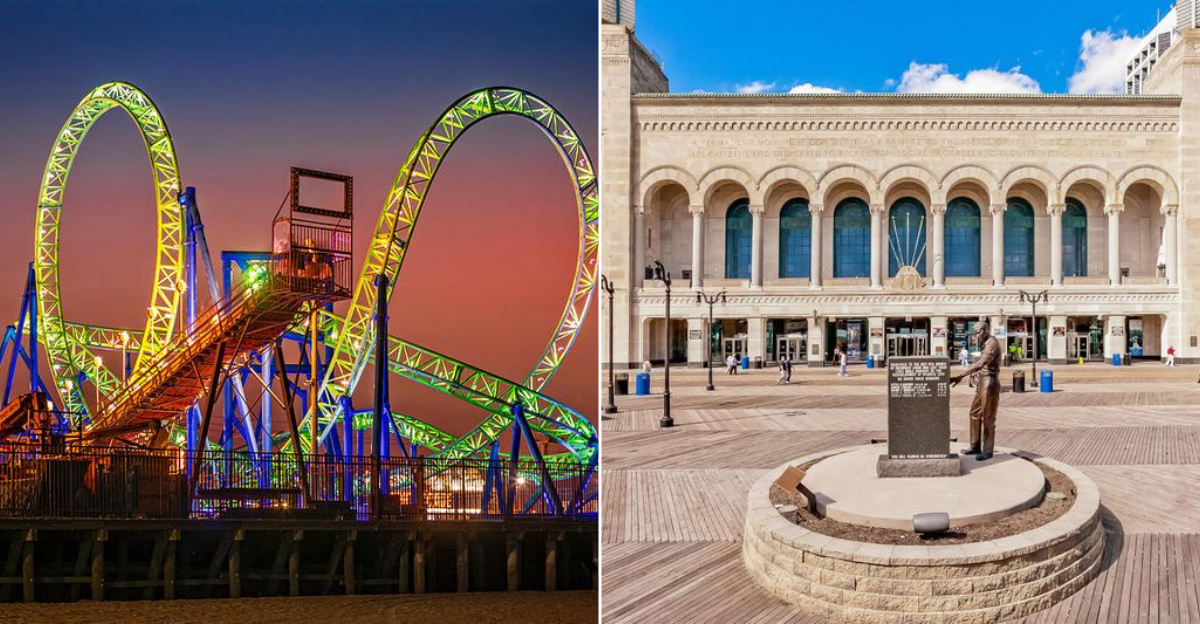
Growing up, nothing said summer quite like the salty breeze, crashing waves, and glowing neon lights of New Jersey’s legendary boardwalks.
They were places where childhood memories were made—arcade games clattering, the smell of funnel cakes drifting through the air, and the thrill of roller coasters lighting up the night sky. While many attractions disappeared with the big hair and shoulder pads of the 1980s, a handful of landmarks have stood firm against time.
These resilient treasures continue to enchant new generations while offering older visitors a nostalgic return to their youth, surviving economic shifts, changing trends, and even hurricanes.
1. Lucy the Elephant (Margate City)
Standing tall since 1881, Lucy has witnessed more Jersey Shore drama than all the reality TV shows combined! This six-story wooden pachyderm once served as a hotel, tavern, and even a summer home before becoming the quirky roadside attraction I first visited with my grandparents.
The world’s largest elephant-shaped building survived multiple demolition threats throughout the decades. I still remember my childlike wonder climbing the spiral staircase to reach her howdah (that’s the fancy name for the carriage on her back).
Lucy earned National Historic Landmark status in 1976, cementing her place in Jersey lore. Her recent $2.4 million restoration ensures she’ll continue trumpeting Margate City’s unique charm for generations to come.
2. Asbury Park Convention Hall & Paramount Theatre (Asbury Park)
Majestic doesn’t begin to describe this grand beachfront complex where I caught my first concert in 1979. Built in the late 1920s, its stunning Beaux-Arts architecture with arched promenades instantly transports you to a more glamorous era.
The venue has hosted everyone from Frank Sinatra to The Doors. My teenage years were punctuated by summer shows here, where the ocean breeze would mingle with guitar riffs echoing through the hall.
Despite Asbury’s economic decline in the ’80s and ’90s, this architectural wonder remained standing—albeit barely. Today, it anchors the city’s remarkable comeback story, hosting performances while its copper-green rooftop continues to define the shoreline’s silhouette just as it did when my parents danced there decades ago.
3. The Stone Pony (Asbury Park)
Rock and roll salvation arrived in brick and mortar form! This unassuming club launched in 1974 became hallowed ground where a scruffy kid named Bruce Springsteen cut his teeth before conquering the world.
I’ll never forget sneaking in underage during the summer of ’82. The sweaty walls seemed to pulse with decades of musical history as local bands dreamed of following in The Boss’s footsteps.
When Asbury Park hit rock bottom in the late ’80s, The Stone Pony nearly closed forever. Somehow, this scrappy venue held on through the lean years. Now restored to its former glory, it remains the beating heart of Jersey’s music scene—a testament to the power of three chords and the truth to revitalize an entire shoreline.
4. Casino Pier (Seaside Heights)
Flashing lights, screaming thrill-seekers, and the unmistakable aroma of funnel cake—Casino Pier defined my childhood summers! Every Friday night, my family would pile into our station wagon for our weekly date with the Himalaya ride, where the operator would speed it up as we begged him to go “faster, faster!”
Hurricane Sandy nearly wiped this landmark off the map in 2012. The heartbreaking image of the Jet Star roller coaster submerged in the Atlantic became the disaster’s defining symbol.
Remarkably, Casino Pier rose from the wreckage. While some rides disappeared forever, the pier itself returned with new attractions alongside classics like the carousel and Skee-Ball alleys. The resilience of this family playground mirrors the Jersey Shore spirit itself—knocked down but never out.
5. Boardwalk Hall (Atlantic City)
Before I knew about blackjack and slot machines, Atlantic City meant one thing: the Miss America pageant broadcast from this enormous barrel-vaulted wonder. Built in 1929, this architectural marvel once housed the world’s largest pipe organ and an indoor space so vast it created its own weather patterns!
Mom tells stories of seeing the Rolling Stones here in ’69, while I remember attending the Ice Capades during the hall’s slightly less glamorous ’80s era. Despite Atlantic City’s rollercoaster fortunes, this limestone landmark remained a constant.
Renamed from Convention Hall to Boardwalk Hall in 1983, this National Historic Landmark survived the casino boom that transformed its surroundings. Recently restored to its Art Deco splendor, it continues hosting everything from hockey games to concerts, its elegant facade still overlooking the same boards where generations of families have strolled.
6. Dupont Avenue Carousel (Seaside Heights)
Pure magic spun in circles! My first-ever boardwalk memory involves clutching a brass ring while riding one of the hand-carved horses on this magnificent merry-go-round. Built in 1910 by legendary carousel maker William Dentzel, this whirling treasure features 58 animals and two chariots that have delighted five generations of Jersey Shore visitors.
The distinctive sound of its Wurlitzer Military Band Organ still stops me in my tracks whenever I visit. During the ’80s video game invasion, many historic carousels disappeared as arcades expanded, but this one kept turning.
Hurricane Sandy threatened its existence in 2012, but the carousel survived with minimal damage. Recently relocated to a safer spot on the boardwalk, this antique beauty continues its circular journey through time, connecting modern kids to the same simple joy their great-grandparents experienced.
7. Tillie Mural Relics (Asbury Park)
That grinning face! Those wild eyes! The first time I spotted Tillie’s manic smile painted on the Palace Amusements building, I wasn’t sure whether to laugh or run away. This cartoonish character with his Joker-like grin became Asbury Park’s unofficial mascot, watching over decades of boardwalk revelry.
When the crumbling Palace faced demolition in 2004, preservationists literally cut Tillie from the walls. I joined hundreds of locals forming a human chain to protect this weird but beloved piece of shore history.
Today, Tillie replicas appear throughout the revitalized Asbury Park—on t-shirts, murals, and even tattoos. The original sections remain carefully preserved, awaiting permanent display. More than just faded paint, Tillie represents the quirky, persevering spirit that kept the Jersey Shore’s soul intact through decades of change.