
One Of Alaska’s Most Incredible Roads Ends At A Town You Can’t Reach By Car
Most roads are built to get you somewhere. This one feels like it was designed to test how badly you really want to get there.
Deep in Alaska, a legendary wilderness road winds through mountains, glaciers, and landscapes so remote that turning around almost feels like admitting defeat. But here’s the strange part.
After miles of rugged adventure, the road doesn’t deliver you to a typical town entrance with a welcome sign and a parking lot. Instead, your journey ends with one final surprise. A place where cars don’t get the last word.
This is the kind of destination that sounds made up. A forgotten corner of Alaska where history, wilderness, and a little bit of “are we really doing this?” energy come together.
And that’s exactly what makes it unforgettable.
60 Miles Of Pure Gravel Glory
Buckle up, because the McCarthy Road is not your average Sunday cruise. This legendary 60-mile stretch of gravel starts in Chitina and winds its way through some of the most breathtaking wilderness Alaska has to offer.
It largely follows the original roadbed of the historic Copper River and Northwestern Railway, built between 1908 and 1911.
The railway once hauled enormous amounts of copper ore from the mines down to the coast at Cordova. Today, that same corridor carries adventurous travelers instead of ore cars.
The road takes roughly two hours each way, and conditions can be rough, so a full-sized spare tire is not optional, it is essential.
Services along the route are virtually nonexistent, so packing food, water, and supplies before departure is a smart move.
The Alaska Department of Transportation maintains the road from early spring through mid-fall. Along the way, you will pass stunning mountain ranges, glacial rivers, and sweeping valley views that make every pothole completely worth it.
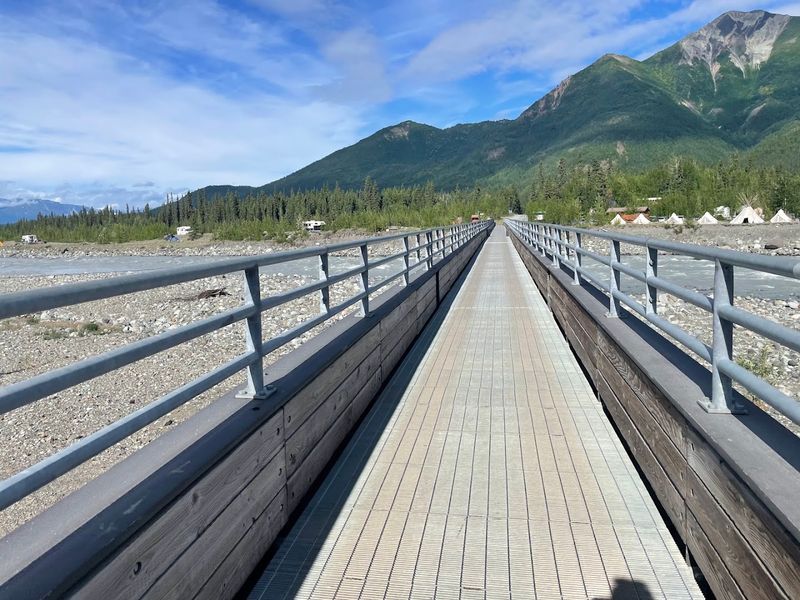
The road ends where the real adventure begins, at a footbridge over the Kennicott River that your car simply cannot cross.
The Car-Free Frontier Gem
There is something almost rebellious about a town that refuses to let cars in. McCarthy sits deep inside Wrangell-St. Elias National Park and Preserve, and it plays by its own rules.
Fewer than 100 people call this place home year-round, which means the vibe here is refreshingly unhurried and genuinely authentic.
No stoplights, no traffic jams, and cell service is basically a rumor for most carriers. To get into town, you park at the end of the road and walk across a footbridge over the Kennicott River.
That short walk is a kind of unofficial ceremony, a transition from the modern world into something far more interesting.
The town sits just south of the Kennecott and Root Glaciers, framed by peaks that look almost too dramatic to be real. Its status within a national park preserve means privately owned land is allowed here, giving McCarthy a frontier town character that feels completely unique.
This is the kind of place where the absence of modern convenience is actually the biggest attraction. You will not miss the Wi-Fi, we promise.
McCarthy’s Wild Past As The Original Vice Town
Every great adventure spot has a backstory, and McCarthy’s is genuinely one for the history books. Back in its heyday, McCarthy earned a colorful reputation as the unofficial “vice town” to its famously strict neighbor, Kennecott.
While Kennecott operated as a rigid company town with a firm no-fun policy for its miners, McCarthy happily filled the gap.
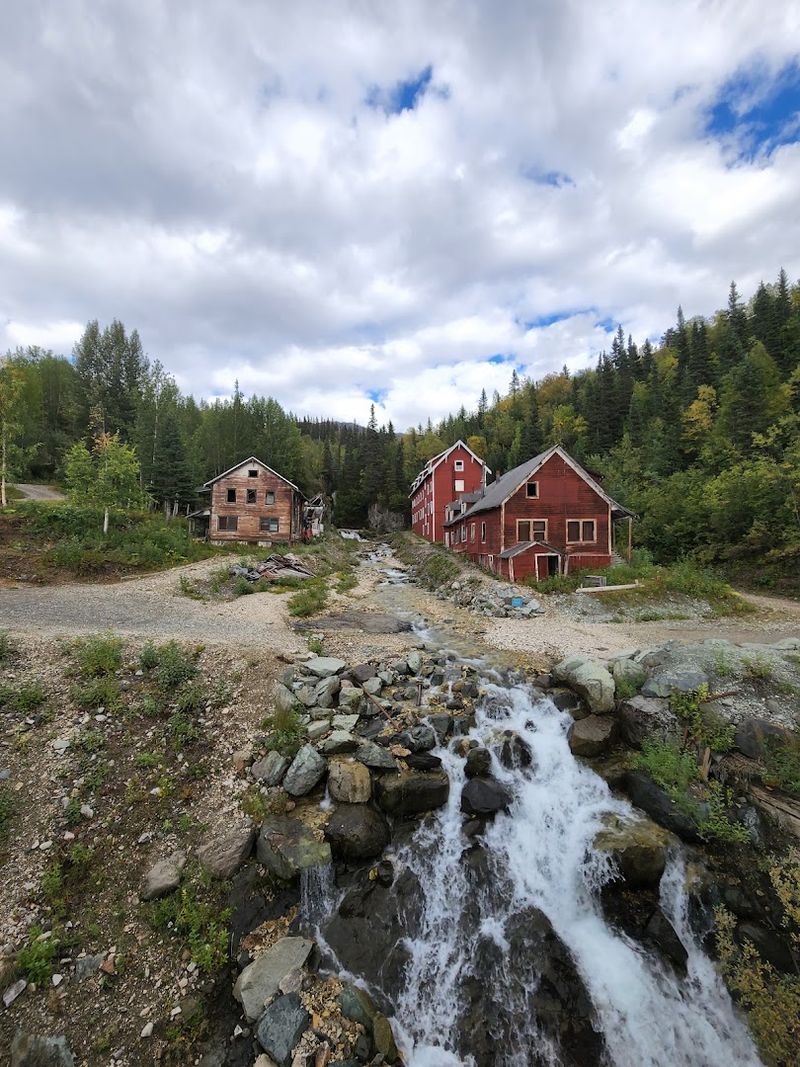
A lively red-light district flourished along the creek banks, offering entertainment and escape for hard-working miners.
During the Prohibition era, railroad engineers reportedly developed a special train whistle code to alert local establishments whenever a U.S. Marshal was on board.
At its peak, McCarthy served a community of around 800 residents in the surrounding area.
When the Kennecott mines closed in 1938, McCarthy largely emptied out and became a quiet ghost of its former self. A handful of determined residents kept the spirit alive through the quiet decades.
Today, that same scrappy, independent energy has transformed into a thriving adventure tourism scene. The town’s past adds layers of intrigue to every corner you explore, making it feel less like a visit and more like stepping into a living, breathing history lesson.
A Copper-Clad Time Capsule
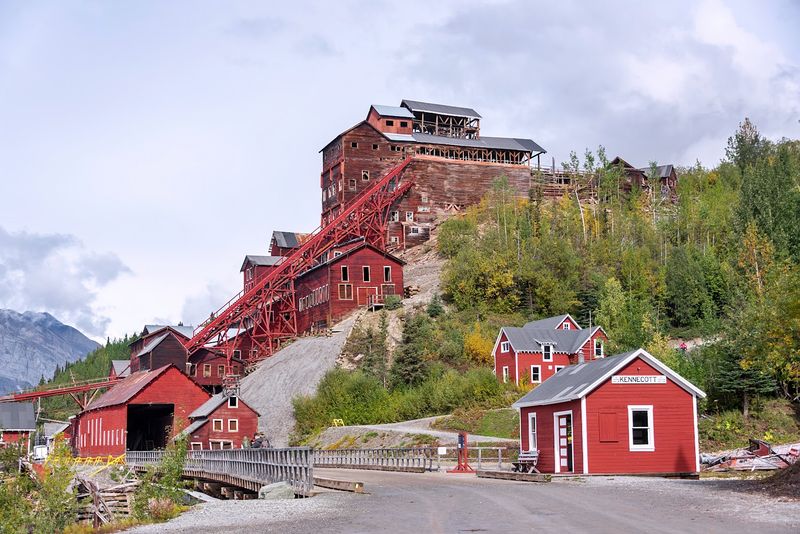
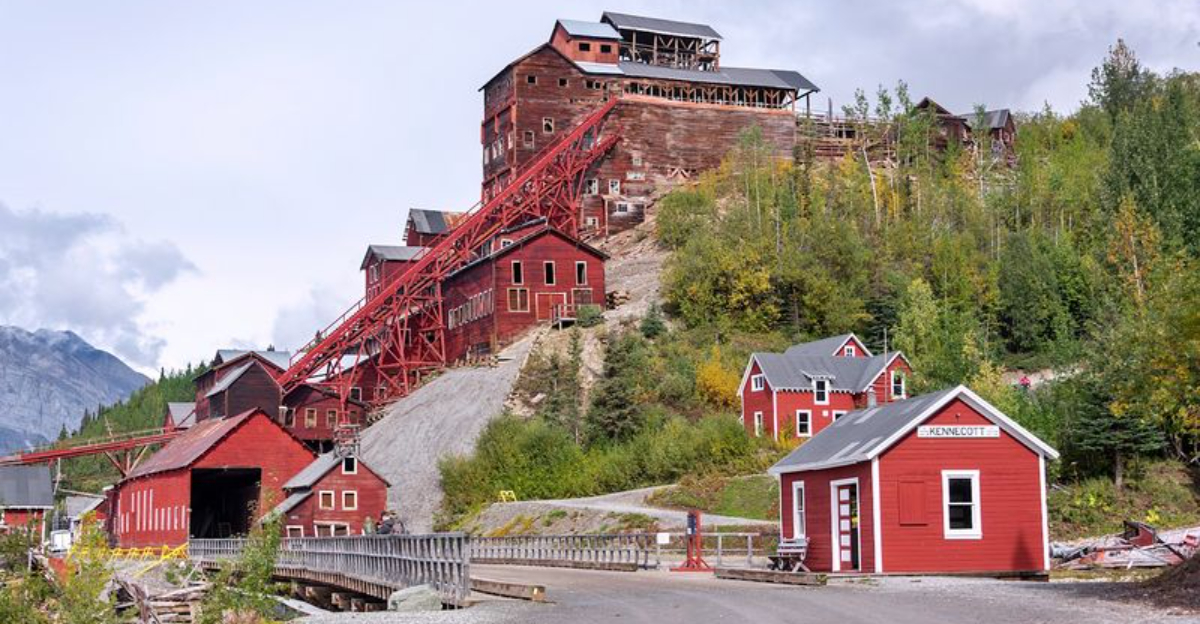
Standing in front of the Kennecott mill building feels like the universe just hit pause on the last hundred years.
Just five miles up the road from McCarthy, the Kennecott Mines National Historic Landmark is one of the most remarkably preserved mining towns in the entire country.
Designated a National Historic Landmark in 1986, it represents the finest surviving example of early 20th-century copper mining in America.
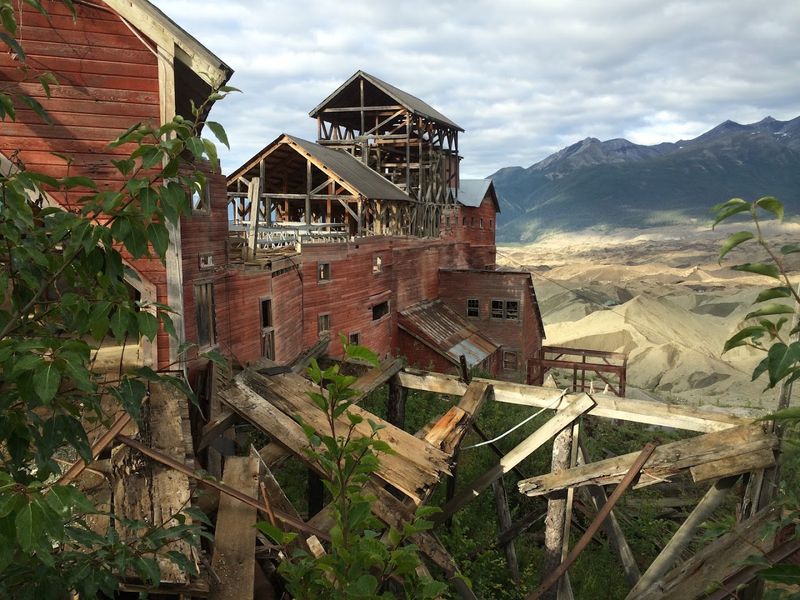
From 1911 to 1938, this operation processed nearly 200 million dollars worth of copper ore, which was an absolutely staggering sum for that era. The centerpiece is the towering 14-story mill building, painted in its signature red, standing boldly against a backdrop of glaciers and mountains.
Visitors can wander through bunkhouses, a train depot, workers’ cottages, and other original structures that have been carefully preserved.
Shuttle vans run conveniently between McCarthy and Kennecott, making the trip easy and accessible. Guided tours offer deep context about the mining operations and the daily lives of workers who called this remote place home.
Walking through Kennecott is not just a sightseeing experience. It is a genuine conversation with history, told through timber, rust, and mountain air.
Walking On Ancient Ice
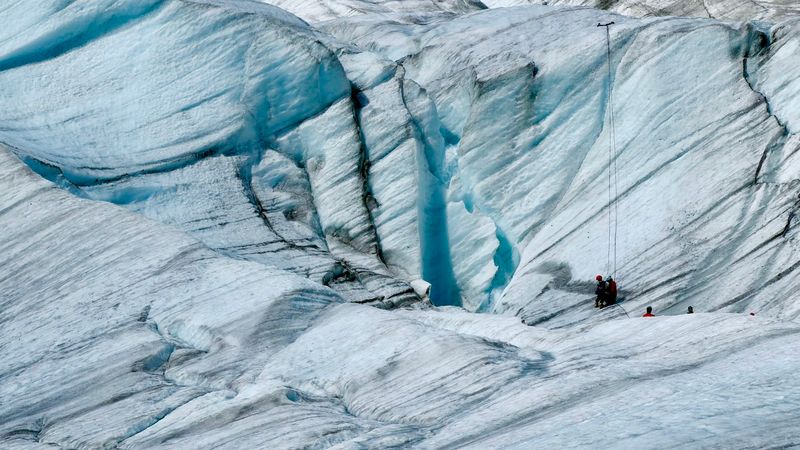
Walking on a glacier sounds like something reserved for extreme athletes or Antarctic researchers. But Root Glacier makes that dream surprisingly accessible, and it is one of the most thrilling things you can do in the McCarthy area.
Starting from Kennecott, a well-marked trail leads directly to the glacier’s edge in roughly two miles each way.
Once you step onto the ice, the landscape transforms completely. The glacier’s surface is a mesmerizing mix of brilliant white snow, deep blue crevasses, and crystal-clear meltwater streams that catch the light in unexpected ways.
Views of surrounding peaks like Mount Blackburn and Regal Mountain frame the entire experience in jaw-dropping style.
For first-timers, guided tours offered by local outfitters are highly recommended. Guides provide crampons, ice axes, and the kind of expertise that turns a glacier walk into a genuinely safe and educational adventure.
Ice climbing opportunities are also available for those craving an extra layer of challenge.
Root Glacier is one of those rare places where you feel both incredibly small and completely energized at the same time. Every crack, every color, and every gust of glacial air reminds you that nature is still very much in charge out here.
The View That Rewires Your Brain
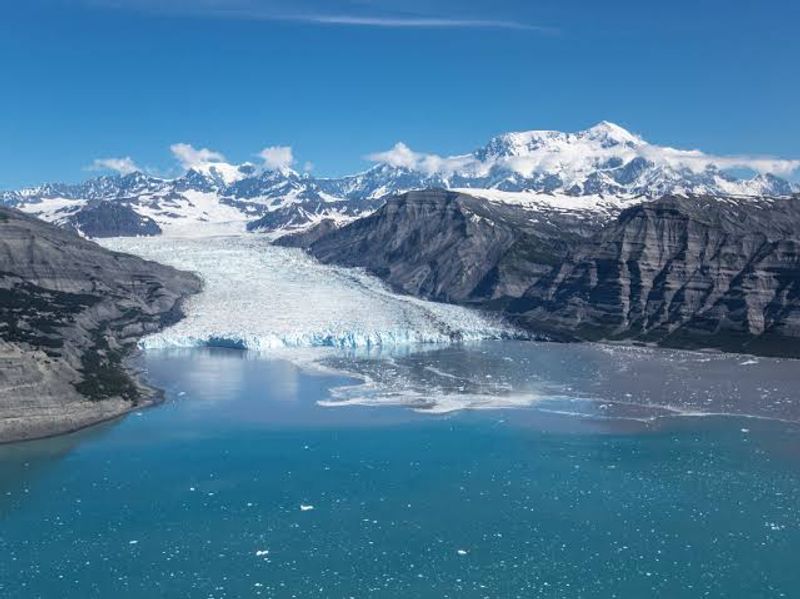
There are views, and then there are views that permanently rearrange how you see the world. Taking a flightseeing tour over Wrangell-St. Elias National Park firmly belongs in the second category.
From the air, the sheer scale of this wilderness stops being a concept and becomes something you feel in your chest.
Wrangell-St. Elias holds the title of America’s largest national park at 13.2 million acres. To put that into perspective, it is larger than Switzerland, Yellowstone, and Yosemite combined.
More than 3,000 glaciers cover over three million acres of the park, creating a landscape that looks almost alien in its beauty and magnitude.
Small bush planes depart from the McCarthy area and offer routes that sweep over glaciers, mountain ridges, and river valleys that are completely unreachable by foot or vehicle.
Pilots often serve as informal guides, pointing out key landmarks and sharing stories about the terrain below. Whether you are a seasoned traveler or a first-time Alaska visitor, this aerial perspective adds a dimension to McCarthy that ground-level exploration simply cannot replicate.
Book early because seats fill up fast during the summer season.
The Wilderness That Swallows You Whole
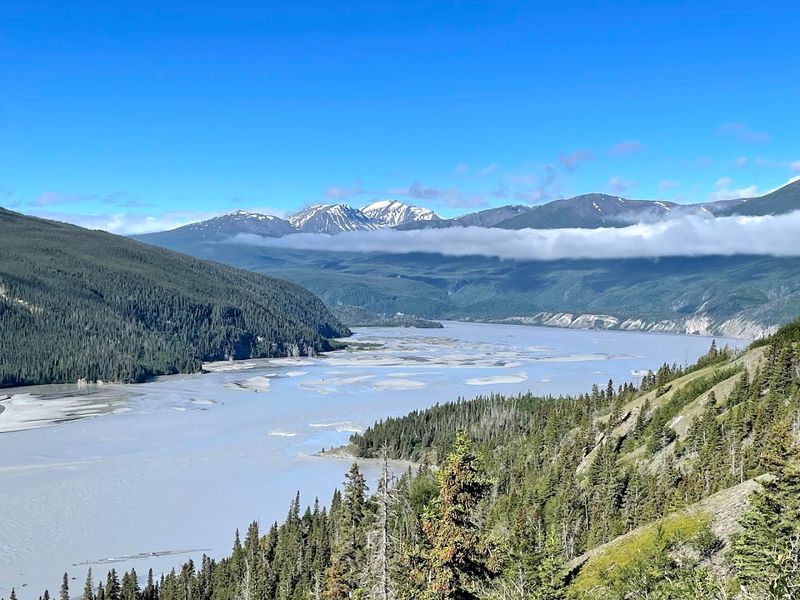
Some places make you feel small in the best possible way.
Wrangell-St. Elias National Park and Preserve is absolutely one of them. At 13.2 million acres, it is the largest national park in the United States, and it is also one of the least visited, which means you often get this jaw-dropping landscape practically to yourself.
Four major mountain ranges converge within the park’s boundaries, including the Wrangell, St. Elias, Alaska, and Chugach ranges.
Among them stand some of North America’s tallest peaks, with Mount St. Elias rising to over 18,000 feet. This UNESCO World Heritage Site shares its designation with neighboring Canadian parks, forming one of the largest internationally protected wilderness areas on the planet.
McCarthy serves as the primary gateway for visitors exploring the park’s interior. From here, trails, glacier routes, and flightseeing paths fan out into a wilderness that genuinely feels untouched.
Wildlife sightings including bears, moose, Dall sheep, and eagles are a regular part of the experience. This park does not just offer outdoor activities.
It offers a full recalibration of perspective, reminding you just how vast and extraordinary the natural world truly is.
Where The Stories Live
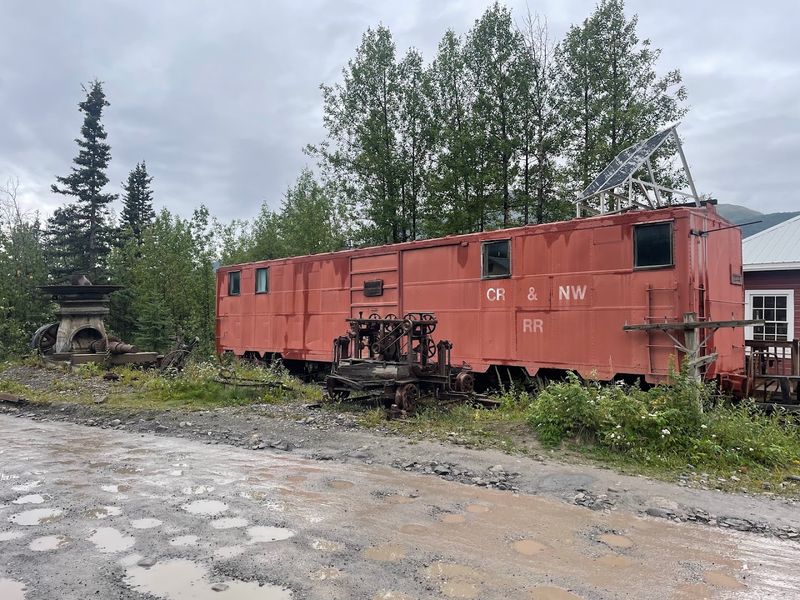
History has a funny way of hitting harder when it is told through actual objects rather than textbooks. The McCarthy-Kennecott Historical Museum delivers exactly that kind of gut-punch storytelling.
Housed inside the beautifully preserved former Copper River and Northwestern Railroad depot, this compact museum packs an impressive amount of local history into a surprisingly small space.
Operated as a private, non-profit, volunteer organization, the museum covers the full arc of McCarthy and Kennecott’s history from the late 1800s through the present day.
Original photographs, handwritten documents, and fascinating artifacts bring the mining era to life in vivid detail. A miniature scale model of historic McCarthy lets you visualize the town at its bustling peak, while a detailed diorama of the Bonanza mine adds another layer of depth.
The museum is conveniently located right at the junction of the Kennecott road and the footbridge into town, making it a natural first stop after crossing over from the parking area.
Spending time here before exploring the wider area gives every trail, building, and glacier view a richer context. It transforms the landscape around you from beautiful scenery into a living chapter of American history.
Start here, and everything else makes more sense.
Alaska’s Coolest Underdog Town
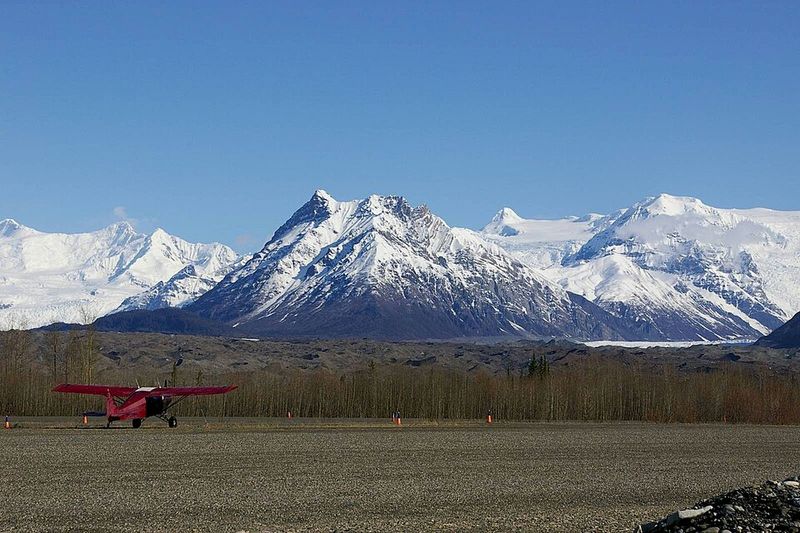
Some towns have a vibe you can feel the second you arrive, and McCarthy has it in abundance. There is something magnetic about a place that operates entirely on its own terms.
Outside Magazine once recognized McCarthy among its top “Kickback Towns” in the United States, and anyone who has spent time here will immediately understand why.
The community thrives on a shared passion for wilderness, simplicity, and genuine adventure. That energy is contagious in the best possible way.
Visitors quickly find themselves slowing down, looking up at the mountains more often, and caring a lot less about their phone signal. The absence of modern noise creates space for something more interesting: actual presence.
McCarthy also carries a fun historical nod to its past as a dog mushing hub, with plenty of four-legged residents still making the town feel alive and characterful.
The blend of quirky frontier history, epic surrounding wilderness, and a welcoming community spirit creates a destination that genuinely defies easy description. McCarthy is not trying to be anything other than exactly what it is, and that honesty is precisely what makes it so unforgettable.
Have you ever been somewhere that felt like it was made just for people who are truly paying attention?