
One Of America’s Most Powerful Monuments Stands In A Small Michigan Park
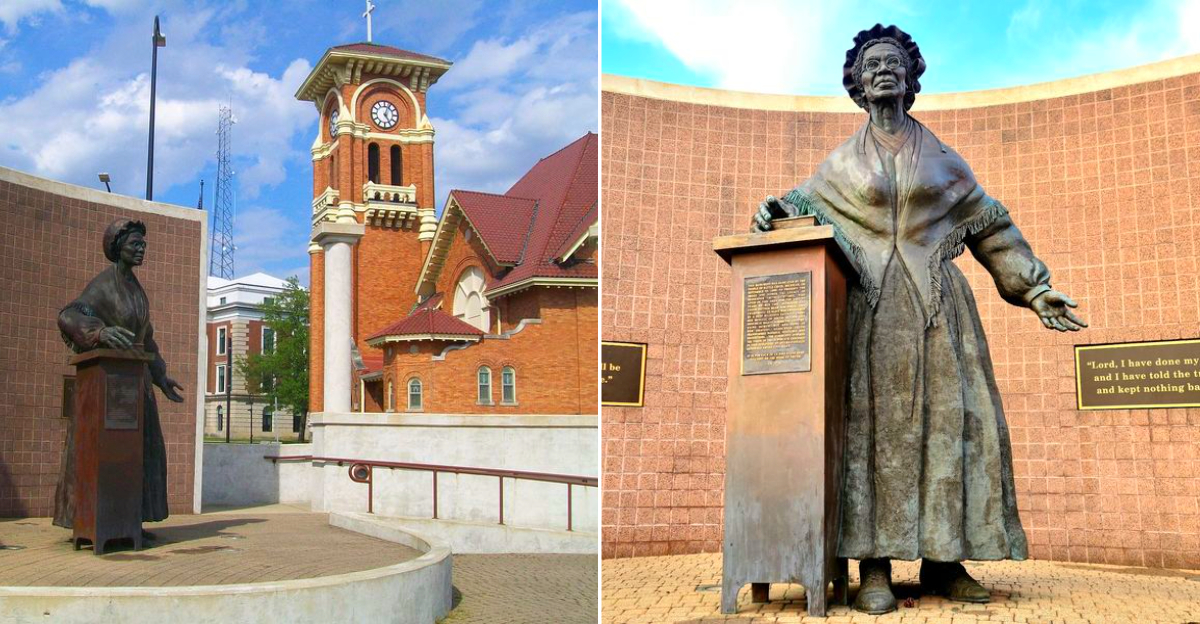
I drove past the park twice before I realized what I was looking for. The monument sits in a small green space in downtown Battle Creek, and nothing about the setting prepares you for the sculpture itself.
She is seated, mid-speech, one arm raised, and the bronze captures something photographs cannot. Force.
Conviction. The kind of authority that made a woman born into slavery stand before audiences and demand they see her as human. Sojourner Truth chose this city for her final years. She is buried here.
The fact that her monument exists at all is a testament to people who refused to let her memory fade into a footnote. I stood there for a while, and the park was quiet, and that felt right.
One of America’s most powerful monuments stands in a small Michigan park, and the woman it honors chose this town as her home.
Read Every Bronze Quotation
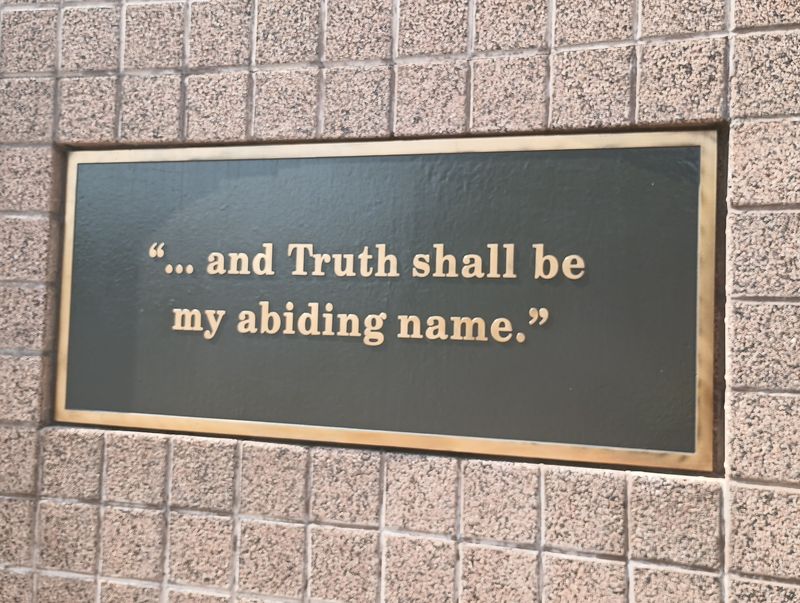
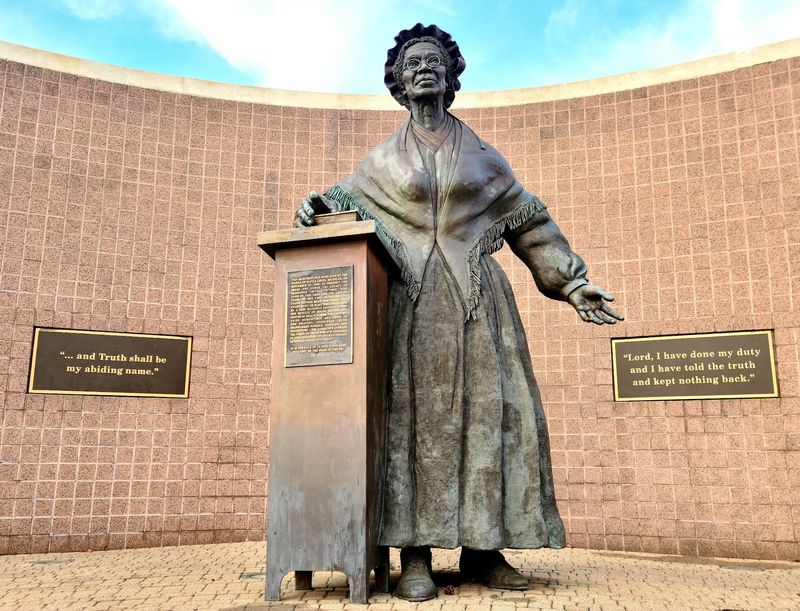
Words curve around Sojourner Truth here, turning the wall behind her into something closer to an outdoor history book for modern visitors. Read each bronze plaque slowly rather than treating the inscriptions as background decoration for a photograph during your time in the park.
One quotation explains that Truth would be her abiding name, connecting her chosen identity with the honesty guiding her public work. Another says she performed her duty, told the truth, and kept nothing back, a statement with remarkable directness and lasting force.
Try reading the lines aloud at a respectful volume because spoken language shaped Truth’s influence as an abolitionist and rights advocate nationally.
Photograph individual plaques afterward, so their messages remain clear instead of disappearing beneath a wide picture dominated by the towering sculpture alone.
Arrive With Time To Pause
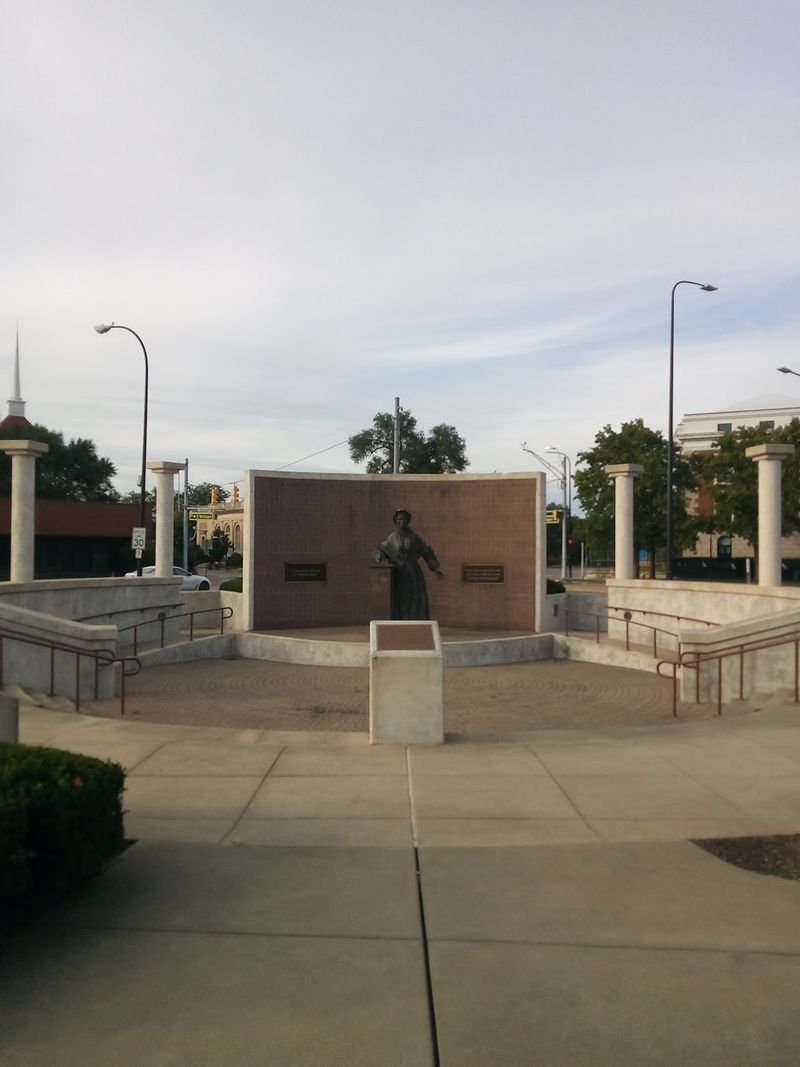
The Sojourner Truth Monument stands in Monument Park at 110 E Michigan Avenue in downtown Battle Creek, Michigan. From I-94, Exit 98B puts drivers onto M-66 North, which runs roughly 3.5 miles toward the center of the city.
Stay on M-66 as it reaches downtown, where Division Street meets Michigan Avenue beside Monument Park and City Hall. The monument sits right at this downtown gateway, so the final approach comes almost immediately as the highway corridor gives way to central Battle Creek.
Monument Park includes parking and is pedestrian-accessible. Leave the car nearby, then walk into the small park from the Division Street and Michigan Avenue side to reach the Sojourner Truth sculpture.
Notice The Clothing Details
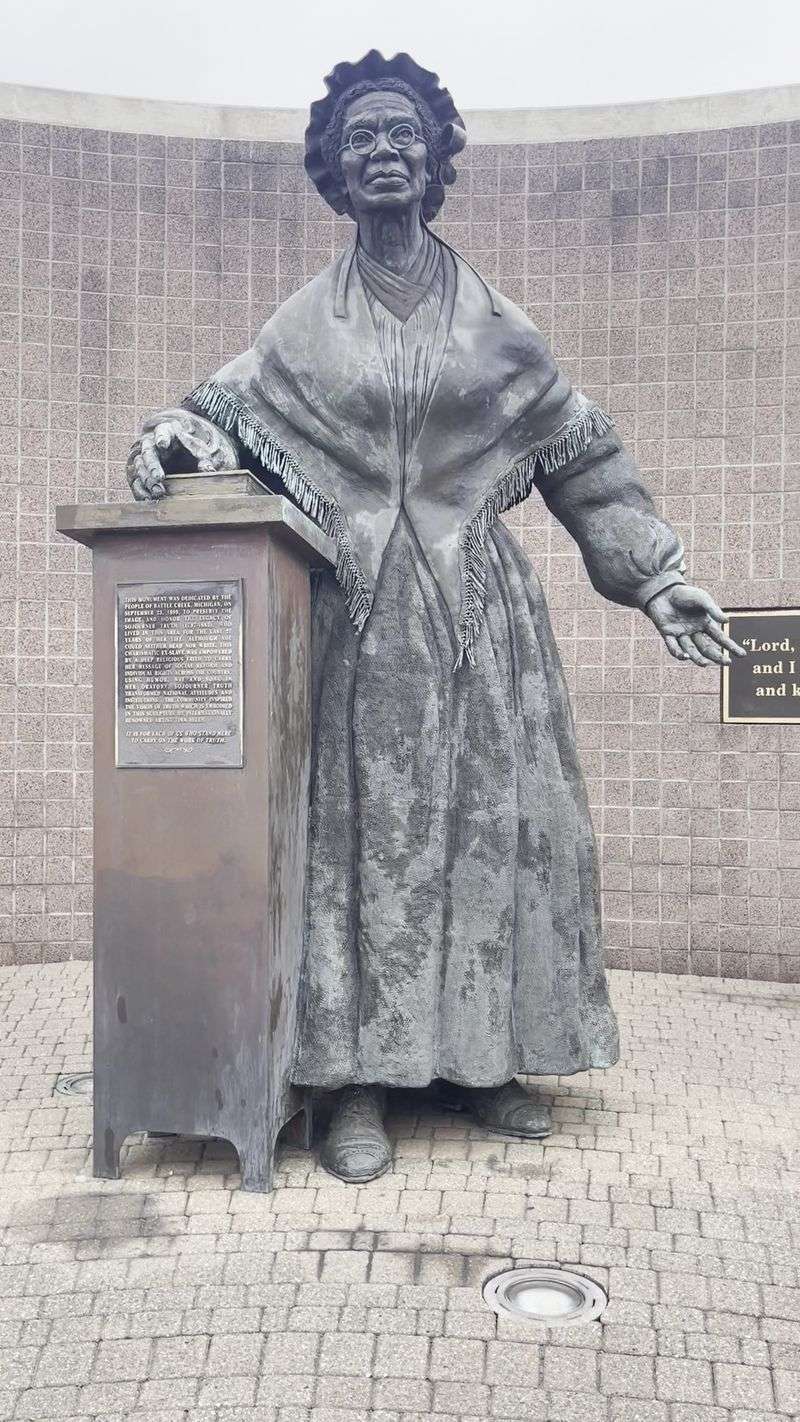
A scalloped bonnet, fringed shawl, and floor-length dress give the bronze figure a strong physical identity before any plaque is read. Look closely at how folds, edges, and surfaces suggest fabric without making Truth appear delicate or removed from public action.
Artist Tina Allen placed her behind a lectern, presenting an older Black woman as a speaker whose ideas deserve serious attention. Her right hand rests upon a book, an especially meaningful choice because Truth never learned to read or write during her lifetime.
Move sideways across the front and watch how shadows sharpen different textures in the bonnet, face, sleeves, and shawl each moment. A closer view also discourages rushed assumptions, reminding visitors that clothing, posture, and gesture all help communicate historical character with unusual clarity.
Find Her Actual Signature
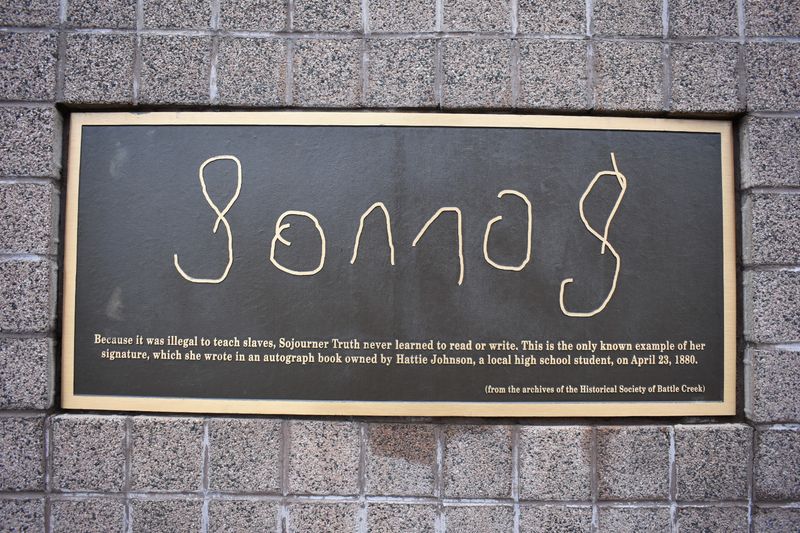
Among the monument’s grand features, a small signature may become the detail you remember longest after returning home from Battle Creek. The bronze plaque reproduces Truth’s actual mark from an autograph book owned by a local high school student in the city.
She added it on April 23, 1880, only three years before her death, creating a direct personal connection across generations. Because Truth could not read or write, seeing her distinctive signature beside a monumental bronze figure carries unusual emotional and historical weight.
Search carefully rather than rushing past the plaques, and explain the story to younger visitors once they locate it for themselves. Photograph the signature closely, then capture the entire monument, pairing one human-scale trace with the powerful public tribute surrounding it today downtown.
Understand Her Battle Creek Years
Battle Creek was not merely a final resting place for Truth; it was her chosen home during her last decades. She first visited in 1856 to speak before a Friends of Human Progress meeting, then settled here during the following year.
From 1857 until her death in 1883, Truth lived within this community while continuing her broad campaign for justice and equality. Knowing that connection changes the monument from a general national tribute into a deeply local marker of residence, work, and belonging.
Pause behind the usual biography and picture twenty-six years of ordinary seasons, neighbors, travel, speeches, aging, and determined public service here. That long relationship explains why Battle Creek honors her so prominently, and why the sculpture feels rooted rather than conveniently placed downtown.
Study The Speaker’s Stance
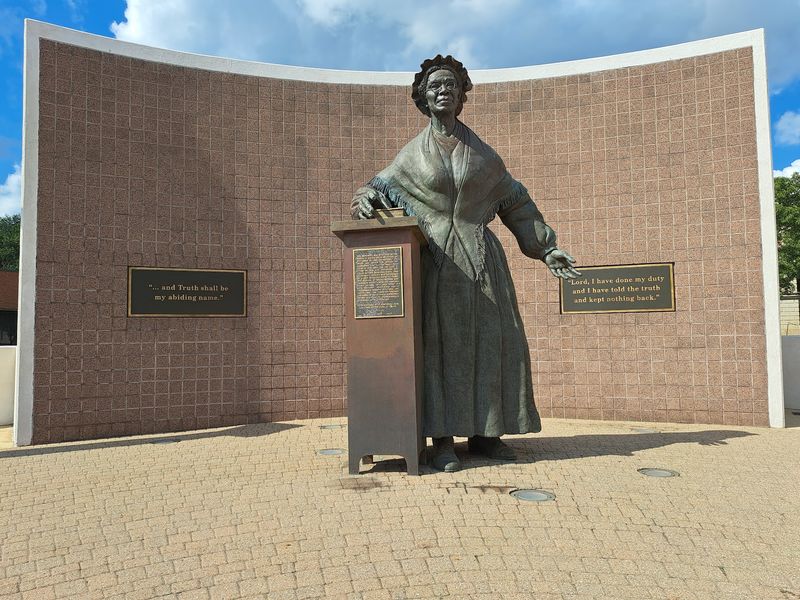
Bronze can seem motionless, but Truth’s stance suggests that a speech could begin the moment everyone finally becomes quiet around her. The lectern identifies her immediately as an orator, while her upright posture gives the figure dignity without turning stiff or distant.
Step toward the center, then compare that view with both sides to understand how Tina Allen shaped the public encounter. From below, the twelve-foot height feels commanding; from farther away, the curved backdrop frames Truth like a civic stage for listeners.
Keep your camera slightly low if you want to emphasize scale, but include the lectern to preserve the sculpture’s meaning clearly. Her power came through speech, humor, wit, and song, so the speaking pose reflects her real methods rather than invented symbolism.
Connect Her Causes Carefully
Freedom anchors Truth’s story, yet her work reached across several connected struggles that shaped nineteenth-century American public life for many people. After escaping slavery, she became a nationally known advocate for abolition, women’s rights, prison reform, and rights for formerly enslaved people.
The monument gains depth when you resist squeezing that broad record into one slogan or a single famous speech from her career. Read reliable background before arriving, then use the plaques and visual details as starting points for discussion instead of complete lessons.
Families can assign each child one cause to research afterward, making a short park stop continue well beyond downtown Battle Creek. Adults might consider which demands remain unfinished, since the site still hosts demonstrations and encourages people to carry her work forward today.
Appreciate Tina Allen’s Design
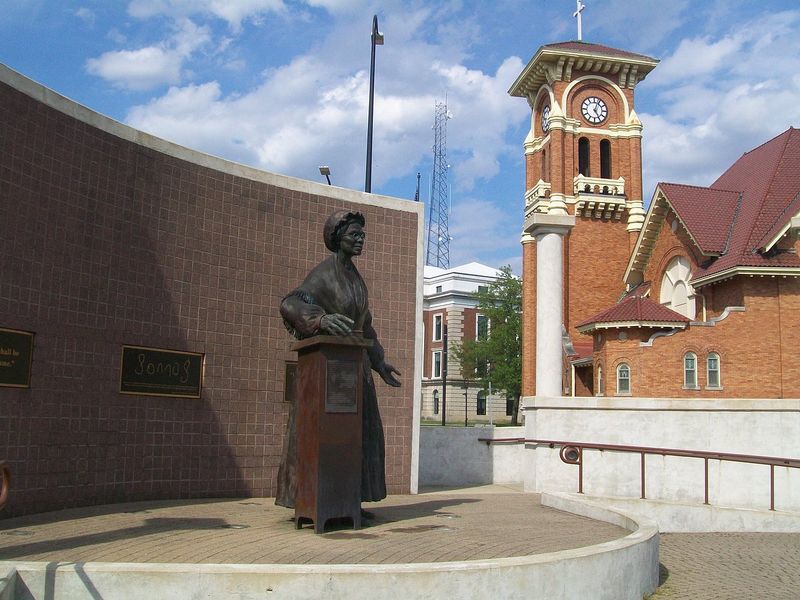
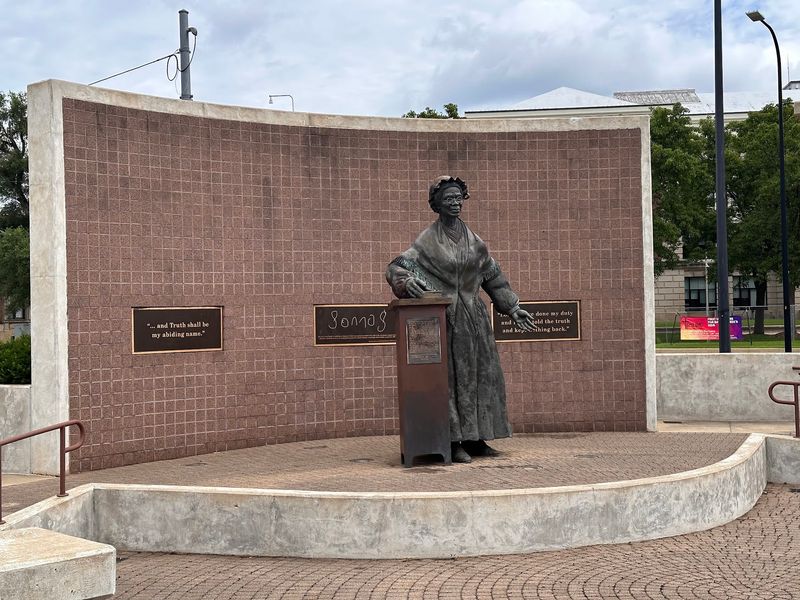
The curved wall does more than hold quotations; its concave shape gathers the composition around Truth like an attentive audience nearby. California artist Tina Allen created the sculpture, which was formally dedicated in Battle Creek on September 25, 1999, before the public.
Notice how the wall’s horizontal sweep balances the tall standing figure and keeps empty space from feeling accidental or unfinished. The design invites movement because no single viewpoint shows the face, clothing, lectern, book, plaques, and setting equally well at once.
Walk a slow semicircle while watching bronze surfaces shift between brightness and shadow, especially around the detailed shawl and bonnet edges. Architecture-minded visitors should also photograph the relationship between straight paths and curved stone, a quiet contrast supporting the monument’s visual authority.
Explore Monument Park’s Context
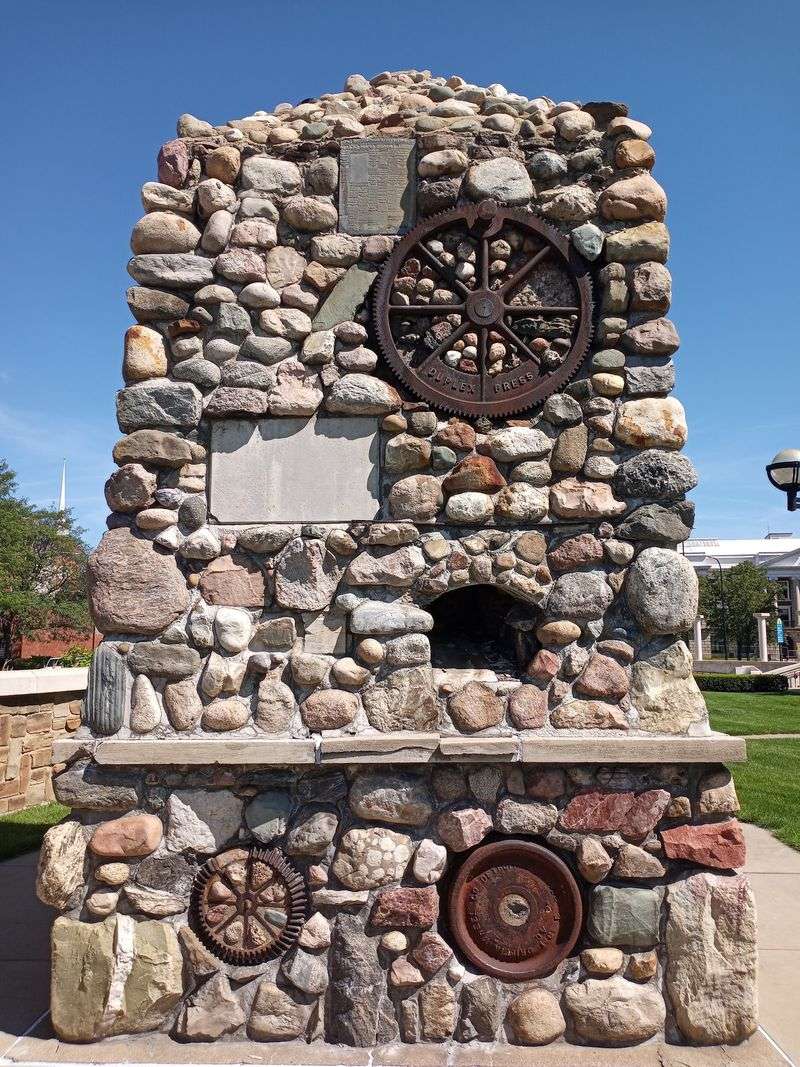
One powerful statue could fill your attention completely, but Monument Park contains other objects that reveal Battle Creek’s layered civic memory nearby. Established in 1917, the small downtown park stands next to City Hall near North Division Street and East Michigan Avenue.
Look for the memorial to cereal manufacturer C.W. Post and the unusual stone history tower created by historian James Brown.
Built during the 1930s, the tower combines varied stones and artifacts, making it feel like a local archive assembled outdoors.
Keep Truth’s monument as your main focus, then make one circuit of the grounds to understand its broader public setting better. The contrast between memorials raises useful questions about whom communities honor, how stories share space, and why monuments change meaning over time.
Choose Light And Weather Wisely
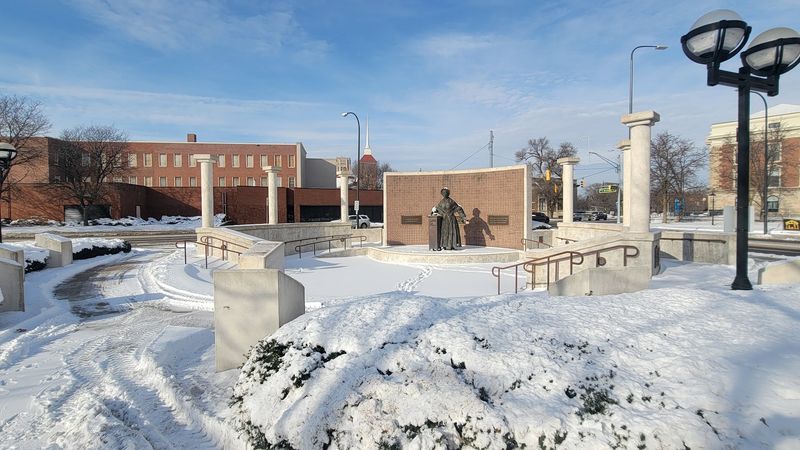
Sunlight can turn the bronze from deep brown to warm gold, changing the mood without altering a single sculpted line visibly. Morning or late-afternoon light often reveals stronger texture across Truth’s face, shawl, bonnet, dress, lectern, and resting hand for photographs.
Overcast skies offer softer contrast, which helps when recording plaque text and the signature without harsh glare across their metal surfaces. Winter may expose the monument’s structure clearly, while leafy months make the surrounding pocket of downtown greenery feel more enclosed.
Wear suitable shoes because rain, snow, or fallen leaves can make outdoor paths less comfortable during a thoughtful, unhurried visit. Since the site remains outdoors and open continuously, choose daylight when possible for easier reading, photography, orientation, and awareness of surroundings.
Leave With A Next Step
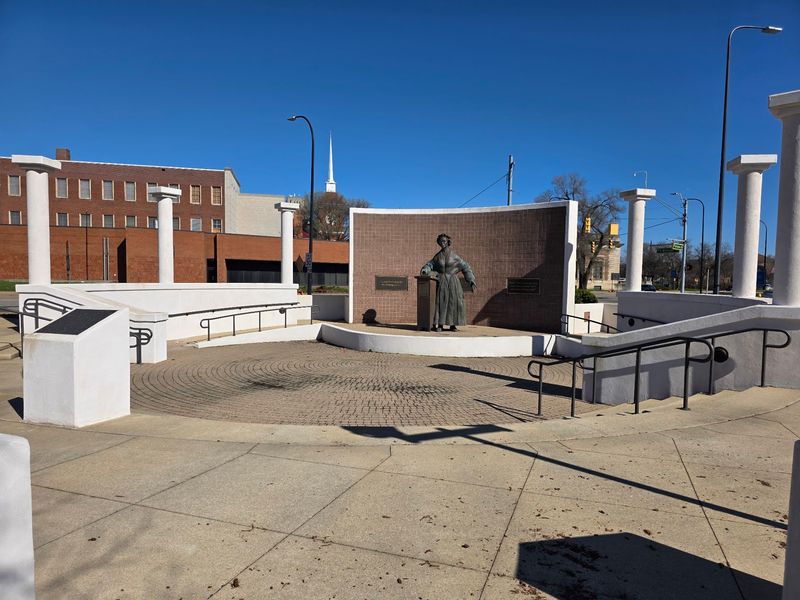
A meaningful monument visit should create motion in your thinking, even while the bronze figure remains firmly planted before you. Before departing, choose one quotation, cause, or biographical detail to research further rather than trying to remember everything at once.
Truth was born Isabella Baumfree around 1797, escaped slavery, and transformed lived hardship into decades of courageous public advocacy for others. Her Battle Creek monument was intended to inspire continuing work, not simply provide a handsome background for passing photographs downtown today.
Write a short note while the experience feels fresh, especially if you are visiting with students, relatives, or community groups. Leaving with one practical action, perhaps reading, teaching, volunteering, or discussing equal rights, respects the forward-looking spirit embodied here for everyone.