
One Of Montana’s Most Beautiful Lakes Changes Color Throughout The Year
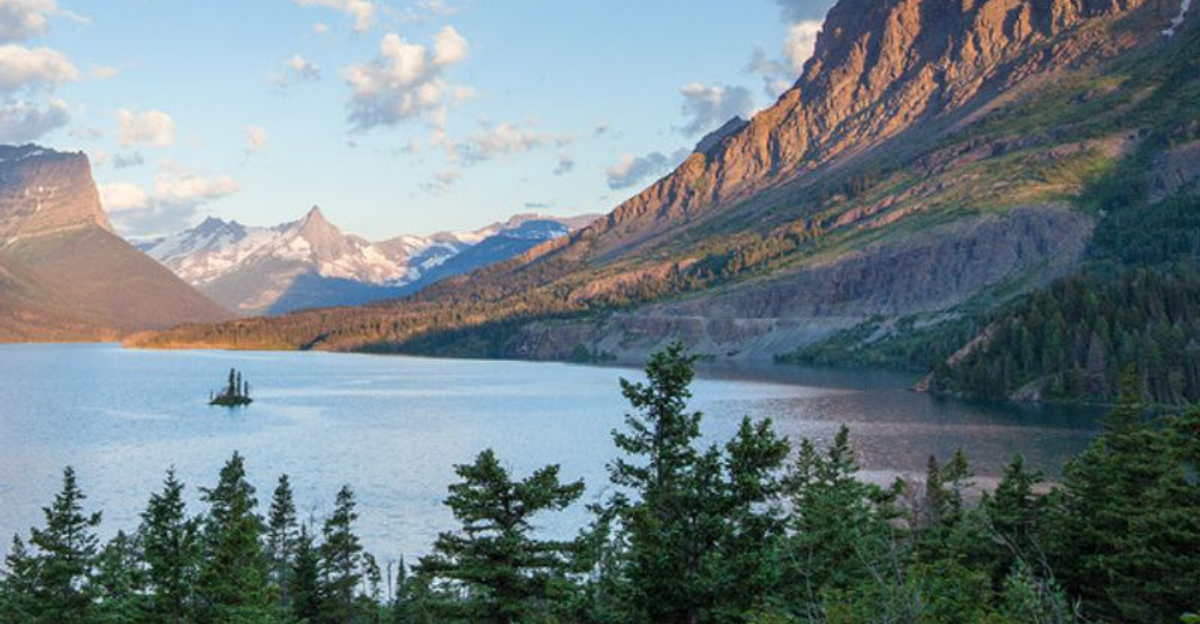
Blue one month, almost turquoise the next. This Montana lake refuses to stick to just one color. At first glance, it almost looks like someone secretly adjusted the saturation. The truth is even more fascinating.
As the seasons change, shifting sunlight, glacial water, and the surrounding landscape constantly transform its appearance, making every visit feel a little different from the last.
Add dramatic mountain peaks, crystal-clear reflections, and wildlife that occasionally steals the spotlight, and you’ve got a place that barely seems real.
If there’s one destination that proves nature loves showing off, it’s this breathtaking Montana gem.
A True Color Story
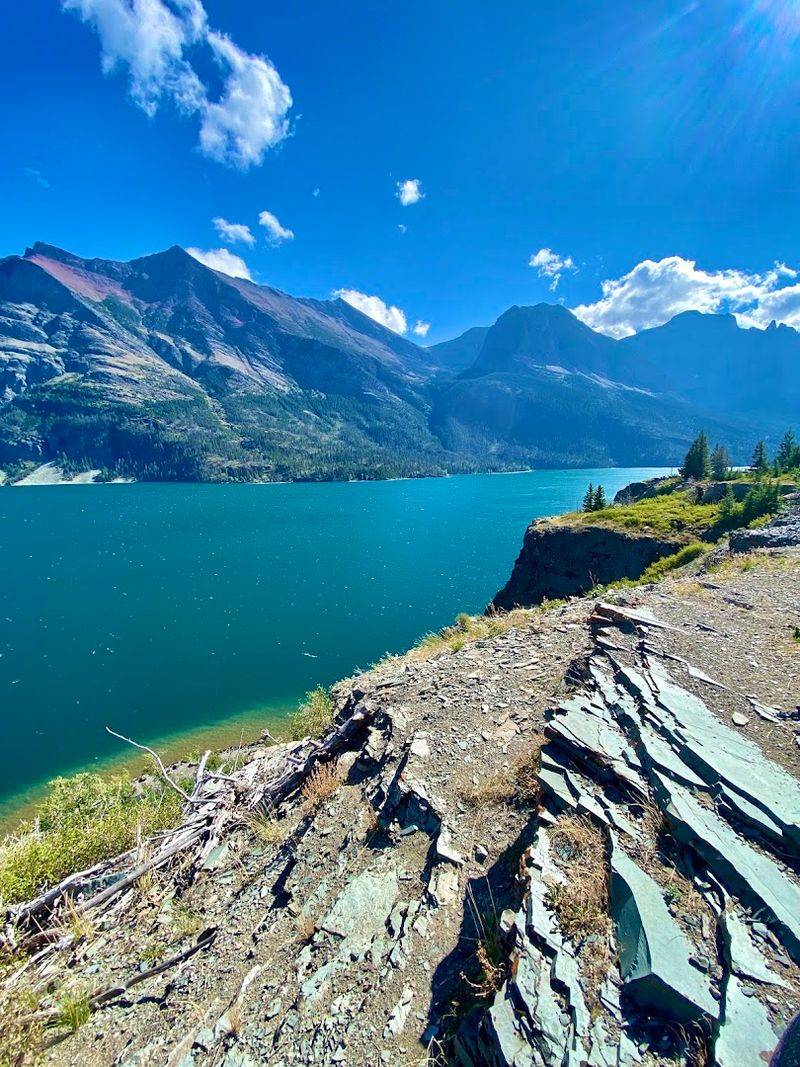
Some lakes are blue. St. Mary Lake is a whole mood board.
The secret behind its jaw-dropping color is glacial flour, a fine powder created when ancient glaciers grind slowly over rock.
This silky sediment flows into the lake via meltwater and stays suspended near the surface. When sunlight hits those tiny particles, they scatter light in a way that produces the lake’s signature turquoise and teal tones.
What makes it even more fascinating is that the color isn’t static. Early morning light can make the lake look like liquid pewter.
By midday, it blazes a vivid blue-green that seems almost artificial. Overcast days soften it into a moody slate tone that feels cinematic and brooding.
You could visit on ten different days and photograph ten completely different lakes.
Seasonal changes add another layer of drama. Spring snowmelt sends fresh glacial flour rushing in, intensifying the color.
Summer sun amplifies the turquoise brilliance. Autumn cools the palette into deeper blues.
Winter locks everything under ice and snow, creating a frosty, hushed beauty. St. Mary Lake in Montana doesn’t just change color, it tells a new story with every single visit.
The Tiny Star Of Every Photo
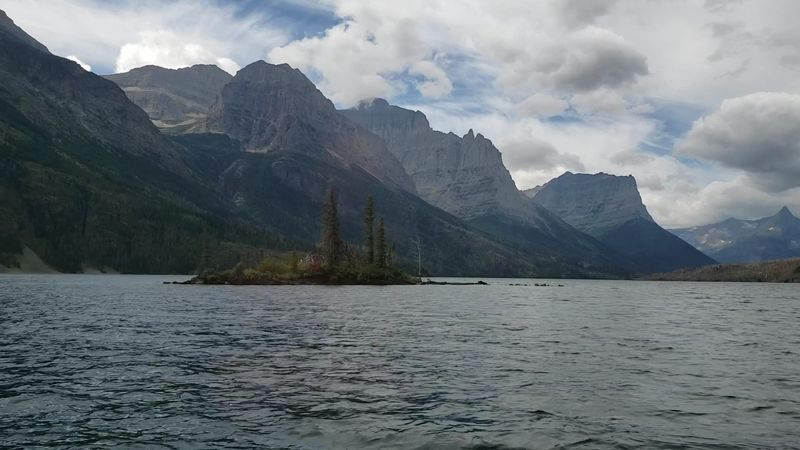
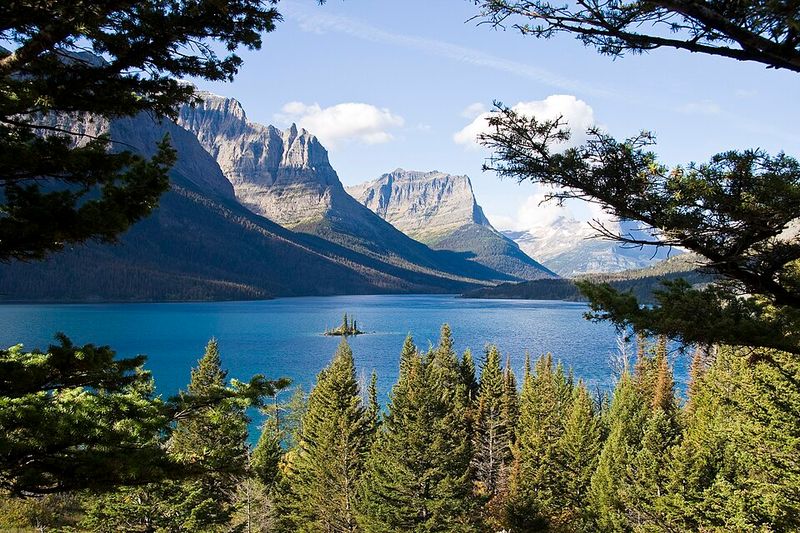
Fourteen feet above the water’s surface, a tiny island punches way above its weight class. Wild Goose Island is probably the most photographed spot in all of Glacier National Park, and honestly, the hype is completely justified.
It rises from St. Mary Lake with quiet confidence, surrounded by that legendary turquoise water, framed by mountains that look like they were designed by someone who really loved drama.
The island’s petite size is part of its magic. There’s something about a small, solitary landmass sitting in the middle of a massive, colorful lake that feels profoundly poetic.
It shows up in travel magazines, park brochures, and yes, it even made a cameo in the film “What Dreams May Come.” Hollywood recognized what nature already knew: this island is a natural showstopper.
You can admire it from multiple pullouts along the Going-to-the-Sun Road, each offering a slightly different perspective.
Some angles frame it against towering peaks, others place it low on the water with sky dominating the composition.
Catching it at sunrise, when the lake glows with soft pastel light, is an experience that lingers long after you’ve driven away.
Going-To-The-Sun Road
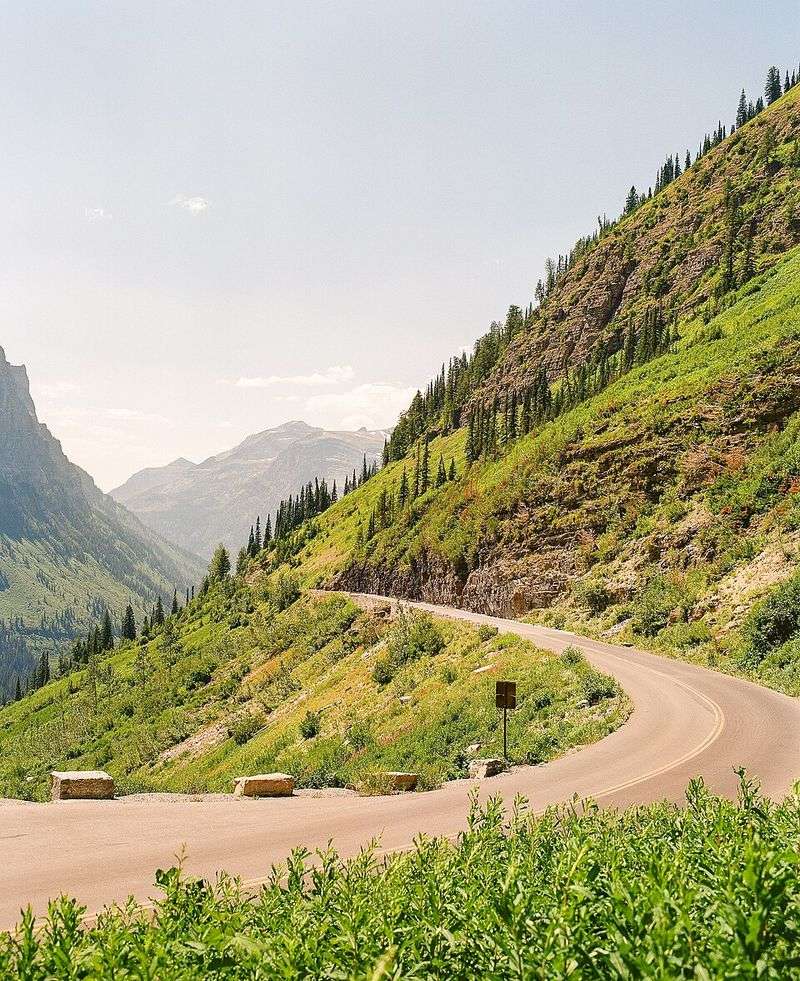
Not every road gets to be legendary, but Going-to-the-Sun Road earned that status the moment it was carved into the side of Glacier National Park.
Tracing the northern shoreline of St. Mary Lake, this road is less of a commute and more of an event. Every curve reveals something that makes you want to pull over immediately and just stare.
The engineering alone is remarkable, but the views are the real headline act.
What makes this stretch particularly special is the dramatic geological transition it showcases. You’re literally watching the Great Plains give way to the Rocky Mountains in real time.
Rolling grasslands shift into jagged, snow-capped peaks within a few miles. It’s the kind of landscape contrast that makes your brain do a double-take.
Numerous pullouts along the route invite you to stop, breathe, and appreciate what’s happening around you.
Many of these stopping points offer prime views of Wild Goose Island and the lake’s ever-changing surface below. On clear days, distant glaciers peek through mountain passes, adding another layer of grandeur.
The road itself has been designated a National Historic Civil Engineering Landmark. Driving it feels less like transportation and more like participating in something genuinely extraordinary.
Where The Mountains Let Loose
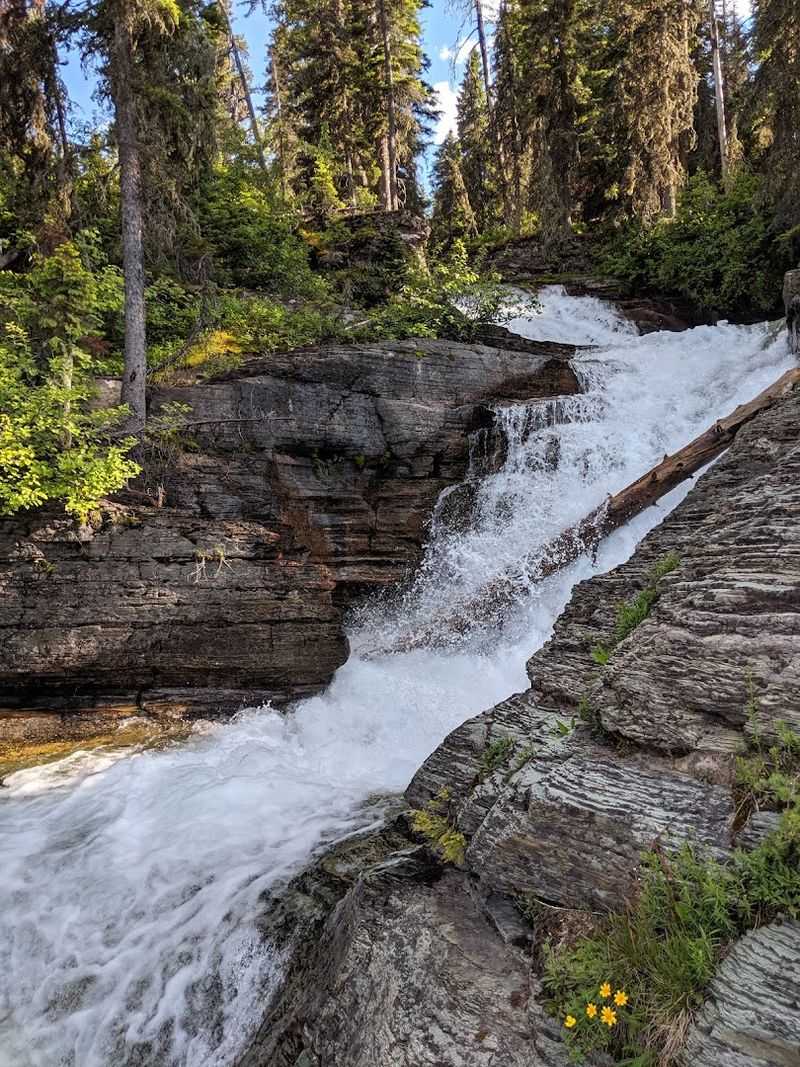
If St. Mary Lake is the headliner, the surrounding waterfalls are the opening acts that absolutely steal the show.
The area is generously blessed with cascades that range from charming to utterly spectacular. Baring Falls is a crowd favorite, reachable via a short, easy walk from the boat dock.
The sound of water rushing over ancient rock hits differently when you’re surrounded by mountains this majestic.
For those willing to hike a little further, St. Mary Falls and Virginia Falls await with serious payoff. The trail connecting them winds through dense forest, offering shade, birdsong, and the occasional wildflower patch.
Virginia Falls drops approximately 100 feet in a powerful, roaring cascade that you feel before you see it. Standing at its base with mist cooling your face is one of those moments that resets your entire perspective.
These waterfalls are fed by snowmelt and glacial runoff, which means they’re at their most powerful in late spring and early summer. By late summer, the flow softens into something more gentle and contemplative.
Either version is worth the trip.
The combination of colorful lake water, forested trails, and thundering falls creates a sensory experience that no highlight reel can fully capture.
The Animals That Call This Place Home
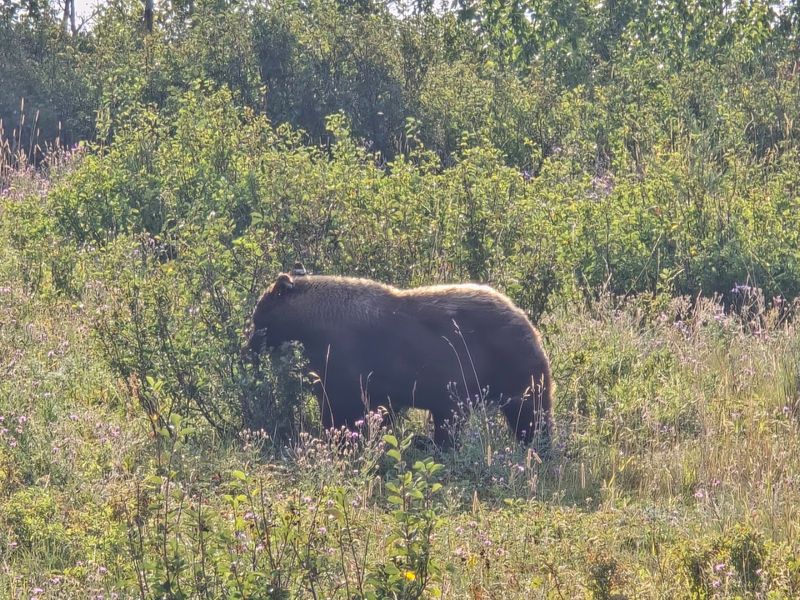
There’s a particular kind of thrill that comes from spotting a grizzly bear from a safe distance and realizing you’re in their world, not the other way around. St. Mary Lake and its surrounding terrain are prime wildlife territory.
The open meadows, dense forests, and shoreline habitat create a rich ecosystem where animals thrive. Patience and a good pair of binoculars are your best tools here.
Mule deer are frequent visitors to the meadows near the lake, often grazing with a relaxed elegance that feels almost theatrical.
Elk appear during dawn and dusk, their silhouettes dramatic against the mountain backdrop. Both grizzly and black bears roam the area, particularly in areas with berry patches and near stream corridors.
Bighorn sheep and mountain goats sometimes appear on rocky slopes above the treeline, seemingly unbothered by the altitude.
Bird enthusiasts will find plenty to celebrate too. Bald eagles soar above the lake on thermal currents, while osprey hunt the shallows with precision.
The diversity of species in this relatively compact area reflects how healthy and protected the ecosystem truly is. Visiting at dawn dramatically improves your chances of memorable wildlife encounters.
This lake doesn’t just offer beautiful scenery, it offers a living, breathing natural world.
Gliding Across Glacial Hues
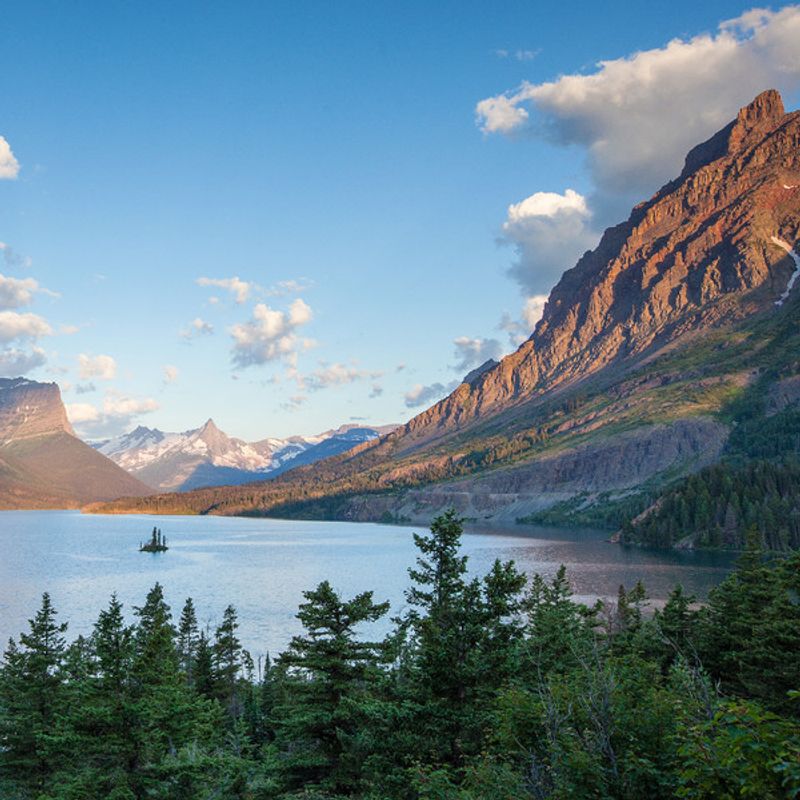
There is genuinely no better vantage point for St. Mary Lake than from the water itself. Being out on that turquoise surface, with mountains rising in every direction and the color of the lake shifting beneath your hull, is the kind of experience travel writers run out of adjectives for.
Guided boat tours are a fantastic option, especially for first-time visitors who want context and commentary alongside the scenery.
These tours typically cruise past Wild Goose Island and stop near Baring Falls, giving passengers a close-up view that road travelers simply can’t access.
The narration covers everything from the lake’s geology to the history of the park, turning a scenic float into something genuinely educational.
Some tours also point out the distant Sexton Glacier, which adds yet another dramatic layer to the already overwhelming panorama.
Independent adventurers can rent canoes, kayaks, or motorboats for a more self-directed experience. Paddling across the lake at your own pace, stopping wherever the light looks perfect, is deeply satisfying.
One important heads-up: the water temperature rarely climbs above 50 degrees Fahrenheit, even in summer.
That cold clarity is part of what keeps the lake so pristine and so impossibly beautiful year after year.
Trails That Reward Every Step
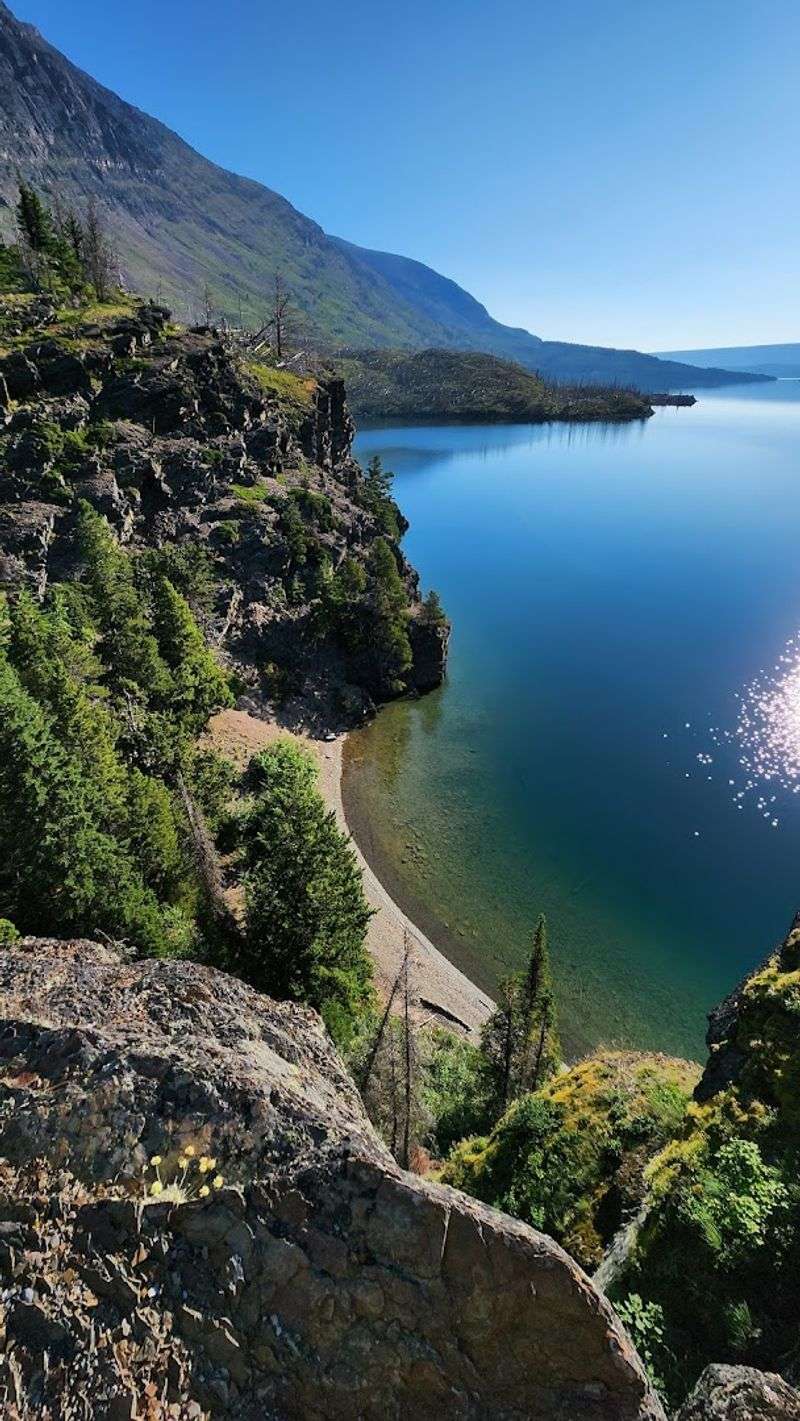
Lace up properly, because the trails around St. Mary Lake are the kind that turn casual walkers into passionate hikers.
The range of options here is genuinely impressive. Whether you want a breezy two-mile stroll or a full-day mountain adventure, the trail network has something waiting for you.
The scenery along every route is so consistently stunning that even the easy paths feel like a reward.
The route to St. Mary Falls and Virginia Falls is a perennial favorite, clocking in at roughly 2.5 miles through gorgeous mixed forest.
Sun Point serves as a popular trailhead, offering access to multiple paths and sweeping lake views right from the start. The Sun Point Nature Trail is particularly good for those wanting a shorter, interpretive walk with big visual payoff.
Wildflowers explode along these paths in late spring and early summer, with Indian paintbrush and lupine creating vivid splashes of color.
Autumn transforms the experience entirely. Aspen trees along the slopes turn fiery shades of orange and gold, layering new warmth over the cool mountain tones.
The trails become quieter, the light turns golden, and the lake below shifts into deeper, richer blues. Hiking here across different seasons feels like visiting four entirely different destinations.
Every trail is a new chapter in the same extraordinary story.
St. Mary Lake Under Ice And Snow
When winter arrives at St. Mary Lake, the whole vibe shifts from vibrant and dynamic to something quieter, more sacred.
The lake freezes over completely, sometimes developing ice up to four feet thick. Snow blankets the surrounding mountains and meadows, and the usual turquoise brilliance is replaced by a pale, crystalline beauty that feels almost otherworldly.
The silence out here in winter is the kind you feel in your chest.
Access changes significantly when the Going-to-the-Sun Road closes to regular traffic during winter months. But that doesn’t mean the lake becomes off-limits.
Cross-country skiing and snowshoeing open up the terrain in a completely different way. Gliding through snow-covered forests, with the frozen lake glinting in the distance, is a meditative experience unlike anything the summer crowds get to enjoy.
You essentially have one of the most beautiful places on earth almost entirely to yourself.
The light in winter behaves differently too. Low-angle sun creates long shadows across the snow and sends golden hues across the ice in the late afternoon.
Mountain peaks stand sharper against cold blue skies, and the reflections in any open patches of water carry an extra intensity. St. Mary Lake in Montana in winter is proof that beauty doesn’t hibernate, it just changes its outfit.
Have you ever seen a frozen lake this stunning?