
Oregon’s Overlooked Fishing Lake With Trails You’ll Love
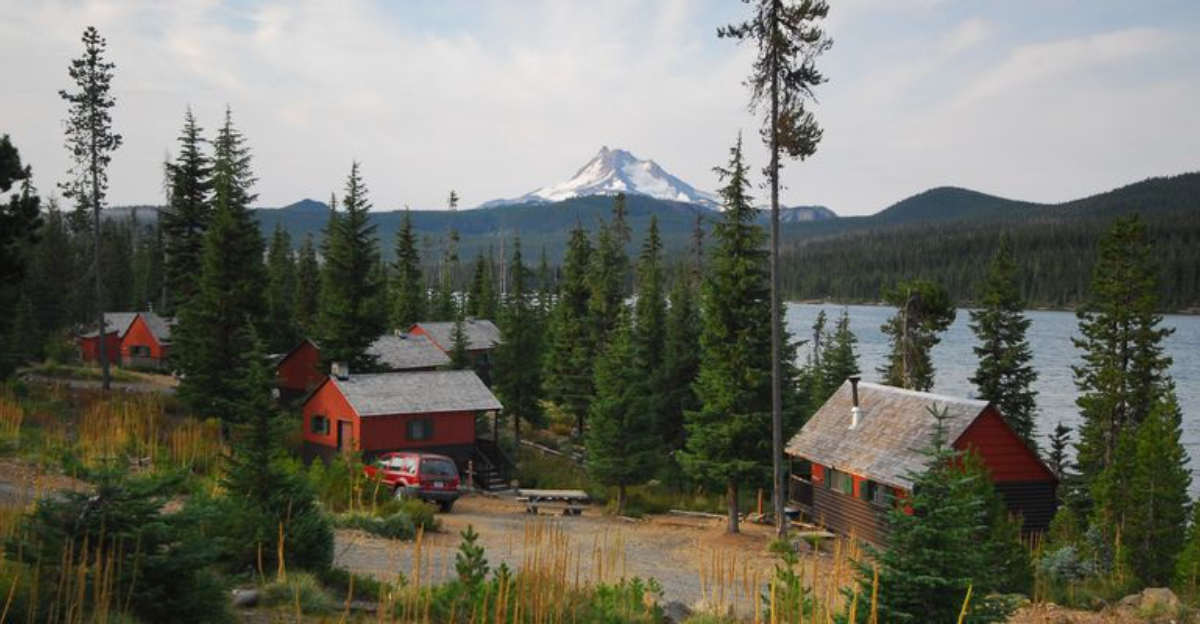
Deep in Oregon’s Cascade range lies Olallie Lake, a quiet retreat often overshadowed by more famous alpine waters.
This lake, part of the Olallie Lake Scenic Area in the Mt. Hood National Forest, draws anglers, hikers, and seekers of calm. Rowboats glide on still water, trails wind through fir and pine, and wild huckleberries stain fingers in summer. The Pacific Crest Trail skirts nearby.
Here are features you’ll want to find when you visit, each a sensory doorway into what makes Olallie special. Bring patience, a light daypack, and a love for slow discovery.
1. Mount Jefferson Reflected On Olallie
At first light, the surface of Olallie Lake often lies still enough to carry a mirror of Mount Jefferson. The mountain’s sharp snowfields feel doubled in the glassy water.
When wind rises, the reflection ripples and fragments, as if the peak is sliding away. Watching that transformation can be more compelling than the view itself.
I’ve stood there waiting for clouds to part and caught a brief, perfect reflection. That fragile moment reminded me why patience is the only real requirement here.
2. Rowboats Only No Motors
Olallie’s rules keep engines off the lake, leaving only oars and paddles to break the surface. Silence holds the shoreline, carried only by wind and birds.
Rowboats and canoes cluster at a weathered dock. Rentals are handled by the small resort store, cash, no cards, just an old ledger and a handshake.
You push off, water lapping wood, the boat swaying. Without engine noise, every creak and splash feels louder, more intimate, as though the lake is listening back.
3. Trout On The Stringer
A splash breaks the silence, then a rod bends. Along these banks, brook and rainbow trout are common catches, stocked by state biologists.
Olallie has long been a fishing stop, an annual stocking program paired with local lore of “the big one.” Shore spots near submerged logs are especially busy.
I watched an angler lift a rainbow nearly the length of his arm. His grin said more than words; that fish became part of his story, not just dinner.
4. PCT Sign Beside The Shore
Just beyond the waterline, a weathered post carries the Pacific Crest Trail emblem. It looks plain, almost forgettable, yet it ties this quiet lake to a 2,650-mile journey.
Hikers moving north or south pause here, boots coated with dust, water bottles refilled, maps checked before pushing into the next section.
The sign doesn’t boast, but it hums with meaning. It reminds me that even a still lake can sit on the edge of a much bigger story.
5. Monon Lake Boardwalk Curves
Step onto the narrow planks and suddenly you’re walking above water. Beneath your feet: reeds, minnows, and the shadows of trout moving lazily.
The boardwalk bends gently, carrying you out into Monon Lake’s marshy edge. Each curve shifts the perspective, offering small revelations of sky and shore.
Visitors linger mid-way, elbows on rails, cameras raised. It feels less like a shortcut and more like a stage built so the lake can show itself slowly.
6. Red Lake Trail Through Pines
Pine needles cushion every step, muting sound until the forest feels almost breathless. Sunlight filters in shards between trunks, painting stripes across the path.
The trail’s history runs deep; early maps marked it as a connector between the Olallie lakes, and it still serves backpackers looking for quieter routes.
I’ve walked it alone at midday, struck by the solitude. That stillness wasn’t empty, it carried a weight that made me slow down and notice every detail.
7. Olallie Butte From The Dock
From the dock, the butte dominates the northern skyline, a broad volcanic rise that feels both near and unreachable. Snow lingers on its ridges into summer.
Geologists note it’s a shield volcano, dormant now but once a major presence shaping the Olallie Basin. Its bulk anchors the horizon, steady and immovable.
Anglers glance back at it between casts, children ask its name. The butte seems to watch everything, reminding visitors that the lake is only part of the landscape.
8. Rustic Cabins And Tiny Store
Cabins sit low among trees, each with woodstoves, simple bunks, and porches just big enough for two chairs. They creak and smell of cedar.
The adjoining store stocks licenses, snacks, and oars for rent. Transactions are handwritten, almost ceremonial in their slowness. That rhythm suits the place.
Guests drift from cabin to lake with coffee mugs in hand, conversations muted. Staying here isn’t about luxury, it’s about living a weekend stripped back to basics.
9. Primitive Campgrounds Under Fir
Tent pads scatter beneath tall firs, fire rings blackened from years of use, air thick with resin. Mornings arrive with mist curling low.
Some sites sit close to shore, others hidden deeper among trunks. The setup is minimal, no hookups, no noise, just ground and shelter.
I once woke here to birdsong echoing through fog. Crawling from the tent, I realized the austerity wasn’t a lack; it was freedom. Camping had reduced life to what mattered most.
10. Head Lake Swimming Spot
Sunlight strikes Head Lake differently, sharper, clearer, making the small dock glow like an invitation. Unlike Olallie, here you can actually swim.
Families wade in cautiously before plunging, their laughter echoing against the fir-covered slopes. The water bites cold, even on the warmest afternoons, but that shock is part of the ritual.
Many hikers come here after long loops, stripping boots and easing sore legs into the water. The chill feels medicinal, a reset before heading back.
11. Huckleberry Stained Fingers
Late summer transforms slopes into berry country. Bushes sag with ripe huckleberries, their dark skins hiding under leaves.
“Olallie” itself means berry in Chinook Jargon, a fitting name for a lake surrounded by edible abundance. Locals return year after year, knowing when the patches peak.
Children run the trails with palms purple, shirts streaked. Adults crouch, filling bags. The air hums with bees. Here, harvesting becomes part of hiking, a seasonal exchange between forest and visitor.
12. Sunset Kayaks On Still Water
Evening flattens the lake, turning the surface into soft bronze. Kayaks push gently from shore, paddles dipping without sound.
Some circle slowly, others pause mid-lake, letting the boat drift as the horizon burns pink, then violet. The silence is communal, unspoken but shared.
I paddled out one August night, staying until the first stars pricked overhead. That glide back to shore felt like carrying the last of the day in my hands.
13. Starry Skies Over Quiet Piers
At night, the wooden piers stretch into black water, vanishing into starlight. The Milky Way arcs overhead, unbroken by city glow.
Visitors bring blankets, lie flat, and point out constellations. Frogs croak softly from reeds, and the lake itself disappears, leaving only sound and sky.
This is a place where time feels limitless, and dreams take flight. It’s a sanctuary for those seeking connection with the cosmos, where the universe’s grandeur is intimately felt.
14. Bumpy Forest Road 4220 Gate
The approach itself sets the tone. Forest Road 4220 rattles cars with washboard gravel and sharp bends, rising slowly through firs.
Snow closes the gate in winter, leaving access only to those willing to wait for thaw. Summer brings dust clouds and the occasional stalled vehicle.
Travelers swap nods at pullouts, windows down, engines grumbling. The rough drive is part of the price of admission: by the time you reach the lake, you’ve already left hurry behind.