
Outsiders Struggle To Say These Arkansas Foods (But Locals Learned Early)
Arkansas is home to a variety of delicious dishes with names that can be tricky for visitors to pronounce. Some come from French culinary roots while others are unique local specialties.
These names might sound unfamiliar or confusing at first, but they’re part of what makes dining in Arkansas special. Locals have been saying them for generations, and mastering the pronunciations can make ordering at restaurants easier and more enjoyable.
Getting these names right not only shows respect for the state’s food culture but also helps newcomers feel more at home when exploring Arkansas cuisine.
1. Petit Jean Ham
This premium Arkansas ham gets its name from Petit Jean Mountain, but don’t let the French fool you. Most locals say it like “PET-it-jeen” instead of the proper French pronunciation.
Made in Morrilton since 1926, this smoky ham appears on breakfast plates across the state. The company started as a small family business and grew into Arkansas’s most famous meat brand.
Visitors often stumble over the name, but once you taste this tender, flavorful ham, you’ll remember how to say it perfectly.
2. Muscadine Grapes
Newcomers often say “MUS-ca-deen” but locals know it’s “MUS-kuh-dine” with that soft middle sound. These thick-skinned grapes grow wild throughout Arkansas and make amazing jellies.
My grandmother used to send me out to pick muscadines from the fence row every September. The purple ones were sweetest, but the bronze varieties made better jelly for her famous biscuits.
Native Americans ate these grapes long before European settlers arrived, and they still grow abundantly in Arkansas forests and backyards today.
3. Poke Sallet
Don’t call it “poke salad” like the Elvis song suggests. Real Arkansans say “POHK SAL-it” when talking about this traditional cooked green made from pokeweed plants.
Gathering poke requires knowledge because the roots and mature leaves are toxic. Only young, tender leaves get picked in early spring, then boiled multiple times to remove the poison.
Many Arkansas festivals celebrate this wild edible, including the famous Poke Sallet Festival in Blanchard Springs where locals demonstrate proper preparation techniques to curious visitors.
4. Koolickles
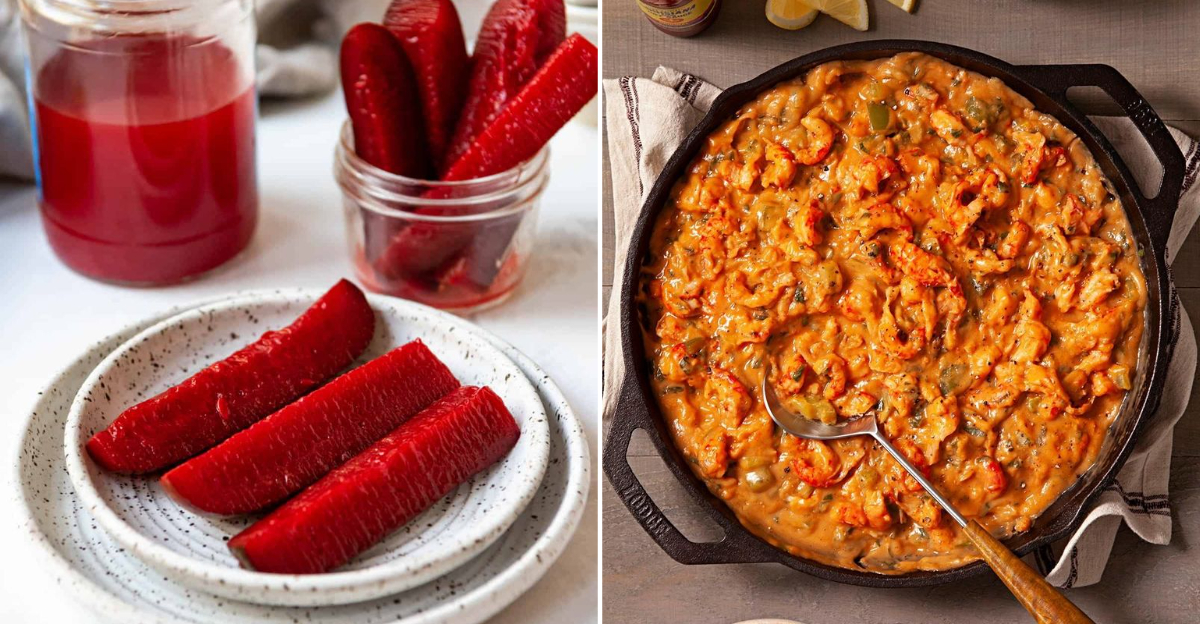
This Delta creation sounds exactly like it looks: “KOOL-ick-uls.” Some genius figured out that soaking dill pickles in Kool-Aid creates a sweet and sour snack that kids absolutely love.
Corner stores throughout eastern Arkansas sell these bright red or purple pickles alongside regular snacks. The combination sounds weird but tastes surprisingly good, especially on hot summer days. Cherry and tropical punch flavors work best, though creative cooks experiment with different Kool-Aid varieties. The longer they soak, the more intense the flavor and color become.
5. Beignets
French pastries found their way to Arkansas through Louisiana connections, but the pronunciation still trips people up. Say “ben-YAY” with that final syllable rising like a question.
Food trucks and coffee shops across Arkansas now serve these puffy, sugar-covered squares alongside traditional Southern breakfast items. They’re basically fancy doughnuts without the hole, fried fresh and dusted with powdered sugar.
Little Rock’s farmers markets often feature beignet vendors who watch customers struggle with the name before biting into these heavenly, warm pastries that melt in your mouth.
6. Andouille Sausage
Cajun restaurants in Little Rock serve this spicy sausage, but customers often mangle the pronunciation. The correct way sounds like “ahn-DOO-ee” with a soft beginning and emphasis on the middle.
This smoked pork sausage adds incredible flavor to jambalaya, gumbo, and red beans and rice. Traditional recipes call for a coarse grind and plenty of garlic, paprika, and cayenne pepper.
Arkansas chefs learned to make authentic andouille from Louisiana cooks who moved north, bringing their spice blends and smoking techniques to create this beloved sausage.
7. Boudin
Another Cajun favorite that confuses visitors who try to pronounce it “BOW-din” instead of the correct “boo-DAN.” This rice and pork sausage appears on menus throughout Arkansas, especially in the southern regions.
Traditional boudin gets stuffed into casings and served hot, while boudin balls get rolled, breaded, and deep-fried until crispy. Both versions pack incredible flavor from onions, bell peppers, and Cajun seasonings.
Gas stations in Louisiana sell boudin like hot dogs, but Arkansas restaurants treat it more like a specialty appetizer or side dish for adventurous diners.
8. Étouffée
This classic Cajun dish stumps even confident diners who attempt “eh-TOOF-ay” instead of the proper “ay-too-FAY.” The word means “smothered” in French, which perfectly describes this rich, saucy creation.
Crawfish étouffée appears on menus across Arkansas, featuring tender crawfish tails swimming in a dark roux with the holy trinity of onions, celery, and bell peppers.
Shrimp versions work well too. Served over rice, this hearty dish brings Louisiana flavors to Arkansas tables where diners learn to pronounce it correctly after ordering it several times.
9. Gyro
Greek restaurants like Leo’s Greek Castle in Little Rock serve these wrapped sandwiches, but customers argue over pronunciation. Some say “YEE-roh” while others insist on “JYE-roh,” and both sound acceptable locally.
Seasoned lamb and beef get carved from a rotating spit, then stuffed into warm pita bread with onions, tomatoes, and tangy tzatziki sauce. The combination creates a perfect handheld meal.
Greek immigrants brought this recipe to Arkansas decades ago, adapting it slightly for local tastes while maintaining the authentic Mediterranean flavors that keep customers coming back regularly.