
Palouse Falls Plunges Nearly 200 Feet Into A Canyon In Washington That Looks Like Another Planet
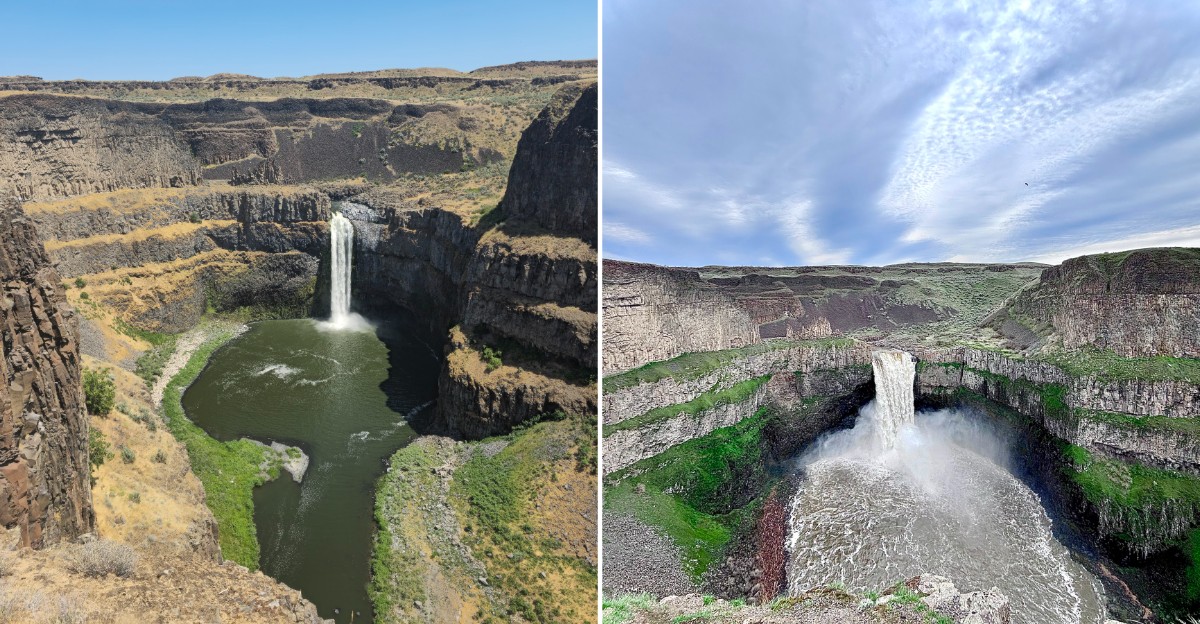
A 198-foot waterfall crashes into a basalt bowl so dramatic that it barely looks like it belongs on Earth. Even stranger, you reach it by driving through flat wheat country where nothing hints at what’s coming.
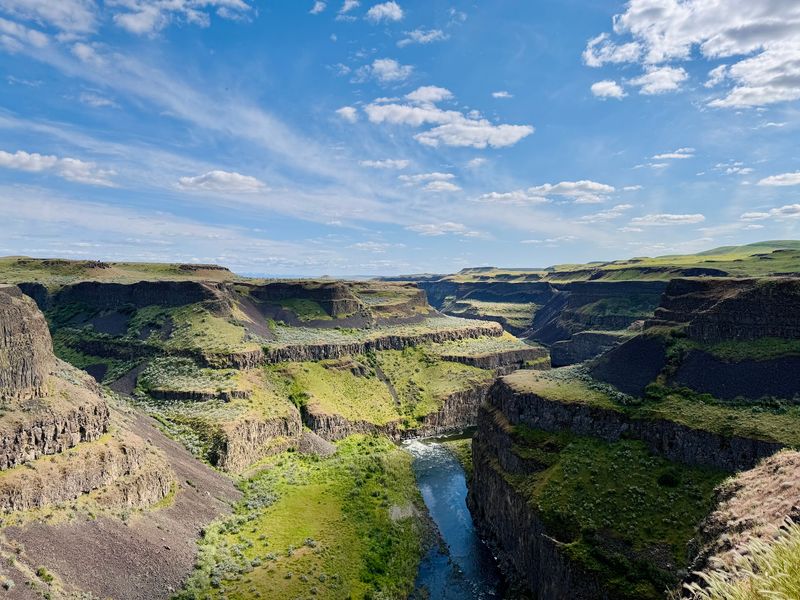
The land drops away all at once. Then a roaring ribbon of water pours over a cliff and thunders into a canyon carved by Ice Age floods.
I love that this spot is Washington’s official state waterfall, picked from a state absolutely packed with them. That’s a serious title in a place this soaked with cascades.
I can’t think of a better reason to point the car toward the dry southeast corner of the state.
You can reach a great viewpoint just steps from the parking lot. So why have so many longtime Washington residents never seen it?
A Waterfall Where Nobody Expects One
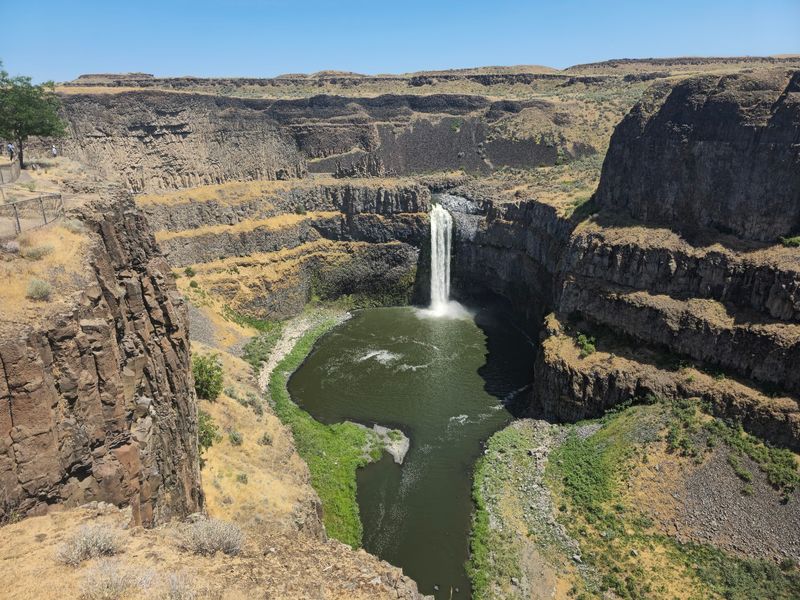
Out in the open scablands of southeast Washington, the ground suddenly splits wide open. Palouse Falls State Park Heritage Site sits right at that split, guarding one of the most startling views in the Pacific Northwest.
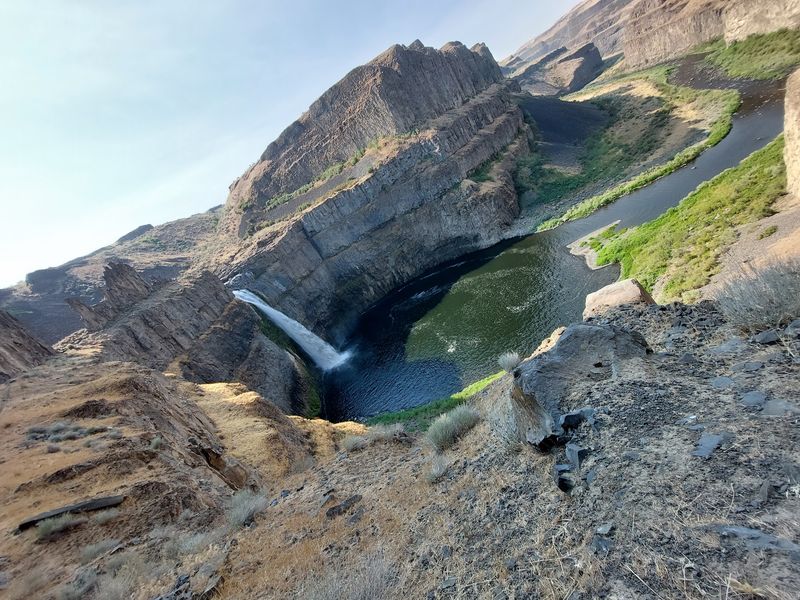
The star of the show is a 198-foot waterfall. It drops off a basalt ledge and slams into a round plunge pool far below.
The park itself is a state park and heritage site with an ADA-accessible overlook. It also offers a campground, picnic areas, and a handful of viewpoints around the canyon rim.
What makes the place so memorable is the contrast. You spend miles rolling past dry, wide-open farmland that feels almost sleepy.
Then you step out of the car and the earth seems to fall away beneath you. The canyon walls are jagged, layered, and dark, and the falls roar right through the middle.
It’s no wonder the scene gets compared to another planet. The rock looks raw and ancient, almost unfinished, like the landscape is still figuring itself out.
For a stop that takes only a short walk to enjoy, the payoff feels enormous. That’s a pretty great trade on any weekend.
Ice Age Floods That Carved The Canyon
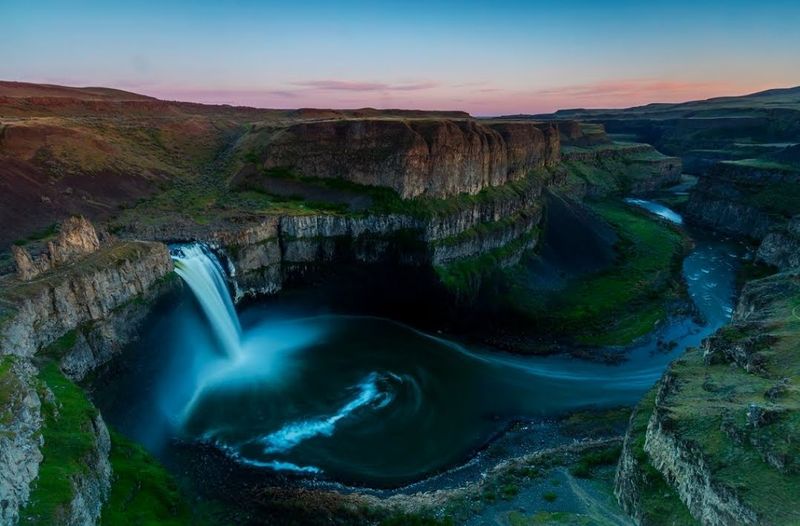
Floodwaters on a scale that’s hard to picture shaped this whole canyon. The Missoula Floods tore across eastern Washington during the last Ice Age and left behind the rugged scablands you see today.
Palouse Falls is one of the most dramatic leftovers from that event. The water rushed through, scoured the basalt, and carved the deep bowl the river still pours into.
Here’s a fun detail for curious minds. The park has plaques along the paths that explain the science behind the landscape.
Reading them adds real depth to the visit. Suddenly that pretty waterfall becomes a lesson in how powerful moving water can be.
The history also explains why the canyon looks so strange. Those stacked, columned cliffs are layers of ancient lava rock exposed by the floods.
Kids who love dinosaurs or volcanoes tend to enjoy this kind of story. It’s geology you can actually see, not just read about in a textbook.
So when you’re standing at the rim, take a minute with the signs. The view hits differently once you know the floods behind it.
Washington’s Official State Waterfall Title
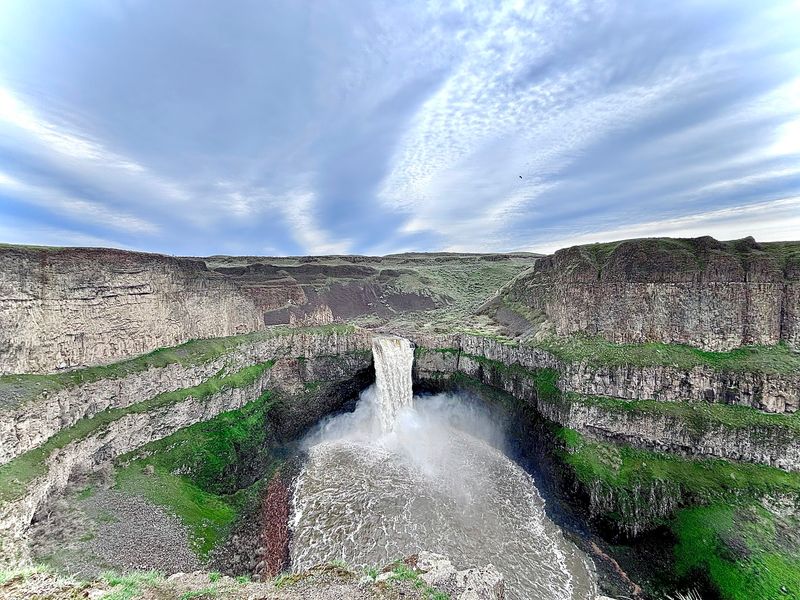
Out of all the waterfalls in a famously rainy state, this one earned the crown. Palouse Falls is the official state waterfall of Washington.
That’s a big deal in a place known for misty forests and cascades around every bend. Yet the honor went to a waterfall in the dry side of the state.
It makes sense once you see it. The falls stand out not just for their height, but for the wild setting around them.
Most Washington waterfalls hide behind trees and moss. Palouse Falls sits fully exposed, framed by bare cliffs and big sky.
Plenty of people who have lived in Washington for decades still haven’t made the trip. The park is a bit off the beaten path, which keeps it feeling like a discovery.
For west-siders, the drive across the mountains feels like visiting a different state entirely. The scenery shifts from evergreen to open grassland and basalt.
Adding it to your list is an easy win for local pride. Few road trips let you check off a true state symbol in a single afternoon.
The Main Overlook Is Barely A Stroll Away
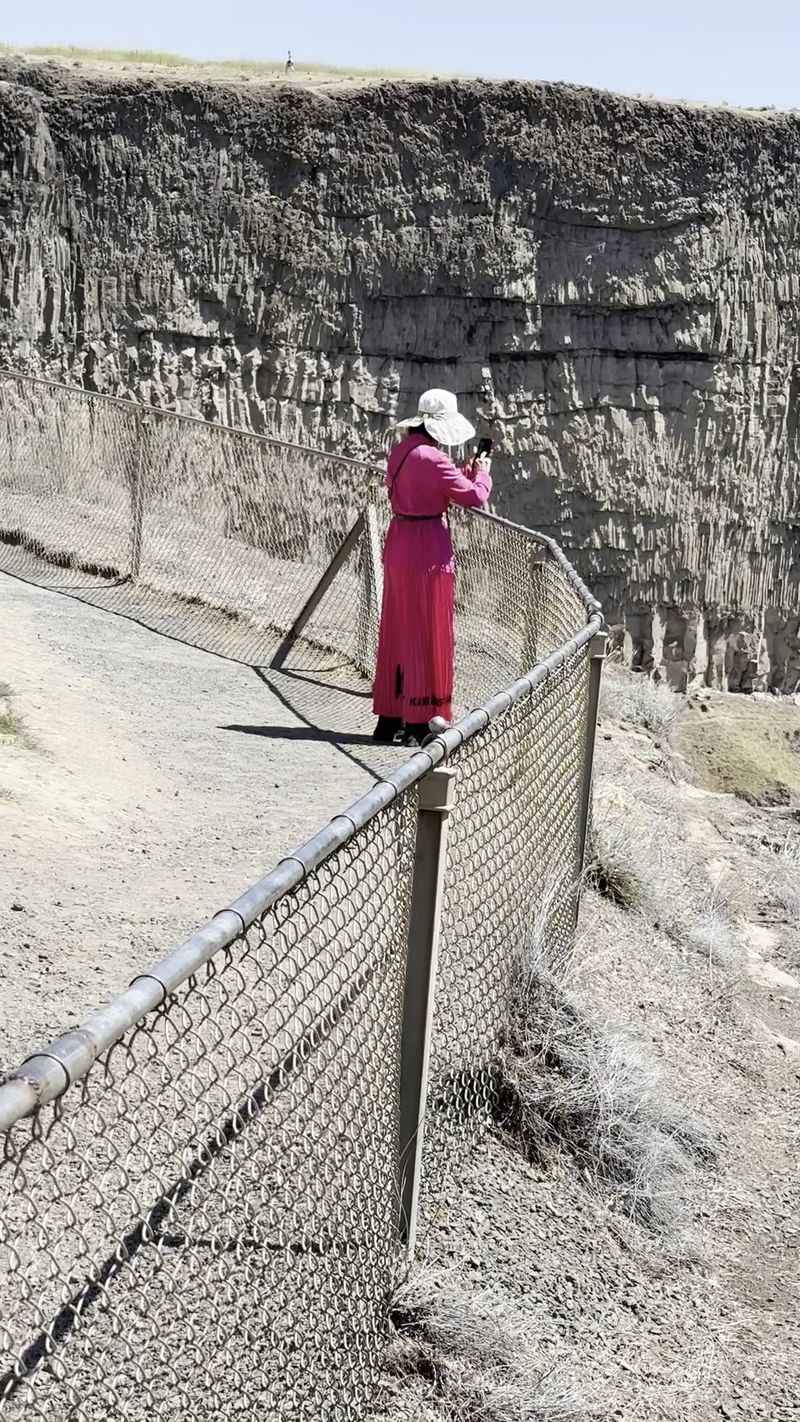
Good news for anyone who dislikes long hikes. The first great view of the falls sits less than a short stroll from the parking area.
A paved walking path leads from the lot toward the main viewing spots. The park also features an ADA-accessible overlook, so more people can enjoy the scene comfortably.
That makes this one of the friendliest big-view stops in eastern Washington. Grandparents, little kids, and anyone with limited mobility can all share the moment.
The basic loop of viewpoints is roughly a mile round trip. Many people spend about an hour here, taking photos and reading the signs along the way.
Don’t expect a backcountry adventure from the main area. It’s mostly the parking lot, the picnic grounds, and a few viewpoints around the rim.
For a lot of families, that’s exactly the appeal. You get a jaw-dropping payoff without worn-out legs or cranky kids.
Bring a camera and some patience for the perfect angle. The light shifts across the cliffs, and each viewpoint frames the falls a little differently.
Side Trails For Extra Angles On The Canyon
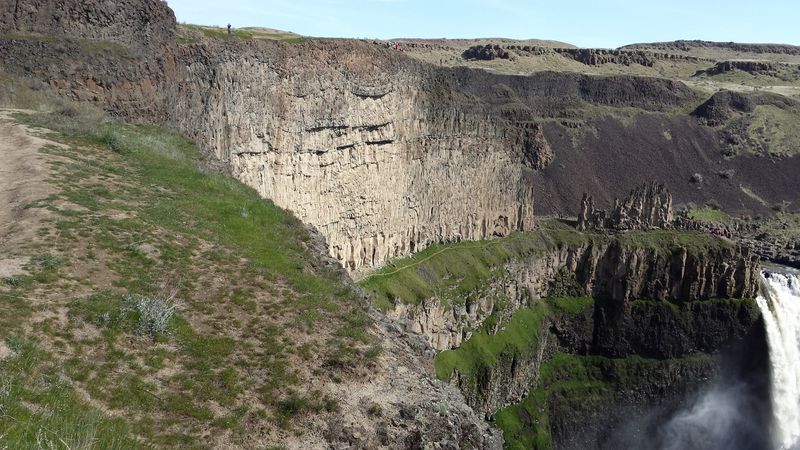
Want more than the classic postcard view? A few trails wander off from the main area toward different edges of the canyon.
These paths let you see the falls from new angles. Some also reveal the river winding through the canyon below.
A handy tip is to walk to the right of the restrooms. That direction leads to even more sweeping views of the area.
The paths aren’t long, but some stretches are steep. Walking sticks can help, especially if you’re not steady on loose ground.
Some trail sections are raw and exposed along the edge. Stay on marked routes, keep kids close, and give the cliffs plenty of respect.
Wind can also pick up out here in the open landscape. A light jacket and sturdy shoes make the walk much more pleasant.
Not everyone takes the side trails, and that’s okay. Even a short wander beyond the main viewpoints rewards you with a fresh perspective on this amazing canyon.
Spring Thunder Versus Summer Calm
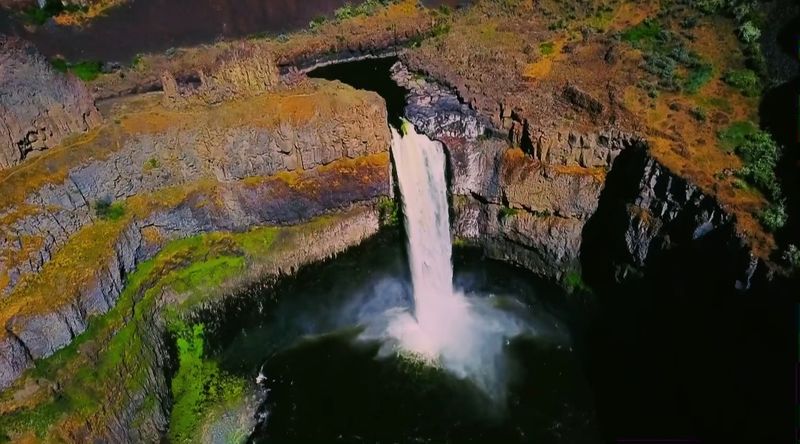
Timing changes everything at Palouse Falls. In spring, the water roars over the edge with serious force.
Late winter and spring rains swell the Palouse River. That means more water, more noise, and more spray rising from the plunge pool.
The thunderous sound is part of the magic. You can hear the falls before you fully take in the view.
Spring can also bring touches of green to the canyon. Mossy patches on the cliff walls soften the dark basalt beautifully.
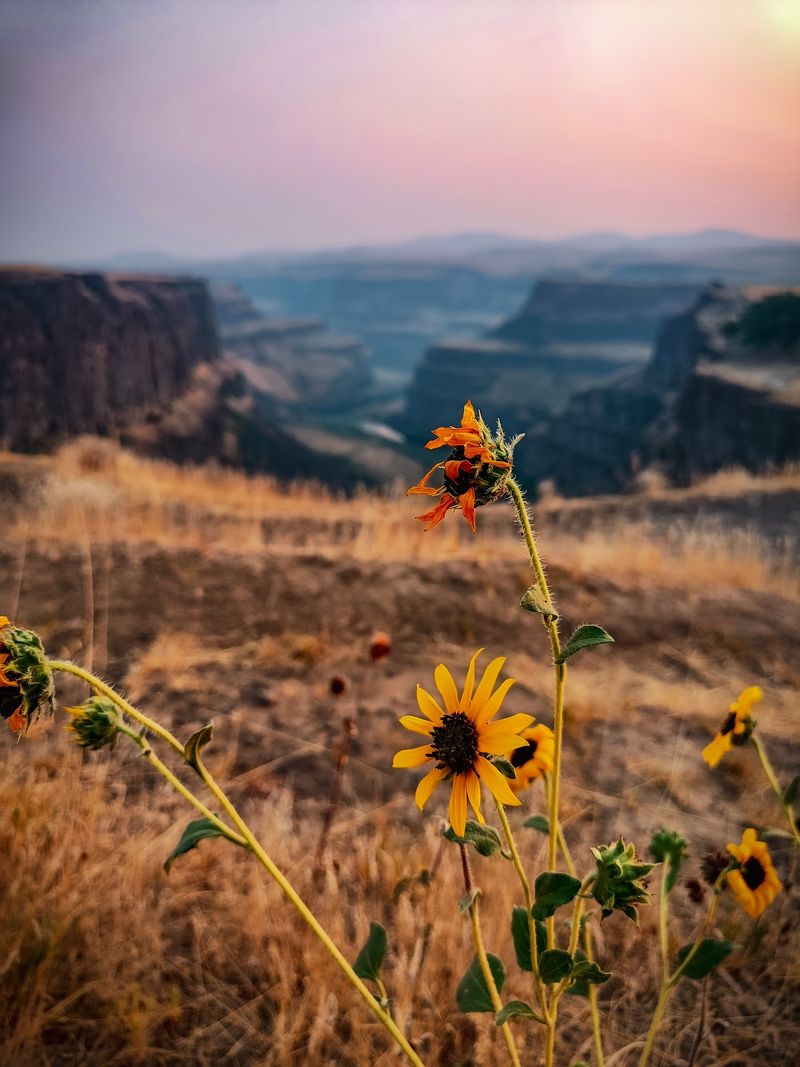
Later in the year, the flow usually calms down. The landscape turns golden and dry, which gives the canyon an even more otherworldly look.
Golden hour is a favorite time for photos. Low sunlight can make the cliffs glow in warm shades of orange and amber.
Any season can deliver a memorable trip. Just know that spring is when the falls truly show off their muscles.
Marmots, Hawks, And Other Canyon Locals
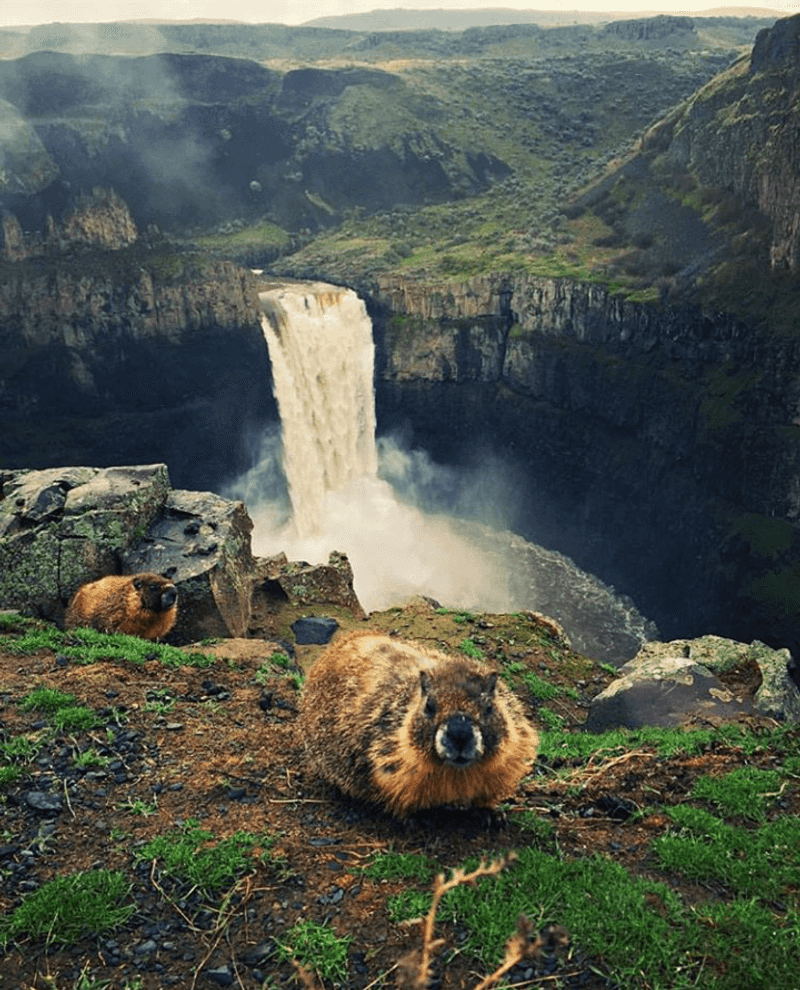
Keep an eye on the rocks, because something might be watching you back. Marmots live around the park and often pop up along the canyon edges.
These chunky, furry critters are a fun bonus for kids. Spotting one sunning itself on a boulder can steal attention from the waterfall for a moment.
Birdwatchers have plenty to enjoy too. Hawks, vultures, swallows, and pigeons have all been spotted around the falls.
Watching birds ride the thermals above the canyon is surprisingly relaxing. They glide in slow circles over the gorge with barely a flap.
Now for a practical note. Rattlesnakes live in this dry, rocky landscape, so stay on paths and watch where you step.
That’s simply part of exploring eastern Washington’s open country. A little awareness keeps the visit safe and stress-free.
Pack binoculars if you have them. Between the marmots, the birds, and the scenery, there’s plenty to look at beyond the water itself.
Picnic Tables With A Front-Row View
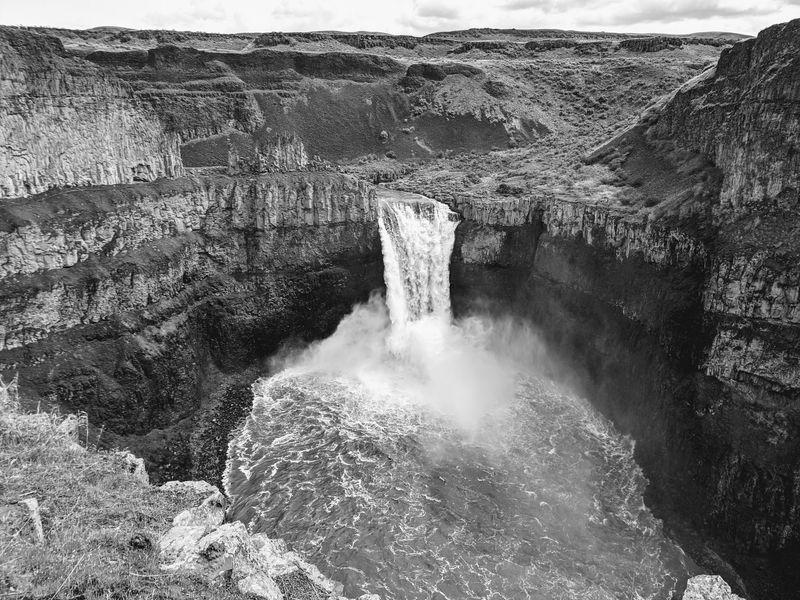
Lunch with a waterfall view sounds fancy, but it costs little more than a packed cooler. The park has plenty of picnic tables near the main viewing area.
Many of the tables sit in shade, which helps on warm days. There’s also at least one covered table in the open picnic area.
Some picnic spots come with BBQ grates. That turns a quick stop into a relaxed afternoon outing.
Bringing food is a smart move. Once you’ve seen the falls, there isn’t much else to do on site, and the area is remote.
Benches also dot the grounds for anyone who just wants to sit. You can rest, snack, and soak in the canyon at your own pace.
Bugs sometimes show up in warmer months. Eating in the car is always a backup plan if they get pesky.
For budget-minded families, it’s a wonderful deal. A simple homemade picnic and a world-class view make a memory that feels priceless.
Camping Under Wide-Open Eastern Washington Skies
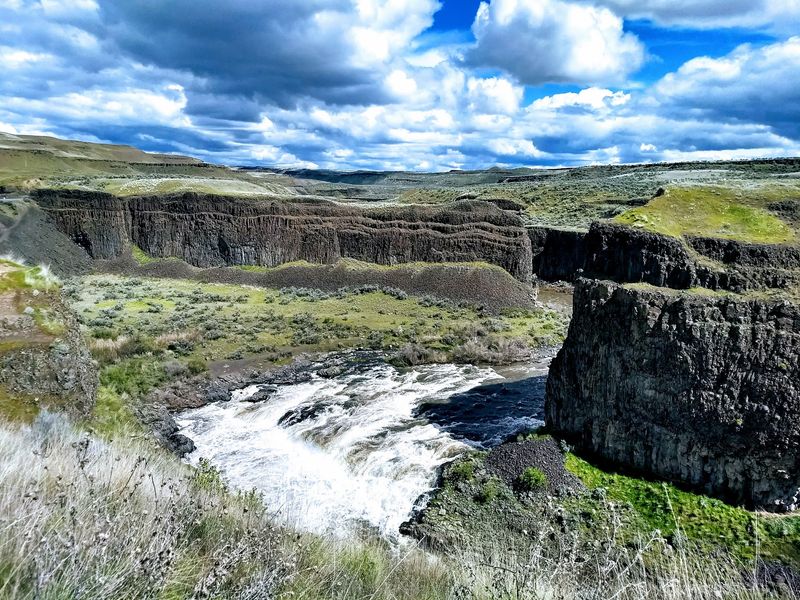
Staying longer than an hour is absolutely possible. The park includes a campground, so you can turn a day trip into an overnight adventure.
Camping here puts you right next to the canyon. Mornings and evenings can feel especially peaceful once day visitors head home.
The setting is wide open and quiet. You’re far from city lights, surrounded by farmland and basalt.
That kind of location makes for a calm, unplugged night. It’s a nice change from busy weekend campgrounds closer to the big cities.
Plan ahead before you go. Check reservation details and campground rules with Washington State Parks before you pack the car.
Bring everything you’ll need, since services nearby are limited. Extra water, snacks, and layers are wise in this exposed landscape.
Waking up near the state waterfall is a fun bragging right. Kids will remember falling asleep close to a canyon carved by ancient floods.
Restrooms, Parking, And A Tidy Little Park
Clean bathrooms deserve a shout-out on any road trip. The park offers a restroom building plus portable toilets.
The pit toilets are known for being well kept. Park attendants have been seen walking the grounds to keep things neat.
Parking is split between two lots. The main lot is fairly small, so arriving early on busy weekends can help.
Busy holiday weekends draw more visitors. Even then, benches and shady spots make it easy to find a quiet corner.
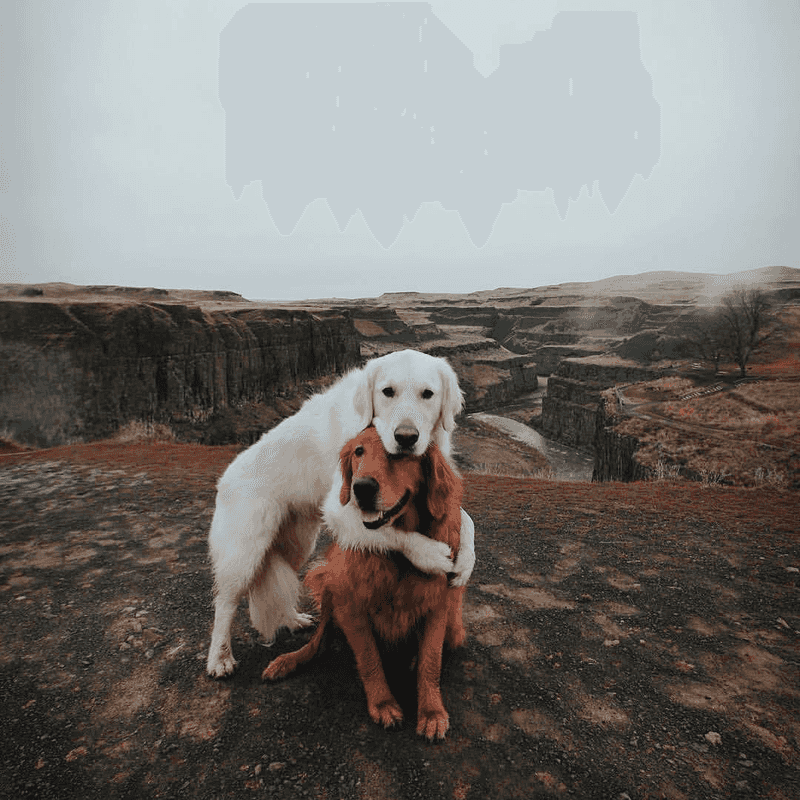
Dogs are welcome, which is great news for pet owners. Keep them leashed and away from the cliff edges, of course.
Swimming isn’t an option here. The falls and plunge pool are meant for viewing, not wading.
The overall vibe is simple and well cared for. Facilities are basic, but they cover what most families need for a comfortable visit.
Getting There Without A GPS Detour
Your GPS might try to trick you, so be careful. Always search for Palouse Falls State Park, not just Palouse Falls.
Other routes can send you down a dirt farm track. One alternate access point is now private property and closed to the public.
The official address is Palouse Falls Rd, LaCrosse, WA 99143. It sits in the southeast part of Washington, far from any big city.
The last couple of miles run on a groomed gravel road. It’s manageable for regular cars, but slow down and drive carefully.
Many travelers make the trip as a detour from Highway 26. It’s a worthwhile side trip if you’re already crossing eastern Washington.
Fill up on gas and snacks before heading out. Services are sparse once you leave the main roads.
The drive itself is part of the fun. Rolling wheat fields stretch on and on, building up suspense for the big reveal.
Hours, Passes, And Budget Tips
Early birds get a long day here. The park is open daily from 6:30 AM to 8 PM.
A Discover Pass is required for parking. If you don’t have one, you can buy a day pass at the machine on site.
The kiosk takes credit cards only. Leave the cash at home and bring your card instead.
Washington residents who visit state parks often may find the annual Discover Pass worth it. It could save money if you plan several trips each year.
Beyond the pass, the visit costs very little. Pack a lunch, and you have a full outing on a small budget.
Weekdays tend to feel quieter than holiday weekends. A Friday visit might mean only a few cars in the lot.
For retirees and families watching costs, that’s an easy sell. Few attractions offer this much wow for so little spending.
Worth Every Mile Of Gravel
Some road trips earn their place on a lifetime list, and this one deserves a spot. Palouse Falls State Park Heritage Site delivers a view that feels far bigger than the effort it takes.
You get a 198-foot waterfall, Ice Age history, and a canyon that looks like another world. All of it sits just steps from your car.
It suits families, retirees, photographers, and curious travelers alike. Anyone who loves a good surprise will find something here.
It’s true that the stop can be short. An hour or so covers the main viewpoints, though picnics and side trails can stretch it.
That compact visit fits beautifully into a larger eastern Washington trip. It also works as a dedicated day out if you live within a few hours.
Pack food, grab a Discover Pass, and type the right destination into your GPS. Then let the wheat fields lead you toward the edge.
When the canyon finally opens up, you’ll understand the hype. Washington picked its state waterfall well.