
10 Peaceful Pennsylvania Hideaways Perfect For A Quiet Escape
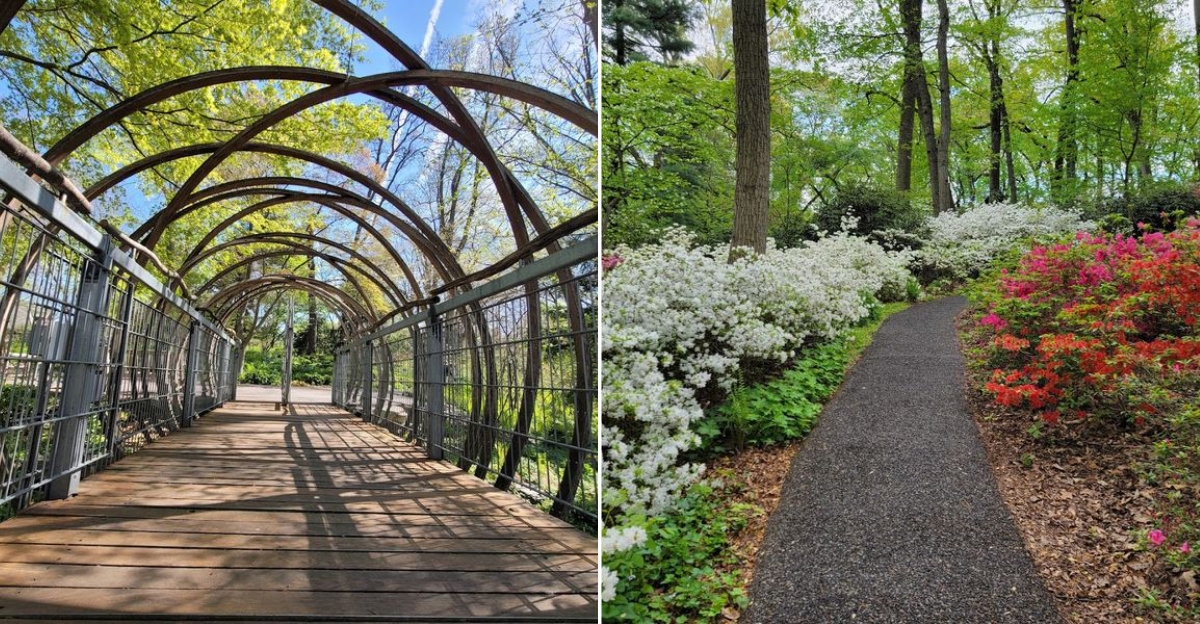
Some getaways are all about big crowds and packed itineraries, but others offer something even better: a chance to exhale.
The most peaceful escapes have a special kind of magic. They slow the noise, soften the pace, and make a day feel fuller simply by asking less of you.
Throughout Pennsylvania, there are still places where quiet paths, scenic views, and gentle surroundings can turn an ordinary outing into the kind of reset you did not realize you needed.
These hideaways are made for the moments when life feels a little too loud and your brain wants a break.
Think calm corners, fresh air, and the simple thrill of finding somewhere that feels like a deep breath in destination form.
It is the kind of low-key charm that does not need flashy distractions to leave a lasting impression. Sometimes the best adventure is just a little stillness in a beautiful setting.
I always find myself craving places like this after a busy stretch, because there is something wonderful about stepping somewhere peaceful, hearing almost nothing, and realizing that a quiet escape can do more for me than a packed weekend ever could.
1. Chanticleer, Wayne
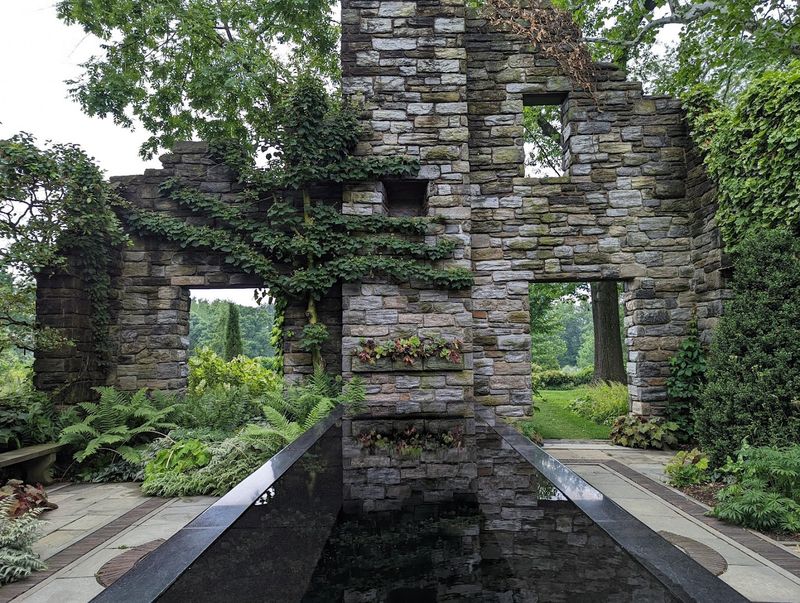
Some gardens feel like art galleries you can walk through, and Chanticleer in Wayne, Pennsylvania, is exactly that kind of place.
Spread across 35 acres in Chester County, Chanticleer is a pleasure garden built around a series of distinct outdoor rooms, each with its own personality and plantings.
One moment you are strolling past bold tropical containers near the Teacup Garden, and the next you are standing in a quiet meadow watching butterflies drift through tall grasses.
The estate dates back to the Rosengarten family, who lived here in the early 20th century, and the historic stone buildings still anchor the landscape beautifully.
Spring brings tulips and cherry blossoms, while summer fills Chanticleer with dahlias, salvias, and ornamental grasses that shimmer in the breeze.
Comfortable walking shoes are a must, since the terrain includes gentle slopes and gravel paths throughout the property.
Chanticleer is open from April through November, making it an ideal destination for a slow, restorative afternoon in Wayne.
2. Morris Arboretum and Gardens, Philadelphia
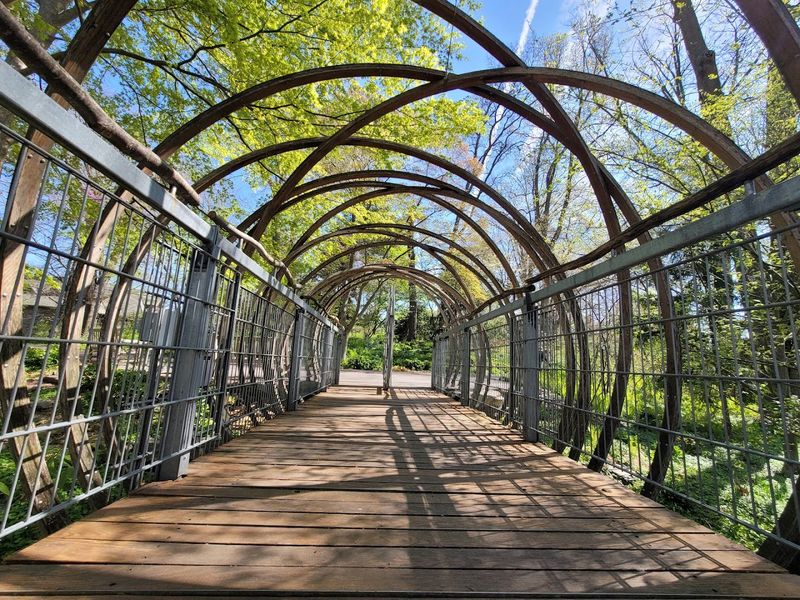
High above the treetops of Philadelphia, the Out on a Limb canopy walk at Morris Arboretum and Gardens gives you a bird’s-eye view of one of the most thoughtfully designed green spaces in the entire state.
Morris Arboretum, located in the Chestnut Hill neighborhood of Philadelphia, is the official arboretum of the Commonwealth of Pennsylvania and home to more than 13,000 plants representing over 2,500 species.
The grounds were originally designed in the English Romantic style by siblings John and Lydia Morris in the late 1800s, and that sense of timeless elegance still lingers in every winding path and hidden garden room.
A fernery, a rose garden, and a log cabin tucked into the woodland all reward those who take their time exploring Morris Arboretum.
The arboretum sits along Wissahickon Creek, and the sound of moving water adds a natural soundtrack to the entire visit.
Morris Arboretum is open year-round, making it a reliable retreat no matter what season pulls you toward Philadelphia.
3. Tyler Arboretum, Media
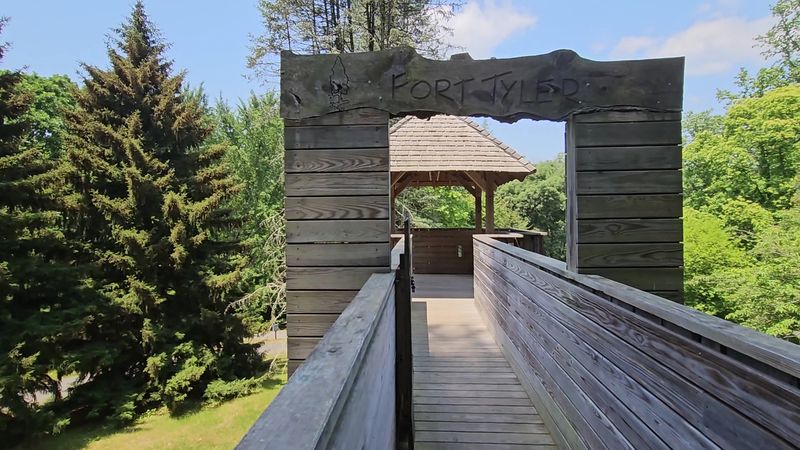
Old trees have a way of making you feel small in the best possible sense, and Tyler Arboretum in Media, Pennsylvania, has some of the oldest and most impressive specimens you will find anywhere in the Mid-Atlantic region.
Two giant sequoias planted in the 1850s stand near the historic Painter family farmstead, serving as living landmarks that have watched generations of visitors pass beneath their enormous branches.
Tyler Arboretum covers roughly 650 acres in Delaware County, with more than 20 miles of trails winding through meadows, wetlands, and dense woodland.
The fragrant garden near the entrance is a particular highlight, designed specifically so visitors can touch and smell the plants, making it a wonderfully sensory experience.
Tyler Arboretum also maintains a dedicated bird observation area, and the property regularly attracts warblers, woodpeckers, and migratory songbirds throughout the year.
Families with young children will appreciate the Lachman Tract, a natural play area where kids can explore creek beds and log piles freely.
Tyler Arboretum is a place that rewards slow wandering far more than a quick loop around the main path.
4. Jenkins Arboretum and Gardens, Devon
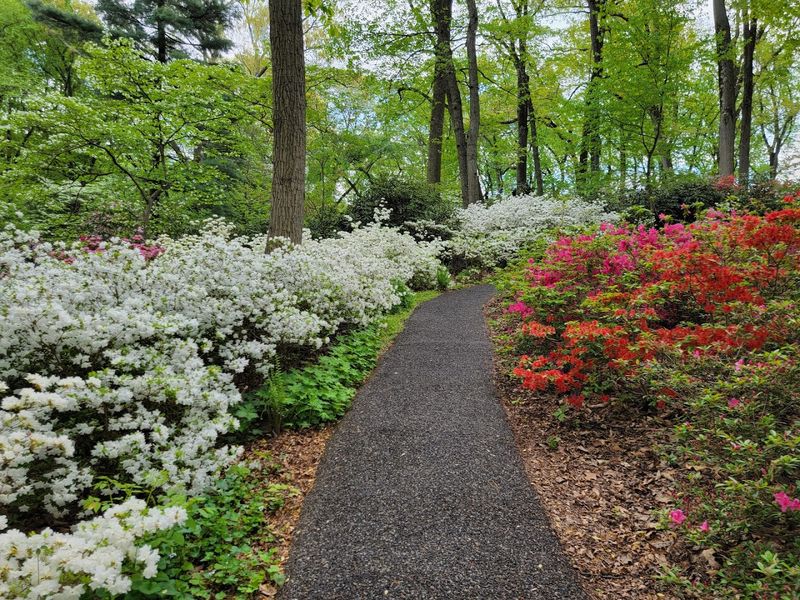
Every May, Jenkins Arboretum and Gardens in Devon, Pennsylvania, erupts into one of the most spectacular wildflower displays in the entire state, and if you time your visit right, the sight of thousands of native azaleas in full bloom will genuinely stop you in your tracks.
Located in Chester County along the banks of a small tributary of Valley Creek, this 48-acre woodland garden feels far removed from the suburban landscape that surrounds it.
Jenkins Arboretum specializes in native plants and has built an exceptional collection of rhododendrons, trilliums, and ferns that thrive naturally in the rich, shaded soil of the site.
A loop trail and a series of boardwalks guide visitors through the property without disturbing the delicate root systems of the mature trees overhead.
The arboretum is free to the public, which makes it one of the most accessible peaceful escapes in the greater Philadelphia area.
Even outside of peak bloom season, Jenkins Arboretum offers a genuinely calming walk through a landscape that feels carefully tended yet refreshingly wild.
5. Andalusia Historic House, Garden and Arboretum, Bensalem

Perched along the Delaware River in Bensalem, Pennsylvania, Andalusia Historic House, Garden and Arboretum carries the kind of quiet grandeur that feels more like stepping into a painting than visiting a historic property.
The estate was home to the prominent Biddle family for nearly two centuries, and the Greek Revival mansion at its center is considered one of the finest examples of that architectural style in North America.
Beyond the architecture, Andalusia sits on 230 acres of riverfront land dotted with specimen trees, formal gardens, and open meadows that slope gently toward the water.
The property includes a grotto, a billiard room cottage, a tenant farmhouse, and a boat house, all of which give visitors a layered sense of how life unfolded here across generations.
Andalusia is open for guided tours and self-guided garden walks, making it a destination that suits both history lovers and those simply looking for a peaceful outdoor stroll.
The views of the Delaware River from the lawn at Andalusia are genuinely hard to leave behind.
6. Bartram’s Garden, Philadelphia
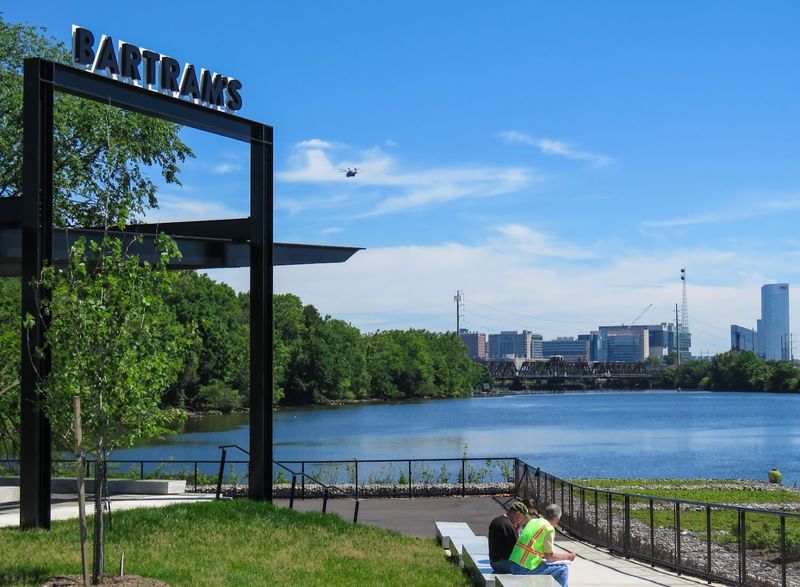
America’s oldest surviving botanical garden has been growing along the banks of the Schuylkill River in Philadelphia since 1728, and Bartram’s Garden still carries the spirit of curiosity and wonder that its founder, John Bartram, brought to every plant he ever collected.
Bartram was a self-taught botanist and farmer who traveled extensively through colonial America, gathering seeds and specimens that he cultivated on his Philadelphia property and shared with botanists across Europe.
Today, Bartram’s Garden spans 45 acres and includes the original stone farmhouse, a working farm, native meadows, and restored riverfront habitat that supports a remarkable range of birds and pollinators.
The garden sits in the Kingsessing neighborhood of southwest Philadelphia, a part of the city that many visitors overlook entirely, which only adds to the sense of discovery when you arrive.
Free public programs, community events, and guided tours make Bartram’s Garden one of the most welcoming green spaces in all of Philadelphia.
The connection to early American natural history gives every visit to Bartram’s Garden a depth that most parks simply cannot match.
7. Hawk Mountain Sanctuary, Kempton
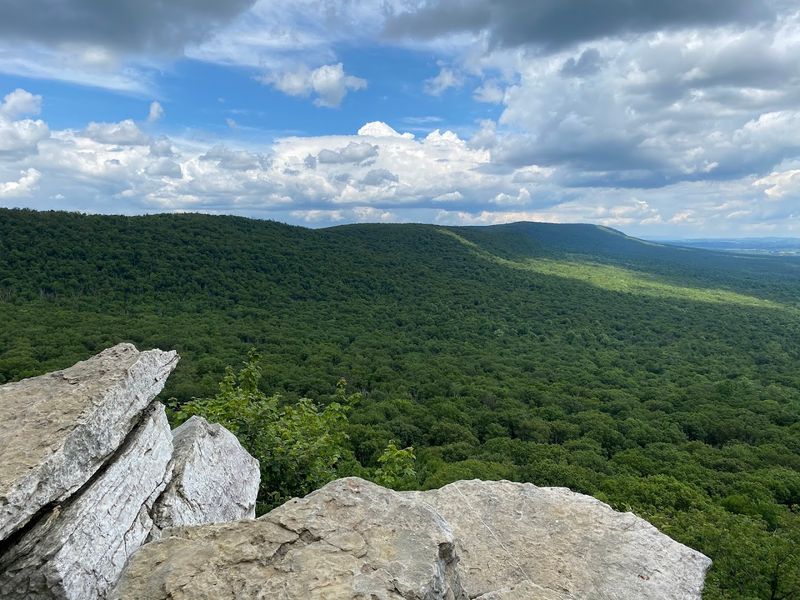
There is something almost meditative about standing on a rocky ridge in Berks County and watching a broad-winged hawk ride a thermal current straight over your head without a single wingbeat.
Hawk Mountain Sanctuary in Kempton, Pennsylvania, sits along one of the most important raptor migration corridors in the Eastern United States, and during peak fall migration, thousands of hawks, eagles, ospreys, and falcons funnel past the North Lookout in a single day.
The sanctuary was established in 1934 after conservationist Rosalie Edge purchased the mountain to protect migrating raptors from being hunted, making it the world’s first refuge for birds of prey.
Hawk Mountain covers nearly 2,600 acres of Appalachian woodland, with trails ranging from a short, easy walk to the South Lookout to longer routes through hemlock ravines and rocky terrain.
The visitor center at Hawk Mountain offers excellent exhibits on raptor biology and migration, providing helpful context before you head up to the ridgeline.
September through November is prime time to visit, though the trails and lookouts at Hawk Mountain offer rewarding views in every season.
8. Cook Forest State Park, Cooksburg
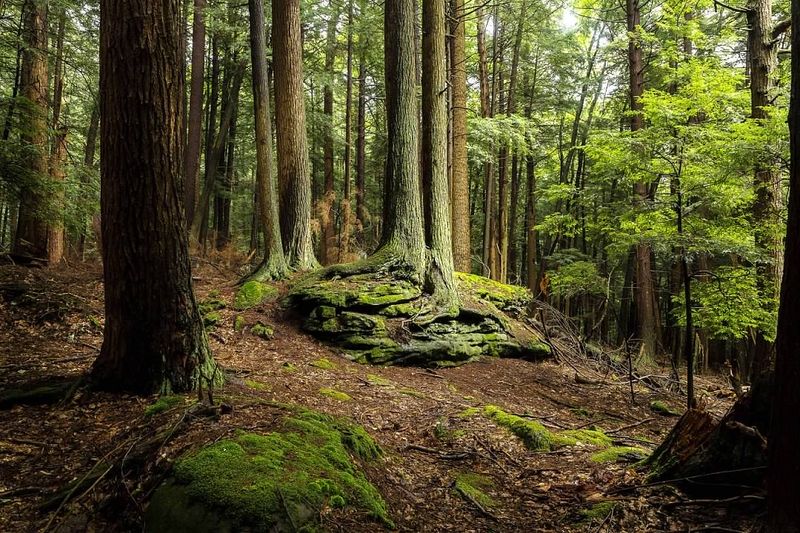
Walking into the Forest Cathedral at Cook Forest State Park near Cooksburg, Pennsylvania, produces a kind of hushed awe that is genuinely hard to put into words.
The old-growth pines and hemlocks here rise up to 180 feet, making them among the tallest trees in the entire eastern United States, and the scale of the forest creates a cathedral-like atmosphere that has inspired visitors for well over a century.
Cook Forest State Park covers more than 8,500 acres along the Clarion River in Clarion and Forest counties, offering swimming, canoeing, fishing, and camping alongside its famous old-growth trails.
The Longfellow Trail and the Ancient Forest Trail are both short, accessible walks that take you directly through the most impressive groves of old-growth timber in the park.
A log cabin rental program at Cook Forest makes it easy to spend a full weekend immersed in the forest without roughing it too hard.
If old trees and clear rivers are your idea of perfect scenery, Cook Forest State Park will feel like exactly the right place to exhale.
9. Worlds End State Park, Forksville
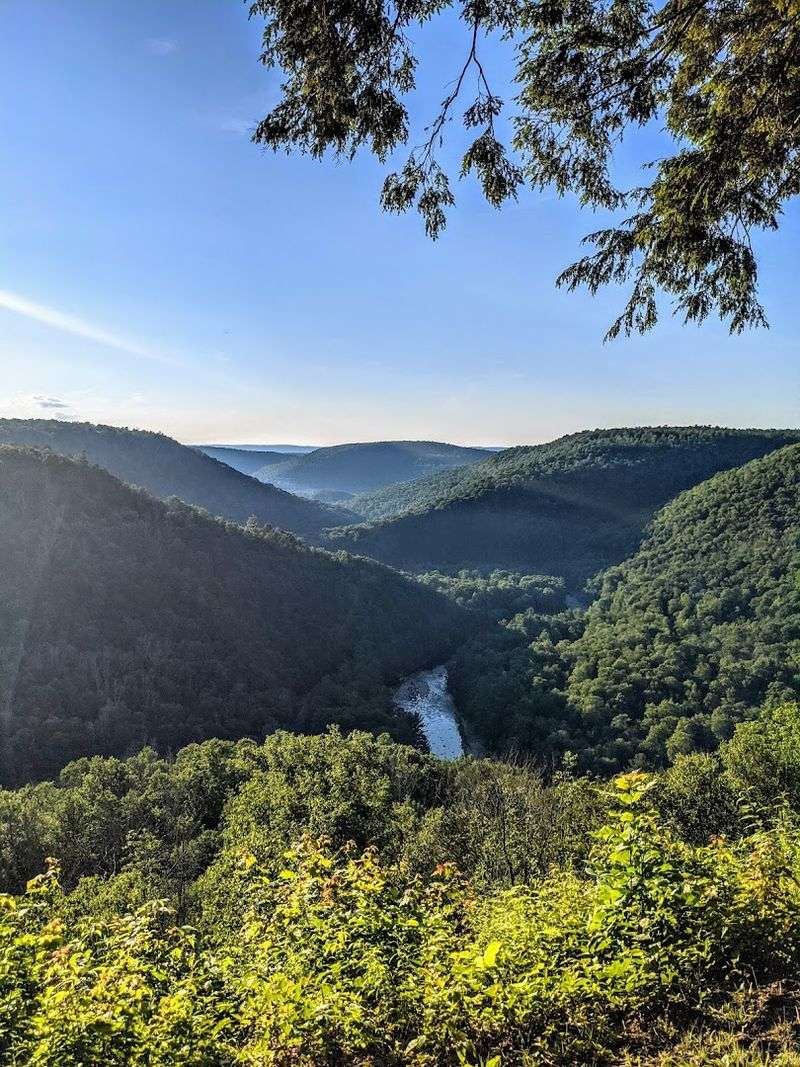
The name sounds dramatic, but Worlds End State Park near Forksville, Pennsylvania, is less about dramatic endings and more about a beautifully dramatic landscape that rewards every visitor who makes the effort to get there.
Tucked deep in Sullivan County along Loyalsock Creek, Worlds End sits within the Loyalsock State Forest and is surrounded by steep ridges, deep gorges, and some of the most rugged terrain in all of Pennsylvania.
The park’s name likely comes from the old local term for the twisting, disorienting path through the surrounding mountain terrain, and once you see the narrow valley carved by the creek, the label starts to make a certain kind of sense.
Hiking trails at Worlds End include the challenging Loyalsock Trail, which runs for over 59 miles through the state forest, as well as shorter loop options that offer stunning ridge-top views without a full-day commitment.
Swimming in Loyalsock Creek on a hot summer afternoon is one of the park’s most beloved simple pleasures.
Worlds End State Park has a remote, off-the-beaten-path quality that makes every visit feel like a genuine discovery.
10. Delaware Water Gap National Recreation Area, Stroudsburg
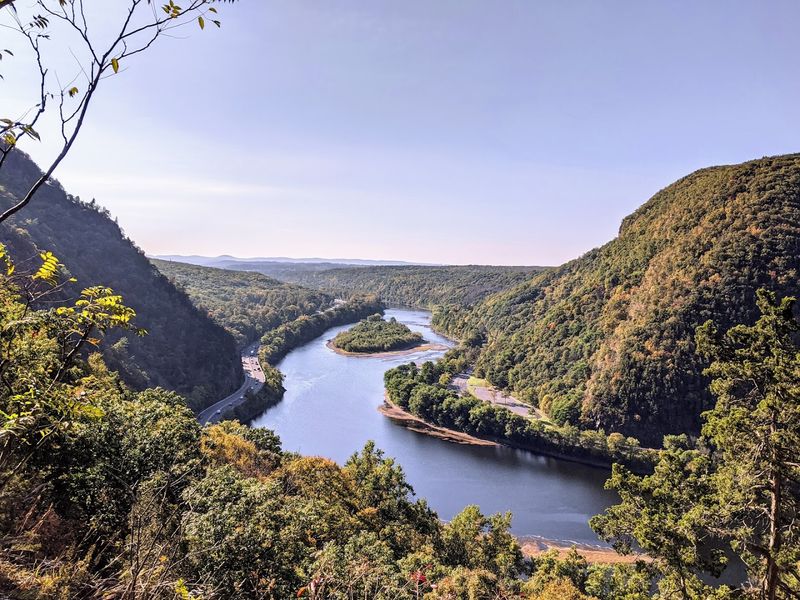
Few natural landscapes in the northeastern United States pack as much variety into one place as the Delaware Water Gap National Recreation Area near Stroudsburg, Pennsylvania.
Stretching for 40 miles along the Delaware River on the border of Pennsylvania and New Jersey, the recreation area encompasses waterfalls, ridgeline trails, river beaches, historic villages, and dense hardwood forest all within a single protected landscape.
Dingmans Falls, one of the tallest waterfalls in Pennsylvania, is located within the recreation area and is accessible via a short, flat boardwalk trail that is suitable for almost any fitness level.
The Appalachian Trail passes directly through the Delaware Water Gap, and the climb to the Mount Tammany overlook offers one of the most photographed views of the entire river corridor.
Paddling the Delaware River through the gap is a popular way to experience the landscape at water level, with calm stretches ideal for beginners and more spirited sections for experienced paddlers.
The Delaware Water Gap National Recreation Area draws visitors year-round, but autumn, when the hardwood forest ignites with color, is arguably its most spectacular season.