
15 Pennsylvania Christmas Towns Where Main Street Glows From Dusk To Midnight
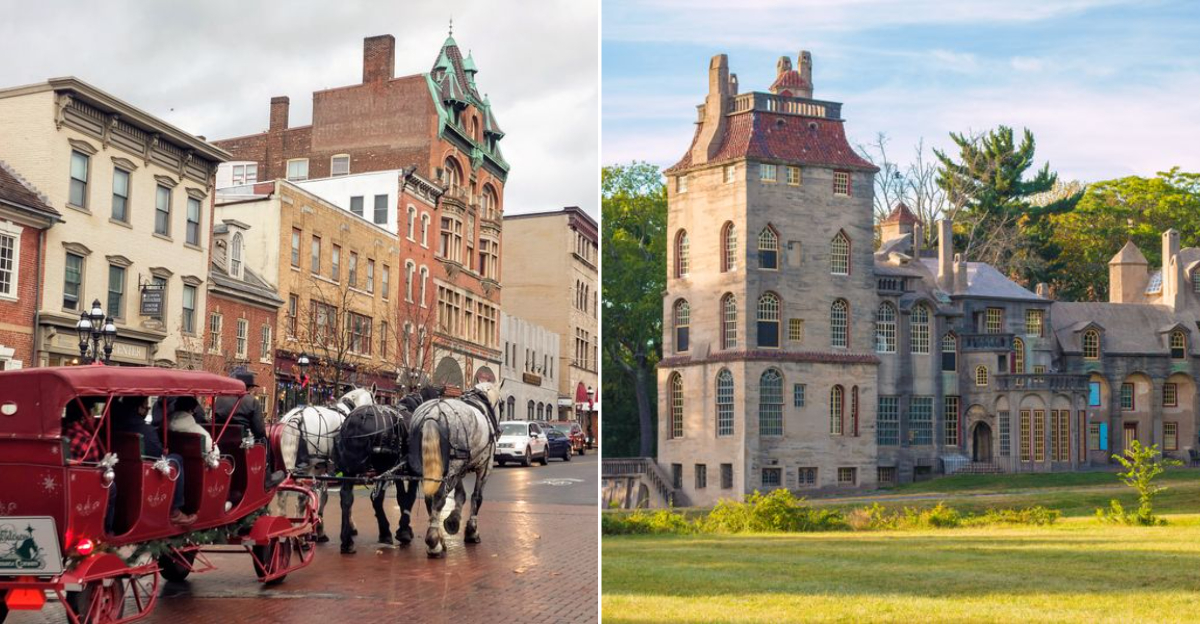
Main streets in Pennsylvania don’t simply decorate for the holidays so much as recalibrate the night itself, shifting the tone after dusk until storefronts hum with a quieter energy, steeple bells seem to test the cold air, and old brick takes on that softened winter shine that makes familiar blocks feel newly discovered.
I’ve walked these streets when the sky goes early-dark and the lights come on one by one, Moravian candles glowing steady in upper windows, vintage bulbs strung low and warm, crackling with the soft insistence of vinyl warming up before a first song.
The effect isn’t flashy or rushed; it’s cumulative, built from details that reward staying out longer than planned.
What keeps you moving is the way each town reveals its glow gradually. A corner bakery spills light and sugar into the cold.
A courthouse square gathers people without announcing it.
Church steps catch reflections from strings of bulbs, and suddenly a block you thought you knew becomes a reason to slow your pace.
Conversations drift, mittens come off and on, and cocoa warms hands while maps get folded, unfolded, and smudged by snow.
This guide follows the light after dusk, tracing those small, attentive choices that turn winter nights into invitations.
If twinkle lights are your North Star, these towns will keep you walking until midnight, content to wander, warm-pocketed, and happily off schedule.
1. Bethlehem
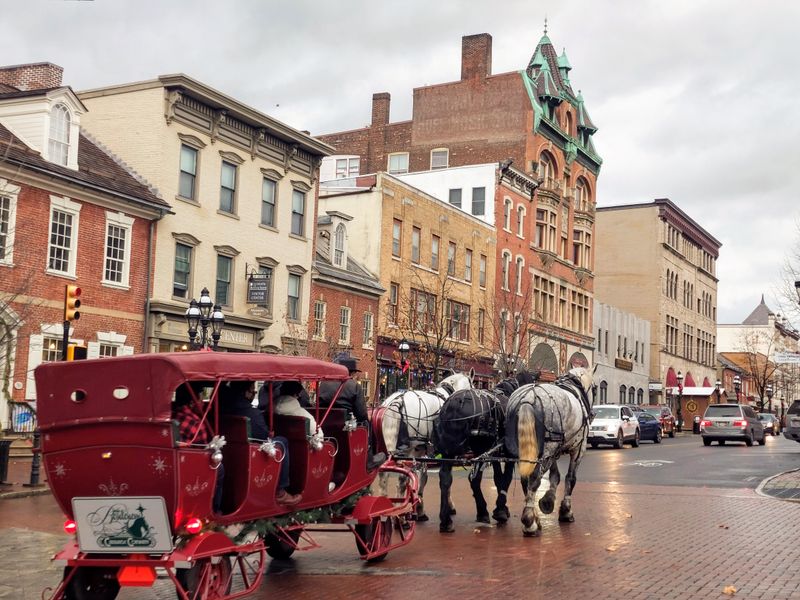
Evening settles softly over the brick-lined blocks as Moravian stars hang above the sidewalks like solemn punctuation marks, turning familiar crossings into something closer to a candlelit manuscript that asks to be read slowly rather than skimmed.
Warm light spills from shop windows along Main Street while the live Advent calendar at the historic Goundie House opens one square at a time, drawing small crowds who behave less like tourists and more like neighbors quietly acknowledging a shared ritual.
Steam rises from mugs clasped in gloved hands as vendors at the Christkindlmarkt sell tin ornaments, spiced wine, and cinnamon-heavy pastries, creating a scent trail that lingers long after you’ve moved on to the next block.
The Moravian influence runs deeper than décor, shaping the town’s pace and proportions, from the Gemeinhaus to the disciplined symmetry of restored stone buildings that feel especially grounded once winter compresses sound and crowd alike.
High above it all, the oversized illuminated star on South Mountain keeps watch with unapologetic presence, visible from nearly everywhere, serving not as spectacle but as orientation, a steady reassurance that you are exactly where you should be.
Walking routes naturally loop, pulling you past the Moravian Book Shop, into quiet residential pockets, and back toward the busier plaza without ever feeling forced, as though the town has been rehearsing this choreography for centuries.
Crowds peak around concert times and weekends, so parking garages fill early and patience becomes part of the experience, yet lingering longer almost always rewards you with calmer streets, colder air, and lights that feel brighter simply because fewer people are there to witness them.
2. Jim Thorpe

Fog from the Lehigh Gorge Scenic Railway drifts upward as trains arrive and depart, softening the steep hillsides and making the entire town feel temporarily suspended between eras rather than anchored to a single moment in time.
Victorian storefronts stack tightly along narrow streets, wrapped in uninterrupted strands of warm white lights that trace cornices, windows, and balconies, turning the climb up Broadway into a slow ascent through glowing architectural layers.
Carolers appear almost without announcement near the opera house, their voices bouncing off stone façades while ticket queues turn into conversations that last longer than planned, helped along by the cold that encourages togetherness.
The town’s industrial past remains visible in rail remnants, switched-back slopes, and the looming presence of Asa Packer’s mansion, which feels particularly theatrical at night when winter darkness sharpens every outline.
Holiday train rides run at a deliberately unhurried pace, easing families through river shadows and wooded cuts, creating the uncanny sensation that motion itself has slowed to match December’s expectations.
Footing matters here, since hills demand steady traction and sidewalks rarely apologize for their angles, making good boots less of a suggestion and more of an unspoken admission ticket.
Parking near the station disappears quickly, so arriving early or farther out becomes part of the plan, though ducking into a bookstore, café, or pop-up stall for warmth tends to soften every logistical inconvenience along the way.
3. Wellsboro
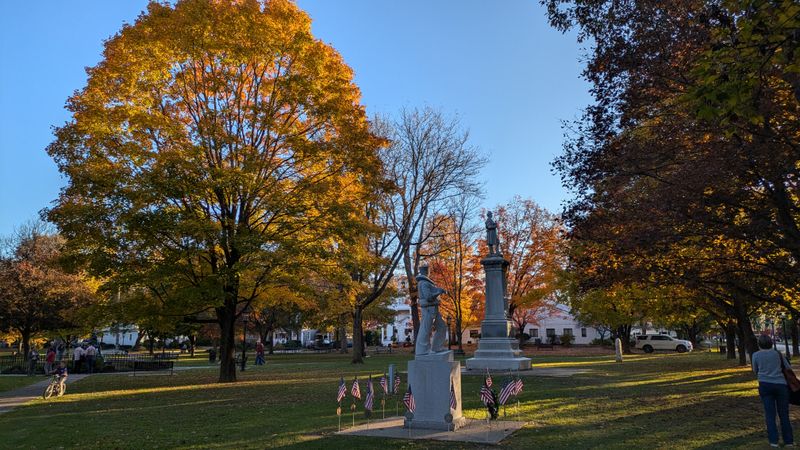
Fog from the Lehigh Gorge Scenic Railway drifts upward as trains arrive and depart, softening the steep hillsides and making the entire town feel temporarily suspended between eras rather than anchored to a single moment in time.
Victorian storefronts stack tightly along narrow streets, wrapped in uninterrupted strands of warm white lights that trace cornices, windows, and balconies, turning the climb up Broadway into a slow ascent through glowing architectural layers.
Carolers appear almost without announcement near the opera house, their voices bouncing off stone façades while ticket queues turn into conversations that last longer than planned, helped along by the cold that encourages togetherness.
The town’s industrial past remains visible in rail remnants, switched-back slopes, and the looming presence of Asa Packer’s mansion, which feels particularly theatrical at night when winter darkness sharpens every outline.
Holiday train rides run at a deliberately unhurried pace, easing families through river shadows and wooded cuts, creating the uncanny sensation that motion itself has slowed to match December’s expectations.
Footing matters here, since hills demand steady traction and sidewalks rarely apologize for their angles, making good boots less of a suggestion and more of an unspoken admission ticket.
Parking near the station disappears quickly, so arriving early or farther out becomes part of the plan, though ducking into a bookstore, café, or pop-up stall for warmth tends to soften every logistical inconvenience along the way.
4. Lititz
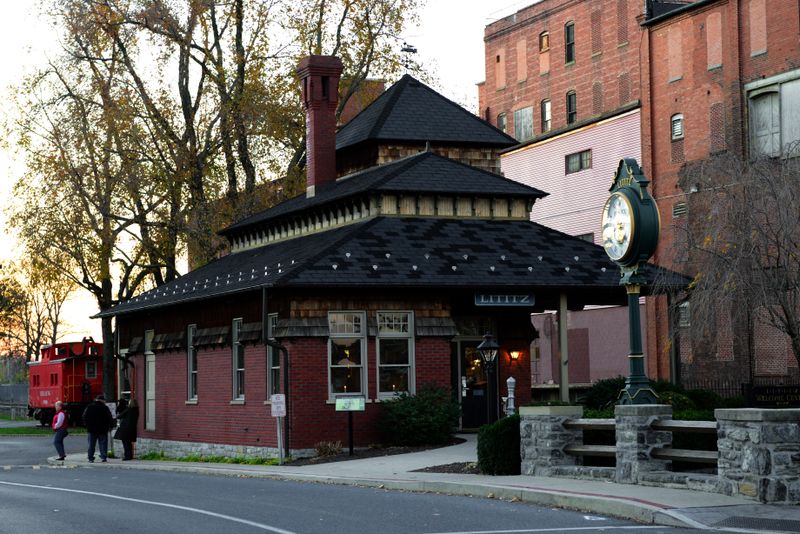
Soft brass music drifts across the square as evening settles, and the glow from tidy shop windows reflects back off polished sidewalks in a way that makes the town feel deliberately composed rather than accidentally charming.
White Moravian stars and single candles in nearly every window lean into restraint, creating a visual rhythm that rewards looking closely rather than scanning quickly from one storefront to the next.
Pretzel warmth and chocolate notes escape bakeries just enough to guide wandering feet without overwhelming the air, making scent part of the navigation rather than an indulgence.
Lititz Springs Park adds an essential counterpoint, where water mirrors the overhead lights and smooths their edges, encouraging visitors to slow down and linger longer than intended.
Founded by Moravians who believed in order, craft, and calm sociability, the town still carries that design philosophy in its narrow streets, slate roofs, and measured pace through December nights.
Demonstrations at the historic pretzel bakery quietly remind visitors that everyday work once made towns like this possible, a lesson that lands more clearly when hands are cold and daylight is short.
Weekends draw steady crowds, so arriving later in the evening rewards you with quieter sidewalks, easier parking beyond Broad Street, and window displays that feel more intimate once the daytime energy thins.
5. Indiana
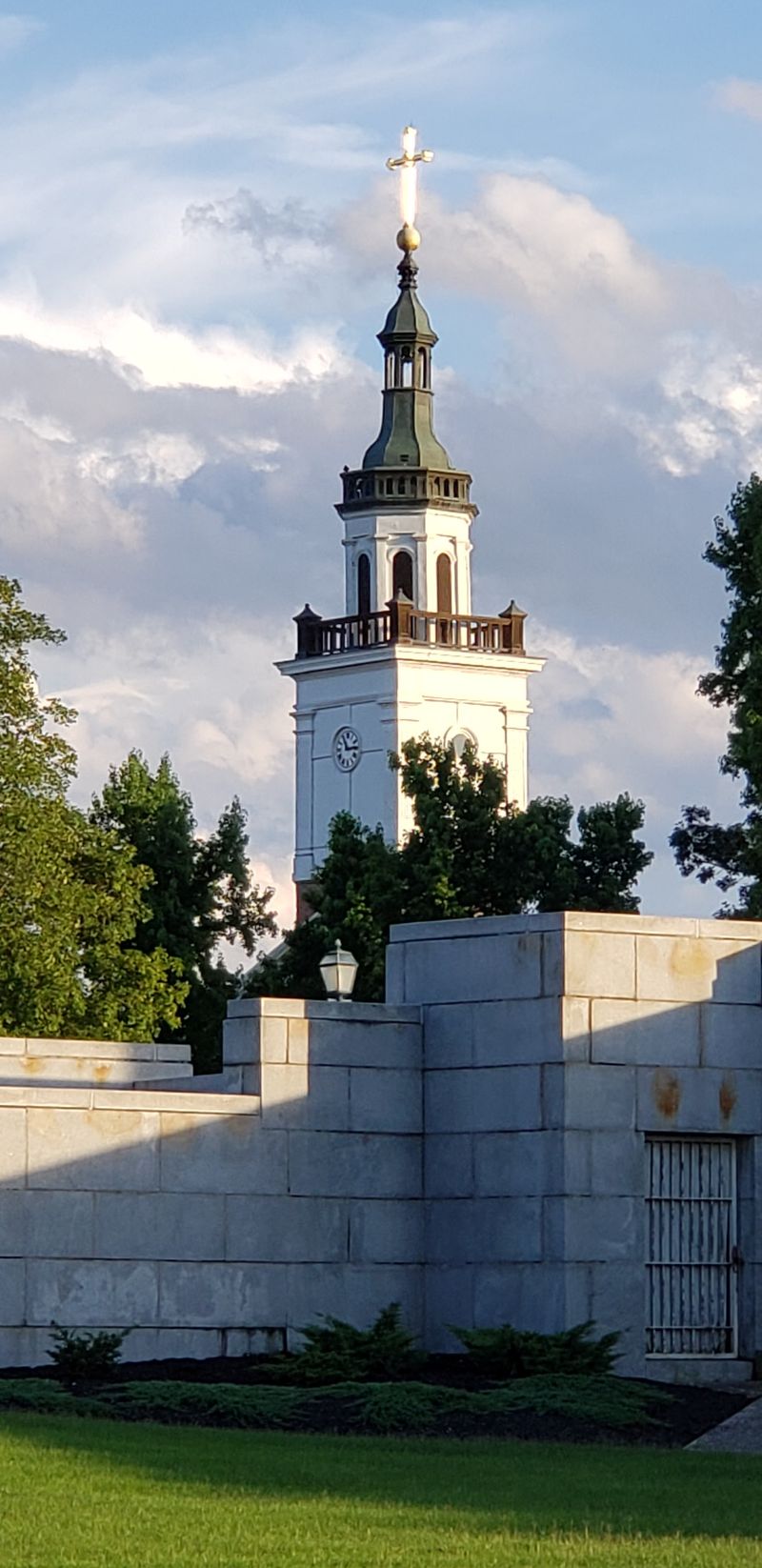
A towering evergreen in front of the courthouse radiates a green-tinted glow that spreads outward across brick streets, anchoring the downtown with a sense of ceremonial calm rather than overt celebration.
Store windows prepare miniature scenes with patient attention, inviting passersby to pause, adjust their scarves, and stare a little longer than scheduled without feeling hurried along.
Jimmy Stewart’s presence lingers subtly, not as loud memorabilia but as a tone, reinforced by the annual It’s a Wonderful Life Festival that treats nostalgia with unusual gentleness.
Coal history and university life coexist here without tension, shaping a downtown that balances earnest tradition with youthful night energy once classes end and lights turn on.
Standing near the Stewart statue feels less like fandom and more like a civic acknowledgment, especially after dark when shadows simplify details and emotion rises closer to the surface.
Cold corners appear suddenly when the wind shifts, making gloves and patience important companions during longer strolls between storefronts and side streets.
Free parking helps on quieter nights, but festival evenings fill quickly, so arriving early allows time for parades, lingering conversations, and a diner milkshake that feels defiantly cheerful against winter restraint.
6. Doylestown
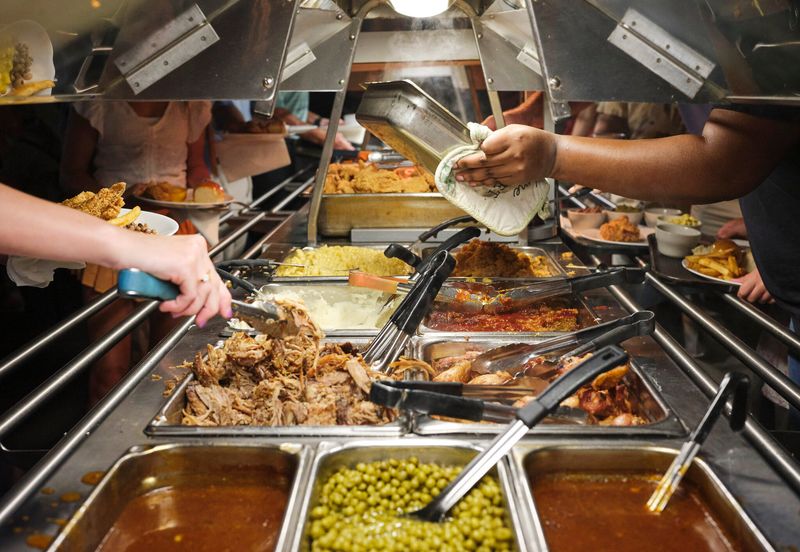
Concrete towers and tiled courtyards take on an almost dreamlike quality once holiday lights are added, transforming Mercer’s eccentric architecture into something that feels temporarily unmoored from time.
Independent bookstores and bakeries glow with curated warmth, offering refuge without pretense and reinforcing the sense that this town edits rather than overloads its visual language.
Fonthill Castle holds court just beyond the center, its lantern-lit tours framing reinforced concrete walls as if they were handmade artifacts rather than experimental declarations.
The Arts and Crafts philosophy runs quietly through everything, from window displays to walking paths, resisting trends in favor of continuity and personal conviction.
Candlelight tours tighten schedules in December, which sharpens the experience rather than restricting it, encouraging focused attention instead of distracted wandering.
Evening parking works best near the county complex, turning the walk inward along State Street into a gradual immersion rather than an abrupt arrival.
After the lights, corner pubs and soup menus ease visitors back toward warmth, offering the satisfying closure of a well-paced night rather than a rushed departure.
7. West Chester
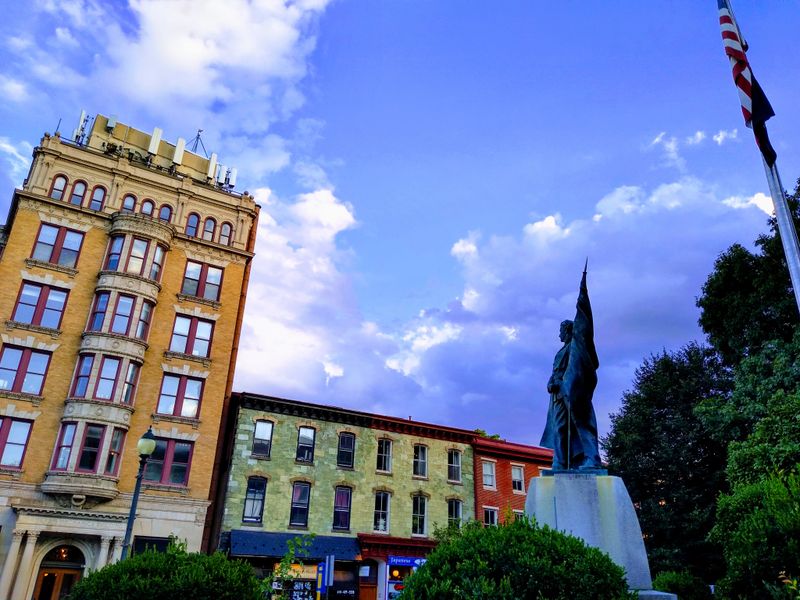
Even after sunset, warm reflections multiply across brick sidewalks as whole blocks participate in a synchronized glow that feels coordinated rather than decorative.
The courthouse anchors the borough like a steady metronome, keeping the movement of parade routes, light shows, and evening foot traffic pleasantly predictable rather than chaotic.
Daily light programs ripple across storefront glass, subtly recalibrating the pace of walkers who slow down without realizing they have done so.
Preservation here favors proportion over nostalgia, which explains why historic cornices, brick patterns, and storefront heights still balance visual weight so effectively in winter darkness.
Shop owners lean into restrained palettes instead of spectacle, using depth, warmth, and repetition to keep displays legible from across the street as crowds ebb and flow.
Parking garages off Chestnut Street simplify arrivals on busy nights, allowing visitors to enter on foot with coats zipped and expectations already softened.
Staying after closing reveals the borough at its best, when residents reclaim the sidewalks, conversations lower in volume, and the lights continue glowing without needing an audience.
8. New Hope
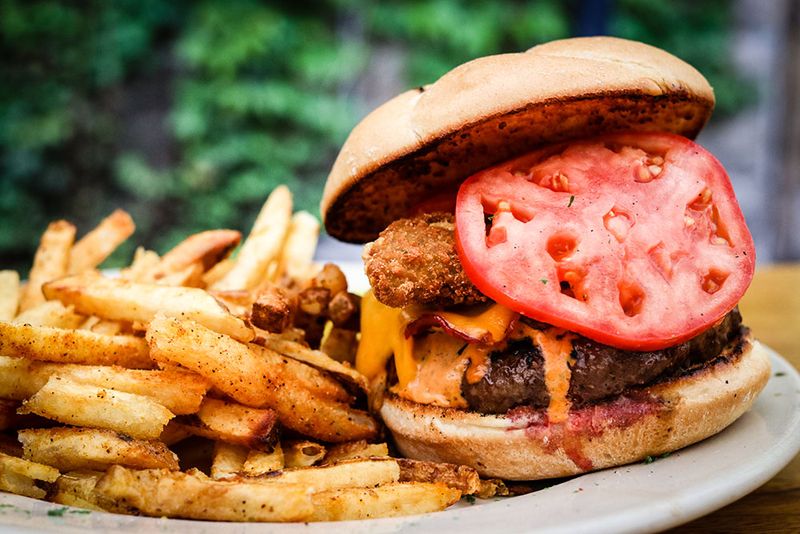
River air moves through this stretch of town differently, carrying faint woodsmoke and damp stone that give holiday lights a soft, shifting quality.
A narrow bridge stitches two towns together visually and emotionally, letting reflections bounce between shop windows on either bank as if the river itself participates in the decoration.
Theater posters, stained glass, and eclectic storefronts coexist without hierarchy, rewarding wandering rather than routing.
Canal-era history and stage tradition overlap here, allowing theaters to send warmed-up voices into December air without breaking immersion.
Evening performances at the playhouse extend the glow beyond storefronts, turning applause into part of the nighttime soundscape.
Parking works best at the edges, where walking in slowly allows the lights to build instead of overwhelm, especially near the bridge.
Dinner reservations matter during peak weekends, but wandering afterward restores calm, especially along the darker canal paths where the river absorbs light rather than reflecting it.
9. Hershey

Streetlights shaped like iconic chocolate silhouettes introduce a playful logic that softens winter darkness before visitors even reach the sidewalks.
Chocolate Avenue wears its decorations with deliberate warmth, using repetition rather than novelty to establish rhythm along the commercial stretch.
Drive-through light displays nearby scale holiday spectacle upward, transforming wooded stretches into glowing corridors that feel cinematic without becoming frantic.
The town’s company-built origins remain visible in orderly planning, institutional generosity, and a confidence that allows celebration without excess.
Seasonal park events continue even as temperatures drop, framing coasters and walkways against cold air that sharpens anticipation rather than dulling it.
Timed tickets reduce friction and reward preparation, allowing once-parked walking loops to replace repeated car stops through the district.
Warm treats prove unavoidable, and the smartest path leaves space for dessert because resisting the town’s central metaphor never works for long.
10. Canonsburg
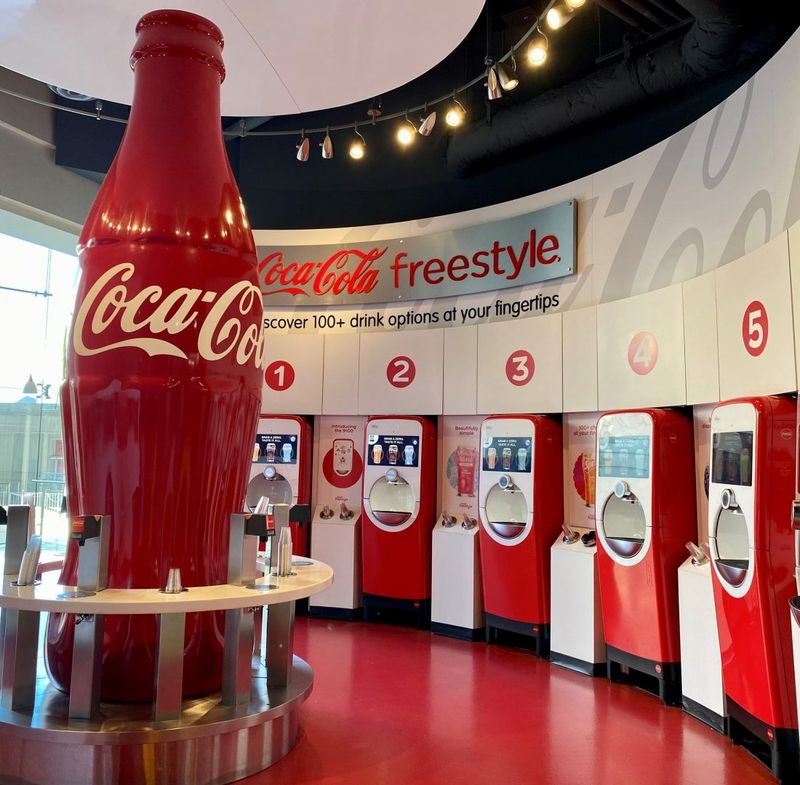
Long rows of glowing vintage blow molds line the street like a community archive brought outdoors for the season, each figure emitting a slightly different shade of nostalgia and care.
The density of decorations creates a visual rhythm that feels handmade rather than curated, as if neighbors competed gently rather than strategically.
Cold air carries the smell of kettle corn and metal streetlight poles, reinforcing the sense that this display belongs to the town rather than to an event sponsor.
Holiday traditions here grew patiently through donations, volunteer labor, and storage sheds filled year after year, not through branding or tourism campaigns.
Town Park becomes a focal point without dominating the evening, allowing side streets to participate instead of fading into darkness.
Traffic slows naturally as drivers adjust to pedestrian movement, making parking a few blocks away both easier and more respectful of the flow.
Walking the full length of the display rewards patience, especially late at night when voices soften and the lights continue glowing as if unaware of being observed.
11. Ligonier
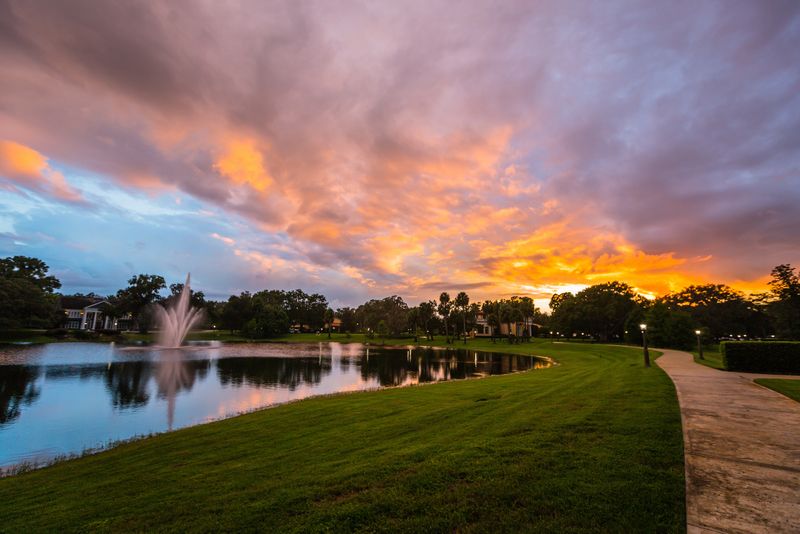
The central diamond reads like a carefully opened jewelry box after dusk, with the gazebo fixed in place as its setting rather than its centerpiece.
Storefront wreaths trace the curve of the square in gentle repetition, reinforcing a sense of maintained continuity rather than seasonal interruption.
Historical gravity from nearby fortifications lingers in the background, giving the holiday softness weight instead of diluting it.
Museum programming and winter lectures complement the lights by inviting thought alongside spectacle.
Shops resist excess, using warm windows and subtle lighting rather than visual competition.
Making a slow loop first provides orientation without urgency, allowing the rest of the evening to unfold organically.
The quietest photographs and strongest impressions arrive after crowds thin, when footsteps replace engines and light feels earned rather than displayed.
12. Gettysburg
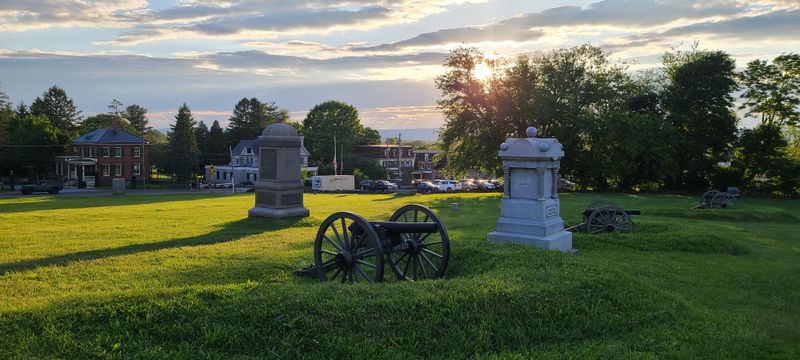
Brick storefronts absorb holiday light instead of reflecting it sharply, producing a steady glow that matches the town’s restrained tone.
Snow resting on cannon barrels creates a visual contradiction that feels solemn rather than ironic.
Evening activity concentrates around the square, where conversation replaces spectacle and lingering feels permitted.
Seasonal tours move slowly by design, encouraging silence and attention rather than narration overload.
Historical preservation guides decoration choices toward understatement, keeping wreaths and bulbs secondary to architecture.
Night deepens quickly near the battlefield, requiring deliberate pacing and awareness rather than wandering.
Warm soups and tavern interiors complete the experience, offering shelter without shifting the evening away from reflection.
13. Mifflinburg
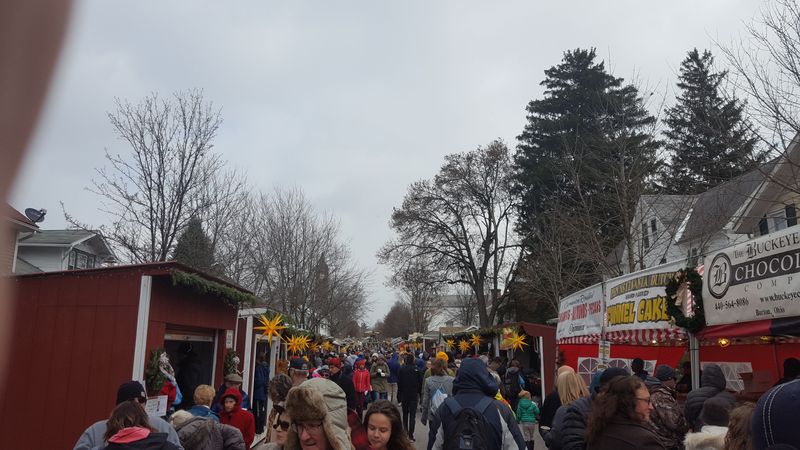
The scent of roasting nuts threads deliberately through the night air during the Christkindl Market, guiding visitors along wooden stalls arranged with almost instructional precision rather than decorative chaos.
Handcrafted booths line the streets in a way that feels inherited rather than assembled, as if the town already knew where each structure belonged long before the lights were switched on.
Brass music carries unevenly through the cold, mixing with boot steps and laughter that feels unhurried instead of performative.
Pennsylvania German traditions show up here through material choices and pacing rather than signage, grounding the market in practice instead of aesthetics.
Craft tables favor usefulness over novelty, which quietly slows browsing and rewards conversation with the makers.
Parking spreads naturally into residential blocks, producing a slow inward walk that functions as a transition rather than an inconvenience.
After official hours end, the remaining window displays gain clarity and calm, letting the town glow without the pressure of an audience.
14. Skippack Village
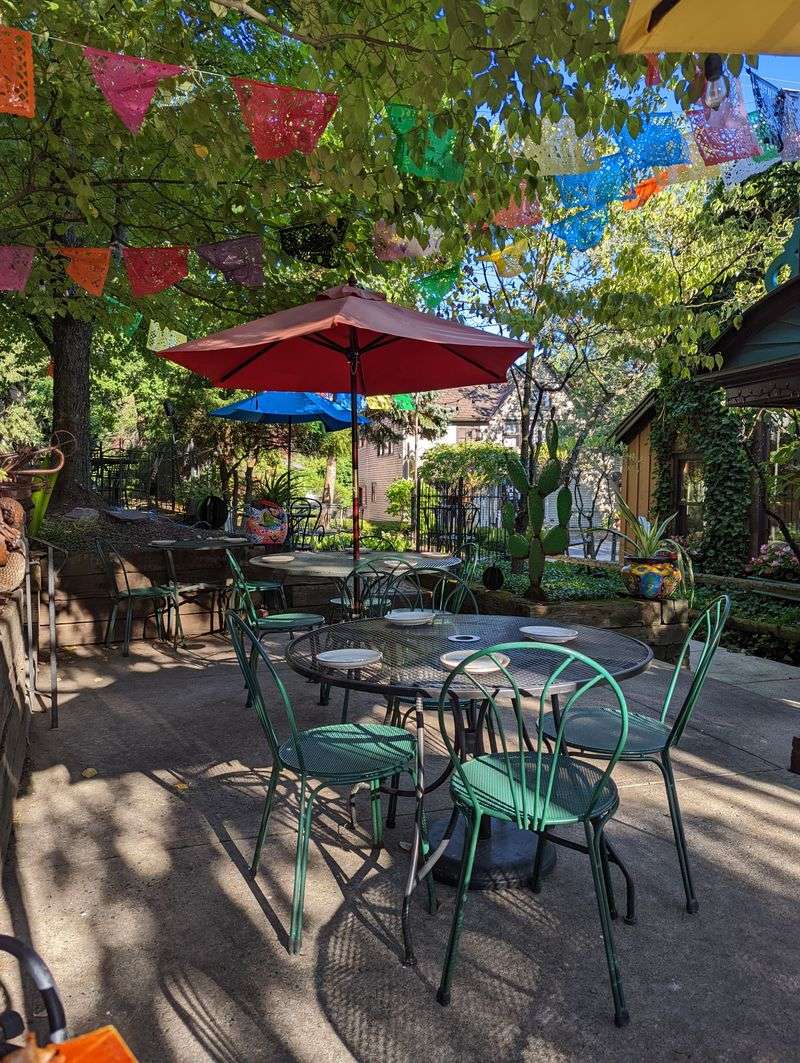
Lantern light pools on stone walkways with a softness that encourages wandering rather than directing it, resisting straight lines and naming no priority path.
Restored colonial buildings frame the season without surrendering their original posture, showing that preservation and warmth can coexist without compromise.
Boutique windows stage small, intentional moments instead of spectacle, rewarding those who pause long enough to notice craftsmanship over novelty.
Seasonal stroll nights coordinate store hours with courtesy, allowing crowds to disperse instead of compress.
Sound travels clearly here, drifting from doorways and courtyards without competing for attention.
Using rear parking lots transforms arrival into a gentle orientation process instead of a logistical hurdle.
Pausing briefly at the covered bridge resets the senses, preparing visitors to reenter light with greater patience and awareness.
15. Kennett Square
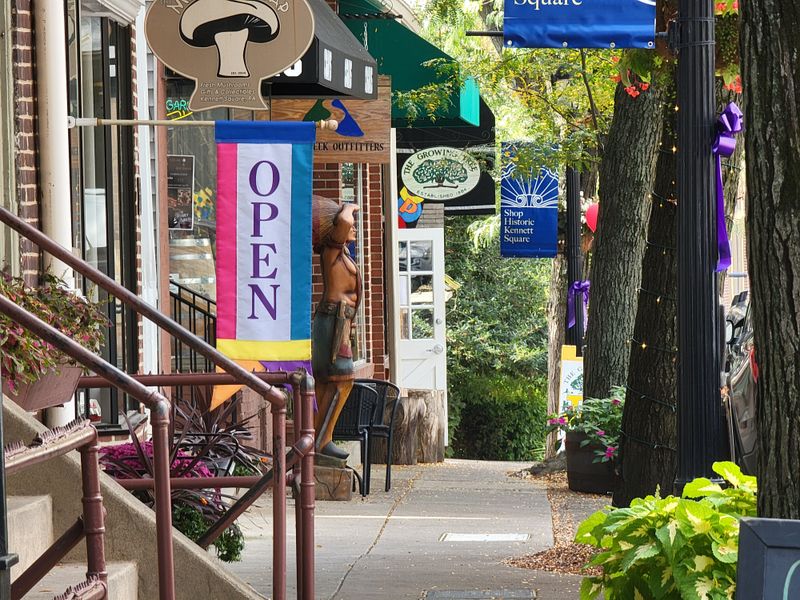
Even in winter, the town carries a faint agricultural scent that threads quietly beneath the lights, refusing to vanish under decoration.
Strings of bulbs trace State Street with restraint, suggesting handwriting rather than emphasis.
Nearby gardens raise expectations for scale and quality, which the town answers through cohesion instead of excess.
Family restaurants and shop windows reflect a long-built cultural mix that feels lived in rather than curated for display.
Visiting after dusk allows storefronts to soften while still retaining energy from nearby attractions.
Parking garages simplify logistics without isolating visitors from the rhythm of the streets.
Ending the walk with soup or baked goods turns the evening inward, completing the experience through warmth rather than brightness.