
14 Pennsylvania Dutch Cooking Habits From The 1930s That Would Shock Millennials
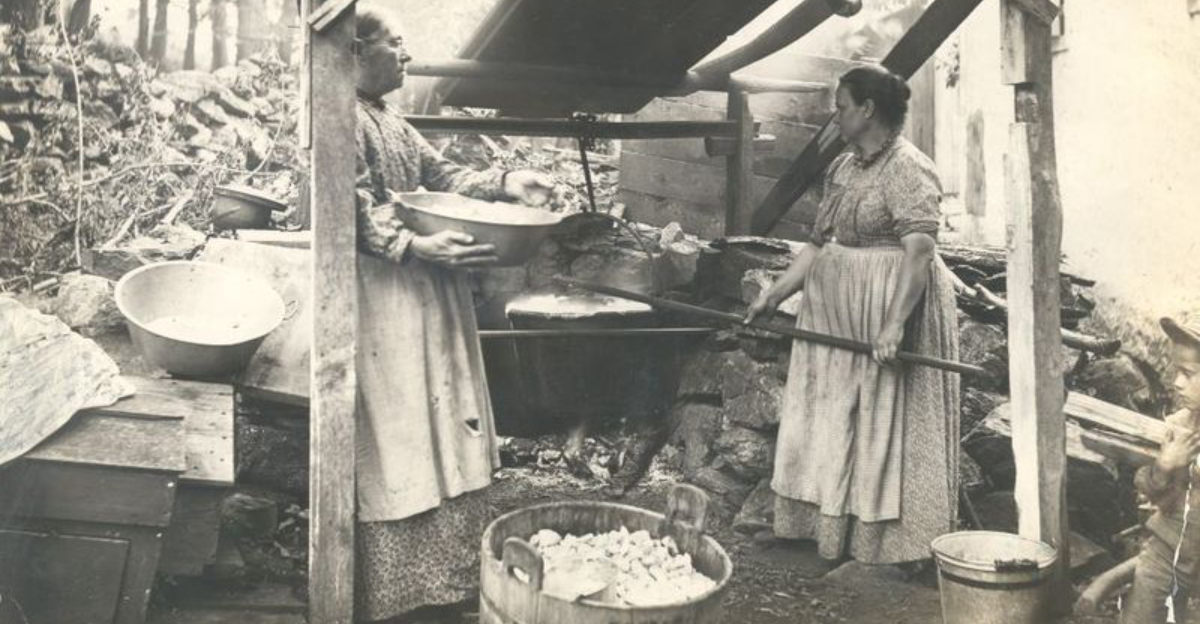
My grandmother’s Pennsylvania Dutch kitchen was like stepping into another world. The aromas, techniques, and ingredients used in those 1930s farmhouses would leave today’s avocado-toast generation utterly baffled.
While scrolling through Instagram food posts might be second nature to millennials, their great-grandparents were busy rendering lard and pickling everything in sight just to survive winter.
1. Rendering Lard Was an Essential Skill
Cooking with vegetable oil? The Pennsylvania Dutch would scoff! After butchering, women carefully cut pork fat into small cubes before slowly melting it down in massive cast-iron kettles.
The liquid gold was strained through cheesecloth into crocks, creating the foundation for nearly every dish. The crackling bits left behind became treats called cracklings (known as Griewe in Pennsylvania German).
This shelf-stable cooking fat produced impossibly flaky pie crusts that would make today’s shortening-users weep. Modern health concerns aside, nothing matched the flavor dimension lard brought to Pennsylvania Dutch kitchens.
2. Scrapple: The Original No-Waste Breakfast
Long before fancy nose-to-tail restaurants charged premium prices, Pennsylvania Dutch families created scrapple from necessity. After butchering, all remaining pork scraps were boiled with cornmeal and buckwheat flour into a thick mush.
Poured into loaf pans and cooled overnight, the morning brought thin-sliced pieces fried crisp in – you guessed it – more lard. My grandmother served it with apple butter or maple syrup.
Today’s clean-eating millennials might cringe at this humble breakfast staple, but the resourcefulness behind this protein-packed meal deserves respect.
3. Stuffed Pig Stomach Was Sunday’s Special
Imagine announcing to dinner guests today that you’re serving stuffed pig stomach! In 1930s Pennsylvania Dutch homes, this dish (called Seimaage) was cause for celebration, not disgust.
The thoroughly cleaned stomach became nature’s cooking vessel, stuffed with potatoes, sausage, and sometimes cabbage. Slow-baked until golden, the organ itself became tender and edible.
The stomach imparted rich flavor to its contents while serving as a natural casing. Sliced and served with gravy, this practical yet impressive dish transformed humble ingredients into a feast worth waiting for.
4. Coffee Soup Started Many Mornings
Before fancy coffee shops and elaborate breakfast rituals, Pennsylvania Dutch families began days with kaffisupp – coffee soup. This peculiar breakfast consisted of hot coffee poured over torn bread or crackers, topped with milk and sugar.
I tried recreating this once using artisanal sourdough, but my great-aunt laughed, saying they’d used stale bread to avoid waste. The soggy mixture provided quick calories and caffeine for farm workers.
No avocado toast or cold brew in sight – just practical sustenance from ingredients already on hand. This thrifty breakfast solution would baffle today’s brunch-posting generation.
5. Shoofly Pie Was Breakfast, Not Dessert
That molasses-rich, crumb-topped delight tourists buy as dessert? Pennsylvania Dutch families started their day with it alongside coffee. Shoofly pie originated as a practical morning cake, designed for winter when fresh eggs were scarce.
The “wet-bottom” variety featured a gooey molasses layer beneath the crumbs, providing quick energy for farm chores. Bakers made these pies in batches, storing them in cool pantries.
My grandmother could whip up shoofly pie without measuring a single ingredient. When I questioned eating pie for breakfast, she simply replied, “It’s no worse than those donuts you young folks eat!”
6. Seven Sweets and Seven Sours Rule
Pennsylvania Dutch tables followed an unwritten rule: every proper meal needed balance through “seven sweets and seven sours.” This wasn’t mere superstition but practical nutrition and preservation wisdom.
“Sweets” included apple butter, chow-chow, and jellies, while “sours” featured pickled beets, cucumbers, and sauerkraut. These preserved goods lined pantry shelves year-round.
The tradition ensured families consumed fermented foods daily, something modern nutritionists now recommend for gut health.
While today’s meals might feature one condiment, these farm tables offered a colorful array of preserved garden bounty at every sitting.
7. Pickled Red Beet Eggs in Every Fridge
Those vibrant magenta eggs weren’t created for Instagram – they were practical protein storage. Pennsylvania Dutch housewives hard-boiled eggs, then submerged them in leftover pickled beet brine, creating a striking preservation method.
Historically kept in cool cellars or iceboxes, the safe modern practice is to refrigerate pickled eggs; home-pickled eggs should not be stored at room temperature. Families kept jars of these ready-to-eat proteins available for quick meals or snacks.
I remember my grandfather grabbing these vibrant eggs straight from the jar for lunch. The ingenious combination utilized two farm staples – chickens and garden beets – while creating a visually striking food that predated food coloring by generations.
8. Dandelion Greens Were Prized Spring Treasures
While modern homeowners poison dandelions, Pennsylvania Dutch families celebrated their arrival as the first fresh greens after winter. Children were dispatched with baskets to gather young leaves before flowers appeared.
The bitter greens were transformed with hot bacon dressing – a sweet-sour mixture of bacon drippings, vinegar, and sugar that wilted the leaves to perfection. My great-grandmother swore dandelions purified winter-thickened blood.
This free, nutritious vegetable provided vital vitamins after months of preserved foods. Today’s millennials pay premium prices for “foraged” restaurant greens, unaware their ancestors harvested the same plants from their yards.
9. Pot Pie Contained No Pie Crust Whatsoever
Ask for pot pie in Pennsylvania Dutch country and you’ll receive soup! Unlike today’s crusty creations, traditional bott boi featured square hand-cut noodles swimming in rich chicken broth with potatoes and meat.
Women rolled dough paper-thin before cutting it into squares with a knife – no fancy equipment needed. The hearty one-pot meal stretched small amounts of meat to feed large families.
I watched my grandmother make this countless times, her fingers flying as she cut perfect squares. When I brought a friend home who expected a crusted pie, my grandmother just laughed and served him an extra-large portion of the noodle-filled stew.
10. Apple Butter Making Was a Community Event
Fall apple harvests meant marathon apple butter sessions where copper kettles bubbled over outdoor fires for up to 12 hours straight. Families took turns stirring the reducing mixture with special long-handled paddles to prevent scorching.
Children threaded apple slices on strings to create “schnitz,” dried apple rings hung from kitchen rafters. These preserved apples became winter currency, traded between neighbors, and used in countless dishes.
Last year, I tried making small-batch apple butter in my slow cooker. The result was tasty but lacked that smoky depth that came from copper kettles and wood fires tended by generations of experienced hands.
11. Pork and Sauerkraut Guaranteed Good Fortune
Pennsylvania Dutch families wouldn’t dream of starting a new year without pork and sauerkraut on the table. This wasn’t just a meal but insurance against bad luck – the pig symbolized forward progress while cabbage represented money.
Fall cabbage harvests were shredded and packed into crocks to ferment into sauerkraut, ready for the New Year’s feast. The tangy kraut paired perfectly with fatty pork.
When I skipped this tradition during college, my grandmother called in genuine concern about my year ahead.
The superstition runs deep in Pennsylvania Dutch country – even modern restaurants throughout the region feature this dish every January 1st.
12. Fastnacht Day Doughnuts Used Up Pre-Lenten Fat
Before Ash Wednesday, Pennsylvania Dutch kitchens buzzed with fastnacht production – potato-dough doughnuts deep-fried to use up forbidden fats before Lenten fasting began.
These weren’t fancy, glazed confections but dense, practical pastries often eaten with molasses or maple syrup.
Churches organized massive fastnacht sales as fundraisers, with women producing thousands by hand. The distinctive square shape and lack of a hole differentiated them from regular doughnuts.
My mother recalls her grandmother testing oil temperature by dropping in a bread cube – no fancy thermometers needed. When it browned perfectly, fastnacht frying commenced in earnest.
13. Home Canning Was Serious Survival Business
Summer and fall weren’t vacation seasons but desperate races to preserve nature’s bounty. Pennsylvania Dutch women processed hundreds, sometimes thousands, of jars annually, working in sweltering kitchens despite summer heat.
Every basement featured floor-to-ceiling shelves of jewel-toned jars: green beans, peaches, tomatoes, corn, and more. Root cellars stored potatoes, onions, and apples in careful arrangements to prevent spoilage.
My great-aunt could identify potential jar seal failures by sound alone. This wasn’t trendy homesteading but survival insurance against winter hunger.
Without these skills, families simply wouldn’t eat during barren months, a reality today’s grocery-store generation can hardly comprehend.
14. Lebanon Bologna Was Homemade Protein Storage
Long before deli counters, Pennsylvania Dutch families created tangy Lebanon bologna as practical meat preservation. This fermented beef sausage hung in smokehouses for weeks, developing distinctive tanginess through careful aging.
The dark, semi-dry sausage could last months without refrigeration. Families sliced it thin for sandwiches or fried thick slices for dinner with potatoes.
Commercial producers like Seltzer’s eventually scaled up this farm tradition, but many families maintained their closely-guarded recipes.
My uncle still talks about his grandfather’s secret spice blend that made their homemade bologna sought-after at community gatherings – a recipe unfortunately lost to time.