
10 Pennsylvania Foods Outsiders Always Mispronounce Or Misunderstand
Pennsylvania is full of flavors that leave outsiders scratching their heads. From regional specialties to local classics, the names alone can trip up even the most confident diners.
Add in unique preparations and beloved traditions, and every bite comes with a story.
Locals relish sharing these foods and their quirks, watching newcomers stumble over pronunciations while savoring every flavor.
It’s a delicious reminder that in Pennsylvania, taste comes with a little local knowledge.
1. Fastnachts
Pronounce it “FASS-knocked,” not “fast-knots” or you’ll immediately out yourself as a newbie.
These square-shaped donuts appear every Shrove Tuesday, fried up by Pennsylvania Dutch communities before Lent begins.
Unlike regular donuts, fastnachts are potato-based, giving them a denser, chewier texture that’s downright addictive. They’re traditionally plain or dusted with powdered sugar, nothing fancy.
Many outsiders mistake them for regular donuts and wonder what the fuss is about, missing the whole cultural tradition behind eating them before fasting season.
2. Lebanon Bologna
Say “LEB-nun” bologna, not “leh-buh-NON,” because it’s named after Lebanon County, Pennsylvania, not the Middle Eastern country.
This smoked, fermented beef product has a distinctly tangy, slightly sweet flavor that shocks first-timers.
It’s darker and firmer than regular bologna, with a texture closer to salami. The unique taste comes from a special smoking process passed down through generations.
Outsiders often expect standard bologna flavor and get blindsided by the intense, vinegary punch that makes this deli meat a Pennsylvania staple.
3. Chow-Chow
No, it’s not a dog breed or Chinese food. Chow-chow is a sweet-and-sour pickled vegetable relish that graces nearly every Pennsylvania Dutch dinner table.
Packed with cauliflower, beans, carrots, and peppers in a mustard-based brine, it’s simultaneously tangy, sweet, and crunchy. People slap it on everything from hot dogs to pot roast.
Visitors expecting a condiment like ketchup get confused by the chunky, complex mixture. The name origin remains mysterious, but the taste is unforgettable once you acquire the taste.
4. Red Beet Eggs
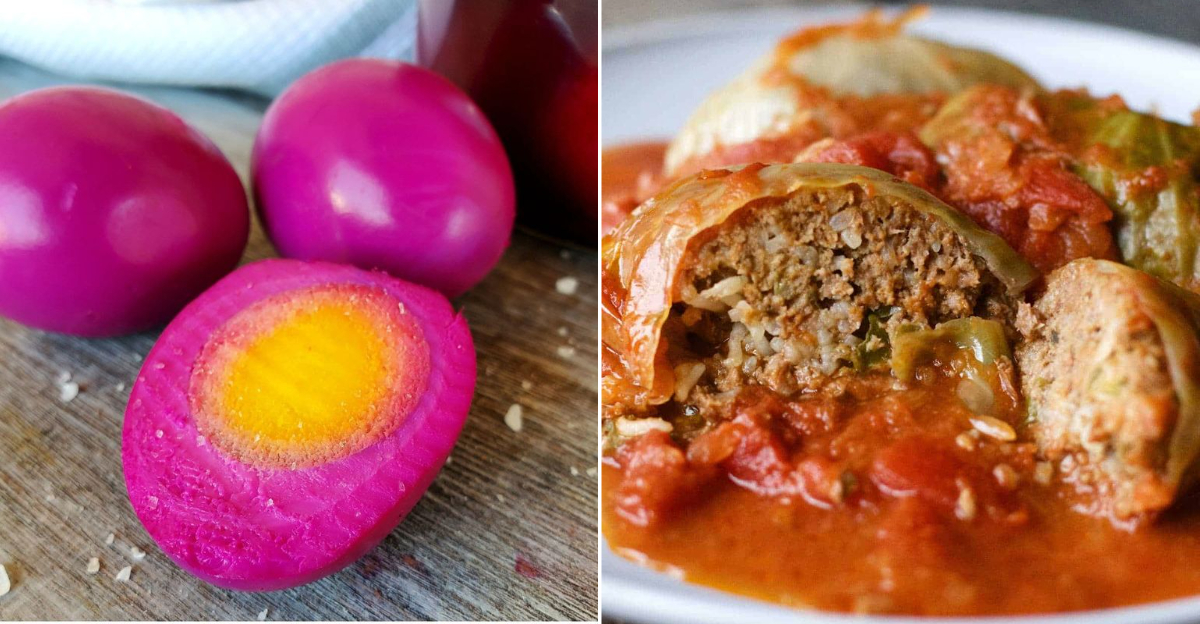
Hard-boiled eggs soaking in beet juice might sound like a science experiment gone wrong, but they’re a Pennsylvania Dutch delicacy.
The eggs turn a shocking magenta color and develop a sweet-tangy flavor from the pickling liquid. You’ll find them sitting in big jars at gas stations, diners, and church picnics across the state.
The bright purple hue freaks out newcomers who can’t imagine eating something so unnaturally colored.
They’re traditionally served alongside pretzels and beer, creating a salty-sweet-tangy combo that locals crave.
5. Pennsylvania Dutch Chicken Pot Pie
Forget everything you know about pot pie. There’s no crust, no baking dish, and definitely no flaky pastry involved here.
Pennsylvania Dutch pot pie is actually a hearty stew loaded with big, thick, square noodles that look like edible tiles floating in rich chicken broth.
The noodles are homemade, dense, and incredibly filling, soaking up all that savory goodness.
Tourists ordering this expecting a golden-topped pie get bewildered when a bowl of soupy noodles arrives. It’s comfort food at its finest, just not what the name suggests.
6. Haluski
Pronounce it “huh-LUSH-key,” and prepare for buttery, carb-loaded heaven. This Polish-influenced dish combines egg noodles with loads of fried cabbage and onions, all swimming in butter.
It’s peasant food elevated to comfort food royalty, simple but insanely satisfying. The cabbage gets sweet and caramelized while the noodles soak up every bit of that golden butter.
Outsiders often confuse it with halupki or think it’s just boring cabbage and pasta. One bite proves them wrong every time, though the pronunciation still trips people up.
7. Halupki
Say “huh-LOOP-key,” not “huh-LUP-key,” and you’re talking about stuffed cabbage rolls. Ground meat and rice get wrapped in tender cabbage leaves, then smothered in tomato sauce and baked until everything melds together beautifully.
They’re labor-intensive to make, so grandmothers across Pennsylvania guard their recipes fiercely. The cabbage becomes melt-in-your-mouth soft while the filling stays hearty and flavorful.
People constantly mix up haluski and halupki, even though one’s noodles and one’s cabbage rolls. Both are delicious Polish-Pennsylvania staples worth learning to pronounce.
8. City Chicken
Plot twist: there’s zero chicken involved. City chicken is actually cubes of pork or veal threaded onto wooden skewers, breaded, and fried until crispy and golden.
The name comes from Depression-era Pittsburgh and Youngstown, where real chicken was expensive, so folks used cheaper meats shaped on sticks to mimic drumsticks. It’s basically meat-on-a-stick masquerading as poultry.
Visitors ordering this expecting actual chicken get bamboozled when pork arrives. The confusion is real, but the crispy, savory result makes converts out of skeptics every time.
9. Chipped Chopped Ham
Western Pennsylvania’s obsession with this ultra-thin-sliced processed ham baffles everyone else.
It’s shaved so thin you can practically see through it, then piled high on sandwiches with cheese and barbecue sauce.
Isaly’s made it famous, and Pittsburghers still swear by it for parties and game day. The texture is delicate and almost melts on your tongue, nothing like thick-cut deli ham.
Outsiders wonder why anyone would choose mystery meat over quality deli cuts. Locals know the truth: there’s no substitute for that nostalgic, paper-thin goodness.
10. Gobs
Gobs are what the rest of America calls whoopie pies, but Pennsylvanians will fight you on the name. Two soft, cake-like chocolate cookies sandwich a mountain of sweet cream filling in the middle.
They’re messy, indulgent, and absolutely irresistible at church bake sales and local bakeries. The cookies stay soft and tender, never crunchy, creating the perfect texture contrast with the fluffy filling.
People from other states insist on calling them whoopie pies, sparking endless debates. Whatever you call them, these handheld treats define Pennsylvania dessert culture.