
13 Pennsylvania Historic Sites Every American Should Visit On The Fourth Of July
The Fourth of July hits differently when you spend it somewhere that helped write the country’s story.
Pennsylvania has historic sites that make the holiday feel less like a date on the calendar and more like something you can stand inside.
These places bring meaning to the fireworks, the flags, and the long weekend energy without turning the day into a history lecture.
They remind visitors that independence was not an abstract idea; it happened in real rooms, on real streets, and through choices that still echo today.
A holiday visit can be fun, reflective, and surprisingly moving all at once.
My favorite patriotic trips are the ones that make me pause between photos, because that is when history stops feeling distant and starts feeling personal.
1. Independence Hall, Philadelphia, Pennsylvania
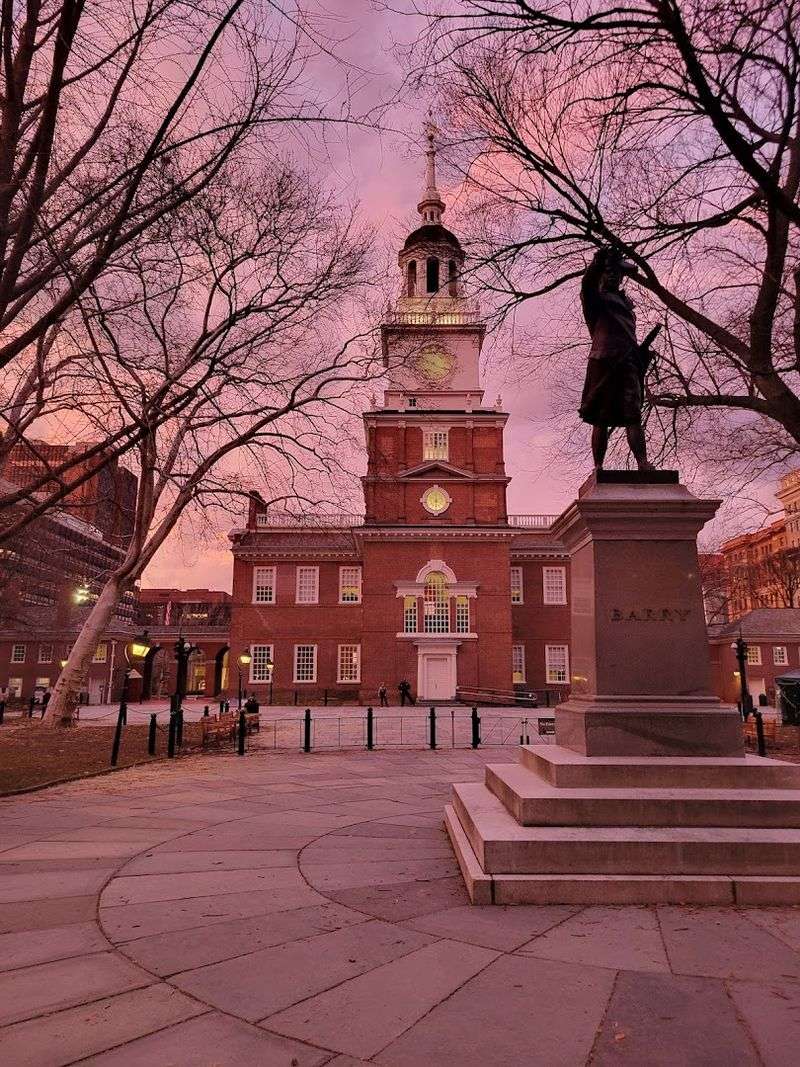
Few places on earth carry the weight of history quite like Independence Hall in Philadelphia, Pennsylvania.
This is the room where the Declaration of Independence was debated, adopted, and signed in 1776, making it ground zero for American freedom.
On the Fourth of July, Independence Hall transforms into something truly electric.
Rangers lead special tours, patriotic programs fill the schedule, and the air practically buzzes with the kind of pride that reminds you why this day matters so much.
The building itself is a marvel of colonial architecture, and stepping inside the Assembly Room feels like pressing rewind on history.
The wooden chairs, the long tables, the famous inkstand used during the signing — every detail has been carefully preserved.
Visiting Independence Hall on July 4th means joining millions of Americans who have stood in this exact spot and felt the same rush of gratitude.
It is an experience that genuinely puts the “independence” back in Independence Day.
2. Liberty Bell Center, Philadelphia, Pennsylvania
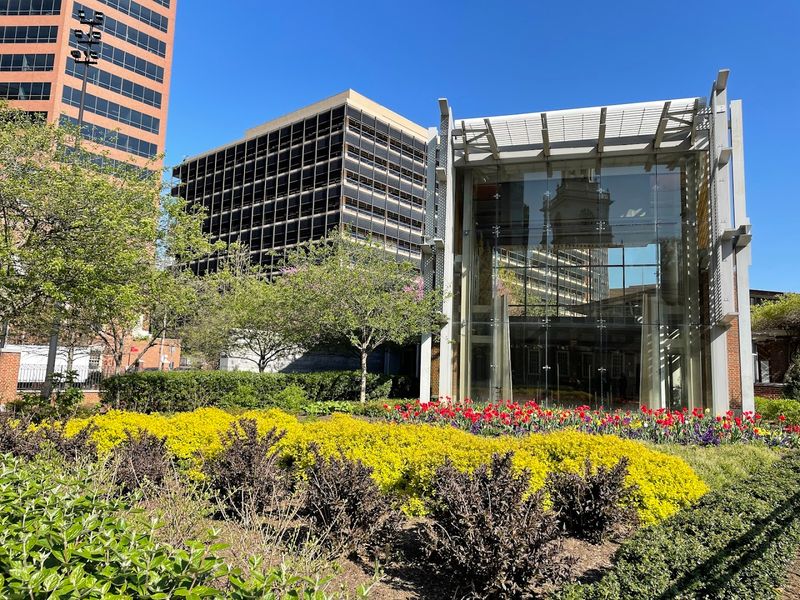
Cracked, iconic, and absolutely unforgettable, the Liberty Bell is one of the most recognizable symbols of American freedom in the entire world.
Housed inside the Liberty Bell Center in Philadelphia, Pennsylvania, this 2,080-pound bronze bell has been inspiring visitors for generations.
Most people are surprised to learn that the bell cracked not once but multiple times throughout its history, with the most famous crack appearing sometime in the early 19th century.
That imperfection, oddly enough, makes it even more powerful as a symbol of a nation always working to live up to its ideals.
The Liberty Bell Center itself is free to enter, which feels perfectly appropriate for a monument dedicated to freedom.
Interactive exhibits walk visitors through the bell’s history, from its origins in London to its role in the abolitionist movement.
On the Fourth of July, the Liberty Bell Center draws massive crowds, so arriving early is strongly recommended. The experience of seeing it up close is genuinely worth every minute of the wait.
3. Valley Forge National Historical Park, King of Prussia, Pennsylvania
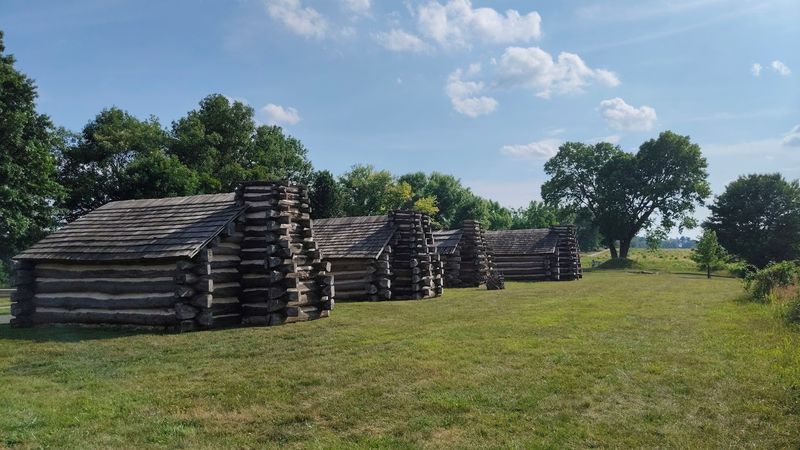
Courage has a home address, and it is Valley Forge National Historical Park in King of Prussia, Pennsylvania.
This is where General George Washington and roughly 12,000 Continental Army soldiers endured one of the most brutal winters of the Revolutionary War from 1777 to 1778.
The park spans over 3,500 acres and includes reconstructed log huts, bronze monuments, and sweeping meadows that stretch as far as the eye can see.
Driving or biking the park’s scenic tour road is one of the best ways to take it all in at your own pace.
Valley Forge offers a surprisingly moving Fourth of July experience, with ranger-led programs and living history demonstrations that bring the Revolutionary War period to life.
Musket demonstrations and seeing the currently closed original Washington’s Headquarters make the sacrifices of that era feel very real.
The park’s open green spaces also make it a fantastic spot for a patriotic picnic between historical stops. Valley Forge proves that history and the great outdoors make a perfect team.
4. Gettysburg National Military Park, Gettysburg, Pennsylvania
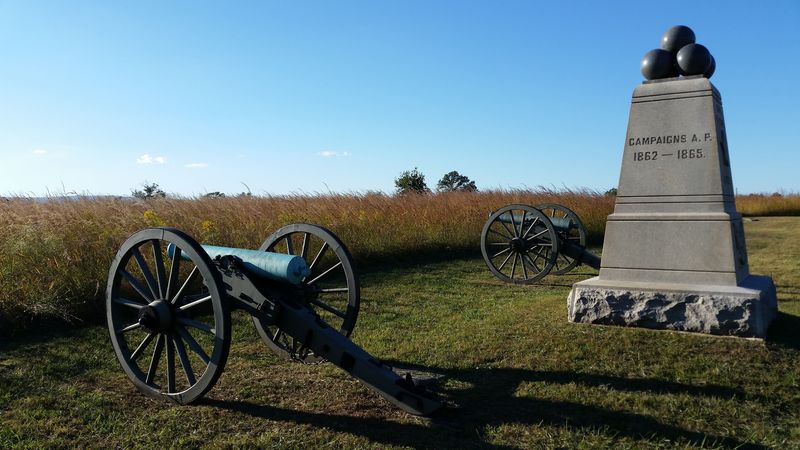
There are 1,328 monuments, markers, and memorials spread across Gettysburg National Military Park in Gettysburg, Pennsylvania, and every single one of them tells a story worth hearing.
This is the site of the Battle of Gettysburg, fought in July 1863, which many historians consider the turning point of the Civil War.
Visiting Gettysburg on the Fourth of July carries a particular kind of weight, since the Confederate retreat began on July 4th of that year.
The timing makes the holiday feel layered with meaning in a way that few other historic sites can match.
The park’s visitor center and museum is a world-class experience, featuring the restored Gettysburg Cyclorama, a massive 360-degree painting of Pickett’s Charge that genuinely takes your breath away.
Guided battlefield tours by licensed guides offer even deeper context and storytelling. Gettysburg National Military Park spans 6,000 acres, so comfortable walking shoes are a must.
The landscape itself, rolling and peaceful today, helps visitors understand the enormous scale of what happened here.
5. National Constitution Center, Philadelphia, Pennsylvania
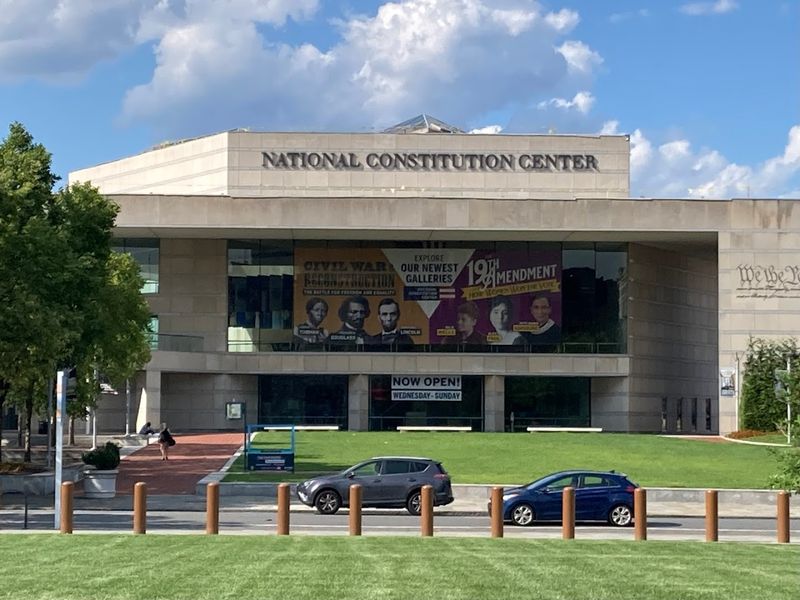
The U.S. Constitution is arguably the most influential document in the history of modern democracy, and the National Constitution Center in Philadelphia, Pennsylvania, is the only museum in the country dedicated entirely to it.
That alone makes it worth a visit on the Fourth of July.
Inside, the center’s signature experience is “Freedom Rising,” a theatrical presentation that uses a 360-degree stage and a live actor to tell the full arc of American constitutional history.
It is part history lesson, part performance, and completely captivating for visitors of all ages.
The Signers’ Hall is another highlight, featuring life-size bronze statues of all 42 delegates present for the signing.
Visitors can walk among them, which creates a surprisingly intimate connection to that historic moment in 1787.
The National Constitution Center also hosts special Fourth of July programming, including free admission, patriotic performances, family activities, and historical reenactors.
Located on Independence Mall, it pairs perfectly with a visit to Independence Hall just steps away, making for a full and richly rewarding day of American history.
6. Museum Of The American Revolution, Philadelphia, Pennsylvania
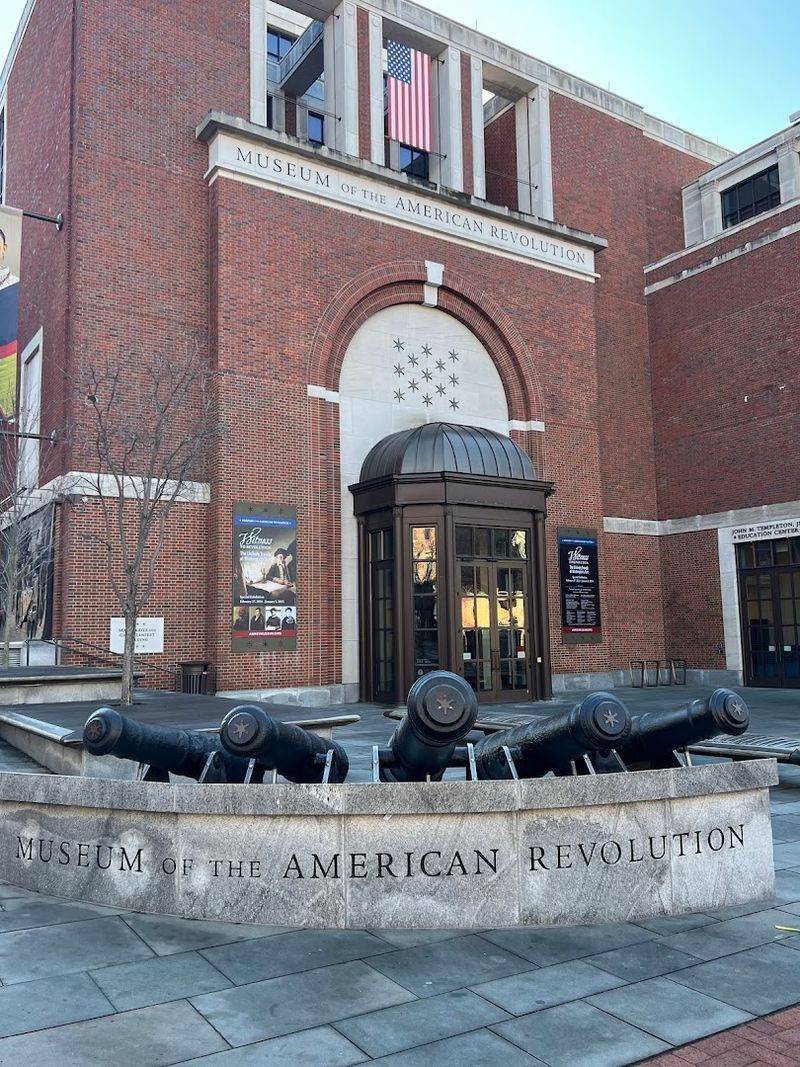
Opened in 2017, the Museum of the American Revolution in Philadelphia, Pennsylvania, is one of the newest and most impressive history museums in the country.
Do not let its modern exterior fool you; inside, it holds some of the most remarkable Revolutionary War artifacts ever assembled in one place.
The museum’s crown jewel is George Washington’s original campaign tent, which served as his sleeping quarters and command center throughout the war.
Seeing it displayed under careful lighting inside a dramatic theater-style presentation is one of those moments that genuinely stops you in your tracks.
Galleries cover the full sweep of the Revolution, from its political causes to the personal stories of soldiers, enslaved people, Indigenous communities, and loyalists who all experienced the war in very different ways.
The storytelling is nuanced, honest, and deeply engaging. On the Fourth of July, the Museum of the American Revolution typically hosts special events and extended hours.
Its location in the heart of Philadelphia’s historic district means it fits easily into a full day of patriotic exploration across the city.
7. Washington Crossing Historic Park, Washington Crossing, Pennsylvania
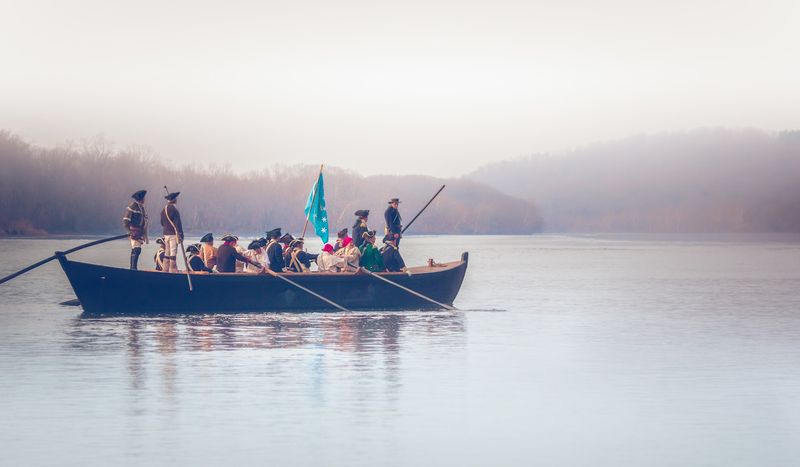
On Christmas night in 1776, George Washington led 2,400 soldiers across the icy Delaware River in a daring overnight crossing that changed the course of the Revolutionary War.
Washington Crossing Historic Park in Washington Crossing, Pennsylvania, preserves the exact spot where that legendary moment unfolded.
The park is spread across two sections connected by a scenic road along the Delaware River.
The McConkey’s Ferry section, where the crossing launched, includes historic buildings, interpretive exhibits, and a replica of the Durham boats used that fateful night.
Every Fourth of July, the park hosts one of its most beloved annual events, complete with patriotic ceremonies, musket demonstrations, and living history programs that bring 18th-century military life into sharp focus.
The setting along the riverbank is naturally beautiful and deeply atmospheric.
Washington Crossing Historic Park is a fantastic choice for families, since kids tend to respond strongly to the dramatic story of the crossing.
The park’s quiet, wooded paths and riverside scenery make it feel like a world apart from the busier Philadelphia sites just a short drive away.
8. Fort Necessity National Battlefield, Farmington, Pennsylvania
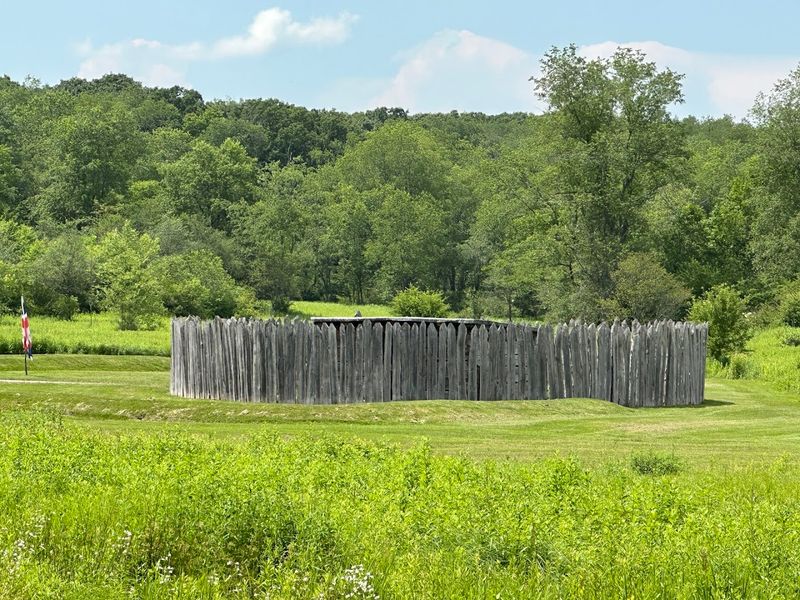
Long before the Declaration of Independence, a young Virginia militia officer named George Washington fought his very first military engagement at a site that would become Fort Necessity National Battlefield in Farmington, Pennsylvania.
The year was 1754, and that skirmish helped ignite the French and Indian War.
The reconstructed fort is a small but striking circular wooden stockade sitting in the middle of a broad, open meadow.
Its simplicity is part of what makes it so compelling; this was a hastily built defensive position, and the landscape still feels raw and exposed in the best possible way.
Fort Necessity National Battlefield sits along the historic National Road in the Laurel Highlands of southwestern Pennsylvania, making it a scenic drive from Pittsburgh or other regional cities.
The visitor center does an excellent job of placing the battle in the larger context of colonial North America.
On the Fourth of July, reflecting on Washington’s early military stumbles here adds a fascinating dimension to his later triumphs. Fort Necessity is a reminder that even the greatest leaders start somewhere.
9. Eisenhower National Historic Site, Gettysburg, Pennsylvania
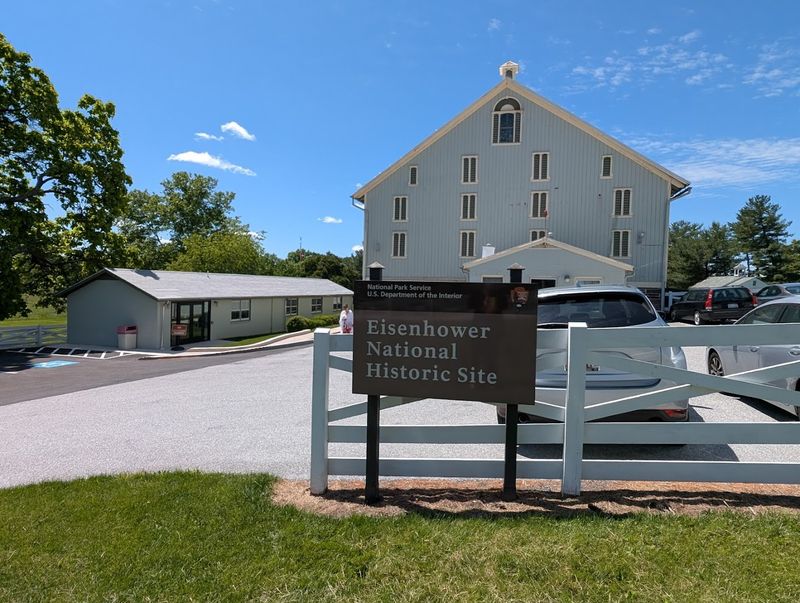
Right next door to the famous Civil War battlefield sits one of Pennsylvania’s most underrated historic treasures.
Eisenhower National Historic Site in Gettysburg, Pennsylvania, was the beloved farm and retirement home of President Dwight D. Eisenhower and his wife Mamie.
Eisenhower, who served as Supreme Allied Commander in World War II before becoming the 34th President of the United States, chose Gettysburg as his permanent home, making it the only home he and Mamie ever owned together.
The farm has been preserved almost exactly as it appeared during his lifetime, right down to the furniture and personal belongings inside.
Visitors can now reach the site by driving directly, with limited onsite parking instead of mandatory shuttle access, which makes the trip much simpler than before.
Guided tours of the farmhouse offer intimate glimpses into Eisenhower’s private life, hobbies, and the world leaders who visited him here.
Pairing Eisenhower National Historic Site with the Gettysburg battlefield on the Fourth of July creates a remarkable journey through two of America’s most defining chapters, the Civil War and the 20th century’s global conflicts.
10. Flight 93 National Memorial, Stoystown, Pennsylvania
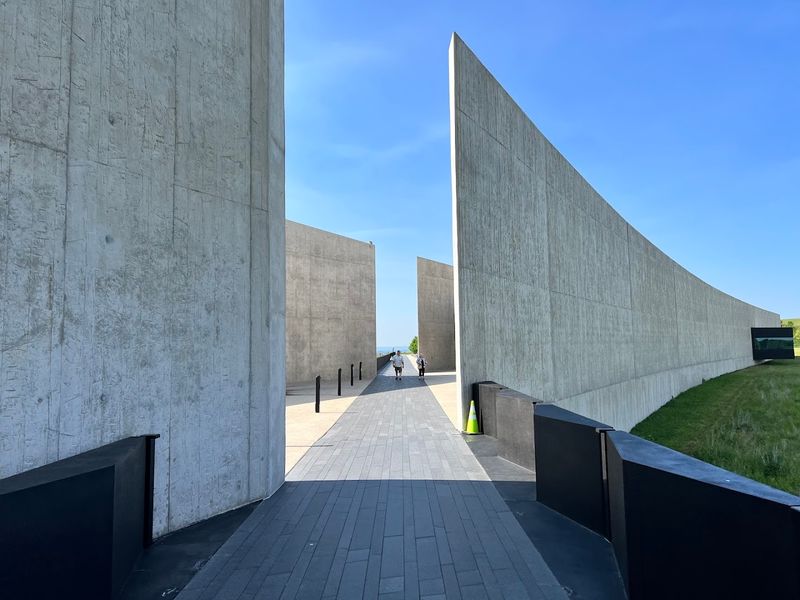
Some places demand silence, and the Flight 93 National Memorial in Stoystown, Pennsylvania, is one of them.
This is the field where, on September 11, 2001, 40 passengers and crew members of United Airlines Flight 93 fought back against hijackers and prevented the plane from reaching its intended target in Washington, D.C.
The memorial is a masterpiece of thoughtful design. A long, sweeping pathway leads visitors toward the Wall of Names, where each of the 40 heroes is honored with an individual marble panel.
The crash site itself is visible from the overlook, marked only by a large boulder placed at the point of impact.
The visitor center tells the story of that morning through personal accounts, recovered artifacts, and the final phone calls passengers made to their families.
It is a deeply emotional experience that is handled with extraordinary care and dignity.
Visiting the Flight 93 National Memorial on the Fourth of July reframes the meaning of American courage in a profound and contemporary way.
This is not ancient history; it is a living reminder of what ordinary people are capable of in extraordinary moments.
11. Pennsylvania State Capitol, Harrisburg, Pennsylvania
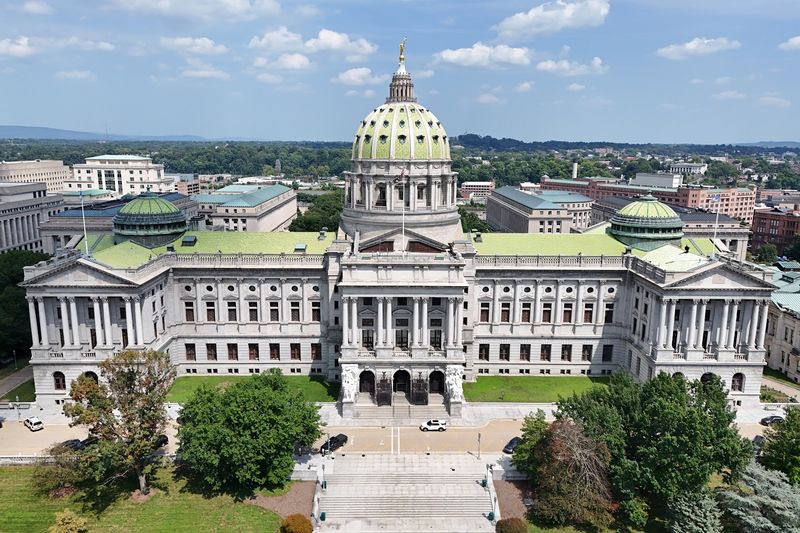
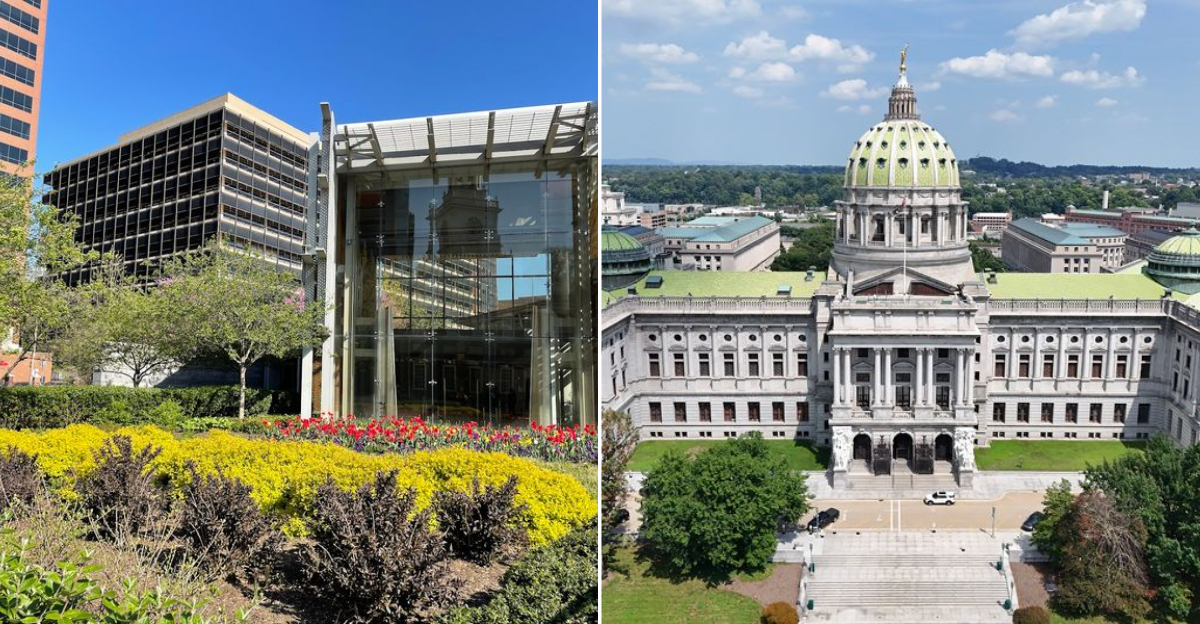
President Theodore Roosevelt called it “the handsomest building I ever saw” when it was dedicated in 1906, and honestly, that compliment still holds up.
The Pennsylvania State Capitol in Harrisburg, Pennsylvania, is a stunning Beaux-Arts masterpiece topped by a massive green dome modeled after St. Peter’s Basilica in Rome.
Free guided tours of the Capitol are available throughout the year and cover the building’s extraordinary interior, including hand-painted murals by artist Edwin Austin Abbey, intricate mosaic tile floors, and a grand staircase that feels lifted straight from a gilded age fantasy.
Every surface seems to tell a story about Pennsylvania’s history and values.
On the Fourth of July, Harrisburg typically celebrates with outdoor festivities at nearby Riverfront Park, including live music, food vendors, and fireworks over the Susquehanna River just blocks away.
The combination of architectural splendor and community celebration makes for an especially festive holiday stop.
The Pennsylvania State Capitol is a strong reminder that democracy is not just an idea; it is a living institution housed in buildings built to inspire awe and civic pride.
12. Brandywine Battlefield Park, Chadds Ford, Pennsylvania
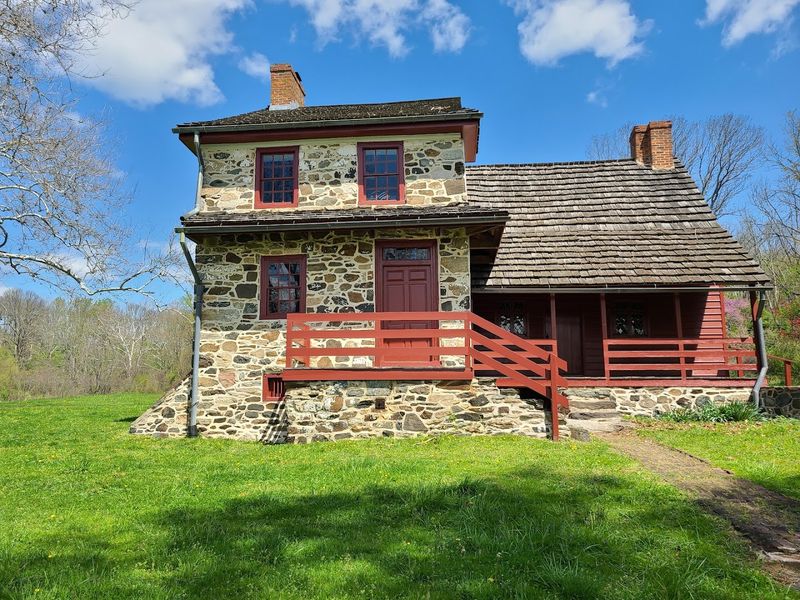
The Battle of Brandywine, fought on September 11, 1777, was the largest single-day battle of the entire Revolutionary War, involving nearly 30,000 soldiers.
Brandywine Battlefield Park in Chadds Ford, Pennsylvania, preserves a portion of that dramatic landscape in the rolling hills of Chester County.
The park includes two historic houses associated with headquarters during the battle, one used by General Washington and one tied to the Marquis de Lafayette, the young French general who was wounded here during his very first American battle.
Current tours focus on available buildings while construction limits access to others on the site.
Brandywine Battlefield Park is surrounded by the broader Brandywine Valley, a region rich with art museums, gardens, and scenic countryside.
Visiting on the Fourth of July can still feel meaningful, though visitors should check the current schedule before expecting interpretive programs or special demonstrations.
The park’s open fields and gentle landscape make it easy to spend a full morning exploring at a relaxed pace.
Brandywine Battlefield Park rewards visitors who slow down and really listen to the stories embedded in the land.
13. Hopewell Furnace National Historic Site, Elverson, Pennsylvania
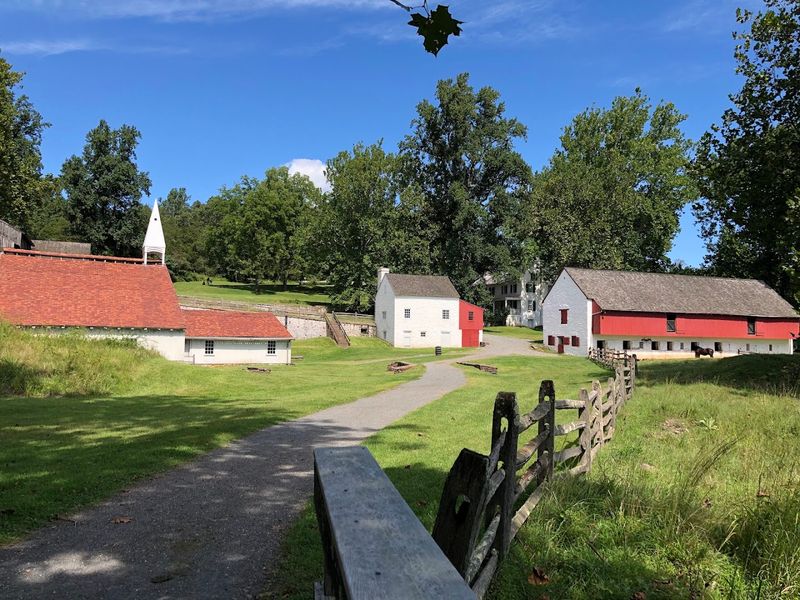
Before America could fight for its independence, it needed iron; a lot of it.
Hopewell Furnace National Historic Site in Elverson, Pennsylvania, tells the story of an 18th and 19th-century iron plantation that helped supply the raw materials that made the young nation’s industrial ambitions possible.
The site preserves a remarkably complete iron-making community, including the cold blast iron furnace, the ironmaster’s mansion, workers’ cottages, a barn, and a company store.
Walking through Hopewell Furnace feels like stepping into a fully functioning historic village rather than a single monument.
Hopewell Furnace was active from 1771 to 1883, spanning the Revolutionary War, the early republic, and the industrial era.
During the Revolution, it produced stove plates, kettles, and other iron goods that supported the Continental Army’s supply chain in very practical ways.
On the Fourth of July, the site’s living history demonstrations, which include costumed interpreters and craft activities, add a wonderfully tactile layer to the visit.
Hopewell Furnace National Historic Site is a quietly brilliant stop for anyone who wants to understand how the American economy and the American Revolution were deeply intertwined.