
14 Pennsylvania Historic Towns That Make You Feel Like You Stepped Into Another Era
Pennsylvania shows its age in ways you can run your hand across.
I’ve wandered brick streets polished smooth by a century of footsteps, crossed stone bridges that hold the day’s weight without complaint, and ducked into rooms where the past feels less like a story and more like a held breath.
Some afternoons carry a faint coal-smoke memory near old depots.
Some evenings glow with lanternlight behind tavern glass.
And at dusk, certain fields fall silent in a way that asks you not to speak over it.
This trip is about slowing down enough to notice those textures, the kind you don’t scroll past.
If you like history that still feels warm from use and stories that leave a little dust on your shoes, you’re in the right place.
1. Jim Thorpe
Bright facades rise along the Lehigh Gorge in colors that look freshly rinsed after rain.
The town, once called Mauch Chunk, keeps its Victorian streetscape intact with steep roofs and ornamental trim that climb the hillside naturally.
The Asa Packer Mansion sits above Broadway like a patient overseer of the valley.
The Switchback Trail rattles with bikes passing through layers of old rail history.
The station clock sets its own rhythm even when visitors crowd the platform.
Early arrival makes parking easier and lets you walk the upper streets before the day fills out.
Side lanes hold quieter corners where river air mixes with the sound of shoes on brick.
2. Gettysburg

Mist settles low over the fields in a way that softens the sharpness of the past for just a moment.
Brick storefronts and porches seem unchanged from the nineteenth century, holding echoes from the 1863 battle.
The Soldiers National Cemetery and the Cyclorama display the history with a scale that slows even hurried visitors.
Shops sell hardtack replicas next to modern pastries as if to show how eras can overlap politely.
Guides build entire strategies from simple street corners, making familiar names feel newly complicated.
The auto tour works best early or late when buses thin out and the fields feel wide again.
Licensed battlefield guides help the terrain align with the narratives in a surprisingly immediate way.
3. Lititz

The smell of warm pretzels drifts down the street before the bakery sign comes into view.
Lititz began as a Moravian settlement, and the limestone buildings still follow the careful order of that early design.
Lititz Springs Park carries cool water past footbridges that break the light into uneven ripples.
Local makers favor small-scale craft over spectacle, keeping storefronts modest and warm.
Wilbur Chocolate and small workshops show pride in slower production.
Weekday mornings offer the gentlest pace and easiest parking along the square.
The park’s trout move calmly under the surface, giving the center of town a steady quiet.
4. New Hope
River light glints off the Delaware in a way that catches your eye before you realize how many painters lived here.
New Hope grew from mills and canal trade into a town where theater programs and gallery postcards feel like currency.
The Bucks County Playhouse anchors that artistic thread, and the towpath gives the whole place a leafy rhythm.
Live music spills from porches on weekend evenings.
The bridge to Lambertville makes an easy walk between two different moods and two different states.
Crowds swell fast on Saturdays, making satellite lots along West Bridge Street the smarter choice.
Walking in along the canal keeps the approach soft and lets the river set the pace.
5. Bedford
Stone facades and a courthouse square give Bedford a deliberate sense of shape.
The town carries traces of the French and Indian War through Fort Bedford and stagecoach routes that once crossed its grid.
Bedford Springs Resort adds layers of nineteenth century spa history and long afternoons built around mineral water.
Antique stores hum quietly with polished wood and glass.
The Fort Bedford Museum offers context that ties local events to larger movements in the region.
A loop across the covered bridges pairs well with a simple lunch on Pitt Street.
Evening light at the springs gives the landscape a calm that settles slowly.
6. Ligonier

The Diamond presents the town like a tidy centerpiece with storefronts forming a neat circle.
Fort Ligonier stands just beyond it, reconstructed with detail that makes each timber joint look intentional.
The festival season in fall brings music, crafts, and the warm chaos of Fort Ligonier Days.
Porch culture shapes how people greet each other across the circle.
The fort rampart offers a view that stretches across the ridges like an old defensive line.
Arriving early on festival weekends keeps the day manageable and slow.
The museum helps place the fort’s story before you wander the circle again.
7. Bellefonte
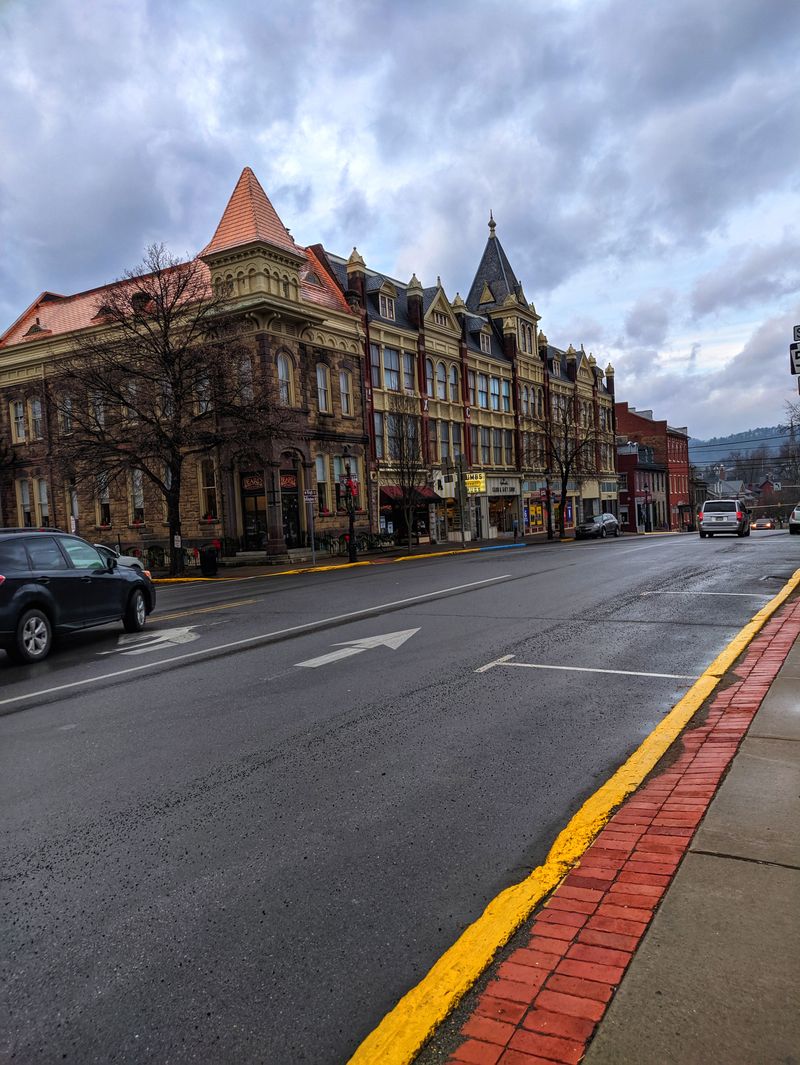
Spring Creek runs under iron bridges that look handmade rather than manufactured.
Bellefonte built its reputation on Victorian houses that sent several governors from this valley to the state capital.
The courthouse and waterfront park sit close enough together to frame a full walk in a single glance.
Fly anglers keep a slow presence along the bank.
Students from State College mix with locals in cafés and thrift shops.
Parking turns over quickly near Talleyrand Park, so the municipal lots by High Street often work best.
The creek path reveals the town’s facades with a softer angle and warmer light.
8. Lewisburg
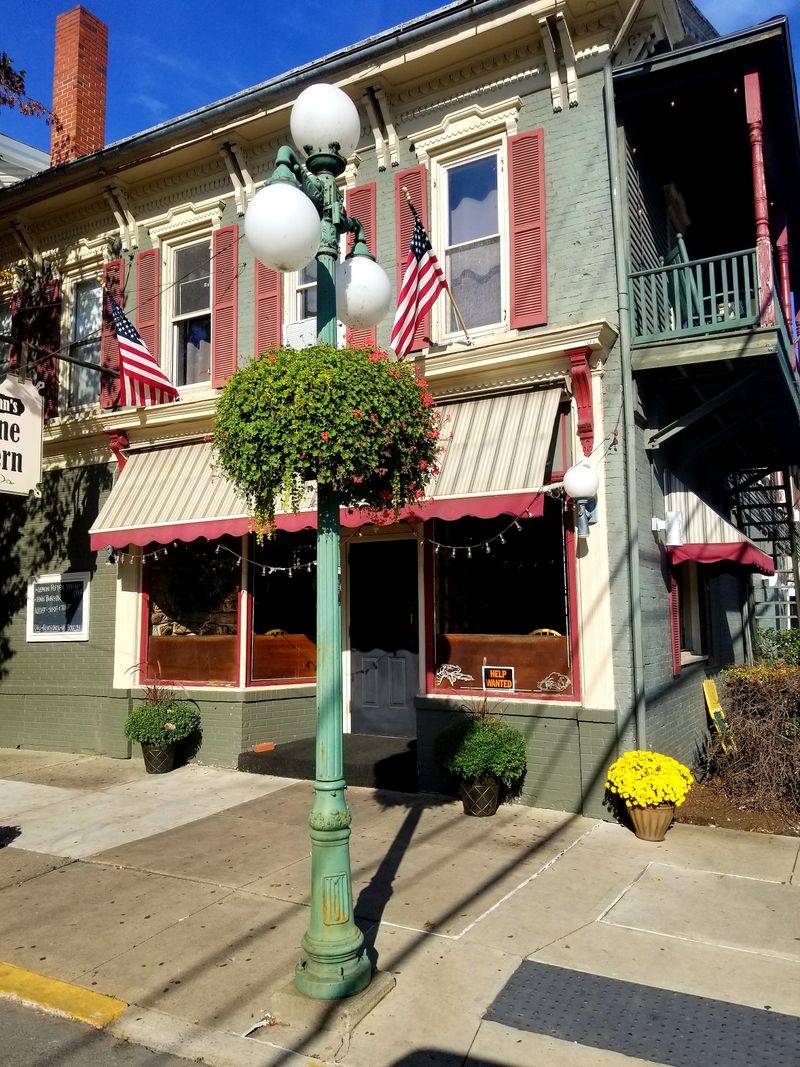
Brick sidewalks sound crisp underfoot as Market Street carries a calm blend of shops and university life.
Founded in 1785, the town balances Federal and Victorian structures while Bucknell University adds a quiet academic thread.
The Campus Theatre stands out as an Art Deco time capsule that glows softly on movie nights.
Stores lean toward books, bread, and bicycles in a way that suits a river town.
Packwood House Museum offers small domestic details that make the past feel intimate.
Parking signs near campus shift on weekdays, so attention helps.
The rail trail gives a gentle sunset route along the Susquehanna.
9. Wellsboro
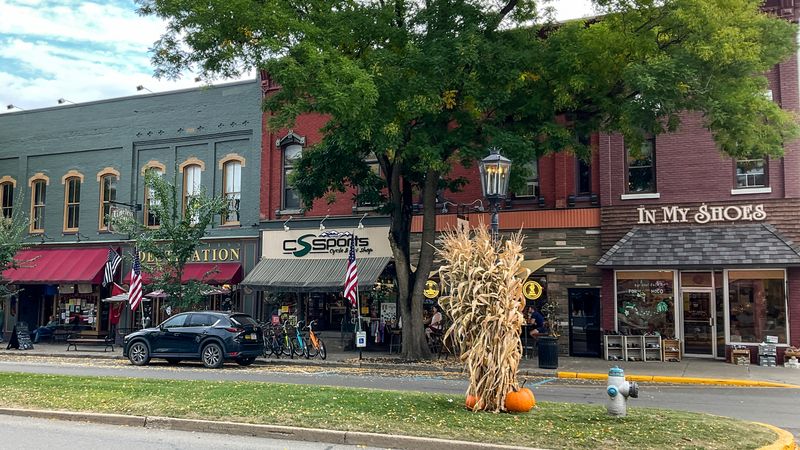
Gas lamps line the sidewalks with a steady glow that feels older than the storefronts themselves.
Wellsboro sits near Pine Creek Gorge, but the town holds its own with early twentieth century buildings and a dignified courthouse.
The Green hosts parades and everyday errands in the same quiet tone.
Canyon overlooks outside town offer long lessons in rock and time.
After dark, lamps reflect softly against the forest edge.
Checking trail conditions at Darling Run helps plan a safe gorge visit.
Pie in town afterward turns the evening into something settled and warm.
10. Milford
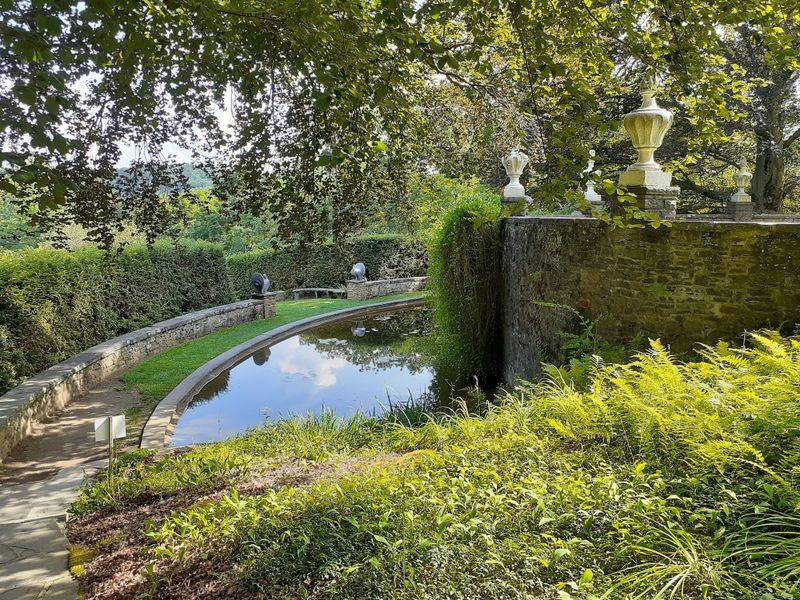
Hemlock shade cools the sidewalks and deepens the green of the gardens.
Milford’s 19th century grid holds Italianate and Second Empire styles with steady confidence.
Grey Towers National Historic Site rises above it like a storybook castle for conservation history.
Local galleries reflect the Delaware Highlands in soft colors and landscape studies.
Waterfall hikes nearby attract quiet travelers who trade trail notes over breakfast.
The short canal path behind town gives a peaceful break from Main Street.
Touring Grey Towers early avoids bus clusters and leaves time for Raymondskill Falls later.
11. Strasburg
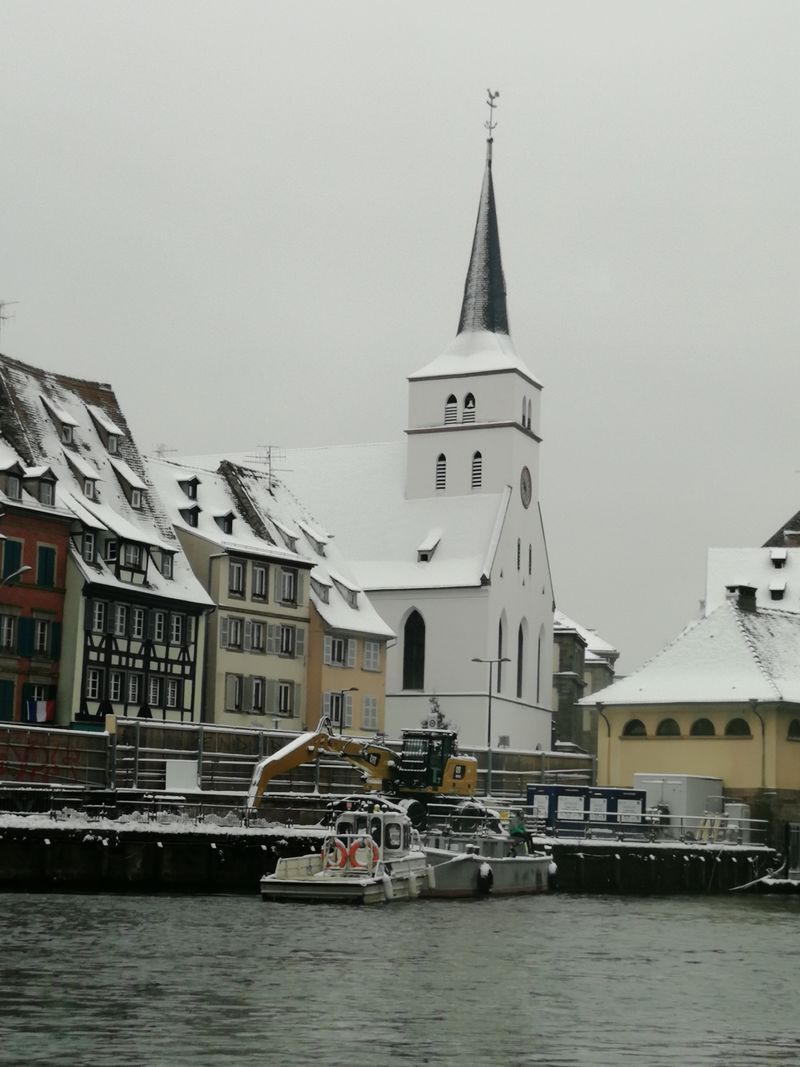
A distant whistle crosses open fields and signals the shift into rail country.
Strasburg Rail Road runs vintage trains past barns and cornfields in a rhythm that feels deliberately old.
The Railroad Museum of Pennsylvania holds locomotives arranged like an industrial timeline.
Limestone houses and plain storefronts reflect the wider landscape.
Riders wave with old-fashioned sincerity as the train passes.
Open air cars work best on clear days and require advance booking.
The museum’s turntable exhibit adds a satisfying mechanical finish.
12. Mercersburg

Church bells drift over the foothills and give Main Street a measured calm.
Mercersburg ties its identity to President James Buchanan’s youth and the academic presence of Mercersburg Academy.
Brick and stone buildings frame gardens and alleys with a sense of order.
The academy grounds feel collegiate and offer striking fall color.
Late afternoon light lengthens shadows in a way that suits the quiet downtown.
Checking event calendars helps avoid parking surprises near the academy.
Cowans Gap State Park adds a nearby option for water and trails.
13. Boiling Springs
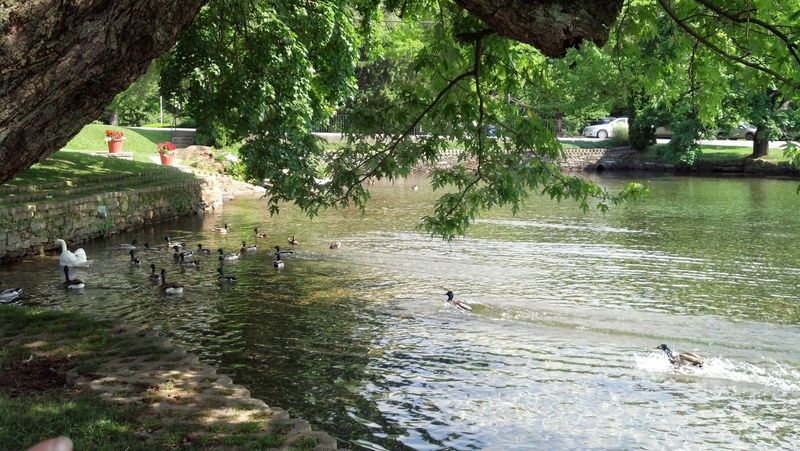
Clear water rises from the limestone springs with a bubbling steadiness that anchors the town.
Boiling Springs traces its roots to iron works and remains a favorite stop for hikers on the Appalachian Trail.
The Bubble, the town’s round lake, reflects porches and geese with postcard clarity.
Fly fishers move with unhurried patience.
Trail hikers drift in for pie with dusty shoes and relaxed shoulders.
Parking by the Appalachian Trail Conservancy office works when timing aligns.
A lap around the lake holds the best light when walked counterclockwise.
14. Ephrata
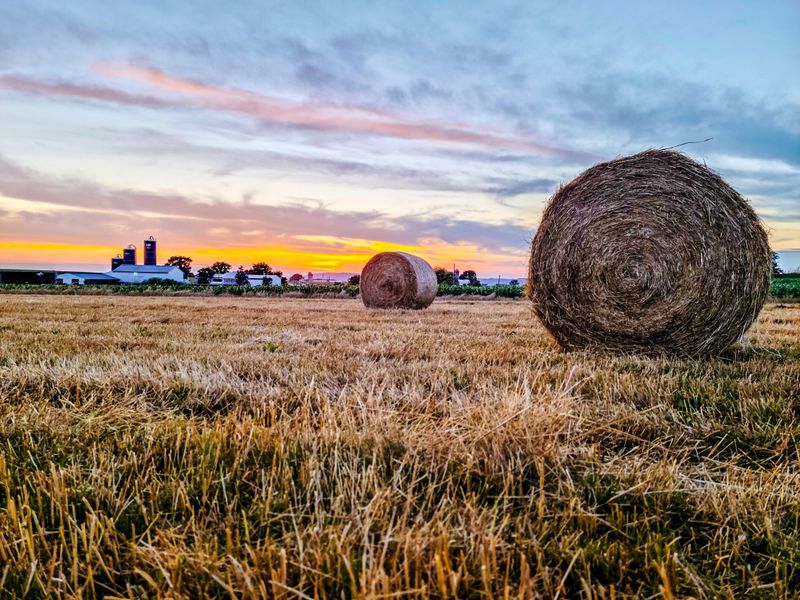
Before sunrise, the steep gables of the Cloister look shaped by secrecy and discipline.
Founded in the 1730s as a German Pietist community, Ephrata preserves narrow dormitories and plain meeting spaces with thoughtful care.
Fraktur manuscripts and early music give the complex a quiet atmosphere.
Modern life outside continues with diners, quilt shops, and small businesses.
The contrast between Cloister stillness and town movement feels reflective rather than abrupt.
Booking a guided tour unlocks stories that architecture alone cannot tell.
Shoofly pie afterward brings you back to the present in a soft and familiar way.