
Pennsylvania Is Home To A Grand Garden With 10,000 Plant Species And A Fascinating Historic Legacy
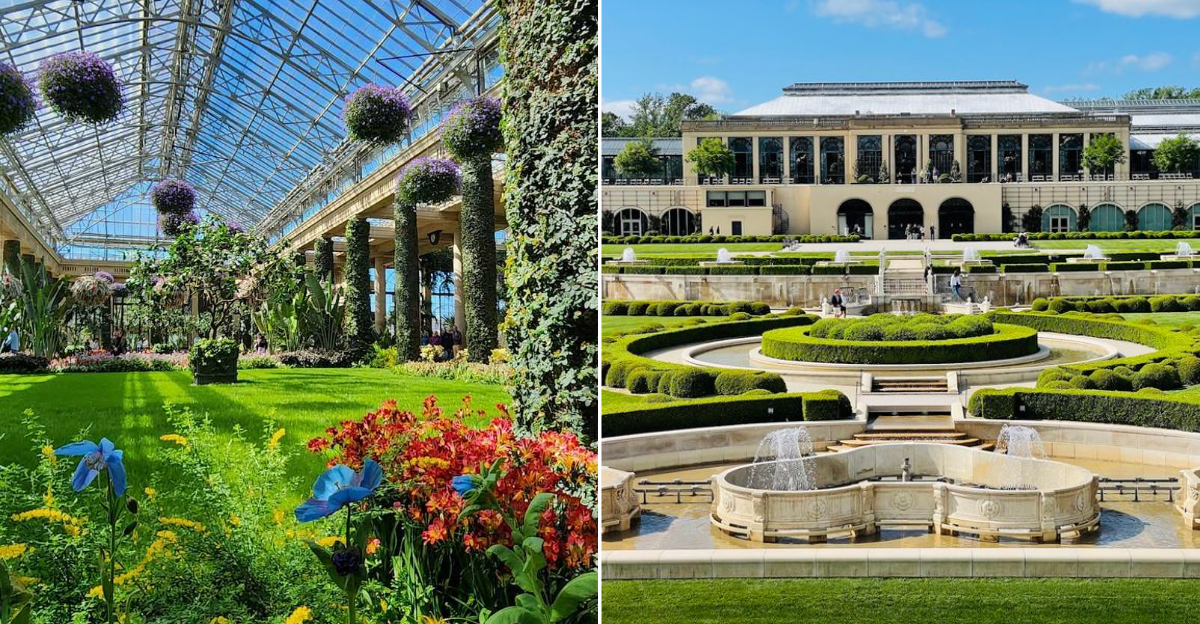
Some places feel like stepping into a living painting. Pathways wind past vibrant flower beds, towering trees cast gentle shade across quiet lawns, and fountains sparkle as sunlight dances across the water.
Every turn reveals another burst of color or a perfectly arranged garden scene that feels carefully designed to inspire a sense of wonder.
It is botanical beauty, peaceful strolling, and the kind of destination where every season brings something new to admire.
Gardens like this help make Pennsylvania an unforgettable place for anyone who loves nature and history working side by side.
Vast collections of plants from around the world create landscapes that change throughout the year, offering visitors fresh colors, fragrances, and textures with each visit.
Walking through spaces like these can feel both relaxing and inspiring at the same time.
I sometimes imagine wandering along a quiet garden path with a camera in hand, stopping every few steps because another patch of flowers suddenly looks too beautiful not to capture.
A History Rooted In Centuries Of Land Stewardship
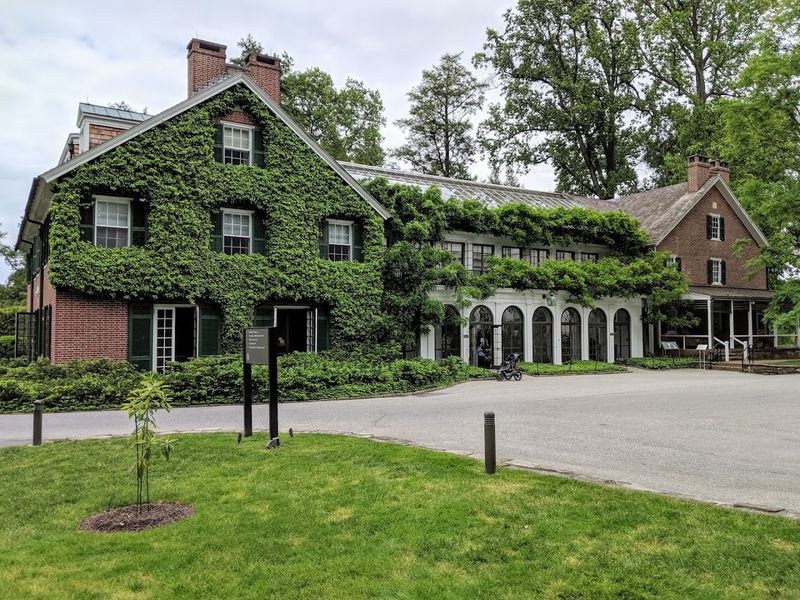
Long before the fountains and flower beds arrived, the land that Longwood Gardens now occupies had already lived many lives.
The Peirce family, Quaker settlers, began farming this land in 1700, and their legacy shaped everything that followed.
By the early 1800s, the Peirce brothers had planted one of the finest arboretums in the young United States, filling the property with rare trees from across the country and beyond.
The land changed hands several times before industrialist Pierre S. du Pont purchased it in 1906, reportedly to save the old trees from being cut down for lumber.
Du Pont transformed the estate into a world-class garden over the next several decades, pouring his engineering brilliance and personal fortune into every corner of the property.
His vision turned a beloved family farm into a living monument to horticulture that Pennsylvania, and the world, still celebrates today.
Pierre Du Pont’s Engineering Genius Behind The Fountains
Most people know Pierre S. du Pont as a business titan, but at Longwood Gardens he revealed a side of himself that surprised even his closest associates: a passionate, obsessive fountain designer.
After visiting the 1893 World’s Columbian Exposition in Chicago and the great gardens of Europe, du Pont became determined to build something that would outshine them all.
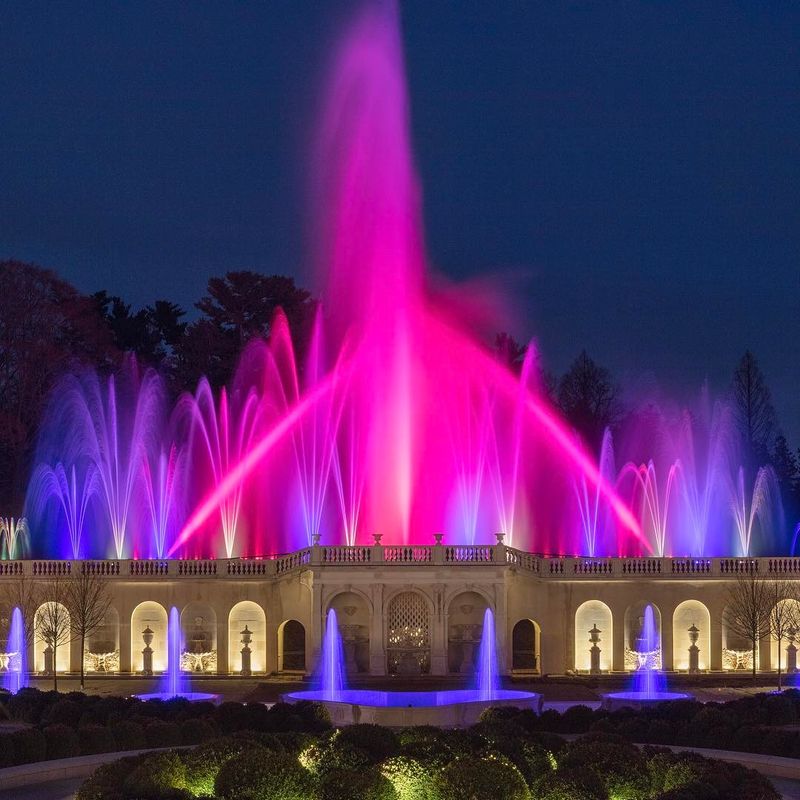
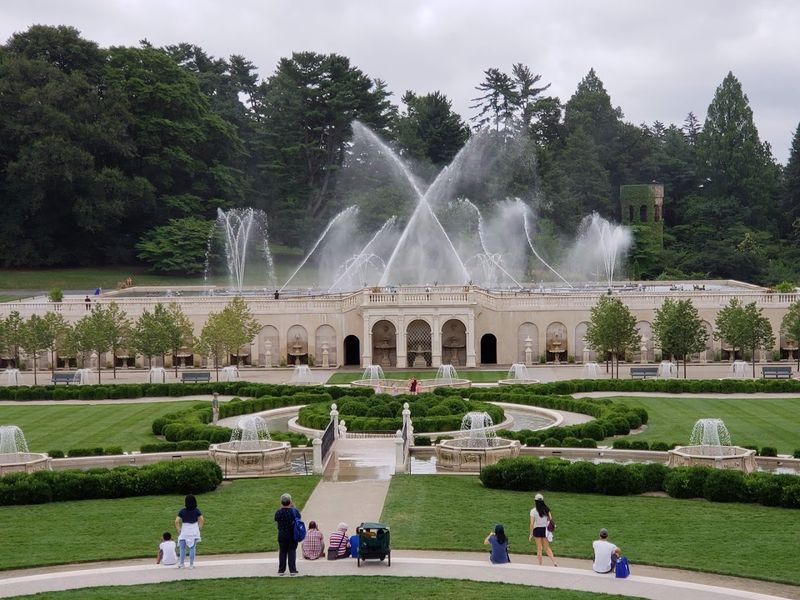
The Main Fountain Garden, completed in 1931 and later dramatically revitalized, features 1,719 jets capable of sending water soaring as high as 175 feet into the air.
The system reflects du Pont’s drive for precision and spectacle, refined over time with the same care he applied to his industrial ventures.
Today fountain performances run on select evenings in warmer seasons, drawing thousands of visitors who stand in open-mouthed amazement as water moves to music and lights transform the garden after dark.
It is one of those spectacles that simply cannot be overstated.
The Conservatory: A Glass Palace Bigger Than You Expect
Standing outside the Longwood Gardens conservatory for the first time, you might think you have a reasonable sense of how big it is. You would be wrong.
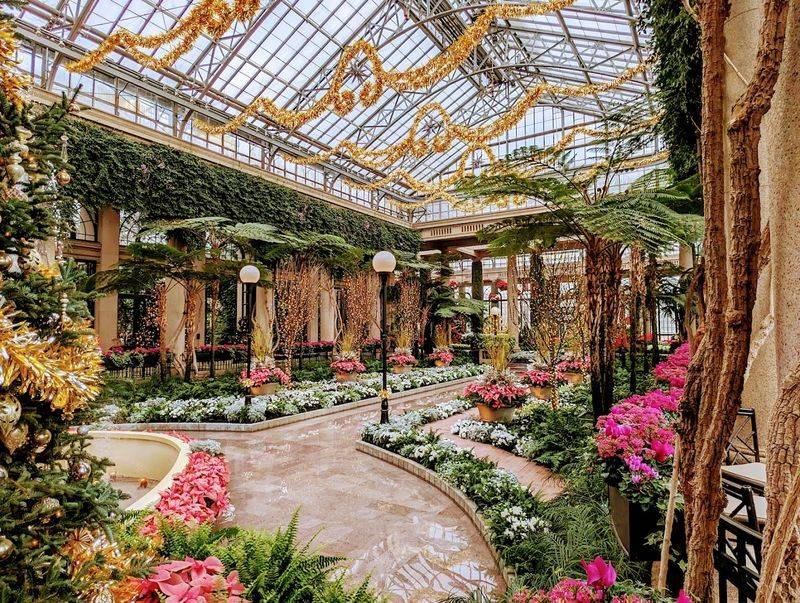
The structure covers four acres under glass, making it one of the largest conservatories in the United States, and stepping inside feels like walking into an entirely different climate zone.
Originally built in 1919 and dramatically expanded over the decades, the conservatory holds themed rooms that shift from Mediterranean landscapes to tropical rainforests to elegant rose gardens, all under one roof.
During winter months, when the outdoor grounds go quiet, the conservatory becomes the undisputed star of the show.
The Christmas season transformation is particularly jaw-dropping, with thousands of poinsettias in every color imaginable, decorated trees reaching toward the glass ceiling, and a pipe organ that fills the air with holiday music.
It is the kind of place that makes you forget how cold it is outside.
Over 10,000 Plant Species Calling This Place Home
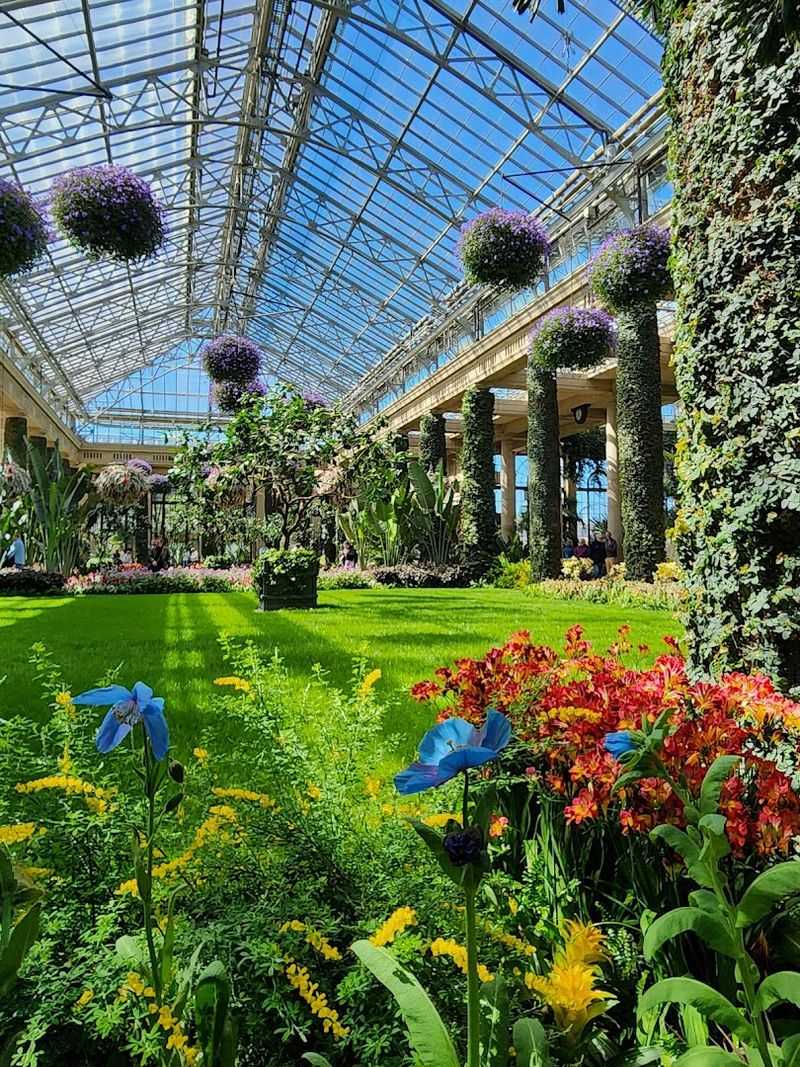
Ten thousand plant types is a number that is hard to wrap your head around until you actually start walking the grounds.
Longwood Gardens maintains one of the most diverse plant collections in North America, with more than 10,000 taxa, spanning everything from towering specimen trees planted by the Peirce family in the 1800s to rare orchids cultivated in climate-controlled greenhouses.
The orchid collection alone is extraordinary, with hundreds of varieties on display in a dedicated room that stops visitors in their tracks.
Beyond the showy bloomers, the garden also champions less glamorous but equally important plants, including ferns, mosses, carnivorous plants, and heritage vegetable varieties grown in the kitchen garden.
Horticulturalists and plant experts from around the world contribute to this living library, making Longwood not just a beautiful garden but a major center for plant care and conservation. Pennsylvania is genuinely lucky to have this treasure on its soil.
Seasonal Transformations That Keep Every Visit Fresh
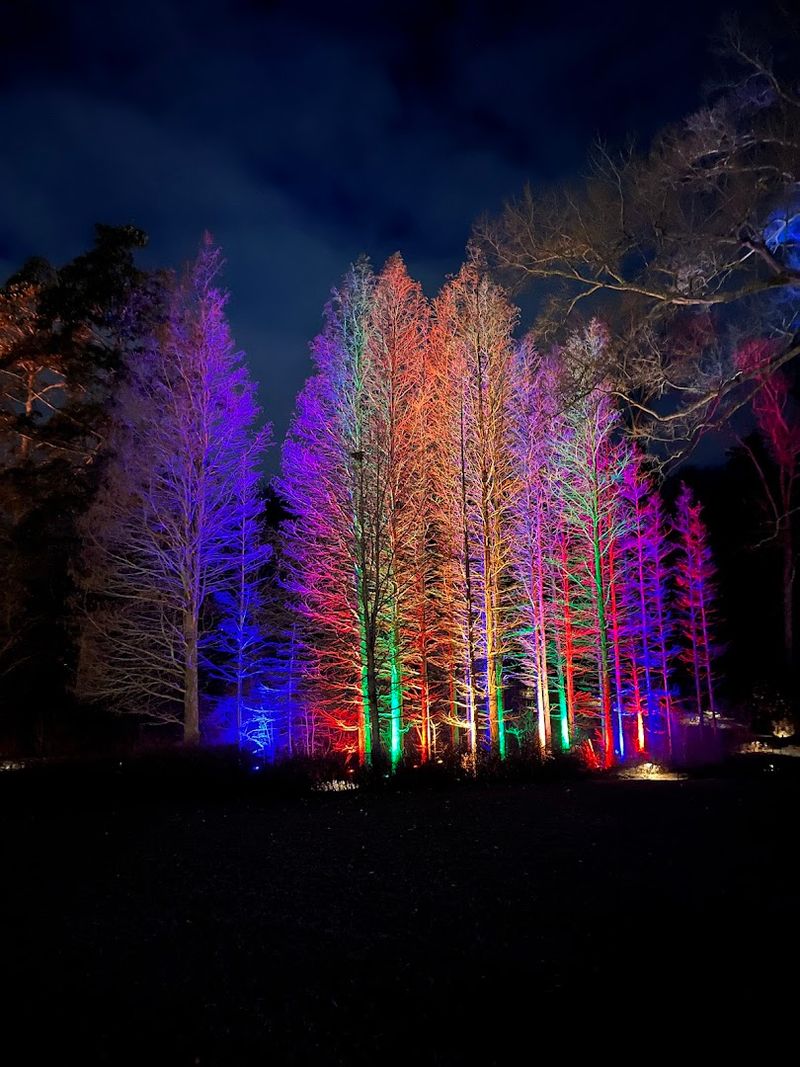
One of the most clever things about Longwood Gardens is that it refuses to be the same place twice.
The entire property reinvents itself with each passing season, giving regular visitors a genuine reason to come back again and again throughout the year.
Spring brings tulip festivals and wisteria in full bloom, while summer turns the outdoor meadows into a riot of color and the fountain gardens into an evening spectacle.
Autumn wraps the tree-lined paths in warm amber and orange tones that feel almost theatrical in their beauty.
Then winter arrives, and Longwood goes all in with its famous Christmas display, a tradition that has grown into one of the most beloved holiday experiences on the East Coast.
Hundreds of thousands of lights, decorated trees, themed indoor rooms, and outdoor light shows transform the entire property into something that feels genuinely magical.
No two seasons feel alike, which is a remarkable achievement for any destination.
The Meadow Garden: A Wilder, More Untamed Side
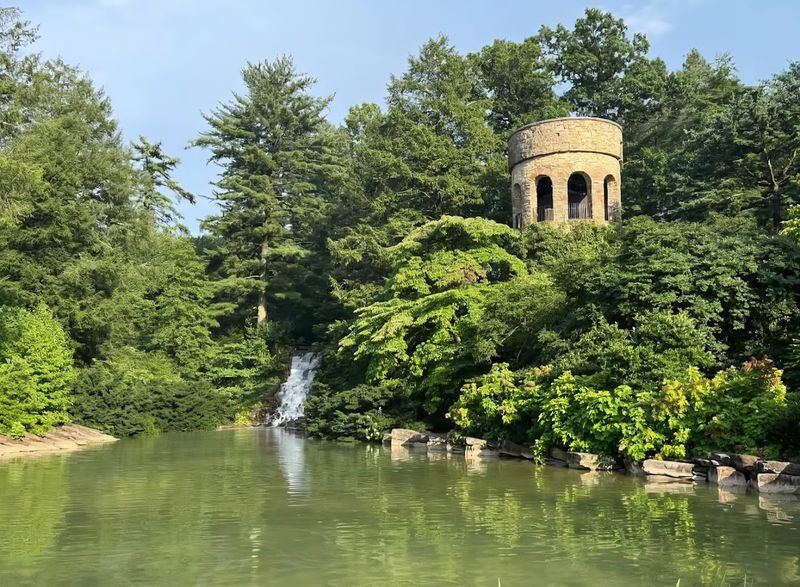
Not everything at Longwood Gardens is manicured within an inch of its life, and that contrast is part of what makes the property so interesting.
The Meadow Garden, covering about 86 acres, is a deliberate celebration of wild, naturalistic planting that feels like a breath of fresh air after the formal garden spaces.
Inspired by the meadow landscapes of the American Midwest, including the prairie traditions found in states like Ohio, the Meadow Garden was designed to support pollinators, birds, and native wildlife while giving visitors a sense of open, unfiltered nature.
Tall grasses, native wildflowers, and seed heads that shimmer in the afternoon light create a landscape that changes subtly every single week.
Walking through it in late summer, when the grasses reach shoulder height and goldfinches dart between seed heads, is one of those quietly perfect experiences that you do not expect to find in a formal garden setting. It earns its place on the map.
Educational Programs That Go Far Beyond A Simple Tour
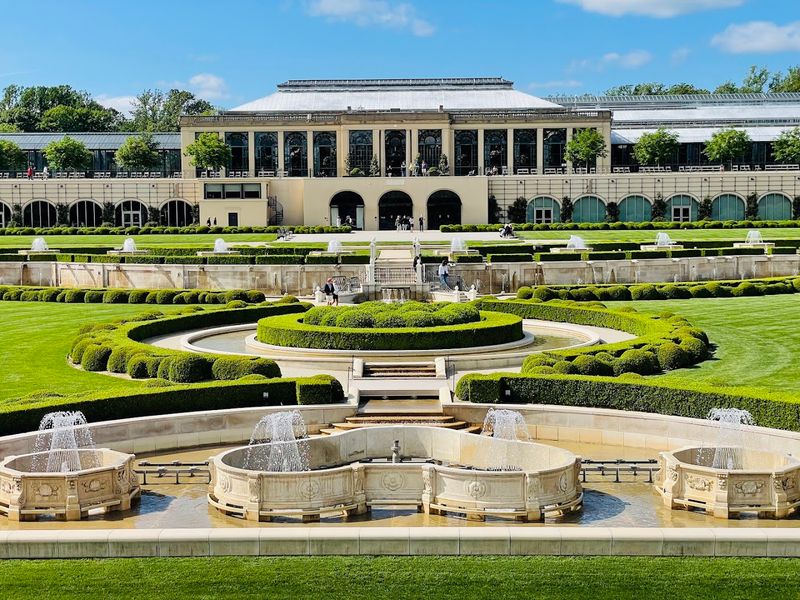
Longwood Gardens has always taken its role as an educational institution seriously, and the scope of its programming reflects that commitment in impressive ways.
The Longwood Graduate Program, now known as the Longwood Fellows Program, is a highly respected training pathway built through a longstanding collaboration with the University of Delaware.
Beyond graduate-level education, the garden offers workshops, classes, and demonstration programs for visitors of all ages and skill levels.
Children can learn about composting and plant life cycles, while adults can take master classes in floral design, sustainable gardening, and landscape history.
The staff horticulturalists bring genuine enthusiasm to every session, making even a basic workshop feel like a conversation rather than a lecture.
Programs like these reflect a broader mission that goes well beyond putting on a pretty show for visitors.
Longwood Gardens genuinely invests in the next generation of growers, designers, and conservation-minded leaders, which is exactly the kind of long-term thinking that strong land stewardship traditions have always championed.
The Pipe Organ: A Musical Surprise Inside The Conservatory
Hidden behind a decorative wall inside the conservatory, one of the largest residential pipe organs ever built waits to fill the entire space with sound.
Pierre du Pont was an organ aficionado who, in 1930, replaced the original organ with a much larger, custom-designed Aeolian model that remains at Longwood to this day.
The organ has 10,010 pipes and can be played live by visiting organists or operated through its automated player system.
During the Christmas season especially, hearing it echo through the conservatory while surrounded by thousands of poinsettias and decorated trees creates an atmosphere that is genuinely hard to forget.
Organ concerts are scheduled throughout the year, and catching a live performance is absolutely worth planning around.
It is the kind of detail that reveals how deeply du Pont thought about every aspect of the visitor experience, making Longwood Gardens feel less like a public attraction and more like a personal gift to anyone who walks through its gates.
Accessibility And Practical Tips For Planning Your Visit
Longwood Gardens earns high marks not just for its beauty but for how thoughtfully it accommodates visitors with different needs.
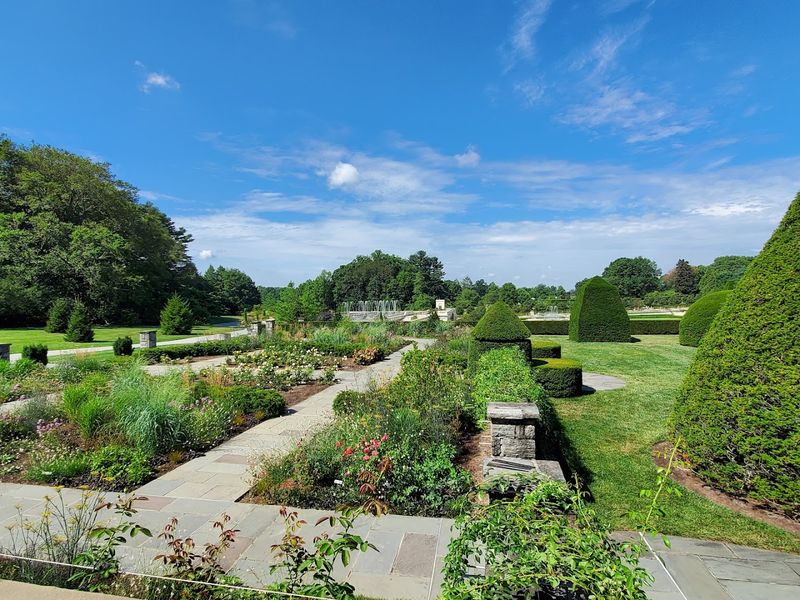
Paved paths run throughout the property, making it accessible for wheelchairs, scooters, and strollers without sacrificing access to the best areas of the garden.
Scooters are available on a first-come, first-served basis with a pay-what-you-wish cost, which is a genuinely considerate touch.
Restrooms are plentiful and kept in excellent condition, and the conservatory itself offers a warm, sheltered environment that works well for visitors who cannot spend long periods outdoors.
For practical planning: the garden opens at 10 AM on its operating days, with extended evening hours on Fridays, Saturdays, and Sundays on the current schedule, and Tuesday is listed as closed.
Tickets should be purchased in advance online, especially during peak seasons like Christmas and spring bloom.
Comfortable walking shoes are non-negotiable since the property is large, and a full visit typically takes three to five hours to do properly.
A Legacy That Continues To Grow And Inspire
What Pierre du Pont started in 1906 has grown into something far beyond what even he likely imagined.
Today, Longwood Gardens welcomes over one million visitors annually from across the United States and around the world, drawing people who come for the flowers, the fountains, the history, and the sheer sense of wonder the place produces.
The garden continues to evolve through ambitious restoration and expansion projects, including a major conservatory renewal completed in recent years that modernized facilities while preserving the historic character du Pont established.
New meadow sections, updated water features, and expanded educational facilities reflect an institution that is thinking seriously about the next hundred years.
Destinations like Longwood Gardens remind us that great public spaces, whether they exist in Pennsylvania, Ohio, or anywhere else, are living things that require constant care, vision, and investment.
The fact that this one keeps getting better with time is perhaps its most impressive achievement of all.