
14 Pennsylvania Natural Rock Formations Worth Experiencing Up Close
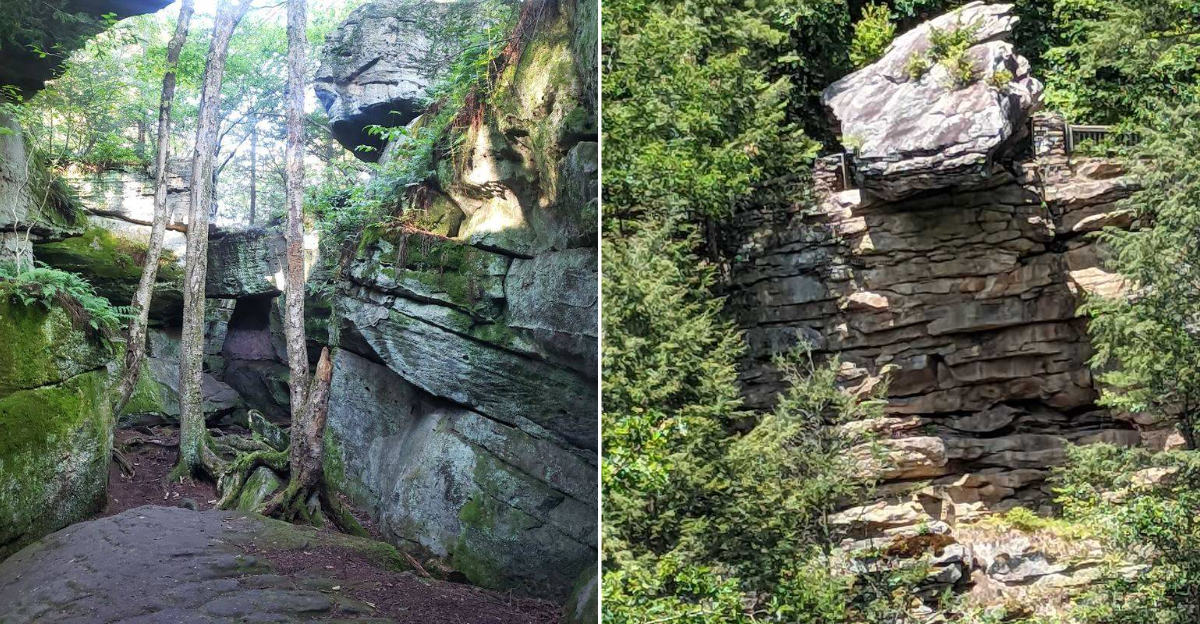
Nature has a way of shaping landscapes into something that feels almost unbelievable.
Towering stone walls, massive boulders, and weather carved formations can turn an ordinary hike into an experience that feels adventurous and a little mysterious.
Rock formations carry a quiet kind of drama. Each crack, ridge, and curve tells a story about time, weather, and the slow power of nature working its magic.
Pennsylvania offers plenty of places where those natural stone wonders rise out of forests, hillsides, and scenic trails.
Some appear suddenly along a path, while others stand proudly in open landscapes where visitors can admire their scale from every angle.
Moments like these remind people how fascinating the natural world can be. Standing beside a formation shaped by centuries of wind and water makes the whole place feel timeless.
I always find myself pausing longer than expected when I come across rock formations like these, because seeing something so massive and beautifully sculpted by nature makes the entire outdoor adventure feel even more memorable.
1. Boulder Field, Hickory Run State Park
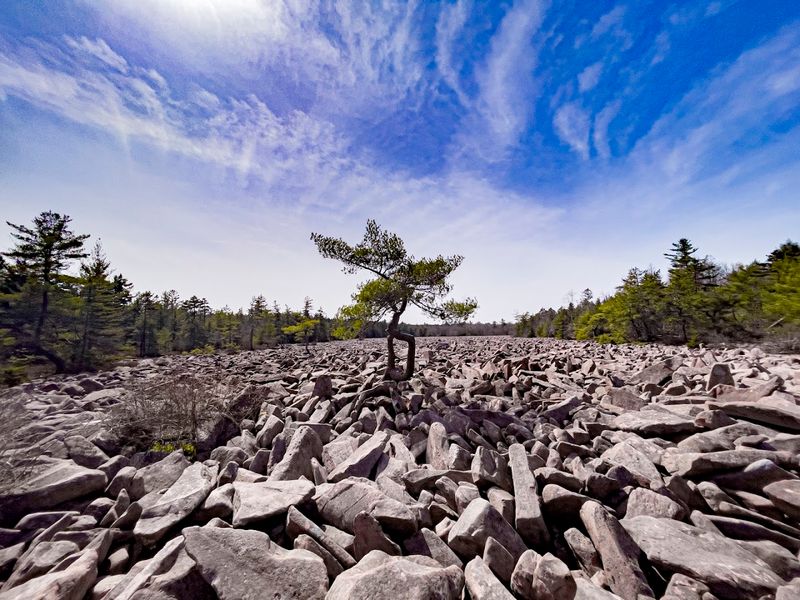
Stepping onto the Boulder Field at Hickory Run State Park feels like the earth forgot to finish what it started.
This National Natural Landmark sits in Carbon County and covers roughly 16 acres of tightly packed boulders, some as large as 26 feet long, left behind by glaciers around 20,000 years ago.
The field is strikingly flat, which makes it even more surreal since there are no trees growing within it.
Walking across the rocks requires careful footing, but that slow, deliberate pace is actually part of what makes Boulder Field so memorable.
The surrounding forest of Hickory Run State Park adds a lush green frame to the rocky landscape.
Visit in autumn when the leaf color contrast against the gray stone is truly something to see. Arrive early on weekdays to have this geological wonder largely to yourself.
2. Ringing Rocks County Park
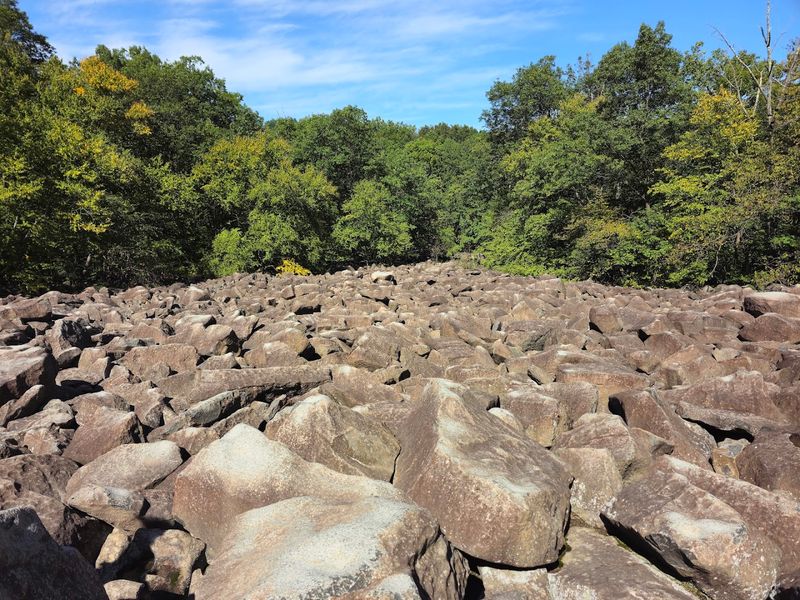
Not every rock formation comes with a built-in sound effect. Ringing Rocks County Park in Upper Black Eddy, Bucks County, is home to the Bridgeton Boulder Field, a field of diabase boulders where many rocks produce a clear, bell-like tone when struck with a hammer.
People have studied this phenomenon for years and still debate exactly why some rocks ring while others stay silent.
Only some of the boulders reliably produce the musical sound, so part of the fun is hunting for the best-sounding ones.
Visitors typically bring small hammers and spend a surprisingly entertaining hour creating impromptu rock concerts.
The ringing boulder field itself is commonly described as about seven to eight acres, while the surrounding parkland is much larger.
A short trail through the woods leads to the site, and a waterfall nearby can be a rewarding add-on when it is running well.
3. Bilger’s Rocks
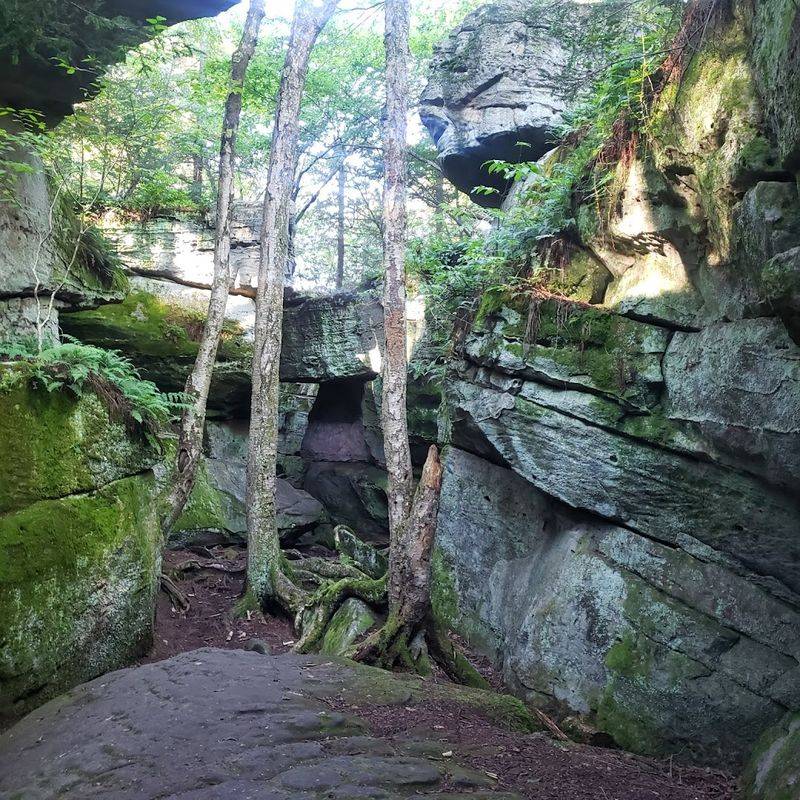
Tucked into a quiet corner of Clearfield County near the small town of Grampian, Bilger’s Rocks is one of Pennsylvania’s most underrated geological treasures.
The formation is made up of massive sandstone broken into a jumbled landscape over hundreds of yards, with the remaining sandstone bed described as over 50 feet thick in the vicinity.
Exploring Bilger’s Rocks feels like wandering through a natural maze.
The crevices between boulders are wide enough to walk through in many places, and the cool air trapped inside them makes the passages noticeably chilly even on warm summer days.
Ferns and mosses coat much of the rock surface, giving the entire area a lush, prehistoric atmosphere.
The site is privately managed by a local association, and donations are typically requested to help maintain the area.
Bilger’s Rocks stays relatively uncrowded compared to state park destinations, so you can genuinely take your time exploring every mossy corridor at your own pace.
4. Devil’s Den, Gettysburg National Military Park
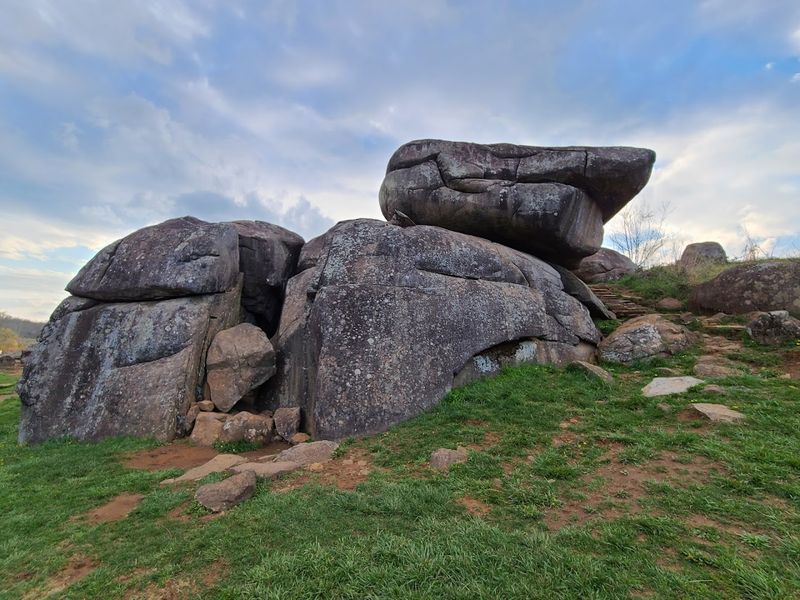
History and geology collide at Devil’s Den inside Gettysburg National Military Park in Adams County.
This jumble of large triangular boulders sits at the base of Little Round Top and played a significant role during the Battle of Gettysburg in July 1863, serving as a sharpshooter position during fierce fighting.
The rocks themselves are ancient, formed from erosion-resistant diabase that has been weathering for millions of years.
Climbing across Devil’s Den gives you a ground-level perspective on how the natural landscape shaped the military decisions made on those grounds.
The views from the top of the boulder cluster look out across the Triangular Field, giving a clear sense of the terrain.
Beyond its historical significance, Devil’s Den is genuinely impressive as a rock formation on its own terms.
Plan to visit Gettysburg National Military Park during shoulder season when the crowds thin out and you can sit quietly among the boulders.
5. Jakes Rocks Overlook, Allegheny National Forest
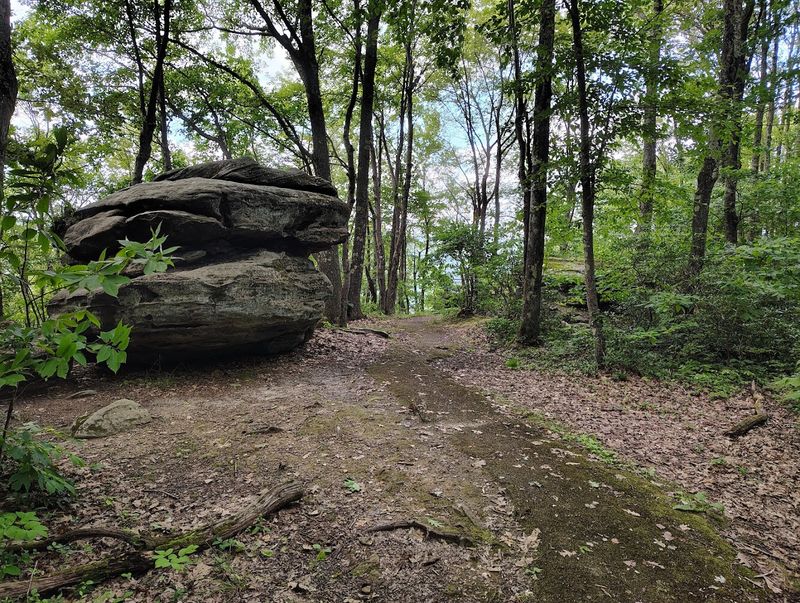
Perched above the Allegheny Reservoir in Warren County, Jakes Rocks Overlook rewards visitors with one of the most dramatic views in all of Allegheny National Forest.
The sandstone outcrop juts out from a wooded ridge, creating a natural platform that looks down over Jackson Bay on the Allegheny Reservoir, with the Kinzua Dam area visible in the broader reservoir landscape.
The rocks at Jakes Rocks are part of a larger sandstone formation that runs along the ridge, and the weathered surfaces show layers of geological time in striking detail.
Getting to the overlook involves a short but satisfying walk through mature forest. Sunrise visits are especially rewarding when morning mist rises off the reservoir and the light turns everything golden.
Jakes Rocks Overlook also connects to several longer trail systems within Allegheny National Forest, so hikers can extend the day well beyond the main viewpoint.
Bring a camera, because the reservoir view from up here is genuinely hard to leave.
6. Pulpit Rock (Appalachian Trail), near Hamburg
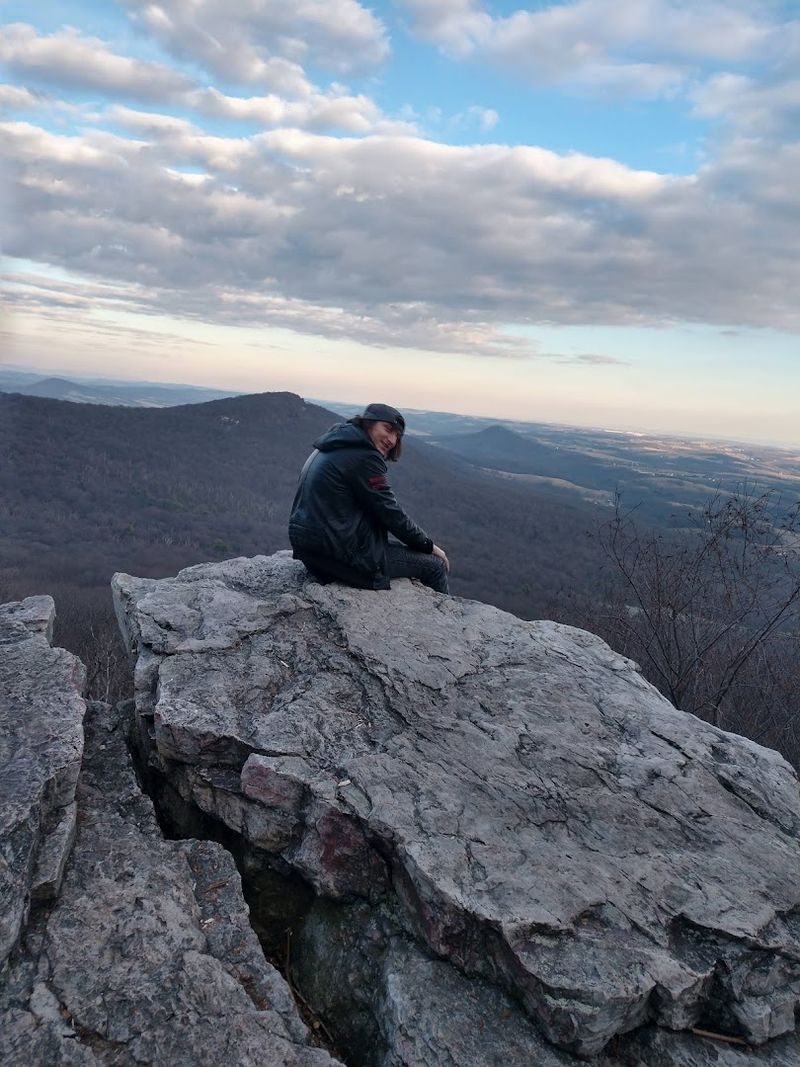
Rising above the farmland of Berks County, Pulpit Rock sits along the Appalachian Trail just north of Hamburg and delivers a panoramic view that stretches for miles across the Great Valley.
The rocky quartzite outcrop earned its name from its raised, platform-like shape, which really does resemble an old stone pulpit when viewed from the trail below.
The hike to Pulpit Rock is accessible for most fitness levels, making it a popular weekend destination for both seasoned Appalachian Trail hikers and casual day-trippers.
The trail surface is rocky in sections, so solid footwear is a smart call.
From the top of Pulpit Rock, the patchwork of farms, forests, and small towns spread across the valley floor creates a scene that feels genuinely timeless.
The spot pairs naturally with the nearby Pinnacle viewpoint for a satisfying loop hike. Pulpit Rock is especially striking during spring wildflower season when the ridge comes alive with color.
7. The Pinnacle (Appalachian Trail), near Hamburg
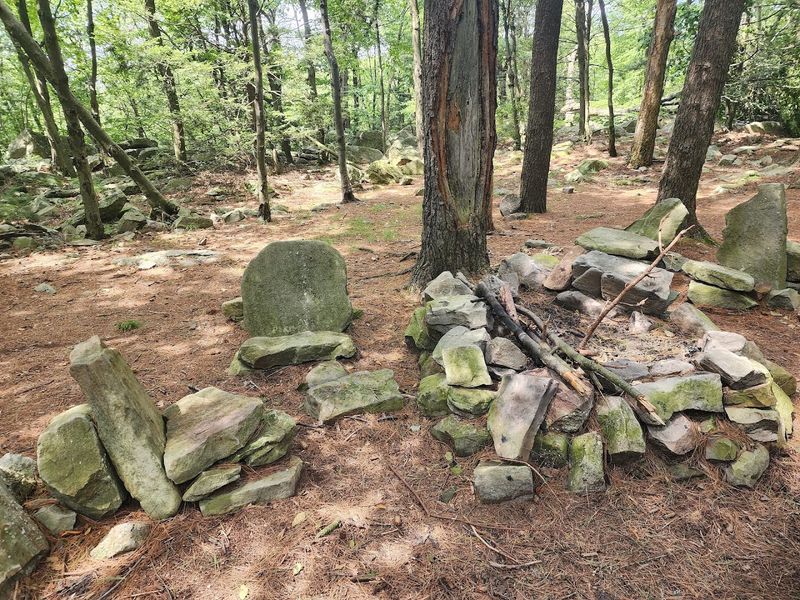
Among all the viewpoints along Pennsylvania’s stretch of the Appalachian Trail, The Pinnacle near Hamburg consistently earns the most enthusiastic reactions from first-time visitors.
Sitting at roughly 1,635 feet elevation on Blue Mountain in Berks County, this quartzite outcrop offers a sweeping 270-degree view that takes in Hawk Mountain, the Great Valley, and on clear days, much of the surrounding ridge and valley landscape.
The hike to The Pinnacle from the Port Clinton trailhead is about six miles round trip, passing through rocky forest that builds genuine anticipation for the payoff at the top.
Hawks migrate past this ridge in impressive numbers every autumn. The Pinnacle is one of those places where people sit on the rocks longer than they planned, simply because leaving feels like a mistake.
Pair it with Pulpit Rock on the same day for a full ridge experience. The Pinnacle near Hamburg is a repeat-visit kind of place.
8. Council Rock, Delaware Water Gap National Recreation Area
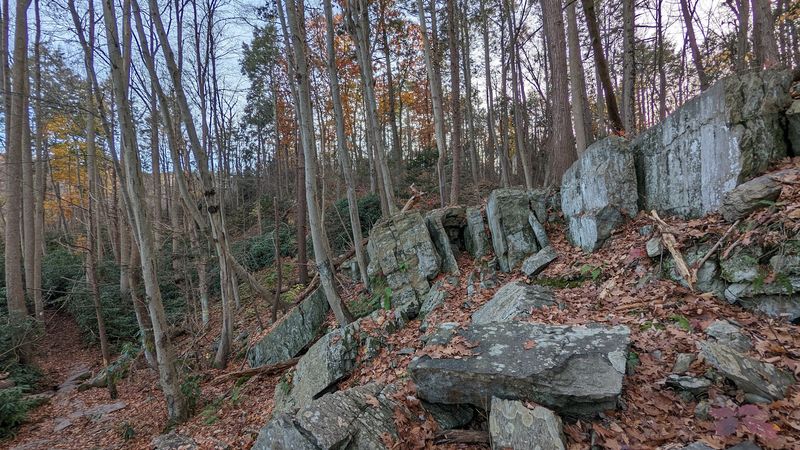
Council Rock inside Delaware Water Gap National Recreation Area carries a name rooted in history.
Local tradition holds that this large, flat-topped boulder near the Delaware River was used as a gathering place long before European settlers arrived in the region.
The rock sits within a forested section of the recreation area and is accessible via a relatively short trail that winds through mature hardwood forest.
Its size is genuinely impressive up close, and the flat surface makes it easy to understand why it would have been chosen as a meeting spot.
Delaware Water Gap National Recreation Area stretches across both New Jersey and Pennsylvania, and Council Rock sits within the Pennsylvania side in the broader recreation area.
Visiting Council Rock alongside the area’s other natural highlights can make for a full and rewarding day in the park.
The combination of natural beauty and long-held local stories gives this boulder a depth that purely geological sites sometimes lack.
9. Lookout Rock, Delaware Water Gap National Recreation Area
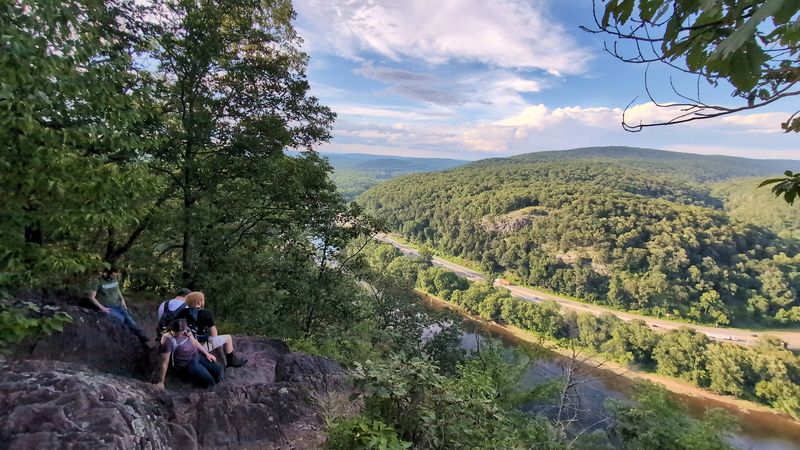
Positioned above the Delaware River gorge within Delaware Water Gap National Recreation Area, Lookout Rock offers one of the most satisfying river views in the entire park.
The overlook sits at an elevation that places you comfortably above the treetops, with the Delaware River curving through the landscape far below and the New Jersey ridgeline rising on the opposite bank.
Getting to Lookout Rock involves a moderate hike through forest, and the trail gains elevation steadily before the trees open up at the viewpoint.
The rocky ledge at the top is wide enough to spread out and enjoy the view without feeling crowded.
Delaware Water Gap National Recreation Area is a four-season destination, and Lookout Rock earns its reputation in every season, from spring green to autumn orange to the stark beauty of a winter ridgeline.
The Delaware River looks especially dramatic from this height during high water periods in early spring. Lookout Rock is a reliable highlight within a park full of them.
10. Balanced Rock, Trough Creek State Park
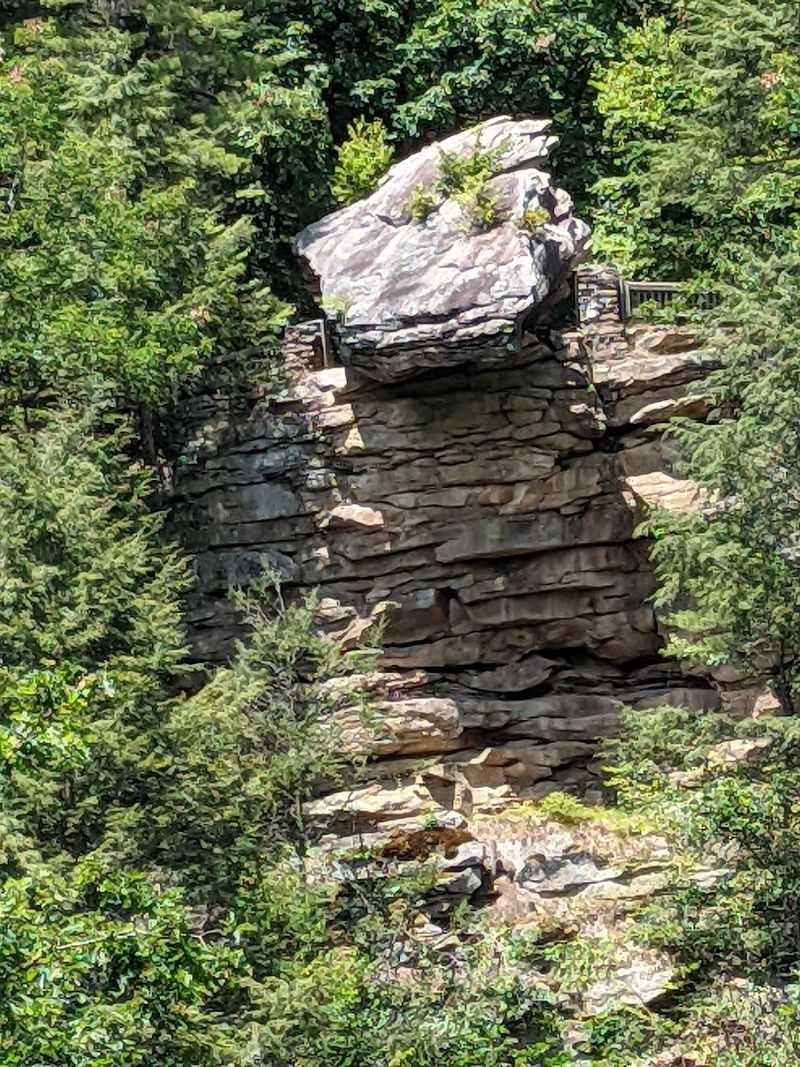
Gravity seems to be doing something it should not at Trough Creek State Park in Huntingdon County, where a massive sandstone boulder sits perched on a much smaller base in a seemingly impossible arrangement.
Balanced Rock is exactly what the name promises, a large chunk of stone that looks like it should have toppled centuries ago but somehow has not.
The formation sits along a trail that also passes through a natural ice mine and alongside Trough Creek Gorge, making the surrounding area one of Pennsylvania’s most geologically interesting compact zones. Balanced Rock itself is photogenic from almost every angle.
Trough Creek State Park keeps a low profile compared to some of Pennsylvania’s larger parks, which means the trails stay quieter even on weekends.
The park’s mix of gorge scenery, historical features, and rock formations like Balanced Rock gives it an outsized personality for its size. Pack a lunch and plan to spend the full morning exploring.
11. Copperas Rocks, Trough Creek State Park
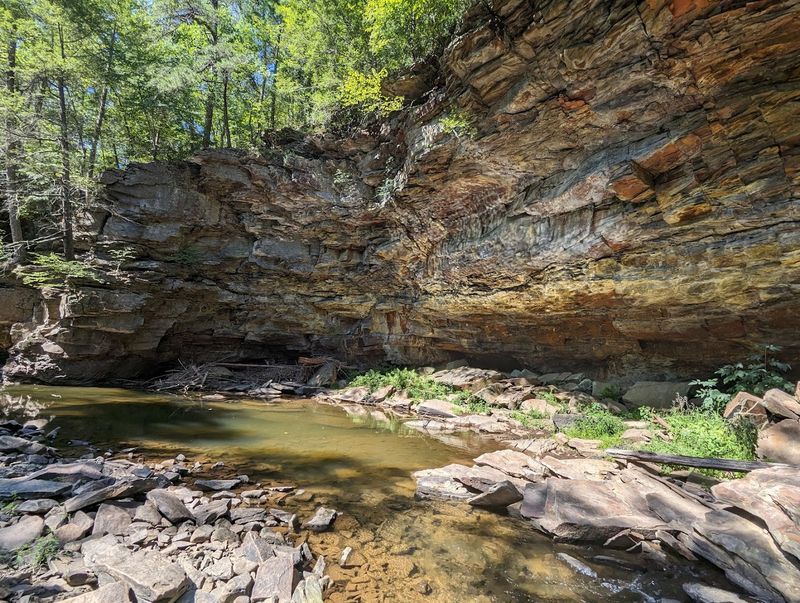
The name alone is enough to spark curiosity. Copperas Rocks in Trough Creek State Park gets its striking reddish and orange coloring from iron sulfate minerals, specifically copperas, which stain the sandstone in vivid tones that look almost painted on.
The formation rises above the gorge in dramatic fashion, and the color contrast against the surrounding green forest is genuinely striking.
The rocks are accessible via the park’s trail network, and the approach through Trough Creek Gorge adds considerable scenic value to the journey. This part of Huntingdon County packs a lot of geology into a small area.
Copperas Rocks and Balanced Rock sit close enough together that visiting both in a single outing is straightforward and highly recommended.
The mineral staining at Copperas Rocks is most vivid after rain when the iron compounds are wet and their color deepens noticeably.
Trough Creek State Park deserves far more recognition than it typically receives on Pennsylvania hiking lists.
12. High Rocks Vista, Ralph Stover State Park
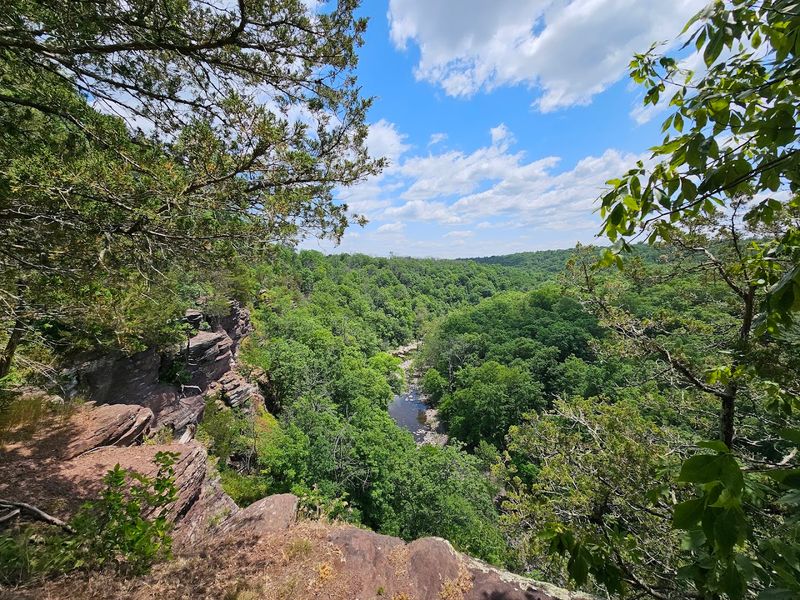
Standing at the edge of High Rocks Vista in Ralph Stover State Park, Bucks County, requires a moment to process what you are looking at.
The cliffs rise to about 200 feet above Tohickon Creek, which winds through a narrow, heavily forested gorge below. The view is both beautiful and vertigo-inducing in the best possible way.
The rock face and ledges here form a dramatic overlook shaped by time and erosion, and the High Rocks trail is one of the most striking short hikes in this corner of Bucks County.
Ralph Stover State Park sits near the town of Point Pleasant, and the vista rewards anyone who comes prepared to slow down and take it in.
Autumn is the prime season to visit High Rocks Vista when the gorge below fills with color and the contrast between the gray cliffs and orange foliage is stunning.
Rock climbers also use the area regularly, adding another layer of visual interest to an already impressive spot.
13. Chickies Rock, Chickies Rock County Park
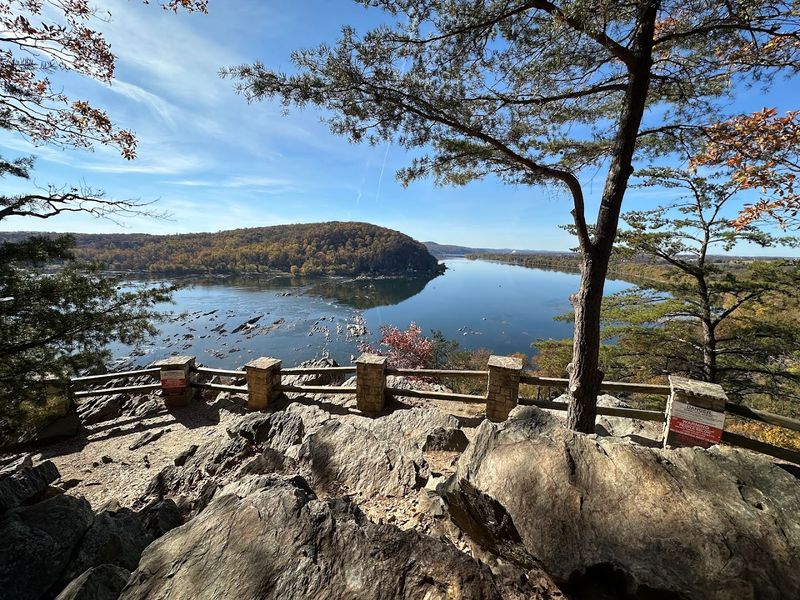
Lancaster County is better known for its farmland and covered bridges, but Chickies Rock County Park holds a geological surprise that most visitors outside the region have no idea exists.
The quartzite outcrop at Chickies Rock towers about 100 feet above the Susquehanna River, offering a panoramic view of the river valley that feels completely out of place in the middle of Pennsylvania Dutch Country.
The hike to the main overlook at Chickies Rock is moderate and well-maintained, passing through mature forest before opening dramatically at the cliff edge.
The Susquehanna River spreads wide below, and the surrounding landscape stretches out in every direction.
Chickies Rock County Park also has an interesting geological backstory, with quartzite formations that stand out for their durability and presence.
Bald eagles are often spotted along the river corridor below the overlook, especially during colder months when views open up.
Chickies Rock turns an ordinary Lancaster County day trip into something genuinely memorable.
14. Haystacks, Loyalsock State Forest
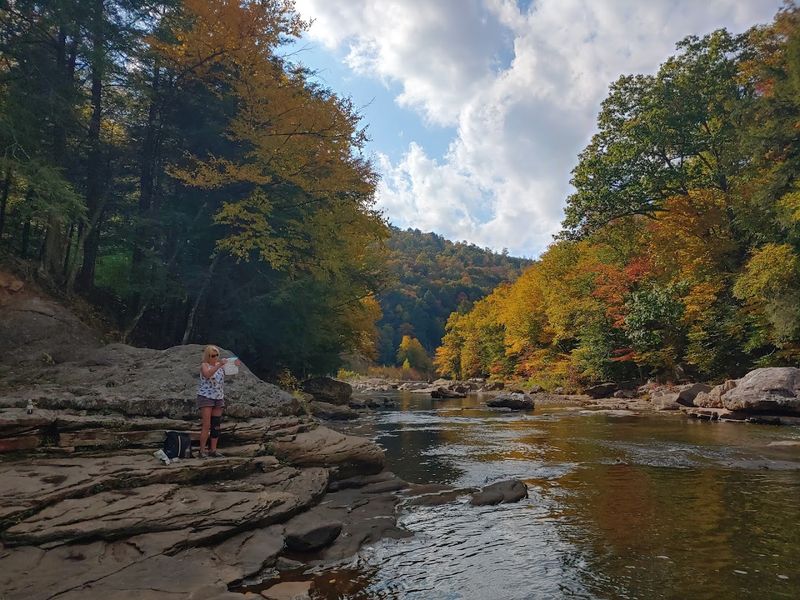
Along the banks and streambed of Loyalsock Creek, a collection of large rounded sandstone boulders emerges from the water in shapes that genuinely resemble old-fashioned haystacks.
The Haystacks formation in Loyalsock State Forest is one of those spots that earns a double-take from every first-time visitor, because the shapes are surprisingly consistent and the setting is spectacularly wild.
Reaching the Haystacks typically involves hiking along the Loyalsock Trail, a well-known long-distance route through rugged forest, and the approach adds significant atmosphere to the arrival.
The creek itself is clear and cold, and wading near the boulders on a hot summer day is one of the better decisions a person can make.
Loyalsock State Forest surrounds the area with miles of undeveloped woodland, keeping the whole experience refreshingly remote.
The Haystacks look especially dramatic in early morning light when the creek catches the sun at a low angle. This spot rewards visitors who make the full effort to get there.