
10 Pennsylvania Trails That Deserve More Attention But Remain Overlooked
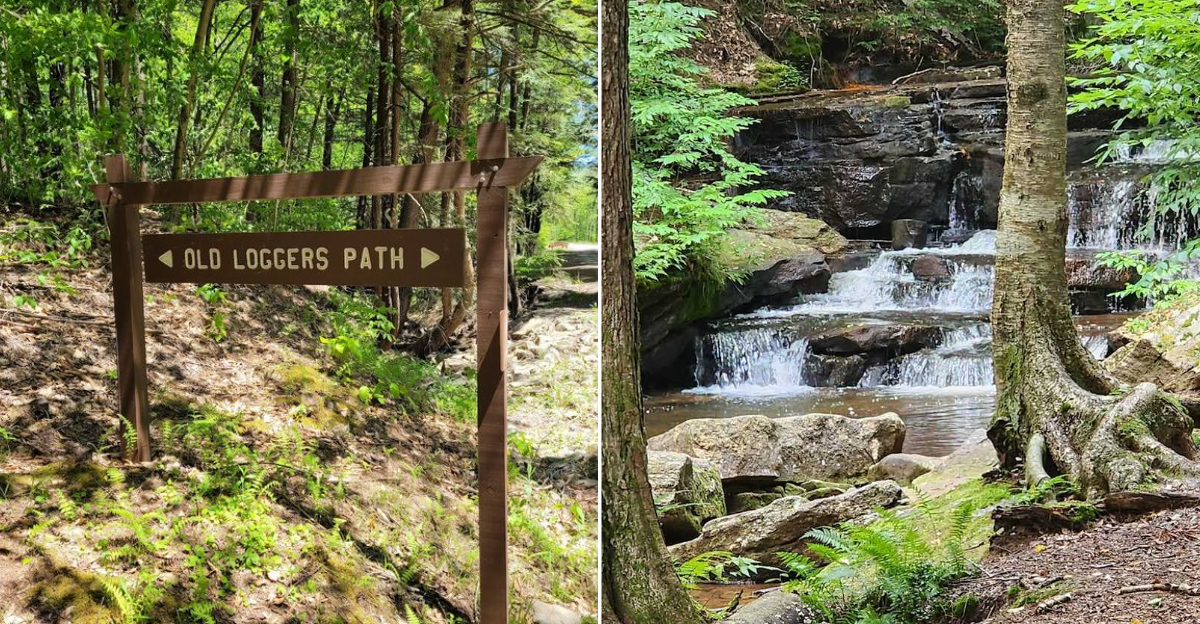
Not every unforgettable trail comes with a crowded parking lot, a line at the overlook, or a flood of social media hype.
Some of the best walks are the quiet achievers, the scenic sleepers, the under-the-radar paths that deliver fresh air, beautiful views, and that wonderful feeling of having stumbled onto something special.
Pennsylvania is full of headline grabbers, but it also has plenty of trails that deserve a lot more love than they get. That is part of the appeal.
An overlooked trail can feel like your own little secret, where the noise fades, the pace softens, and every bend in the path holds the promise of a pleasant surprise.
Maybe it is a peaceful stream, a canopy of trees, a rocky overlook, or just the kind of calm that makes a simple hike feel like a reset. No fuss, no frenzy, just pure trail magic and a little breathing room.
I always end up especially attached to places like these because the moment I realize a trail is beautiful and strangely uncrowded, I start walking slower, looking around more, and thinking I may have just found my new favorite escape.
1. Loyalsock Trail, Loyalsock State Forest, Pennsylvania
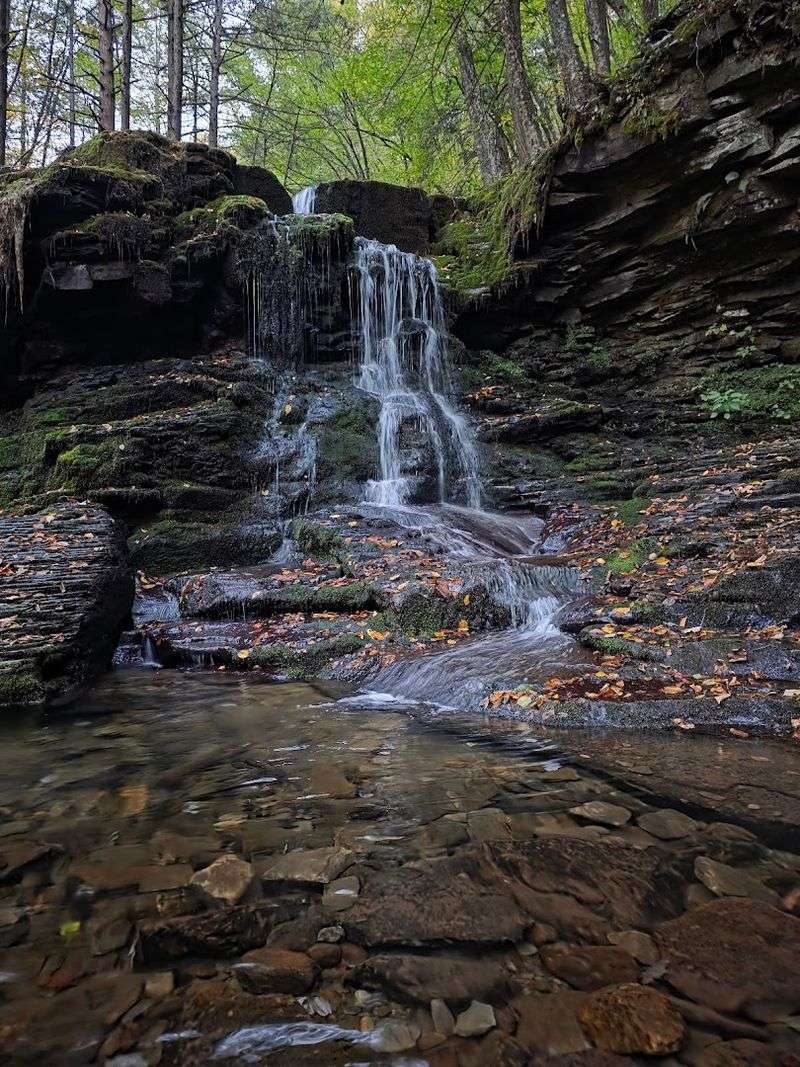
Running roughly 59 miles through the wild heart of Lycoming County, the Loyalsock Trail is the kind of route that rewards hikers who actually do their homework before lacing up.
The Loyalsock Trail threads through Loyalsock State Forest, crossing cold mountain streams, climbing rocky ridges, and delivering panoramic views from spots like High Knob Overlook that feel almost unreasonably good for how few people see them.
The terrain is genuinely challenging in places, with steep ascents and rocky footing that keep casual walkers away, which is honestly part of the appeal.
Spring brings rushing waterfalls and wildflowers along the creek corridors, while fall turns the whole forest into a slow-burning display of orange and red.
Backpackers can string together multi-day trips using primitive campsites scattered along the route, making it a solid option for anyone craving a true backcountry experience without driving to another state.
The Loyalsock Trail is one of Pennsylvania’s longest and most scenic footpaths, and it absolutely deserves far more recognition than it currently gets.
2. Old Logger’s Path, Tiadaghton State Forest, Pennsylvania
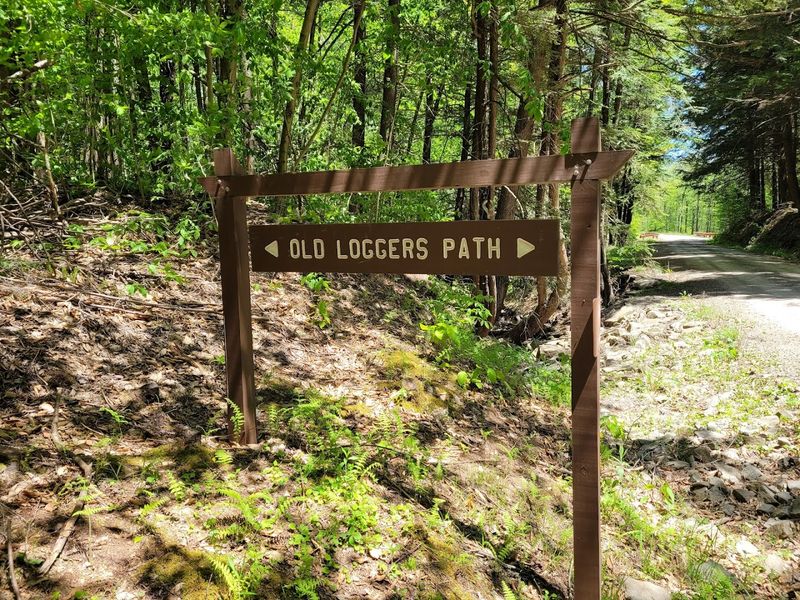
History and hiking make a surprisingly good team on the Old Logger’s Path, a 27-mile loop tucked inside Loyalsock State Forest in Lycoming County.
The trail follows routes once used by old loggers who stripped these hillsides bare, and the forest that has grown back since then is a quiet testament to how resilient Pennsylvania’s woodlands really are.
Walking the Old Logger’s Path feels like reading a chapter of regional history with your feet, passing through second-growth hemlocks and hardwoods that have slowly reclaimed the landscape over the past century.
The loop design makes planning straightforward, and the route feels approachable for hikers with a reasonable fitness base, even though stream crossings and rougher footing still demand real attention.
Stream crossings add a bit of adventure, especially after heavy rain, and the lack of crowds means you’ll often have long stretches entirely to yourself.
The Old Logger’s Path is a meaningful, meditative trail that connects you to Pennsylvania’s logging heritage in a way that no museum exhibit ever quite manages.
3. Ghost Town Trail, Indiana and Cambria Counties, Pennsylvania
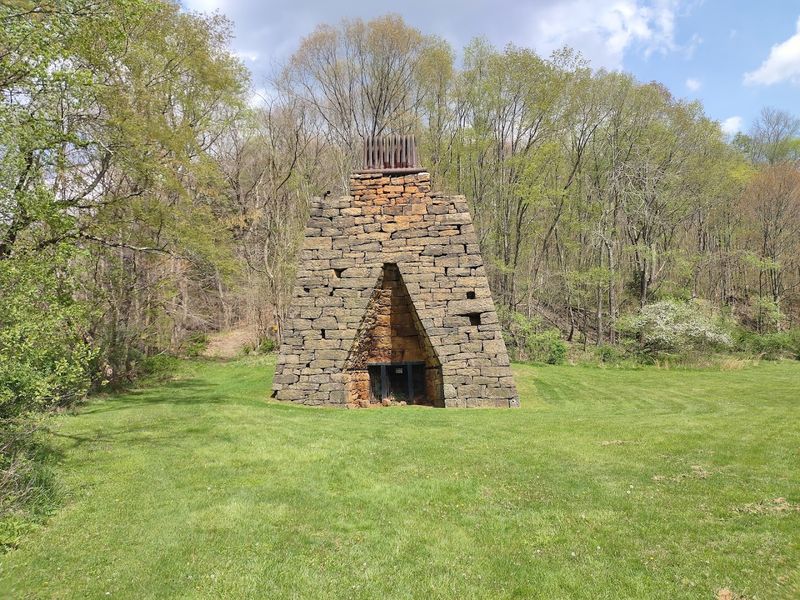
Few trails in Pennsylvania carry as much atmospheric storytelling as the Ghost Town Trail, a 36-mile rail-trail that winds through Indiana and Cambria Counties along a former railroad corridor.
The path gets its evocative name from the abandoned coal mining communities that once thrived along this route, and sharp-eyed hikers can still spot the stone foundations, old coke ovens, and crumbling structures that remain scattered through the woods.
Because it follows a converted rail bed, the Ghost Town Trail stays largely flat and smooth, making it genuinely accessible for cyclists, families with strollers, and hikers of all ability levels.
The trail passes through Blacklick Valley Natural Area, where the creek runs alongside the path and herons can frequently be spotted wading in the shallows.
Autumn is particularly striking here, when the tree canopy above the corridor burns with color and the old ruins take on an especially moody quality in the slanted afternoon light.
The Ghost Town Trail offers a rare combination of easy terrain and genuinely fascinating history that most Pennsylvania hikers have completely overlooked.
4. Thunder Swamp Trail, Delaware State Forest, Pennsylvania
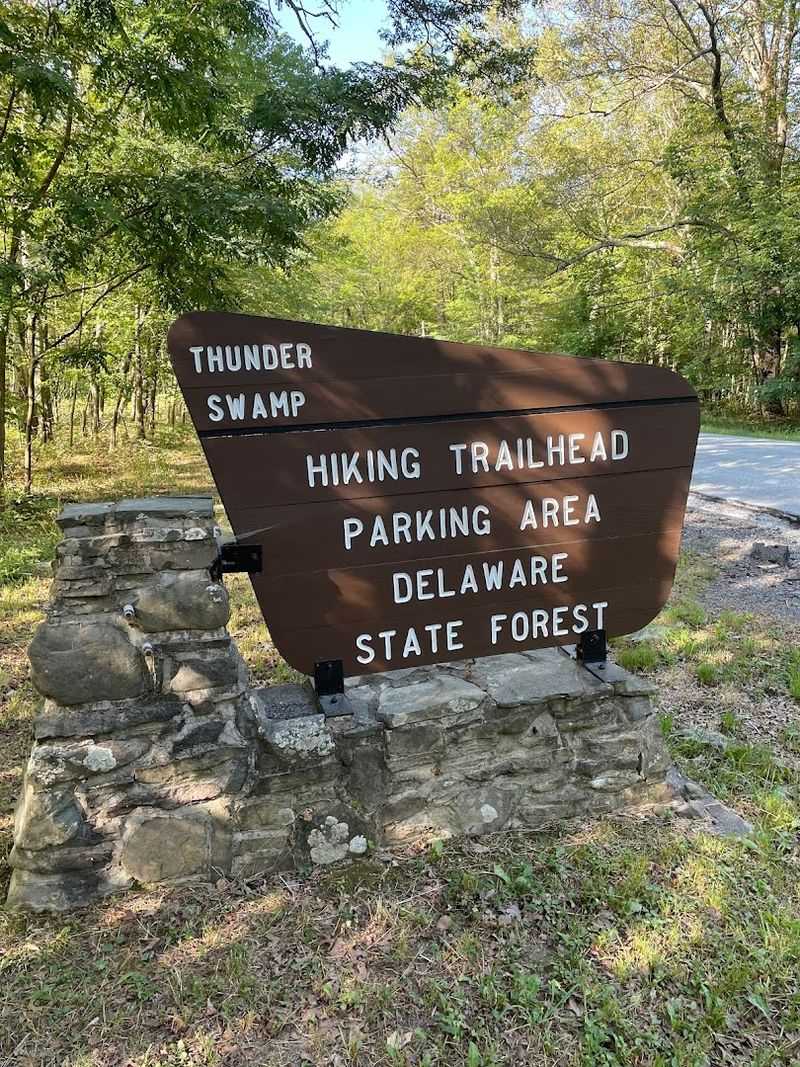
The name alone should be enough to get any curious hiker’s attention, and the Thunder Swamp Trail in Delaware State Forest, Pike County, delivers on every bit of that wild promise.
The main loop stretches 18.3 miles through one of the least-visited corners of the Pocono region, and the broader trail system reaches 31.7 miles when the Stillwater Natural Area spur is included.
The Thunder Swamp Trail passes through a striking mix of forest, swamps, and wetlands that feels completely different from most Pennsylvania hiking terrain.
Wildlife sightings are common here, from black bears moving through the thick understory to birds working the wetter stretches along the route.
The trail can feel remote in places, so solid map-reading skills and a downloaded GPS track are genuinely useful before heading out.
For hikers who prefer their adventures to come with a side of genuine remoteness, the Thunder Swamp Trail is one of Pennsylvania’s most underrated and rewarding options.
5. Mid State Trail, Central Pennsylvania
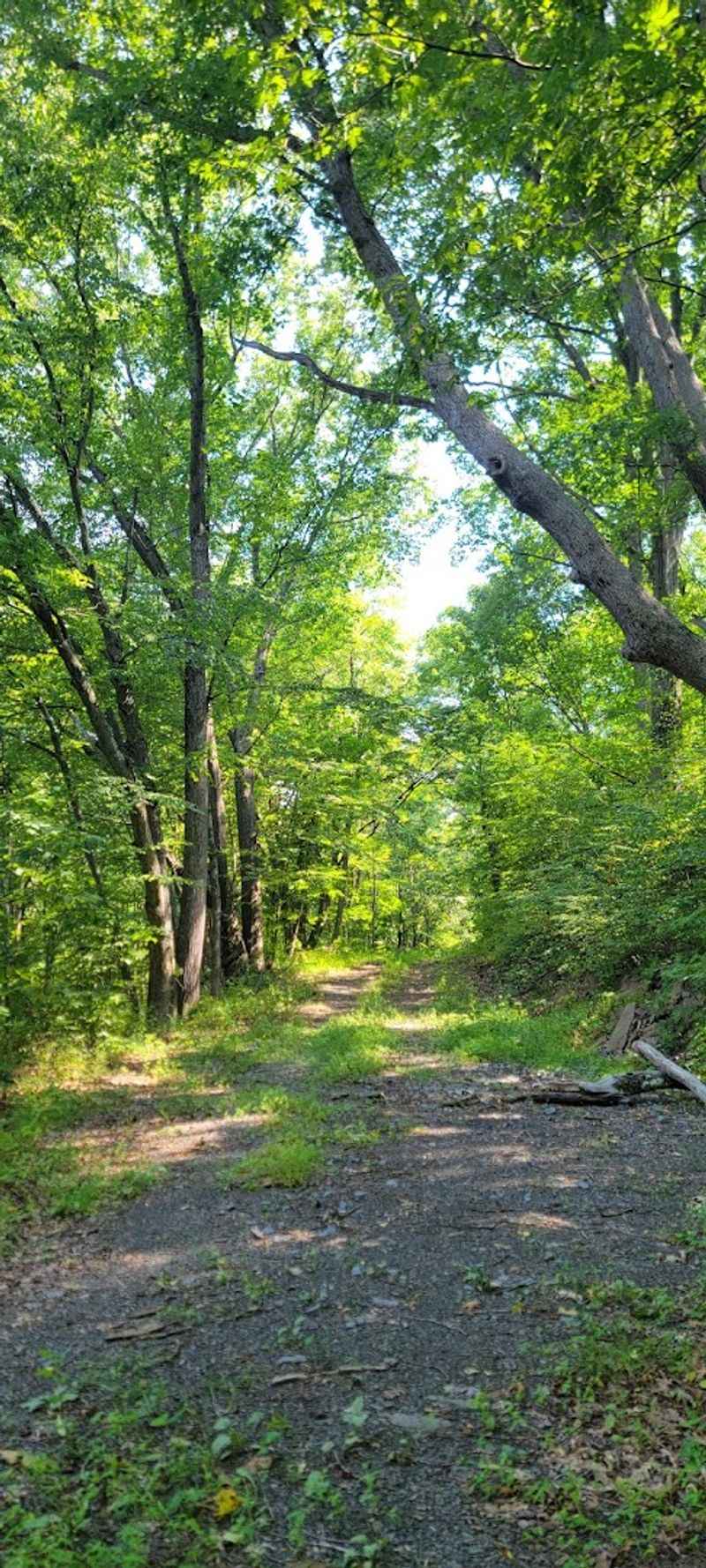
Stretching more than 320 miles from the Maryland border all the way to the New York state line, the Mid State Trail is one of Pennsylvania’s longest footpaths and also one of its most consistently underappreciated.
Running through the geographic center of the state, the Mid State Trail crosses ridge after ridge of the Appalachian highlands, offering views from open rocky summits that rival anything you’d find on the more famous long trails in the region.
The route passes through multiple state forests and state parks, giving hikers an enormous variety of terrain across its full length, from boulder fields and pine plantations to open meadows and hemlock-lined stream valleys.
Section hiking is popular here since the trail can be broken into manageable day or weekend trips, making it accessible even for people who can’t commit to a thru-hike.
Orange blazes mark the Mid State Trail throughout, and the Pennsylvania Mid State Trail Association maintains the route with genuine dedication.
This trail is a serious contender for the best long-distance hiking experience in Pennsylvania that most people have somehow never heard of.
6. Standing Stone Trail, Huntingdon County, Pennsylvania
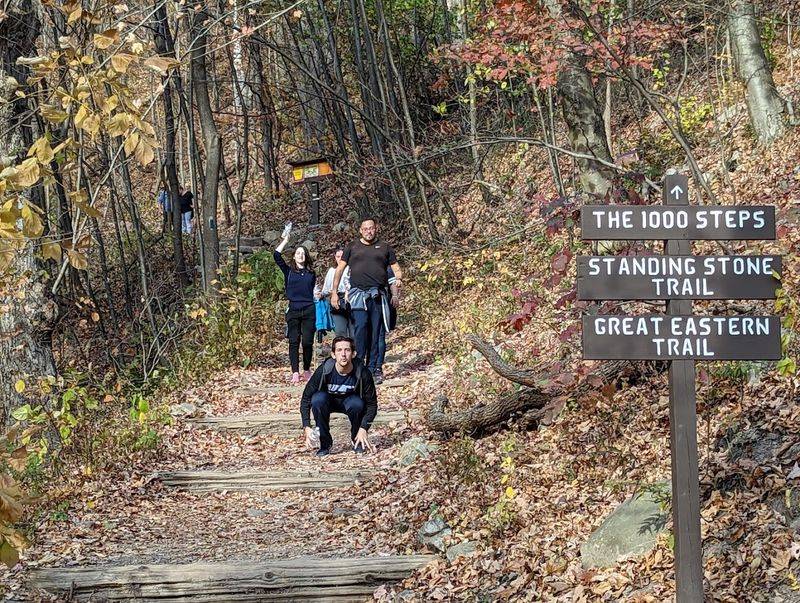
Connecting the Tuscarora Trail at Cowans Gap State Park to the Mid State Trail north of Greenwood Furnace State Park, the Standing Stone Trail covers roughly 80 to 85 miles of remarkably varied terrain through south-central Pennsylvania.
Named after the historic standing stone that once marked a Native American path through the region, the Standing Stone Trail carries a sense of deep history alongside its considerable scenic appeal.
Ridge walks along Jacks Mountain and other high sections offer long, unobstructed views across the valleys below, and the rocky character of the path keeps the hiking genuinely engaging rather than monotonous.
The Standing Stone Trail passes through a mix of state forest land, game lands, natural areas, and some road-connected sections, so staying on marked routes is especially important here.
Stream crossings and seasonal water sources require some planning for overnight trips, but the primitive camping opportunities along the route make multi-day adventures very achievable.
Hikers who make the effort to explore the Standing Stone Trail consistently leave with the feeling that they’ve discovered something Pennsylvania has been quietly keeping to itself for years.
7. Allegheny Front Trail, Blair and Centre Counties, Pennsylvania
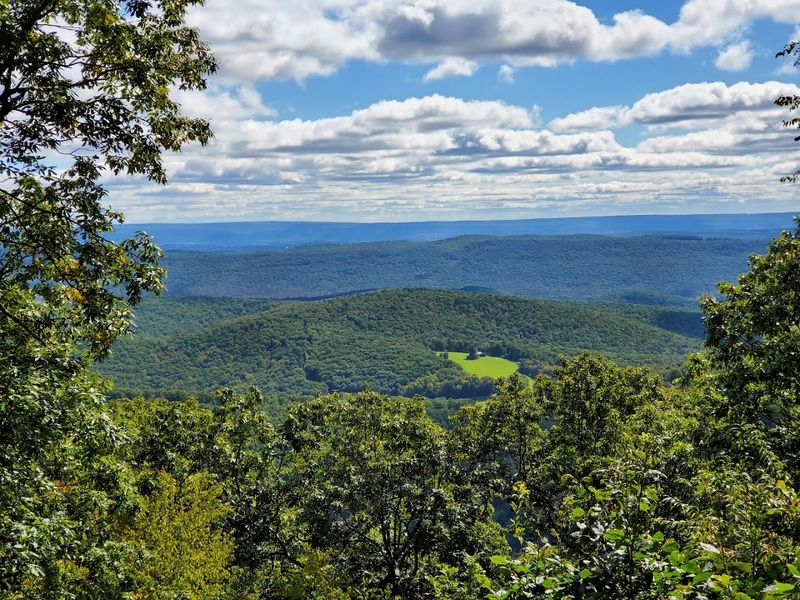
Perched along the dramatic escarpment where the Ridge and Valley province drops away to the Allegheny Plateau, the Allegheny Front Trail offers some of the most commanding views in all of Pennsylvania.
This roughly 41.5-mile loop in Centre County traverses the Allegheny Plateau in Moshannon State Forest and roughly encircles Black Moshannon State Park.
The Allegheny Front Trail passes through a wide variety of forest environments, including wetlands, streams, and multiple maintained vistas, delivering consistent elevation and consistently impressive scenery.
Rocky outcroppings along the ridgeline make for excellent rest stops with views stretching across folded valleys and forested ridges on clear days.
The loop design gives backpackers a satisfying circular route that can be completed over multiple days with lightweight gear and reasonable planning.
The Allegheny Front Trail is a ridgeline experience that belongs on every serious Pennsylvania hiker’s radar, yet somehow remains one of the state’s best-kept secrets.
8. Quehanna Trail, Moshannon and Elk State Forests, Pennsylvania
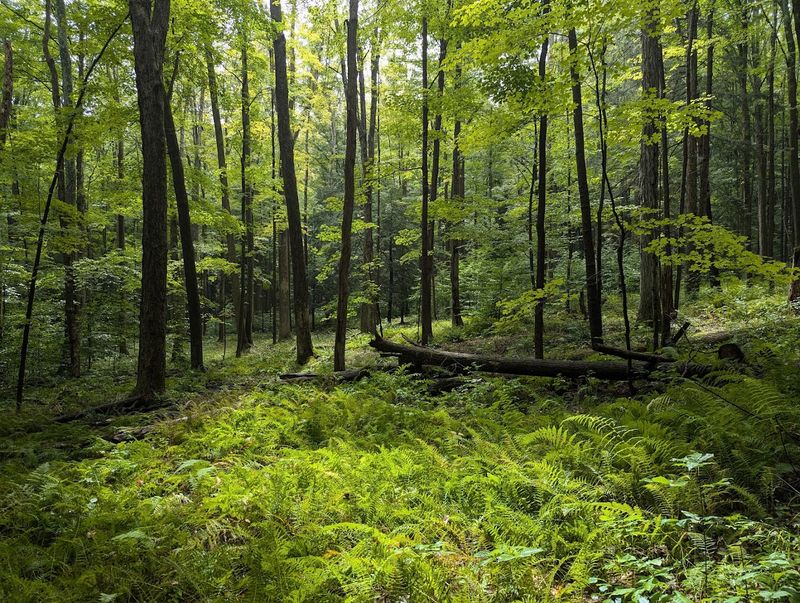
The Quehanna Wild Area in north-central Pennsylvania is one of the most genuinely remote corners of the state, and the roughly 73-mile Quehanna Trail loop is the best way to experience it properly.
Passing through both Moshannon and Elk State Forests in Clearfield, Cameron, and Elk Counties, the Quehanna Trail moves through a landscape that feels deliberately far from the modern world, with few road crossings and long stretches of unbroken forest.
The wild area designation means that the land is managed with minimal development, so the trail experience here is rawer and more demanding than on maintained park paths.
Elk sightings are genuinely possible along the Quehanna Trail, particularly in the early morning and late afternoon hours when the animals move through forest edges and open areas.
Water sources exist along the route but should be filtered, and navigation requires attention since some sections pass through areas without obvious landmarks.
The Quehanna Trail is a serious backcountry adventure that pays back the effort with a level of solitude and wild character that is increasingly rare in the eastern United States.
9. Morrison Hiking Trail, Tiadaghton State Forest, Pennsylvania
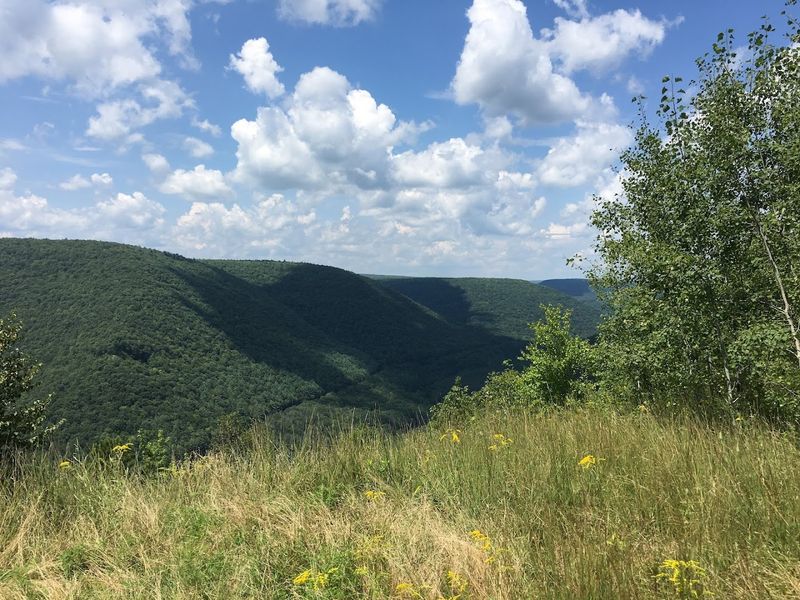
The Morrison Hiking Trail offers a quieter backpacking experience in Allegheny National Forest and gives hikers a very different side of northwestern Pennsylvania than the state’s more famous gorge and rail-trail destinations.
Rather than following Pine Creek Gorge, the Morrison Hiking Trail is a loop system in the Allegheny National Forest that leads toward Morrison Campground on Kinzua Bay of the Allegheny Reservoir.
The trail covers roughly 12.6 miles and is arranged as three loops, which allows for either a short day hike or a longer overnight outing with more route flexibility.
Rocky sections, open hardwoods, and changing forest scenery give the hike plenty of variety, and the campground connection adds another layer of usefulness for backpackers.
Spring through fall are especially good seasons here, when the woods are active and the reservoir setting adds extra atmosphere to the trip.
The Morrison Hiking Trail is a quiet alternative to Pennsylvania’s busier hiking destinations and one that delivers a completely different kind of payoff.
10. Gerard Hiking Trail, Allegheny National Forest, Pennsylvania
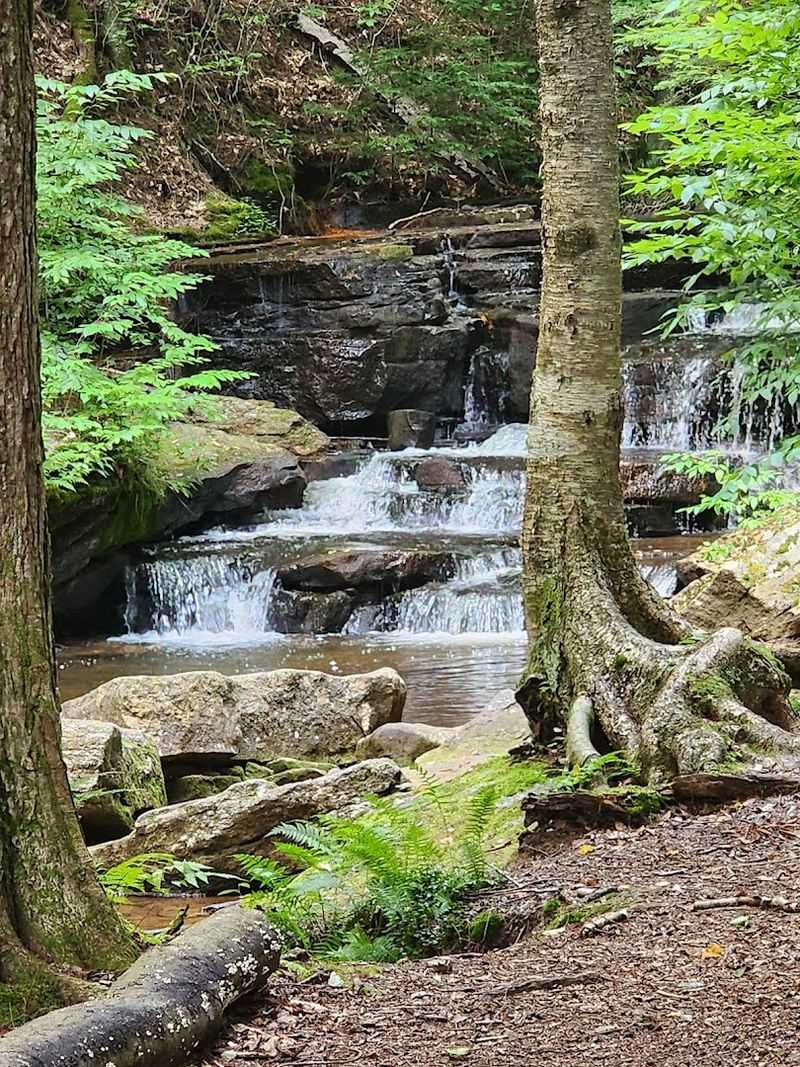
Looping through Oil Creek State Park in northwestern Pennsylvania, the Gerard Hiking Trail covers 36 miles of woodland, historic terrain, and scenic overlooks that most hikers from other parts of the state never bother to explore.
The Gerard Hiking Trail follows the full length of the park and is known for its mix of vistas, waterfalls, and historic sites tied to the Oil Creek valley.
Portions of the trail pass through classic park forest scenery rather than around Kinzua Dam or the Allegheny Reservoir, which belong to a different part of Pennsylvania entirely.
The loop format makes the Gerard Hiking Trail practical for backpacking, with two overnight shelter areas and shorter connector loops available for day hikers who do not want the full route.
Wildlife is abundant in this part of Pennsylvania, and deer, birds, and other common forest species are regular companions along the trail corridor throughout most of the year.
The Gerard Hiking Trail is a northwestern Pennsylvania treasure that quietly outperforms expectations every single time someone actually makes the trip to walk it.