
Pennsylvania’s Lincoln Highway Features An 18-Foot Coffee Pot That Has Greeted Travelers Since The 1920s
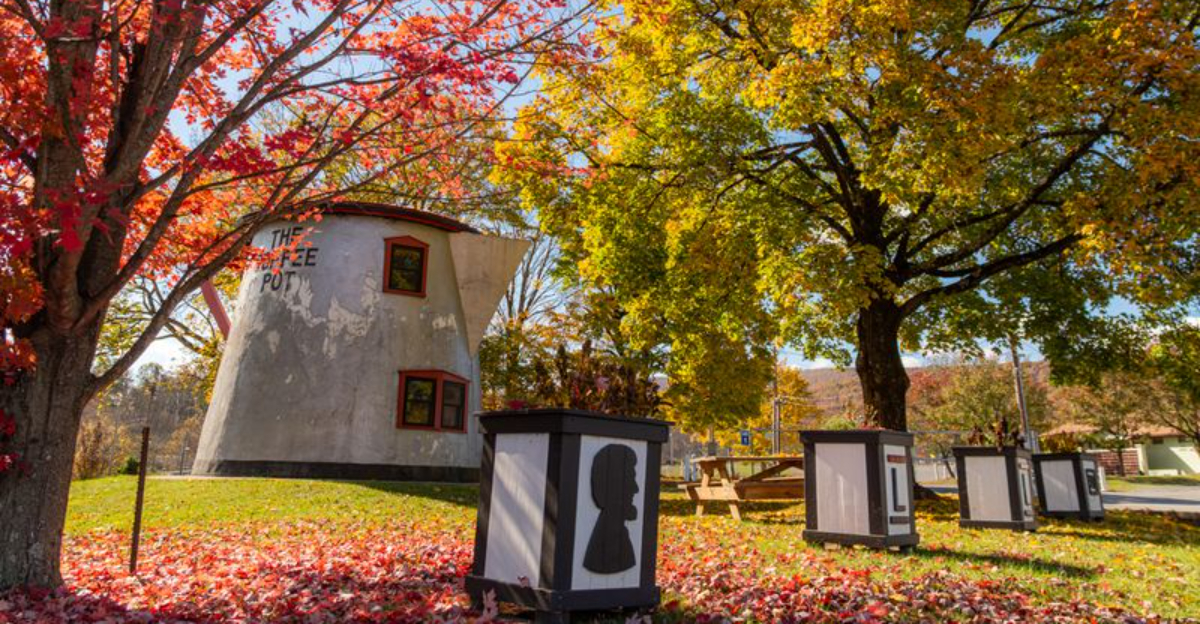
Roadside landmarks do not get much more charming than a giant coffee pot greeting travelers from another era.
Along Pennsylvania’s Lincoln Highway, this whimsical piece of roadside history feels like a wink from the past, when highways were full of quirky stops, bold signs, and attractions built to make drivers slow down.
The fun is in how wonderfully specific it is. An enormous coffee pot does not need to be practical to be memorable.
It just needs character, history, and enough oddball charm to make people smile, pull over, and take a closer look. These are the kinds of landmarks that turn a drive into a story.
I have always loved roadside stops that feel a little playful and proudly strange, and a Pennsylvania coffee pot that has been greeting travelers for generations would absolutely earn a photo from me.
It Started As A Clever Marketing Stunt In The 1920s
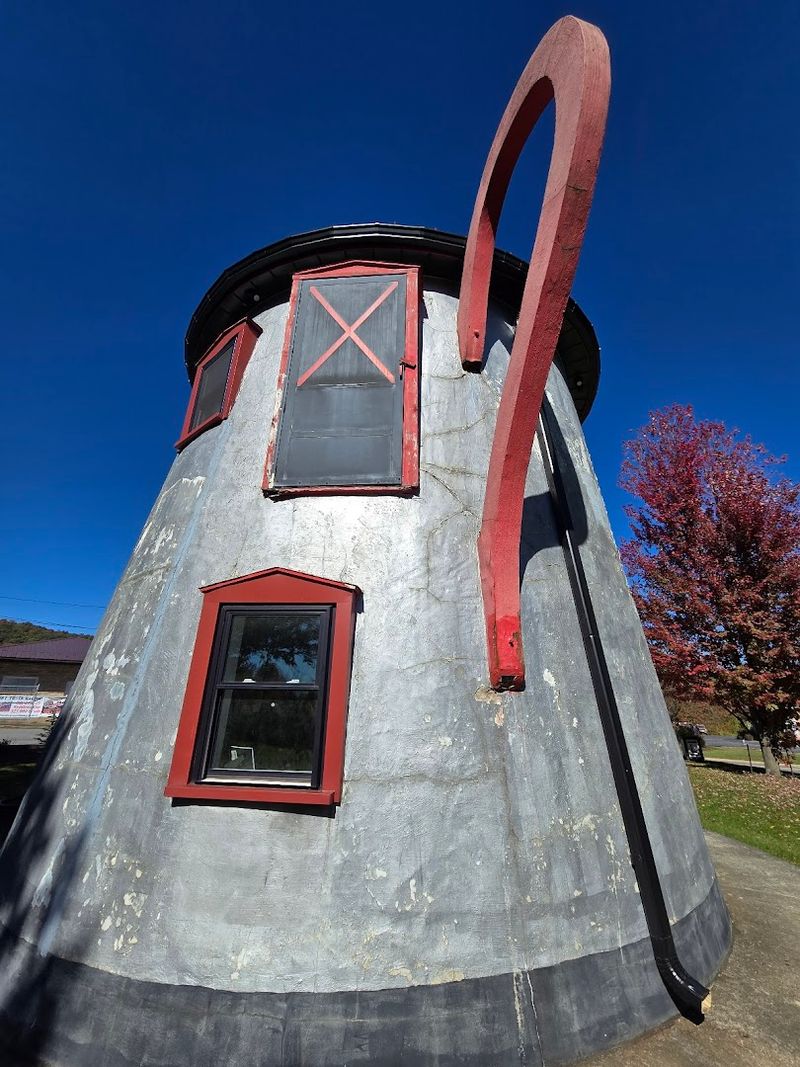
Long before social media made viral marketing a thing, one Bedford businessman figured out that nothing sells coffee like a building shaped like a coffee pot.
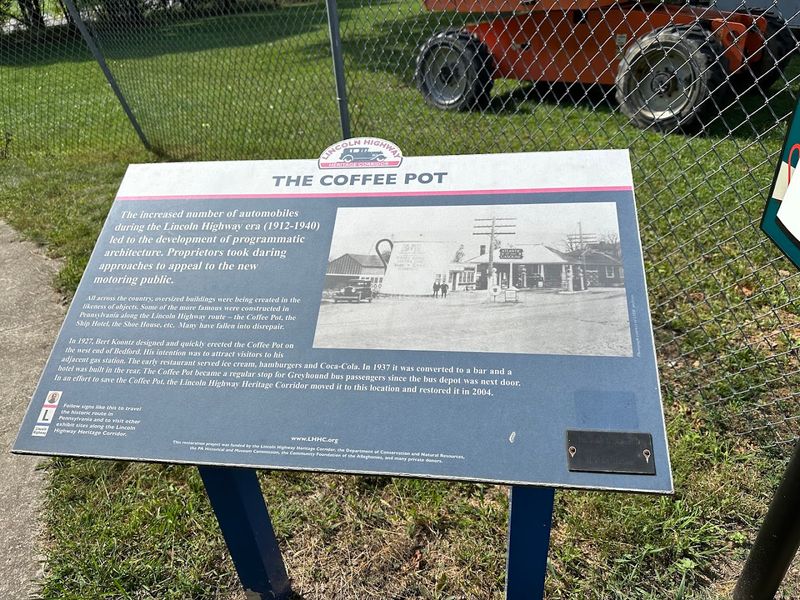
Built around 1927, the Koontz Coffee Pot was constructed as a roadside refreshment stand designed to catch the eye of weary travelers rolling along the Lincoln Highway in Pennsylvania.
The idea was simple and genius at the same time. Make the building look exactly like what you are selling, and people will stop out of pure curiosity.
That instinct turned out to be spot-on, and the structure became an instant local landmark.
This style of architecture is called programmatic or mimetic architecture, where a building physically resembles its product or purpose.
The Koontz Coffee Pot is one of the few surviving examples in the entire country, making it a genuinely rare find for history lovers and road-trippers alike.
The Coffee Pot Stands A Whopping 18 Feet Tall
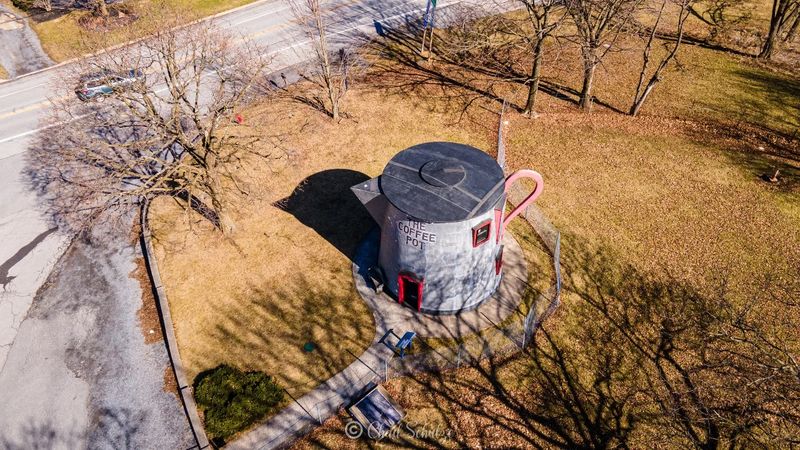
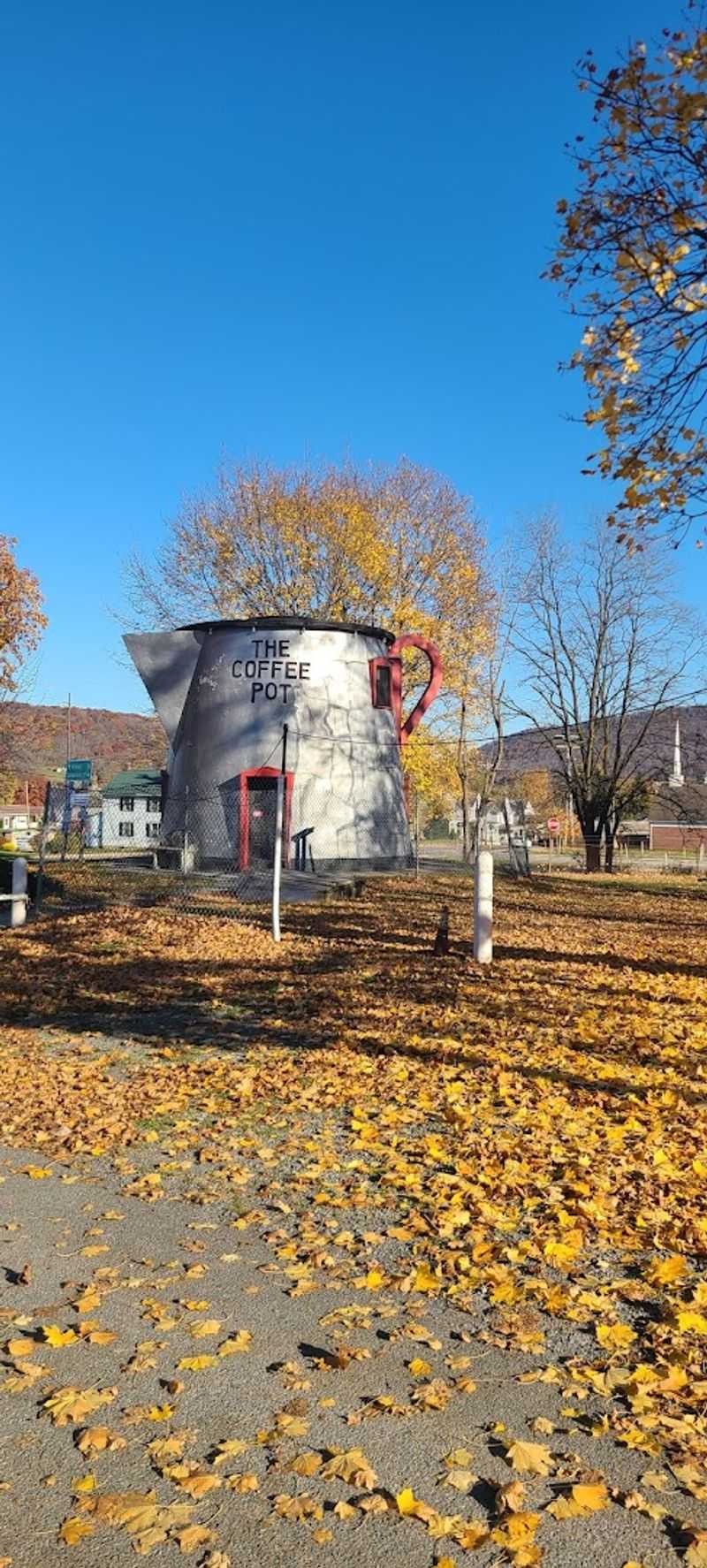
Standing at 18 feet tall, this is not the kind of coffee pot you find sitting on a kitchen counter.
The Koontz Coffee Pot is a full-scale architectural statement, big enough to be spotted from a moving vehicle and impossible to ignore once it catches your eye.
The structure was built from brick covered in sheet metal, shaped with a rounded body, a spout, a handle, and a lid just like the real thing.
For its era, the craftsmanship involved in constructing a building this shape was genuinely impressive and required some creative problem-solving.
I still remember the first time I saw a photo of it and thought someone had digitally edited a coffee pot onto a roadside. Nope, it is completely real.
For a structure that has been standing since the 1920s, the fact that it still holds its shape is a small miracle of old-school American ingenuity.
It Was Originally Located At A Gas Station
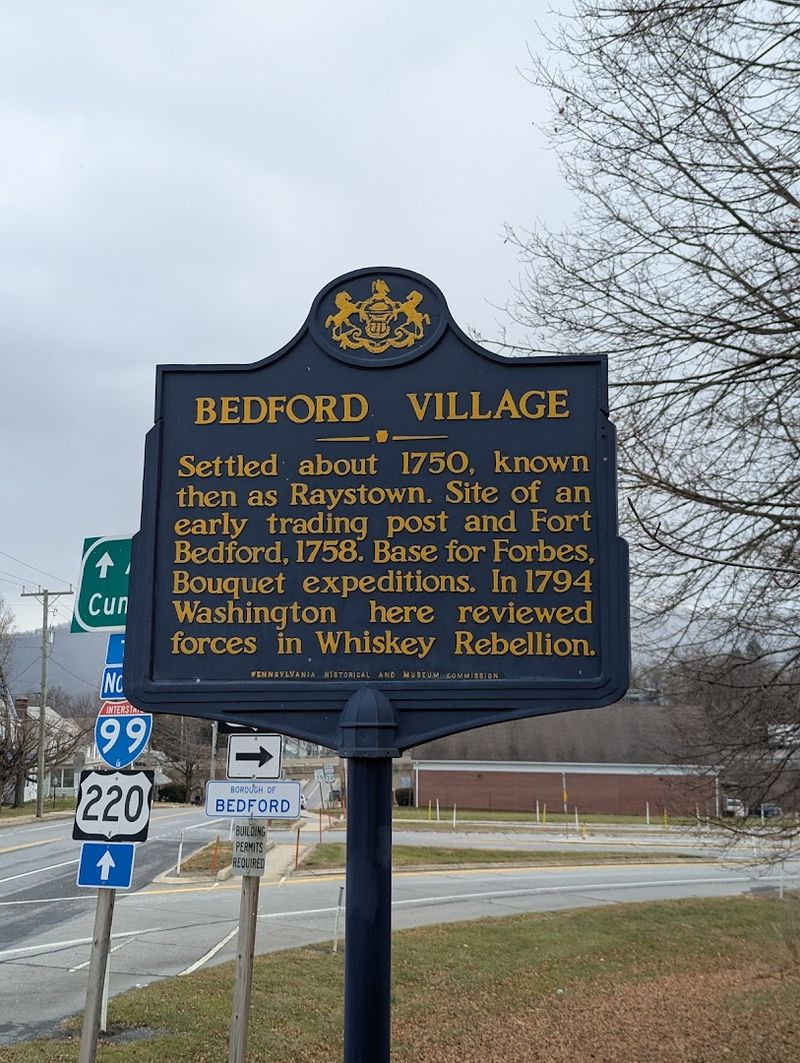
Here is a fun detail that surprises most first-time visitors. The Koontz Coffee Pot did not always sit in front of the Bedford Fairgrounds.
Its original home was at a gas station down the street, where it served as a refreshment stand for drivers stopping to fuel up their vehicles.
Pairing a coffee stop with a gas station was a smart business move in the 1920s, long before convenience stores made that combination standard.
Travelers could fill their tank and grab a hot drink without making two separate stops, which was a genuine time-saver on a long cross-country drive.
At some point, the structure was relocated to its current spot, which some visitors feel takes it slightly out of its original context.
Still, the move helped preserve it from demolition, and that trade-off seems worth it. Knowing its gas station origins makes the coffee pot feel even more grounded in everyday American life from a century ago.
The Address And How To Find It Today
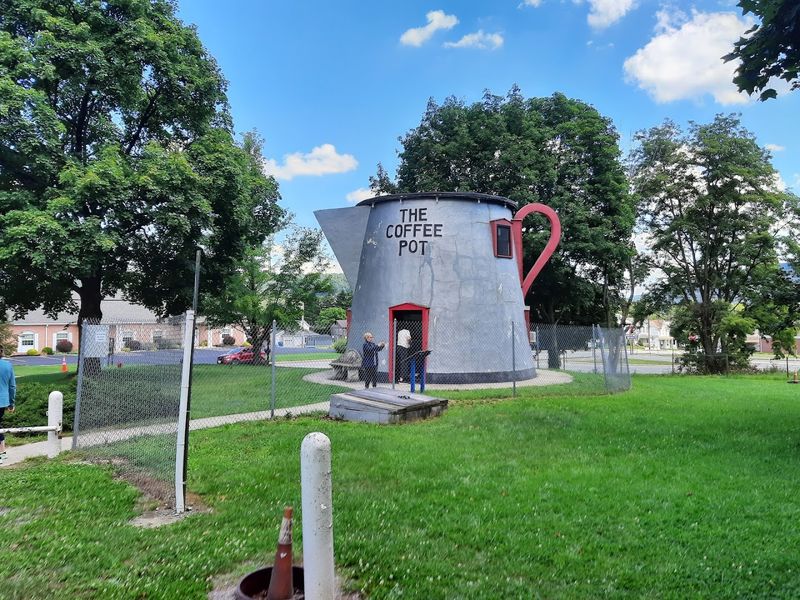
Tracking down the Koontz Coffee Pot is pretty straightforward once you know where to look. The structure is currently located at 714 W Pitt St, Bedford, PA 15522, positioned in front of the Bedford Fairgrounds.
It is right off the main road, so you do not need to wander down any mysterious back streets to find it.
Parking is limited, with space for roughly two to three cars along the side, so pull in carefully and be mindful of the surrounding property, which belongs to the fairgrounds.
The gate area is private, so stick to the designated visitor space. The exterior is easy to view from the roadside, which means you can swing by at any time of day to snap your photos.
For updated local details, it is smarter to check Bedford County Fairgrounds or Bedford-area visitor information before making the trip.
It is a quick, easy stop that fits naturally into any Pennsylvania road trip route.
It Sits Along The Famous Lincoln Highway
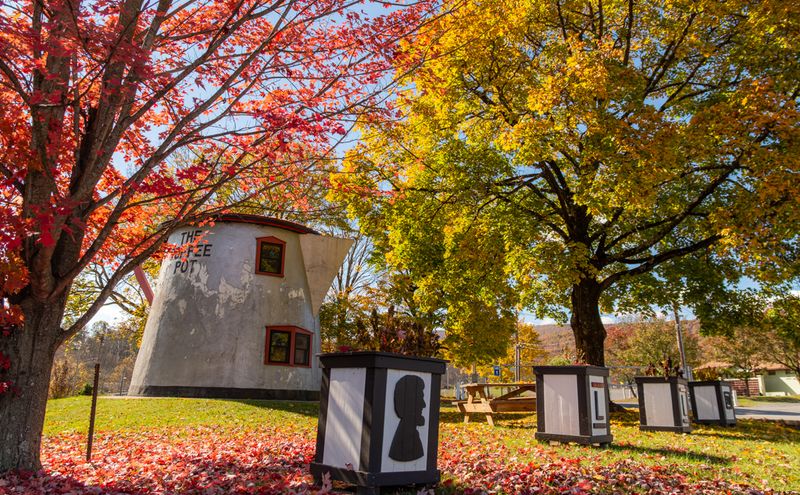
The Lincoln Highway holds a special place in American road history.
Stretching from New York to San Francisco, it was the first paved transcontinental road in the United States, officially established in 1913. Pennsylvania sits right in its path, and Bedford was one of the towns travelers passed through on their long cross-country journeys.
The Koontz Coffee Pot was originally positioned right along this iconic route, making it a natural pit stop for drivers who needed a break and a warm drink.
Back in those days, there were no highway rest stops or drive-throughs, so a roadside stand shaped like a coffee pot was genuinely useful.
That location along the Lincoln Highway is a big part of why this structure carries so much historical weight. It is not just a novelty building.
It is a physical connection to the early days of American road travel, sitting in the heart of Pennsylvania history.
The Building Is A Rare Example Of Programmatic Architecture
Programmatic architecture was a wildly creative movement in early 20th-century America where buildings were designed to look like the products or services they offered.
Think giant hot dogs, oversized ducks, and yes, enormous coffee pots. The goal was pure visual advertising, and it worked brilliantly before billboards took over the landscape.
The Koontz Coffee Pot belongs to this tradition and is considered one of the few surviving structures of its kind in the country.
Most of these novelty buildings were demolished as tastes changed and properties were redeveloped, making the ones that remain genuinely precious to architectural historians.
Pennsylvania has a handful of these quirky gems scattered across the state, and the coffee pot in Bedford is among the most recognizable.
For anyone interested in American design history, stopping here feels less like a tourist detour and more like visiting a living museum exhibit that somehow escaped the wrecking ball through sheer luck and community stubbornness.
A Restoration Effort Is Actively Underway
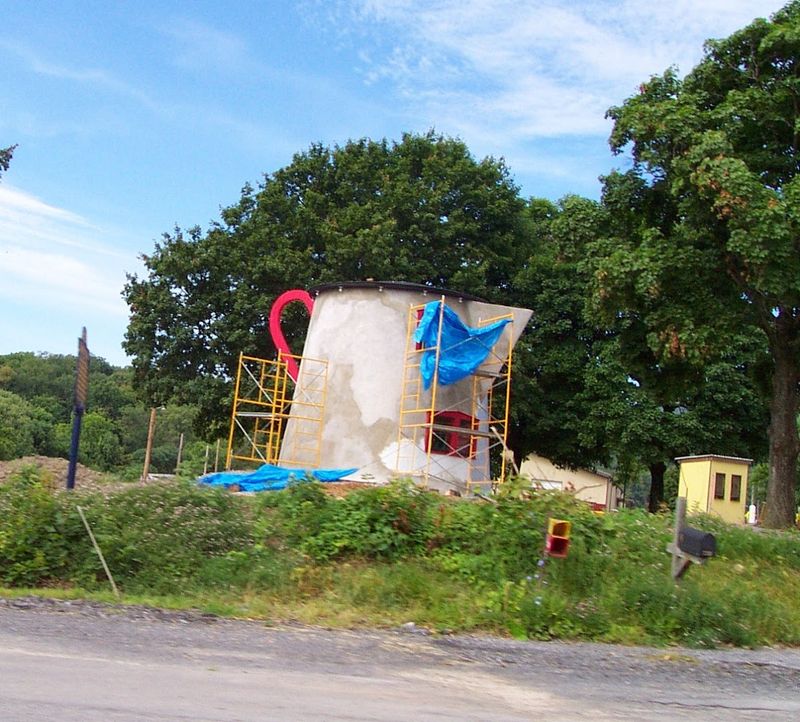
The Koontz Coffee Pot has seen better days, and several visitors have noted that the structure shows signs of wear after nearly a century of standing outdoors. But it has not been forgotten.
A dedicated group of preservation enthusiasts has continued working to rehabilitate the building and raise money toward its ongoing restoration needs.
Restoration projects like this one depend heavily on community support, local historical societies, and sometimes state funding.
Pennsylvania has a strong tradition of preserving its roadside and architectural heritage, and the coffee pot fits naturally into that mission.
There is also an informational sign on-site that explains the history of the structure, giving visitors something to read while they walk around and take photos.
The grounds are described as well-kept, which suggests ongoing care even if full restoration is still a work in progress.
Knowing a community is actively fighting to save this thing makes every visit feel like a small act of support.
The Interior Is Currently Closed To Visitors
One of the most common questions visitors ask is whether you can go inside the coffee pot. In most cases, not during a routine roadside stop.
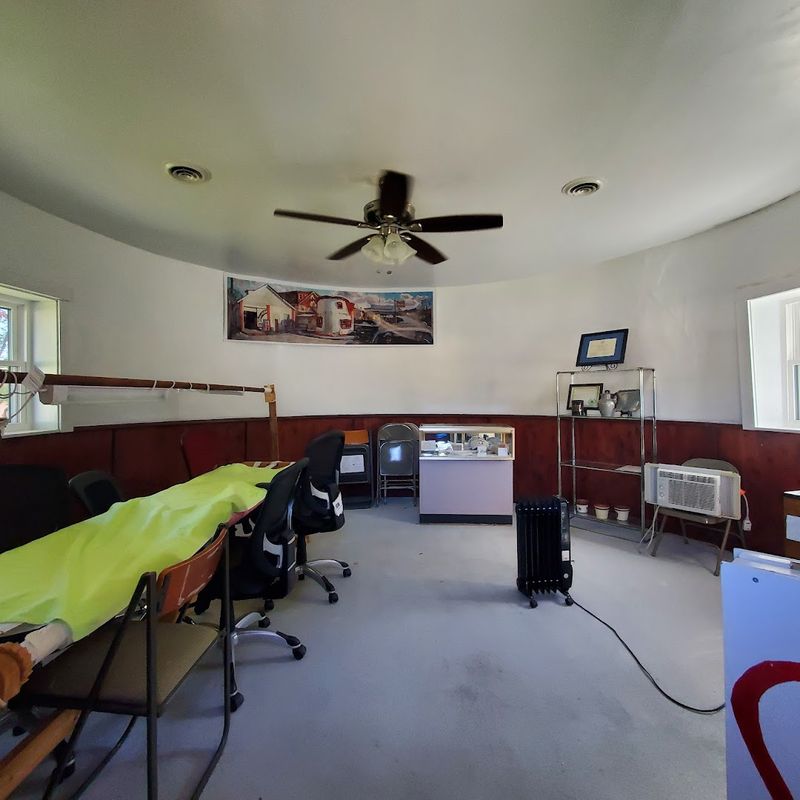
The door is typically closed during regular visits, and the interior is not generally open for everyday walk-in access.
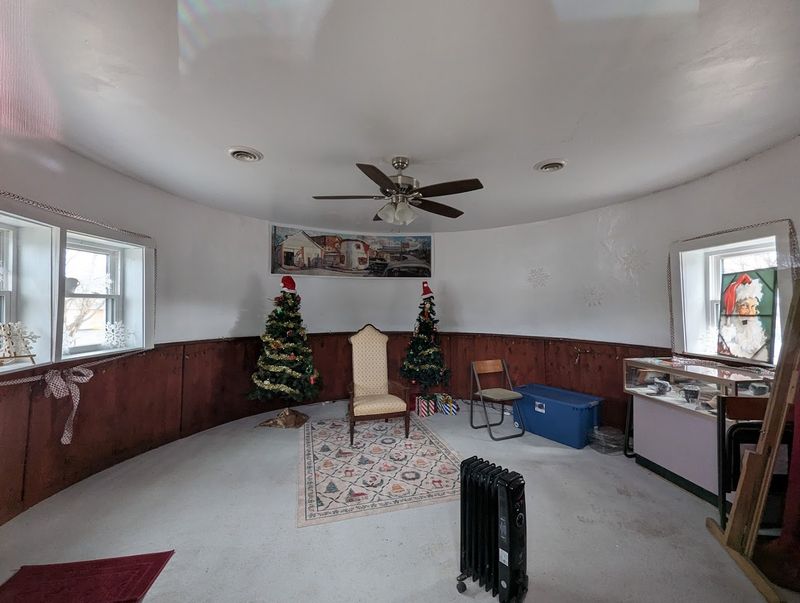
That said, peeking through the windows gives you a glimpse of a small, simple space that was never meant to be a grand hall.
The structure now serves as a museum or gift-shop-type historic space tied to the Bedford County Fair, and it has also been opened during certain fairground events or seasonal occasions.
It is a small detail that adds personality to what could otherwise feel like just an empty shell.
Some visitors have expressed hope that the space could eventually reopen more consistently as a small gift shop or coffee stand, which would be a genuinely charming way to bring the building back to life.
For now, the exterior experience is the main event, and honestly, the outside is impressive enough to justify the stop all on its own.
It Has A Rating Of 4.4 Stars And Draws Visitors From Across The Country
Word has spread about the Koontz Coffee Pot, and its 4.4-star rating from over 327 reviews tells a pretty clear story.
Road-trippers, history buffs, architecture fans, and curious passersby have all made the detour to Bedford, Pennsylvania, and most of them leave genuinely glad they did.
People travel from neighboring states and sometimes much farther to tick this landmark off their road trip lists.
Some stumble upon it by happy accident, taking a wrong exit and suddenly finding themselves face-to-face with an 18-foot coffee pot.
Either way, the reaction is usually the same: surprise, delight, and a quick reach for the camera. What makes a place like this resonate so broadly is that it asks nothing complicated of you.
You show up, you look at a giant coffee pot, you feel a little giddy about the absurdity of it, and you drive away with a story worth telling. That is a pretty solid return on a five-minute stop.
It Represents The Spirit Of Classic American Roadside Culture
There is something deeply satisfying about a landmark that refuses to take itself too seriously.
The Koontz Coffee Pot is a giant coffee pot standing next to a fairground in a small Pennsylvania town, and it has been doing exactly that since the 1920s without apology or explanation.
Roadside Americana culture was built on exactly this kind of spirit.
The idea that a business owner, a builder, or a community could plant something wild and wonderful along a highway and let it become part of the landscape is a uniquely American impulse.
Pennsylvania has held onto that impulse better than most.
Visiting the Koontz Coffee Pot feels like a small act of time travel, a chance to connect with the version of America that built things for the pure joy of catching someone’s attention.
No algorithm, no focus group, just a very large coffee pot and an open road. That is a story worth stopping for.