
10 Places In Utah That Look Like They Belong On Another Planet
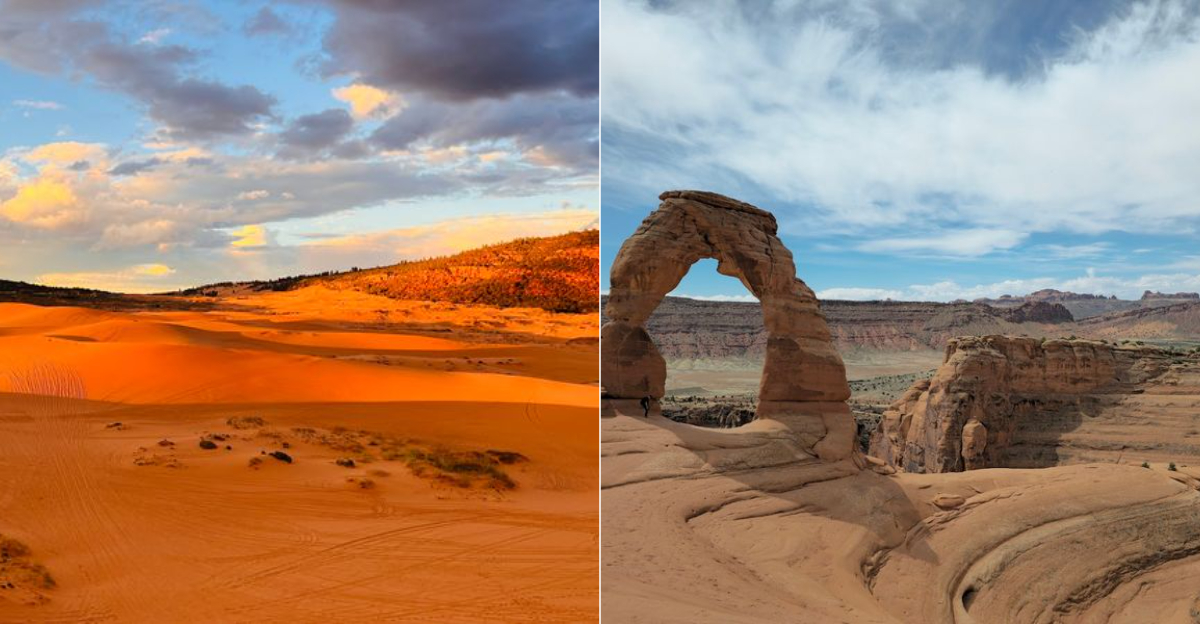
Red rocks. Alien landscapes. Views that make you question if you’re still on Earth. Utah has a funny way of making reality look like science fiction.
One minute you’re standing on solid ground, and the next you’re staring at towering cliffs, twisted rock formations, and endless landscapes that seem like they were designed for a space explorer’s vacation album. But here’s the real question.
Why travel millions of miles to find another planet when some of the strangest scenery in the universe is right here?
From landscapes shaped by millions of years of wind and water to places that look almost too surreal to be real, Utah is full of natural wonders that feel completely out of this world.
Grab your camera, because these places might have you checking your location twice.
1. Goblin Valley State Park
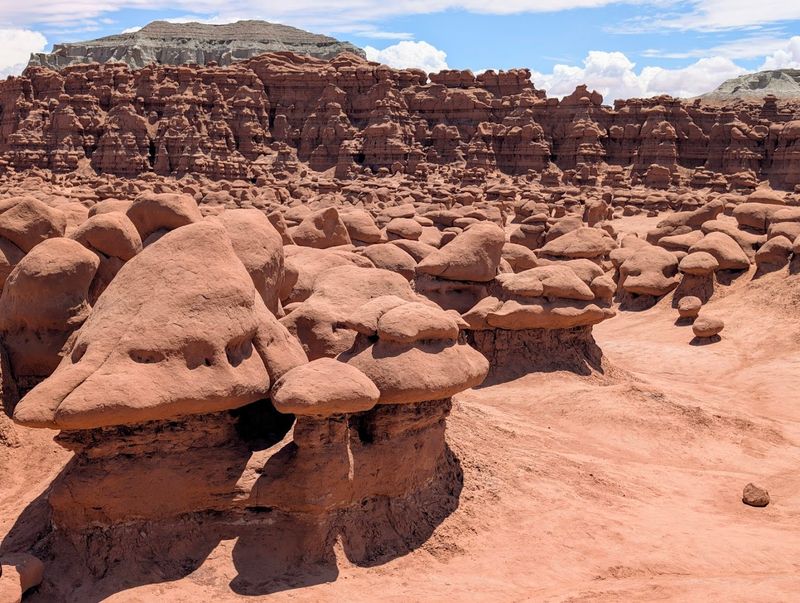
Picture thousands of rounded, mushroom-shaped rock figures scattered across a wide desert floor, and you have Goblin Valley.
It looks less like Earth and more like the set of a low-budget sci-fi film that somehow had an incredible location scout. Located at 18630 Goblin Valley Rd, Green River, UT 84525, this park is one of Utah’s most uniquely bizarre destinations.
The formations here are called hoodoos, though locals affectionately call them goblins. They formed over roughly 170 million years as ancient Entrada sandstone was slowly carved by wind, rain, and ice.
Erosion-resistant rock caps sit on top of softer sandstone below, creating those signature rounded, wobbly shapes that look like they are about to start walking around.
What makes Goblin Valley truly special is that you can wander freely among the formations. There are no roped-off paths here, which means you can weave through hundreds of goblins like you own the place.
The valley floor is open and vast, giving the whole scene a cinematic quality.
Sunrise and sunset are the best times to visit, when the light turns everything a glowing amber. If extraterrestrial vibes had a home address, this would absolutely be it.
2. Bonneville Salt Flats
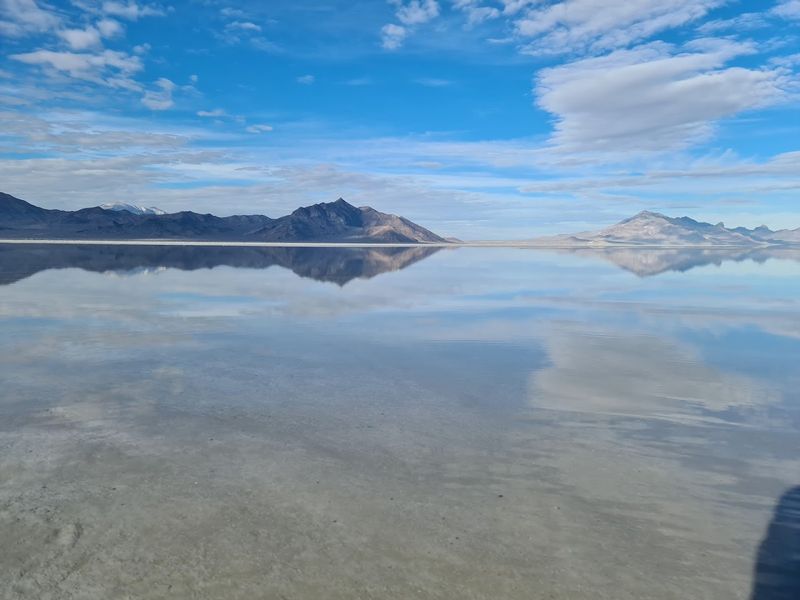
Flat. Blindingly white.
Seemingly infinite. The Bonneville Salt Flats do not look like something that belongs on this planet, and honestly, the science behind them makes them even more fascinating.
Found at Bonneville Salt Flats Access Rd, Wendover, UT 84083, this extraordinary salt pan covers over 30,000 acres of northwestern Utah desert.
The flats are a remnant of prehistoric Lake Bonneville, which covered much of Utah between 14,000 and 32,000 years ago.
As the ancient lake evaporated over thousands of years, it left behind a thick, dense crust of white salt minerals, mostly sodium chloride. The result is one of the flattest surfaces on Earth, so flat that you can actually see the curvature of the planet from ground level.
On hot days, shimmering heat waves create wild mirages across the surface, making it look like a giant liquid mirror.
After light rainfall, a thin layer of water turns the entire flat into a perfect reflection of the sky above, creating a visual effect so surreal it feels digitally edited. Hexagonal salt patterns sometimes form naturally across the surface from freeze-thaw cycles.
Speed records have been broken here for decades, because when your runway is this flat and this long, why not go fast?
3. Bryce Canyon National Park
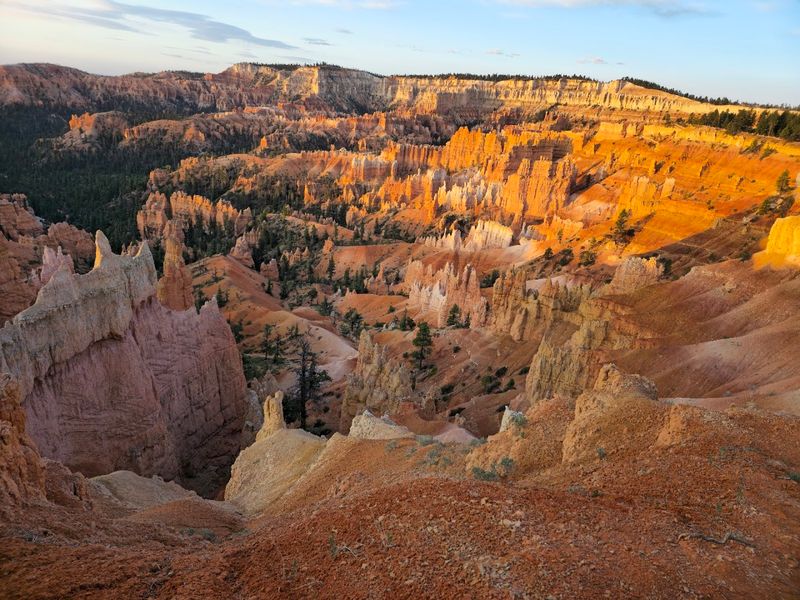
Nobody warned you that stepping into Bryce Canyon would feel like being shrunk down and placed inside a coral reef made entirely of stone.
The scale, the color, and the sheer number of hoodoos packed into this place is almost too much to process at once. Bryce Canyon National Park sits along UT-63, Bryce, UT 84764, high on the Colorado Plateau.
The park is home to one of the world’s largest collections of hoodoos, those narrow spires of rock that shoot upward in clusters like a crowd of stone giants.
These formations were carved from freshwater limestone of the ancient Claron Formation over millions of years. The iron oxide within the rock is responsible for the vivid reds, oranges, and pinks that color the canyon walls in a way that seems almost artificially saturated.
The view from the rim at sunrise is genuinely one of the most cinematic moments nature offers anywhere on Earth.
Hoodoos glow in shades of amber and magenta as the light creeps across the amphitheater. Trails wind down into the canyon floor, letting you walk among the spires and look up at a sky framed by alien-looking rock towers.
Bryce Canyon does not just look otherworldly; it rewires your idea of what a landscape can actually be.
4. Coral Pink Sand Dunes State Park
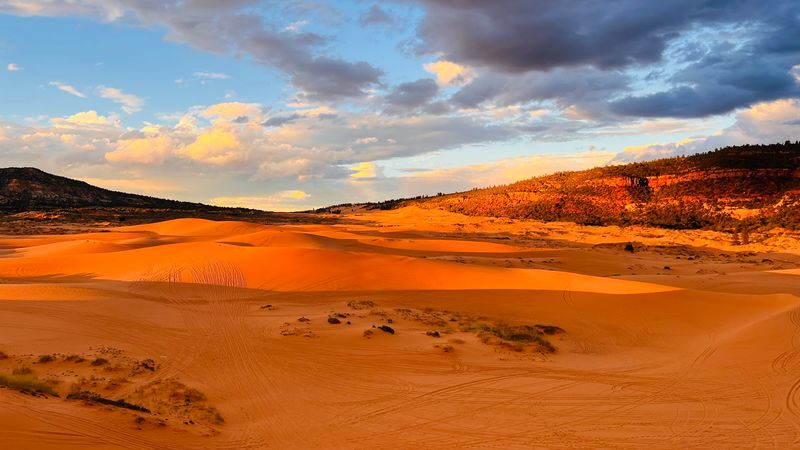
Somehow, Utah decided regular sand was not interesting enough and went full coral pink instead. Coral Pink Sand Dunes State Park is one of those places that makes you stop mid-step and genuinely wonder if the color saturation on your phone is glitching.
Located at 12500 Sand Dune Rd, Kanab, UT 84741, this park spans over 3,000 acres of continuously shifting, brilliantly hued dunes.
The sand gets its signature color from eroding Navajo sandstone, stained by iron oxides that tint each grain a warm, rosy hue.
A natural wind phenomenon called the Venturi effect funnels air through a gap between the Moquith and Moccasin mountains, picking up sand and depositing it here as wind speed drops. These dunes are estimated to be between 10,000 and 15,000 years old, making them ancient by any measure.
Each grain of sand is rounded and polished from constant movement, giving the dunes a silky texture that is oddly satisfying to walk on.
The dunes shift and reshape constantly, meaning the landscape you see today will look different next season.
Morning light turns the whole scene into something resembling a painting, all warm tones and long shadows stretching across soft ridgelines. This is not just a sand dune; it is a full sensory experience that feels genuinely out of this world.
5. Snow Canyon State Park
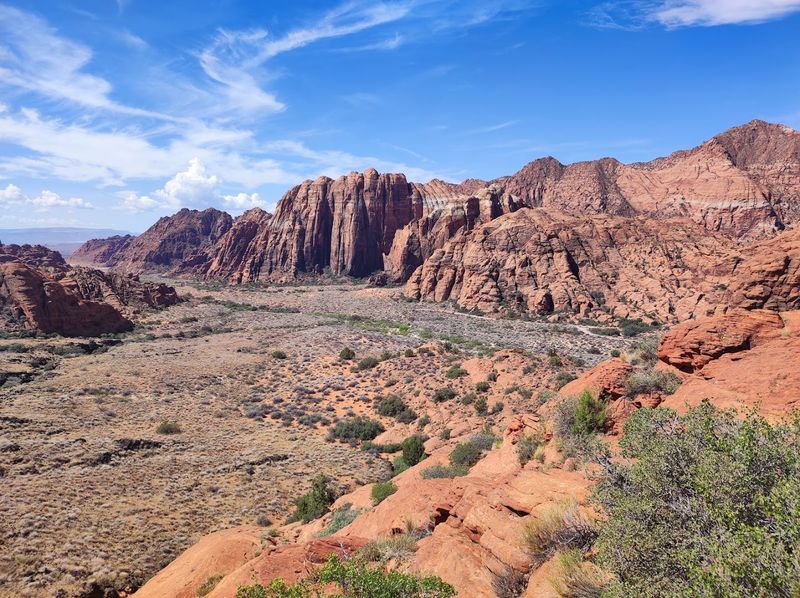
Black lava meets red sandstone meets white cliffs, and the result is a landscape so visually dramatic it looks like three different planets collided in the best possible way.
Snow Canyon State Park, at 1002 Snow Canyon Dr, Ivins, UT 84738, is a geological mashup that somehow works perfectly together.
The park features towering Navajo sandstone formations in vivid shades of red, white, and orange, all dramatically contrasted by dark black basalt lava flows cutting across the terrain.
Volcanic activity in the region produced lava flows as recently as 27,000 years ago, which filled ancient canyons, redirected waterways, and ultimately helped carve the canyon we see today.
The interaction between volcanic rock and ancient sandstone creates a visual tension that is genuinely hard to look away from.
Hidden inside the park are lava tubes, underground tunnels formed when the outer shell of a lava flow cooled and hardened while molten rock continued moving beneath.
Petrified sand dunes, frozen in place within the stone, add another layer of geological storytelling to the canyon walls. Small, dark, spherical iron oxide concretions called Moqui marbles are scattered across the ground like nature left its toys behind.
Snow Canyon earns its alien reputation through sheer geological variety alone.
6. Horse Point State Park
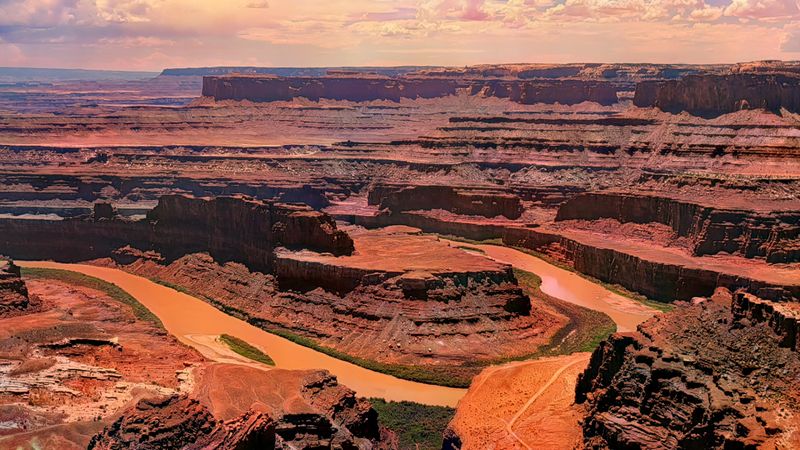
Standing at the edge of Horse Point is one of those rare moments where your brain genuinely struggles to process the scale of what it is seeing.
The view from this mesa stretches across hundreds of millions of years of geological history, all laid out in colorful horizontal layers below your feet. Horse Point State Park is located at UT-313, Moab, UT 84532, perched high above the canyon floor.
The landscape below is a masterclass in geological time. Layers of Navajo Sandstone represent petrified sand dunes from 175 million years ago, while the reddish Wingate Sandstone below it dates back roughly 200 million years.
The Colorado River carved its way through all of it, exposing these ancient strata and creating the dramatic canyon system that unfolds in every direction from the viewpoint.
The mesa itself is a narrow strip of land connected to the surrounding plateau by a thin neck of rock, which is what makes the view feel so dramatic and exposed.
Flat-topped mesas and steep canyon walls create a layered panorama that shifts in color and shadow throughout the day.
At dusk, the canyon glows in deep oranges and purples that make the whole scene feel like a planet-wide sunset. This is the kind of view that makes every long drive feel completely worth it.
7. Kodachrome Basin State Park
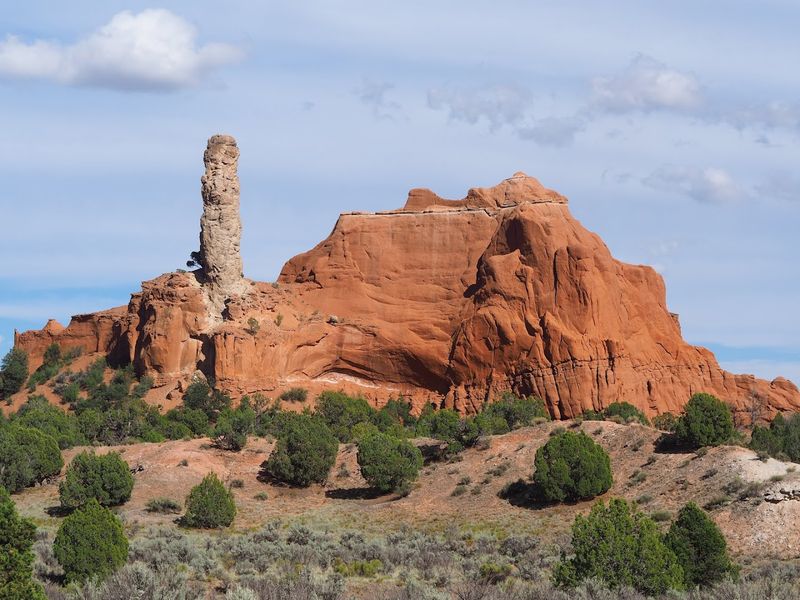
The National Geographic Society named this place Kodachrome after the famously vivid photographic film, and once you see it, that choice makes complete sense.
Kodachrome Basin State Park, at 2905 S Kodachrome State Park Rd, Cannonville, UT 84718, is home to 67 monolithic stone spires that shoot straight up from the basin floor like geological exclamation points.
These formations are called sedimentary pipes or chimney rocks, and they range in height from 6 to 170 feet. The surrounding rock has eroded away over millions of years, leaving these harder sandstone columns standing tall and proud.
Geologists believe they may have formed from ancient geysers or from water-saturated sediments forced upward during seismic activity, though the exact origin is still debated.
The colors here are what truly set Kodachrome apart from every other Utah park. Layers of red, brown, white, and yellow sandstone shift in tone as the sun moves across the sky, turning the basin into a living painting throughout the day.
Trails wind through the formations, offering close-up views of the spires and wide open vistas across the surrounding landscape.
Kodachrome Basin is quieter than its famous neighbors, which makes the experience feel like a private showing of one of Utah’s most spectacular geological collections.
8. Cedar Breaks National Monument
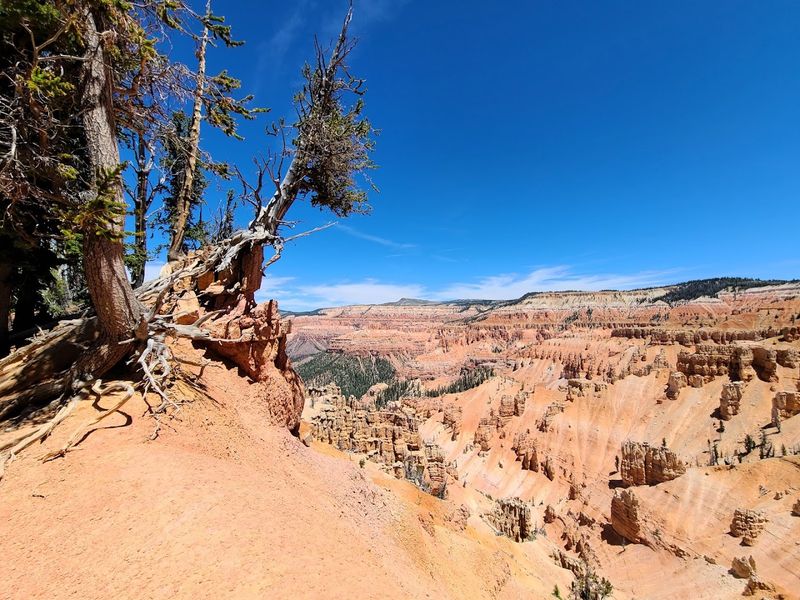
Imagine standing at over 10,000 feet above sea level and looking down into a three-mile-wide natural amphitheater filled with hoodoos, spires, and cathedral-like rock formations in shades of pink, purple, red, and white.
Cedar Breaks National Monument, located at 4730 S Highway 148, Brian Head, UT 84719, is essentially Bryce Canyon’s dramatic, high-altitude sibling.
The amphitheater plunges 2,000 feet deep into the earth, showcasing Claron Formation rocks made of sandstone, limestone, dolomite, and siltstone.
Iron and manganese oxides within the pink limestone create that extraordinary range of warm and cool tones that paint the canyon walls. The whole landscape began forming around 60 million years ago when the region was a vast lake bed, followed by massive geological uplift and intense erosion.
Because of the high elevation, Cedar Breaks gets significant snowfall and remains cooler than lower Utah parks, making it a refreshing summer escape.
Wildflower meadows bloom across the plateau in July and August, adding bursts of color to the already vibrant scene. At night, the monument holds a Gold Tier International Dark Sky designation, meaning stargazing here is extraordinary.
Cedar Breaks is the kind of place that makes you feel small in the best possible way, like the universe is reminding you how wonderfully vast everything truly is.
9. Fantasy Canyon
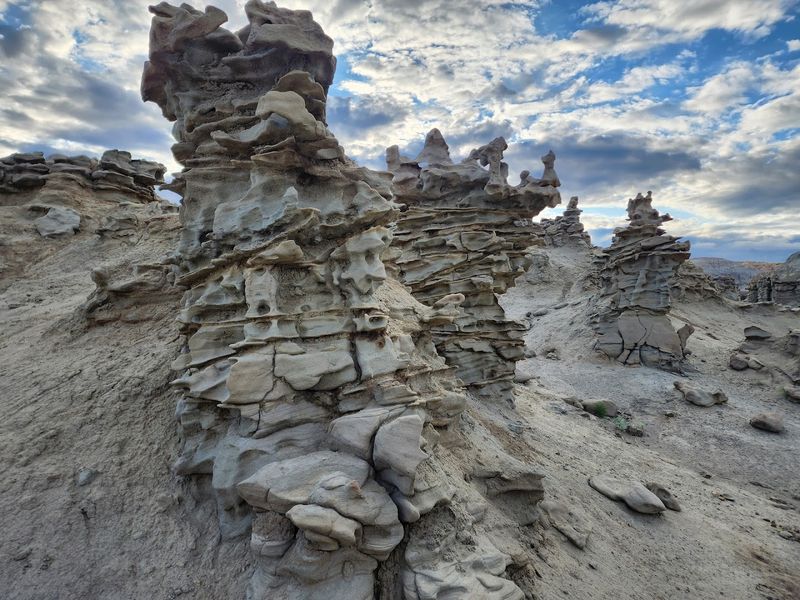
Fantasy Canyon earns its name without any argument. This is a place where sandstone has been sculpted into shapes so strange and intricate that visitors have given individual formations names like The Flying Witch and Alien Head.
Located at Fantasy Canyon Rd, Vernal, UT 84078, this remote spot is one of Utah’s best-kept geological secrets.
The formations here began developing between 38 and 50 million years ago, when the area sat beneath ancient Lake Uinta. Sediments settled on the lake floor and eventually became rock, layered with varying hardness.
Over millennia, differential erosion wore away the softer siltstone and shale, leaving behind incredibly delicate quartzose sandstone sculptures shaped by wind and water into forms that look genuinely surreal.
The structures are fragile enough that the site is often called Nature’s China Shop, a nickname that captures both the beauty and the responsibility visitors carry when exploring here.
Every formation feels like it could have come from a fever dream or a fantasy novel, with twisted shapes, hollow curves, and impossible balancing acts frozen in stone.
Fantasy Canyon sees far fewer visitors than Utah’s famous national parks, which gives it a quiet, almost secretive atmosphere. Finding it feels like discovering something the rest of the world has not quite caught up to yet.
10. Arches National Park
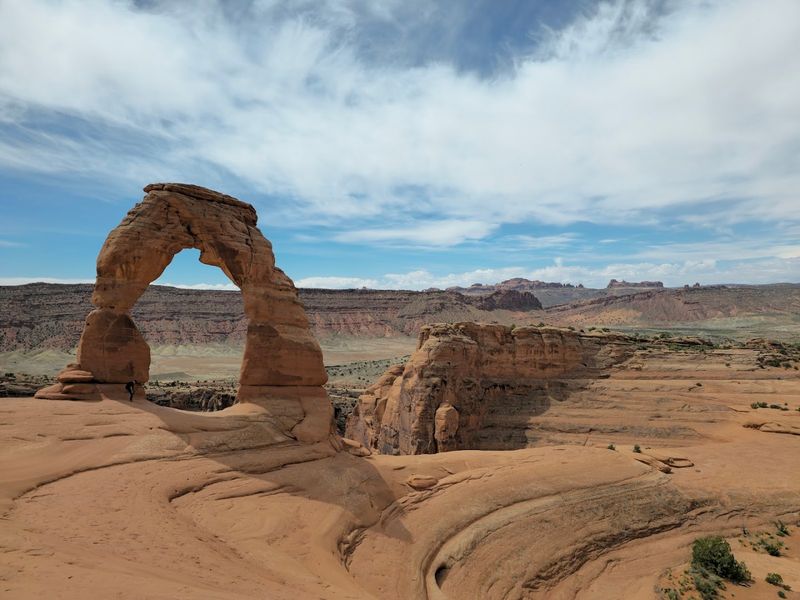
Over 2,000 natural sandstone arches in one park. Let that number sit for a moment.
Arches National Park, found at Arches National Park Rd, Moab, UT 84532, holds the highest concentration of natural arches anywhere on Earth, and the landscape surrounding them is just as spectacular as the arches themselves.
The story of how these arches formed begins over 300 million years ago with an underground salt bed. As the salt shifted and dissolved, the overlying Entrada Sandstone cracked into tall, thin walls called fins.
Wind, water, and ice then patiently carved away at weaker sections of those fins over millions of years, eventually punching through to create the arches we hike to today.
Beyond the arches, the park is full of towering pinnacles, massive balanced rocks, and sweeping red rock fins that create a landscape that feels genuinely gravity-defying.
Delicate Arch, the most photographed of the bunch, stands 52 feet tall and frames the La Sal Mountains behind it like nature designed it specifically for postcards.
The park glows in deep reds and burnt oranges at golden hour, turning every photograph into something that looks almost too beautiful to be real.
Arches National Park does not just belong on another planet, it makes you grateful this particular alien landscape ended up on ours. Have you started planning your Utah road trip yet?