
16 Regional Sandwiches That Deserve Global Fame
Some sandwiches stay local legends, quietly dominating hometown menus without ever making it big beyond their borders.
But tucked inside delis, diners, and corner cafés across the country are handheld creations that pack enough flavor to impress just about anyone, anywhere.
These regional heroes don’t need glitz or fame, just one bite speaks for itself. From saucy and stacked to simple and soulful, these sandwiches are long overdue for their spot on the global stage.
1. Philly Cheesesteak: The Icon of the City of Brotherly Love
Sizzling ribeye steak, gooey cheese, and caramelized onions stuffed into a crusty roll create sandwich perfection born on the streets of Philadelphia.
The debate over proper cheese (Cheez Whiz or provolone?) and the inclusion of peppers divides locals but unites them in hometown pride.
Pat and Harry Olivieri accidentally invented this masterpiece in 1930 when they threw some beef on their hot dog grill.
Their experiment became so popular they opened Pat’s King of Steaks, which still operates today.
2. New Orleans Po’ Boy: The Gulf Coast’s Generous Gift
Crispy French bread cradles fried seafood, roast beef, or other fillings in this New Orleans classic, always dressed with lettuce, tomato, pickles, and mayo.
Legend claims it was created to feed striking streetcar workers in 1929 – the “poor boys” who needed affordable, filling meals during tough times.
Size matters with po’ boys! These massive sandwiches often measure 10+ inches long, requiring both hands and plenty of napkins to tackle properly.
3. Muffuletta: New Orleans’ Italian-Creole Marriage
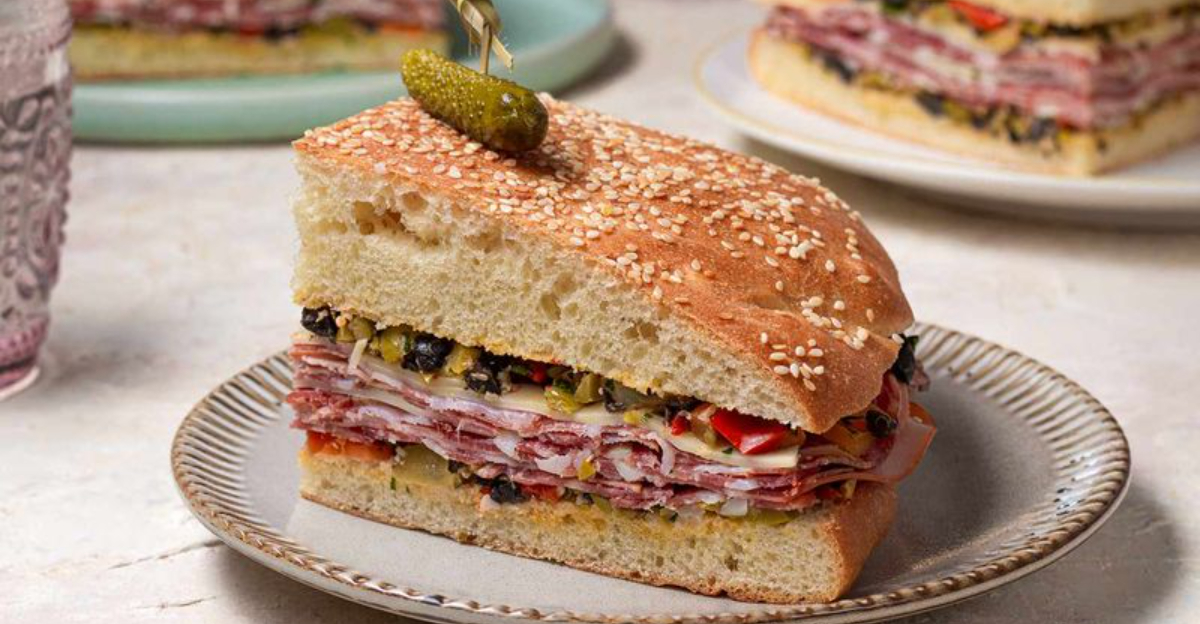
Thick rounds of sesame-studded bread embrace layers of mortadella, salami, ham, provolone, and the star of the show – olive salad soaked in olive oil.
Central Grocery in New Orleans’ French Quarter invented this Italian-American masterpiece in 1906 to feed Sicilian workers.
The signature olive salad needs time to marry its flavors. Locals know a muffuletta tastes better after sitting wrapped for hours, allowing the bread to soak up the tangy, garlicky olive oil.
4. Cuban Sandwich: Tampa and Miami’s Delicious Dispute
Roast pork, ham, Swiss cheese, pickles, and mustard pressed between Cuban bread creates a harmonious crunch that sparks fierce debates between Tampa and Miami.
Tampa’s version includes salami, reflecting its unique immigration history, while Miami purists consider this addition heresy. Cuban workers in Florida’s cigar factories needed portable lunches in the late 1800s.
Their solution? This perfectly balanced sandwich that could withstand the tropical heat while providing sustaining energy for long workdays.
5. Bánh Mì: Vietnam’s French-Inspired Sensation
Crusty French baguettes filled with savory pork, pickled vegetables, cilantro, jalapeños, and creamy mayo create a perfect harmony of textures and flavors.
This culinary crossroads emerged during French colonial rule of Vietnam, combining European bread with local ingredients and spices.
Street vendors throughout Vietnam sell these sandwiches from morning till night.
The magical combination of warm meat and cool, crunchy vegetables makes bánh mì ideal for any weather – from steamy Saigon afternoons to chilly Hanoi mornings.
6. Medianoche: The Cuban Midnight Snack
Sweet egg bread envelops roast pork, ham, Swiss cheese, pickles, and mustard in this nocturnal cousin of the Cuban sandwich.
Its name – literally “midnight” – comes from its popularity as a late-night snack in Havana’s clubs and bars, where dancers needed sustenance after hours of moving to the music.
The secret lies in the bread. Unlike the Cuban’s crusty loaf, medianoche uses a soft, sweet egg bread similar to challah, making it gentler on party-goers’ palates in the wee hours.
7. Reuben: The Contested Casino Creation
Corned beef, Swiss cheese, sauerkraut, and Russian dressing grilled between rye bread creates a sandwich that’s spawned multiple origin stories.
Nebraska’s Blackstone Hotel claims their chef Reuben Kulakofsky invented it in the 1920s during a poker game, while New York’s Reuben’s Delicatessen insists it was their creation.
Regardless of birthplace, the Reuben demonstrates perfect balance. The sharp sauerkraut cuts through rich corned beef, while melted Swiss cheese and tangy Russian dressing unite everything into savory-sour harmony.
8. Lobster Roll: New England’s Buttery Treasure
Sweet, tender lobster meat nestled in a butter-toasted split-top roll represents coastal New England on a plate.
Maine-style serves it cold with mayonnaise and celery, while Connecticut-style features warm lobster meat bathed in melted butter – both are transcendent experiences worth traveling for.
Roadside shacks along Maine’s rocky coastline serve these summer delicacies to eager tourists and locals alike.
The best versions use lobster caught that morning, requiring nothing more than minimal seasoning to let the ocean-fresh flavor shine.
9. Monte Cristo: The Sweet-Savory French Toast Sandwich
Ham and cheese sandwiched between egg-battered bread, then fried until golden and dusted with powdered sugar creates an unforgettable breakfast-lunch hybrid.
This American adaptation of the French croque monsieur took off in the 1950s and became further popularized when Disneyland’s Blue Bayou restaurant featured it.
Serving style varies regionally. Some versions come with maple syrup or fruit preserves for dipping, doubling down on the breakfast-meets-lunch concept that makes this sandwich uniquely indulgent.
10. French Dip: Los Angeles’ Juicy Claim to Fame
Thinly sliced roast beef on a French roll comes with a side of rich, warm beef jus for dipping in this early 20th-century creation.
Two LA restaurants – Philippe’s and Cole’s – both claim to have invented it around 1908, though their origin stories differ on whether it was intentional or accidental.
The sandwich itself is simple, but the technique makes it special. Each bite gets dipped into the savory broth just before eating, transforming ordinary bread and beef into a transcendent hot sandwich experience.
11. Choripán: Argentina’s Grilled Sausage Sensation
Grilled chorizo sausage split down the middle and served on crusty bread creates this South American street food staple.
The name itself combines the two essential ingredients – “chori” (chorizo) and “pan” (bread) – reflecting its beautiful simplicity. No Argentine asado (barbecue) is complete without choripán as a starter.
Topped with chimichurri sauce – a vibrant mix of parsley, garlic, vinegar, and oil – this sandwich transforms humble ingredients into a flavor explosion beloved throughout South America.
12. Pan Bagnat: The French Riviera’s Portable Feast
Round loaves of bread filled with tuna, anchovies, olives, eggs, vegetables, and olive oil create Nice’s answer to the portable lunch.
The name means “bathed bread” in the local Niçoise dialect, referring to how the bread soaks up the olive oil and vegetable juices.
Traditionally wrapped tightly and weighted down for hours before eating, pan bagnat improves with time.
Beach-goers along the French Riviera unwrap these colorful sandwiches after a morning swim, when the flavors have fully melded into Mediterranean perfection.
13. Croque Monsieur: Paris’ Sophisticated Grilled Cheese
Jambon de Paris and Gruyère cheese inside and béchamel sauce on top create this elevated grilled sandwich that’s a staple in French cafés.
The name roughly translates to “Mister Crunch,” aptly describing the contrast between the crispy exterior and creamy interior.
Add a fried egg on top and it becomes a Croque Madame, supposedly because the egg resembles a woman’s hat.
Both versions transform basic ham and cheese into something worthy of lingering over with espresso at a Parisian sidewalk café.
14. Bauru: Brazil’s Melty Masterpiece
Melted mozzarella, roast beef, tomato, and pickles on hollowed-out French bread create this beloved Brazilian sandwich.
Created in 1934 at Ponto Chic restaurant for student Casimiro Pinto Neto, nicknamed “Bauru” after his hometown, the sandwich quickly outgrew its origins.
The preparation method makes it special. Traditional bauristas hollow out the bread’s soft interior before toasting it, then add warm ingredients to the crispy shell, creating a contrast of textures while preventing sogginess.
15. Smørrebrød: Denmark’s Open-Faced Artistry
Dense rye bread topped with precisely arranged ingredients creates these Danish open-faced sandwiches that elevate sandwich-making to an art form.
Traditional versions feature pickled herring, liver pâté, or cold cuts, always garnished with artistic arrangements of fresh herbs, vegetables, and sauces.
Eating smørrebrød follows strict etiquette rules. Danes consume them in specific order (herring first, then other fish, then meat) and always use utensils – never hands!
This deliberate approach transforms a simple lunch into a mindful dining experience.
16. Döner Kebab: Berlin’s Turkish Import Revolution
Slices of seasoned meat shaved from a vertical rotisserie, stuffed into flatbread with fresh vegetables and sauce creates this German-Turkish street food phenomenon.
While kebabs originated in Turkey, the sandwich version was reportedly invented in 1970s Berlin by Turkish immigrant Kadir Nurman.
Today, more döner kebabs are sold in Germany than hamburgers!
Late-night revelers throughout Europe flock to brightly-lit kebab shops, where the combination of savory meat, crisp vegetables, and garlicky sauce provides the perfect end to evening adventures.