
9 Regions In Arkansas With The Highest Cottonmouth Activity This Summer
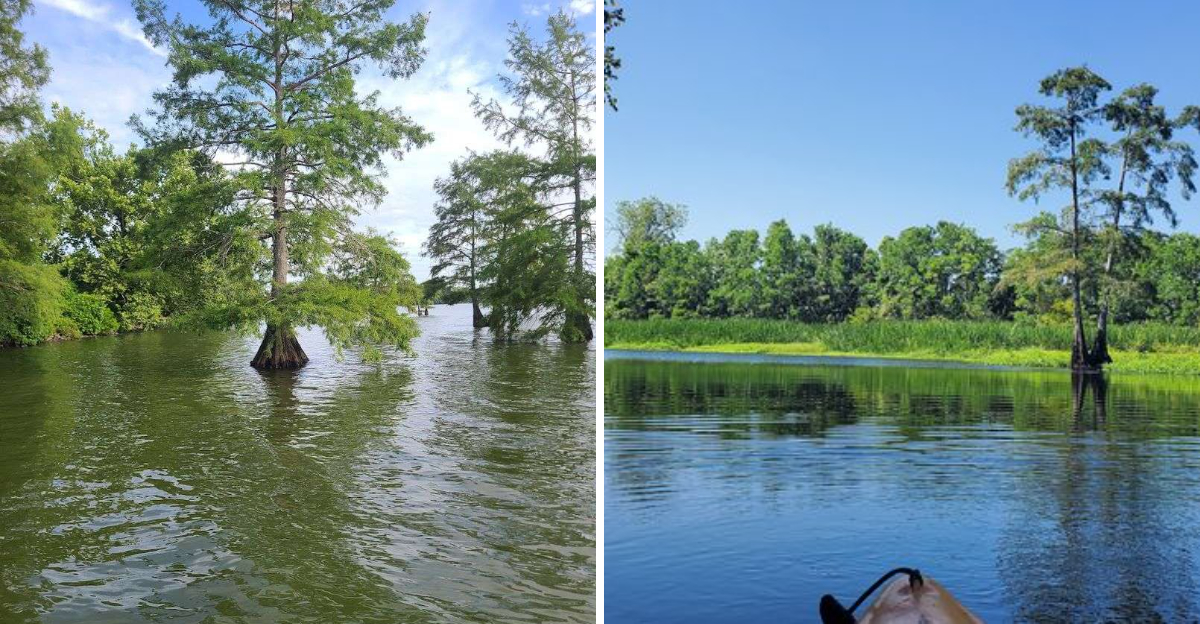
A calm shoreline can look completely harmless until something moves beside the water. That moment reminds visitors that wild places still run on their own rules.
Cottonmouths live in wet habitats throughout Arkansas, especially around swamps, floodplains, and slow backwaters. They are not waiting to chase people, but close encounters can happen when someone steps near cover or reaches into thick vegetation.
The regions in this article share the kind of watery terrain these snakes commonly use during warmer months. Some spots are built for paddling.
Others draw anglers or hikers close to shaded banks and flooded timber. A little awareness goes a long way.
Stay on open paths, look before stepping over logs, and never try to handle a snake. These places remain worth exploring for their scenery and wildlife.
The goal is not to create fear. It is to help every summer outing feel informed, respectful, and safer.
1. Felsenthal National Wildlife Refuge, Crossett
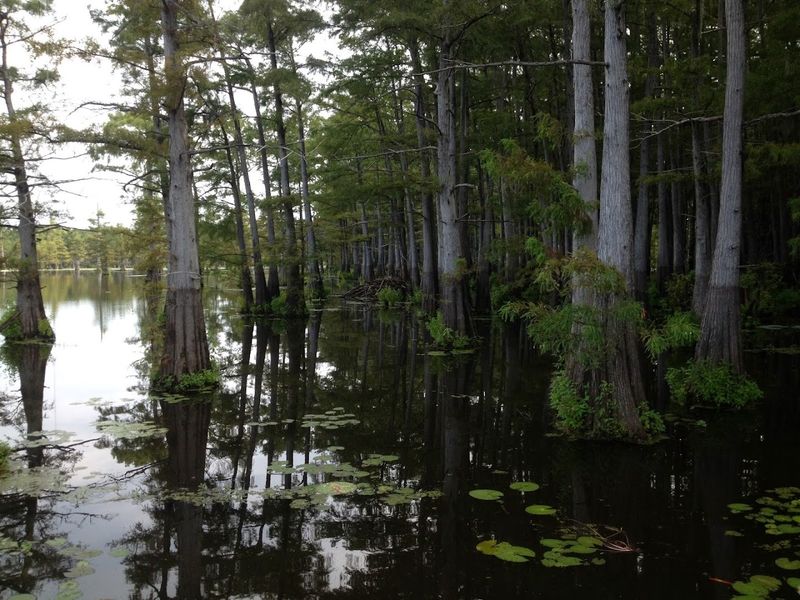
Wild energy fills nearly every corner of Felsenthal National Wildlife Refuge at 5531 US Highway 82 West, Crossett, AR 71635.
Sitting at the confluence of the Saline and Ouachita Rivers in south-central Arkansas, this refuge is a mosaic of rivers, creeks, sloughs, and lakes wrapped inside a vast bottomland hardwood forest.
The basin can hold around 15,000 acres of water, and during flood periods that number can more than double, turning the landscape into a sprawling aquatic world.
That kind of watery terrain is exactly what cottonmouths prefer. Warm, slow-moving water surrounded by dense vegetation gives these snakes ideal conditions for hunting, resting, and going about their summer routines.
Paddlers navigating the Deep Slough or Shallow Lake water trails should keep their eyes on overhanging branches and submerged logs, as cottonmouths are known to bask in both spots.
Over 1,150 species of plants and animals have been documented here, including American alligators, which share habitat with the cottonmouth. Hikers on the refuge’s land trails should wear sturdy boots and stay on marked paths.
Boat ramps, primitive campgrounds, and fishing piers give visitors multiple ways to experience the refuge. The visitor center is a smart first stop for learning what wildlife to expect and how to navigate the area safely this summer.
2. Dale Bumpers White River National Wildlife Refuge, St. Charles
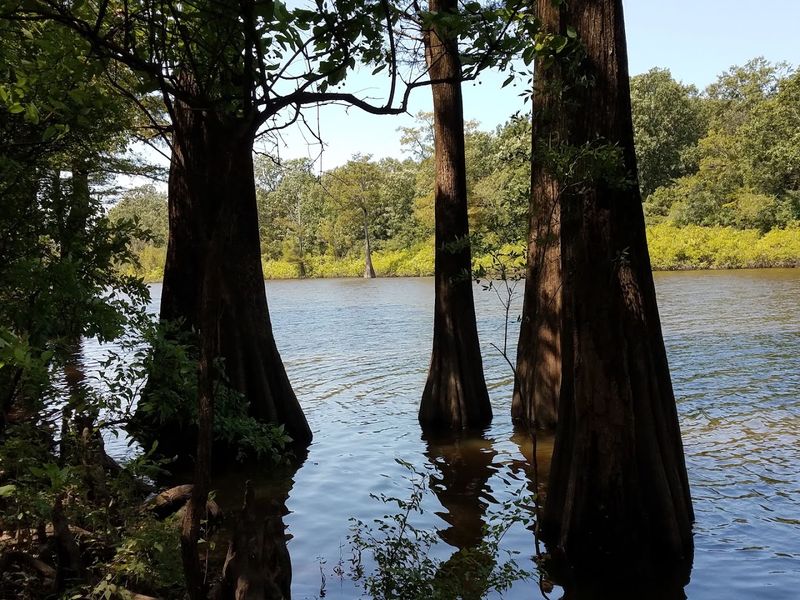
Spread across the White River floodplain where it edges close to the Mississippi River, Dale Bumpers White River National Wildlife Refuge is a heavyweight in terms of both size and biodiversity.
The visitor center sits at 57 South CC Camp Road, St. Charles, AR 72140, and from there you get a sense of just how vast this place really is.
Covering nearly 160,000 acres, it holds the title of the nation’s largest continuous block of bottomland hardwood forest under single ownership.
With 356 natural and man-made lakes, countless streams, sloughs, and bayous woven through the landscape, this refuge is a textbook cottonmouth address.
These snakes are highly capable swimmers and are frequently spotted crossing open water or coiled near the water’s edge waiting for prey.
Summer temperatures accelerate their activity, so early morning and late afternoon hours are when encounters are most likely.
The refuge supports roughly two-thirds of all bird species found in Arkansas and is also home to the state’s only native black bear population, so wildlife encounters here go well beyond reptiles. Fishing, hunting, primitive camping, and wildlife photography draw visitors throughout the warm months.
The visitor center features ecology exhibits that help guests understand what lives in these waters. Staying alert near the shoreline and avoiding reaching into dense vegetation along the banks will go a long way toward keeping your visit both memorable and safe.
3. Cache River National Wildlife Refuge, Augusta
World-class duck hunting put Cache River National Wildlife Refuge on the map, but summer tells a completely different story about what lives in these waters.
Located at 26320 Highway 33 South, Augusta, AR 72006, near both Augusta and Brinkley, this 68,993-acre refuge is celebrated as one of North America’s most critical wintering areas for ducks and holds the largest remaining continuous tract of bottomland hardwood forest on the continent.
The landscape here is a winding puzzle of meandering channels, shallow sloughs, oxbow lakes, and ancient stands of baldcypress and water tupelo. That slow, dark water surrounded by towering trees creates the kind of atmosphere that cottonmouths absolutely favor.
With 48 species of reptiles and amphibians documented within the refuge, you are never far from scaly company while paddling the Bayou DeView Water Trail.
Crappie, bream, and catfish fishing draws anglers to the refuge all summer long, and those fishing near the bank or in shallow coves should scan the water’s surface before wading in.
Birdwatchers and wildlife photographers have plenty to keep their lenses busy, but staying aware of your surroundings near the water is always a good call.
Camping and hiking round out the outdoor options here. Cache River is the kind of place that rewards patience and a sharp eye, whether you are chasing fish, birds, or just the quiet beauty of an ancient forest.
4. Overflow National Wildlife Refuge, Parkdale
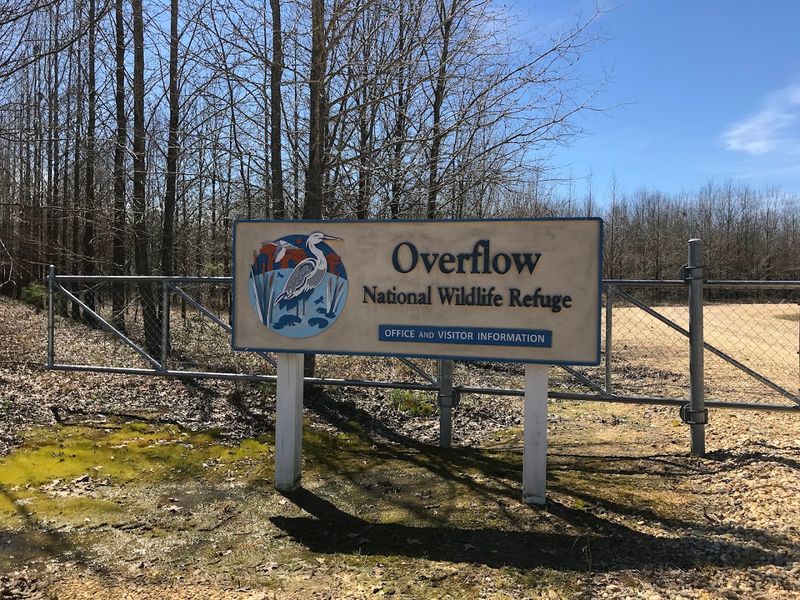
The name alone hints at what kind of terrain you are walking into. Overflow National Wildlife Refuge, located at 3858 Highway 8 East, Parkdale, AR 71661, occupies part of southeastern Ashley County near the Louisiana border.
Established to protect one of the last remaining bottomland hardwood forests essential to waterfowl populations along the Mississippi Flyway, this refuge covers more than 13,000 acres of seasonally flooded forest, impoundments, and croplands.
Willow and overcup oaks dominate the canopy, and beneath them the ground stays wet through much of the summer, creating exactly the kind of low-lying, humid habitat that cottonmouths exploit with ease.
One unusual feature within the refuge is a 230-acre old-growth Sugar Maple and American Beech forest, a rare sight in this part of the country.
Walking or cycling through the refuge’s roads and designated ATV trails means moving through prime snake territory, so keeping your eyes low and your pace steady is good practice.
Public hunting is permitted in designated areas during specific seasons, and the refuge is managed actively to maintain its natural productivity and ecological balance. Birding enthusiasts will find the flooded forest edges particularly rewarding during summer mornings.
Overflow may not have the name recognition of some larger refuges, but its dense, waterlogged character makes it one of the most authentic wild experiences in the region. A slow bike ride through this refuge at dawn is something you will not forget quickly.
5. Pond Creek National Wildlife Refuge, Lockesburg
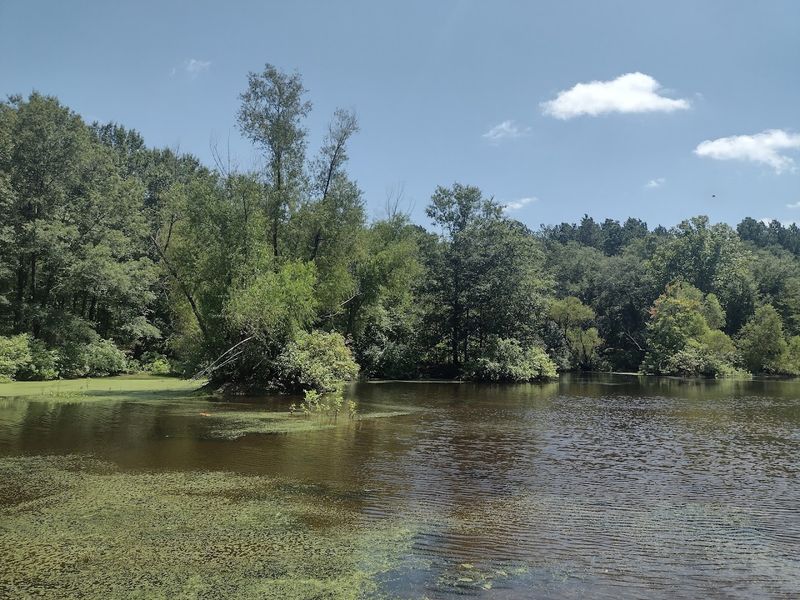
Sitting right where the Central and Mississippi flyways overlap near the Texas and Oklahoma border, Pond Creek National Wildlife Refuge offers a wild corner of Arkansas that feels genuinely off the beaten path. The official address is 1958 Central Road, Lockesburg, AR 71846, in Sevier County.
Nearly 30,000 acres of bottomland hardwood forest fill this refuge, with the Cossatot River forming the eastern edge and the Little River running along the west.
The network of rivers, sloughs, and oxbow lakes that cuts through this forested landscape reads like a cottonmouth wish list. Warm, still backwater areas with abundant prey make this refuge a hotspot for summer snake activity.
What makes Pond Creek particularly notable is that it marks the northern edge of the American alligator’s range in Arkansas, a threatened species that shares the same sloughs and streams where cottonmouths are regularly active.
Waterfowl hunting in the backwater sloughs and lakes is a major draw, and big game and small game hunters also find plenty of opportunity here. Primitive camping lets you fully settle into the rhythm of the refuge, with nights full of frog calls and morning mist rising off the water.
Wildlife viewing is a rewarding pursuit, with over 20 species of migratory songbirds nesting here during the warmer months. Pond Creek is a refuge where the landscape does the talking, and every trail through the trees feels like turning a page in a very good nature story.
6. Millwood State Park, Ashdown
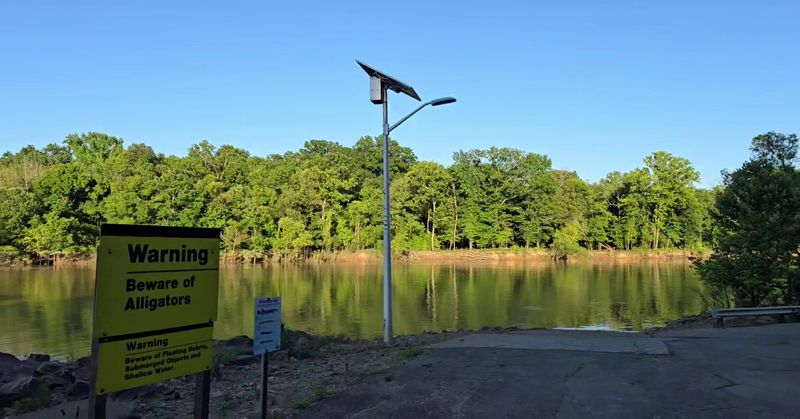
Trophy bass fishing and a surprisingly wild shoreline make Millwood State Park one of southwest Arkansas’s most talked-about outdoor destinations.
The park entrance is at 1564 Highway 32 East, Ashdown, AR 71822, and it sits along the banks of Millwood Lake, a 29,260-acre reservoir known for its submerged timber, marshes, and oxbow cutoffs.
That structural complexity beneath and along the water creates a habitat that supports an extraordinary variety of aquatic and terrestrial life.
Cottonmouths are very much part of that picture. The marshy edges and flooded timber zones around Millwood Lake are classic water moccasin territory, and boaters and bank anglers should stay sharp when working near vegetation-heavy shorelines.
Alligators are also a natural part of the ecosystem here, and the park advises visitors to take precautions on the water, a reminder that Millwood plays by wild rules.
Beyond the reptiles, the park has earned recognition as an Audubon-designated Important Bird Area, with over 300 of Arkansas’s nearly 400 bird species spotted here. White-tailed deer, bobwhite quail, squirrels, and raccoons round out the mammal presence.
Shaded campsites, a marina, picnic areas, and trails like the 4-mile Wildlife Lane Trail and the 1.5-mile Waterfowl Way Trail give visitors plenty of structured ways to explore. Millwood rewards the curious visitor who takes the time to look beyond the fishing rod and notice everything else sharing the water.
7. Lake Chicot State Park, Lake Village
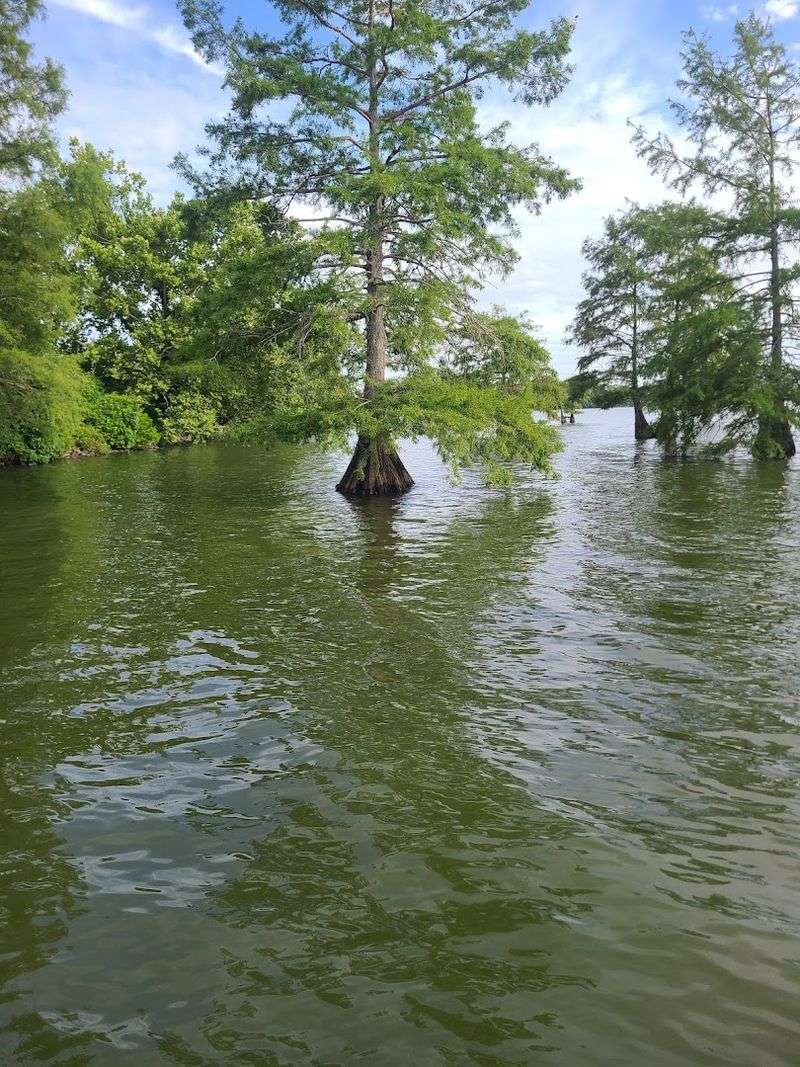
Lake Chicot carries a quiet kind of grandeur that is hard to put into words until you are actually standing at its edge.
The park’s address is 2542 Highway 257, Lake Village, AR 71653, and it wraps around Arkansas’s largest natural lake, a 20-mile-long oxbow formed centuries ago when the Mississippi River shifted course and left this crescent-shaped body of water behind.
Towering cypress trees line much of the shoreline, their roots reaching into the slow, tea-colored water below.
That combination of still water, dense vegetation, and warm summer temperatures makes Lake Chicot a predictably active area for cottonmouths.
Anglers fishing from the bank or in shallow coves should always check their surroundings before settling in, especially near fallen timber or thick aquatic vegetation.
The park also hosts alligator snapping turtles and the occasional alligator, adding to the sense that this is a genuinely wild place operating on its own terms.
Fishing for bream, crappie, catfish, and bass is the main draw for many visitors, while birders make the trip specifically because of the park’s position along the Mississippi Flyway, which turns it into a migratory bird magnet during cooler months.
A nature trail invites hikers to explore the shoreline habitat, and cabins are available for overnight stays.
A swimming pool offers a refreshing option for summer visitors who prefer their water experience a little more controlled. Lake Chicot is a place that earns its reputation one peaceful morning at a time.
8. Arkansas Post National Memorial, Gillett
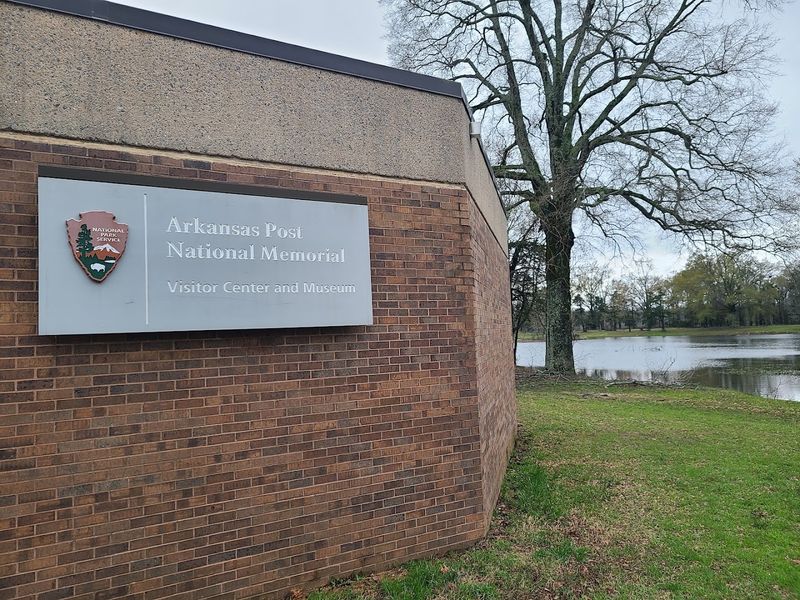
History and nature collide in a fascinating way at Arkansas Post National Memorial, located at 1741 Old Post Road, Gillett, AR 72055.
This site holds the distinction of being the first European settlement in the Lower Mississippi Valley, established in 1686, and it later served as a trading post, military outpost, and even a stage for events during the American Revolutionary War and a Civil War battle.
That layered human history sits inside a natural setting that is every bit as compelling.
The memorial occupies land within the Arkansas River floodplain, a riverine and wetland environment that shares ecological traits with the swamps and bayous found throughout the broader region.
Cottonmouths are well adapted to exactly this type of terrain, where seasonal flooding creates pockets of slow water, dense brush, and abundant prey.
Visitors walking the interpretive trails should treat the surrounding vegetation with the same awareness they would bring to any wetland environment.
The exhibits inside the memorial do an excellent job of connecting the site’s human story to its natural context, helping visitors understand why this particular bend in the river attracted settlers, traders, and soldiers across different centuries.
The peaceful surroundings offer a reflective atmosphere that feels very different from a traditional park experience.
Arkansas Post is one of those rare places where you can think about both the past and the present ecosystem in the same quiet moment. Wear closed-toe shoes and stay on the marked trails for the best experience.
9. Bayou Bartholomew River Trail, Pine Bluff
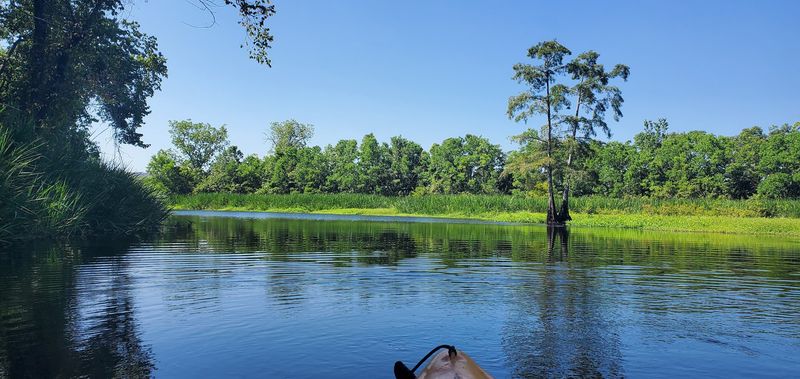
Bold claim, fully earned: Bayou Bartholomew is widely recognized as the longest bayou in the world, and its access point near Pine Bluff at 5401 South Olive Street, Pine Bluff, AR 71603, is the gateway to one of the most biodiverse water corridors in the entire region.
Slow-moving water, towering cypress trees, and dense aquatic vegetation define the character of this bayou from one end to the other.
Those exact conditions make Bayou Bartholomew a prime summer habitat for cottonmouths. Kayakers and canoeists paddling the trail should keep a respectful distance from overhanging branches and root tangles at the water’s edge, as these are favorite resting spots for water moccasins on warm afternoons.
The bayou’s calm surface can make it feel deceptively tranquil, but a sharp eye will reveal just how active the surrounding ecosystem truly is.
Fishing is a highlight here, with the bayou producing solid catches and drawing anglers who appreciate a quieter, more intimate setting than a large open lake.
Wildlife viewing rewards those who move slowly and quietly through the water, with birds, turtles, and aquatic mammals all making regular appearances along the trail.
The bayou’s unique status as a globally significant natural feature makes every paddle feel like a small adventure worth talking about. For anyone who loves the idea of exploring wild water without venturing far from town, Bayou Bartholomew delivers something genuinely special on every visit.