
18 Rhode Island Recipes That Locals Swear Should Never Be Touched
Rhode Island sits small on the map but looms large when it comes to food traditions that locals guard fiercely.
Mess with a recipe handed down through generations, and you might find yourself politely asked to leave the next family gathering.
The Ocean State has dishes that taste like home, history, and honest ingredients, and residents believe they should stay exactly as they are.
Here are a few food treasures that mean so much to so many Rhode Island folks.
1. Rhode Island Clear Clam Chowder
Salt-bright quahog broth, potatoes, onion, a little pork fat. No cream, no tomato, just clean ocean flavor with cracked pepper at the end. Served with oyster crackers and steam rising like low-tide fog.
Locals call this the original chowder, and they mean it. Manhattan style gets the side-eye, and New England cream versions earn polite silence. The clear broth lets quahog sweetness shine through every spoonful.
I once watched a diner send back a bowl because it arrived too thick. The cook had added flour by mistake, and the customer knew immediately something felt wrong.
2. Clam Cakes
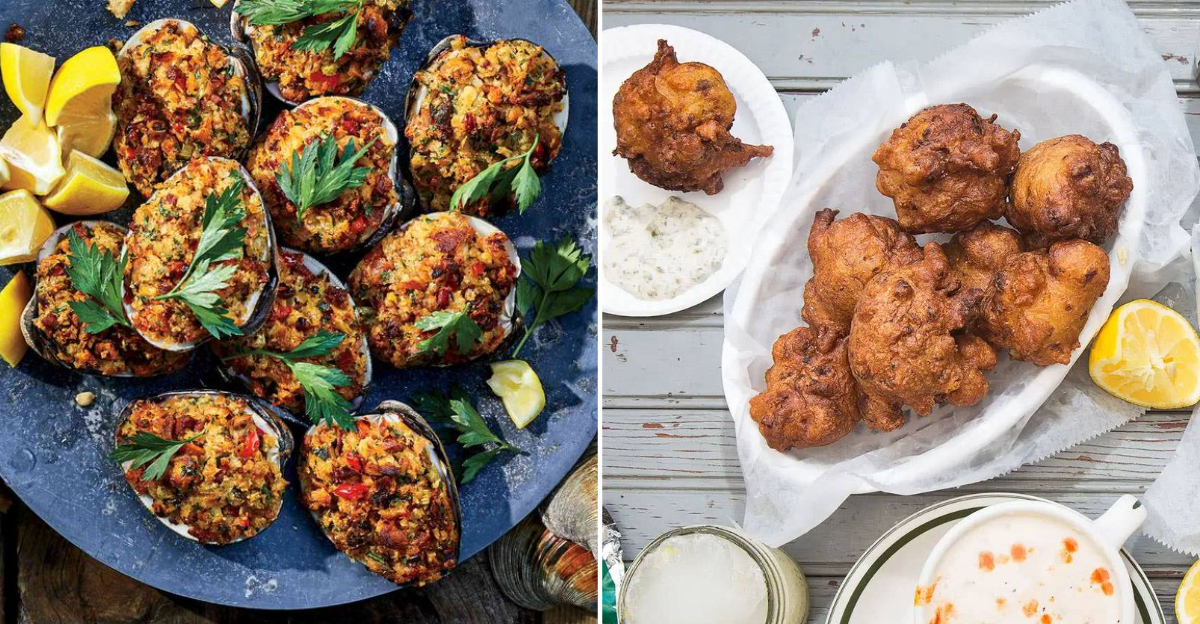
Puffy, craggy fritters studded with chopped quahog, fried till golden and crisp at the edges. Batter stays simple, so the clam sweetness leads. Best dipped in chowder and eaten hot at a picnic table.
These are not hush puppies, and they are not doughnuts. The clam ratio matters, and the fry oil temperature must stay steady. Too much batter turns them into bread balls.
Beachside shacks serve them by the dozen, and locals know which stands use fresh clams versus frozen. The difference shows up in texture and taste every single time.
3. Stuffies (Stuffed Quahogs)
Chopped quahog folded into buttery crumbs with onion, celery, and paprika. Chouriço is welcome, but never overwhelms the clam. Baked in the shell till the top crust smells toasty and the center stays moist.
Every family has a slightly different recipe, but the rules remain the same. The clam must be the star, not the sausage or the seasoning. Shells get saved, scrubbed, and reused for the next batch.
My grandmother used to line hers up on a baking sheet like little boats, each one perfectly browned and smelling like summer cookouts.
4. Rhode Island Clam Boil
A pot perfumed with quahogs, potatoes, onions, and chouriço, sometimes a hot dog for old-time flair. Spice bag sets the broth, not fancy aromatics. Bowls arrive steaming, with bread for dunking and butter on standby.
This is backyard cooking at its finest, no frills or fuss. The hot dog addition might sound strange to outsiders, but it adds a nostalgic snap that locals grew up loving. Broth gets sopped up with crusty rolls.
Timing matters here because overcooked clams turn rubbery fast. Everyone gathers around the pot, and the first ladle signals the start of a proper Rhode Island meal.
5. South County Jonnycakes
Stone-ground whitecap flint corn, water, salt, and patience on a hot griddle. Edges go lacy, centers stay custardy, corn aroma fills the kitchen. Topped with butter or a drizzle of syrup, never buried under add-ins.
South County style means thin and delicate, while other regions might go thicker. The corn itself makes all the difference, and locals insist on using Rhode Island-grown whitecap flint. Substitutes just do not taste right.
I tried making these once with regular cornmeal, and they came out flat and bland. Real jonnycakes have a toasty, almost nutty flavor that store-bought cornmeal cannot replicate.
6. Hot Wieners, New York System Style
Snappy veal-pork wieners on steamed buns with mustard, warm meat sauce, chopped onion, and celery salt. Lines of five or six get dressed up-the-arm at the counter. No ketchup, ever.
The New York System name confuses tourists, but Rhode Islanders know exactly what it means. The meat sauce has a spiced, slightly Greek-inspired flavor that sets it apart from chili dogs. Celery salt adds the final salty punch.
Order them three at a time, and watch the counterperson work with lightning speed. Buns get steamed, wieners get nestled, and toppings get layered in seconds flat.
7. Coffee Milk
Cold milk kissed with coffee syrup until the color turns caramel and the glass sweats. Sweet, roasty, simple childhood in a tumbler. No espresso shots, no foams, just syrup and milk.
This is the official state beverage, and locals grow up drinking it at breakfast, lunch, and dinner. Coffee syrup brands matter, and most Rhode Islanders have a favorite they stick with for life. The flavor leans sweet but never cloying.
I remember my first sip at a diner counter, expecting something bitter. Instead, it tasted like liquid nostalgia, smooth and comforting, with just enough coffee kick to keep things interesting.
8. Coffee Cabinet
Milkshake built from ice cream, milk, and coffee syrup, blended thick enough to hold a straw upright. Flavor leans creamy and roasty, not bitter. Served frosty, never thinned with ice.
Calling it a milkshake will get you corrected fast. In Rhode Island, it is a cabinet, named after the wooden cabinets that once housed the blending machines. The texture should be spoon-thick, not sippable.
Diners and ice cream shops serve these year-round, and locals order them even in January. The coffee syrup blends perfectly with vanilla ice cream, creating a dessert that tastes like childhood summers.
9. Doughboys
Beach-stand slabs of fried dough dusted with powdered or cinnamon sugar. Bubbles crackle, centers pull soft, fingers get sticky. Eaten hot from a paper plate, not air-fried, not healthified.
These are summertime staples at every Rhode Island beach and boardwalk. The dough puffs up in hot oil, creating crispy edges and tender middles. Sugar clings to every surface, and napkins become necessary immediately.
I once tried baking these at home to cut down on oil, and they turned out dense and sad. Doughboys need hot oil to achieve that perfect crackle and chew combination.
10. Bakery Pizza Strips
Room-temperature slabs with focaccia-soft crumb and a glossy, sweet-tangy red sauce. No cheese on top, just sauce that stains napkins and smiles. Wrapped in white paper for parties and Sunday visits.
Bakeries sell these by the tray, and they show up at every family gathering, school event, and church function. The sauce has a slight sweetness that balances the tangy tomato. No one expects them hot, and no one wants cheese added.
My first encounter with these left me confused. Pizza without cheese seemed wrong, but one bite changed my mind. The sauce and bread combination works perfectly on its own.
11. Zeppole di San Giuseppe
St. Joseph’s Day ritual, tender shells piped with silky pastry cream and a cherry on top. Orange zest whispers in the filling, powdered sugar drifts like snow. Eaten fresh, never day-old.
Every March, Italian bakeries in Rhode Island start turning out trays of these delicate pastries. The shells stay light and airy, and the cream filling tastes rich without being heavy. Orange zest adds a subtle brightness.
Families order them by the dozen, and they disappear fast. Day-old zeppole lose their magic, so locals know to eat them the same day they are made.
12. Grape-Nut Pudding
Custard speckled with cereal that sinks into a soft, nutty layer. Warm vanilla scent, spoon-carved valleys, cream on top if you like. No chocolate swirls, no modern twists.
This old-fashioned dessert shows up at church suppers and family dinners, beloved for its simplicity. The cereal adds texture without turning mushy, and the custard stays smooth and vanilla-forward. Some folks eat it warm, others prefer it chilled.
I remember my aunt serving this at Thanksgiving, and I thought it sounded strange. One taste proved me wrong. The nutty cereal and creamy custard combination felt comforting and familiar.
13. Rhode Island-Style Calamari
Lightly fried rings and tentacles tossed with garlic butter and pickled hot peppers. Heat, salt, and lemon balance the crunch. Served fast so the coating stays crackly.
This is not the marinara-dunked calamari found elsewhere. Rhode Island style means hot peppers mixed right in, adding vinegar tang and spice. The garlic butter coats everything, and lemon brightens each bite.
Restaurants across the state serve this as a signature appetizer, and locals judge seafood spots based on their calamari. Soggy coating or bland seasoning means the kitchen does not understand Rhode Island standards.
14. Clams Casino
Littlenecks crowned with buttery crumbs, bacon, and diced peppers. Bacon crisps, clam juices bubble, parsley brightens. No overload of cheese, just a savory halo around the clam.
This dish originated in Rhode Island, and locals take pride in that fact. The topping should enhance the clam, not bury it. Bacon adds smokiness, peppers add color, and breadcrumbs add crunch.
I tried a version once that had so much cheese it turned into a gooey mess. The clam flavor got lost completely. Rhode Island style keeps things balanced and lets the clam shine through.
15. Chouriço and Peppers
Smoky Portuguese sausage simmered with onions, peppers, and a hint of tomato. Oil turns brick red, kitchen smells pepper-sweet and savory. Tucked into a grinder roll or spooned over rice, nothing fussy.
Portuguese influence runs deep in Rhode Island, and this dish shows up at festivals, family tables, and sandwich shops. The sausage releases flavorful oils that coat the peppers and onions. Simple ingredients, big flavor.
My neighbor used to make this every Sunday, and the smell would drift through open windows. The sausage had a slight kick, and the peppers stayed tender but not mushy.
16. Spinach Pies
Golden turnovers packed with garlicky spinach, sometimes a little feta or mozzarella. Steam puffs when you break one open, oregano perfumes the bite. Eaten warm from a bakery bag, not reinvented with kale.
Bakeries across Rhode Island sell these alongside pizza strips and rolls. The pastry stays flaky, and the filling tastes bright with garlic and herbs. Some versions add cheese, others keep it simple with just spinach and seasoning.
I used to grab one on my way to work, still warm from the oven. The garlic aroma filled my car, and I could barely wait to take the first bite.
17. Snail Salad
Thin-sliced whelk marinated with lemon, olive oil, celery, and black olives. Texture stays tender with a pleasant chew, herbs stay bright. Served chilled at family tables and feast halls, not drowned in mayo.
This Italian-American tradition shows up at festive occasions and special dinners. The whelk gets sliced thin so it stays tender, and the marinade keeps things light and tangy. No heavy dressings or creamy additions allowed.
My first encounter with this dish made me hesitant. The name sounded intimidating, but the flavor turned out fresh and briny, with just enough lemon to balance the ocean taste.
18. Fried Clam Bellies
Whole-belly clams dipped light, fried quick, and salted while whisper-hot. Briny gush at first bite, sweet aftertaste, crisp shell. Always whole bellies, never strips.
Locals know the difference between belly clams and strips, and they will not settle for the latter. The belly holds the sweet, briny liquor that bursts when you bite down. Strips taste like rubbery disappointment by comparison.
I watched a clam shack refuse to serve strips even when a customer requested them. The owner simply said they do not cut corners, and the customer ended up ordering bellies. One taste, and they understood why.