
Sandhill Cranes Fly Over Illinois By The Thousands Each Fall, And These 10 Spots Put Families Under Them
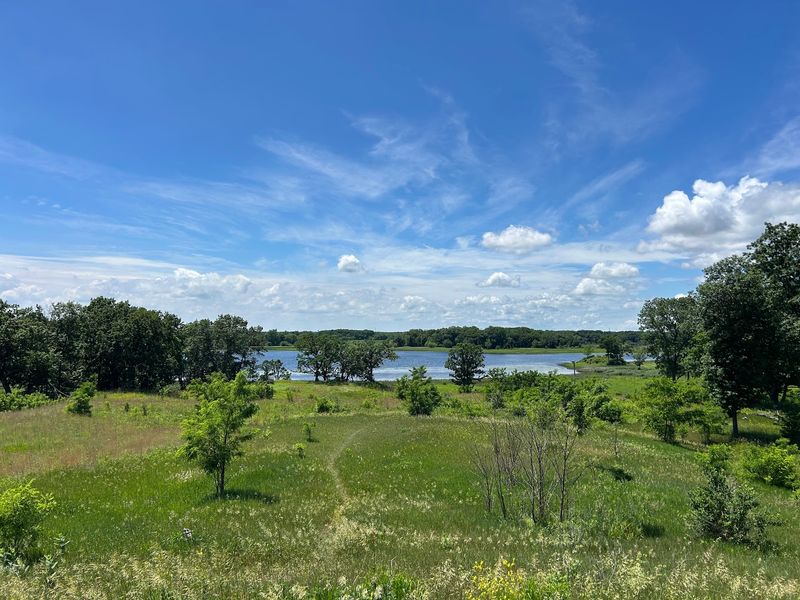
Listen closely on a cool October morning in Illinois and you might hear a rattling, rolling call drifting down from far above. That sound belongs to sandhill cranes, birds that stand up to four feet tall and stretch their wings about seven feet wide.
Roughly 20,000 of them pass over the state from mid-September through mid-November, stopping in northern Illinois to rest and refuel. The best part for families is that watching this free sky show costs nothing but a little patience and a warm jacket.
1. Carl And Myrna Nygren Wetland Preserve
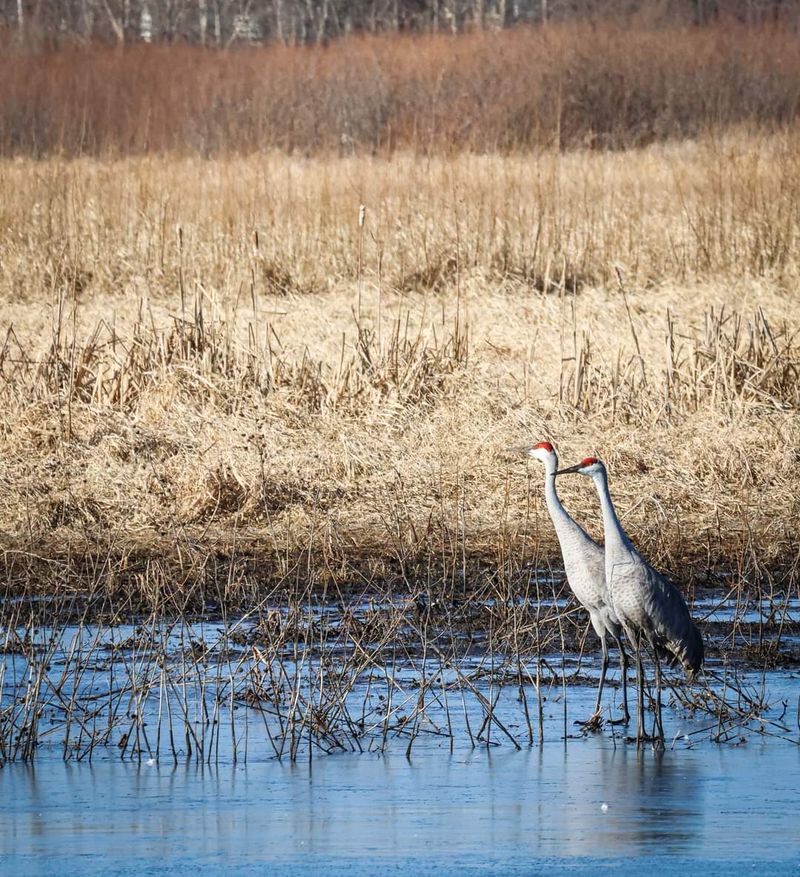
Pelicans, otters, turtles, storks, and sandhill cranes all share the same slice of marsh along West Rockton Road. That lineup alone makes this preserve near Rockton, a small village in northern Winnebago County close to the Wisconsin line, a standout first stop.
Restored prairie rolls right up to the wetland edges, giving cranes plenty of room to land, feed, and call to each other. Fall is when the open grasses turn gold and the birds become easier to pick out against them.
A viewing deck overlooks the water, so little legs get a break while grown-ups scan the horizon.
Families will appreciate how simple the visit is. Parking is free, both in the lot and along the street, and the hiking trails are easy enough for younger kids to handle without complaint.
No ticket booth, no admission fee, just walking paths and big sky.
Bring a thermos of cocoa and a pair of binoculars, then settle in on the deck as the morning light spreads across the marsh. Kids tend to remember the first time they hear that wild bugling call overhead.
Out here, it often arrives before you even spot the birds making it.
2. Glacial Park Conservation Area
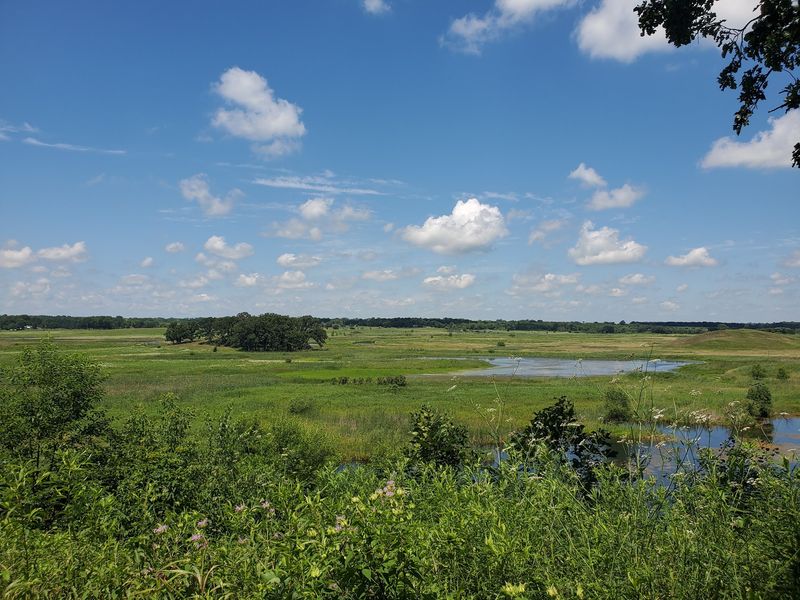
Thousands of years ago, retreating glaciers left behind the lumpy hills you see at Glacial Park. Geologists call them kames, and kids usually call them the best climbing hills in McHenry County.
Spread across about 3,400 acres near tiny Ringwood, a village of fewer than 1,000 people, the park packs prairie, bog, marsh, and old-growth oak savanna into one sprawling landscape. That mix is exactly why sandhill cranes love it.
Wide open space means you can often watch flocks glide in from a long way off, wings set, legs dangling as they drop toward the wetlands.
Miles of trails wind over the rolling terrain, and the paths are friendly for young hikers. Snakes, cranes, and a wide variety of other birds keep the walk interesting, so the classic question of how much farther rarely comes up.
Planning a longer outing? Picnic tables, grills, and public restrooms make it easy to turn crane spotting into a full afternoon.
Pack sandwiches, claim a table, and keep one eye on the sky between bites.
Dogs are welcome too, and free parking is available, which keeps the whole adventure firmly in budget-friendly territory.
3. Moraine Hills State Park
Got a crew that includes a toddler, a grandparent, and a restless ten-year-old? Moraine Hills State Park might be the easiest crane outing on this list to please everyone.
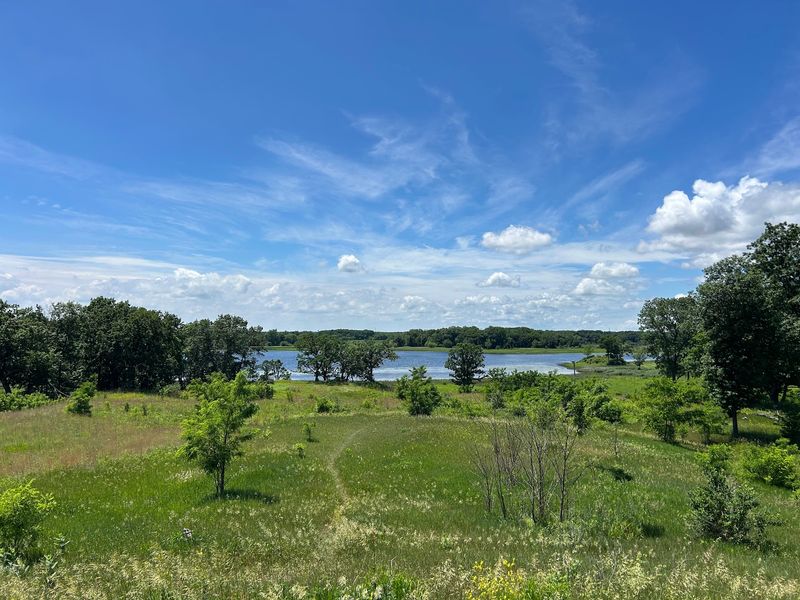
Covering more than 2,200 acres outside McHenry, the park sits on land shaped by glaciers into kettles, moraines, wetlands, and lakes. Trails dip and climb through that terrain, while paved paths make strollers and slower walkers welcome.
Along the way, sandhill cranes share the scenery with cormorants, great blue herons, turtles, ducks, and geese.
Here is what sets it apart. A playground with slides and swings means kids can burn off energy after a quiet stretch of bird watching.
Picnic tables and grills invite a lunch break, and public restrooms are a relief on chilly fall days.
A nature center adds another layer, and the staff who keep the grounds tidy are known for being friendly and helpful with questions.
Free parking is available, so a family can spend a full day without spending much at all. Arrive early, walk the wetland loops while the birds are active, then let the little ones loose on the swings.
Everybody goes home happy.
4. Dick Young Forest Preserve
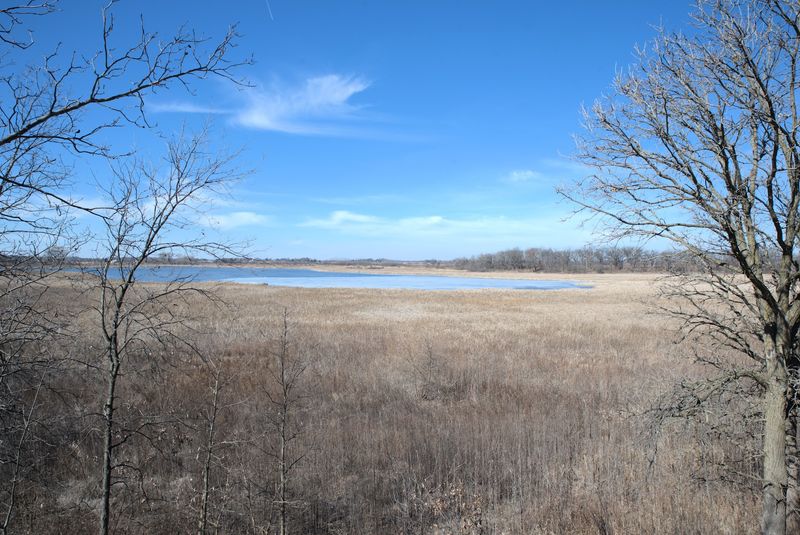
Sunset over Nelson Lake might be the most peaceful show in Kane County. As the sky turns orange, sandhill cranes drift down into the marsh, sometimes in pairs, wings spread wide for a slow, graceful landing.
Tucked along Nelson Lake Road on the edge of Batavia, this Fox River area preserve wraps woodland, prairie, and wetland around a sizable lake. A 3.5-mile walking trail circles the water, and hikers who want more can stretch the route to about six and a half miles.
Two viewing platforms and a handful of benches dot the trail. They are perfect pausing spots for families, and they often deliver views of white pelicans and eagles in addition to the cranes.
Few places in the suburbs offer that kind of variety in a single loop.
Fall evenings are especially rewarding. Plenty of birds and other wildlife move around as daylight fades, making a quiet walk feel like a nature documentary playing live.
Picnic tables and public restrooms keep things comfortable, and leashed dogs can join the walk. Pack a light dinner, find a bench facing the marsh, and let the cranes provide the entertainment.
5. Volo Bog State Natural Area
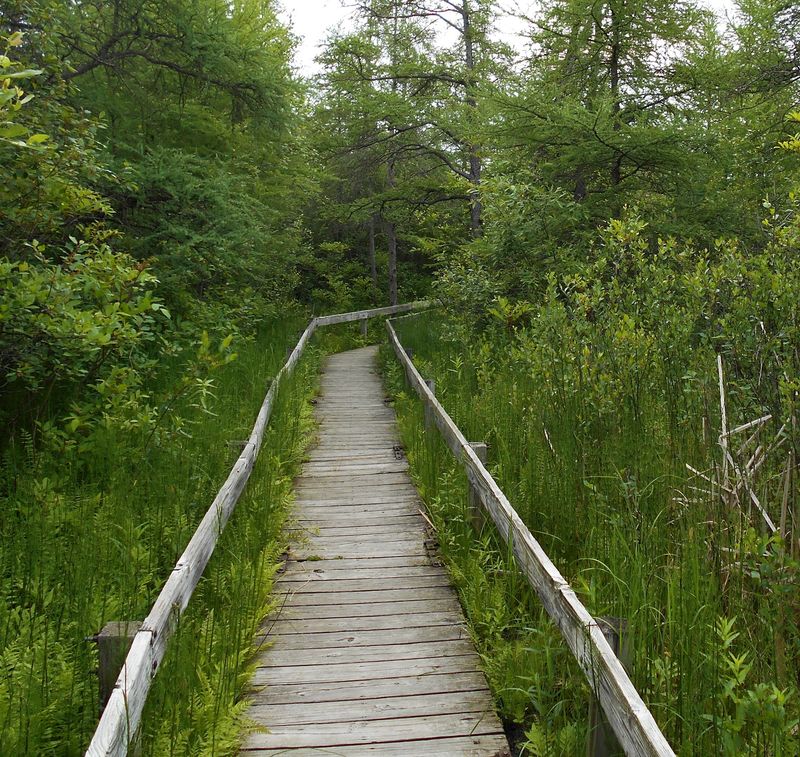
Walking on water sounds like a stretch, yet the floating boardwalk at Volo Bog comes pretty close. Kids feel it shift slightly underfoot, and suddenly a nature walk turns into an adventure.
Found in Ingleside, a quiet lake and marshland area of Lake County, this state natural area protects a true bog, which is rare in Illinois. The floating trail leads through several distinct zones, each with its own plants and creatures.
Herons, cranes, deer, frogs, turtles, butterflies, and bees all call the place home or pass through.
Learning comes built in. Free guided tours run on most weekends, and the visitor center blends nature, art, and helpful information in a way that keeps curious minds busy.
A small Tamarack gift shop sits inside, and once a month astronomy nights give families a reason to return after dark.
Hours run from 8 AM to 7:30 PM daily, giving plenty of time for a morning or afternoon visit.
Picnic tables, grills, and restrooms round out the practical side, and free parking is available. For families who want crane spotting with a side of science, this spot is hard to beat.
6. Rollins Savanna Forest Preserve
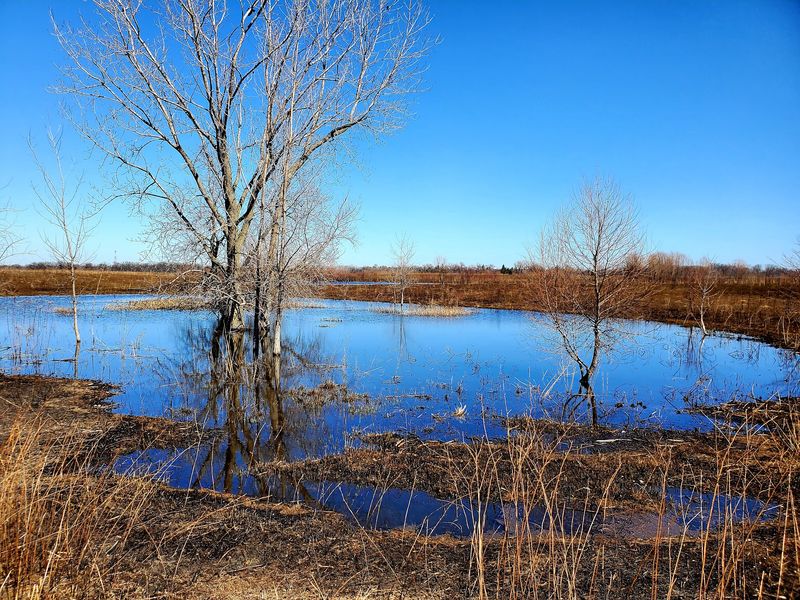
Bare oak branches reaching across a wide open savanna make a dramatic backdrop in late fall. At Rollins Savanna, those silhouettes frame the sky just as crane season peaks.
Spread over 1,200 acres near the historic village of Grayslake in Lake County, the preserve offers sweeping views of grassland and marsh. That openness pays off for bird watchers, since flocks passing overhead stay visible for a long time.
A dedicated bird viewing area with benches overlooks a pond, and a separate wildlife viewing spot even provides binoculars.
Families with a competitive streak will enjoy the trivia trail, which sprinkles fun questions along the route. Cute boardwalks cross wetter stretches, and informative signs explain what you are seeing.
The main trail is well kept and wide enough for both walking and biking.
Fun fact for the ride home: sandhill cranes are among the oldest bird species still flying, with roots stretching back millions of years.
Picnic tables and public restrooms make longer stays easy, and free parking keeps costs low. End the season here, bundle up, and watch for long lines of cranes heading south.
It is a sweet way to say goodbye until spring.
7. Spring Lake Nature Preserve
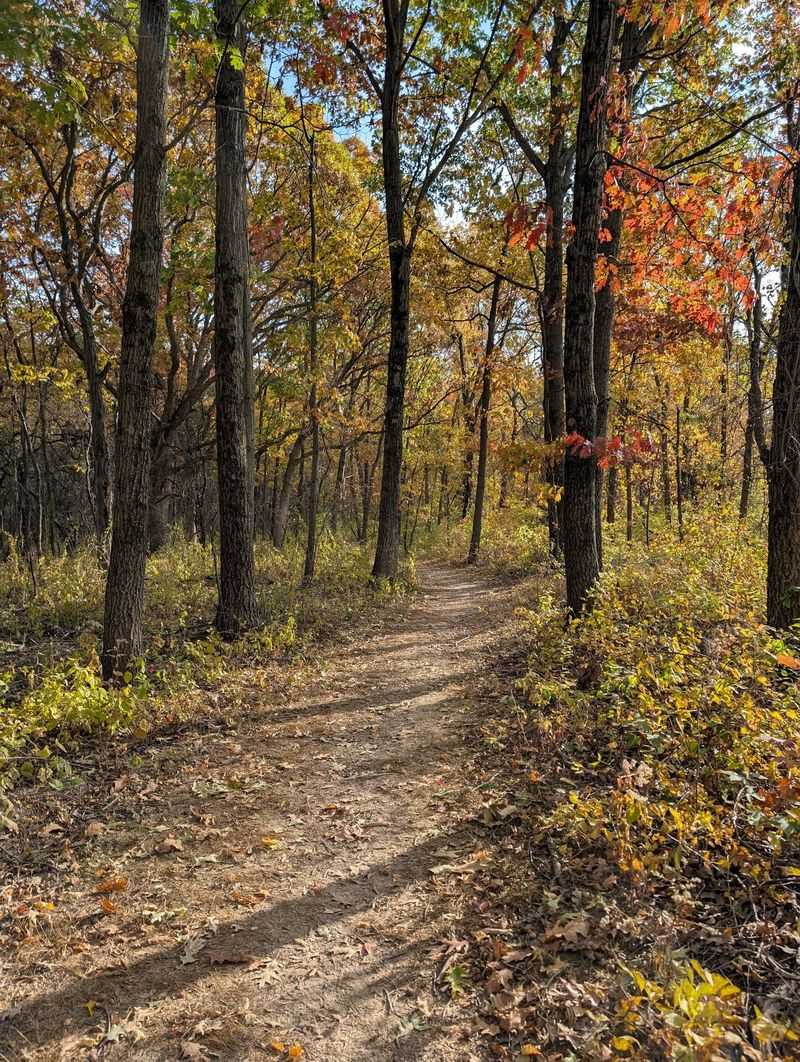
Ask a local birder about Barrington Hills, and Spring Lake is likely to enter the conversation. Its protected marshes and open grasslands belong to a larger preserve complex covering roughly 4,000 acres.
Cranes are among the birds recorded here, along with kingfishers and owls. Their rolling calls can carry across the open countryside, giving families a reason to stop walking and look up.
The setting feels far from the suburbs. Glacial pools sit among prairie remnants, while a winding creek cuts through the surrounding valley.
There’s plenty to explore, but choose your route carefully. Spring Lake’s trails are unpaved and hilly, so sturdy shoes are a better choice than a stroller.
For a practical starting point, use the Spring Lake equestrian parking area on Bateman Road, then follow the marked trails into the preserve.
Kids can count cranes, listen for bird calls, or search the grasses for movement. Bring binoculars and a notebook to keep track of what appears.
Early mornings make an outing, especially when autumn color spreads across the woods.
Pack a thermos of cocoa and leave enough time to enjoy the quieter moments. Even without a big flock overhead, this landscape gives wildlife watchers plenty to discover.
8. Middlefork Savanna Forest Preserve
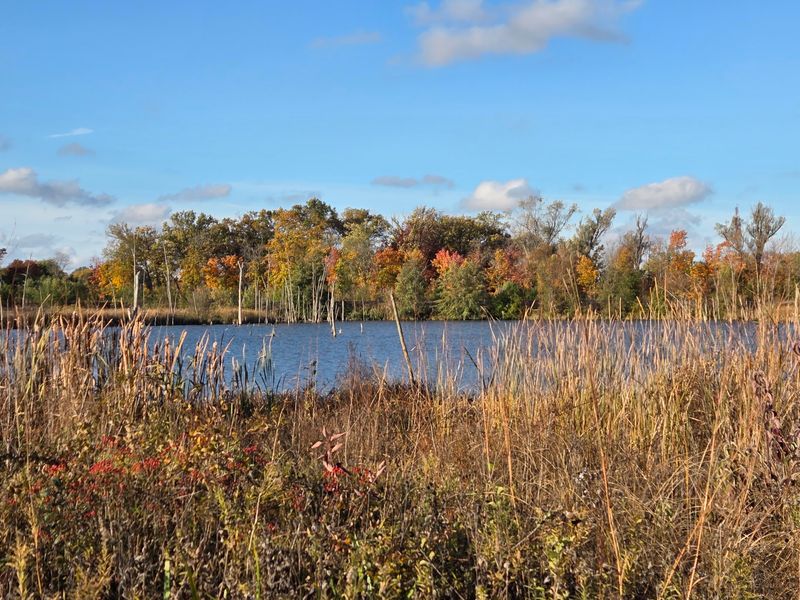
Rare habitat draws attention to Middlefork Savanna. Near Lake Forest, 687 acres shelter a remarkable stretch of tallgrass savanna, including 25 acres considered among the finest of their kind in the country.
That alone makes it worth a fall visit. Add the chance to spot sandhill cranes, and the outing becomes memorable.
The preserve is a mix of oak trees, open prairie, and wetlands. Sandhill cranes are documented here in autumn, when birds preparing to travel south may gather in groups.
Listen for their bugling calls as you scan the grasslands. The sound reaches you before the birds come into view.
Families can explore 5.5 miles of gravel hiking trails, with two boardwalks crossing sensitive wetland areas. Choose a shorter stretch for younger children.
There’s an easy game for the walk: have everyone find a different bird, then compare notes at the next stopping point.
A pair of binoculars helps, but the wide landscape is enjoyable even without special equipment.
Parking is available at the end of Middlefork Drive, and the preserve opens daily at 6:30 AM.
Bundle up for a morning visit, keep voices low near the marsh, and give the cranes room to carry on with their journey.
9. Nachusa Grasslands
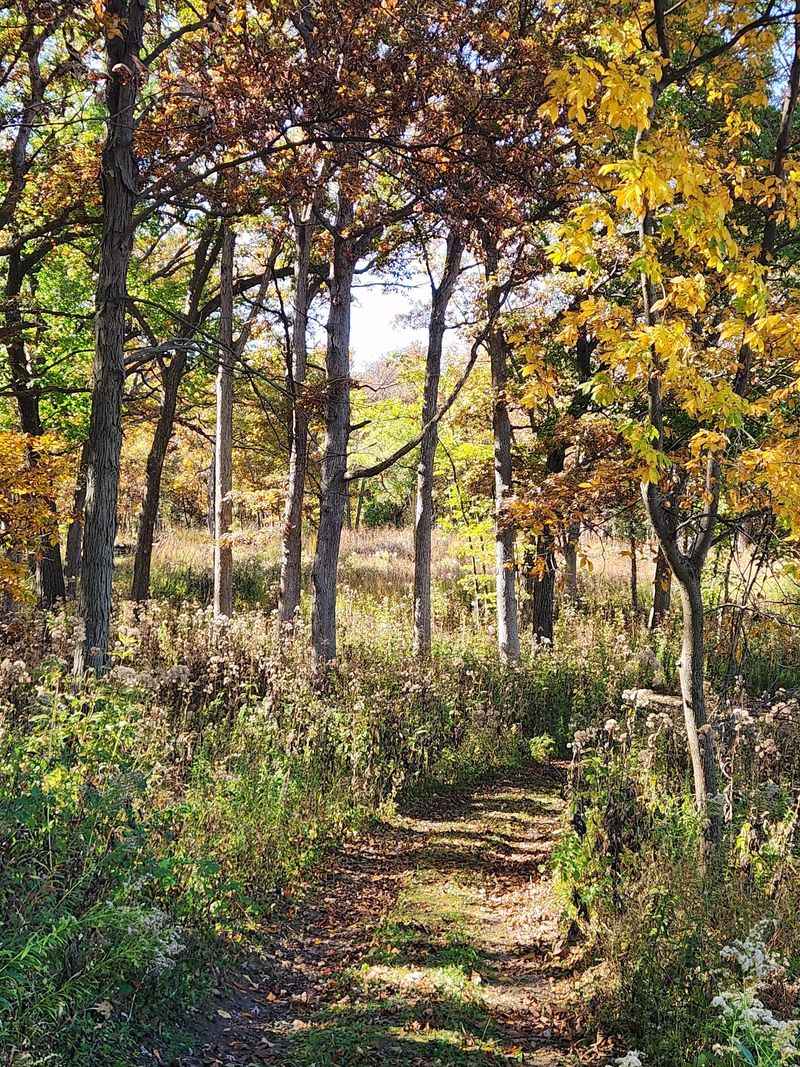
Picture a herd of bison grazing on the prairie while sandhill cranes call overhead. At Nachusa Grasslands near Franklin Grove, both animals are part of the autumn wildlife story.
This Nature Conservancy preserve protects thousands of acres of restored grassland, oak savanna, and wetlands. Its rolling hills provide views of the sky, which helps when watching for migrating birds.
Fall is when cranes that breed here begin moving south. Listen for their calls, then search above the prairie for long-necked silhouettes.
Start at the visitor center on Lowden Road. Exhibits explain the restoration work, and the center has drinking water and restrooms, which families will appreciate.
A half-mile mowed walking loop offers a manageable introduction without committing to a longer hike. More adventurous visitors can drive to trailheads.
The bison are an attraction, but sightings are never guaranteed. They roam inside fenced areas, and visitors must stay outside those enclosures and keep at least 100 feet away.
Bring binoculars for watching the herd from a distance. Dogs and other pets are not allowed.
A fall outing here can become a wildlife lesson without anyone realizing they’re learning.
And when the cranes call above those wide-open hills, the prairie feels enormous.
10. Kankakee Sands-Illinois
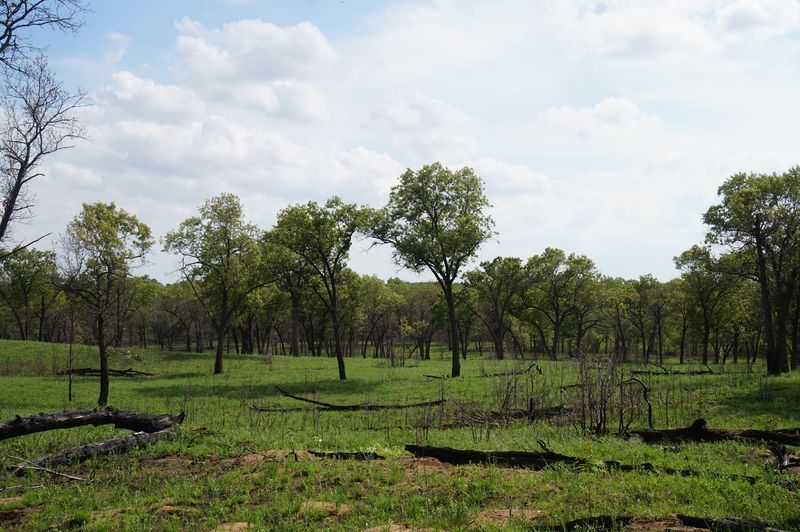
Sand underfoot in Illinois? Pembroke Township has an answer, with prairies and black oak savannas growing on soil left behind by glacial meltwaters.
At Kankakee Sands-Illinois, The Nature Conservancy protects about 1,800 acres across four sites. The scattered black oaks give the landscape a look unlike the woods families know.
Fall brings a special soundtrack. Migrating sandhill cranes can be heard bugling overhead, making this a strong choice for children eager to watch migrating birds.
Look up when those calls begin. The birds may be high above the trees, so binoculars help with finding the moving shapes against the sky.
Pembroke Savanna is a good first stop, for first-time visitors. Each of the four sites offers a natural walking trail roughly one to one and a half miles long.
The paths are sandy rather than paved, so choose sturdy shoes and expect uneven footing. Bring water and snacks, too.
There are no restrooms or picnic areas at the preserve sites, and roadside parking is limited.
Aim for a daylight visit and check directions before leaving home, since mobile service varies.
The reward is a landscape that feels miles away from ordinary Illinois scenery, with cranes providing the occasional overhead surprise.