
8 Secret New York Waterfalls That Aren’t On Any Tourist Map
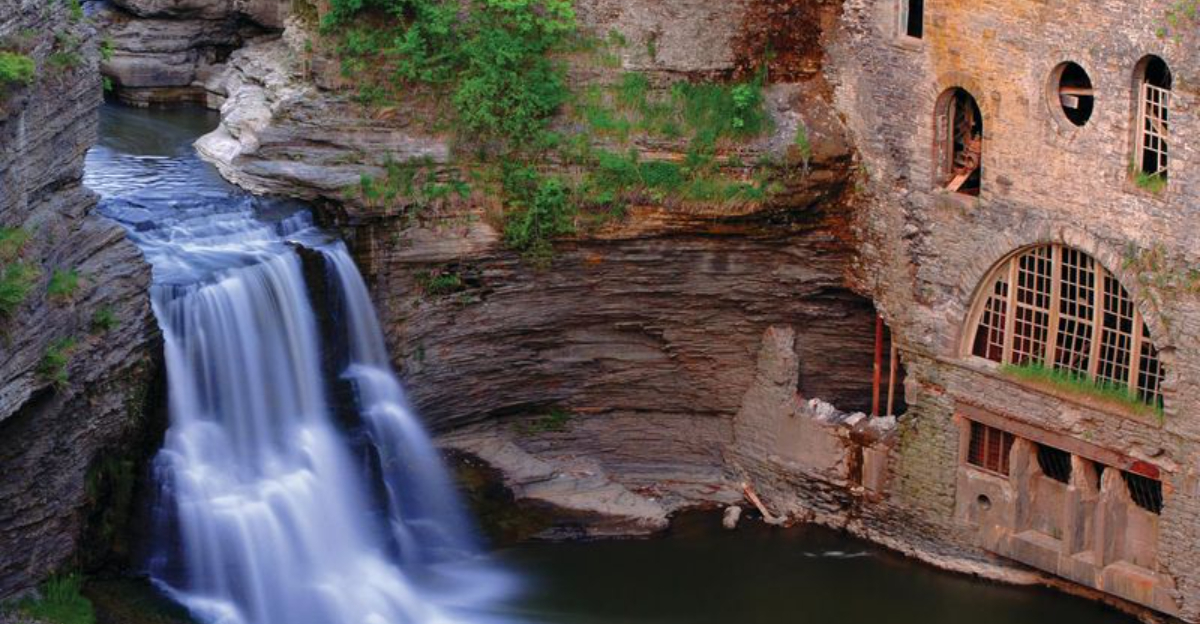
New York’s landscape hides more than just skyscrapers and busy streets. Beyond the concrete jungle lie magical cascades tumbling over ancient cliffs, tucked away from the crowds and waiting for those willing to wander off the beaten path.
I’ve spent years exploring hidden corners of the state, often stumbling upon waterfalls while following unmarked trails or listening to local tips.
These aren’t the ones you’ll see on glossy postcards—they’re the kind that make you feel like you’ve discovered a secret world of your own.
Ready for an adventure that’ll make your Instagram followers green with envy? Here are eight waterfalls that the tour buses haven’t found yet.
1. Eternal Flame Falls: Nature’s Everlasting Candle
Would you believe there’s a waterfall in New York with an actual flame burning inside it? At Chestnut Ridge Park, near Buffalo, a small natural gas pocket seeps through cracks in the shale, creating a golden flame that flickers just behind the falling water. The first time I hiked here, I thought someone had planted it as a trick.
The hike isn’t listed on many park maps, which adds to the sense of mystery. The trail winds through a ravine, crossing shallow streams before you finally hear the rush of water. Depending on the season, the flame sometimes gets snuffed out by heavy spring runoff, but it can easily be reignited. Come at dusk, when the orange glow dances against the darkening forest backdrop—it feels like stepping into a fairy tale.
2. Perryville Falls: The Forgotten Cascade
Near the hamlet of Perryville in Madison County, a thunderous 90-foot cascade drops through a narrow limestone gorge. Most visitors to the area drive past without ever knowing it exists. I nearly did myself, until I followed the distant sound of rushing water down a wooded path.
In the 1800s, this waterfall powered several mills, remnants of which still lie hidden beneath moss and ferns. Today, only the falls remain, crashing into a deep pool that doubles as a swimming hole in summer. The sheer force of the water after a good rain vibrates through your chest long before you catch a glimpse. On hot days, locals cool off here, floating lazily in the spray while dragonflies skim across the surface.
3. Verkeerder Falls: The Upside-Down Wonder
At 187 feet, Verkeerder Falls in the Shawangunk Mountains is one of the tallest in the state, yet it remains surprisingly quiet. The trail begins at Sam’s Point Preserve and winds through pine barrens before opening onto sheer cliffs where the waterfall plunges dramatically into the valley below.
On blustery days, the spray is carried upward by strong gusts, giving the illusion that the water is falling in reverse. Surrounding the falls are rock ledges marked with honeycomb patterns carved by centuries of erosion. Come in autumn, when the fiery reds and golds of the maples make the entire gorge glow. The hike is long and rugged, but the reward is a sweeping view of raw wilderness that feels worlds away from city life.
4. Leatherstocking Falls: The Literary Cascade
Just outside Cooperstown, Leatherstocking Falls drops gracefully in multiple tiers, nearly 100 feet in total, as it tumbles down a hemlock-shaded ravine. Named after James Fenimore Cooper’s Leatherstocking Tales, the site feels like a scene plucked straight from his novels.
Each tier forms a natural pool where sunlight catches in shimmering ripples. Locals call them “The Inkwells,” saying they resemble the writing wells Cooper might have dipped his quill into. When I visited one misty morning, the air was filled with birdsong and the earthy scent of damp moss. The setting was so peaceful I lingered for hours, reading on a flat rock while the water gurgled steadily nearby.
5. Triphammer Falls: The Industrial Beauty
In the middle of Cornell University’s bustling campus sits a 55-foot waterfall that most students pass by daily without realizing its history. Triphammer Falls is framed by the ruins of old mills and a stone bridge, blending industrial heritage with natural spectacle.
The name comes from the trip-hammer forges once powered by its rushing water. Today, the university still harnesses the falls for hydroelectric power, making it one of the rare cascades that is both scenic and functional. In winter, icy curtains cling to the gorge walls, while in autumn, fallen leaves whirl in the current like confetti. When I first spotted it, framed by ivy-covered buildings, I was stunned—proof that even in a busy city, wild beauty endures.
6. Ludlowville Falls: The Haunted Plunge
Tucked behind a small roadside park in the village of Lansing, Ludlowville Falls plunges 35 feet into a circular pool carved from shale. At first glance it seems modest, but step closer and you’ll notice the perfectly rounded plunge basin and the eerie echo of the falling water.
Locals whisper ghost stories here—tales of a “Lady in White” who appears on moonlit nights, linked to drownings in the 1800s. Whether or not you believe in spirits, there’s an undeniable stillness in the air, as if the gorge remembers every story ever told. In autumn, golden leaves swirl hypnotically in the pool, creating a kaleidoscope of color that makes it one of the most atmospheric falls I’ve visited.
7. Deckertown Falls: The Three-Season Wonder
In Montour Falls, just south of Seneca Lake, Deckertown Falls is both dramatic and elusive. The 50-foot cascade flows with force in spring and after storms, but often dwindles to a trickle—or vanishes entirely—during the dry summer months.
What fascinates me most is how the same spot tells different stories each season. In spring, the torrent crashes over boulders, echoing down the gorge. By autumn, the water softens into ribbons that weave between mossy stones. In winter, the entire gorge transforms into an ice cathedral, with icicles draping the cliffs in shimmering curtains. Every visit feels like discovering a new waterfall.
8. Hector Falls: The Roadside Secret In Plain Sight
Cars speed past Hector Falls every day along Route 414 without realizing the full spectacle just below. While the upper tier is visible from the road, the lower cascades—stretching the total height to about 165 feet—remain hidden unless you know where to stop.
A short trail leads to overlooks where the full grandeur comes into view, with Seneca Lake glistening in the distance. The waterfall tumbles in multiple sections, starting as a broad curtain before narrowing into a chute that crashes into the gorge below. In winter, spray freezes onto nearby trees, encasing them in glassy armor. On summer mornings, mist rises like smoke, catching the first rays of sunlight. It’s proof that sometimes the biggest treasures are hiding in plain sight.