
12 Secret Ohio Places You Won’t Believe Even Exist
Ohio loves a good plot twist. Just when you think you know the state, a back road leads to giant concrete corn, a hand-built castle, an underground wonder, or a rock garden so detailed it feels like someone’s imagination spilled into the yard and stayed there.
That is the fun of exploring beyond the obvious stops. Some of these places are strange in the best way, some are quietly beautiful, and a few feel like they were dreamed up during a very creative lunch break.
So consider this your nudge to take the scenic route and follow the weird little signs. Ohio is packed with secret spots that make you look twice, ask questions, and wonder how something this unusual has been hiding so close to home.
1. Hartman Rock Garden, Springfield, Ohio
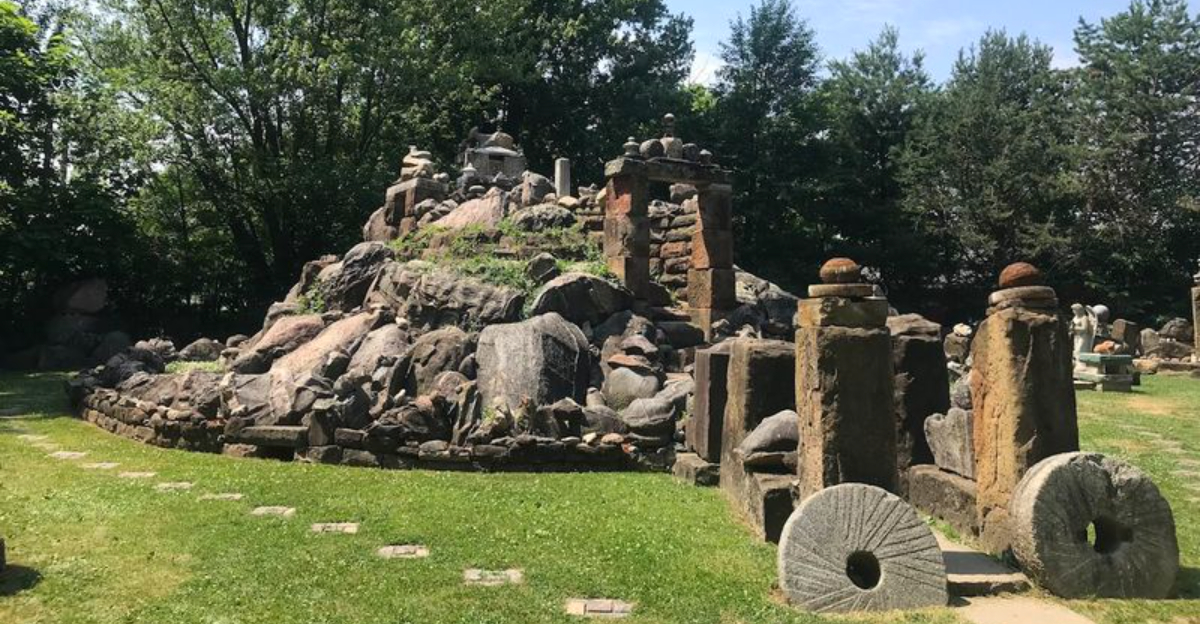
Somewhere on a quiet residential street in Springfield, Ohio, sits one of the most astonishing pieces of folk art you will ever see in your life.
Ben Hartman built this garden by hand between 1932 and 1944, using rocks, glass, concrete, metal, wood, and whatever else he could find to create a backyard world that still feels wildly original.
There are tiny castles, biblical scenes, American monuments, and strange figures that are impossible to fully categorize.
Everything is dense, colorful, and packed into a surprisingly small space, which makes walking through it feel almost dreamlike.
Hartman started this project in the 1930s as a personal creative outlet after losing his foundry job during the Great Depression, and he kept building for the remaining twelve years of his life.
The garden has been preserved as a nationally recognized visionary art environment, so it is well maintained and open for visitors.
Admission is free, which makes it an easy stop if you are passing through the Springfield area.
Bring a camera, because every single corner of this place offers something new and unexpected to photograph.
2. Temple of Tolerance, Wapakoneta, Ohio
Right in the hometown of astronaut Neil Armstrong, there is a wildly creative outdoor installation that most travelers completely overlook.
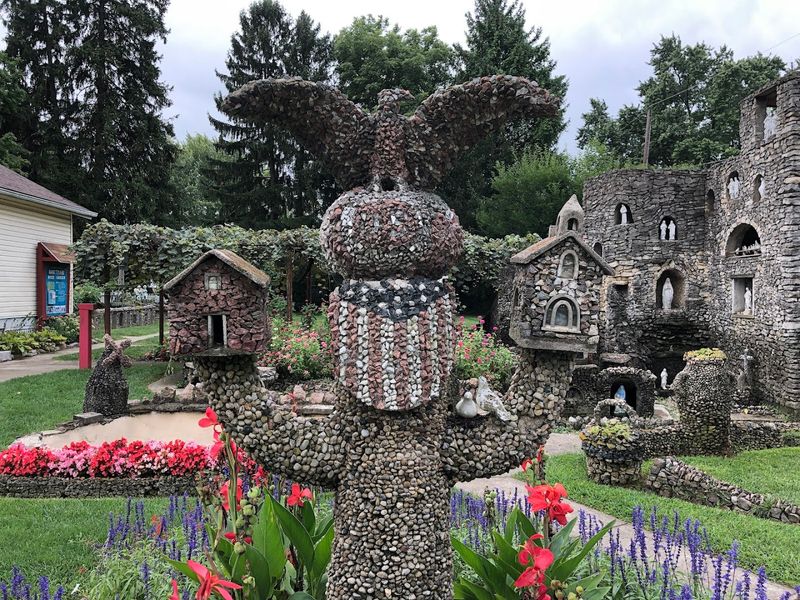
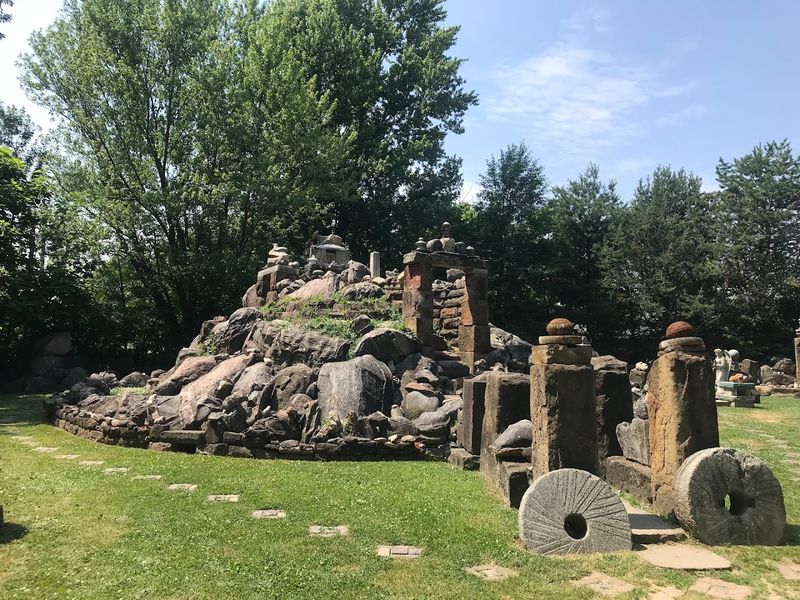
Jim Bowsher, a local artist and historian, spent decades building the Temple of Tolerance in his own backyard at 203 S. Wood St. in Wapakoneta, Ohio.
The structure is covered in stones, tiles, fossils, arrowheads, and found objects that each carry a specific symbolic meaning related to peace and human connection.
Walking around it feels less like visiting a tourist attraction and more like stepping into one person’s deeply personal philosophy made physical.
Bowsher designed every element intentionally, and he is often present to explain the meaning behind the pieces if you visit during open hours.
The temple is not a polished museum experience, and that rawness is exactly what makes it so compelling and memorable.
It sits quietly in a residential neighborhood, which means you might drive past it without noticing if you are not paying attention.
Check ahead for visiting hours, since access can vary depending on the season and Bowsher’s availability.
3. Field of Corn (with Osage Oranges), Dublin, Ohio
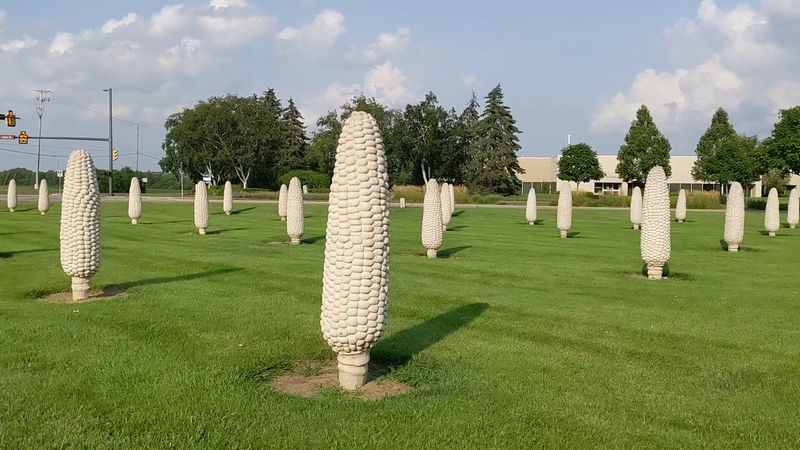
Driving past a field of giant concrete corn sculptures is not something most people expect to encounter on a regular afternoon, yet here we are.
Located at 4995 Rings Road in Dublin, Ohio, the Field of Corn features 109 concrete ears of corn, each standing roughly six feet tall in a flat open field.
The installation was created by artist Malcolm Cochran and dedicated in 1994 as a tribute to the agricultural history of the Sam and Eulalia Frantz farm that once occupied the land.
The ears of corn are planted in neat rows, which gives the whole installation a surprisingly eerie quality, especially on foggy mornings or at dusk.
Scattered among the concrete corn are actual Osage orange trees, which add an organic contrast to the hard, grey sculptures around them.
The site is free to visit and accessible at any time, making it a perfect spontaneous detour.
It is located right next to a modern office park, which somehow makes the whole scene even more surreal and worth seeing in person.
4. Topiary Park, Columbus, Ohio
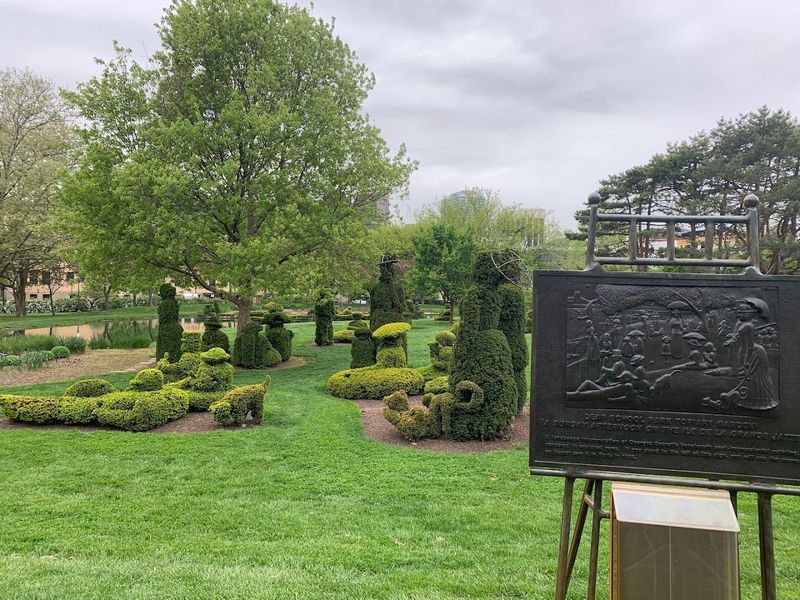
Somewhere in the middle of Columbus, a famous French painting has been brought to life entirely out of carefully trimmed shrubbery.
Topiary Park, located at 480 E Town St in Columbus, Ohio, recreates Georges Seurat’s iconic pointillist painting A Sunday on La Grande Jatte using topiary sculptures arranged across a reflecting pond.
There are 54 human figures, 8 boats, 3 dogs, a monkey, and a cat, all clipped from green bushes and arranged in the same composition as the original artwork.
The figures range from small children to full-sized adults, and standing among them gives you the strange sensation of being inside a painting.
The park is maintained by the City of Columbus and is open to the public free of charge throughout the year.
Spring and summer are the best times to visit, when the topiaries are at their fullest and the surrounding gardens are in bloom.
It is tucked away in the Old Deaf School Park neighborhood, so it tends to attract curious visitors rather than large tourist crowds.
5. Pyramid Hill Sculpture Park & Museum, Hamilton, Ohio
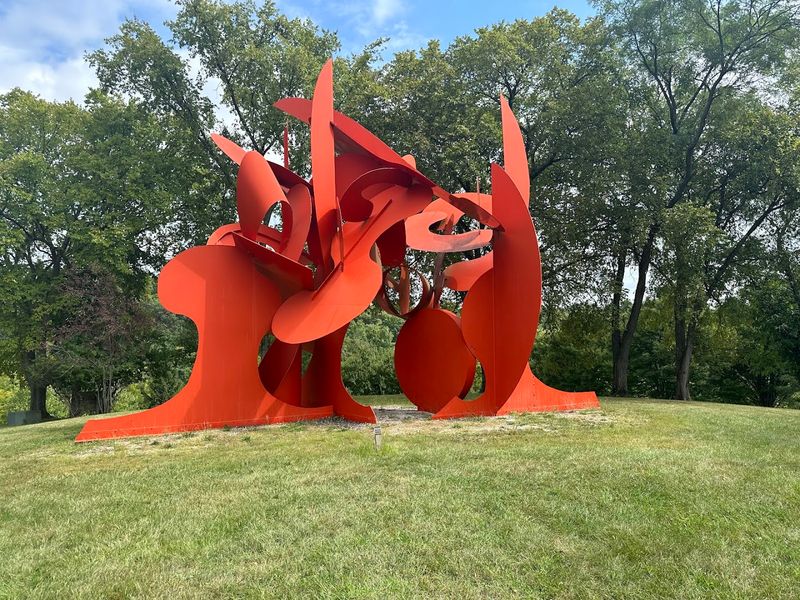
Not many places can claim to have a literal pyramid on the property, but Pyramid Hill Sculpture Park in Hamilton, Ohio, pulls it off with total confidence.
Spread across 470 acres at 1763 Hamilton Cleves Road, this outdoor museum features more than 60 large-scale sculptures placed across rolling hills, forests, gardens, overlooks, and open meadows.
The works range from abstract metal forms to figurative stone carvings, and the scale of everything is genuinely impressive against the natural landscape.
Walking the trails between sculptures feels more like an adventure than a standard museum visit, since the terrain itself becomes part of the experience.
The pyramid-shaped Pyramid House on the grounds includes antiquities, while the Gallery Museum adds rotating contemporary exhibitions, giving the visit a completely unexpected indoor layer as well.
Admission fees apply, and the park offers seasonal events and programs throughout the year, so checking the current calendar before visiting is a smart move.
Located just outside Cincinnati, Pyramid Hill makes for an easy half-day trip that rewards anyone willing to wander off the main roads.
6. Ohio Caverns, West Liberty, Ohio
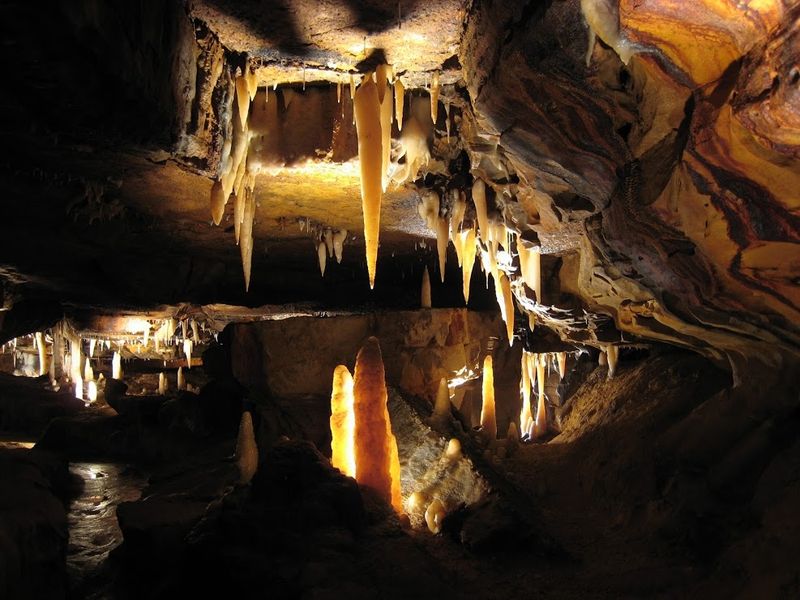
Beneath the quiet farmland of West Liberty, Ohio, there is an underground world that has been forming for millions of years without anyone above knowing it existed.
Ohio Caverns, located at 2210 East State Route 245, is known as Ohio’s largest and most beautiful cavern and one of the state’s most memorable underground attractions.
The caverns are famous for colorful formations, brilliant white crystal details, and the Crystal King, the largest stalactite in Ohio.
Tours take visitors through passages filled with formations that range from tiny crystal needles to massive columns that took thousands of years to develop.
The temperature inside stays at a constant 54 degrees Fahrenheit year-round, which makes it a refreshing escape during hot summers and a warm retreat in winter.
Guided tours run regularly and are suitable for most ages and fitness levels, with well-maintained pathways throughout much of the cave system.
The surrounding property also includes a nature trail and picnic area, making it easy to turn the visit into a full outdoor day trip.
7. Serpent Mound, Peebles, Ohio
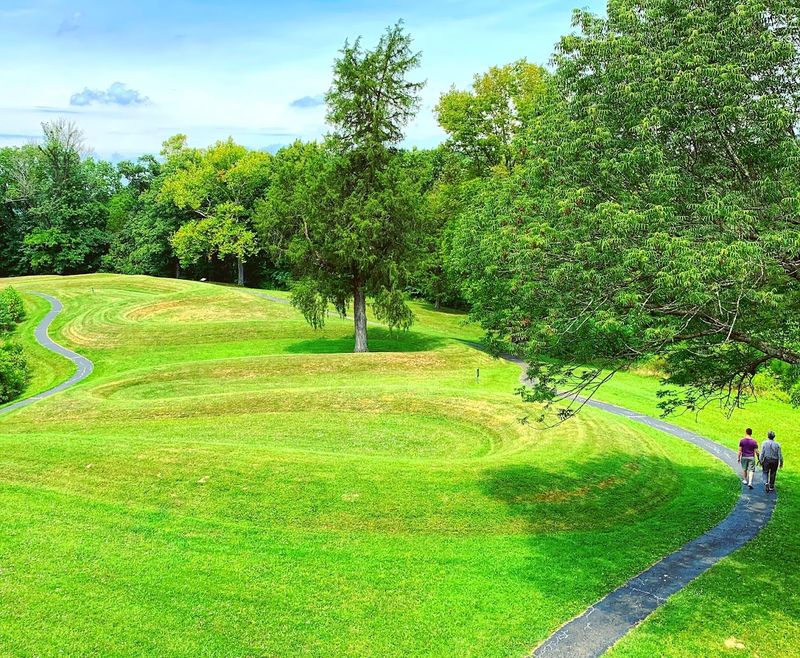
Stretching nearly a quarter mile across a hilltop in southern Ohio, the Great Serpent Mound is one of the most mysterious and impressive prehistoric structures anywhere in North America.
Located at 3850 State Route 73 in Peebles, Ohio, this effigy mound was built in the shape of an uncoiling serpent, though researchers still debate its exact age and cultural origin.
The mound stands about three feet high and winds for 1,348 feet across the landscape, which makes it the largest serpent effigy mound in the world.
Researchers still debate exactly who built it and why, with theories connecting it to astronomical alignments, spiritual ceremonies, and cultural storytelling traditions.
A viewing tower on the property normally allows visitors to look down over the full shape of the mound, which is difficult to appreciate from ground level alone, though visitors should check current site alerts before going.
The site is managed as an Ohio History Connection park, with posted hours, holiday closures, and a parking fee for vehicles.
Visiting near the end of the day casts long shadows across the earthwork and makes the serpent shape stand out in a way that feels genuinely dramatic and unforgettable.
8. Loveland Castle Museum, Loveland, Ohio
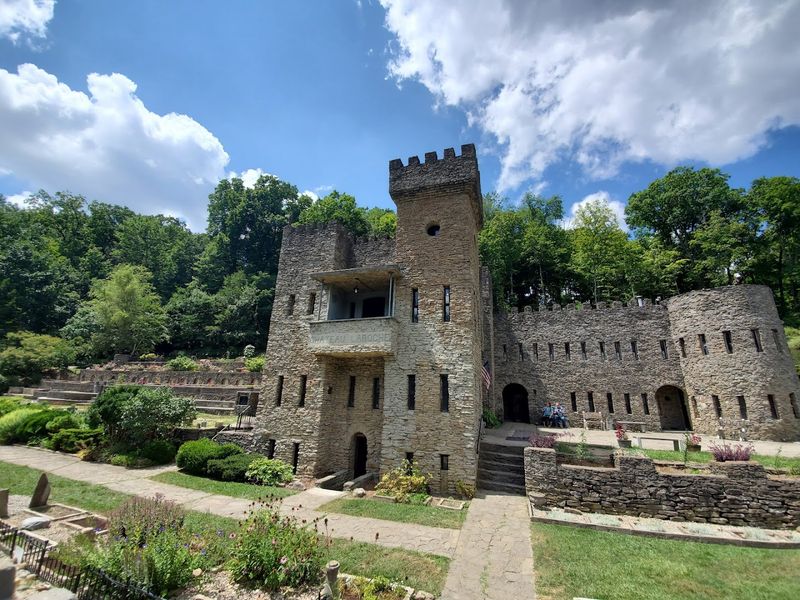
Harry Andrews spent decades building a full-scale medieval-style castle, one stone at a time, on the banks of the Little Miami River.
Loveland Castle Museum, located at 12025 Shore Road in Loveland, Ohio, is the result of that long effort, and it stands today as one of the most charming and eccentric landmarks in the state.
Andrews began construction in the late 1920s and worked on the castle for more than 50 years, with the Knights of the Golden Trail becoming part of the castle’s long-running story.
The castle houses a collection of medieval-style armor, period artifacts, and historical displays that reflect Andrews’ lifelong fascination with old-world architecture and chivalry.
It is maintained and operated by the Knights of the Golden Trail, the organization Andrews founded, which gives the whole place a wonderfully community-driven spirit.
Admission is very affordable, and the grounds along the river are beautiful enough to justify lingering well beyond the tour itself.
Few places in Ohio pack this much character, history, and sheer determination into a single address the way Loveland Castle quietly does.
9. Squire’s Castle, Willoughby Hills, Ohio
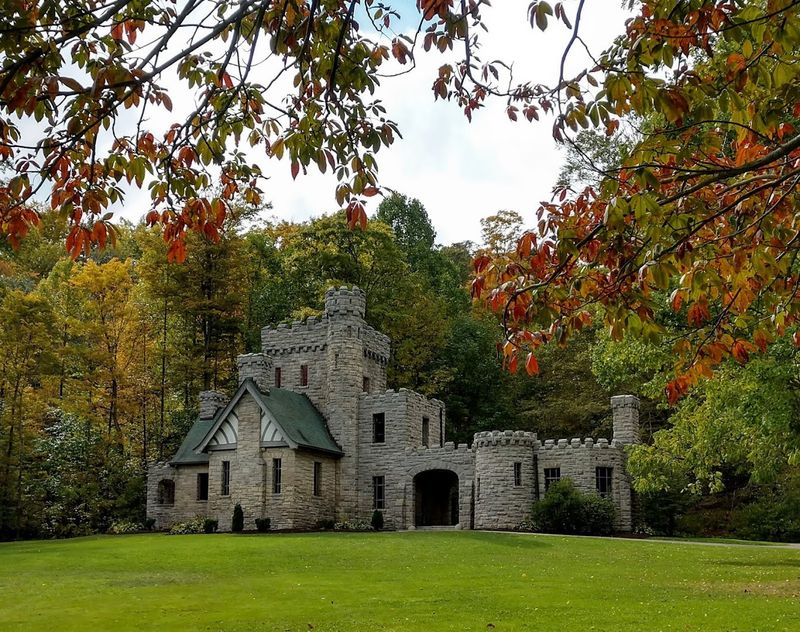
Hidden deep inside the North Chagrin Reservation in Willoughby Hills, Ohio, there is a roofless stone castle that has been slowly returning to the forest for over a century.
Located at 2844 River Road, Squire’s Castle was originally built in the late 1800s as a gatekeeper’s residence for Feargus B. Squire, an executive with Standard Oil who planned to build a grand country estate on the surrounding land.
The main estate was never completed, and the gatehouse was eventually abandoned, leaving the stone shell standing alone among the trees.
Today, the ruins are part of Cleveland Metroparks and are open to the public free of charge year-round.
The hollow stone walls, arched windows, and overgrown surroundings give the place a genuinely atmospheric quality that photographers and hikers both love.
Fall is arguably the best time to visit, when the surrounding forest turns red and orange and the contrast with the grey stone walls is absolutely striking.
A short trail network connects the castle to the wider reservation, making it easy to combine with a longer hike through the woods.
10. American Sign Museum, Cincinnati, Ohio
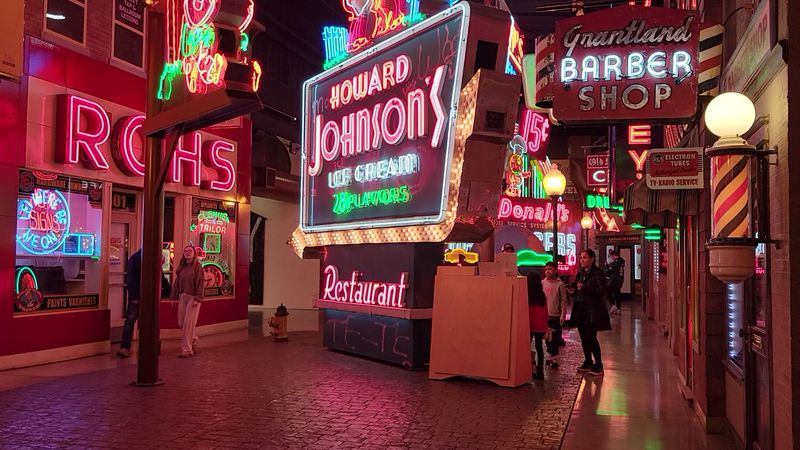
Neon lights, hand-painted wood, flashing arrows, and towering roadside giants, the American Sign Museum in Cincinnati, Ohio, turns the history of advertising into something genuinely fascinating.
Located at 1330 Monmouth Avenue, this expanded museum now covers about 40,000 square feet and traces more than 100 years of American sign history.
The collection includes original neon signs, three-dimensional trade symbols, signmaking materials, and full-scale reconstructions of classic roadside environments that make you feel like you have stepped back into mid-century America.
One of the highlights is the Main Street-style gallery, where a recreated streetscape shows how signage shaped the visual identity of American towns and cities across different decades.
The museum is privately owned and independently operated, which gives it a curatorial personality that feels very different from larger institutional museums.
Admission is reasonably priced, and guided tours and special programming are available for visitors who want a deeper explanation of the collection.
It is one of those places that sounds niche until you actually walk through it and realize that signs have been telling the story of American culture all along.
11. The Troll Hole Museum, Alliance, Ohio
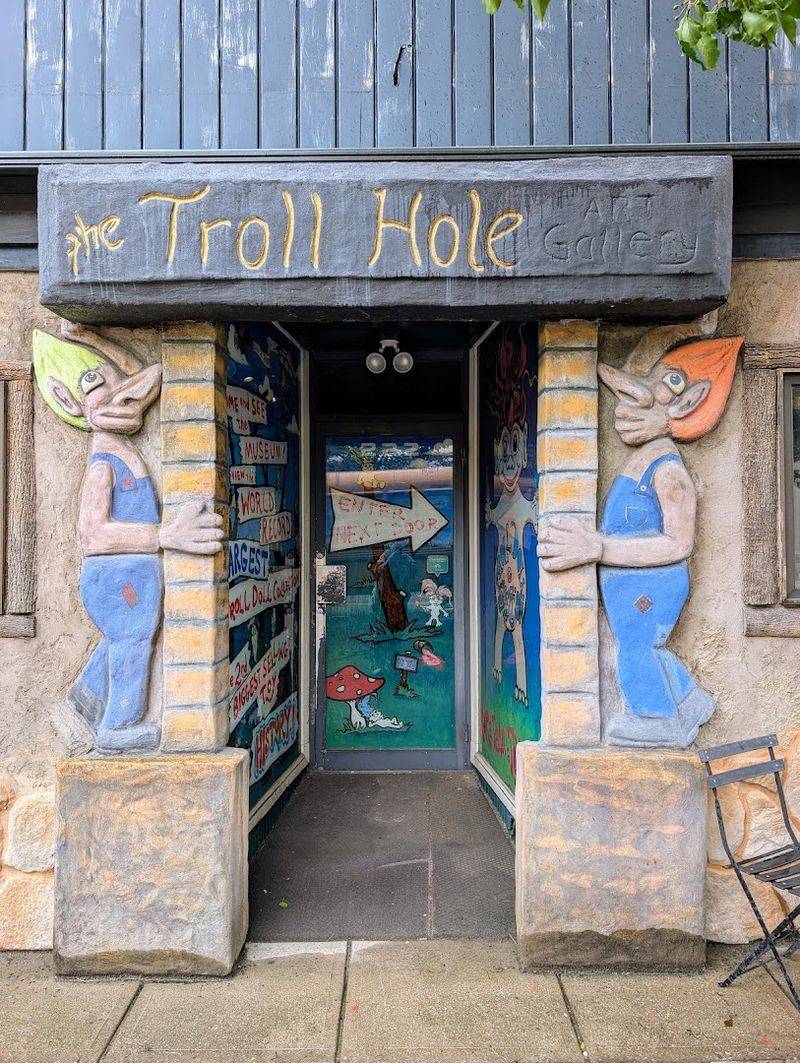
If you have ever wondered where thousands upon thousands of troll dolls end up, the answer is apparently Alliance, Ohio.
The Troll Hole Museum at 228 E Main St holds the Guinness World Record largest troll doll collection, with over 8,000 unique troll dolls and more than 25,000 troll-related items displayed across a dedicated museum space.
The collection was assembled by Sherry Groom, who began collecting trolls as a child and never really stopped, eventually turning her passion into a full Guinness World Record-holding attraction.
Walking through the museum means encountering trolls of every size, era, and style, from vintage rubber figures to modern themed displays that lean fully into the playful weirdness of the place.
The displays are organized with plenty of personality, with rooms dedicated to different eras, materials, and cultural variations of the troll figure across different countries and decades.
Admission is low, and the staff are enthusiastic and knowledgeable, which makes the whole experience feel warm and personal rather than just commercial.
Whether you grew up with troll dolls or have never thought about them once, leaving the Troll Hole without a smile on your face is genuinely difficult to manage.
12. Ernest Warther Museum & Gardens, Dover, Ohio
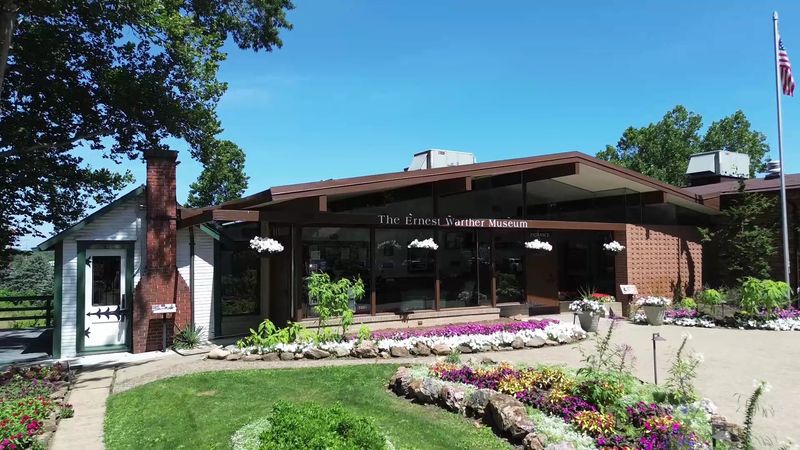
Ernest Warther carved more than 60 intricate steam-engine works by hand, using materials such as ebony, ivory, and walnut to tell the story of steam power in miniature form.
The Ernest Warther Museum at 331 Karl Avenue in Dover, Ohio, preserves this extraordinary body of work and tells the story of a self-taught craftsman whose skill was recognized around the world during his lifetime.
Each locomotive model is a detailed replica with moving parts, and the precision in every piece is so exact that the collection continues to impress engineers, historians, and casual visitors alike.
Warther also carved the history of the steam engine chronologically, creating a visual timeline that spans centuries of transportation development in miniature form.
Beyond the trains, the museum also includes Frieda Warther’s remarkable button collection, which adds a quirky and surprisingly charming secondary exhibit to the experience.
The surrounding gardens are beautifully maintained and provide a peaceful setting for wandering after the museum tour.
Dover is a small town, but the Warther Museum gives it a cultural identity that punches well above its weight on any list of must-see Ohio destinations.