
Skipping This Free, Mural-Filled 1932 Stone Tower Is A Mistake Arizona Travelers Keep Making
Before a single stone went up, the architect had a 70-foot platform built just to test the view. That’s how serious she was about this spot on the edge of the canyon.
I love that kind of stubborn devotion.
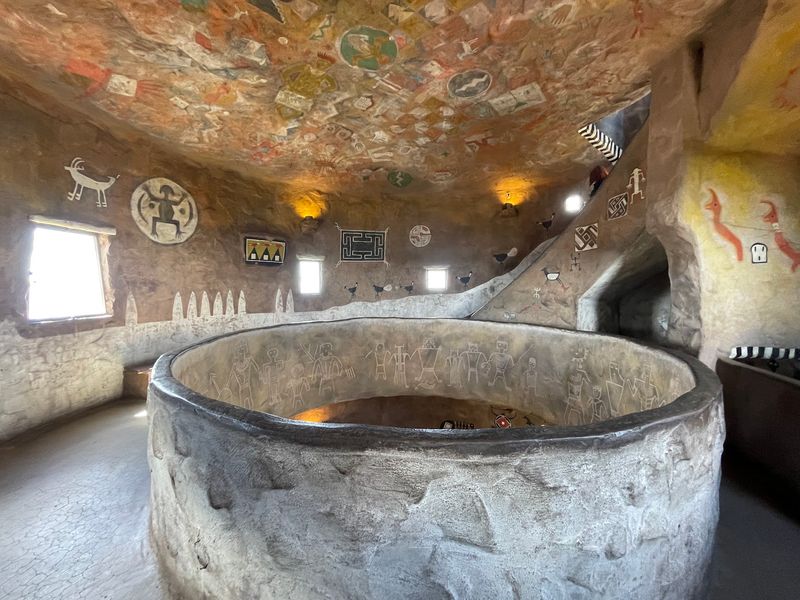
The result is a stone tower that looks almost ancient, even though it went up in 1932. Inside, painted murals climb the walls as you climb the stairs.
Going up to the top costs nothing, which feels like a small miracle in a national park.
Yet plenty of Arizona travelers never make the drive out to see it. They stick to the busy central overlooks and head home happy.
I can’t imagine skipping the eastern end once I know what waits there.
So what exactly are they missing, and why does that long drive pay off so well?
A Stone Tower That Looks Like It Grew Out Of The Rim
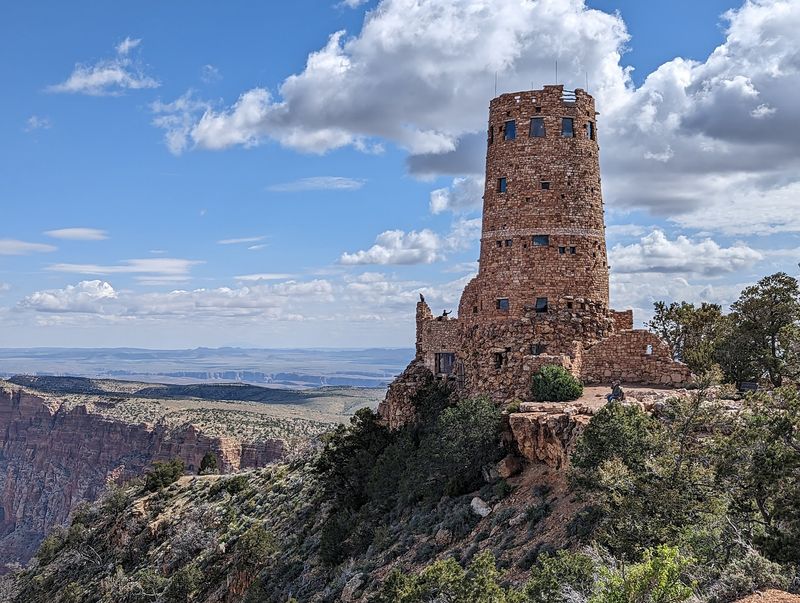
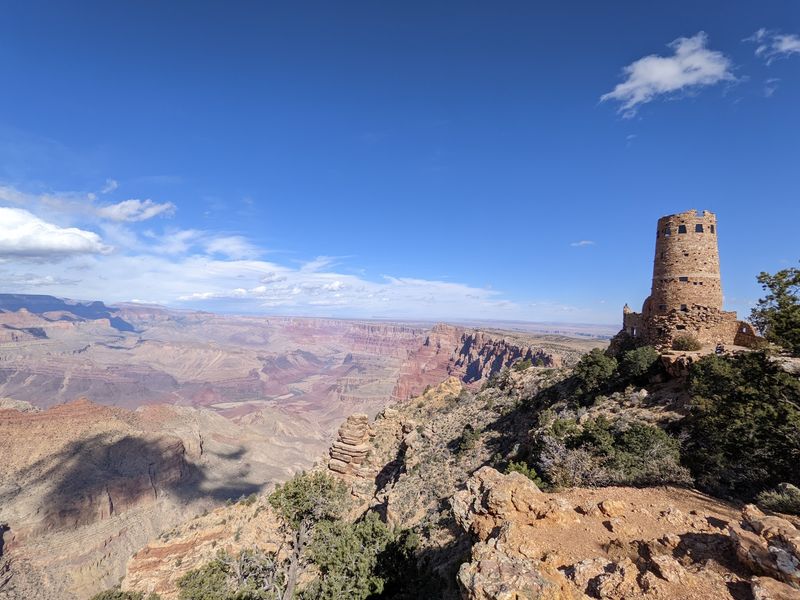
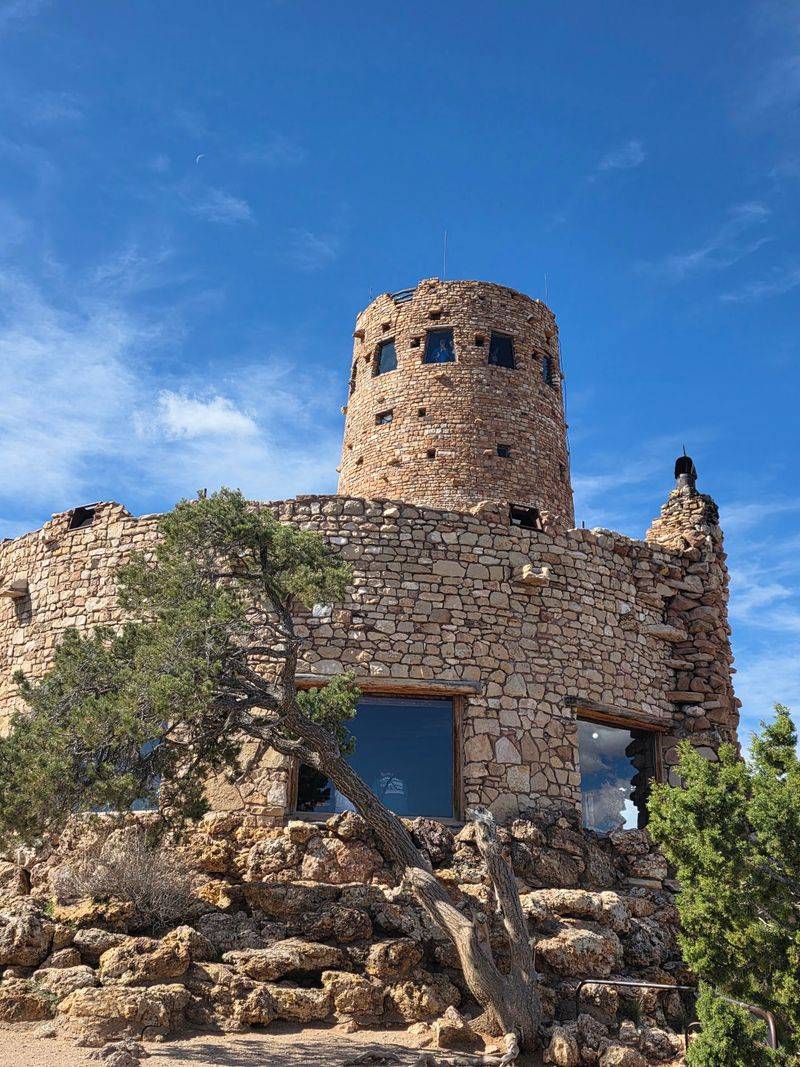
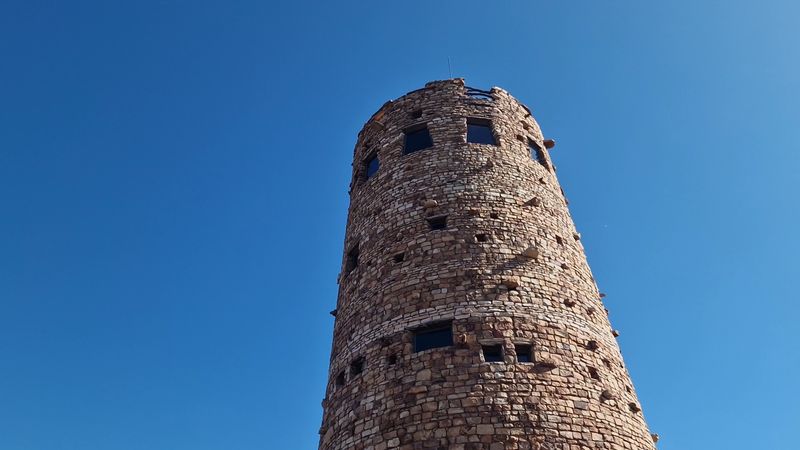
Out at the far eastern end of the South Rim, a round stone tower rises 70 feet above the canyon edge. Desert View Watchtower sits inside Grand Canyon National Park in Arizona, roughly 25 miles east of Grand Canyon Village.
Architect Mary Colter designed it, and it was completed in 1932. She studied Ancestral Puebloan towers at places like Hovenweep and Mesa Verde for inspiration.
Colter didn’t copy those ancient structures, though. She called her tower a modeled interpretation, built with weathered native stone so it would blend into the surrounding cliffs.
That choice pays off from every angle. The column-like shape looks so settled on the rim that it seems older than it is.
Up close, the irregular stonework shows how much care went into every layer.
Recognition followed decades later. The watchtower was designated a National Historic Landmark in 1987, honoring Colter’s vision and craftsmanship.
Most people know the Grand Canyon for its views. Here, the building itself is half the reason to show up.
Few overlooks anywhere in the park give you a structure this memorable to admire before you even glance at the scenery beyond the railing.
The Woman Who Built A Platform Just To Check The View
Mary Colter didn’t trust a blueprint alone. Before construction started, she had a 70-foot platform built on the site to test the views from the planned height.
That level of fussiness explains a lot. Colter was a pioneering Grand Canyon architect, and she treated this tower like a lifetime statement.
Her inspiration came from Ancestral Puebloan architecture across the Four Corners region. Ancient watchtowers at Hovenweep and Mesa Verde shaped the round silhouette and rugged look.
She also chose materials carefully. Weathered native stone keeps the tower in harmony with the canyon walls rather than standing out against them.
Inside, she planned details with the same attention. Hand-hewn wooden beams add an old-world feel overhead.
A fireplace was designed so it wouldn’t block the view.
Small, irregular windows dot the tower’s shaft. They let light filter in and frame little slices of the canyon as you climb.
Fans of strong women in history tend to find her story especially inspiring. She shaped how millions experience Arizona’s most famous landmark, and this tower remains one of her boldest works.
Knowing her backstory makes every step inside feel more personal.
Murals That Turn Every Staircase Into A Story
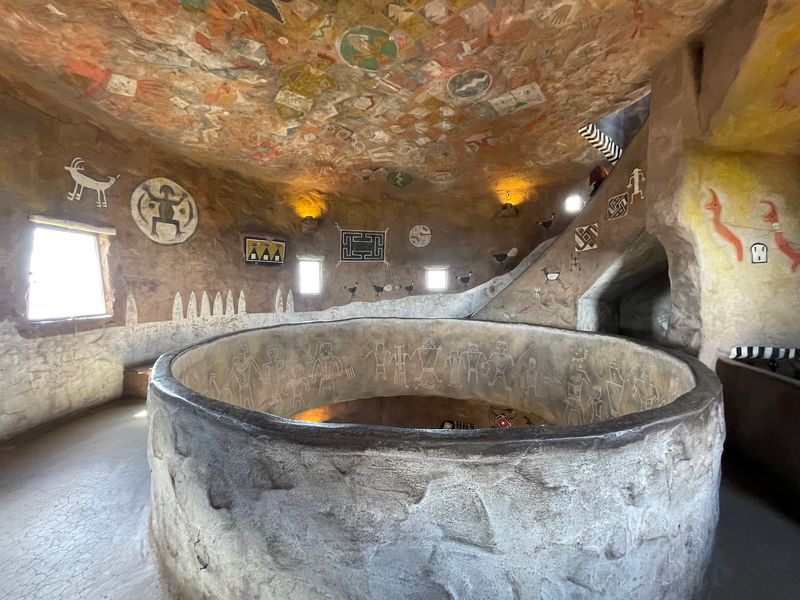
Climbing stairs rarely feels like flipping through a storybook. Inside Desert View Watchtower, it does.
The tower spreads across four levels, linked by a spiral staircase with about 85 steps. Each floor greets you with its own artwork.
Hopi artist Fred Kabotie painted murals on the first floor at Colter’s request. His work depicts stories of the Hopi people’s physical and spiritual origins.
Artist Fred Geary added designs on the second and third floors. His paintings recreate images from ancient sites across the region.
Good news for art lovers: the murals were fully restored in 2023. The colors and details now look sharper than they have in years.
Between paintings, those small irregular windows offer framed glimpses of the canyon. The mix of art and scenery keeps your neck turning in every direction.
A few flights of stairs stand between you and the top. Most people agree the climb is worth every step, since each level adds something new.
Bring patience for photos, because it’s easy to stop on every landing. The murals deserve as much attention as the view waiting at the summit.
Where The Colorado River Finally Shows Off
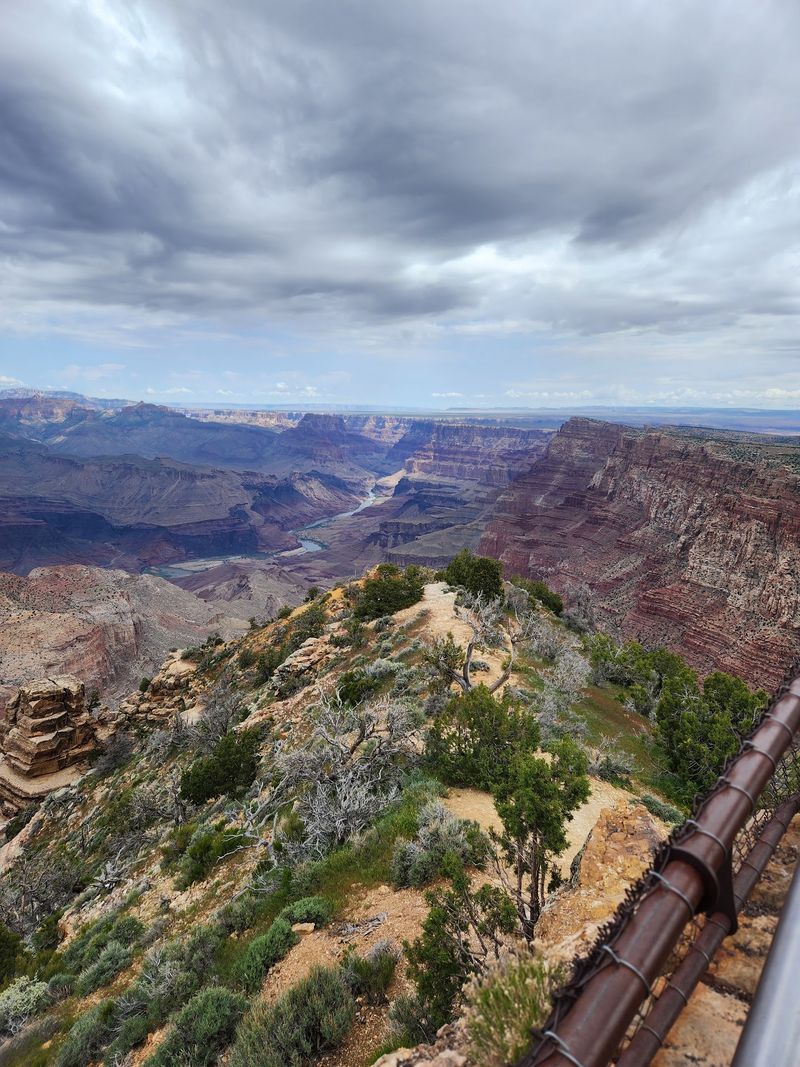
From the top, the Colorado River stops playing hide-and-seek. You can see it winding far below, making its turn from narrow Marble Canyon into the wide Grand Canyon.
Few South Rim spots offer that river view so clearly. It’s one reason sunset views and Colorado River views come up so often when people talk about this place.
The Little Colorado Gorge is visible from here too. Beyond it, the colorful Painted Desert stretches toward the horizon.
On a clear day, sightlines can reach over 100 miles. The San Francisco Peaks and Navajo Mountain may appear in the distance.
The terrain at Desert View is more open than in the central park. That gives you long, uninterrupted views and a full sense of how huge northern Arizona really is.
Weather adds its own drama. Clouds, fog, and even storms can roll through the canyon, revealing rock formations piece by piece.
Even if you skip the tower climb, the outdoor overlooks deliver serious panoramas. Still, the highest deck gives a perspective that feels different from anywhere else along the rim.
Photographers, this is your moment to linger.
A Kiva-Inspired Room Honoring Living Cultures
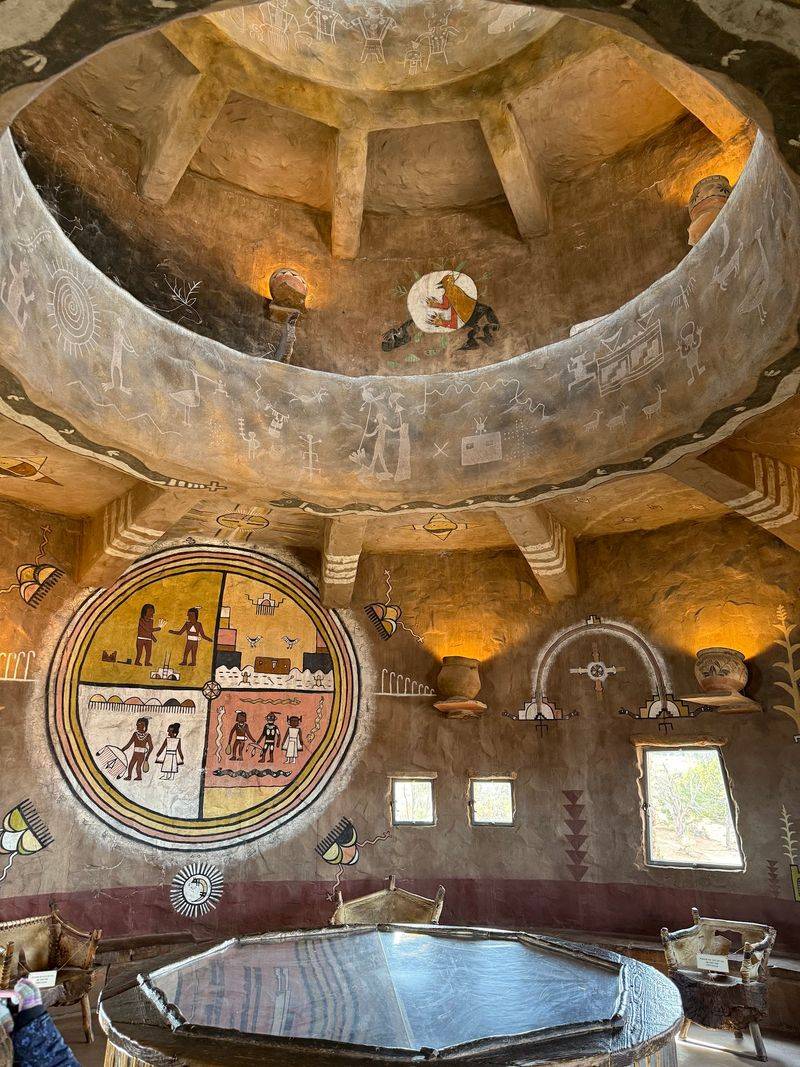
Here’s a fun twist on the usual tourist stop: the ground floor was designed as a rest area. Mary Colter called it the View Room, and it got that purpose back in 2015 after years as a retail space.
The room is modeled after a traditional kiva, a ceremonial space. It anchors the watchtower’s role as an Inter-Tribal Cultural Heritage Site.
That designation celebrates the tribes traditionally associated with the Grand Canyon. In spring, summer, and fall, Indigenous artists often share cultural demonstrations here.
Those visits bring the space to life. You’re not just reading about history but connecting with cultures that still call this region home.
Look for the reflectoscopes while you’re there. These black mirrors give an abstract, haze-cutting view of the canyon’s colorful layers.
It’s a quirky detail that feels like a secret tool from another era. Kids and grown-ups alike tend to enjoy peering into them.
Colter’s broader commitment shows throughout the building. Commissioning Fred Kabotie’s murals and borrowing from Ancestral Puebloan design turned this spot into a meaningful tribute, not merely an observation point on the Arizona rim.
Twenty-Five Miles Of Viewpoints Before The Grand Finale
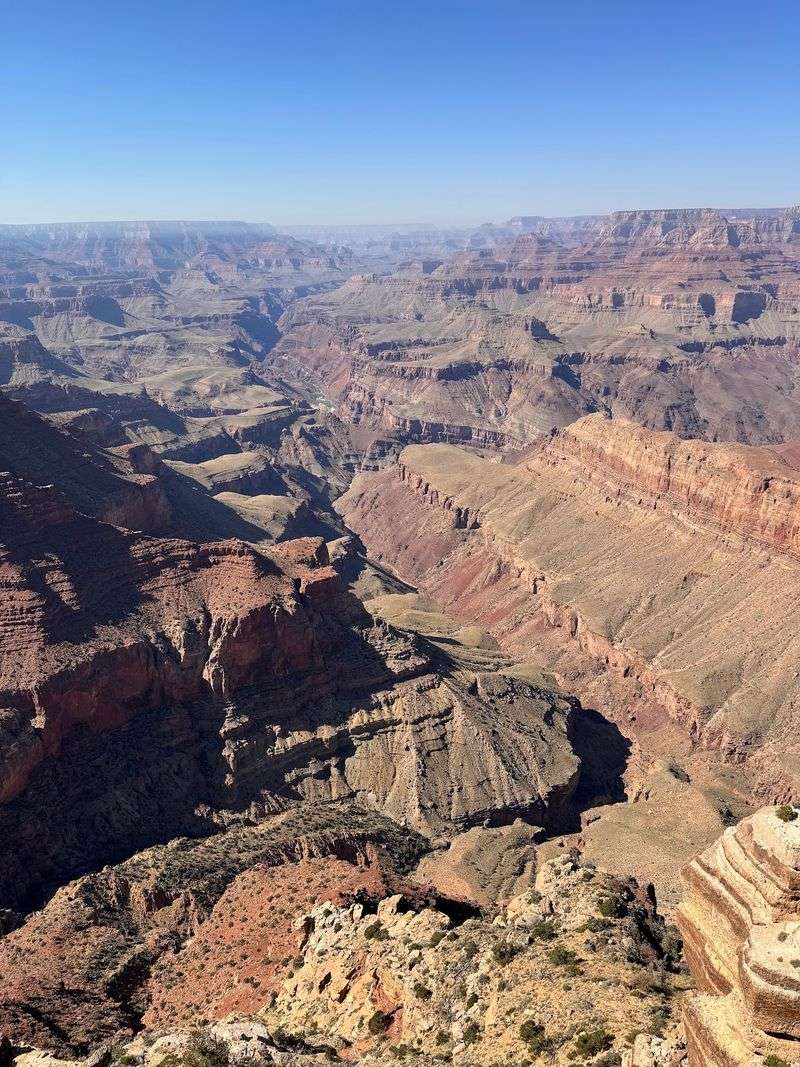
Calling it a detour undersells the trip. Desert View Drive, part of Arizona Highway 64, runs about 23 to 25 miles east of Grand Canyon Village.
Private vehicles can use it all year. That makes it far easier to reach than some park roads.
Along the way, you’ll pass numerous pullouts and six developed canyon viewpoints. Grandview Point, Moran Point, Lipan Point, and Navajo Point each show off different angles of the canyon’s geology.
Ponderosa pine forests line much of the route. Every so often, the canyon peeks through the trees and builds the suspense.
By the time the watchtower appears, you’ve had a full warm-up act. The drive feels like a scenic gallery with a stone tower as the closing piece.
Coming from the East Entrance? Then Desert View Watchtower becomes your very first look at the canyon, and what an introduction it is.
Either direction works beautifully. Just leave time for stops, because rushing this road means missing half its charm.
A snack, a full tank, and a relaxed schedule make the whole outing feel like a mini road trip inside the park.
Free Tickets, Ice Cream, And A Gas Station At The Edge Of Everything
Grab your free tower ticket first, then explore. Access to the upper floors works on a timed system, handed out first-come, first-served at the site.
Each group holds up to 25 people for a 20-minute visit. Upper-floor access depends on staffing, so availability can vary.
The ground-floor View Room and park store keep hours from 9 am to 5 pm daily. Last tickets go out at 3:40 pm, final entry is at 4 pm, and the stairs close at 4:30 pm.
Tickets can go fast on busy days. Waits for a time slot can stretch, so arriving early helps a lot.
Luckily, waiting here is easy. A Grand Canyon Conservancy Park Store fills the watchtower’s ground floor, and a general store and market sit a short walk away.
The seasonal Trading Post offers Native American handicrafts, ice cream, and coffee, plus an outdoor patio. Picnic tables help too.
Fully accessible restrooms are open 24 hours, with baby-changing tables and bottle refill stations. A 24-hour card-operated gas station rounds things out.
The upper tower is stairs-only. Paved sidewalks and overlooks still give everyone wonderful views.
The address is Desert View Watchtower, Grand Canyon Village, AZ 86023.
Why The Long Way Around Is The Right Call
Some trips end with a souvenir. This one ends with a tower full of stories, a river view, and maybe some ice cream on your shirt.
Desert View Watchtower packs architecture, Indigenous heritage, and sweeping eastern panoramas into one stop. Very few places in Arizona combine all three so naturally.
The building rewards slowing down. Murals, framed windows, and Colter’s careful details make the inside as memorable as the outside.
Timing can sweeten the deal. Morning light brightens the eastern canyon, while late afternoon warms the stone in rich tones.
Sunrise and sunset are especially popular here. Off-season visits can also feel calmer, with more room to enjoy each overlook.
Families will like the easy amenities and free climb. History buffs and photographers may never want to leave.
Is it farther than the central viewpoints? Yes, by quite a few miles.
Still, skipping it means missing one of the park’s most distinctive experiences. Tag the friend who always plans the road trip, and add this drive to the list.
Your Grand Canyon story will feel far more complete with this tower in it.