
10 Snorkeling Spots In Florida That Are Too Incredible To Ignore
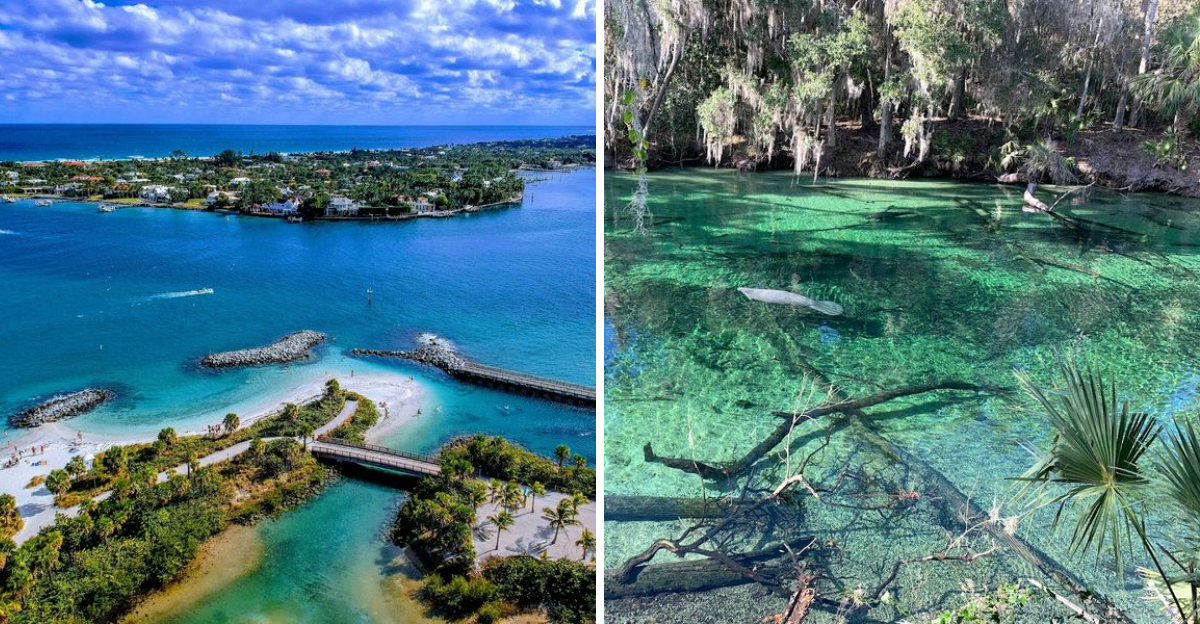
There’s a version of Florida most people never fully experience, and it starts the moment you put your face in the water.
The noise fades, the light shifts, and suddenly you are floating above a world that feels completely separate from everything happening on land.
Some of the most unforgettable moments in Florida happen just a few feet beneath the surface.
One spot reveals crystal-clear springs where the water looks almost unreal.
Another drops you into warm ocean currents filled with tropical fish moving in every direction.
Nothing feels rushed down there.
You slow your breathing, drift with the current, and start noticing details you would normally miss.
The best part is how different each location feels.
Every place shows you a new side of Florida.
And once you start exploring underwater, it becomes very hard to stay on shore for long.
1. John Pennekamp Coral Reef State Park, Key Largo
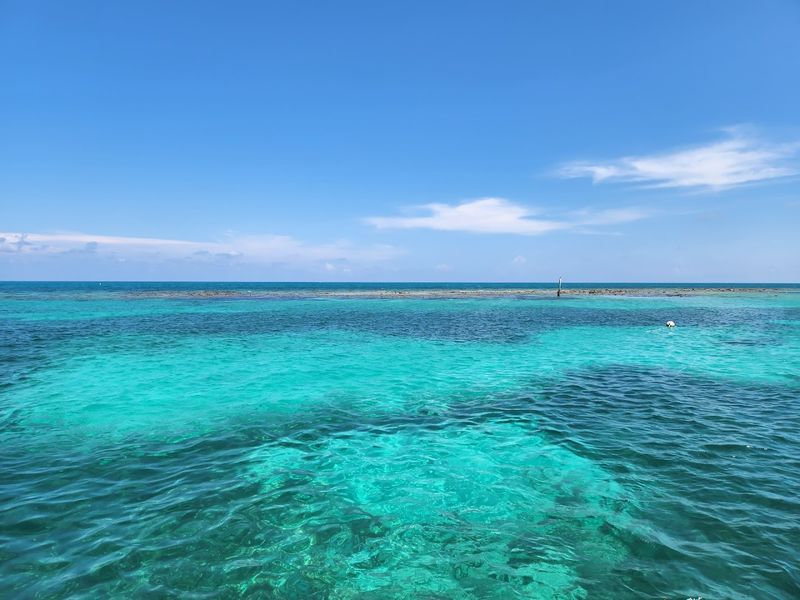
Just off the coast of Key Largo sits one of the most celebrated snorkeling destinations in the entire country, and once you slip beneath the surface at John Pennekamp Coral Reef State Park, you will understand the hype immediately.
This park protects roughly 70 nautical square miles of coral reef, seagrass beds, and mangrove swamps, making it the first underwater state park in the United States.
The reef is alive with parrotfish, angelfish, barracuda, and sea turtles that seem almost unbothered by human visitors.
Boat tours depart regularly from the park’s marina, and snorkel gear rentals are available on-site, so you do not need to bring your own equipment.
The best visibility typically happens in the morning before afternoon winds stir up the water.
I always make a point of swimming near the famous Christ of the Abyss statue, a nine-foot bronze figure resting on the ocean floor that never gets old, no matter how many times I visit.
2. Dry Tortugas National Park, Key West
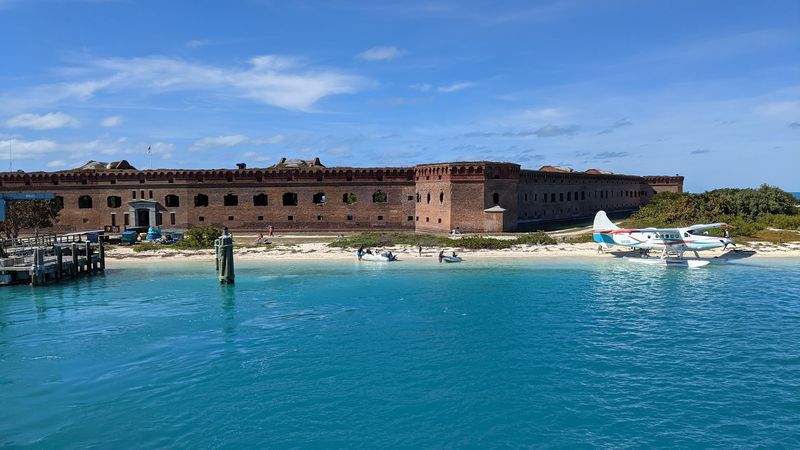
Getting to Dry Tortugas National Park requires either a ferry ride or a seaplane trip from Key West, and honestly, that journey is part of what makes it feel so special.
Located about 70 miles west of Key West, this remote national park is home to some of the healthiest and most pristine coral reefs in Florida, largely because so few people make the trip out there.
Snorkeling around the moat wall of the 19th-century Fort Jefferson is an experience that blends history with marine biology in a way that is genuinely unforgettable. The water is incredibly clear, with visibility often exceeding 100 feet, and you are likely to spot sea turtles, nurse sharks, and massive schools of colorful reef fish.
Camping is available on Garden Key for those who want to extend their stay and snorkel at sunrise when the light filtering through the water creates a scene that feels almost surreal.
As the day winds down, the island grows quieter, and the open ocean surrounding you in every direction makes the place feel almost otherworldly. It is one of those rare spots where the remoteness is not just a detail, but the entire point of the experience.
3. Devil’s Den Prehistoric Spring, Williston
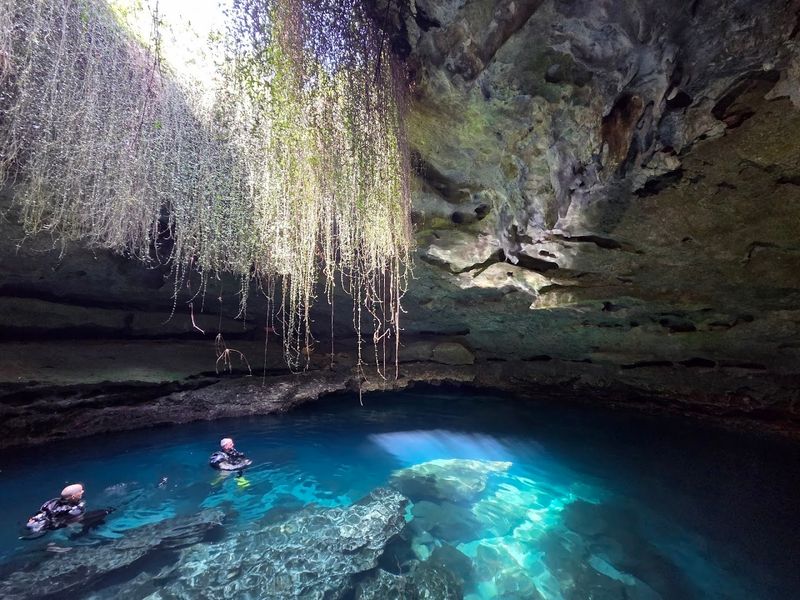
Tucked beneath the earth near Williston, Florida, Devil’s Den is unlike any snorkeling spot you have probably ever seen, because this one requires you to climb down into a sinkhole before you even touch the water.
The spring sits inside a dry cave, and light streams through an opening in the ceiling, casting a magical glow across the 72-degree water below.
The constant temperature makes this a year-round snorkeling destination, which is a big deal in Florida where summer heat can make outdoor activities uncomfortable.
Fossil hunters especially love this spot because ancient animal bones, including those of prehistoric mammals, have been discovered in the sediment here.
The spring is privately owned and requires advance reservations, so plan ahead before making the drive.
Floating in that warm, luminous water while looking up at rays of sunlight cutting through a limestone ceiling is the kind of experience that stays with you long after you towel off.
4. Ichetucknee Springs State Park, Fort White
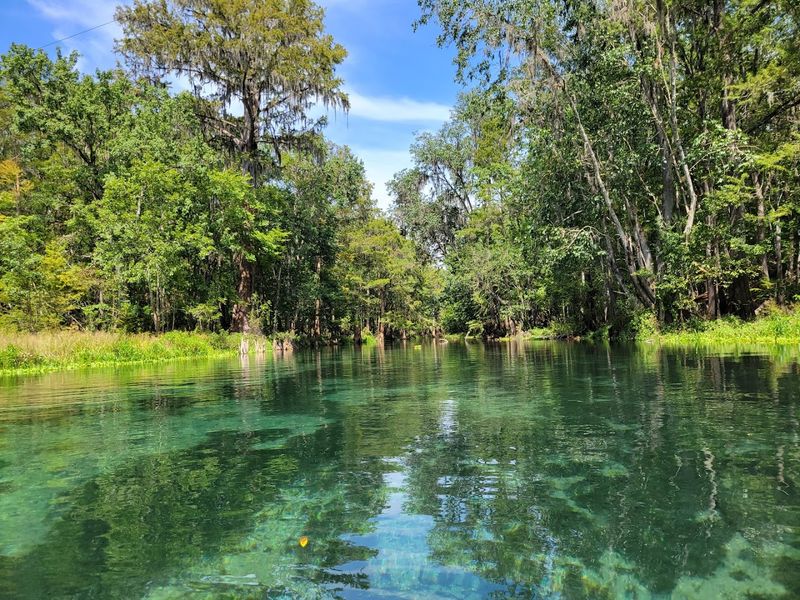
Few places in Florida feel as peacefully wild as Ichetucknee Springs State Park, located near Fort White in north-central Florida, where a series of nine springs feed into a river so clear it looks like liquid glass.
Snorkeling here means drifting slowly downstream through corridors of swaying aquatic plants while freshwater turtles, bass, and the occasional manatee cruise past without a care in the world.
The water temperature holds steady at around 68 degrees Fahrenheit all year, which feels refreshing in summer and surprisingly tolerable in cooler months with a wetsuit.
The park limits the number of daily visitors to protect the ecosystem, so arriving early or booking ahead is strongly recommended.
Tubing is the more popular activity here, but snorkeling gives you a much closer and more intimate view of the river’s underwater life.
By the time the current carries you to the takeout point, you will already be thinking about when you can come back.
5. Blue Spring State Park, Orange City
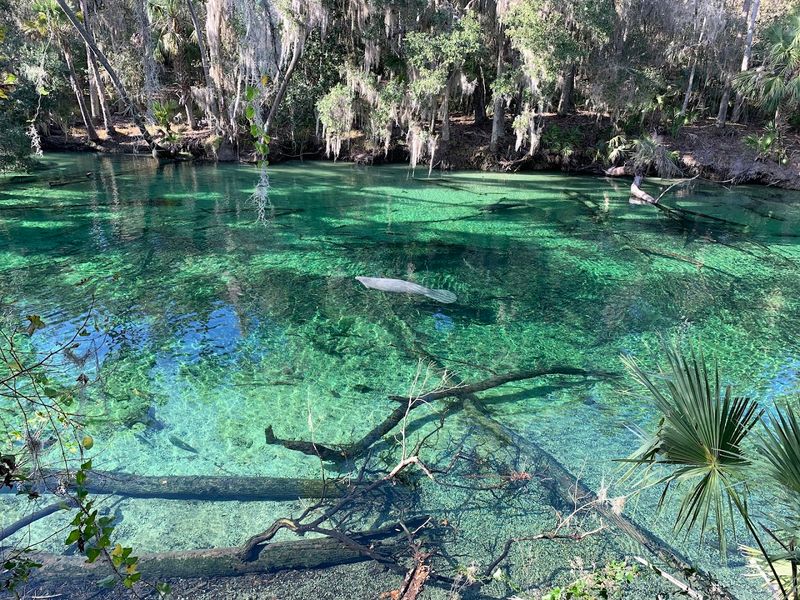
Blue Spring State Park in Orange City, Florida, is most famous for being one of the best places in the state to see West Indian manatees, and snorkeling here during the winter months puts you in the water alongside some of the gentlest creatures on earth.
The spring maintains a year-round temperature of 72 degrees, which draws manatees into the run from the St. Johns River whenever the river water drops below that threshold, typically from November through March.
Outside of manatee season, the spring opens fully for swimming and snorkeling, and the visibility in that brilliant blue water is consistently outstanding.
Catfish, bass, gar, and soft-shell turtles are common sightings year-round, and the underwater landscape of sandy bottom and submerged roots is genuinely beautiful.
The park also has campgrounds, hiking trails, and a restored antebellum homestead, so you can easily make a full weekend out of a visit here.
6. Rainbow Springs State Park, Dunnellon
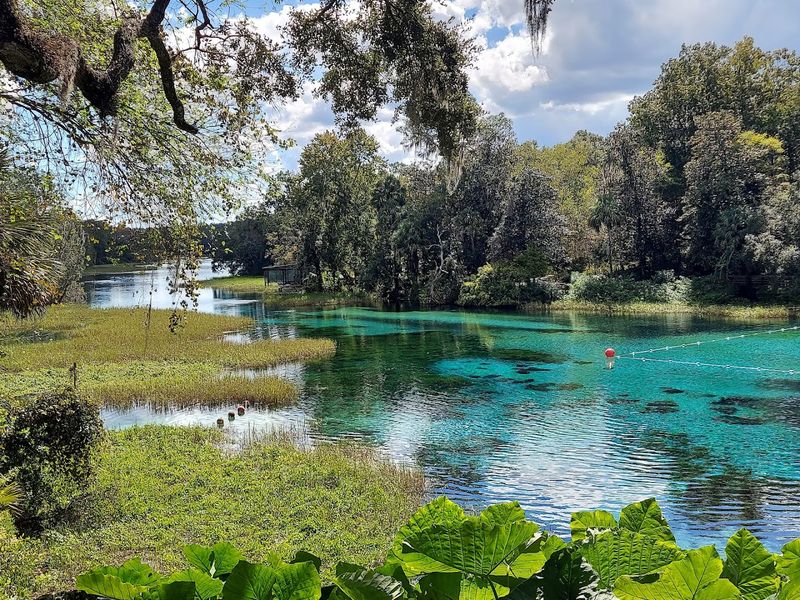
Rainbow Springs, located near the small town of Dunnellon in Marion County, Florida, produces around 400 million gallons of water per day, making it one of the largest first-magnitude springs in the state, and that flow creates snorkeling conditions that are consistently spectacular.
The water is so clear that you can see every pebble and blade of grass on the bottom from the surface, and the various shades of blue and green swirling together give the spring its name.
Freshwater fish like bass, bream, and mullet are everywhere, and the occasional river otter has been known to pop up for a look at curious snorkelers.
The park offers a tubing experience that lets you float down the Rainbow River, but renting a snorkel and exploring on your own gives you a much more personal connection to the ecosystem.
Mornings on a weekday are the best time to visit if you prefer having the water mostly to yourself and that feeling of quiet discovery that makes freshwater snorkeling so rewarding.
7. Peanut Island Park, Riviera Beach
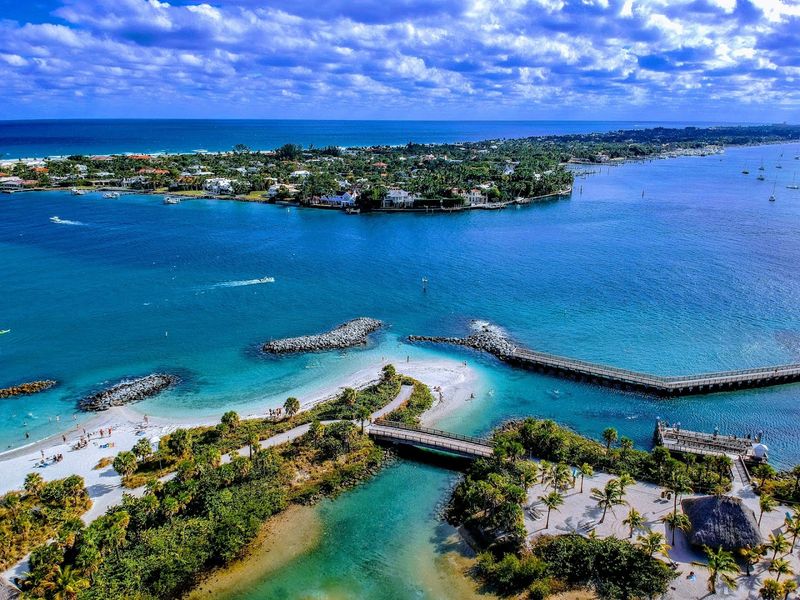
Peanut Island Park sits in the Lake Worth Lagoon near Riviera Beach, Florida, and it holds a quirky piece of Cold War history, a nuclear fallout shelter built for President John F. Kennedy that you can actually tour while visiting.
The snorkeling here is centered around an artificial reef system that has been deliberately built up over the years to attract marine life, and it works remarkably well.
Tropical fish, lobster, moray eels, and even the occasional nurse shark have made this reef their home, creating a surprisingly lively underwater environment for a spot so close to a major urban area.
The island is accessible only by boat or water taxi from the Riviera Beach Marina, which keeps the crowds manageable and the experience feeling somewhat off the beaten path.
Water clarity is generally best on calm days with low wind, and the shallow reef structure makes this a great option for beginners or younger snorkelers who are still building their confidence in open water.
8. Bahia Honda State Park, Big Pine Key
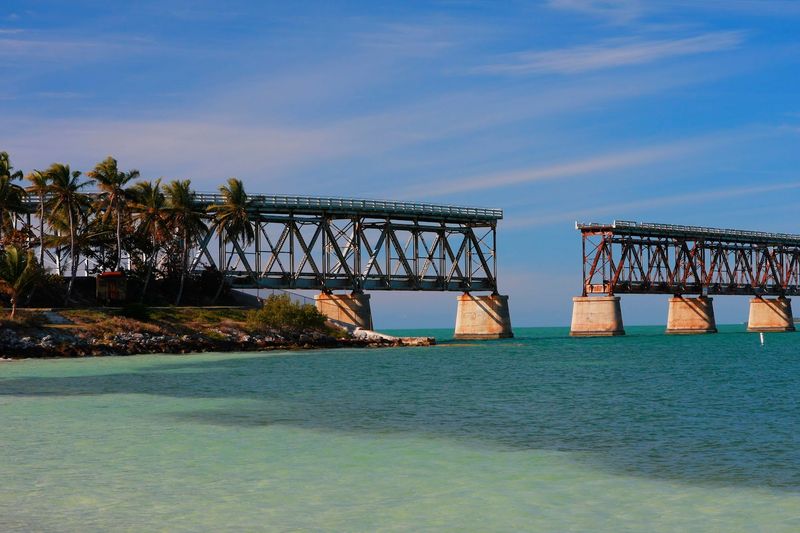
Bahia Honda State Park on Big Pine Key is widely considered one of the most scenic state parks in all of Florida, and the snorkeling here matches the stunning visual reputation of the place above water.
The park sits in the lower Florida Keys, about 37 miles north of Key West, and its waters are home to seagrass meadows, patch reefs, and a surprising variety of marine life for a spot that is relatively easy to reach by car.
Snorkeling tours to nearby Looe Key Reef depart from the park’s marina, giving visitors access to one of the most vibrant sections of the Florida Reef Tract, where brain coral, elkhorn coral, and dense schools of blue tang are common sights.
The old Bahia Honda Rail Bridge, a remnant of Henry Flagler’s Overseas Railroad, adds a dramatic backdrop to the scenery both above and below the waterline.
Camping at the park means you can snorkel at first light before the day-trippers arrive, and those early morning hours in the Keys have a quality of light and quiet that is genuinely hard to describe.
9. Egmont Key State Park, Tampa Bay
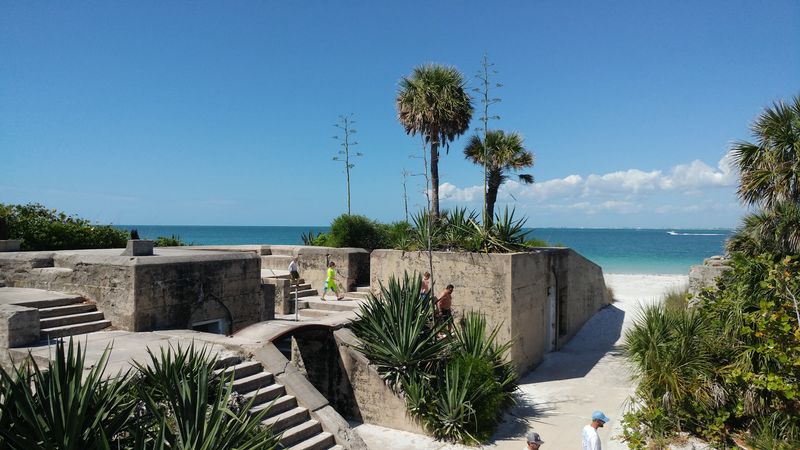
Reaching Egmont Key State Park requires a ferry or private boat ride from Fort De Soto Park or from downtown St. Petersburg, and the moment you arrive on this car-free island at the mouth of Tampa Bay, it feels like a genuine escape from the mainland.
The island is home to a historic lighthouse dating back to 1848, a population of gopher tortoises, and the ruins of Fort Dade, a Spanish-American War-era military installation that has slowly been reclaimed by the sea.
Snorkeling around the submerged ruins and the rocky outcroppings along the island’s edges turns up sea turtles, stingrays, sheepshead, and snook with impressive regularity. The Gulf-side waters tend to be calmer and clearer, making them the better choice for snorkeling on most days.
Because the island has no concessions or facilities, packing your own food, water, and snorkel gear is essential, but that self-sufficiency is also part of what makes a day on Egmont Key feel like a real adventure.
As the boats come and go, the island settles into a quiet rhythm where the only real sounds are waves, wind, and the occasional seabird overhead. It is the kind of place where time stretches out, and for a few hours, everything else feels very far away.
10. Venice Beach, Venice
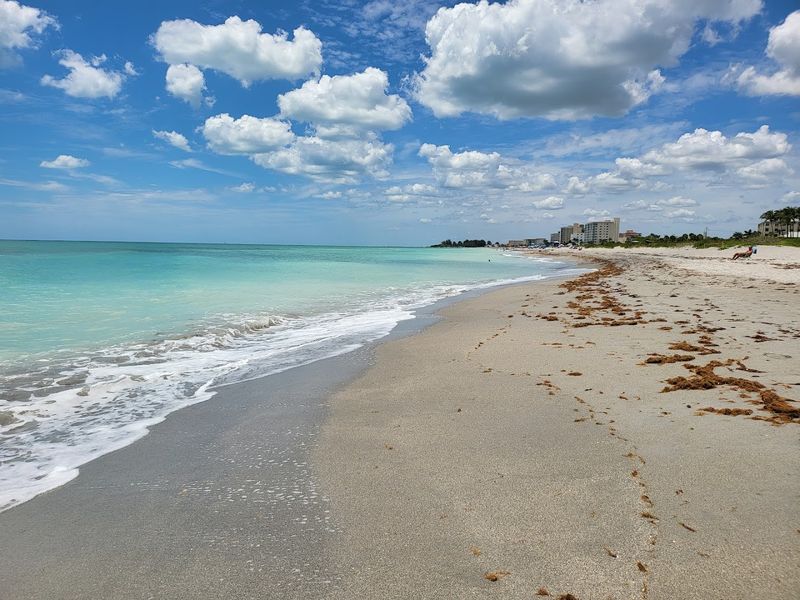
Venice Beach on Florida’s Gulf Coast has earned the nickname “Shark Tooth Capital of the World,” and snorkeling here has a completely different energy than coral reef or spring snorkeling because the main attraction is hidden in the sandy bottom beneath your fins.
Millions of fossilized shark teeth, some dating back tens of thousands of years, wash up along the shoreline and settle in the shallow water just offshore, making every snorkel session feel a little like a treasure hunt.
Megalodon teeth, the fossilized remains of a prehistoric shark that could grow to enormous sizes, are the most prized finds, and serious collectors use mesh scoops to sift through the sediment.
The snorkeling conditions are best after a storm has churned up fresh material from the seafloor, and low tide exposes the most productive stretches of beach for searching.
Venice Beach is free to access, easy to reach, and endlessly entertaining for kids and adults alike, which makes it one of the most genuinely fun snorkeling stops on Florida’s west coast.