
Something Remarkable Is Reemerging From Beneath This Utah Lake
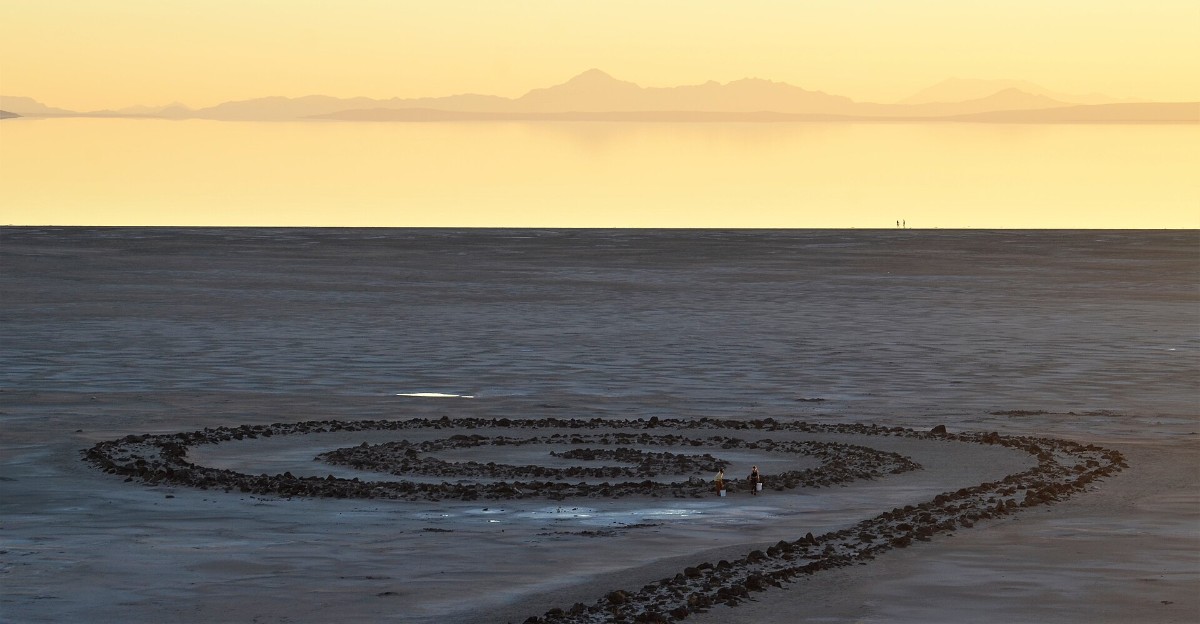
A giant black spiral disappeared beneath a lake, and for nearly 30 years, it remained hidden from view. No dramatic disappearance, no explanation involving anything supernatural.
Just a strange piece of art swallowed by nature, waiting for the right moment to reappear.
What makes its return even more fascinating is that it didn’t come back looking quite the same. Time, water, and the elements seem to have left their own mark on it, almost as if the landscape decided to become part of the artwork itself.
I love the idea of a sculpture that refuses to stay in one place, changing with the world around it rather than simply standing there for people to admire.
And now that it’s visible again, one question comes to mind. What exactly makes this remote Utah landmark so unforgettable?
A Rock Spiral That Played Hide-And-Seek For 30 Years
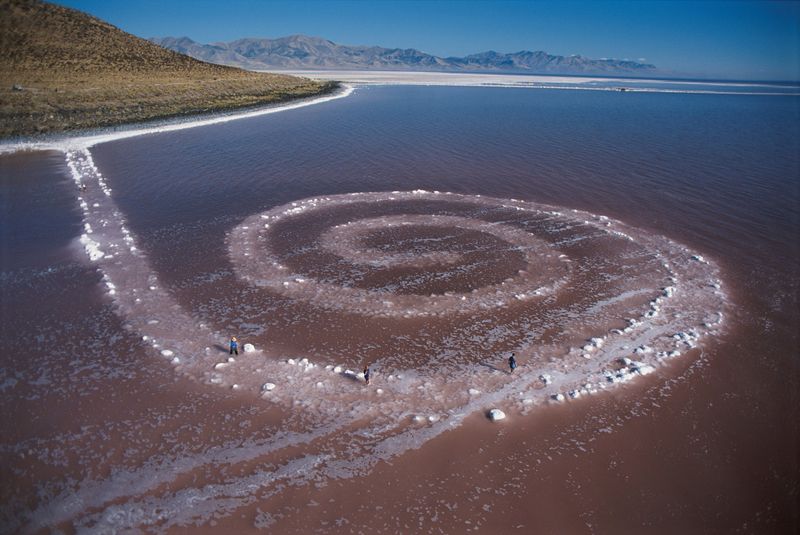
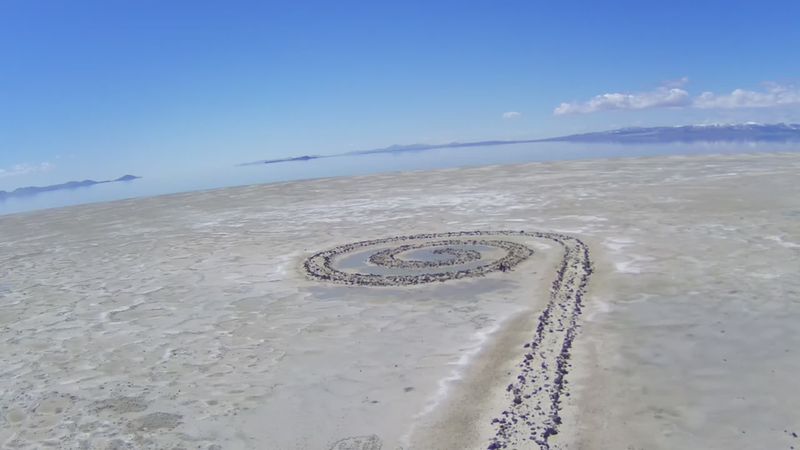
Robert Smithson’s Spiral Jetty was built in April 1970 on the northeastern shore of the Great Salt Lake. By 1972, rising water had swallowed it whole.
The spiral spent much of the next three decades underwater, occasionally reappearing as lake levels fluctuated. Photographs and Smithson’s own film about building it helped preserve its story during those years.
Then came drought. Around 2002, falling lake levels pulled the water back, and the coil popped up again.
It has stayed visible for most of the years since then.
That return is the remarkable part of this story. Few artworks get a second debut after decades underwater.
Fewer still come back wearing a fresh crust of salt crystals.
The comeback also carries a quiet message. A visible jetty means a shrinking lake, and that’s not great news for Utah’s wildlife or air quality.
The spiral now works like a giant measuring stick for the lake’s health.
So when you stand on it, you’re seeing art and a water report at the same time. Smithson wanted his work to change with nature.
He got exactly that, and then some.
Not many sculptures can claim a plot twist like this one.
Fifteen Hundred Feet Of Basalt Make One Very Big Doodle
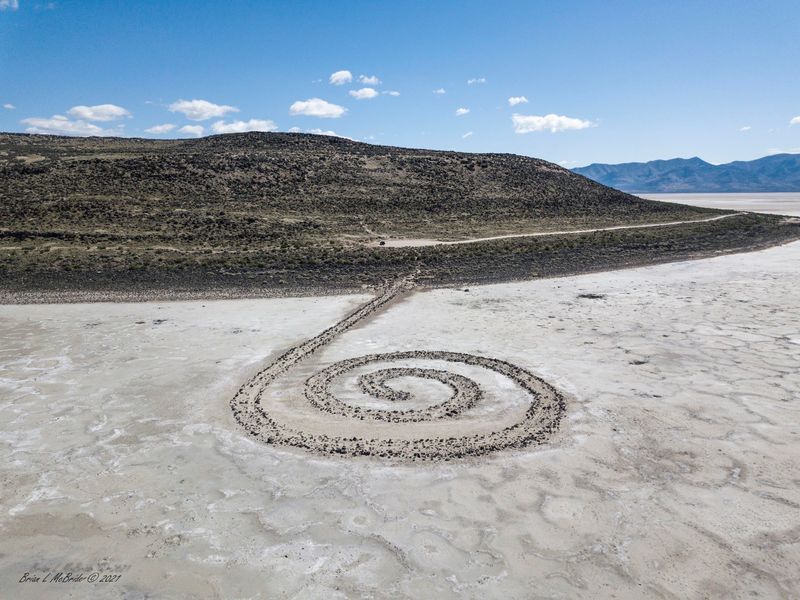
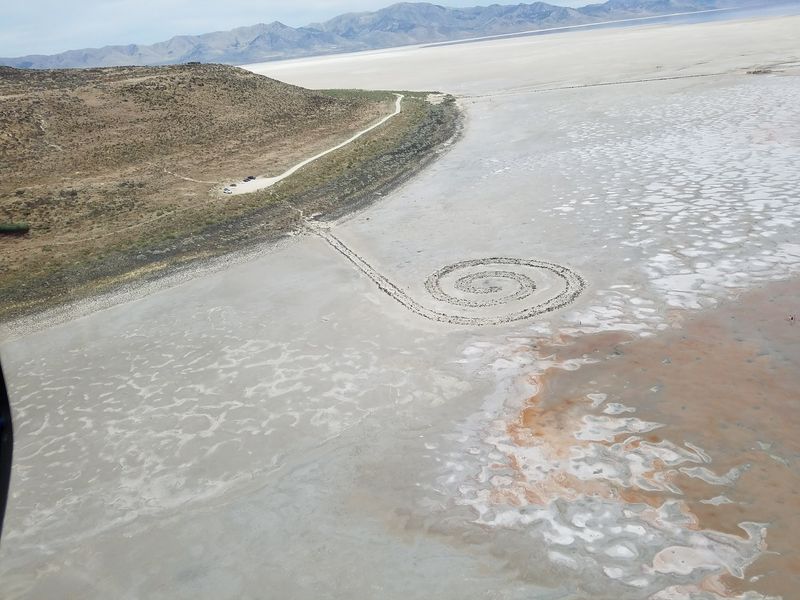
Size matters here, and the numbers are bold. The spiral runs about 1,500 feet long and about 15 feet wide.
It curls counterclockwise into the lake. Smithson built it from black basalt rock, earth, and salt crystals found right at the site.
Think of it as a sketch drawn with a bulldozer instead of a pencil. The dark rock pops against the pale lake bed, so the shape reads clearly from above.
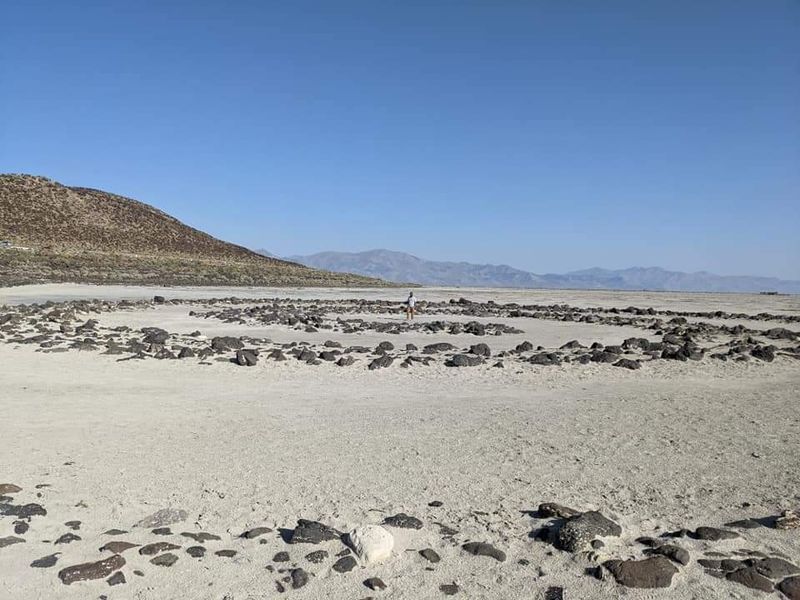
Up close, the rocks feel rough and uneven. That’s part of the charm, but it also means good shoes are a smart call.
Smithson was fascinated by entropy, the idea that things slowly break down and change over time. He picked materials that would weather and shift.
Salt builds up, water rises and drops, and the spiral keeps evolving.
In 2017, Utah named it the official state work of land art. In 2024, it joined the National Register of Historic Places.
Not bad for a pile of rocks shaped like a cinnamon roll. The design is simple, but the scale makes it unforgettable once you see it in person.
Yes, The Water Really Can Turn Pink
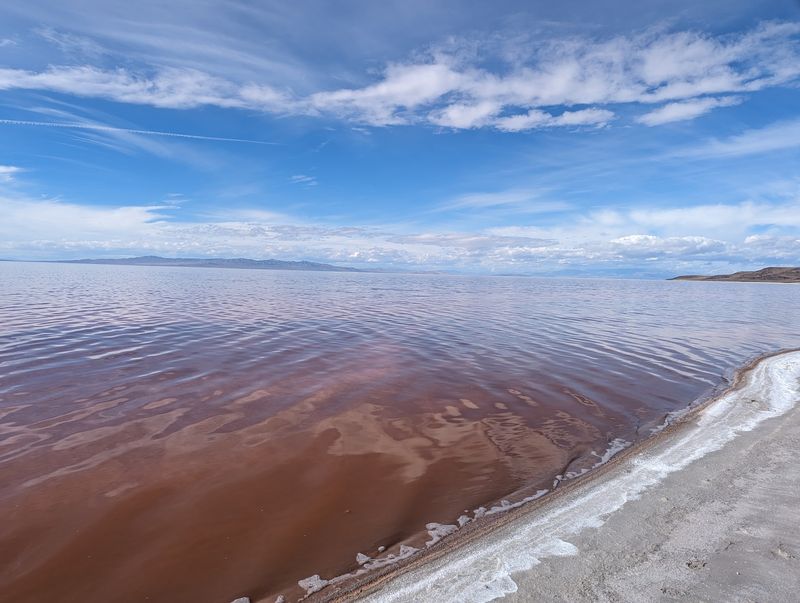
Pink water sounds like a filter trick. Out here, it can be the real deal.
The north arm of the Great Salt Lake is extremely salty. Salt-loving bacteria and algae thrive in it, and they can tint the water pink or reddish.
Smithson actually chose this spot partly because of that color. He liked what he called its anti-pastoral beauty, which is a fancy way of saying it’s strange and gorgeous at once.
Here’s a practical tip, though. Low lake levels have pushed the shoreline far from the jetty.
Reaching the water now usually means a walk across the dry lake bed.
The color also changes with weather, light, and season. Some days are vivid, while others look softer.
Plan for surprises rather than a guaranteed postcard shot.
If you wade in, keep your shoes on. Salt crystals can be sharp, and that briny water dries itchy on skin.
Bring extra water to rinse off afterward, since there’s none on site. Your feet will thank you on the long drive home.
You Are Allowed To Walk Right On This Masterpiece
Most museums keep you behind a velvet rope. Robert Smithson’s Spiral Jetty lets you stroll straight onto the artwork.
When the spiral is above water, you can follow its curves all the way to the center. It’s a slow, winding walk that pulls you deeper into the coil with each step.
That experience is the whole point. You don’t just look at this piece.
You move through it and see the lake from inside the shape.
Still, treat it like art, because it is. The Dia Art Foundation, which has owned and cared for the jetty since 1999, asks visitors to leave rocks where they are.
Don’t build new rock designs or carry stones home as souvenirs. Small changes add up fast when many people visit.
Follow Leave No Trace habits too. Pack out every wrapper, bottle, and snack bag you bring.
Nancy Holt, Smithson’s wife and fellow artist, donated the work to Dia. Keeping it intact honors both of them.
Walk gently, snap your photos, and let the spiral stay exactly as wild as it was meant to be.
The Gravel Road Is Half The Adventure
Paved roads run out long before the spiral shows up. The final stretch is unpaved gravel and dirt, and some parts get bumpy.
Plenty of regular cars make the trip in dry weather. Even so, solid tires and a spare are wise choices out here.
Cell service gets spotty or disappears past the Golden Spike visitor center. Download maps and directions before you leave town.
Fill your gas tank before heading out, too. There are no fuel stops anywhere near the jetty, and turning back halfway is no fun.
Drive slowly on washboard sections. Those ripples in the road can rattle your car and your teeth if you rush them.
Wet weather can make dirt roads slick or muddy. Check the forecast first, and skip the trip if storms look likely.
Give yourself plenty of daylight for the return drive. Gravel roads feel much longer in the dark.
Treat the drive as part of the outing rather than a chore. Wide valleys and empty hills roll past the windows, setting the stage for something unusual waiting at the end.
Pack Like Nobody Is Coming To Help
Snacks aren’t optional here. There are no restrooms, no food, no water, and no gas at the site.
That sounds dramatic, but it’s simply how remote this place is. Smart planning makes the visit relaxed instead of stressful.
Start with plenty of drinking water for everyone in your group. Add easy food like sandwiches, fruit, or trail mix for a picnic with a strange view.
Sun protection is a must. The landscape is wide open with almost no shade, so hats and sunscreen go a long way.
Layers help too, because weather can shift and wind may pick up. Sturdy shoes beat sandals on sharp rocks and salty ground.
Restrooms are available at the Golden Spike visitor center during open hours, so plan a stop on the way. Corinne is another place to grab supplies before the long drive.
Bring a trash bag and pack out everything. Leaving the land clean keeps the site special for the next visitor.
A small first aid kit is a good idea as well. Being ready lets you focus on the view instead of what you forgot.
Watch Your Step Around The Sticky Black Patches
Not every dark spot near the lake is just rock. Natural tar seeps can show up around Rozel Point when water levels drop.
These oozing patches are sticky and messy. Step into one, and your shoes may never feel the same.
The tar is actually part of the area’s odd geology. It helped make the site feel unusual long before Smithson arrived.
So keep your eyes on the ground while exploring. Stick to firm, dry surfaces whenever you can.
Kids especially need a heads-up. A shiny black puddle looks interesting, but it’s best admired from a safe distance.
Loose rocks are another thing to watch. The slope from the parking area down to the jetty can feel uneven, so take it slow.
Salt crusts can also hide soft mud beneath them. Test your footing before putting full weight on unfamiliar patches.
None of this should scare you away. A little caution keeps the trip fun and your shoes mostly clean.
Think of it as part of what makes this place feel like another planet. Just a planet where you should look before you leap.
Make A Stop Where Two Railroads Finally Met
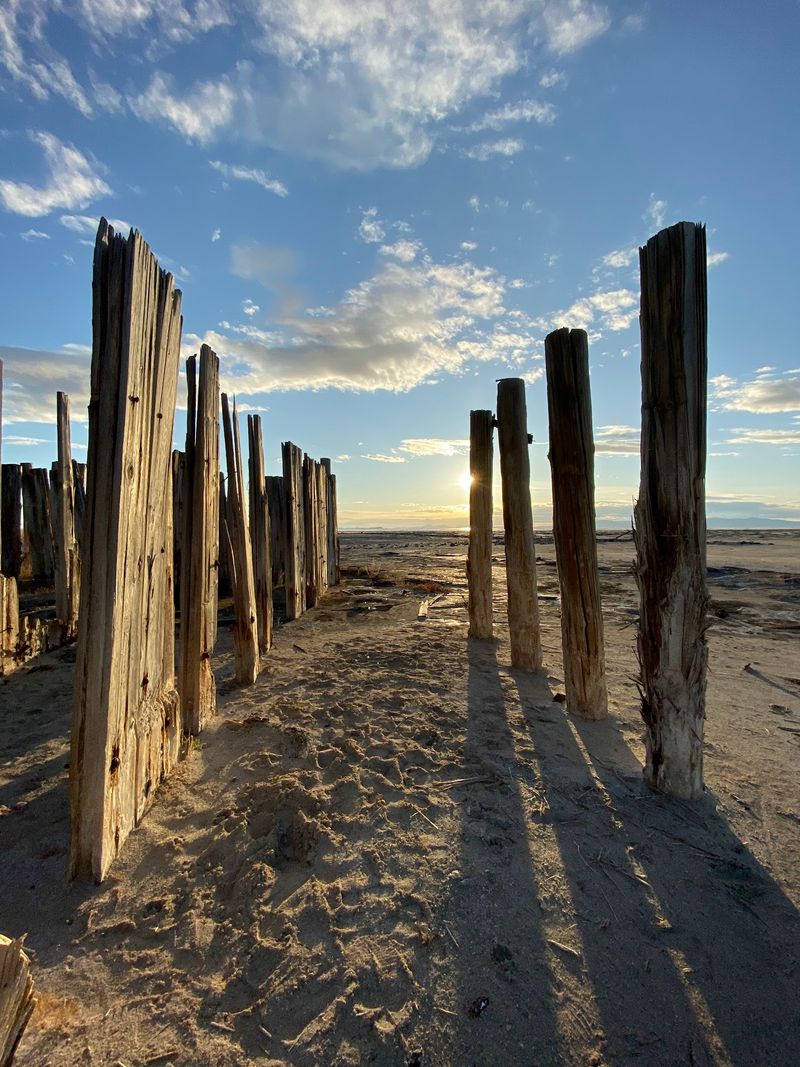
History buffs score a bonus on this trip. The route to the jetty passes Golden Spike National Historical Park in Promontory.
That’s where the first transcontinental railroad was completed in 1869. Two railroad lines met there and connected the country by rail.
The park makes a natural pit stop before the gravel drive. It’s also a good place to check road conditions and stretch your legs.
Pairing the two sites gives your day a fun contrast. One celebrates engineering that linked a nation, while the other twists rock into art.
Both spots tell stories about people shaping the Utah landscape in bold ways. Seeing them together makes the long drive feel extra worthwhile.
Remember that cell service fades after the visitor center. Grab any last-minute info there before heading toward the lake.
The jetty itself sits in a remote corner, with the general address listed as Rozel Point, Great Salt Lake, Corinne, UT 84307. Corinne is the nearest town, but the drive from there still takes a while.
Plan for a full day, and you’ll get two big pieces of history in one road trip.
Stick Around When The Sky Goes Dark
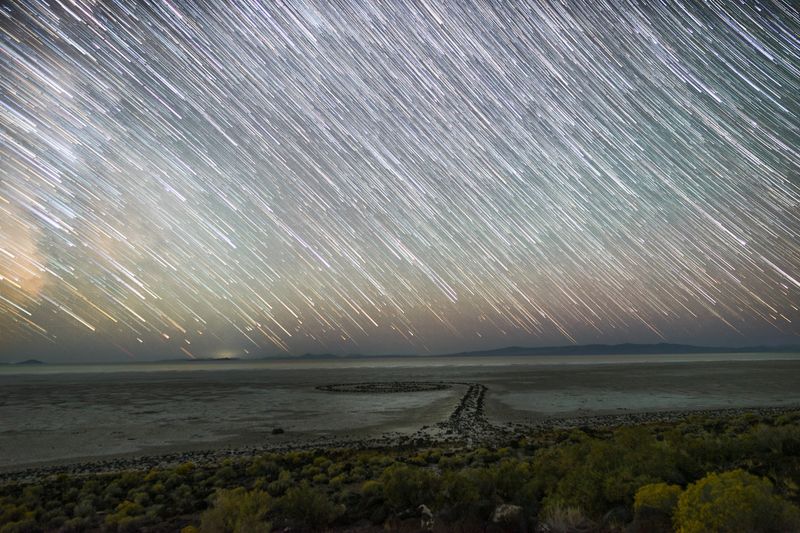
Silence is one of the site’s quietest surprises. With no towns nearby, the soundtrack is mostly wind and your own footsteps.
That remoteness also means very little light pollution. On clear nights, the sky out here can get impressively dark.
Photographers love that combination. A spiral of rock under a starry sky makes a seriously memorable picture.
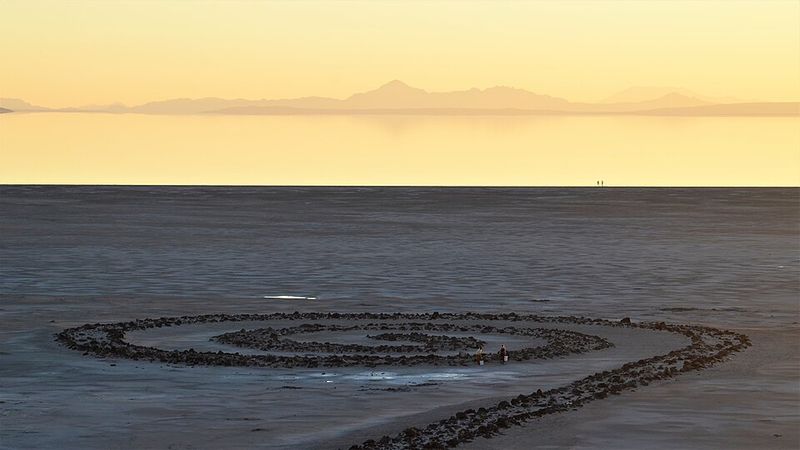
Sunset is another lovely window. Low light stretches shadows across the basalt and can make the salt glow.
If you stay late, prepare well. Bring flashlights, warm layers, and extra water, since the drive back will be in full darkness.
Know your route before the sun drops. Gravel roads with no cell service are much trickier at night.
The site is generally accessible around the clock, but conditions vary. Always respect closures, weather warnings, and private land along the way.
Smithson’s Spiral Jetty was built to change with time, light, and water. Seeing it fade into dusk feels like watching that idea play out live.
It’s a fitting way to end a visit in Utah. The spiral keeps shifting, and so does the sky above it.