
13 South Carolina Foods Only Locals Get Excited About
South Carolina serves up more than meals – it serves memories. Coastal delights mingle with hearty inland favorites, each dish carrying a story handed down through generations.
At family tables and local festivals, these flavors spark instant recognition, making mouths water and hearts smile. One bite, and you can taste the essence of home, woven into every recipe.
1. Shrimp & Grits
Plump creek shrimp dance atop a creamy bed of stone-ground grits, creating a marriage of textures that started as a humble fisherman’s breakfast called ‘shrimps and hominy.’
The secret lies in fresh-caught local shrimp, especially in late summer into fall, peaking around September and October, when their natural sweetness shines brightest.
Charleston chefs elevate this dish with bacon, mushrooms, and scallions, but grandmothers across the Lowcountry still make the best versions.
2. She-Crab Soup
Velvety smooth and palest pink, this luxurious soup showcases the delicate meat of female blue crabs enriched with their coral-colored roe.
The story goes that William Deas, a Charleston butler, created this masterpiece for President William Taft in the early 1900s.
Unlike ordinary crab bisques, the magic happens when a splash of sherry gets added just before serving, creating an aromatic finish that makes locals close their eyes in bliss.
3. Chicken Bog
Fall weekends in the Pee Dee region mean one thing: massive cauldrons of chicken bog bubbling at community gatherings.
I remember my grandfather stirring a pot big enough to feed twenty, telling stories while the rice absorbed all that savory chicken goodness.
Neither soup nor pilaf, this hearty one-pot wonder gets its quirky name from its slightly boggy texture. The town of Loris proudly hosts the annual Bog-Off Festival, drawing thousands who come to taste competing recipes.
4. Frogmore Stew
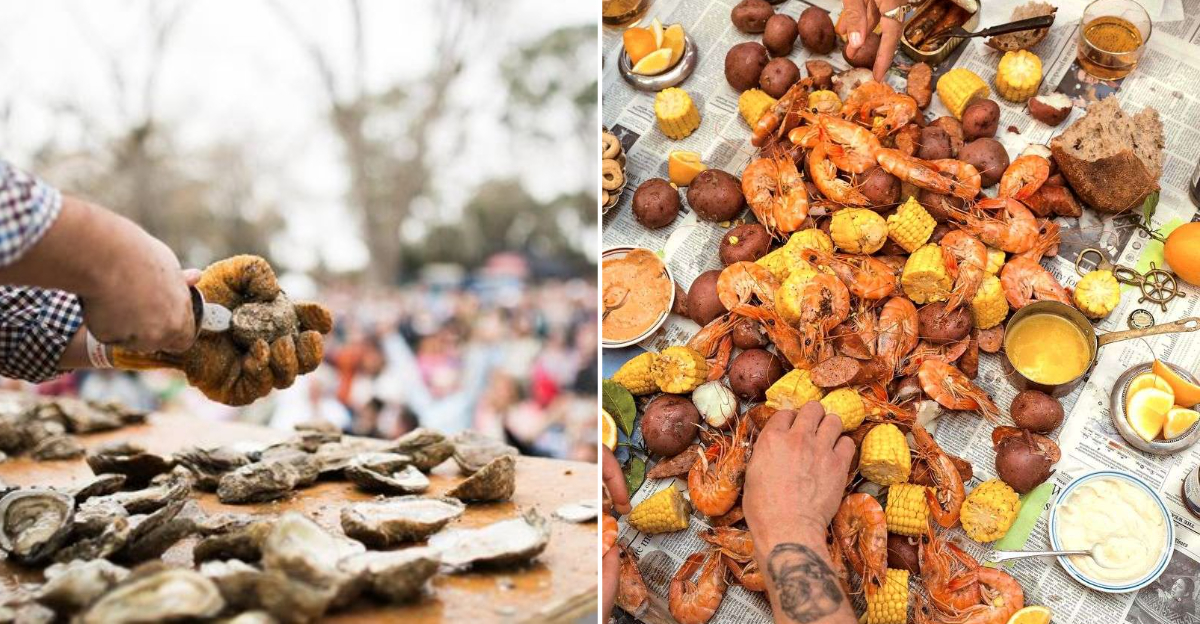
Despite the name, not a single frog appears in this beloved coastal feast. Also called Lowcountry Boil, this one-pot wonder combines fresh shrimp, smoked sausage, corn on the cob, and new potatoes.
The beauty lies in its communal serving style – dumped ceremoniously onto newspaper-covered tables where everyone gathers around.
Named after the tiny Frogmore community on St. Helena Island, locals know summer has officially arrived when the first boil of the season steams up backyard gatherings.
5. Benne Wafers
These penny-sized sesame cookies pack more flavor than seems possible in something so thin. My grandmother always kept them in a blue tin, claiming they brought good luck to anyone who ate them.
Benne seeds arrived with enslaved West Africans in the 1700s, becoming integral to Gullah Geechee cuisine. The toasted seeds create a nutty flavor profile that’s simultaneously sweet and savory.
Charleston’s historic market vendors still sell them in small paper bags, perfect for munching while strolling the cobblestone streets.
6. Carolina Gold BBQ Sauce
Yellow as sunshine and twice as mood-lifting, this sauce transforms ordinary pulled pork into South Carolina’s signature barbecue. German immigrants who settled in the Midlands region introduced the mustard-forward condiment that locals defend with fierce pride.
While other states squabble over tomato or vinegar bases, South Carolinians know the tangy-sweet punch of Carolina Gold reigns supreme.
Family recipes remain closely guarded secrets, with subtle differences in honey, brown sugar, and spice ratios creating distinctive versions across barbecue joints statewide.
7. Hash & Rice
Many true South Carolina barbecue plates come with this mysterious gravy-like concoction ladled over white rice. Outsiders often ask “what’s in it?” only to receive vague answers about pork parts and secret spices.
The truth is, each region makes hash differently – mustard-leaning in the Midlands, vinegar-forward with pork-liver notes in parts of the Lowcountry, and an onion-heavy beef “white hash” showing up in the Upstate.
Born from whole-hog cooking traditions, hash transforms humble ingredients into something magical through long, slow simmering that extracts every bit of flavor.
8. Charleston Red Rice
Brick-red grains glisten with tomato essence in this dish that tells the story of cultural exchange better than any history book. I learned to make it standing beside my neighbor Miss Josephine, who insisted bacon fat was non-negotiable for authentic flavor.
The West African roots show in its similarity to jollof rice, brought by enslaved people and preserved through Gullah Geechee cooking traditions.
Modern versions might include sausage or shrimp, but the signature crimson color and smoky undertones remain constant, connecting diners to centuries of Lowcountry heritage.
9. Hoppin’ John
Black-eyed peas and rice mingle with onions and pork in this dish that promises good fortune to all who eat it on New Year’s Day.
The tradition runs so deep that grocery stores across the state stock extra black-eyed peas every December. Some families add a dime to the cooking pot, blessing whoever finds it with extra luck.
Born from Gullah culture, this humble combination has sustained generations through lean times and celebrations alike, with each family tweaking seasonings to create their signature version.
10. Boiled Peanuts
Nothing says “road trip through South Carolina” like stopping at a weathered roadside stand with a hand-painted “HOT BOILED P-NUTS” sign. Green peanuts simmer for hours in salty water until transformed into soft, slurp-worthy treasures.
Late summer brings peak season when locals buy them by the gallon, creating sticky fingers and car seats covered in wet shells.
Named the official state snack in 2006, these humble legumes inspire passionate debates about proper consistency – some prefer them slightly firm, while others want them practically melting.
11. Oyster Roasts
When temperatures drop and months contain the letter “R,” South Carolinians gather around makeshift tables for the ultimate hands-on feast. Oysters steamed under wet burlap emerge in clusters, ready for skilled hands wielding small knives and oyster gloves.
My first oyster roast at age eight involved more watching than eating until my uncle showed me how to pry open the stubborn shells.
The ritual transcends mere eating – it’s about standing shoulder-to-shoulder, swapping stories while mountains of shells grow higher, hot sauce and saltines passing freely among friends.
12. Okra Soup
Rich tomato broth provides the canvas for tender okra pods, creating a silky texture that defines this Gullah Geechee staple. Unlike gumbos that use okra merely as a thickener, this soup celebrates the vegetable as the star.
West African cooking techniques shine through, especially when served over rice as tradition dictates. The soup’s flexibility accommodates whatever’s available – some versions include shrimp or ham hock, while others remain vegetable-focused.
Regardless of variations, the distinctive okra slime transforms into velvety comfort that tastes like generations of Lowcountry wisdom.
13. Lady Baltimore Cake
Pure white layers hide the decadent surprise within this elegant cake – a filling studded with dried fruits and nuts soaked in brandy or sherry. Charleston tea rooms once served this sophisticated creation to ladies who lunched, its recipe closely guarded.
Popularized by Owen Wister’s 1906 novel set in Charleston, Lady Baltimore cake became the gold standard for weddings and special occasions.
Proper South Carolina hostesses still serve it on their best china with silver forks, though finding bakeries that make authentic versions requires insider knowledge.