
11 South Carolina Foods Outsiders Always Mispronounce (And Locals Never Explain)
I remember my first trip to South Carolina like it was yesterday. My friend, a true local, handed me a cookie and said, “Try this benne wafer.” I stared at the word “benne,” struggling to decide how to pronounce it, and he just laughed before handing me another cookie.
That small moment opened the door to a much bigger curiosity: the world of South Carolina foods with names that outsiders almost always mispronounce.
From snacks to full meals, each dish carries history, tradition, and a little linguistic trickery. Here are 11 South Carolina favorites that visitors consistently stumble over.
1. Benne Wafers
Benne wafers are like little bites of Charleston history. Made from sesame seeds, these thin, crispy cookies have a nutty flavor that’s as rich as their heritage. Yet, outsiders often call them “bean wafers,” struggling with the pronunciation.
Locals, on the other hand, know it’s “BENN-ee” wafers, a name that traces back to West African roots. As you bite into one from Olde Colony Bakery in Mount Pleasant, the decades of tradition come alive. This bakery proudly claims the “Original Charleston Benne Wafers,” and for good reason.
Generations have savored these treats, but newcomers rarely get the pronunciation right on the first try. Perhaps it’s part of the charm, watching visitors hesitate while locals simply reach for more. Each wafer connects the past and present, offering not just flavor, but a story.
2. Perloo / Purloo
Perloo is like a culinary chameleon. Whether you spell it perloo, purloo, or pilau, it remains a comforting one-pot dish of rice, broth, and whatever protein’s on hand. Outsiders often stumble over the name, saying “peer-loo,” but locals know it’s “PER-loo.”
At Middleton Place Restaurant in Charleston, the dish takes on a modern twist with Joyce Farms chicken and Carolina Gold rice. It’s a nod to Gullah Geechee roots while embracing contemporary flavors. As visitors peek at the menu, they hesitate at the spelling, unsure of what awaits.
But, the rich aroma and hearty composition win them over. It’s a dish that transcends its name, offering a taste of the Lowcountry’s diverse culinary landscape. With each spoonful, diners discover why this dish, no matter how you spell it, remains a beloved staple.
3. Chicken Bog
Chicken bog is as mysterious as its name suggests. People hearing it for the first time might think it’s a joke, but locals know it’s a Pee Dee classic. This dish combines chicken, sausage, and rice into a rich, brothy delight that’s wetter than perloo.
Simply Southern Smokehouse in Myrtle Beach serves it with the same unpretentious charm it embodies. At the Loris Bog-Off festival, it even has a celebration of its own. Newcomers often slow down as they say “chicken bog,” anticipating a punchline that never comes.
Yet, with one taste, they’re hooked. The savory blend of flavors defies its curious name, offering comfort and warmth in every bite. It’s a dish that proves appearances—and names—can be deceiving.
4. Hoppin’ John
Hoppin’ John might sound like a lively character, but it’s actually a flavorful dish that carries rich traditions. Made with rice, field peas, and pork, it’s a staple for New Year’s, symbolizing good luck and prosperity.
Visitors often pause, wondering who John is, but locals just savor the flavors. At Poogan’s Porch in Charleston, Hoppin’ John accompanies the fried chicken, weaving Carolina rice traditions into every meal. It’s a name that might confuse, yet it remains deeply rooted in culture.
Served all year round, its appeal lies beyond its name. Each bite tells stories of heritage and hope, making it more than just a side dish. It’s a delicious reminder that sometimes, what’s on the plate is more intriguing than what it’s called.
5. Pimento Cheese
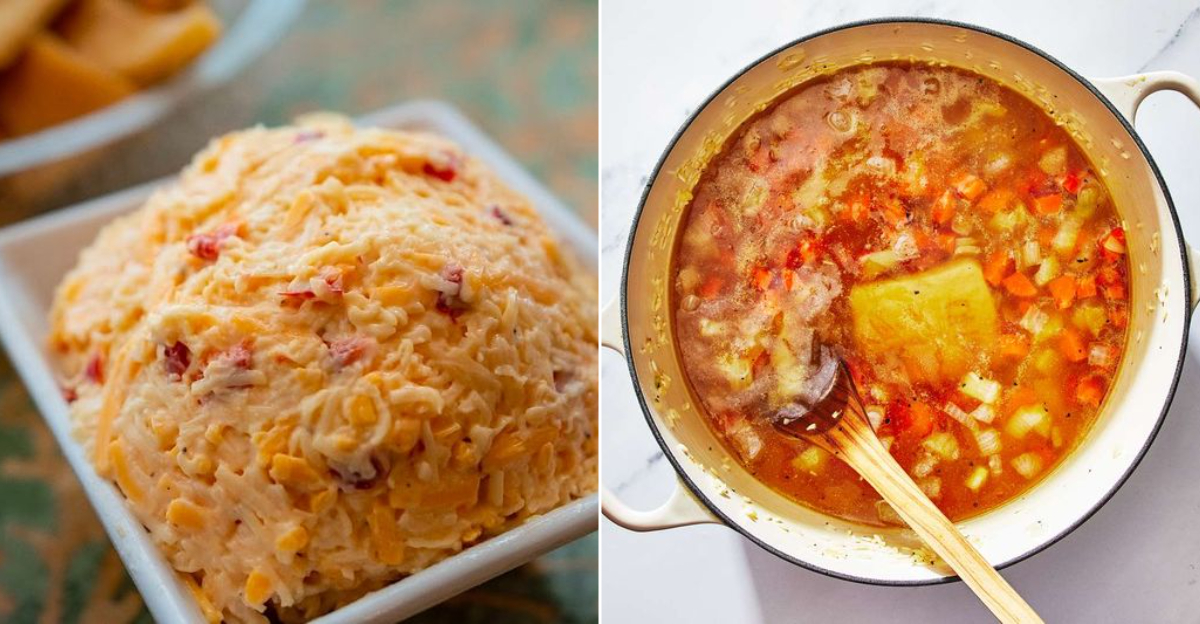
Pimento cheese is a Southern icon, yet the pronunciation often gets a foreign twist. Outsiders might say “pih-MEN-toh” as if it’s a French delicacy, but locals affectionately call it “puh-MEN-toe.”
In Columbia, it’s practically a rite of passage, with DiPrato’s Delicatessen leading the charge. Their house-made pimento cheese with pita chips has turned a humble spread into a must-have appetizer. Visitors may hesitate, attempting to give it a sophisticated flair.
But, the sharp, creamy flavor quickly rectifies any misconceptions. Pimento cheese, with its cheerful orange hue and tangy kick, embodies Southern hospitality in every scoop. It’s a dish that doesn’t need explanation—just a plate and a smile.
6. Shrimp and Grits
Shrimp and grits is South Carolina’s culinary love letter. Visitors might overthink the word “grits,” stretching it unnecessarily into “gree-ts.” Meanwhile, locals know that this dish is a harmonious blend of shrimp, stone-ground grits, and rich pan gravy.
At Poogan’s Porch in Charleston, the dish gets a Southern twist with andouille, peppers, and Tasso ham gravy. It’s a staple on both brunch and dinner menus, becoming a tourist favorite that never disappoints.
This dish not only delivers on flavor but also on tradition. The creamy grits and succulent shrimp speak of coastal roots, offering comfort in every bite. It’s not just a meal—it’s a slice of Southern heritage served on a plate.
7. She-Crab Soup
She-crab soup starts a conversation before it even reaches the table. The name itself prompts curiosity about the “she,” which refers to the roe from female crabs enriching the broth.
Though pronounced correctly, the story often gets lost. At 82 Queen in Charleston, the award-winning she-crab soup is a must-try, with a blend of crab meat and sherry that captures the essence of the sea.
Every spoonful offers a silky, luxurious taste that keeps diners coming back. The dish elevates the dining experience, turning a simple soup into an elegant affair. It’s a savory reminder that sometimes, it’s the little details that make all the difference.
8. Lowcountry Boil / Frogmore Stew
Frogmore stew, also known as Lowcountry boil, is a pot of Southern hospitality. With shrimp, sausage, potatoes, and corn, it’s a feast that newcomers stumble over, saying “Frog-MO-ray” instead of “FROG-more.”
Bowen’s Island Restaurant outside Charleston sets the scene for this culinary tradition, offering trays of boiled seafood with a view. Originally named after a small community near Beaufort, it’s a dish that’s better tasted than pronounced.
Its charm lies in the simplicity and abundance, turning any gathering into a communal celebration. Each bite offers a taste of coastal life, proving that sometimes, the best meals are enjoyed with company and a view.
9. Gullah Red Rice
Gullah red rice appears straightforward, yet it holds a world of flavor. Visitors might think it’s just tomato rice, but they soon discover the depth from smoke, sausage drippings, and Gullah Geechee tradition.
At Bertha’s Kitchen in North Charleston, this dish is a staple, drawing lines of eager customers. It’s more than just red rice; it’s a story told through spices and history, connecting the past to the present.
For those unfamiliar, the name invites curiosity, while the taste invites admiration. It’s a dish that proves simplicity can be profound, offering warmth and richness in every spoonful. Gullah red rice is more than a side—it’s a cultural treasure.
10. Boiled Peanuts
Boiled peanuts are the Southeast’s quirky roadside companion. Outsiders often request “boy-led peanuts,” only to be corrected with a smile and a scoop.
Papa’s Peanuts travels around the Lowcountry, offering a taste of this soft, salty snack. Green peanuts are boiled until tender, confusing those expecting a crunchy version.
Yet, their unique texture and savory flavor make them an unforgettable experience. They’re a snack that defies expectations, offering a taste of Southern whimsy. For locals, they’re a road trip essential; for newcomers, a delightful discovery.
11. Stone-Ground Grits From Marsh Hen Mill
Stone-ground grits from Marsh Hen Mill are a Lowcountry treasure. Visitors may trip over “Geechee” and “Edisto,” but locals savor the rich texture of these heirloom grains.
Milled on Edisto Island, these grits have a depth of flavor that speaks of tradition. Under their former “Geechie Boy” name, they became a staple in Southern kitchens, offering a taste of history with every spoonful.
The small shop welcomes travelers, allowing them to bring home a piece of the Lowcountry. These grits aren’t just a meal— they’re a culinary connection to a vibrant culture, offering a texture that turns any dish into a Southern masterpiece.