
South Carolina Has An Island That Looks Like The Caribbean Without The Price Tag
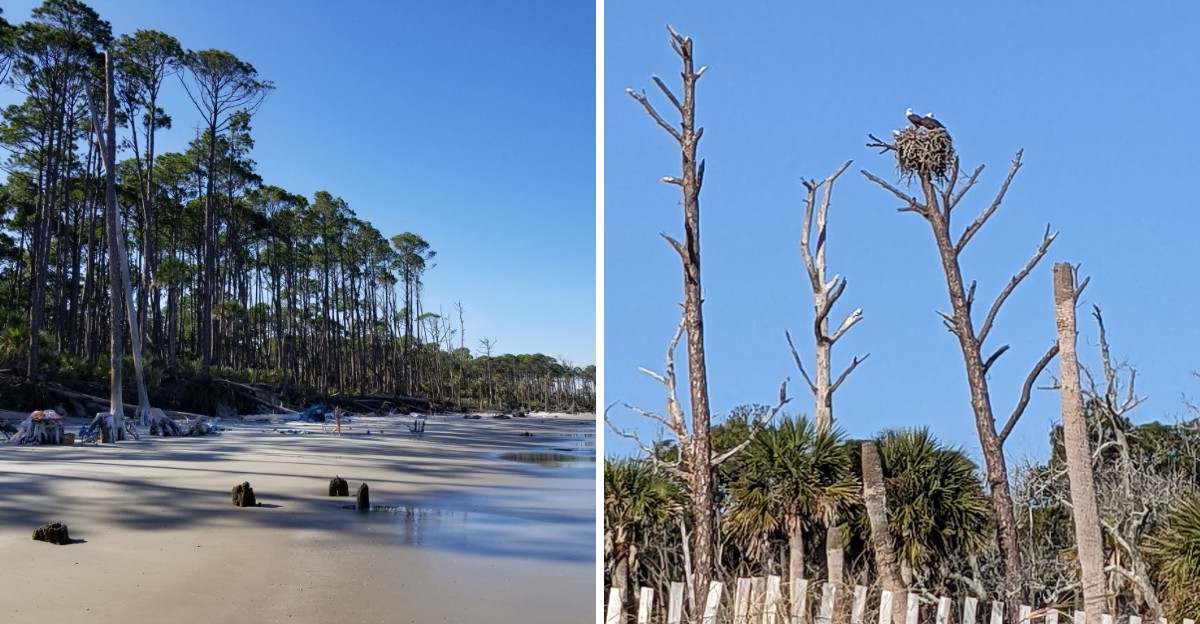
No passport is required for this tropical escape. South Carolina keeps it hidden behind a modest park entrance fee.
Beyond the gate, palm trees lean toward beaches, waves roll across sand, and tangled maritime forests make the modern world feel surprisingly far away. A historic lighthouse rises above it all, offering the kind of view usually reserved for island vacations.
The best part? This paradise refuses to act polished.
Driftwood twists along the shoreline. Deer wander between campsites.
Dolphins may appear offshore while seabirds patrol the sky. Every corner feels wild, beautiful, and slightly different from the last.
How can one affordable state park deliver beaches, history, wildlife, and adventure in a day?
These ten facts reveal why this coastal treasure has become one of South Carolina’s most beloved escapes. Pack water, sunscreen, and a camera with storage space.
The Caribbean fantasy may be closer to home than anyone expected.
Palm Trees And Wild Sand Straight Off A Postcard
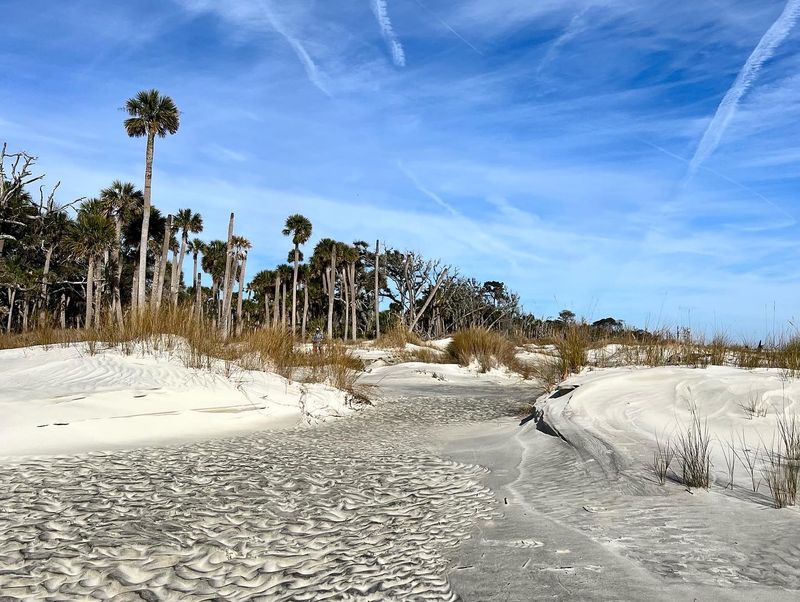
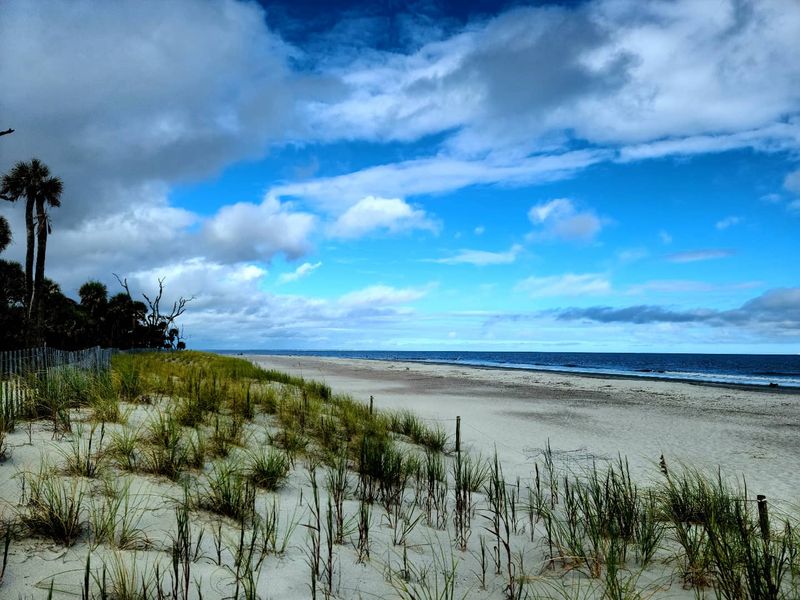
Picture tall palmetto trees leaning over pale sand while warm green waves roll in. Most people would guess you were somewhere in the Bahamas.
Surprise, you are about 16 miles east of Beaufort, South Carolina, on a wild barrier island that never got the resort treatment.
Hunting Island State Park covers roughly 5,000 acres and holds about five miles of beach. There are no high-rise hotels, no souvenir strips, and no jet ski rentals blasting music.
What you get instead is soft sand, salty breezes, and the sound of palm fronds rattling in the wind. The sabal palmetto, South Carolina’s state tree, grows thick here and gives the whole place its tropical look.
One visitor who has walked the beaches of Costa Rica and Antigua said this shoreline ranks right up there with the best of them. That is high praise for a spot you can reach by car.
The drive in along U.S. Highway 21 is part of the fun, too, with wide marshes stretching out on both sides of the road.
The park is often called the most visited state park in South Carolina. Once you see it, you will understand why people keep coming back.
The Lighthouse That Packed Up And Moved
Most lighthouses stay put. Hunting Island’s lighthouse once took a walk.
Well, sort of.
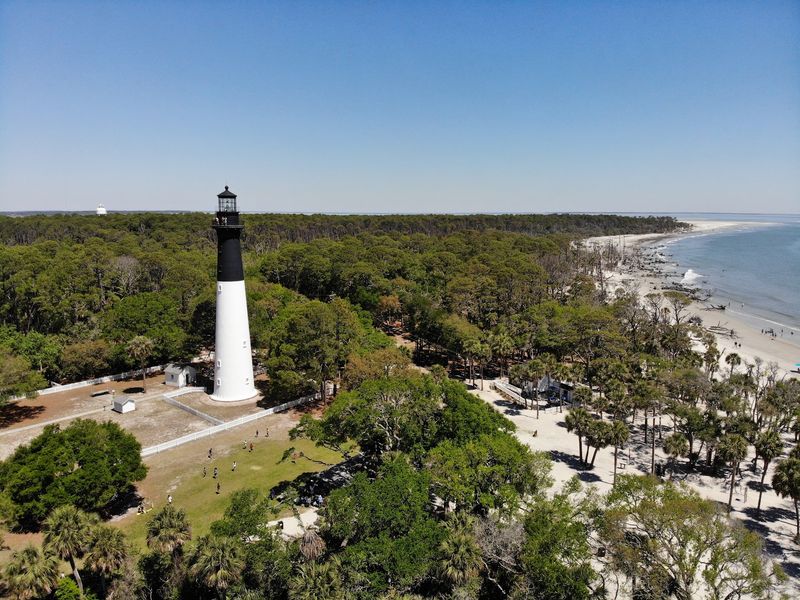
The first lighthouse here was finished in 1859, but it was destroyed during the Civil War. Its replacement, lit in 1875, was built from cast iron sections that could be taken apart like a giant puzzle.
That clever design paid off fast, because the ocean kept eating the shoreline.
In 1889, workers took the tower apart and rebuilt it about 1.3 miles inland, where it still stands today. The black and white tower rises roughly 170 feet, and its light shined until 1933.
For years it was known as the only lighthouse in South Carolina that the public could climb.
If the stairs are open when you visit, get ready for 167 steps. Your legs will complain, but the view from the top is worth every huff and puff.
You can see the ocean, the forest, and the marsh spread out like a map below you.
Here is the catch: the tower has closed for repairs and safety work at different times, so check the park’s website before you go. There is usually a small extra fee to climb, and the stairs are not wheelchair accessible.
Even from the ground, it is a stunner.
Boneyard Beach Looks Like Another Planet
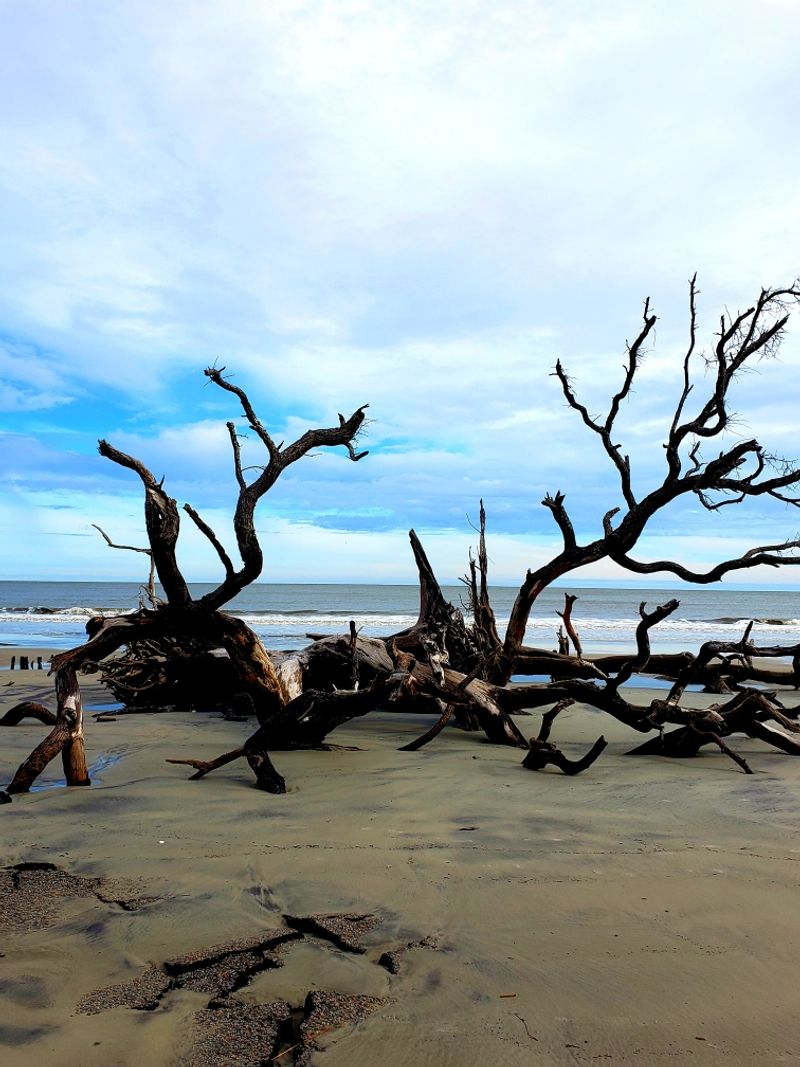
“Like something from another world.” That is how one visitor described Boneyard Beach, and honestly, that sums it up well.
Along parts of the shore, hundreds of dead trees stand and lie in the sand, bleached silver by salt and sun. Their twisted branches reach up like skeleton arms, which is how the area got its spooky nickname.
At sunrise, the light turns the wood gold and pink, and photographers show up with tripods.
So how did a forest end up on the beach? Blame erosion, since Hunting Island loses sand to the ocean every year, and waves keep swallowing the edge of the maritime forest.
Saltwater kills the trees, but their trunks stay behind like statues.
Both the north end near the lighthouse and the stretch south toward the pier have boneyard scenes. Some spots take a bit of a walk from the parking lots, so wear comfy shoes and bring water.
Plan your visit around low tide if you can. The beach gets wider, walking is easier, and you can wander between the trunks safely.
Please do not climb on the fallen trees, since they can be slippery and sharp.
Paradise For About The Price Of Lunch
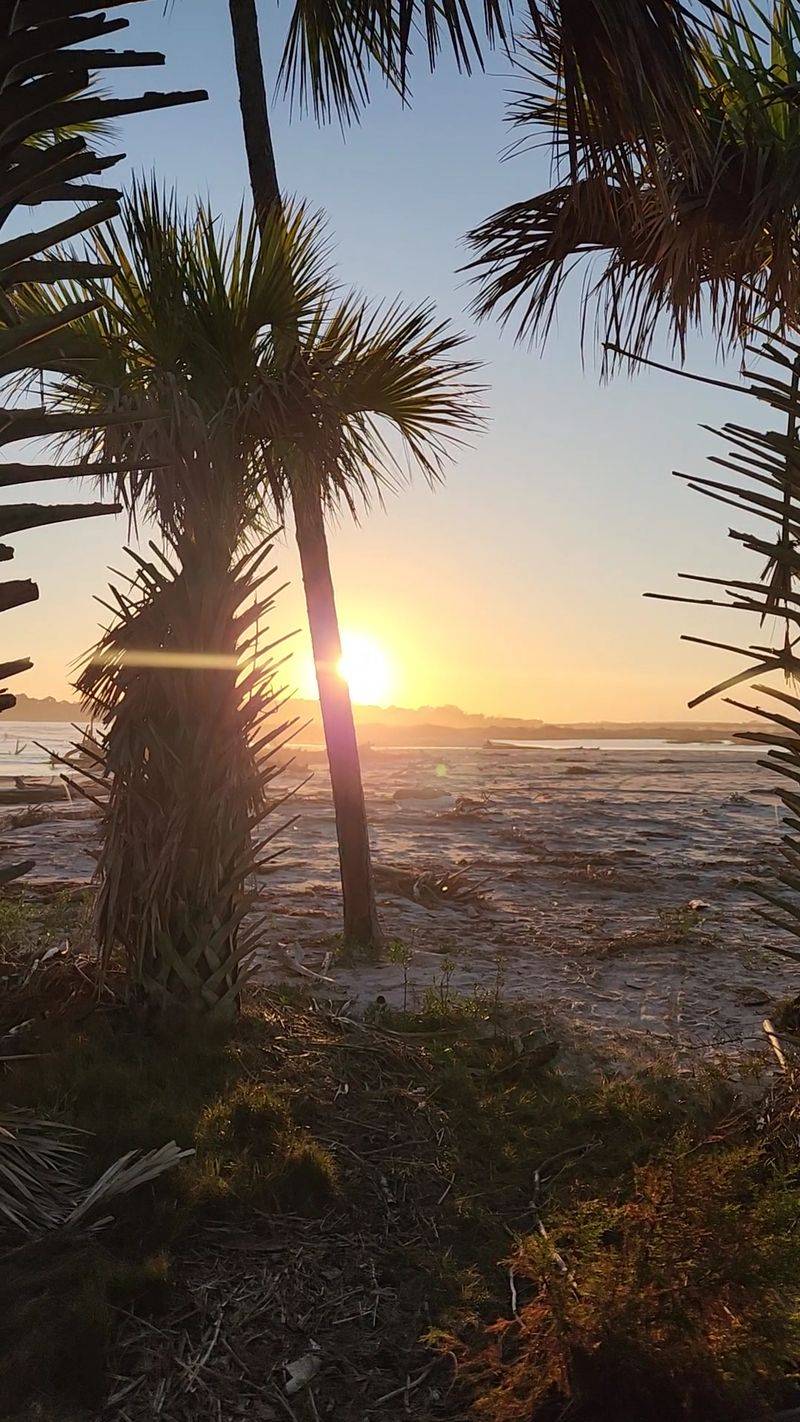
A trip to the Caribbean can mean plane tickets, pricey hotels, and a passport. A day at Hunting Island costs about the same as a fast-food lunch.
Admission is charged per person. Adult prices have been around $8 for out-of-state visitors, with lower rates for South Carolina residents, seniors, and kids, while little ones under 6 usually get in free.
Prices can change, so treat these numbers as a ballpark and check the South Carolina State Parks website before you head out.
Hours are simple to remember in most seasons. The park generally opens at 6 a.m. and closes at 6 p.m., with closing time pushed to 9 p.m. during Daylight Saving Time.
Holidays and storms can shake things up, so a quick check is smart.
Want to save money on repeat visits? South Carolina sells an annual park passport that covers entry at many state parks, including this one.
If you plan to come back more than a few times a year, it can pay for itself quickly.
Pack a cooler with sandwiches and drinks, and your beach day stays cheap. There is a camp store for snacks, sunscreen, and forgotten flip-flops.
Hollywood Found Its Jungle Here
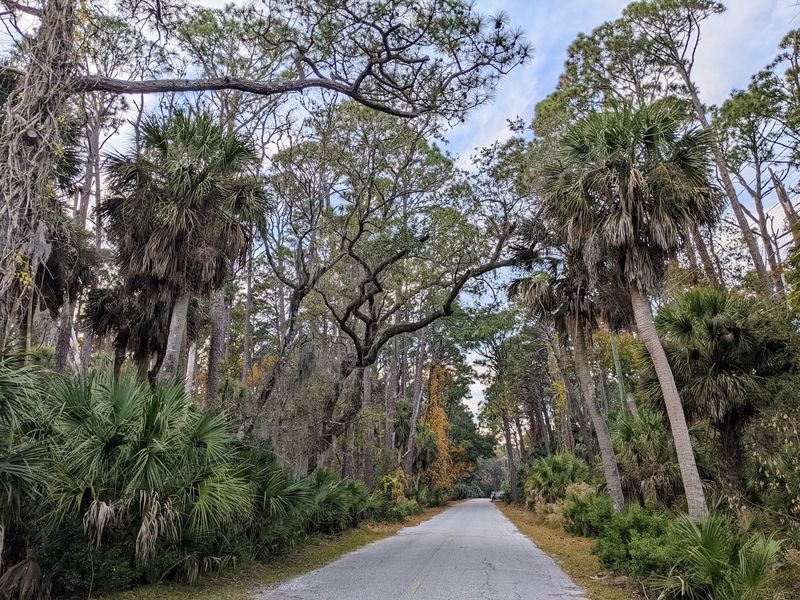
Remember the jungle scenes in Forrest Gump, when Forrest runs through thick green trees in Vietnam? Some of those scenes were actually filmed on Hunting Island.
Hollywood found its jungle right here in the Lowcountry.
Step onto the trails, and you will see why. The maritime forest is packed with slash pines, live oaks, wax myrtles, and palmettos so dense that sunlight comes through in little patches.
The air smells like pine needles and salt, and it feels cooler under the branches than it does on the sand.
The park has miles of hiking and biking trails. One popular route, the Maritime Forest Trail, runs about 2 miles one way between the north end and the area near the Nature Center.
The paths are mostly flat and sandy, which makes them friendly for beginners and families.
A little history makes the walk even better. In the 1930s, workers with the Civilian Conservation Corps helped build roads, cabins, and trails here, and the island became a state park soon after.
Bring bug spray, especially in warm months. Gnats and mosquitoes love this forest as much as you will.
Early morning walks are cooler and give you the best shot at spotting deer.
A Calm Lagoon For Splashers And Paddlers
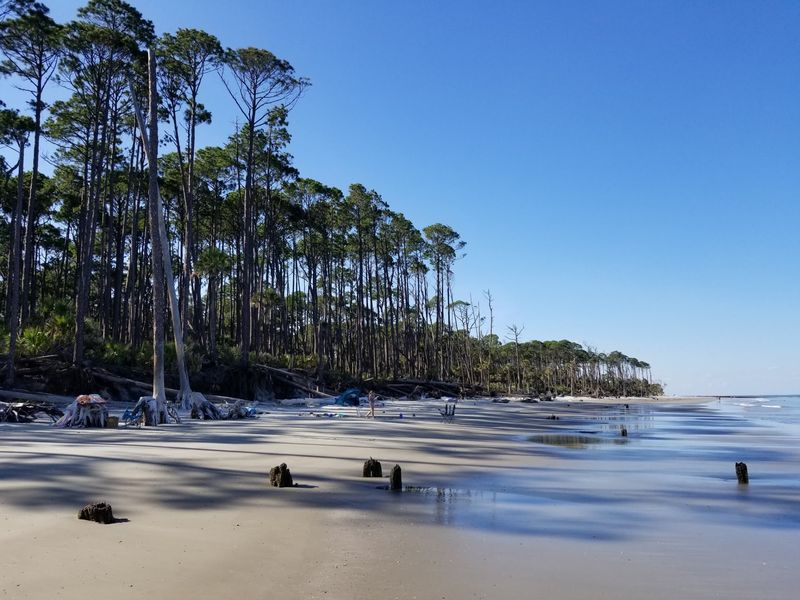
Not every kid loves crashing waves. For the ones who would rather splash than tumble, the saltwater lagoon at the north end of the island is a hidden gem.
The lagoon sits tucked between the beach and the forest, and it connects to the ocean with the tides. The water is usually calmer than the surf, and it shines a pretty blue-green on sunny days.
Herons and egrets stalk the shallows, looking for a snack.
Anglers like the lagoon, too. People cast lines here for fish like redfish and flounder, and a South Carolina saltwater fishing license is required for most folks 16 and older.
Kayakers and paddleboarders sometimes glide across the water, enjoying a peaceful break from the busier beach.
Swimming here calls for some care. Currents can move with the tides, and the park does not have lifeguards, so keep a close eye on children and read any posted signs.
Water shoes help too, since oyster shells can hide in the mud.
For a relaxing afternoon, spread a blanket near the water and let the sounds of birds and lapping water take over. It is the kind of quiet spot that makes you forget your phone exists.
Dolphin Watching From A Very Long Pier
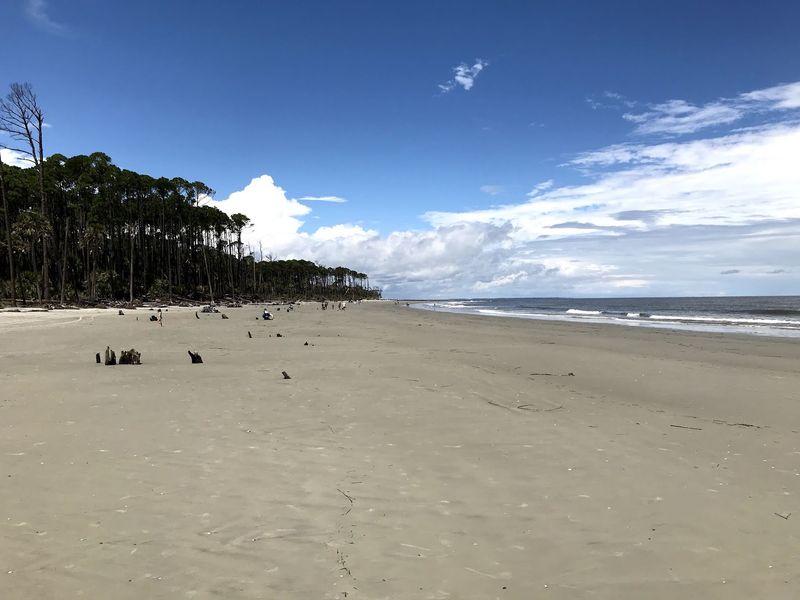
Dolphins are show-offs, and the fishing pier at Hunting Island gives them a big audience. Stand at the end, watch the water in Fripp Inlet, and you may spot fins rolling through the waves.
The pier stretches more than 1,000 feet out into the water, making it one of the longer public piers along the coast. Anglers line the rails hoping to catch whiting, sheepshead, or red drum.
The pier is open to everyone for strolling, and many visitors call it a must see.
Right near the pier sits the Nature Center, a perfect stop for curious minds. Inside, you can learn about the island’s animals, plants, and history through displays and live creatures like turtles and snakes.
Rangers often share tips on what to look for during your visit.
Close by, a marsh boardwalk takes you over the salt marsh. The walk is easy and flat, and you will likely see fiddler crabs waving their big claws and wading birds hunting in the grass.
Visit at sunset if you can. The marsh glows orange, the breeze cools down, and the whole scene feels like a painting.
Parking near the pier is separate from the lighthouse lots, so you may want to drive between the two areas.
Sea Turtles, Ospreys, And Sneaky Raccoons
Here is a fun fact to share at dinner: loggerhead sea turtles crawl onto Hunting Island’s beaches to lay their eggs. Nesting season runs roughly from May through October.
Volunteers mark and protect nests, so if you see a staked-off area, give it plenty of space.
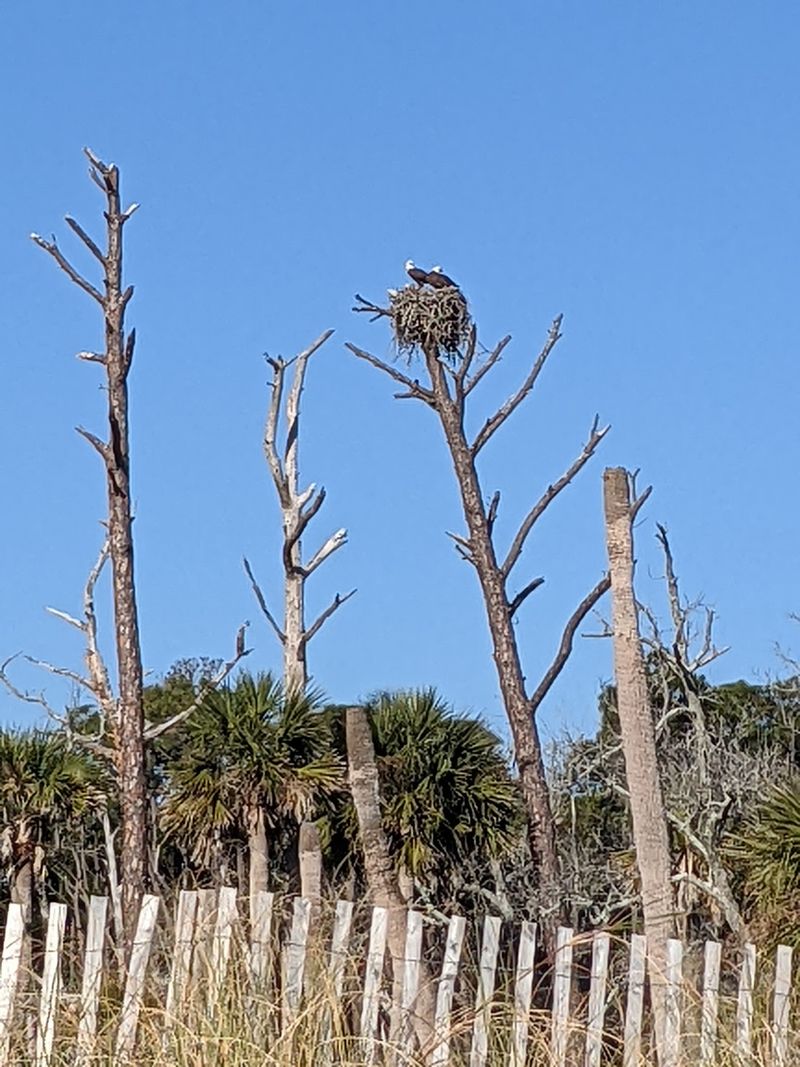
The turtles are just the start. Visitors spot white-tailed deer tiptoeing through the forest, raccoons snooping around campsites, and ospreys building huge stick nests high in the trees.
Pelicans skim the waves in neat lines, and dolphins often play just off the shore.
Birdwatchers will feel right at home. The mix of beach, forest, marsh, and lagoon attracts herons, egrets, woodpeckers, and plenty of shorebirds.
Bring binoculars and move slowly for the best sightings.
A few rules keep everyone safe. Never feed wildlife, and lock up your food, because those raccoons are clever little thieves.
If you walk the beach at night during nesting season, skip the bright flashlights, since light can confuse baby turtles heading to the sea.
Tiny treasures are part of the fun, too. Sand dollars and seashells wash up along the shore, especially after storms, so keep your eyes down as you stroll.
Just leave any live ones where you found them.
Camping Under A Sky Full Of Stars
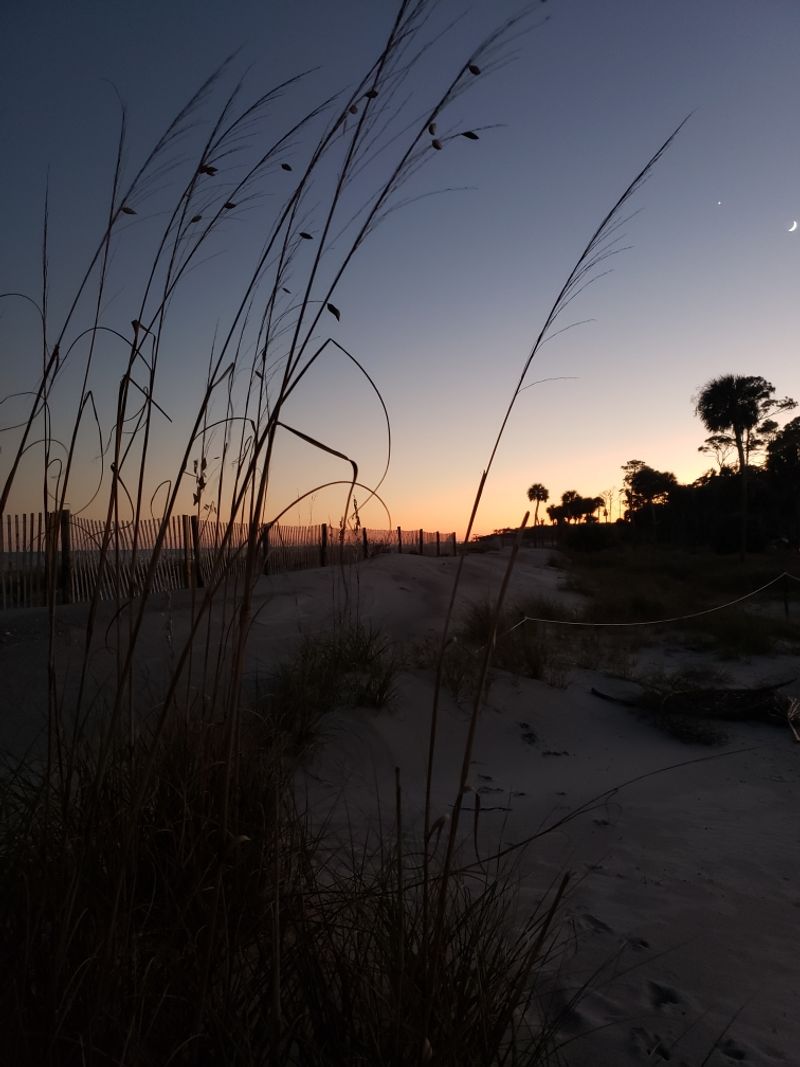
“You can see the Milky Way from the beach,” one visitor wrote, and that is not an exaggeration. With very little city light nearby, the night sky over Hunting Island can be packed with stars.
Bring a blanket, lie back on the sand, and prepare to feel very small in the best way.
Staying overnight makes that easy. The campground sits right near the north beach, with around 100 sites, and many are just a short walk from the ocean.
Sites offer water and electric hookups, but not full sewer hookups, so plan accordingly if you have an RV.
Campers get access to bathhouses with hot showers, and there is a small camp store for supplies. Tent campers love the sandy, shady spots under the pines and palms.
Cabins have been offered in the past, though erosion and storms have changed what is available over the years.
Reservations are smart, especially from spring through fall and on holiday weekends. Sites can fill months ahead, so book early through the South Carolina State Parks website.
For many families, a trip here becomes a yearly tradition. Waking up to waves and falling asleep to crickets has a way of pulling people back again and again.
Smart Moves Before You Hit The Sand
A great beach day starts before you even park the car. With a little planning, your trip to Hunting Island will go smoothly.
Arrive early, especially on summer weekends. Parking lots are limited, and the park may pause entry when it reaches capacity.
The north beach near the lighthouse has plenty of spaces and a short walk to the sand, while the southern lots near the pier are handy for Boneyard Beach and the Nature Center.
Pack a trash bag. Trash cans are mostly found in parking areas, not along the beach or trails, so carry out what you bring in.
Dog owners are welcome to bring pups on a leash, but bring your own waste bags.
For accessibility, many parking areas, restrooms, and the Nature Center are easier to reach, and boardwalks help in some spots. Soft sand and the lighthouse stairs can be tough for wheelchairs and strollers, so call the park ahead to ask about current options.
Timing matters, too. Spring and fall bring milder weather and fewer crowds, though gnats can be pesky in early spring.
Check the tide chart, since low tide gives you a wide, walkable beach that feels like it goes on forever.