
Spectacular Upper Michigan Peninsula Views That Turn An Ordinary Trip Into A Wild And Unforgettable Adventure
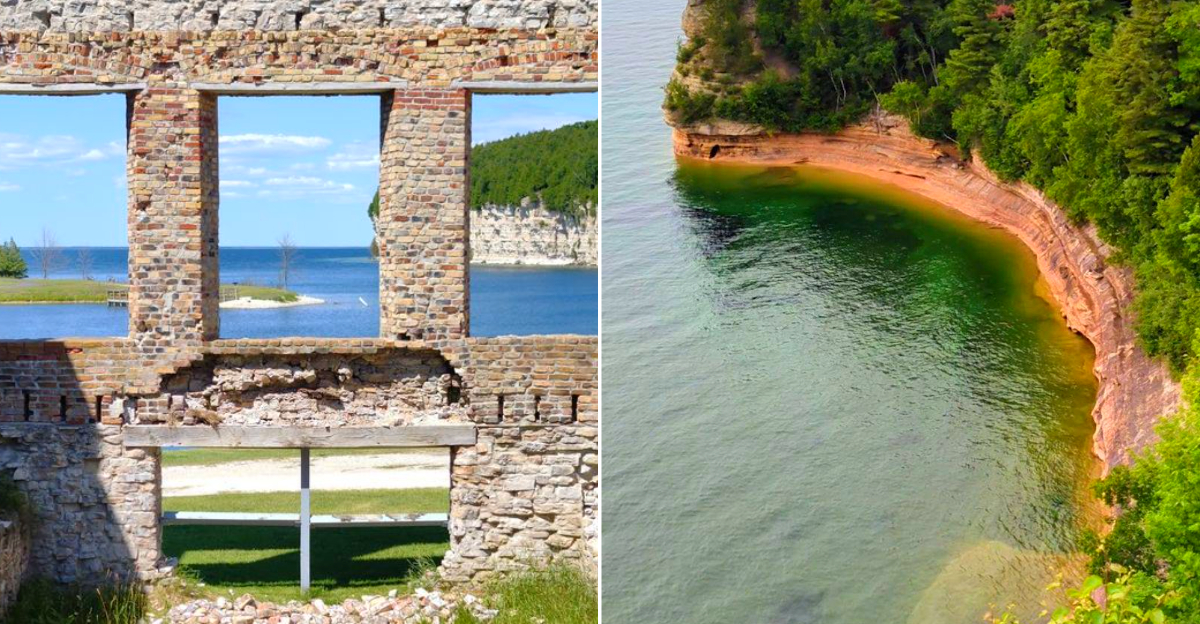
To me, the rest of the country is just scenery, but the Upper Peninsula is a spiritual reset. I’ve hiked trails all over, but nothing compares to that moment when you turn a corner and the horizon opens up into a shimmering, blue promise that feels entirely prehistoric.
Your boots pick up a souvenir of sand and pine needles while the ancient rock formations tell stories that make modern life feel refreshingly small. It is, quite simply, the most beautiful corner of the world, where the air is cleaner and the colors are deeper than anything you’ll find on a postcard.
This guide to the Upper Peninsula’s best scenic overlooks and hidden waterfalls explores the rugged beauty of Northern Michigan, from the dramatic Pictured Rocks cliffs to the serene shores of Lake Superior. Follow along, and I’ll show you the views that will rearrange your soul.
1. Miners Castle
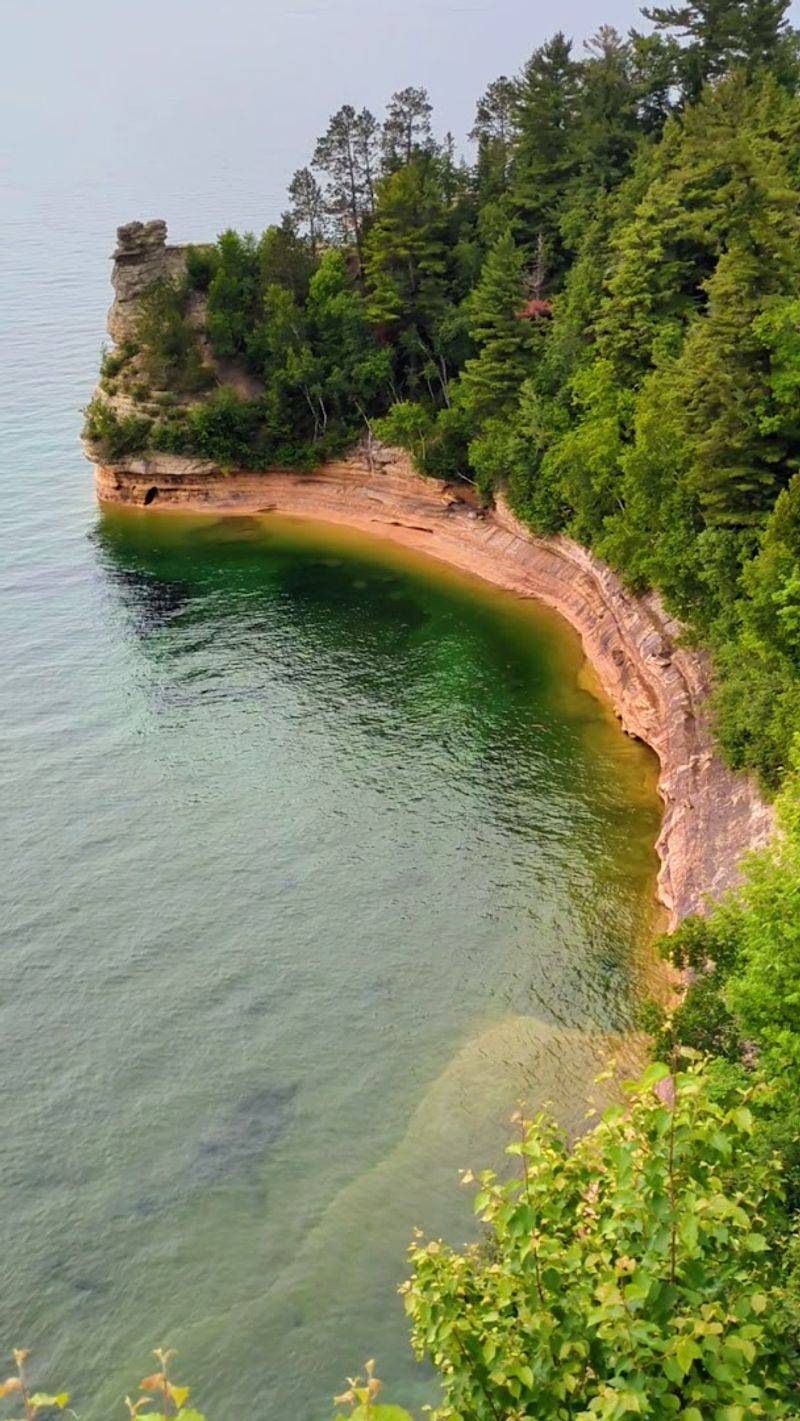
Cliffs step into Lake Superior here, and the sandstone turret nicknamed Miners Castle anchors the view. Wind coming off Superior smells super clean, almost metallic, and gulls carve loose arcs over the water. Trails reach overlooks with railings, so you can edge close to the cliffline without worry.
The rock formation once had two turrets before a 2006 collapse, a reminder that this coast keeps shaping itself. An accessible upper platform makes quick viewing easy, while lower overlooks require short, steep paths. Parking at the end of Miners Castle Road fills by midmorning in summer.
Go early or late for softer light and thinner crowds. Watch wave color shift from bottle green to cobalt. It never gets old.
2. Miners Beach
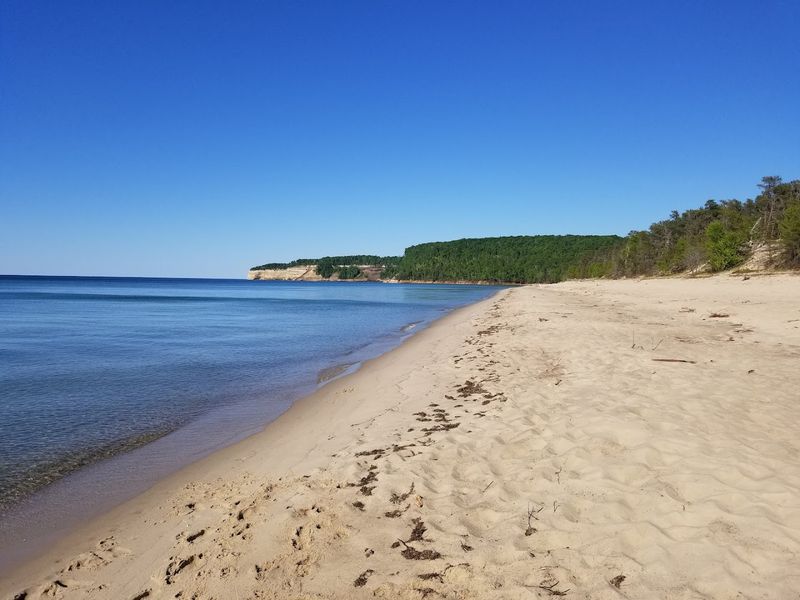
Sand squeaks underfoot on the long, inviting curve of Miners Beach, and Lake Superior moves in slow, glassy breaths against the shore.
On a typical summer day, you might hear pockets of laughter drifting from families gathered near the creek, but mostly, you’ll hear nothing but the rhythm of water folding over itself.
Huge pieces of driftwood lie bleached like ancient ribs along the sand, providing the perfect natural bench for a quick sit and a shoe shake.
The Miners River splits the beach near the western end, a spot that was historically used as a route for log drives during the timber boom of the late 1800s.
As you look east, the dramatic sandstone cliffs of Pictured Rocks National Lakeshore begin to peek out from the coastline. Access is quite straightforward via a paved road, followed by a short set of stairs from the main parking area.
3. Chapel Rock
A lone white pine clings to Chapel Rock, its roots stretched across a gap like taut ropes to the mainland. Waves slap the base with a hollow drum sound that echoes down the cove. The whole scene feels improbable and stubborn, like nature refusing to sign the lease.
Logging stripped nearby forests in the 19th century, but this pine endured. The original arch connecting rock to shore collapsed, yet the tree lives through those roots. Reaching it requires the 6-plus-mile Chapel Loop, mostly packed dirt with some mud.
Start early to beat midday traffic at Chapel parking. Keep off the rock to protect those lifelines. When the breeze drops, you can hear needles whisper above the surf.
4. Pictured Rocks National Lakeshore
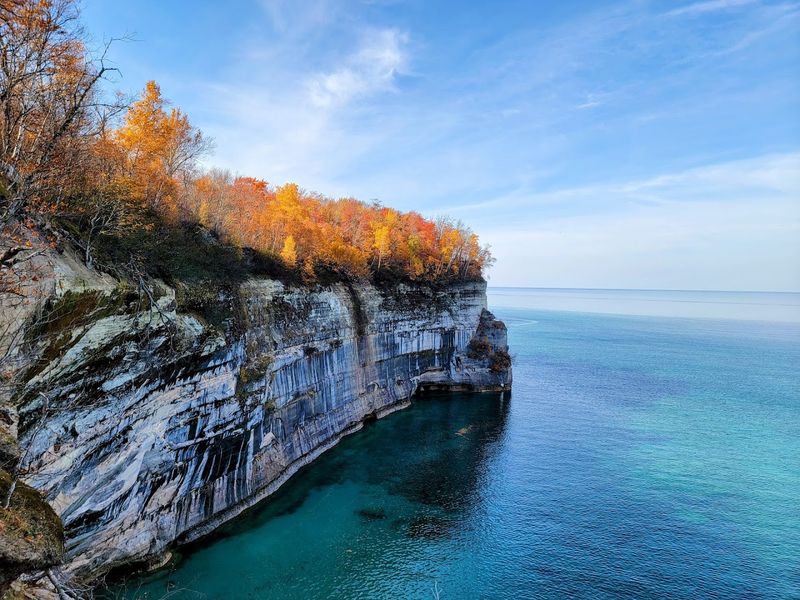
Color runs down the cliffs here like a master’s watercolor painting, with copper and iron deposits staining the sandstone into streaks of vertical rain.
While the hiking trails are spectacular, seeing the Pictured Rocks from a tour boat is where the true scale of the landscape clicks into place.
From the water, the sea caves echo with every passing wake, and the tiny, bright specks of kayaks slip along the base of the walls like colorful punctuation marks.
Congress established this area in 1966 as the nation’s first national lakeshore to protect over 40 miles of pristine Michigan coast. In the winter, the cliffs transform into a frozen wonderland as massive ice curtains form along the ledges, only to crumble away with the spring thaw.
If you’re planning your trip, the visitor centers in Munising and Grand Marais are fantastic resources for checking trail conditions and shuttle schedules.
5. Tahquamenon Falls State Park
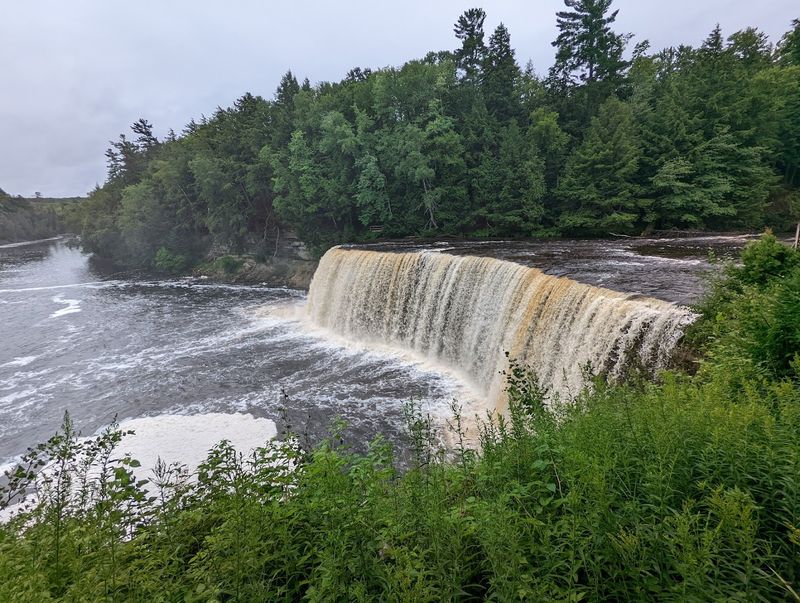
You hear Tahquamenon before you see it, a deep ongoing hush like distant traffic in a city of trees. The tannin stain from cedar swamps dyes the water tea-brown, turning the foam into butterscotch. Platforms let you feel the spray freckle your arms.
Long used by Ojibwe communities and later famed by Longfellow’s verse, the falls were partially logged around the turn of the century. Today, trails connect the Upper and Lower Falls with stair-heavy sections. A brewery near the park entrance lends a toasty grain smell on breezy evenings.
Hit the Lower Falls rowboat rental to reach the island path. Wear bug protection in June. Autumn color plus amber water makes every photo look intentionally filtered.
6. Lake of the Clouds
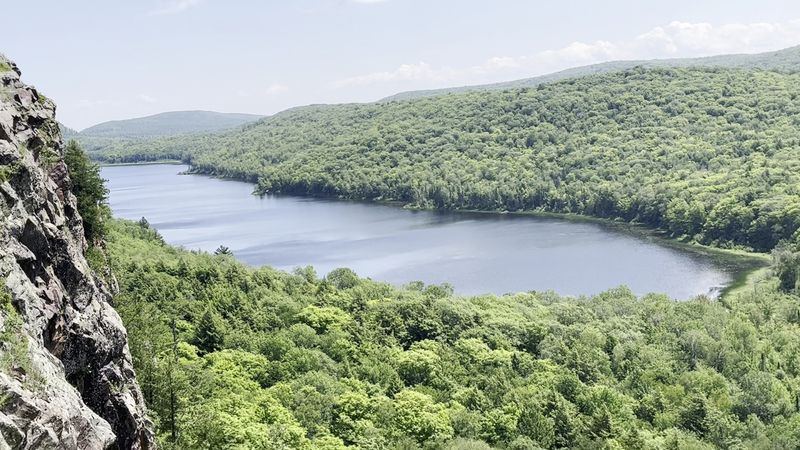
From the Escarpment overlook, the lake sits like a polished mirror tucked into endless forest. Wind combs treetops in waves you can watch roll from ridge to ridge. Ravens float level with your eyes, then tip a wing and fall away.
The Civilian Conservation Corps improved access in the 1930s, anchoring stonework that still frames the view. This is the Porcupine Mountains’ signature scene, unchanged in shape though seasons repaint it wildly. A short paved path makes the primary platform accessible.
Sunrise burns fog off the basin in theatrical curls. Step to side pullouts along the Escarpment Trail for quieter angles. Shoes matter here, because lichen on the rock is pretty and slick at once.
7. Summit Peak
The wood stairs spiral up into the sky at Summit Peak, and each landing seems to steal a little more of your breath only to give it back as an increasingly spectacular view.
Once you reach the top of the observation tower, the hardwoods below knit together like a thick, woven rug stitched with the darker greens of fir and spruce. On a perfectly clear day, you can see all the way to Lake Superior, which appears as a thin silver seam on the western horizon.
The tower stands near the highest elevation in the “Porkies,” yet it remains surprisingly accessible thanks to a half-mile boardwalk approach. While logging once crept right up to these ridges, significant pockets of old-growth forest survived, and today they spread shade wider than your own wingspan.
Arriving early allows you to have the tower to yourself for a few moments of profound silence.
8. Porcupine Mountains Wilderness State Park
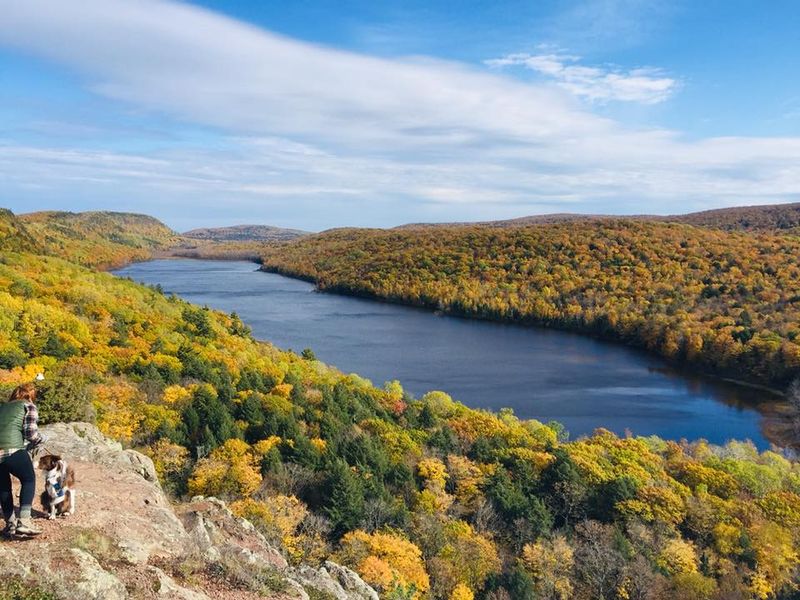
Trails wander through hemlock cathedrals where light filters in soft green bands. Streams thread coppery riffles, and the ground keeps a springy feel from centuries of duff. It is big, and it asks you to slow down until your steps match the place.
Established in 1945 to preserve one of the Midwest’s largest old-growth tracts, the park shelters black bear, wolves, and countless warblers. WPA-era structures and CCC work remain along roads and overlooks. Trailheads cluster near M-107 and South Boundary Road.
Backcountry permits are straightforward at the visitor center. Carry a paper map because service drops quickly. I like to plan loops with a bailout route, then reward the miles with a shoreline sunset listen.
9. Brockway Mountain Drive
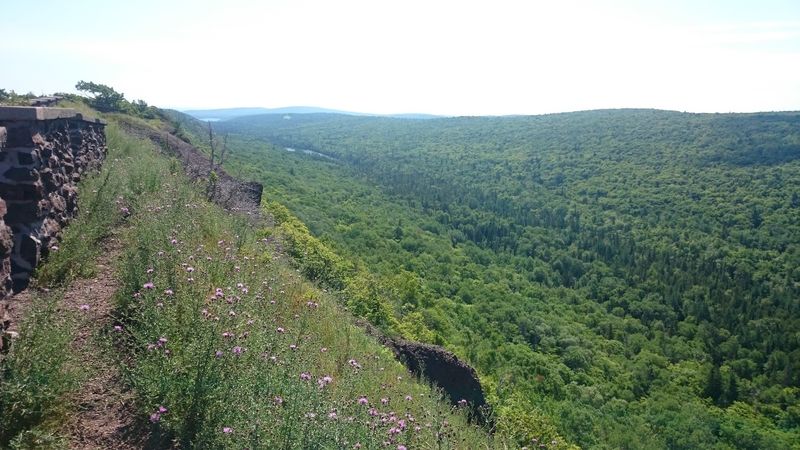
Switchbacks lift you above Copper Harbor until the road rides the spine of the ridge like a quiet kite string. Pullouts bloom with wildflowers in spring, and the lake spreads blue on both sides of your sight. Radio towers blink at dusk like steady metronomes.
Built in the 1930s, largely by local labor during the Depression, the drive tops out near 1,300 feet. Birders stop for raptor migrations skimming the uplift. The pavement is narrow, with gravel shoulders and sudden dips.
Go slow and pause often so drivers behind can pass. Sunset sets the Keweenaw on a dimmer switch rather than a switch-off. Clouds hold leftover light the longest right above the ridge.
10. Presque Isle Park
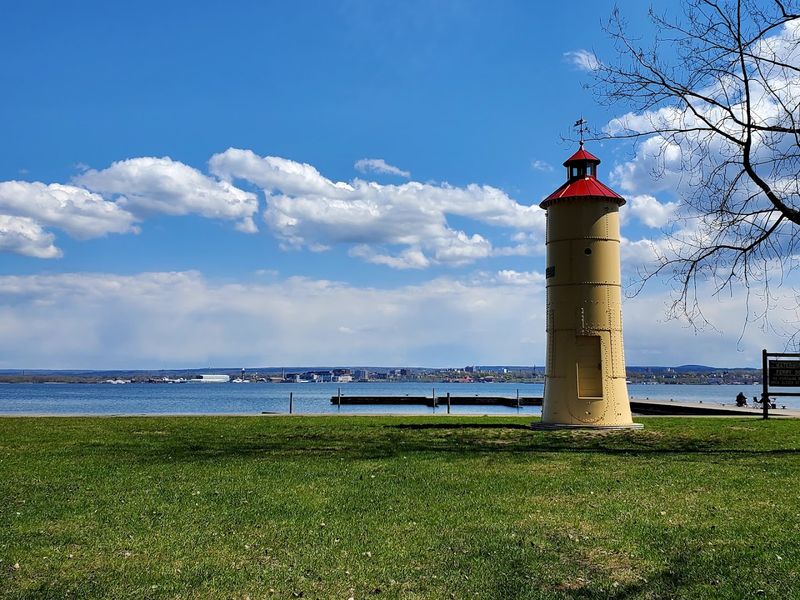
Located just north of downtown Marquette, Presque Isle Park features ancient basalt formations known as the Black Rocks that frame small, hidden coves.
Here, Lake Superior looks incredibly inviting, though it quickly proves its legendary cold with icy conviction the moment you dip a toe in.
A one-way loop road hugs the peninsula, and it is closed to motorized vehicles during the evening hours to make way for walkers, runners, and cyclists. The scent of pine resin and lake spray creates a perfume you’ll find yourself remembering years later.
The park was designed in part by Frederick Law Olmsted’s firm in the late 1800s, ensuring that Marquette would always have a wild, forested edge.
A favorite summertime rite for locals is jumping from the Black Rocks into the lake, though you should only attempt this if the water is calm and you’ve watched the regulars first. Parking pockets near the swimming rocks fill up almost instantly on a hot Saturday.
11. Sugarloaf Mountain
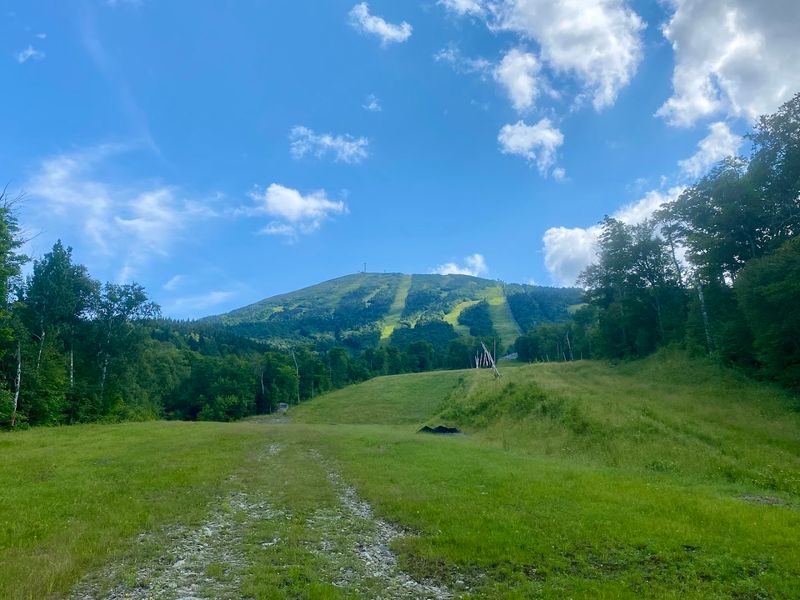
Stairs climb through birch and maple to a bald summit, where platforms point you like compass needles toward Superior, Marquette, and Hogsback. The wind has an edge even on warm days, sharpening the outlines of freighters offshore. Lichens pattern the bedrock in pale coins.
Locals treat Sugarloaf as a quick workout, and trail options split into easier and more difficult routes with clear signs. The summit infrastructure came from community partnerships to handle heavy use. Lot size is modest, and turnover is quick.
Catch sunrise to watch the ore dock throw a long shadow across the harbor. Microspikes help in shoulder seasons. Step aside on narrow stairs and everybody gets happier views sooner.
12. Bond Falls Scenic Site
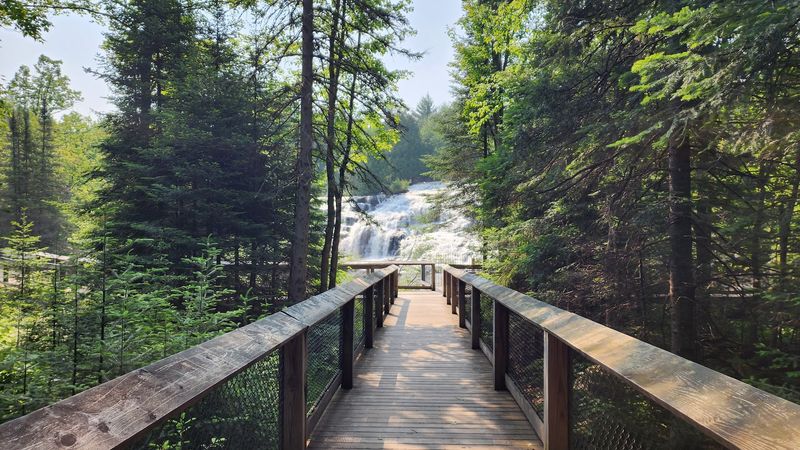
Bond Falls spills in broad sheets over basalt ledges, a fan of white ribbons you can trace from multiple platforms. The rushing sound is bright and layered, like applause in a stone amphitheater. Mist hangs just enough to pearl your glasses.
Developed as a scenic site alongside a hydro project, the area balances access and wildness. The boardwalk forms easy loops with framed viewpoints. Picnic tables scatter under maples that torch red in October.
Arrive on weekday mornings for elbow room at the main deck. Explore side paths downstream for quieter riffs and fern corners. A thermos of something warm feels correct here, even in July, because the river sets its own thermostat firmly cooler.
13. Palms Book State Park
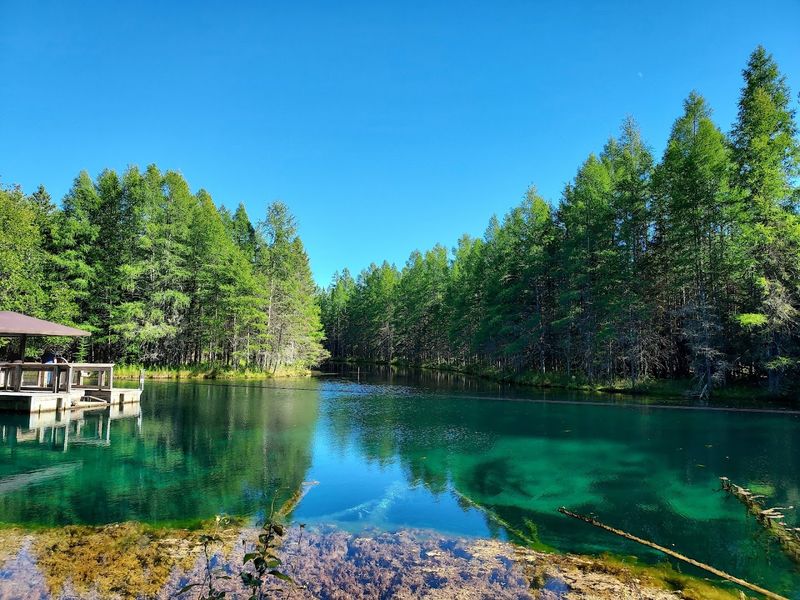
At Kitch-iti-kipi, the spring water is so clear you watch ancient logs float in place while fish hold their ground over pale sand boils. The hand-cranked raft glides on cables, and everyone takes a turn spinning the wheel. Cedar shade cools the platform even on hot afternoons.
The spring pumps thousands of gallons a minute year-round at about 45 degrees, unfrozen in January and August alike. Local lore wrapped it in stories before the state protected it. Park facilities are simple and tidy.
Go early to avoid lines at the raft. Lean over the viewing well for crisp detail without surface glare. Voices drop naturally here, which feels right for a clear window into underground work.
14. Fayette Historic State Park
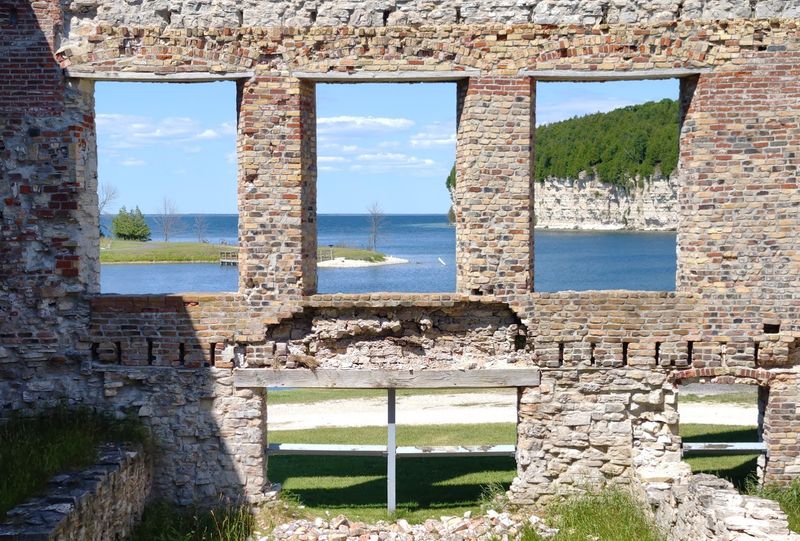
White limestone cliffs guard a teal harbor where an iron smelting town once hammered and hissed. Boardwalks thread between restored buildings: hotel, company store, machine shop. The place holds the quiet of a work shift long ended, with gulls on timecards.
From 1867 to 1891, Fayette smelted charcoal iron, leaving stacks and foundations now stabilized for visitors. Preservation work details lime mortar and clapboard repairs with careful notes. A small museum lays out tools and payroll ledgers.
Walk the cliff trail for a high view across Snail Shell Harbor. Midsummer sun bounces off the limestone, so bring a brimmed hat. Reading interpretive signs slowly makes the town stand up again, just for a minute.
15. Cut River Bridge Roadside Park
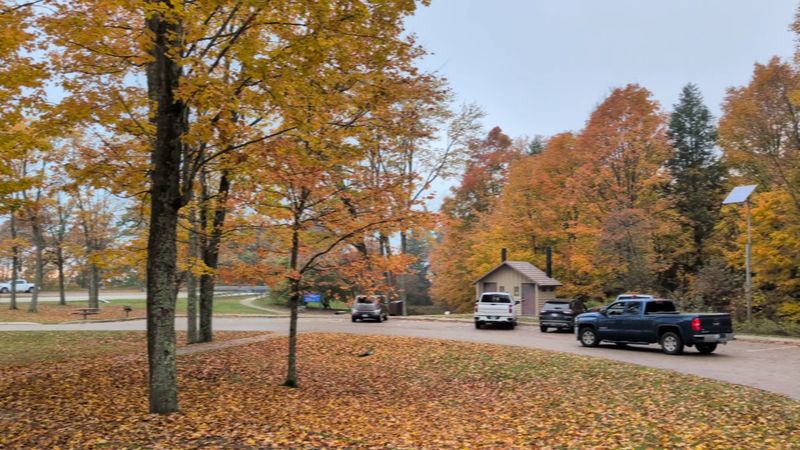
Cars hum across the green steel of Cut River Bridge while the gorge holds a cooler, mossy world below. Wind funnels up the ravine carrying Lake Michigan air that smells faintly mineral. The contrast between highway rush and fern hush is oddly satisfying.
Completed in 1947, the cantilevered truss became a scenic stop along US-2, with stonework and trails added later. Stairs drop steeply to the river and out to the beach. Traffic never fully fades, but birdsong competes well.
Use the north and south trailheads to form a loop under the span. Watch footing on leaves after rain. I like to linger beneath the bridge and listen to tires thrum like a distant drumline.