
Step Inside This Ohio Gorge And Enter The World Of Its Own
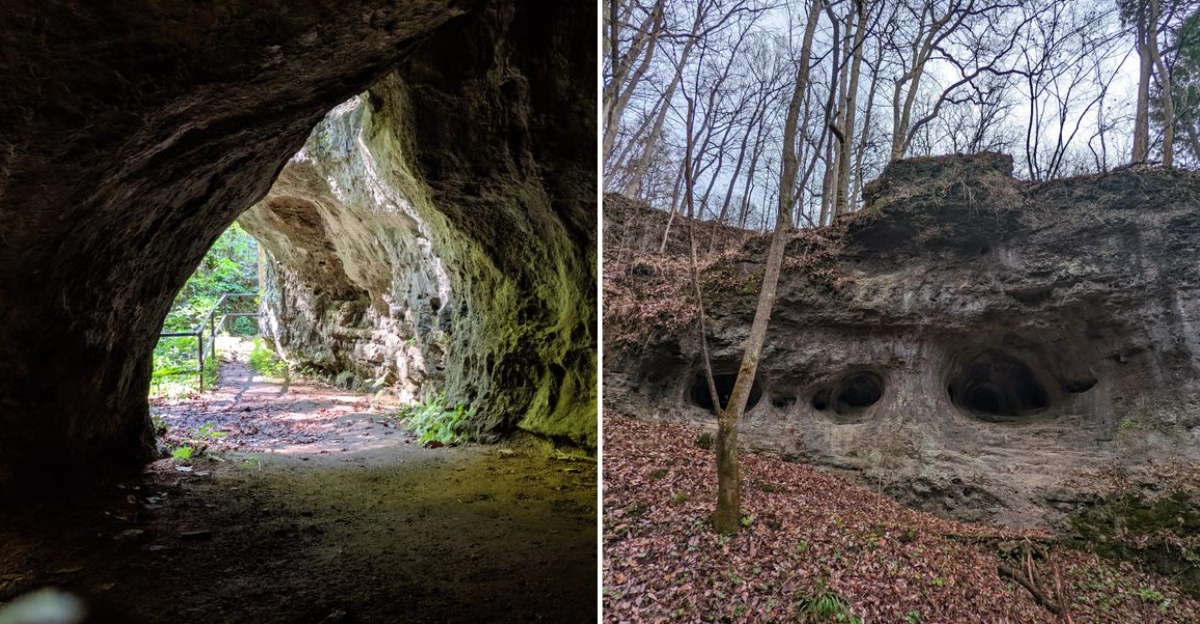
Have you ever felt like you needed to escape the noise and just breathe? Tucked away in southern Ohio, there’s a place where time slows down, and nature takes center stage.
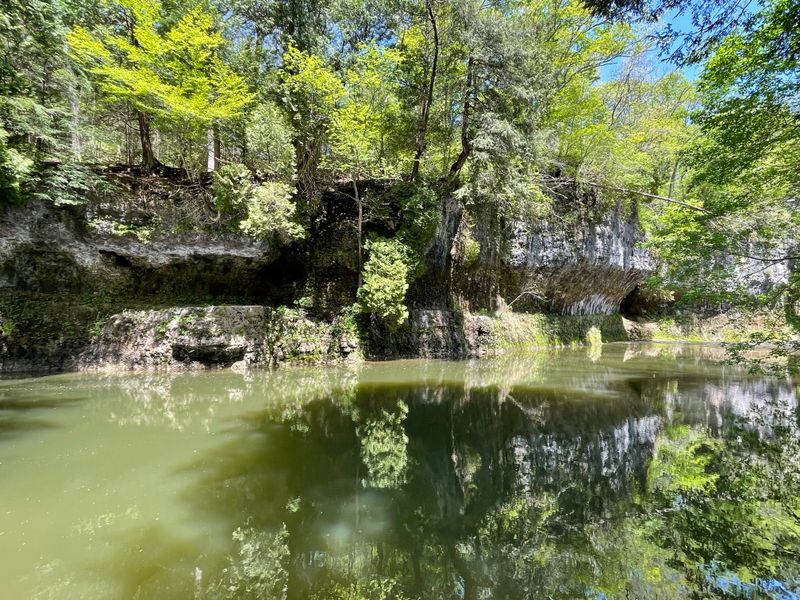
Highlands Nature Sanctuary in Bainbridge, Ohio, offers something rare: a genuine wilderness experience complete with ancient caves, towering cliffs, and trails that wind through old-growth forests.
I visited on a crisp autumn morning, and what struck me first wasn’t just the beauty, but the sense of stepping into another world entirely. The gorge here isn’t just a scenic overlook.
It’s a living, breathing ecosystem that has been quietly thriving for thousands of years.
Best of all, this incredible sanctuary is completely free to explore, though they graciously accept donations. Whether you’re an experienced hiker or someone who just wants a peaceful walk among wildflowers, this place has something special waiting for you.
Let me take you on a journey that feels like it’s out of this world.
A Gorge That Tells Ancient Stories
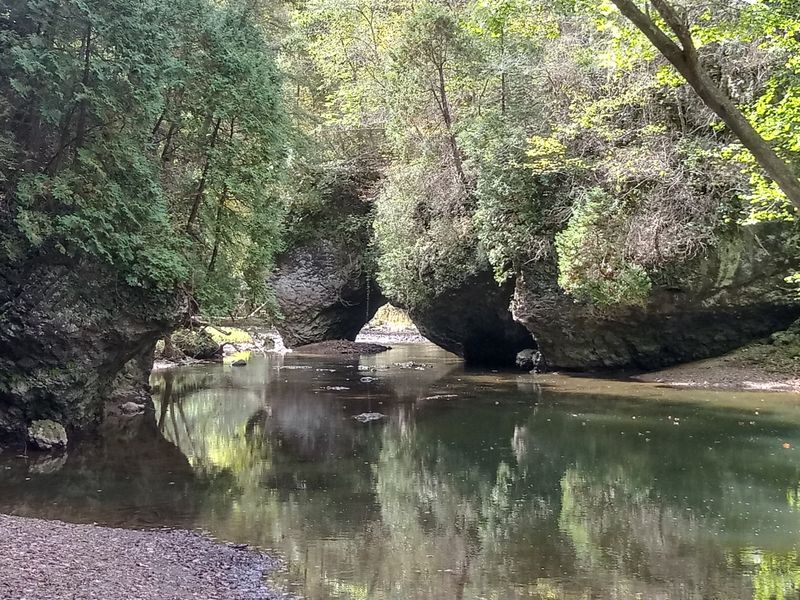
Standing at the rim and looking down into the gorge, I felt a connection to something far older than myself. The rock formations here have been shaped over millennia, creating dramatic cliffs and overhangs that shelter unique plant communities.
Massive boulders litter the stream bed below, some with full-grown trees sprouting from their tops like nature’s own sculptures.
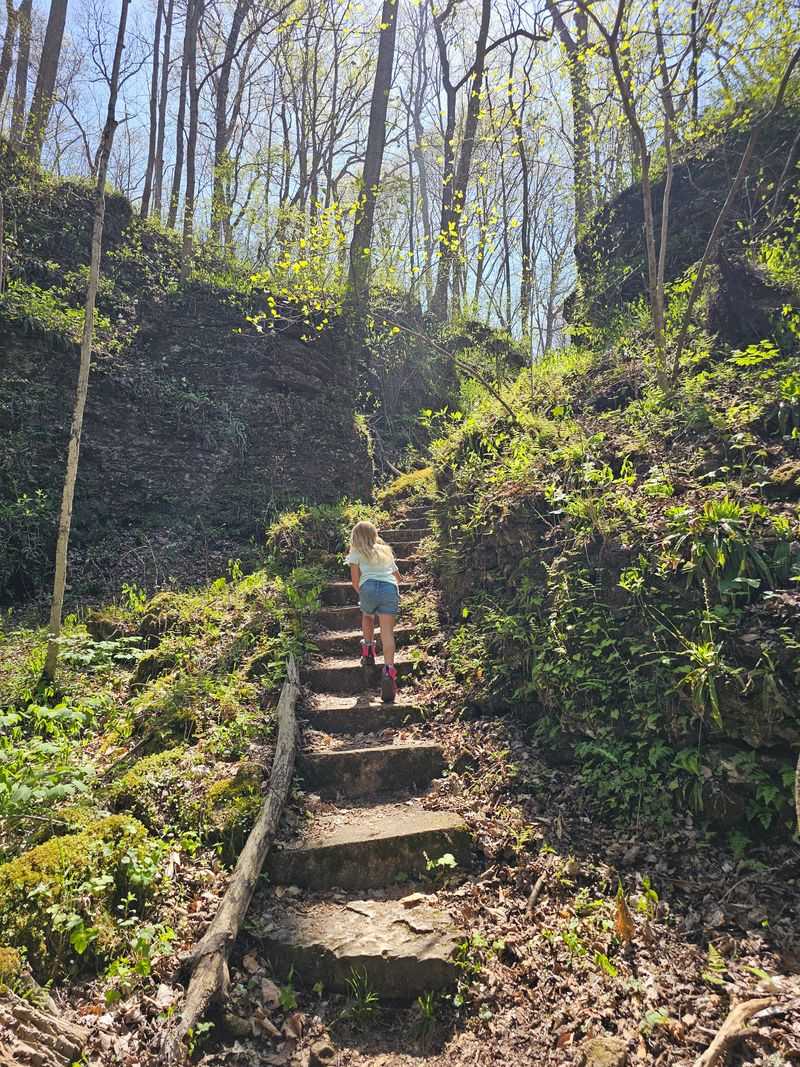
The descent into the gorge takes you through a series of well-maintained switchbacks and stairs. Each step reveals new perspectives on the limestone and dolomite walls that tower above.
The air grows cooler as you descend, and the sounds of the outside world fade away completely.
What makes this gorge particularly special is its biodiversity. The microclimate created by the deep valley supports species that wouldn’t normally thrive in southern Ohio.
I spotted rare wildflowers tucked into rock crevices and heard the distinctive calls of Louisiana Waterthrush echoing off the canyon walls. This isn’t just a pretty view; it’s a functioning ecosystem that offers lessons in geology, botany, and conservation all at once.
Cave Adventures for the Brave
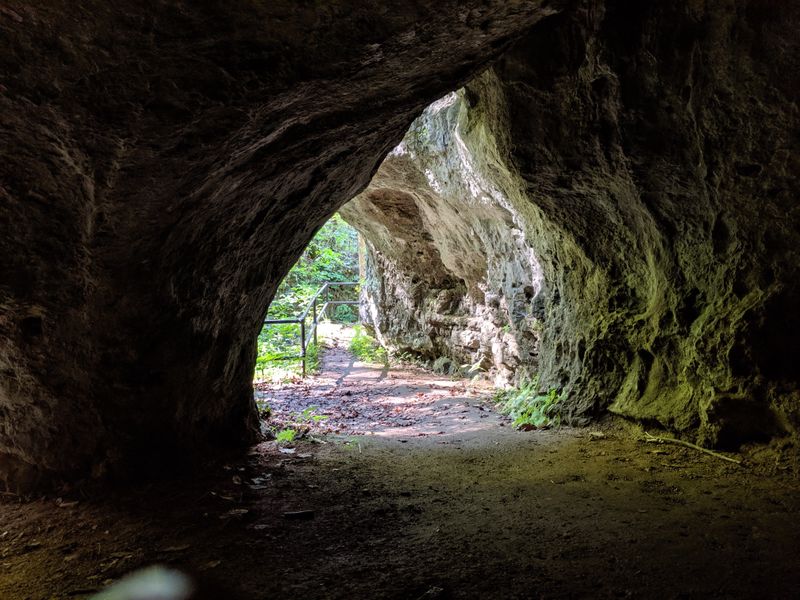
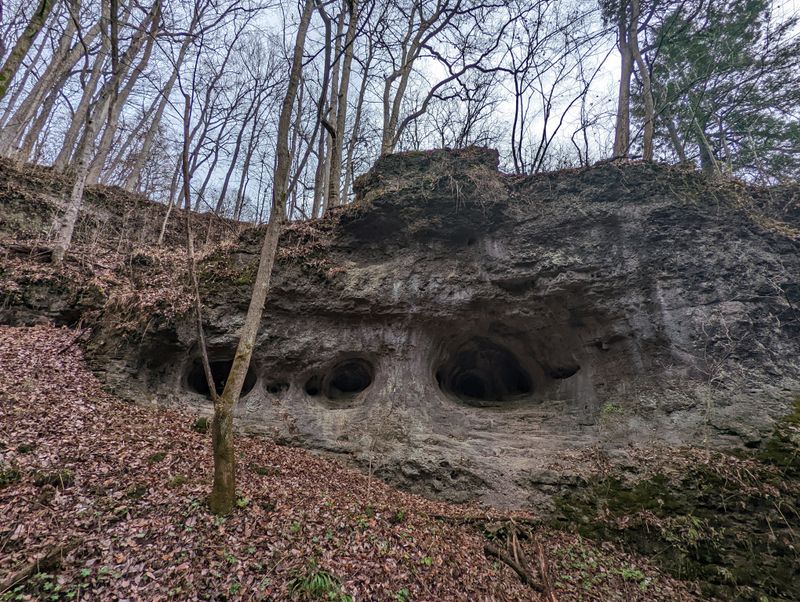
McKimmie’s Cave isn’t for everyone, and that’s exactly what makes it thrilling. You reach the area by following one of the signed trails from the museum complex, and the approach alone builds a sense of anticipation as the forest closes in and the rock walls rise around you.
When I reached the cave, I understood why the sanctuary protects it so carefully.
Access here is about viewing, not climbing inside. Current preserve rules prohibit entering or exploring the cave itself, both to protect fragile formations and to safeguard wildlife that may use it as shelter.
The temperature drops noticeably as you get close to the entrance, and even from the outside you can feel how deep the darkness extends into the hillside, especially on a hot summer day.
Bring a good flashlight only if you want to better study the textures of the rock from the trail, but expect to admire this feature from a respectful distance rather than crawling through it.
This isn’t a commercial cave with handrails and lighting. It’s raw, authentic, and exactly what nature created over thousands of years.
The experience here is about standing at the threshold of a truly wild place, listening to drops of water and studying the contours of stone before hiking back out the way you came.
Just remember to wear clothes and shoes you don’t mind getting a little dirty near the entrance, and be prepared to follow posted guidelines so this fragile spot stays protected for future visitors.
Valley of the Ancients Trail
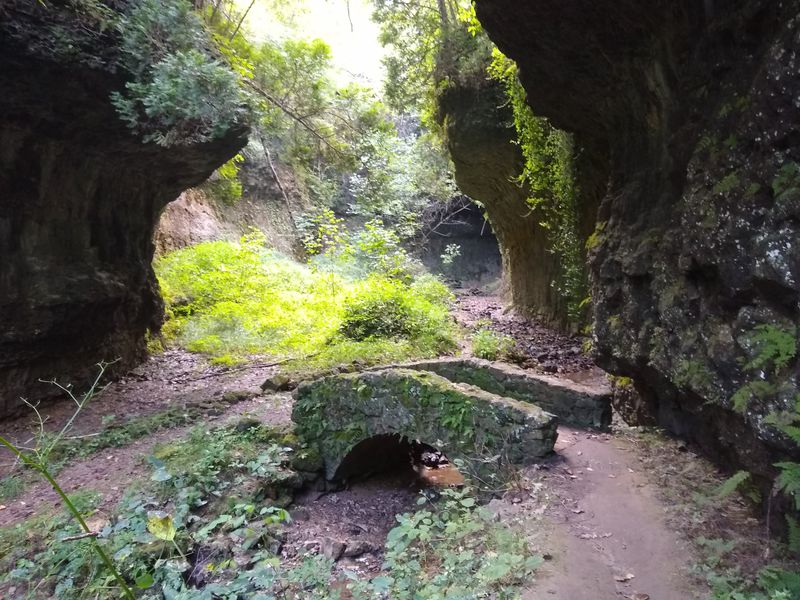
Some trail names are marketing fluff, but Valley of the Ancients genuinely lives up to its title. This shorter loop takes you past rock formations that look like they belong in a fantasy novel.
The trail begins with a steep descent via wooden stairs that lead you into a hidden valley where massive beech and maple trees tower overhead.
Halfway through, you’ll encounter a waterfall that varies in intensity depending on recent rainfall. During my visit after a wet week, the water cascaded beautifully over the rock face, creating a misty atmosphere that felt almost magical.
The trail winds between huge limestone blocks that have tumbled from the cliffs above over countless centuries.
What struck me most was the sense of being surrounded by living history. The old-growth forest here represents what an Eastern Climax Forest looks like when left undisturbed.
Birds flit through the canopy, their calls echoing off the rock walls. There’s no road noise here, just wind, water, and wildlife.
The peace you feel in this valley is something our busy modern world rarely offers.
Spring Wildflower Spectacle
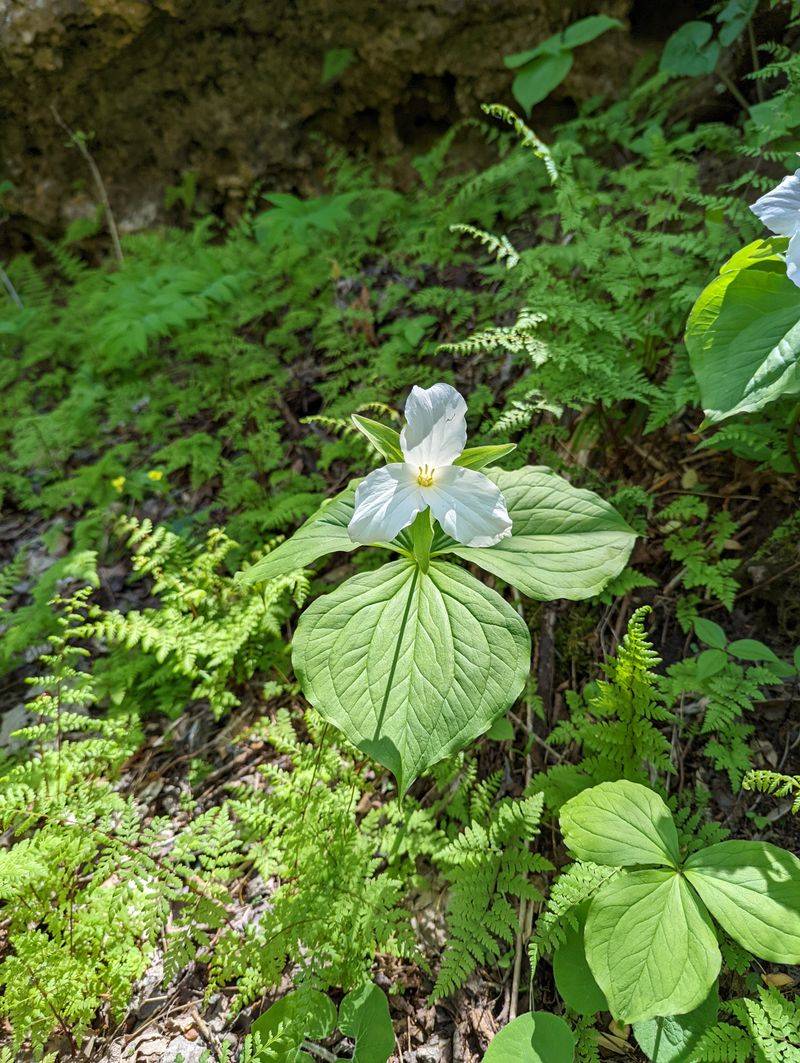
Timing matters at Highlands Nature Sanctuary, and if you can only visit once, make it spring. The wildflower display here is legendary among botanists and nature enthusiasts.
I’ve hiked in many places across Ohio, but the spring ephemeral show at this sanctuary is truly unforgettable.
The forest floor transforms into a carpet of color as trilliums, bloodroot, spring beauties, and dozens of other species burst into bloom. One particularly special resident is the shooting star, an uncommon wildflower that looks exactly like its name suggests.
These delicate flowers create purple-pink explosions of color in the shadier sections of the trails.
The wildflowers aren’t just pretty to look at; they’re part of a carefully timed ecological dance. They bloom and complete their life cycle before the tree canopy fully leafs out and blocks the sunlight.
Walking slowly through Barrett’s Rim Trail or the Valley of the Ancients during this season means encountering new species around every bend. Bring a field guide or use a plant identification app to enhance your experience.
The Appalachian Forest Museum
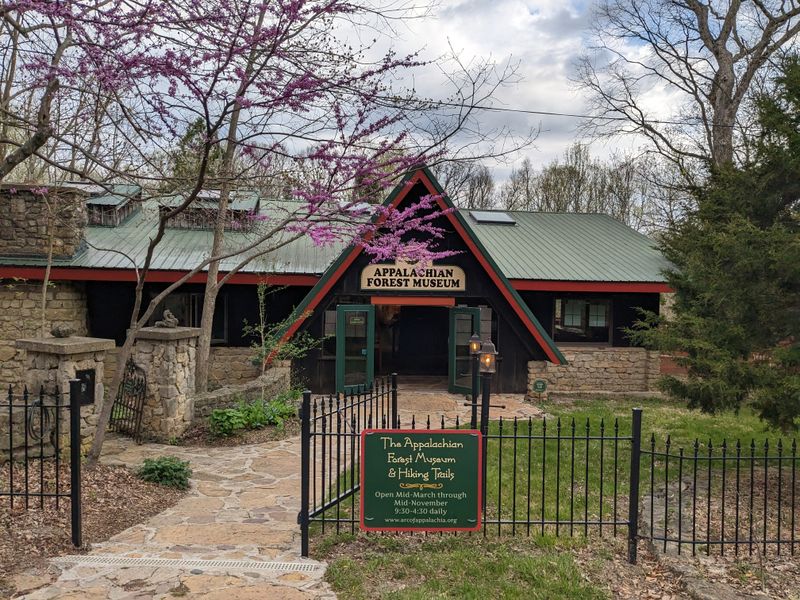
Before hitting the trails, spend some time in the Appalachian Forest Museum. This isn’t just a place to grab maps and use the restroom, though it serves those practical purposes well.
The museum offers genuine educational value with exhibits about the region’s natural and cultural history.
During my visit, I met volunteers who were incredibly knowledgeable and passionate about the sanctuary. Faye, whom several reviewers mentioned, helped me understand which trails would be best for my fitness level and what wildlife I might encounter.
The staff here genuinely wants you to have a meaningful experience, not just check a box.
The museum also hosts special events throughout the year. I learned about their Nature is Neat series, a set of programs designed for children and families that encourage curiosity about the forest and its wildlife through guided activities and hands-on learning.
There’s also a small gift shop where you can support the Arc of Appalachia’s conservation work.
The museum serves as both an educational resource and a community gathering space that enriches the entire experience.
Barrier Ridge Trail Challenge
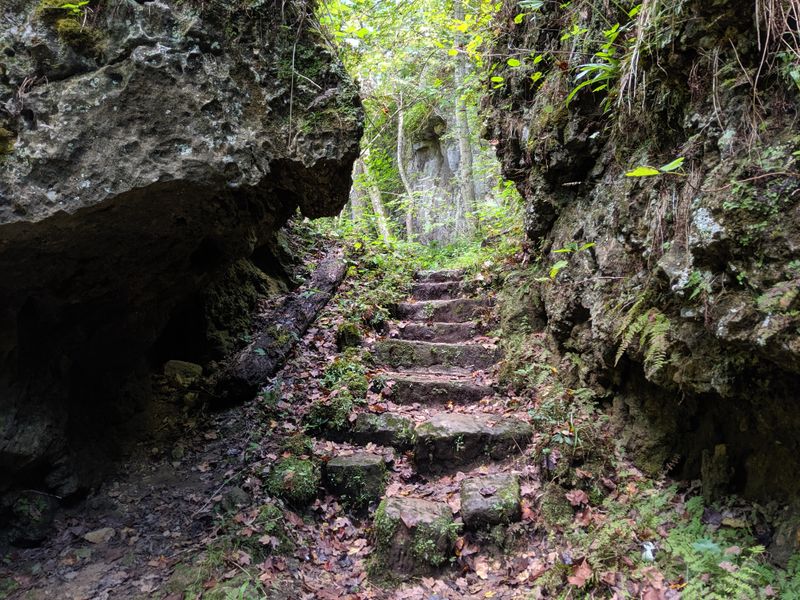
If you’re looking for a genuine workout, Barrier Ridge Trail will deliver. This three-mile loop starts from the lower parking area across from the museum and immediately lets you know it means business.
The trail is rated moderate to hard, and I’d lean toward calling it hard if you’re not a regular hiker.
Expect steep sections, lots of uphill climbing, and narrow passages along hillsides. The trail includes switchbacks and steps to help with the steepest inclines, but your legs will definitely feel it by the end.
Parts of the trail hug the sides of hills, offering dramatic views but requiring careful footing, especially after rain when surfaces can be slick.
Despite the challenge, or perhaps because of it, this trail offers incredible rewards. You’ll experience sections of forest that feel completely untouched by human activity.
The sense of solitude here is profound. Just remember that the parking area gates close at 4:30 PM, so plan accordingly.
Give yourself at least two hours for this loop, more if you want to stop and appreciate the scenery rather than just power through.
Three Sisters Rock Formation
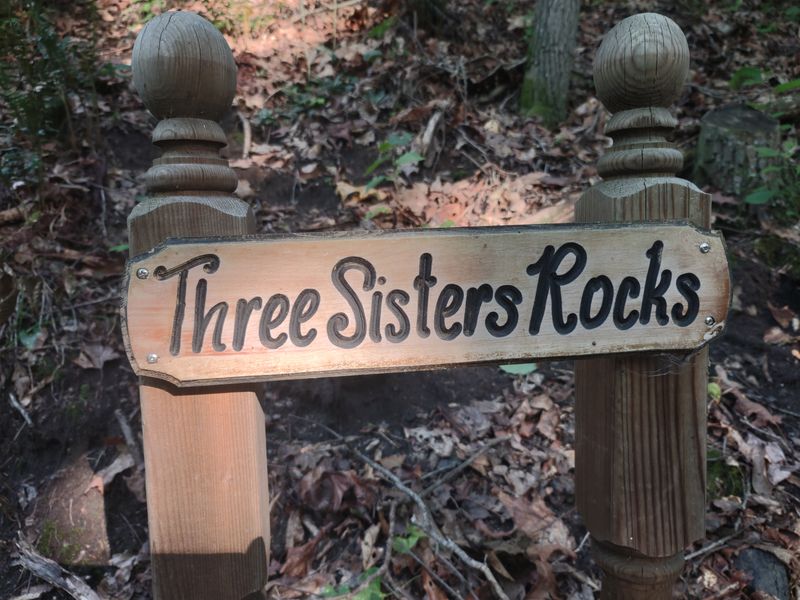
Among all the geological wonders at Highlands Nature Sanctuary, the Three Sisters stand out as something truly special. These massive rock pillars rise from the forest floor like ancient sentinels, their weathered surfaces telling stories of countless seasons.
When I first saw them, I understood why so many reviewers mention this formation specifically.
The Three Sisters represent a perfect example of how erosion can create natural sculptures. These limestone columns have been separated from the main cliff face over thousands of years, leaving them standing independently.
Trees have taken root on their tops, adding to their otherworldly appearance. The way light filters through the canopy and illuminates these formations changes throughout the day, offering different moods and photographic opportunities.
Reaching the Three Sisters requires a moderate hike, but the trail is well worth the effort. The formation serves as a reminder of the immense geological forces that shaped this region.
Standing beside these towering rocks, you can’t help but feel humbled by the passage of time and the power of natural processes that continue shaping our landscape today.
Birdwatching Paradise
Bring your binoculars because Highlands Nature Sanctuary is a birdwatcher’s dream location. The diverse habitats here, from open fields to deep forest to rocky gorges, support an impressive variety of bird species throughout the year.
During my visit, I heard Northern Parulas zipping through the canopy before I even saw them.
Eastern Phoebes repeatedly called their own name from perches along the trail, while several Carolina Wrens sang loudly in patches of sunshine. The gorge itself creates unique acoustic conditions that amplify bird calls, making it easier to hear species that might be harder to detect in other locations.
Louisiana Waterthrush are particularly notable residents, their distinctive calls echoing off the canyon walls.
Spring and fall migrations bring additional species passing through the area. Even if you’re not a serious birder, paying attention to the avian activity adds another layer of enjoyment to your visit.
The sanctuary’s varied habitats mean you might see woodland species, edge species, and even some grassland birds all in one visit. Download a bird identification app before you go, and take your time walking the trails with your ears as alert as your eyes.
Family-Friendly Adventures with Caveats
Highlands Nature Sanctuary can be wonderful for families, but you need to choose your adventure wisely. The museum offers a scavenger hunt that kids absolutely love, complete with a small prize at the end.
This activity transforms a nature walk into an engaging game that keeps children motivated and observant.
However, not all trails are suitable for young children. The steep drop-offs in the gorge area require supervision, and the cave exploration definitely isn’t appropriate for very small kids.
Several reviewers mentioned that the terrain isn’t stroller-friendly, which is absolutely true. The stairs, narrow paths, and uneven surfaces make this a place for kids who can walk independently and follow safety instructions.
That said, older children and teenagers will find plenty to love here. The chance to explore a real cave, climb stairs into a gorge, and spot wildlife creates memories that last far longer than another day at a theme park.
Just be realistic about your family’s abilities and choose trails accordingly. The staff at the museum can help you select appropriate routes based on your children’s ages and energy levels.
Supporting Conservation Through Your Visit
Perhaps the most remarkable thing about Highlands Nature Sanctuary is that it’s completely free to visit. The Arc of Appalachia organization, which manages the property, believes that access to nature should be available to everyone regardless of financial means.
This philosophy makes the sanctuary accessible to families and individuals who might not be able to afford other recreational options.
However, maintaining trails, staffing the museum, protecting rare species, and acquiring additional land for conservation requires funding. The sanctuary gratefully accepts donations, and I encourage every visitor to contribute what they can.
Even small donations add up when every visitor chips in. You can donate at the museum or through their website.
The Arc of Appalachia has done incredible work preserving this landscape and the biodiversity it supports. Your visit and financial support help ensure that future generations can experience the same sense of wonder and peace that you’ll find here.
Consider it an investment in both natural preservation and human wellbeing. The sanctuary also offers rental cottages and homes if you want to extend your visit, with those fees supporting conservation efforts as well.