
Step Into An Ancient Labyrinth Hidden Among Pennsylvania’s Rock Formations
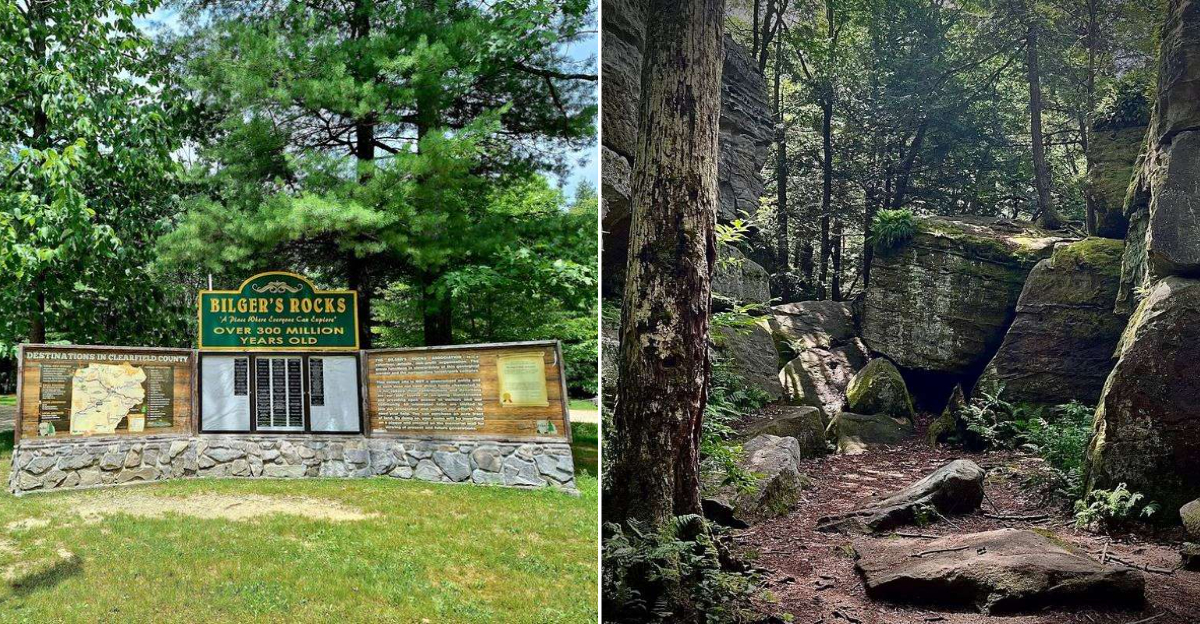
Adventure in Pennsylvania doesn’t always mean long hikes or towering peaks; sometimes it’s stepping between massive stone walls that twist and turn like nature’s own maze.
Cool air settles between the rock formations, sunlight slips through narrow openings, and every corner feels like a secret waiting to be discovered.
It is sandstone wonder, maze-like magic, and that quiet thrill of not quite knowing what is around the next bend.
Moss clings to shaded crevices, leaves crunch underfoot, and the scent of earth and pine lingers in the stillness.
Pennsylvania’s rugged landscapes have a way of sparking curiosity without needing fanfare. Wandering through an ancient labyrinth of stone feels both grounding and slightly mysterious.
I remember squeezing through a narrow passage and emerging into a sunlit opening, feeling like I had unlocked a hidden level in a game.
For a moment, the outside world faded, replaced by rock, sky, and the simple joy of exploring something timeless.
The Ancient Age of the Rocks
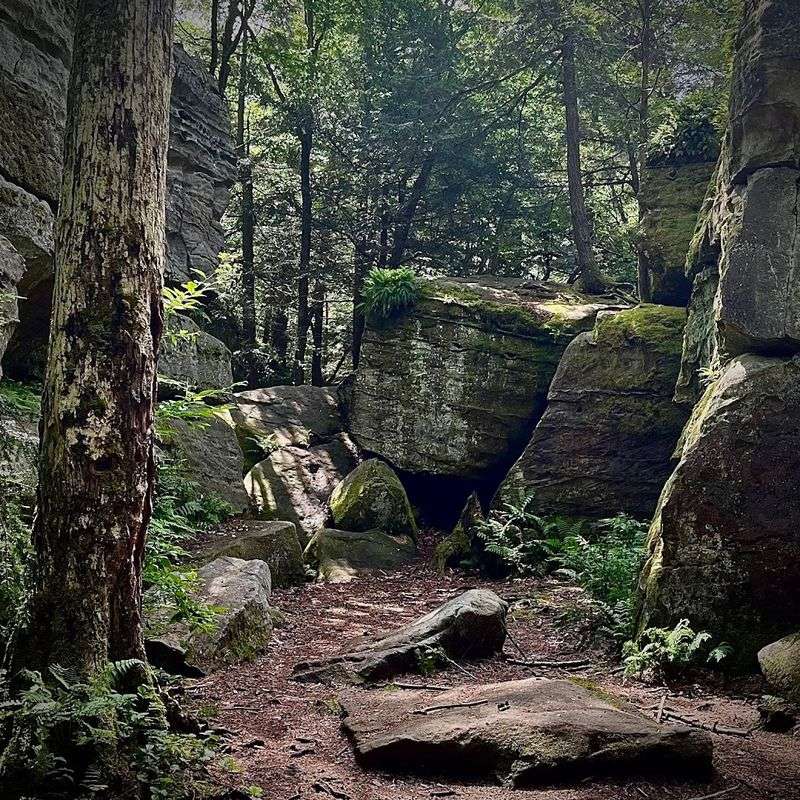
Around 300 million years ago, long before dinosaurs roamed the earth, the sandstone formations at Bilger’s Rocks were slowly taking shape beneath ancient seas and shifting landscapes.
That number is almost impossible to wrap your head around, but standing next to one of these towering boulders makes it feel surprisingly real.
The rocks belong to the Pottsville Formation, a geological layer well known across Pennsylvania and into neighboring states like Ohio.
Over hundreds of millions of years, water, frost, and natural forces worked together to crack, shift, and sculpt these stones into the dramatic labyrinth visitors explore today.
Geologists find this site genuinely valuable for understanding how Pennsylvania’s landscape developed over deep time.
For everyday visitors, the age of the rocks adds a layer of awe that no museum exhibit can quite replicate. You are not just looking at rocks; you are reading a 300-million-year-old chapter of Earth’s story.
The Natural Labyrinth of Passages
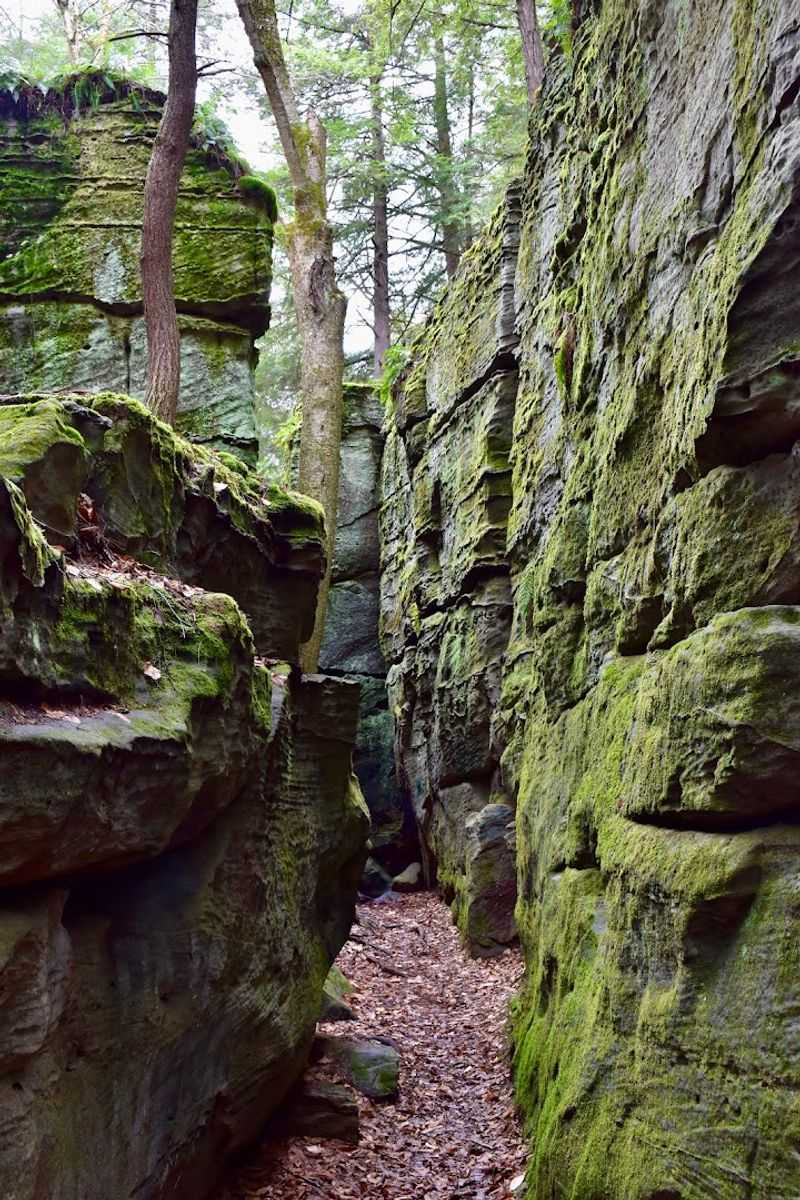
Walking into Bilger’s Rocks feels less like entering a park and more like stepping into a puzzle someone forgot to solve.
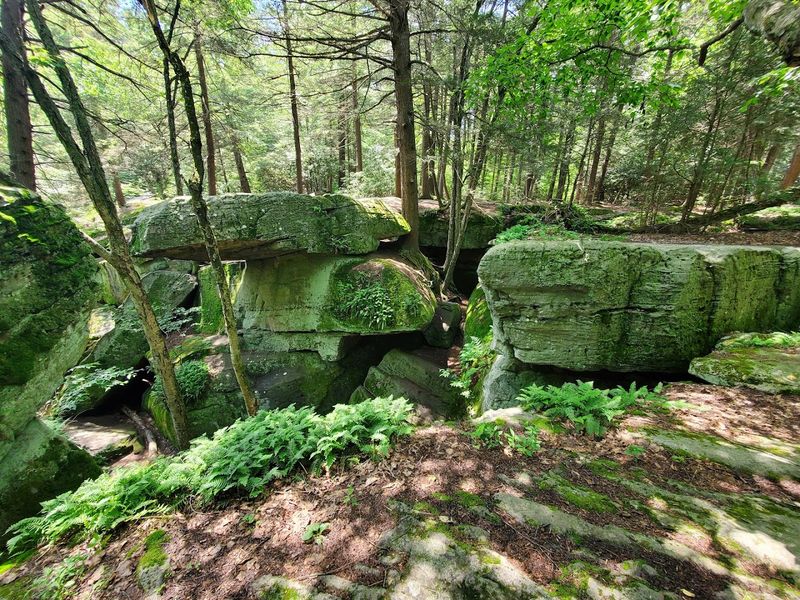
The boulders crowd together so tightly in places that you have to turn sideways, squeeze through gaps, and duck under overhanging rock shelves just to keep moving forward.
From above, the formation looks like a forest floor split open by enormous seams.
From below, inside the passages, you are surrounded by walls of stone rising two to three stories on either side, with only a narrow strip of sky visible overhead. The effect is genuinely dramatic.
Visitors frequently report finding new routes and hidden corners even after multiple trips, which speaks to just how complex this natural maze really is.
Some passages open into surprisingly spacious chambers, while others narrow down to barely a shoulder’s width. It rewards patience and a healthy sense of adventure, making every visit feel like the first one.
The Famous Ice Cave
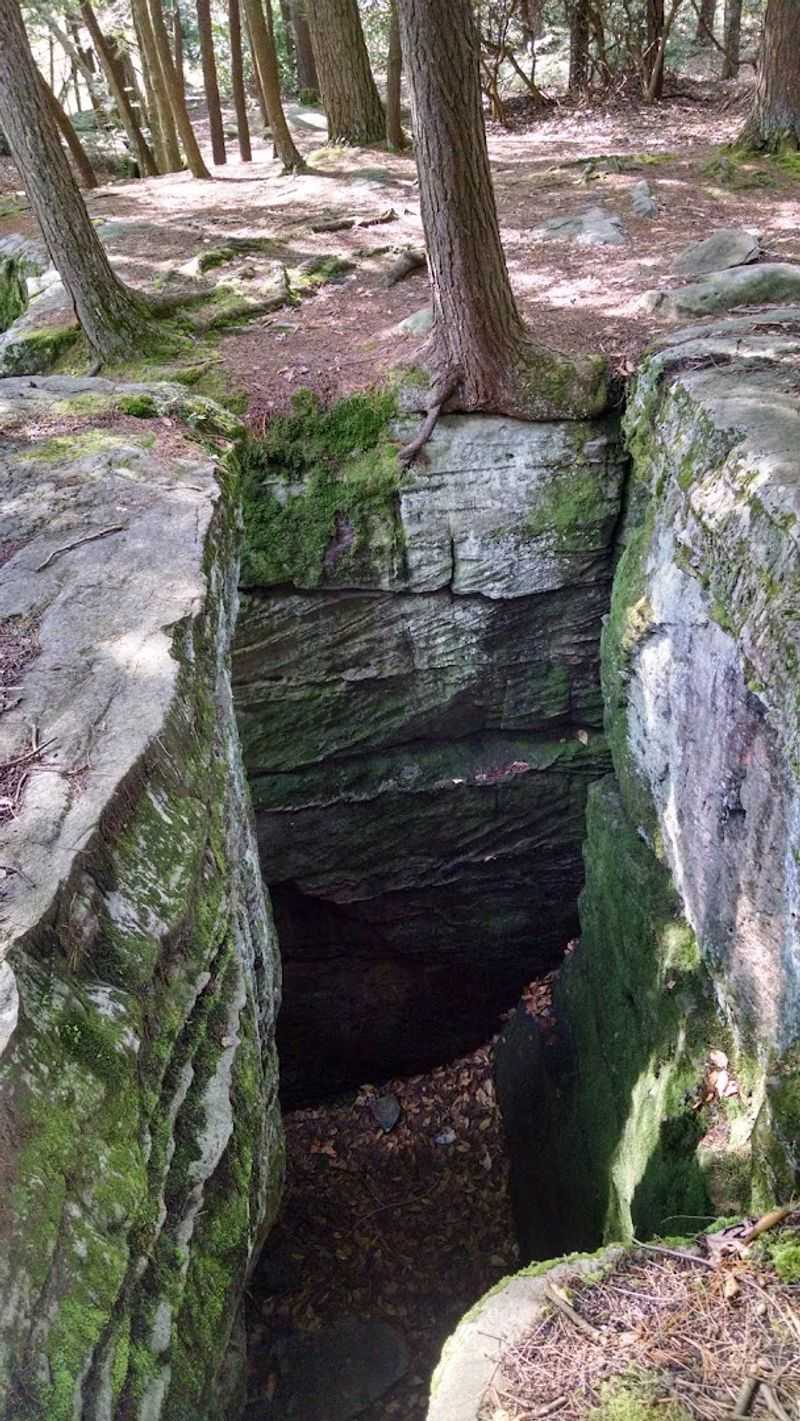
One of the most talked-about features at Bilger’s Rocks is a spot known as the ice cave, and it earns that name honestly.
Even during the hottest weeks of summer, ice can linger at the bottom of this deep, shaded crevice, kept frozen by cold air that flows through the rock formations and collects in the lowest, most sheltered spots.
The physics behind it are fascinating. Cold, dense air sinks into the narrow passages and becomes trapped, while warmer air cannot easily push its way in to replace it.
The result is a naturally refrigerated pocket that surprises first-time visitors who expect nothing more than a shadowy gap between boulders.
Visitors from as far as Ohio have made the trip specifically to experience this unusual feature. Touching actual ice in July inside a Pennsylvania forest is the kind of moment that sticks with you.
Bring a light jacket regardless of the season, because the temperature drop inside the rock passages is real and noticeable.
Free Admission and Donation-Based Access
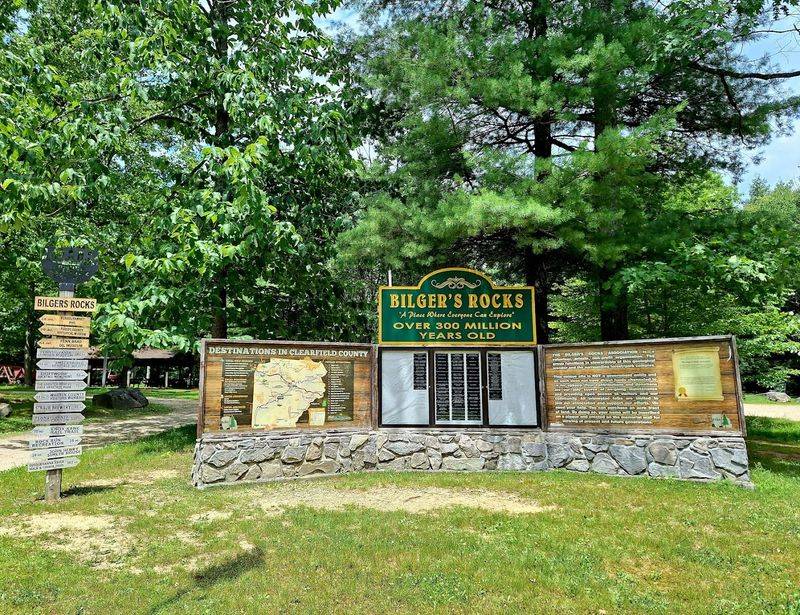
Here is something that feels almost too good to be true in an era of steep park fees: visiting Bilger’s Rocks costs absolutely nothing.
The site is privately owned but open to the public completely free of charge, operating on a donation-based model that relies on the goodwill of the people who visit and love it.
Donation boxes are placed around the property, and the community clearly takes them seriously.
The grounds are well maintained, the facilities are clean, and ongoing improvements like newer tent platforms and educational signage reflect what consistent support from visitors can actually accomplish.
For families driving up from Ohio or road-tripping across Pennsylvania on a budget, this is the kind of stop that feels like a genuine gift.
Leaving a few dollars in the donation box is a small way to help keep this remarkable place accessible for future visitors.
The generosity of the landowners and volunteers who run it deserves to be matched.
The Roland Welker Rock House
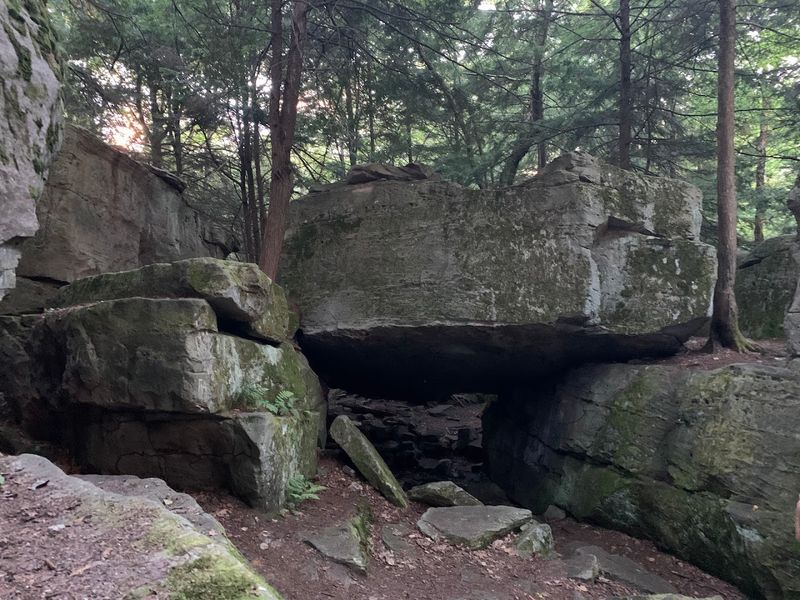
Tucked among the boulders is a structure that adds a human chapter to the geological story: a rock house built by a man named Roland Welker.
Using the natural boulders as walls and foundation, Welker constructed a shelter that blends so seamlessly into the landscape that visitors sometimes walk right past it before realizing what they are looking at.
The rock house is a reminder that people have been finding creative uses for this natural formation for a very long time.
It speaks to the ingenuity of early settlers who saw the rocks not just as obstacles but as building materials and shelter waiting to be used.
Visitors who take the time to find and examine the rock house often describe it as one of the more memorable details of the whole site.
It is a small structure by any standard, but its setting among the towering boulders gives it an outsized sense of character.
History and geology share the same address here, which makes the experience richer for everyone who pays attention.
Wildlife and Natural Surroundings
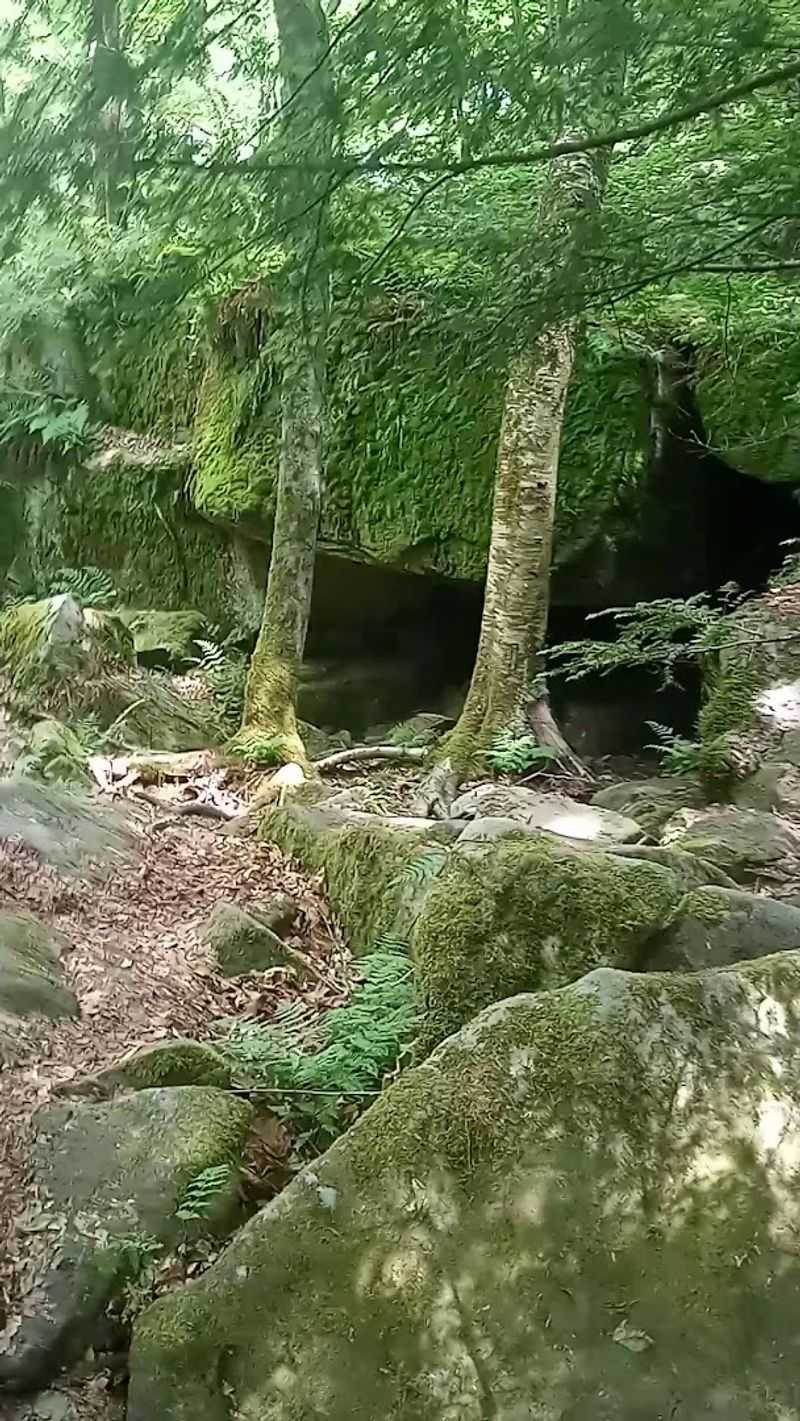
The boulders get most of the attention, but the broader environment at Bilger’s Rocks is genuinely beautiful in its own right.
The site sits within a mature forest that provides shade, fresh air, and a quiet backdrop that makes the whole experience feel removed from everyday life.
A small stream winds through part of the property, adding the gentle sound of moving water to the mix.
Moss and ferns coat the lower surfaces of the boulders, creating layers of green that shift color depending on the season and the light.
Wildlife sightings are common, and the forest feels alive in a way that rewards slow, attentive walking. Deer, birds, and various small woodland creatures are regularly spotted by visitors exploring the trails.
The combination of dramatic rock formations and thriving natural habitat makes this place appealing to photographers, nature lovers, and anyone who simply wants to spend a few hours somewhere genuinely peaceful. Ohio has lovely parks, but few match this particular blend of geology and forest.
Family-Friendly Activities and Facilities
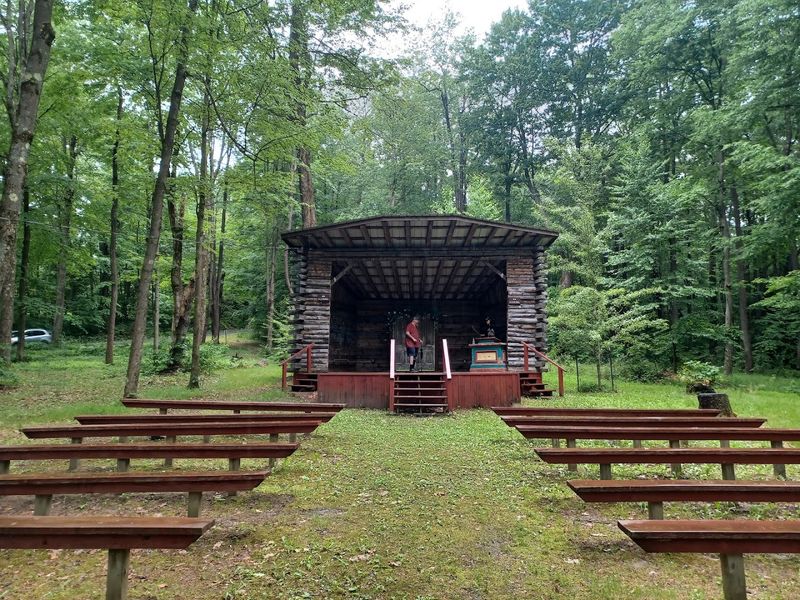
Bilger’s Rocks has quietly grown into a well-rounded destination for families, not just geology enthusiasts.
The site includes picnic tables, a pavilion, a playground for younger children, and fire pits, which means you can make a full afternoon of it without needing to pack an elaborate plan.
The rock formations themselves are the main attraction for older kids and teenagers, who tend to love the freedom to climb, squeeze through passages, and discover hidden corners at their own pace.
Parents should keep a close eye on younger children near the deeper crevices, as some drop-offs are steep and not always immediately obvious.
Portable restroom facilities are available on site and are kept in notably clean condition, which is a small but meaningful detail when you are out with a family for several hours.
Camping platforms have also been added in recent years, opening up the possibility of an overnight stay. For families road-tripping from Ohio or nearby states, this is a stop that punches well above its weight.
Camping Options at the Site
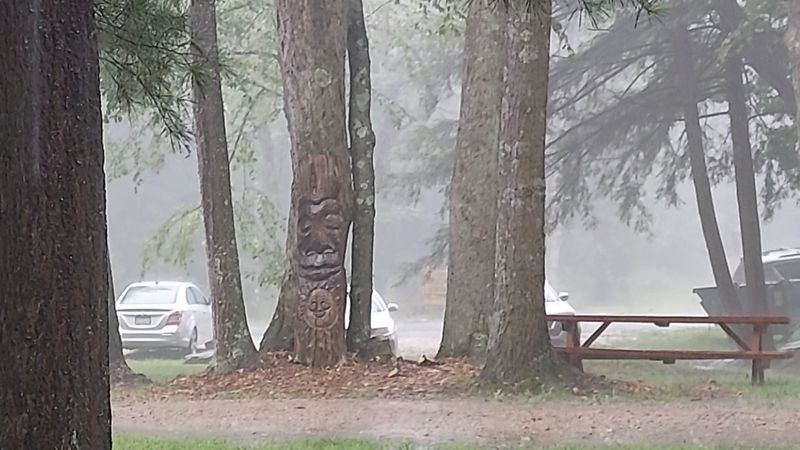
Not many people realize that Bilger’s Rocks offers camping, and that relative obscurity is honestly part of its appeal.
Newer tent platforms have been installed on the property, giving visitors the option to extend their stay beyond a single afternoon and experience the forest after the day-trippers have gone home.
Spending a night here means waking up to birdsong and morning mist drifting through the trees, with the rock formations waiting just a short walk away.
It is the kind of low-key camping experience that feels more connected to nature than a crowded campground with RV hookups and organized activities.
The site is volunteer-run, so amenities are simple rather than luxurious, but that simplicity is very much part of the charm.
Visitors coming from Ohio or other neighboring states who want to turn Bilger’s Rocks into a weekend adventure rather than a quick stop will find the camping option a worthwhile addition.
Reservations and details are available through the official website at thebilgersrocks.com.
Visiting Hours, Location, and Practical Tips
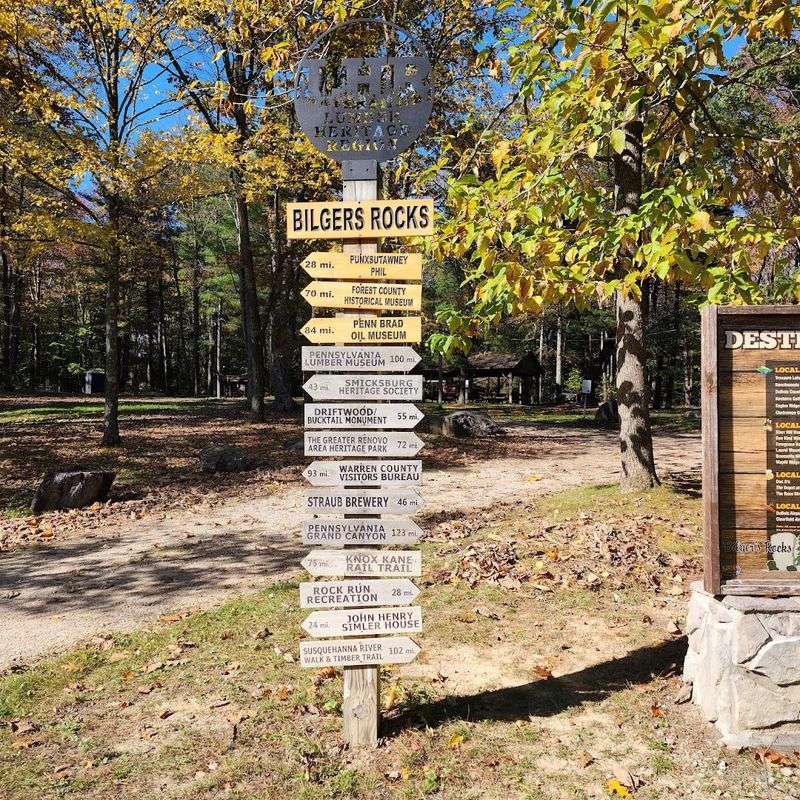
Bilger’s Rocks is open every day of the week from 6 AM to 10 PM, which gives visitors plenty of flexibility to plan around weather, schedules, and travel routes.
The address is 1921 Bilgers Rocks Rd, Grampian, PA 16838.
The walk from the parking area to the main rock formations is short and manageable for most fitness levels, though the terrain inside the formations involves climbing, ducking, and navigating uneven surfaces.
Sturdy, closed-toe shoes are strongly recommended, and a light jacket is a smart call regardless of the season given the cool air inside the passages.
Visitors driving from Ohio should plan for a scenic route through central Pennsylvania, which adds to the experience rather than detracting from it.
Morning visits tend to offer softer light for photography, while late afternoon brings a golden quality to the moss and stone that is hard to beat.
Check the website at thebilgersrocks.com for the latest updates before heading out.
A Landmark Rated 4.8 Stars by Hundreds of Visitors
With a 4.8-star rating across nearly 900 reviews, Bilger’s Rocks has earned a reputation that speaks for itself.
Visitors consistently describe the experience as surprising, awe-inspiring, and far more impressive in person than any photo can convey, which is saying something given how photogenic the formations already look in pictures.
Long-time visitors mention returning year after year and still finding new spots they had never noticed before.
That kind of staying power is rare for any outdoor attraction, and it reflects just how genuinely layered and complex this place really is.
The volunteer-driven care that goes into maintaining the site also earns regular praise from visitors who appreciate the effort.
People traveling from neighboring states like Ohio regularly list Bilger’s Rocks as one of the best natural attractions they have encountered anywhere in the region.
For a free, privately maintained park tucked into rural Pennsylvania, that level of consistent enthusiasm is remarkable. If a place earns that much praise from that many people, it is almost certainly worth your time.